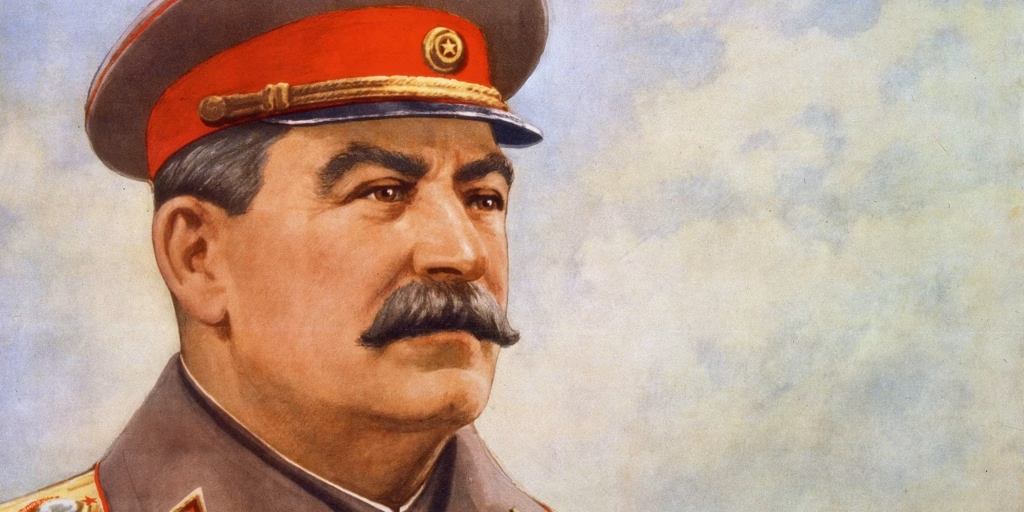
Joseph Stalin
Stalin’s rule was characterised by a ruthless consolidation of power, rapid industrial and agricultural transformation, widespread terror, and the emergence of the USSR as a major global superpower.
Leadership Struggle and Ideological Conflict
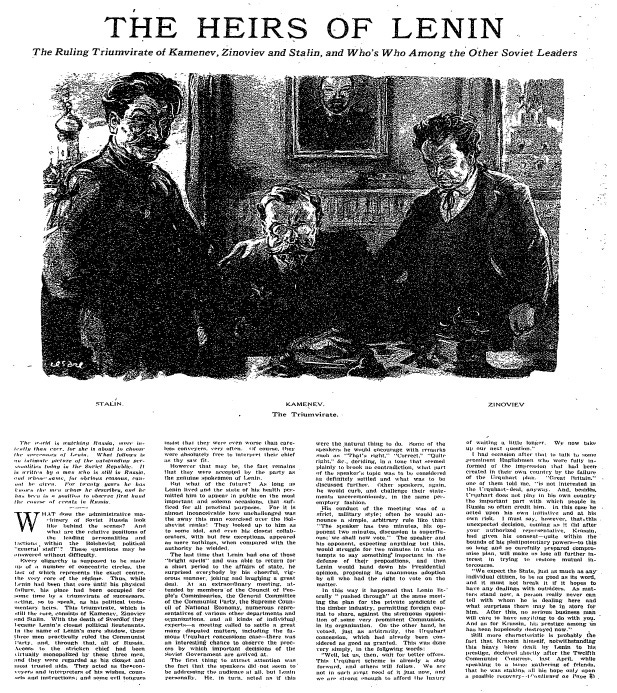
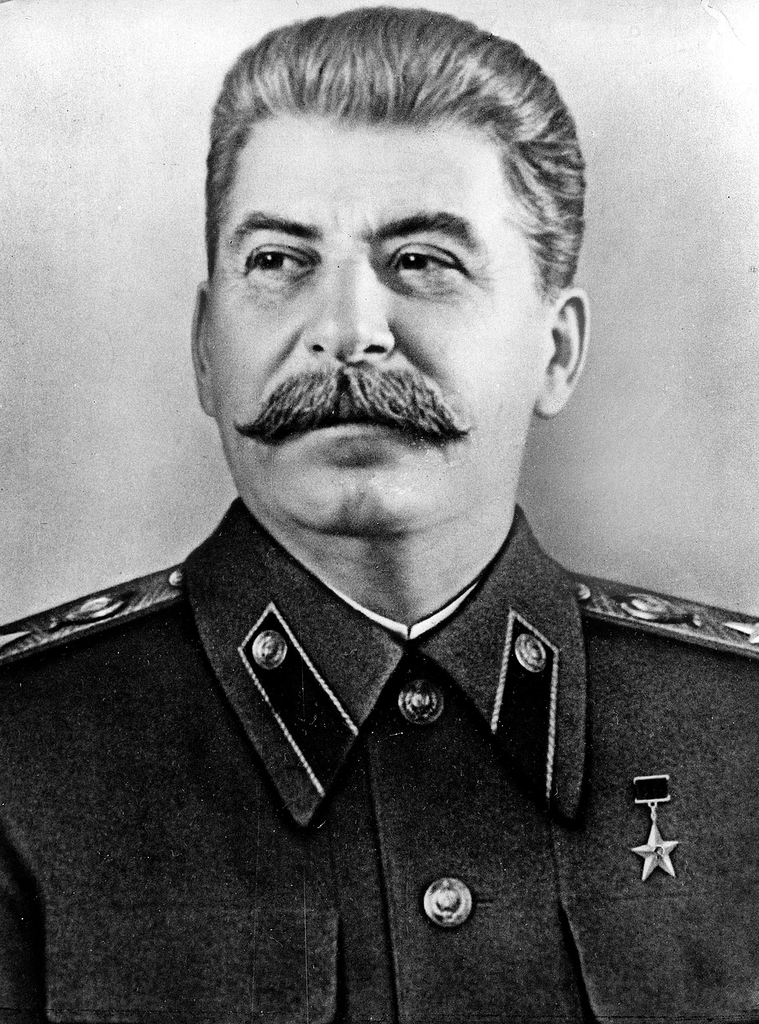
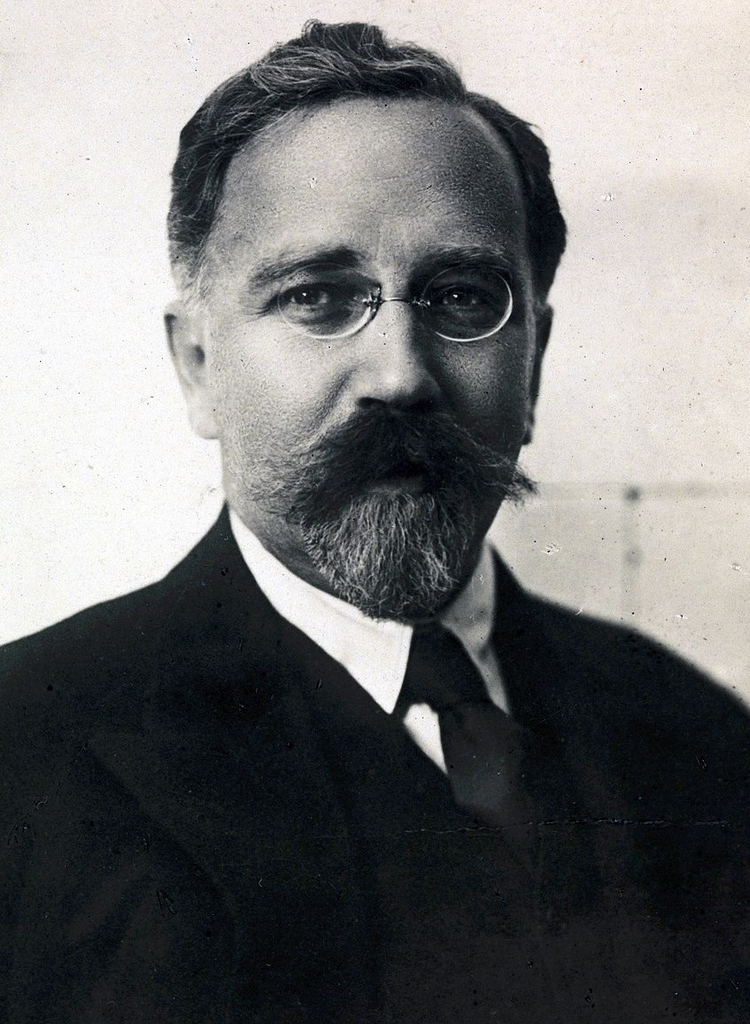
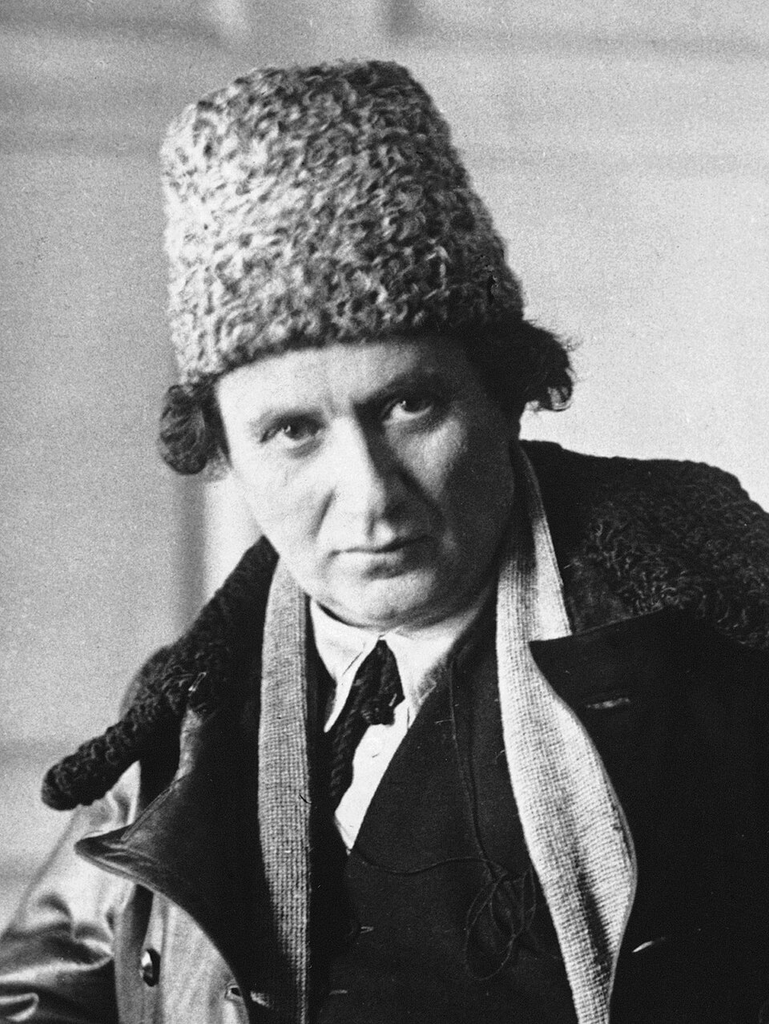
After Lenin’s death, five key figures presented themselves as potential successors
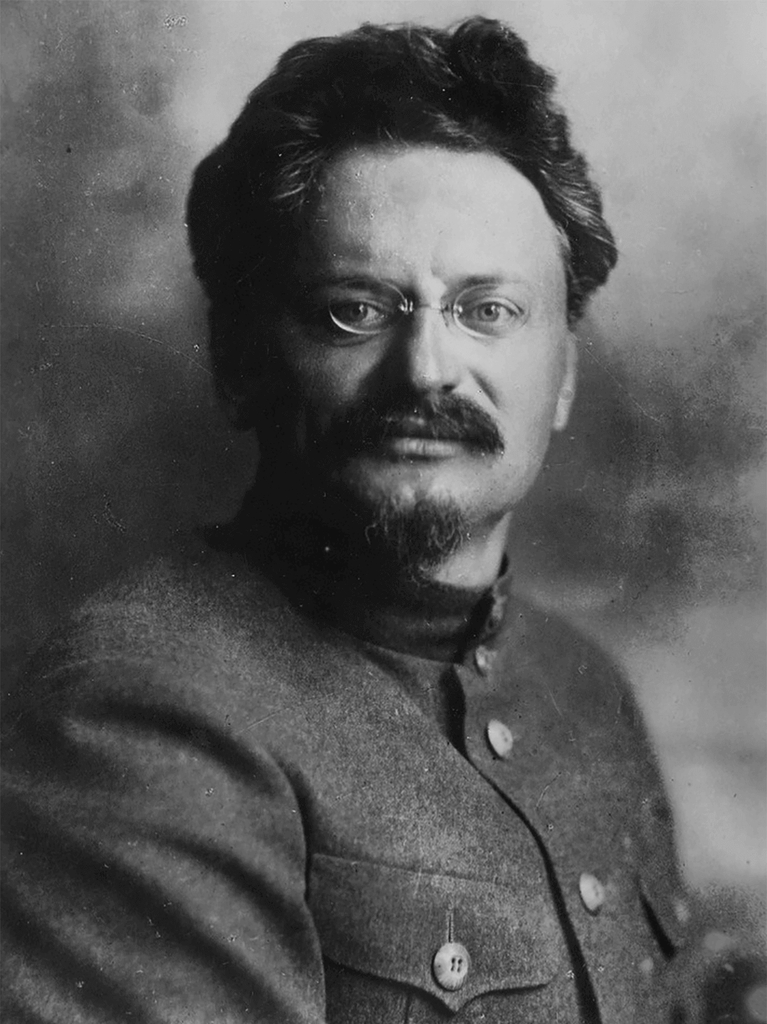
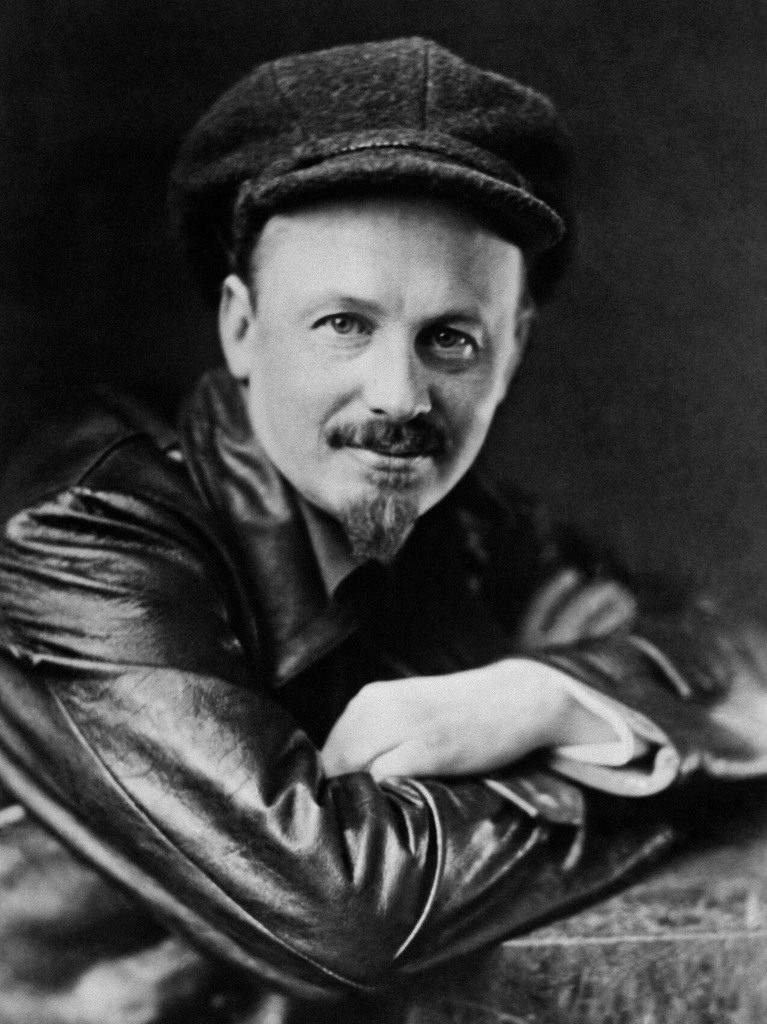
Trotsky
Stalin
Kamenev
Zinoviev
Bukharin
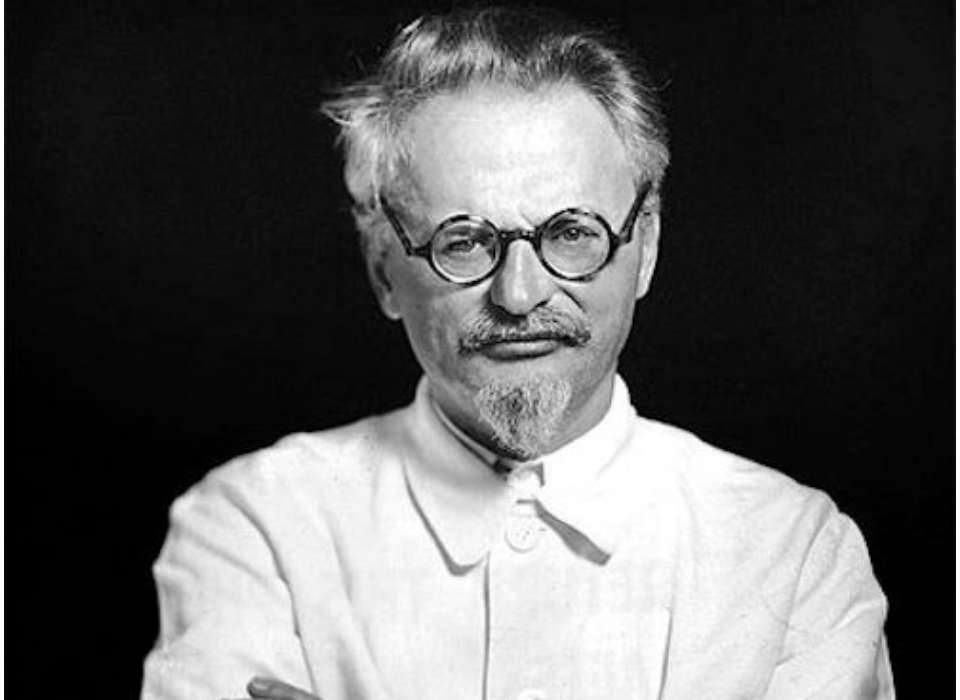
Leon Trotsky
Background
Trotsky was born in 1879 into a relatively well-off Jewish family of independent farmers. At the turn of the century, he joined a revolutionary group, but he was soon exiled to Siberia because of his political radicalism. In 1902, following a daring escape, he joined Lenin and other Marxists in London.
Revolutionary Record
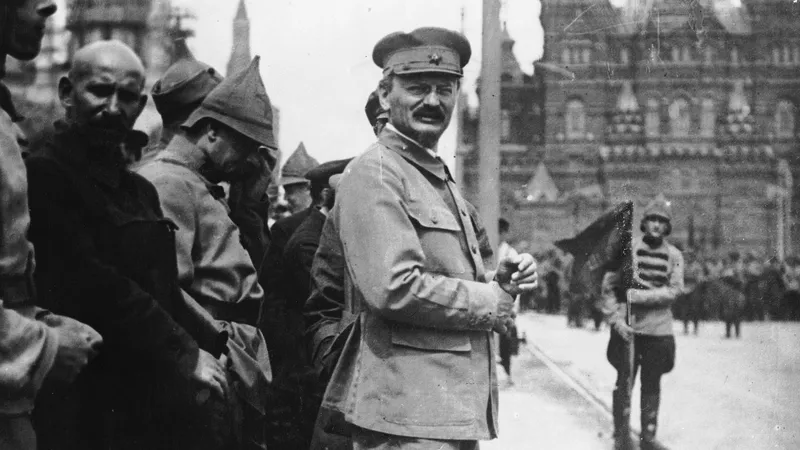
Trotsky’s reputation as a revolutionary was well-established in the 1905 Revolution. He was a leading figure in the short-lived St Petersburg Soviet of November 1905 which organised a general strike amongst St Petersburg workers. In 1917, his reputation – and oratory – won support for the Communists during the crucial period in which the October Revolution was planned. Trotsky masterminded the Communist seizure of power and was subsequently responsible for consolidating Communist rule, through his leadership and restructuring of the Red Army during the Civil War of 1918-1921.
Relationship with Lenin
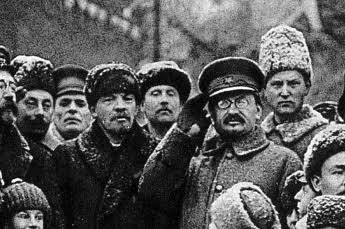
Trotsky’s early relationship with Lenin was turbulent and in 1903 he sided with the Mensheviks, rejecting Lenin’s belief in a disciplined, secretive, professional party. These struggles, spanning a variety of ideological issues, continued until 1917. However, when he returned to Russia in the summer of 1917, he joined the Communists and was able to work closely with Lenin. Throughout the Civil War, Trotsky and Lenin saw eye-to-eye over the controversial issue of restoring discipline in the Red Army. In government, Trotsky acted as Lenin’s principle lieutenant and despite occasional disagreements, Lenin was happy to proclaim that there was “no better Communist”. Lenin singled Trotsky out as “the most able man in the present Central Committee” in his Testament. However, he also noted Trotsky’s “too far-reaching self-confidence”, a character trait that many others saw as arrogance.
Appeal within the Party
Trotsky’s revolutionary heroism in 1905, 1917 and during the Civil War, coupled with his stirring speeches, won him the support of many young Communists and students as well as the loyalty of the Red Army. However, he was not a typical Communist and therefore he had many enemies within the Party. Trotsky’s time in exile – in Paris, New York and London – had made him one of the most “western” of the Party leadership. He was also the most urban. In a country that was predominantly rural and was increasingly proud of its national identity this alienated
Trotsky from many within the Party. Finally, many in the Party resented the way in which Trotsky, who had joined the Party late, had Lenin’s trust as well as important positions within the government.
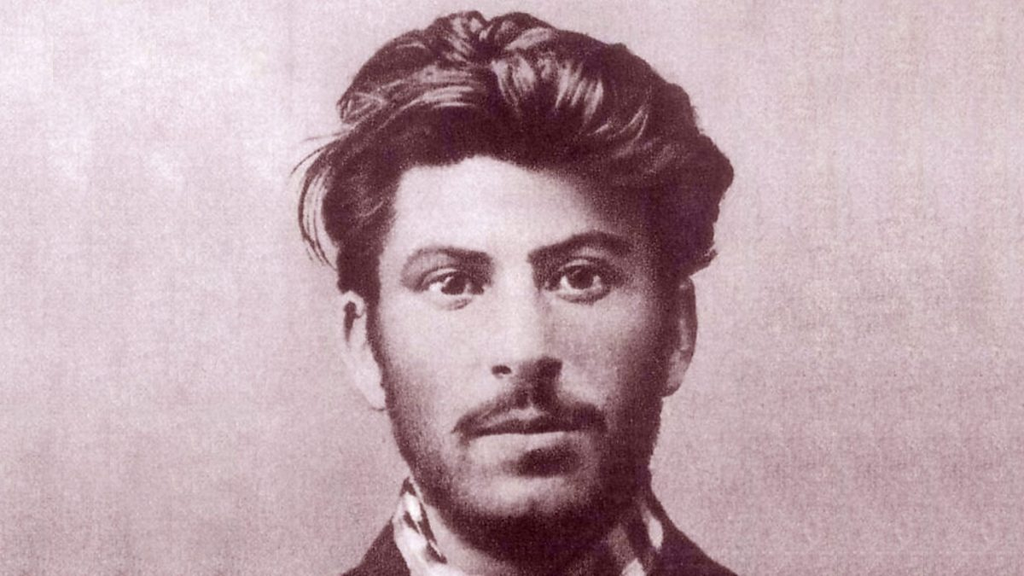
Joseph Stalin
Background
Stalin, who claimed to be the leader of the world proletariat, was in fact born into a family of Georgian peasants in Gori in 1879. He was educated in a local religious school because his parents wanted him to become a priest. On leaving the seminary, he continued his spiritual education in Tbilisi, the largest and most cosmopolitan city in Georgia, and it is here that Stalin converted to Marxism. He joined the Communist Party in 1902, and in 1912 he was made a member of the Central Committee. Throughout this time, he was continually in trouble with the police, notably for raiding banks to acquire funds for the Party. Activities such as this saw him exiled to Siberia, although he escaped no fewer than five times.
Revolutionary Record
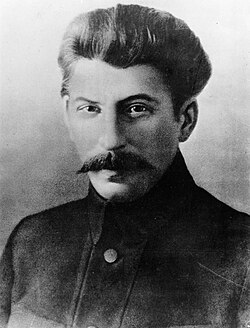
Stalin’s role during the October Revolution, and the years that followed, was that of a committee member. Broadly speaking, he carried out the orders of others rather than taking the initiative. Nonetheless, he saw himself as a military tactician and he refused to accept Trotsky’s authority during the Civil War. Stalin never distinguished himself as a revolutionary hero during this period, but in spite of this, by 1921, his presence on many senior committees secured him a position at the highest level of government.
Relationship with Lenin
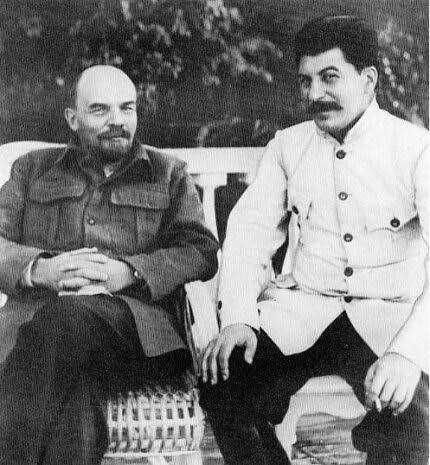
Stalin’s first recorded meeting with Lenin occurred in 1905. In the period prior to the October Revolution, Lenin came to rely on Stalin’s administrative ability and loyalty, and on one occasion even described him as “that wonderful Georgian”. Prior to Lenin’s illness, Stalin was careful to back him on controversial issues. Historian E.H. Carr comments that the “claim to be nothing more than a faithful follower and disciple of Lenin was not altogether opposed. He had no creed of his own.” Nonetheless, once Lenin became ill, Stalin began to oppose him. Lenin was highly critical of Stalin in his Testament, particularly following a disagreement between Stalin and Lenin’s wife. He expressed concern that Stalin had “concentrated an enormous power in his hand” and did not always use it wisely. As a result, he demanded that the other senior members of the party think about a way of removing Stalin and finding someone more tolerant, more loyal, more polite and more considerate to the comrades and less capricious to take his place. Lenin’s disapproval of Stalin is also evident in his last essay Better Fewer, But Better which was highly critical of the Workers’ and Peasants’ Inspectorate, of which Stalin was the Head. However, he also recognised that, along with Trotsky, he was one of the “most able” figures of the Central Committee.
Appeal within the Party
Stalin’s appeal was threefold. First, he had the power to advance the careers of those within the Communist Party machine as a result of his many bureaucratic positions, like General Secretary. Secondly, unlike Trotsky and Bukharin who adopted extreme positions, he appeared to be the voice of calm moderation. Finally, Stalin unlike the other contenders for power, was prepared to appeal to the national pride of those he sought to lead.
Ideological Conflict – Views of the Left
NEP AND INDUSTRY: “the dictatorship of industry”
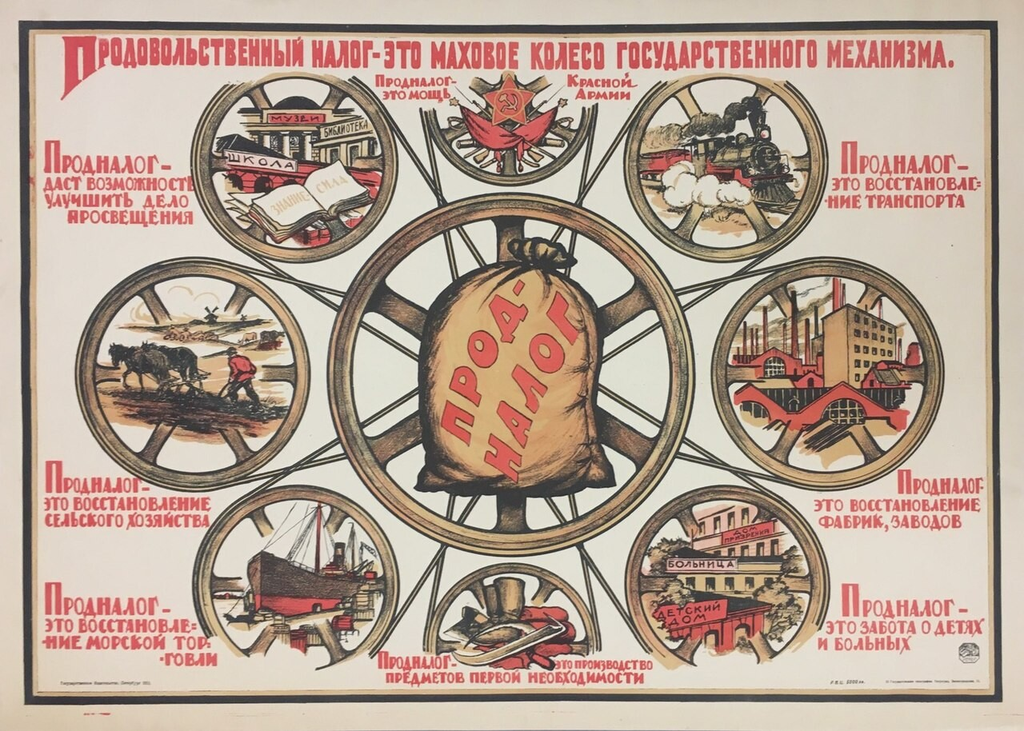
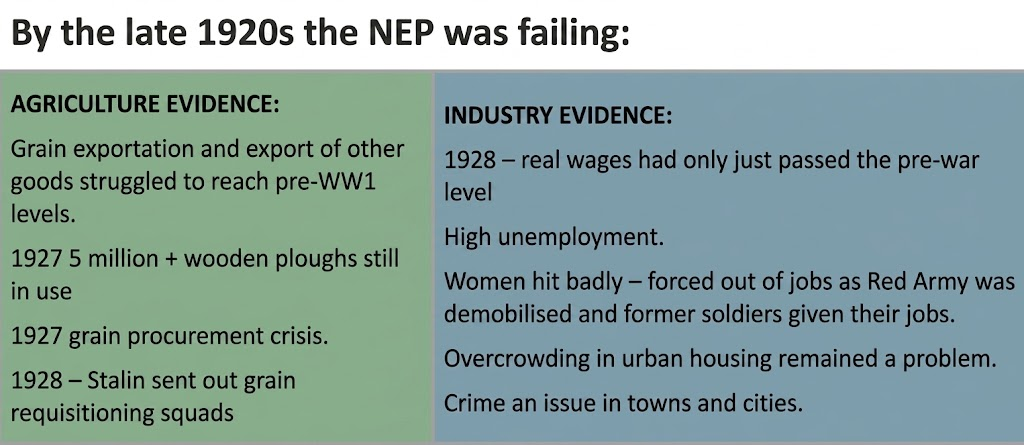
In 1921, following the famine and devastation of the Civil War, the NEP was accepted by all sections of the Party. However, by 1923 the economy had stabilised. This led Trotsky and other left-wing Communists to call a radical change in policy. The left of the Party argued that the NEP was both ideologically and economically misguided. It was ideologically wrong because it favoured the peasants and returned power to the capitalists at the expense of the working class. This was clearly a betrayal of the principles of the Revolution which was supposed to give power to the industrial workers. Economically, the NEP was failing to deliver industrial growth. The NEP had successfully stimulated agriculture, but conditions for workers were yet to improve and unemployment in the cities remained high.
To address these ideological and economic problems, left-wing economist Yevgeni Preobrazhensky proposed “squeezing” the peasants through heavy taxes. The profits raised from this taxation would be invested in heavy industry. Trotsky described this approach as “the dictatorship of industry”. The primary aim of this policy was to accelerate industrialisation at the expense of the wealthy peasants.
WORLD REVOLUTION: “permanent revolution”
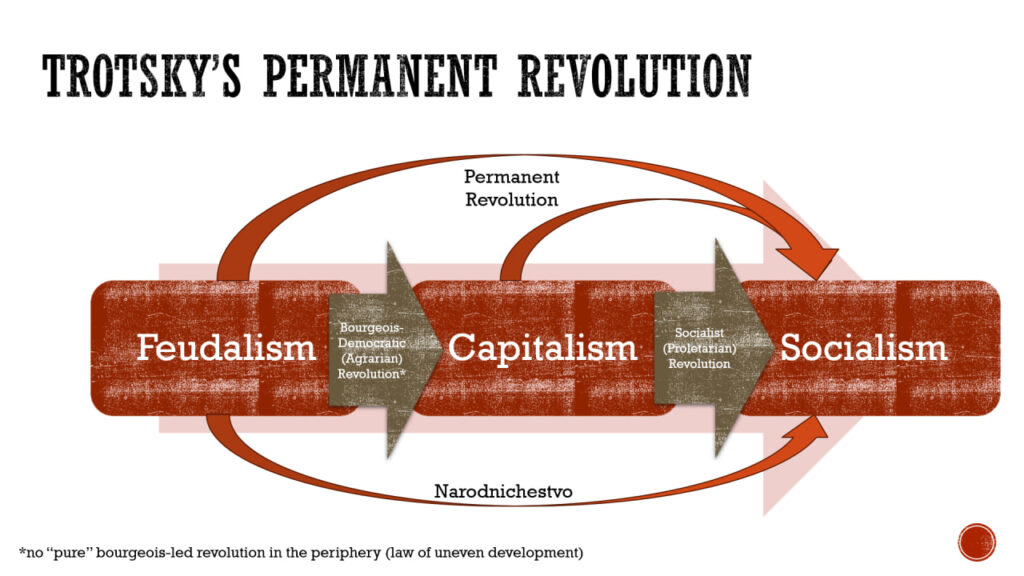
Trotsky’s theory of “permanent revolution” suggested that no socialist society could exist alone. Fundamentally, he did not believe that Russia had the economic resources or technological sophistication to complete the transition to socialism on its own. Therefore, Trotsky hoped for a revolution in western Europe, believing that the communist regimes in more advanced countries would then provide Russia with the resources needed to build socialism.
FUTURE OF THE REVOLUTION – “bureaucratic degeneration”
The left wing were concerned that the Communists had transformed from radical revolutionaries into government bureaucrats. They feared that bureaucrats who had joined the Party for the main purpose of getting well-paid jobs lacked the revolutionary spirit and commitment necessary to fight capitalism.
Leaders of the left wing set out this view in the Declaration of the Forty-Six (1923). The Declaration claimed that ordinary Party members had lost their power to the “bureaucratic apparatus”. Moreover, it stated that those who disagreed with Party policy were afraid to speak out because of the power wielded by this bureaucracy.
In later years, Trotsky claimed that the process of bureaucratisation had been accelerated by the Lenin Enrolment which admitted poorly educated workers into Party membership. Trotsky’s solution to the problem of “bureaucratic degeneration” was greater openness and democracy within the Communist Party. While Trotsky’s proposals were popular on the left wing, they were clearly threatening to the growing number of Communists with good jobs and powerful positions within the Party bureaucracy.
Ideological Conflict – Views of the Right
NEP AND INDUSTRY: – socialism “at a snail’s pace”
The right wing of the Party was more cautious. For the right wing, economic stability took precedence over rapid industrialisation. They emphasised the fact that the Soviet government was based on an alliance of two classes – the workers and the peasants. This “smychka” (alliance) would be threatened by increasing taxes on the peasants. Consequently, the right wing favoured continuing the NEP. Bukharin – the leading advocate of the NEP – suggested that the NEP should last for a period of perhaps twenty years. He summed up this position by stating that socialism in Russia would be achieved “at a snail’s pace” – industry would grow, but slowly. Stalin’s position was similar to the right wings, but unlike Bukharin he was never a “150 per cent Nepist”. For most of the 1920s, Stalin agreed with Bukharin that the NEP was the correct policy. However, Stalin was always more interested in industrialisation than Bukharin, and never as enthusiastic about rich farmers. Consequently, when the NEP started to fail, he quickly abandoned it. Nevertheless, Stalin refused to ally himself with the left as it would mean forming an alliance with Trotsky. For these reasons, Stalin was in the ideological centre of the party rather than on the right.
WORLD REVOLUTION: – “socialism in one country”
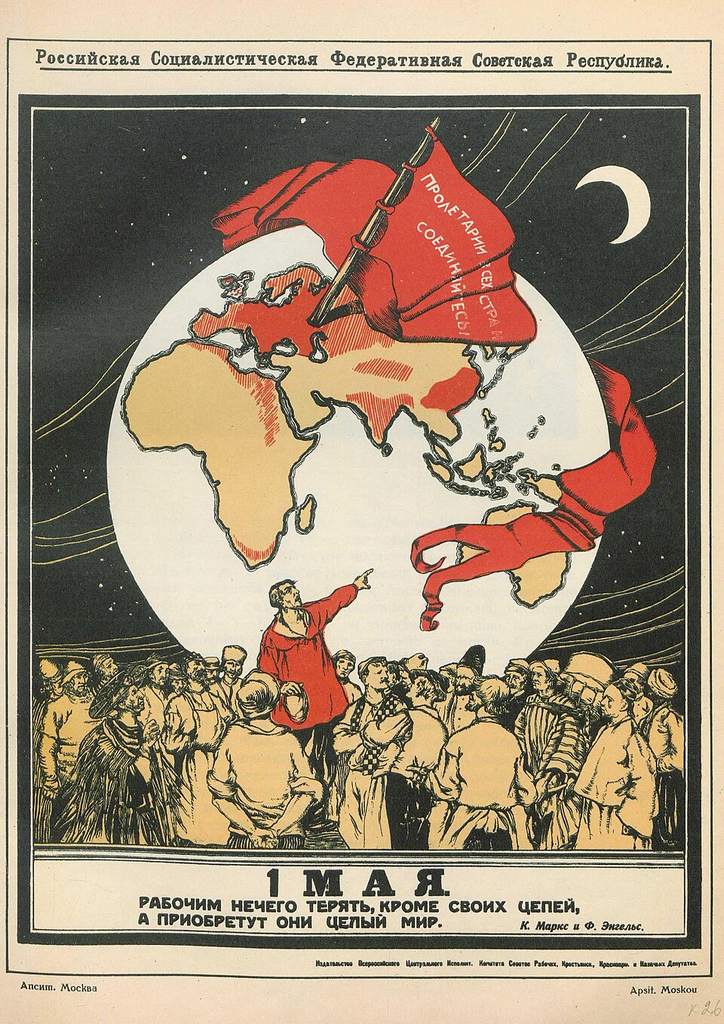
The right wing of the party presented Trotsky’s ideas as pessimistic and defeatist. In 1924, Stalin and Bukharin developed the idea of “socialism in one country”. In direct opposition to Trotsky, they claimed that the unique character of the Russian Revolution would allow “the general victory of socialism” in Russia. Moreover, they claimed that this was the view Lenin had held. They believed that the Russian Revolution could be successful on its own because of the smychka between workers and peasants. This alliance made Russia economically self-sufficient and therefore foreign aid was unnecessary. Socialism in one country was highly appealing because it played on Russian nationalism by giving Russia a leading role in world history.
FUTURE OF THE REVOLUTION – “Bonapartism”
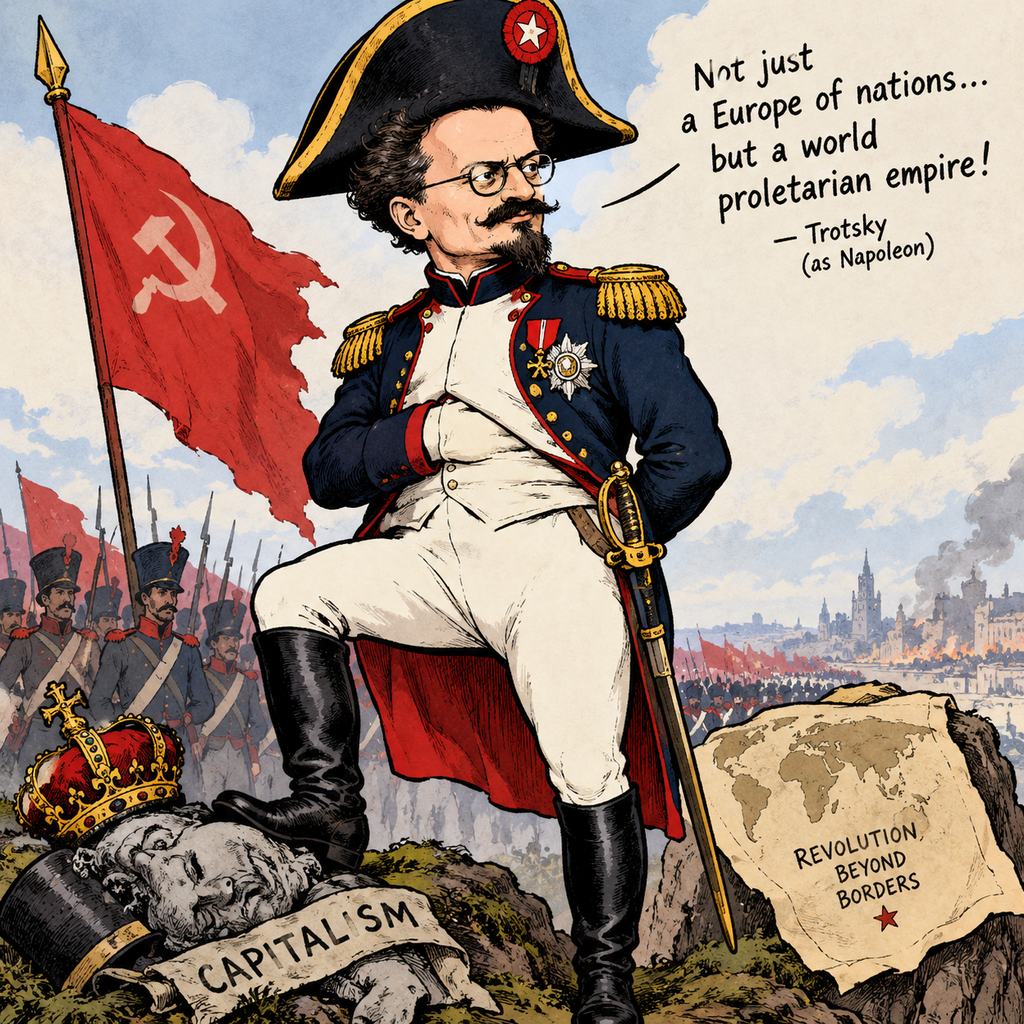
Stalin argued that the real threat to the revolution was Trotsky. Drawing on the history of the French Revolution, Stalin pointed to the danger of a revolution being hi-jacked by a military dictator. Following the French Revolution, Napoleon Bonaparte – a gifted speaker, intellectual, and a leader of the revolutionary army – had installed himself as Emperor of France. To Stalin, the parallels with Trotsky appeared obvious. Many in the Party therefore feared that Trotsky, like Napoleon Bonaparte, would use his position as Head of the Red Army to become a military dictator. This would spell the end of the Communist Party and the degeneration of the revolution. Trotsky’s statement in 1927 that he would assume the position of dictator if Russia was attacked by foreign powers did nothing to allay these fears.
Leadership Struggle
ROUND ONE: LENIN’S DEATH
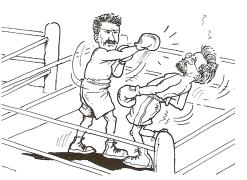
Stalin versus Trotsky: Stalin strikes two significant blows at Lenin’s funeral.
→ Trotsky, recovering from illness over 1000 miles away, was told that Lenin’s funeral was on Saturday and that he wouldn’t arrive back in time. It was actually held a day later
→ Stalin delivered an impassioned speech at Lenin’s funeral, creating an impression of friendship and camaraderie.
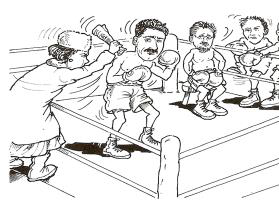
ROUND TWO: STALIN DODGES A KNOCK-OUT BLOW
Lenin’s wife gives Lenin’s last political testament to the Central Committee in May 1924. It included a concise assessment of the party leaders. It recommended that Stalin be removed from his position, and that he was unfit to lead Russia. If made public it could have ended Stalin’s career. The Stalin dominated Central Committee supressed the document
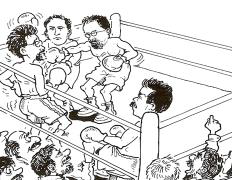
ROUND THREE: TROTSKY ON THE ROPES
Thirteenth Party Congress in 1924: Stalin, Kamenev and Zinoviev were now all working together to lead the party (the triumvirate). At the congress, Trotsky made brilliant speeches on making the party more democratic; Stalin packed the Congress with his own supporters so Trotsky was easily defeated; ‘Ban on factions’ prevented Trotsky from appealing.
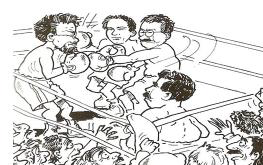
ROUND FOUR: THE LEFT SLUGS IT OUT
In 1924, Zinoviev and Kamenev mounted a vicious campaign against Trotsky. Trotsky retaliated by attacking them in ‘Lessons from October.’ Stalin waited in the background, continued to build his powerbase. Then presented himself as a moderate peacemaker, who wanted to unite the Party.
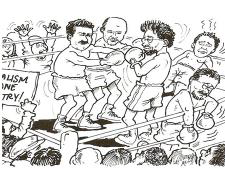
ROUND FIVE: KNOCKOUT BLOW FROM THE LEFT
1925, Stalin’s policy of ‘Socialism in One Country’ proved very popular with the right wing of the party. A new alliance formed: Stalin and Bukharin. At the 14th Party Congress in 1925, Kamenev and Zinoviev attacked Stalin and called for an end to the NEP. In 1926, Kamenev and Zinoviev joined with Trotsky to form the United Opposition. This led Stalin to accuse them of factionalism and all three lost their positions within the party and were expelled in 1927.
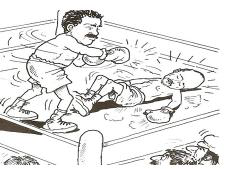
ROUND SIX: KNOCKOUT BLOW FOR THE RIGHT
1928, Stalin turned against the NEP and attacked the right wing of the party. Stalin now supported the former policies of Trotsky, Kamenev and Zinoviev. Party Congress of 1929, Bukharin launched a defence of the NEP. Bukharin was outvoted by Stalin’s supporters who wanted rid of the NEP. Bukharin was removed from the Politburo and party bodies.
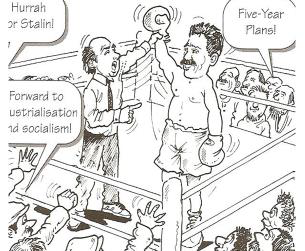
THE WINNER:
December 1929, Stalin celebrated his 50th birthday. He was now the undisputed leader of the USSR.
Five Year Plans
Collectivisation
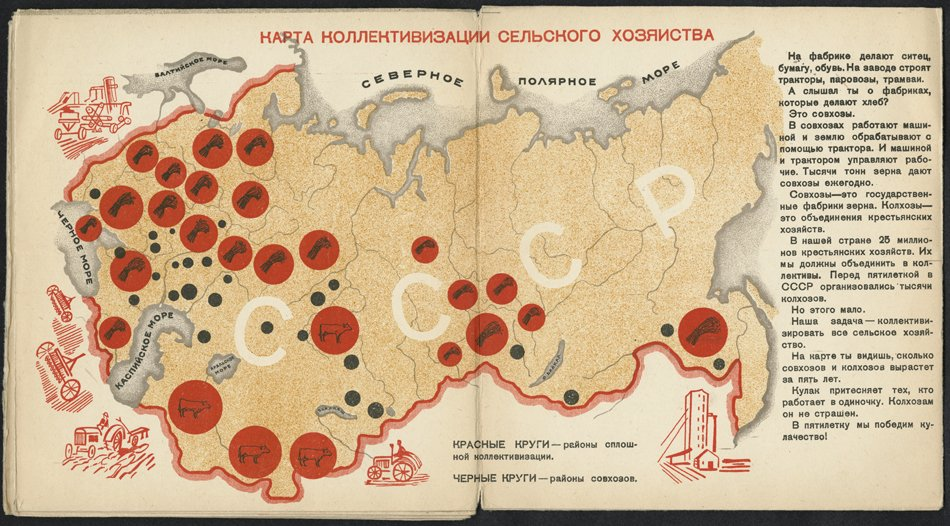
Stalin’s first Five Year Plan focused on the rapid industrialisation of Russia. Collectivisation was introduced as part of this and hoped to deal with the inadequacy of Russian agriculture.
- More efficient methods of farming.
- Higher production of grain for workers and to sell overseas.
- Required less workers, releasing peasants to move to the cities.
- The peasantry would be ‘socialised’.
- Easier for the government to collect grain.
Collectivisation is the process of uniting inefficient farms into one productive collective farm.
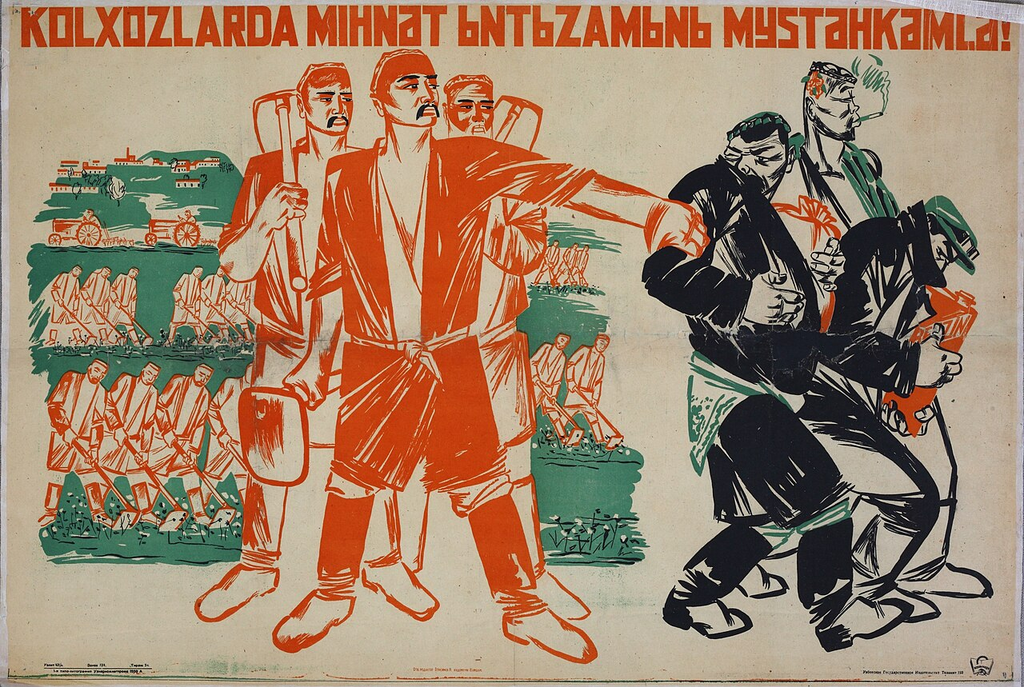
Toz: Peasants owned their own land but shared machinery and duties.
Sovkhoz: Farms owned and ran by the state. Peasants would be paid a regular wage.
Kolkhoz: All land held in common and ran by an elected committee. Peasants farmed the land as one unit.
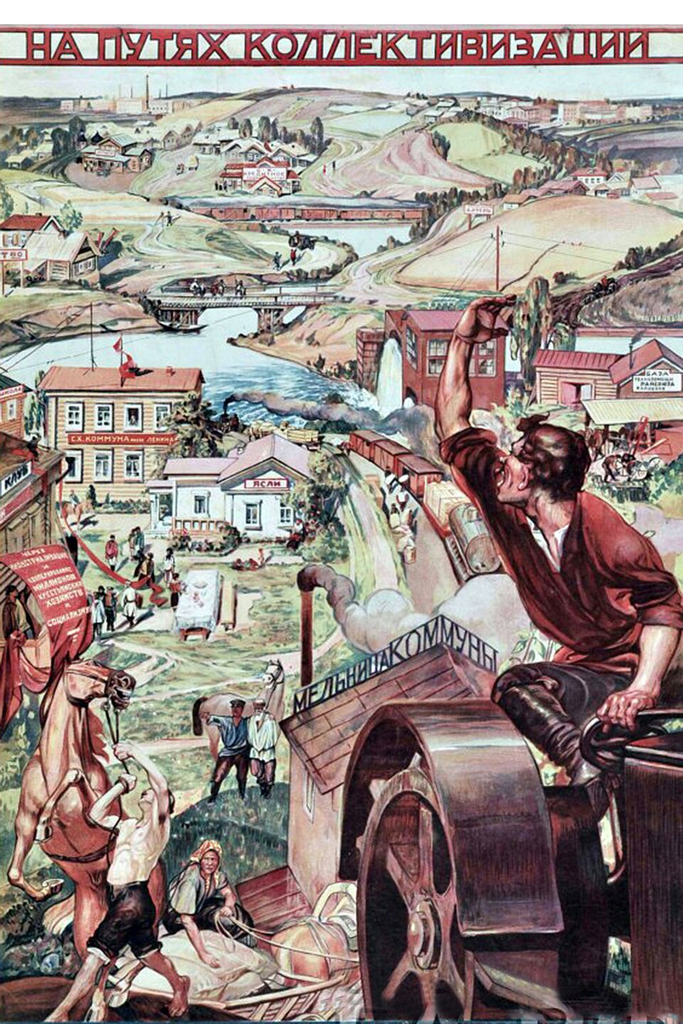
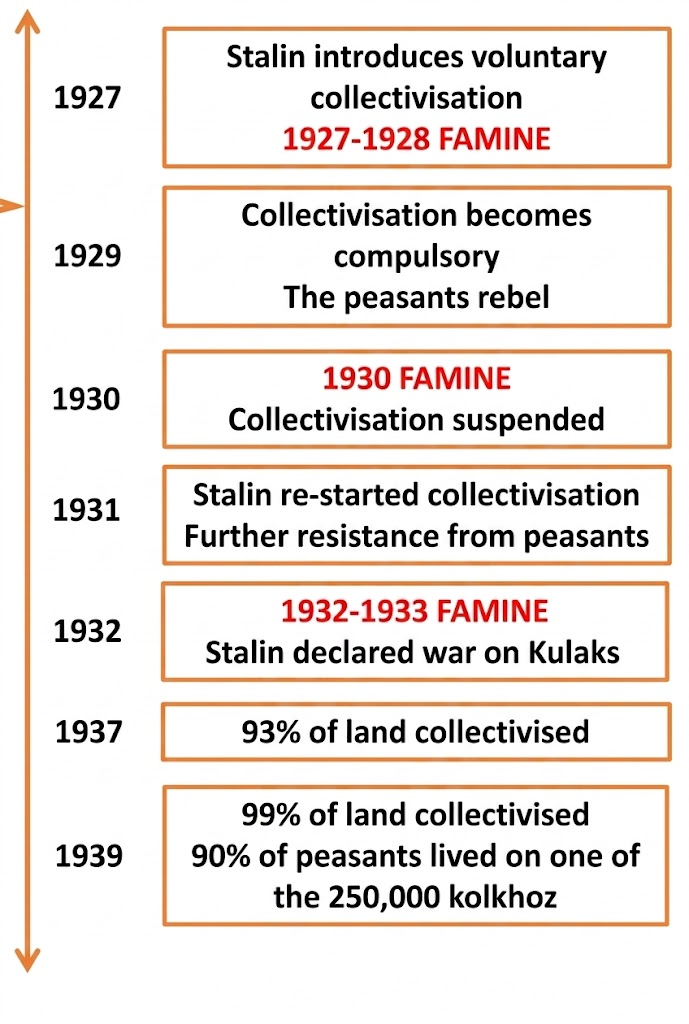
With the announcement of Stalin’s first Five Year Plan came the introduction of voluntary Collectivisation in December 1927. Small, backward peasant farms contributed to continued food shortages and famine (most recently 1927-1928) which highlighted the issues with agricultural production. Collectivisation aimed to unite inefficient farms into one productive collective farm in the form of a Toz, Sovkhoz or Kolkhoz. Stalin hoped that collective farming would be more productive
in terms of machinery as well as an effective way of creating surplus food for workers and trade. In addition to this, it was seen that collectivisation would socialise the peasantry and eliminate the wealthy Kulaks that believed in private ownership.
Though Stalin had high hopes for collectivisation, it was not popular with peasants as many ignored the call for voluntary collectivisation. As a result of this, in 1929 collectivisation was made compulsory causing outrage and rebellion among peasants. Peasants would burn crops, farmland and kill livestock so they wouldn’t have to work on collective farms. Consequently, another famine occurred in 1930 forcing Stalin to temporarily halt collectivisation.
As Stalin decided to re-start collectivisation in 1931, more resistance and again famine occurred. Between 1932-1933 famine spread throughout the USSR which significantly affected Ukraine where an estimated 5 million perished. Through the use of terror and propaganda Stalin blamed the Kulaks for continued famine and rural unrest. Furthermore, Stalin called for Kulaks to be “liquidated as a class”. By 1932 Stalin had “declared war” on the group and ordered for their execution or for them to be sent to the Gulag.
Despite continued resistance and unrest from peasants, by 1937 93% of land was collectivised. This increased by 1939 where 99% of land was collectivised and 90% of peasants lived on one of the 250,000 Kolkhoz.
Was Collectivisation a success?
Collectivisation helped Stalin achieve most of his aims. Grain production rose to nearly 100 million tonnes in 1937 which gave Russia a surplus available to sell to other countries. Also, 17 million people left the countryside to work in towns and cities which further developed industry. By having larger collective farms that were mostly run by government officials, Stalin could closely control peasants and supress uprisings. Furthermore, the Kulaks were eliminated as a class further spreading socialist ideals throughout rural Russia.
In contrast to this, the human cost of Stalin’s success was vast. Approximately 3 million Kulaks were killed. In addition to this, the attempt to force collectivisation onto peasant farms contributed to 1930 and 1932-1933 famines causing immense fatalities.
Collectivisation Sources
“With the rest of my generation, I firmly believed that the ends justified the means. Our great goal was the universal triumph of Communism … I saw what “total collectivisation” meant – how they mercilessly stripped the peasants in the winter of 1932-33. I took part in this myself, scouring the countryside … testing the earth with an iron rod for loose spots that might lead to buried grain. With the others, I emptied out the old folk’s storage chests, stooping my ears to the children’s crying and the women’s wails. For I was convinced that I was accomplishing the great and necessary transformation of the countryside; that in days to come the people who lived here would be better off … In the terrible spring of 1933 I saw people dying of hunger. I saw women and children with distended bellies, turning blue, still breathing but with vacant lifeless eyes. And corpses – corpses in ragged sheepskin coats and cheap felt boots; corpses in the peasant huts …. I saw all this and did not go out of my mind or commit suicide …. Nor did I lose my faith. As before, I believed because I wanted to believe.”
“The peasants chased the kulaks from the land, dekulakised them, took away their livestock and machinery, and requested the Soviet power to arrest and deport the kulaks. The peasants saw that the Party and the government, overcoming difficulties, were building factories to make tractors and new farm machines. Numerous groups of peasants visited the new factories, attended workers’ meetings and were inspired by their enthusiasm. Upon returning to their villages, the working peasantry took the initiative in setting up new collective farms.”
From the History of the Communist Party, a Soviet textbook used in the USSR in the Stalin period.
Unnamed peasant:
Comrades, you write that all the middle peasants and poor peasants join the kolkhoz voluntarily, but it is not true. For example, in our village of Podbuzhye, all do not enter the kolkhoz willingly. When the register made the rounds, only 23% signed it, while 75% did not … If anyone spoke out against it, he was threatened with arrest and forced labour …. Collective life can be created when the entire mass of the peasants goes voluntarily, and not by force…. I beg you not to divulge my name, because the Party people will be angry.
Ivan Troflimovitch:
I am a poor peasant. I have one hut, one barn, one horse …. Isn’t it true that all the poor peasants and middle peasants do not want to go into the kolkhoz at all, but you drive them in by force? In my village poor peasants came out against it …. They did not want serfdom.
Pyotr Gorky:
Every day they send us lecturers asking us to sign up for such-and-such a kolkhoz for eternal slavery, but we don’t want to leave our good homes. It may be a poor little hut, but its mine, a poor horse, but its mine. Among us, he who works more has something to eat … Let the peasant own property. Then we assure you that everyone will be able to put more surpluses on the market.
Stalin’s ‘Great Turn’
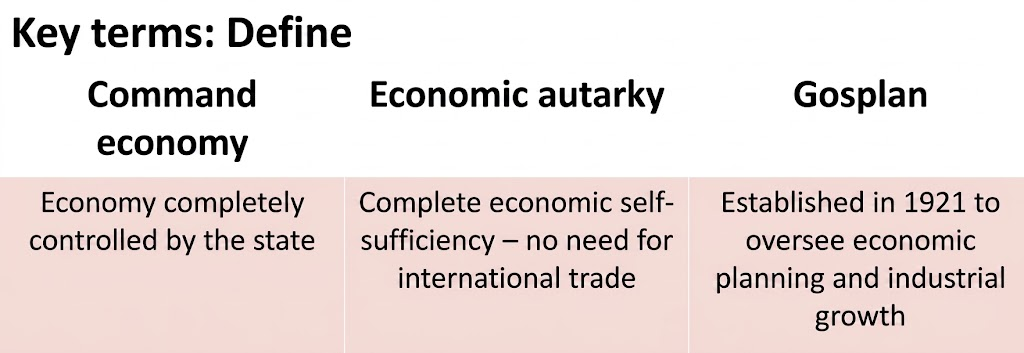
Fifteenth party congress December 1927 – Stalin announces the end of the NEP and a major shift in Soviet economics. Known as his “Great Turn”.
- Marked a major shift in policy away from Lenin’s NEP
- Introduced idea of the “command economy” and intense state economic planning
- Cultural shift – “New-Soviet” man
The First Five-Year Plan
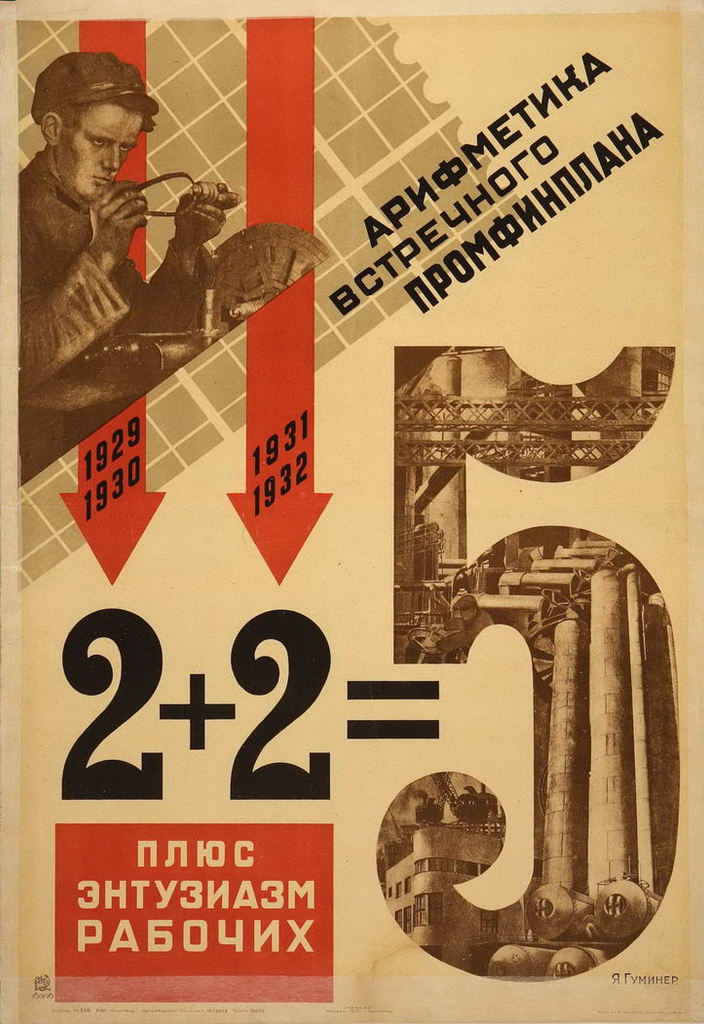
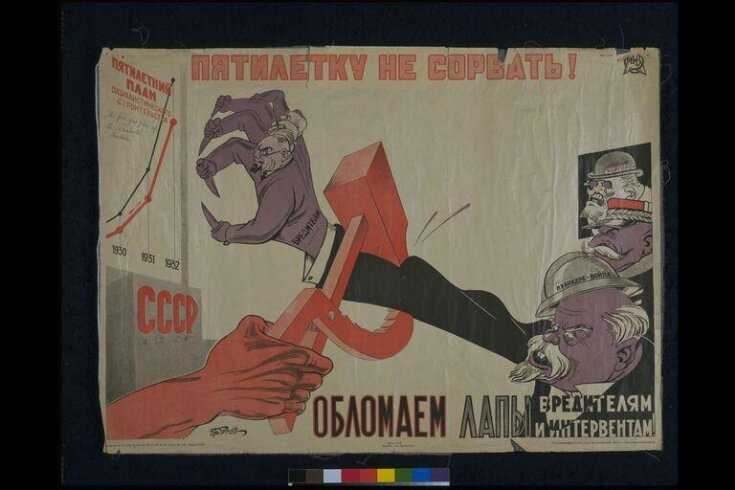
The First Five Year Plan explicitly favoured heavy industry – iron, coal, steel and oil – over consumer goods such as textiles and food. Stalin described coal, steel and oil as the “basic, decisive branches of industry”. For Stalin, these industries were “decisive” because they were the first industries developed in the nineteenth-century industrial revolution. Therefore, Stalin believed that if he was to take Russia down the path of industrialisation, he had to start with these heavy industries.
The focus on heavy industry was, in part, an attempt to lay the foundation for future industrial development. All industries needed raw materials such as coal, steel, oil and iron in order to develop. The majority of Stalin’s industrial labour force were unskilled peasants who had only recently left the countryside following collectivisation. Unskilled peasants were poorly suited to the production of complex consumer goods, but they were well matched to the production of large quantities of raw materials. Stalin’s planners believed that, over time, working in heavy industry would allow the peasants to gain the skills necessary to work in more sophisticated industries, such as textiles. It was also thought that heavy industry would lay the foundations for rearmament in the case of war.
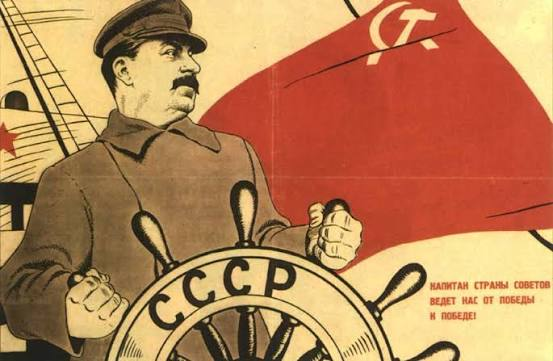
Aleksei Mikhailovich Laptev. [Soviet Union]: Gosudarstrennoe izdatel’stvo, 1930.
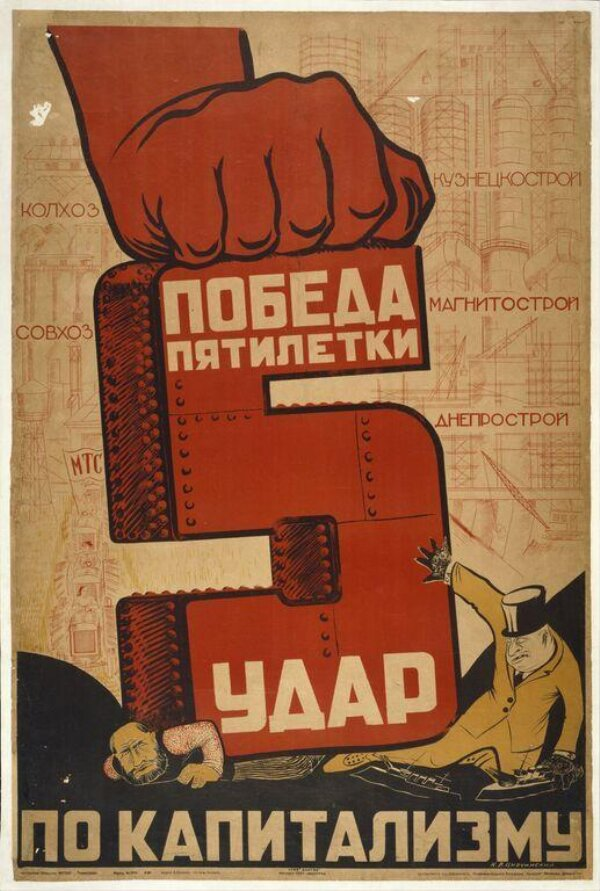
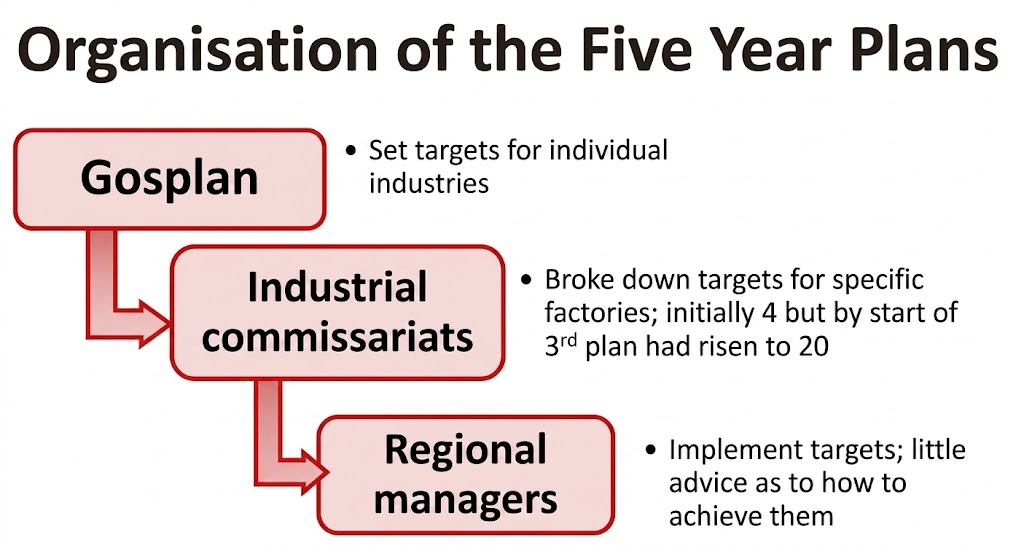
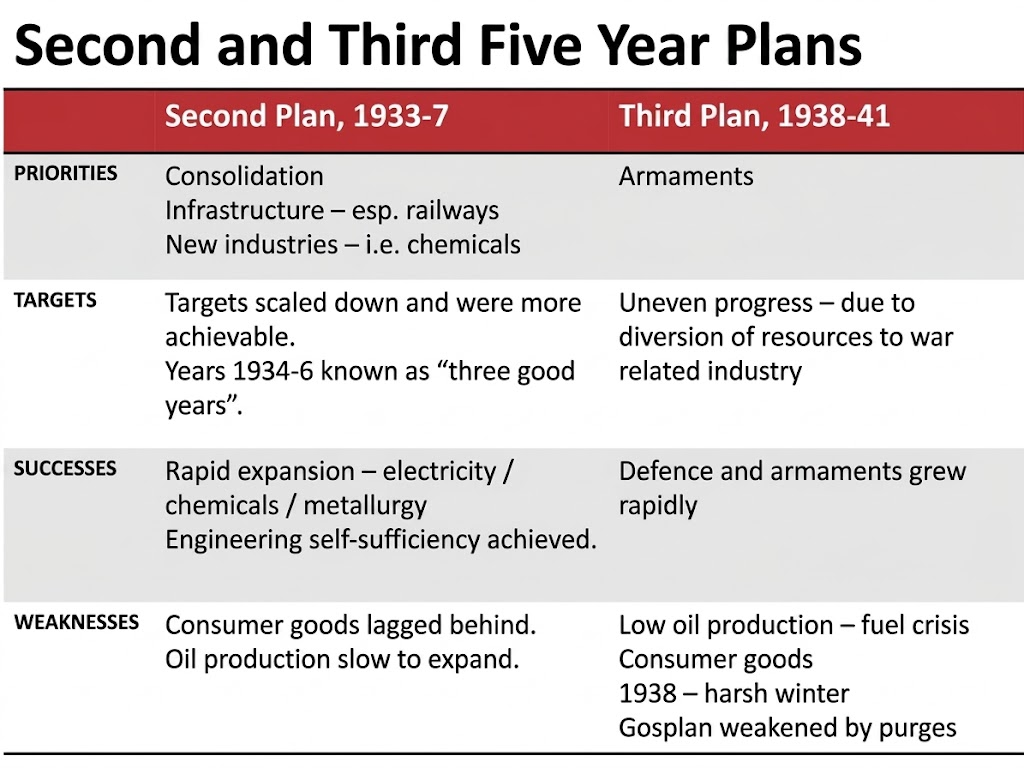
As the First Five-Year Plan got underway, there was a wave of planning fervour or “target-mania”. The original targets set in the first plan were optimistic, but almost before it was begun targets were revised upwards. To many, these seemed hopelessly unachievable. Some historians have suggested that planning was more in the realms of socialist fantasy than rational calculation. Consequently, historian Alec Nove has argued, the Five Year Plans do not fully deserve the title “plans” at all. An economic plan, properly defined, carefully matches raw materials to production, and production to consumption. The first Five Year Plan, and its successors, made no attempt to do this. Rather, the government demanded production with no clear idea of how it was to be achieved or what was to be done with the materials produced. In this sense, it is more appropriate to refer Stalin’s economy as a “command economy” – a system based on a series of central orders – rather than as a “planned economy”.
The high targets placed enormous strain on the economy. Materials of all sorts were in short supply and there was intense competition to get hold of them. Materials and workers – shock brigades – were rushed into key industries to do certain jobs, often on the order of a senior party official, despite the fact that this left other areas short and waiting for supplies. At the regional and local levels, factories competed with each other for scare resources. Bribery and corruption were rife. Managers made illegal deals in their desperation to get the parts or supplies they needed to fulfil their targets. Some were known to hi-jack lorries and ambush trains to get supplies intended for other plants. Bottlenecks appeared everywhere due to shortages of materials and the inadequacy of the transport system. The railways could not cope with what they were expected to transport: it soon became clear that the planners had not invested enough in track or rolling stock.
The net result of this was twofold:
1. In some parts of the economy there was underproduction because factories were held up by shortages of materials. In other parts there was overproduction as factories rushed to exceed their targets.
2. There was a great deal of wastage because:
a. Overproduction created thousands of parts that other industries did not want.
b. Much of the output was sub-standard, such as lorry tyres that lasted for only a few weeks.
What made matters worse was that few managers or officials were prepared to admit anything was wrong. They did not want to be accused of sabotaging the plans or criticising the party. So mistakes were covered up and problems were left unresolved. It was all buried in the colossal amount of paperwork that flowed around the USSR. All that mattered to managers and officials at different levels was that they could show they had achieved targets, whether this was real or invented. In fact, there were extravagant claims of over-fulfilment in many areas. This seemed to confirm that the system was working and discouraged others from speaking out about problems. Of course, not all the mistakes could be covered up and somebody had to be blamed. Class enemies were ready to hand and Stalin was not slow to use this political tool in the same way as he had in the collectivisation drive. The industrial equivalent of the kulak was the “bourgeois specialist”. These were the old-pre 1917 managers, engineers and technical staff who had survived the NEP in important jobs because of their skills and abilities. Now they were identified as saboteurs who were deliberately causing hold-ups, breakdowns and general problems in the supply industries. They were uncovered and imprisoned. Show trials were held to hammer home the point to other managers.
Why were officials and managers too frightened to acknowledge the problems of the planning system?
In March 1928, managerial and technical staff were accused of counter-revolutionary activities at the Shakhty coal mine in the Don Basin. Stalin was closely involved in the proceedings. The staff were forced to confess to subversive activities in a “show trial” for all the public to see. Five were executed and the rest were given long prison sentences. The aim of this was clear – to intimidate managers and party officials who did not go along with the pace of industrialisation. The Shakhty trial created shock waves throughout the planning system. Gosplan was purged of pessimists and non-party members at the end of the 1920s. Statisticians who presented low targets were replaced by those who could paint a more optimistic picture. In the early 1930s, trials of professionals and specialists were held in cities throughout the USSR. In November 1930, the “Industrial Party” show trial was held. This was a party of professionals who were supposedly organising the sabotage and wrecking of the Five-Year Plan. But this party was invented by Stalin. The accused were mainly industrialists, Mensheviks and Socialist Revolutionaries.
Case Study: How was Magnitogorsk built?
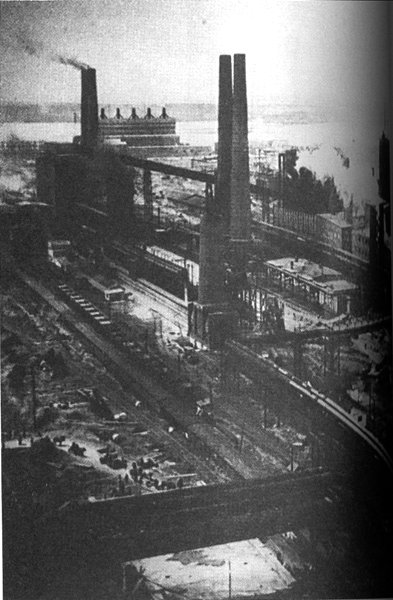
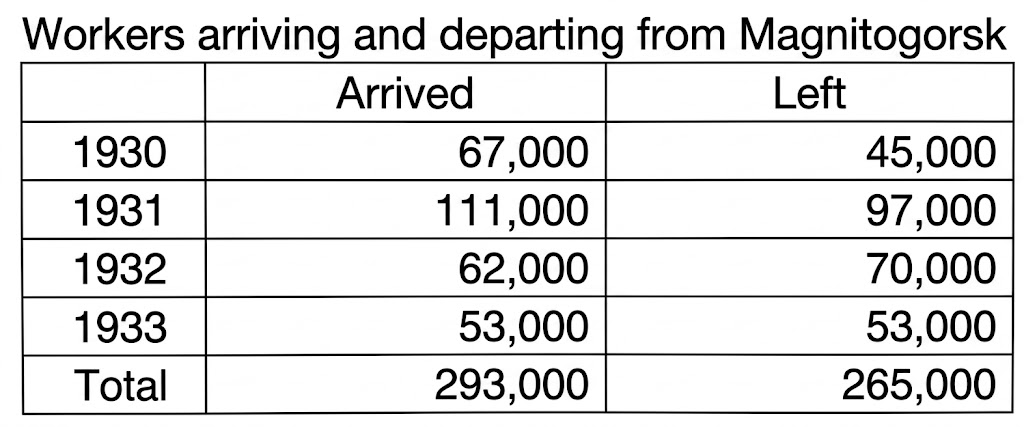
In many ways, the city of Magnitogorsk represents the best and worst of the First Five Year Plan. Stalin’s planners aimed to build a steelworks – and an entire city – from scratch, in an uninhabited part of Russia that was rich in iron ore. A quarter of a million workers were transported to the “magnetic mountain” and instructed to create Russia’s largest steel factory. In 1929, planners commissioned a radical German architect to design a utopian city where workers would be housed in clean, modern accommodation. Thousands of “shock workers” volunteered to take part in the visionary project. The contrast between the vision and the reality was stark. When workers arrived they discovered that few houses were actually built. The majority of workers lived in mud huts, wooden shacks and tents, with no heating or sanitation. Indeed, as late as 1932, construction of the workers’ accommodation was still pending. Conditions were so hard that on average, workers left Magnitogorsk to find new work after eighty-two days.
Nonetheless, the 40,000 prison workers and a hard core of dedicated volunteers miraculously turned desert grasslands into one of Russia’s major industrial centres. Some workers were so dedicated that the worked double shifts, and even through the night, in order to create a modern industrial miracle. The vision of Magnitogorsk was to build a modern industrial society in which workers lived and worked as part of an ideal community. However, in reality, the ideal community was never constructed, and the steelworks was created largely by the slave labour of Stalin’s political prisoners.
Impact of propaganda
Many workers, especially the young and idealistic, were inspired by the great task of transforming Russia. A huge propaganda campaign was launched in the cinema, on radio and in newspapers to further encourage this feeling. Many volunteered to work on distant projects under arduous conditions – believing in the worth of what they were doing; building a better communist society for their children.
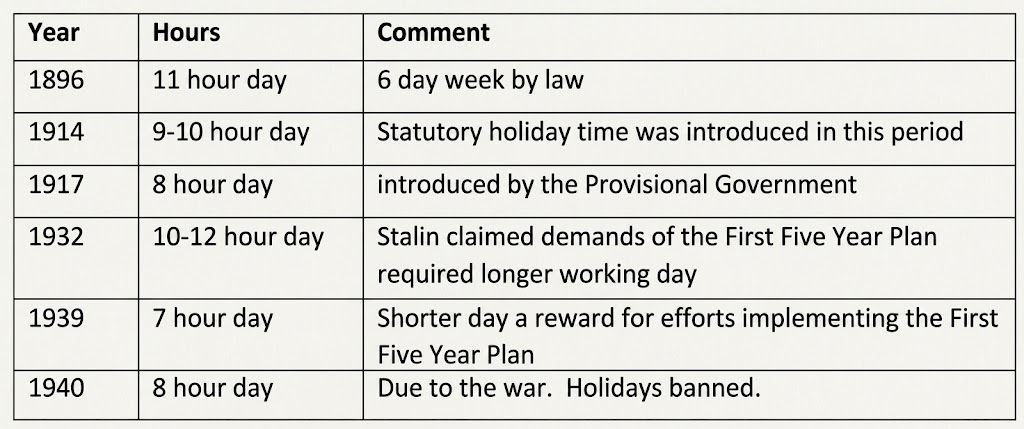
Punishments
Not all workers responded to the propaganda campaigns, and measures were introduced to deal with slackers. The fear of being accused of sabotage and sent to a gulag encouraged workers to carry out their tasks obediently. There was also a strict code of labour discipline with tough punishments:
- Absenteeism was punished by fines, loss of ration cards or dismissal. By 1940 it had become a crime and a prison sentence was given for second offences.
- Workers had to carry labour books, which recorded their jobs and unfavourable comments about them. A bad record could lose a worker food rations or lead to imprisonment.
Awards
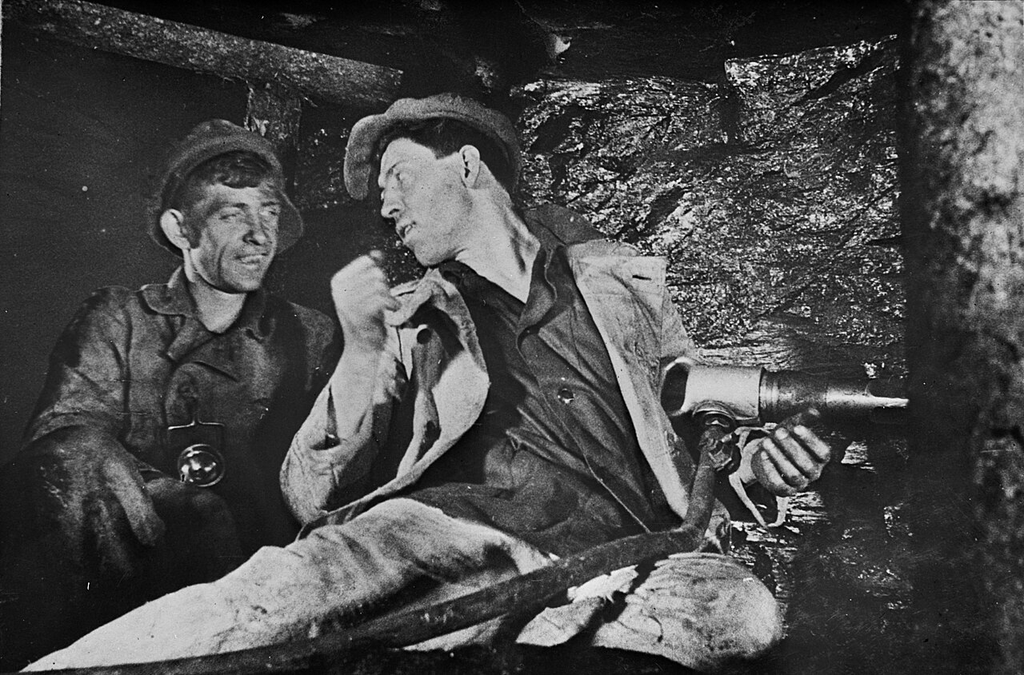
Awards and honours were given to individuals and groups who worked hard. Groups were also encouraged to compete against each other. One famous work, Alexei Stakhanov, gave birth to the Stakhanovite movement, dedicated to hard work. Stakhanov was a Donbas coal miner who was supposed to have moved 102 tonnes of coal on his own in one shift – some 14 times the amount one man would be expected to produce. He was held up in newspapers and posters as a model for others to follow. Workers who exceeded production targets could become “Stakhnaovites”. This entitled them to better housing, free holidays and cash prizes. Although they got rewards, Stakhanovites were often very unpopular with other workers, as they pushed up the production norm on which wages were calculated. Ordzhinikidze, the Commissar for Heavy Industry, had Stakhanov, the “Soviet Hercules”, put on the front page of Pravda. He said, “In our country, under socialism, heroes of labour must become the most famous”. On 11 September, Pravda used the term “Stakhanovite movement” for the first time and in November Stalin called for Stakhanovism to spread “widely and deeply” across the entire Soviet Union. Recordmania swept the country: by December 1935, the records achieved in heavy industry alone filled two volumes.
Women in the Labour Force
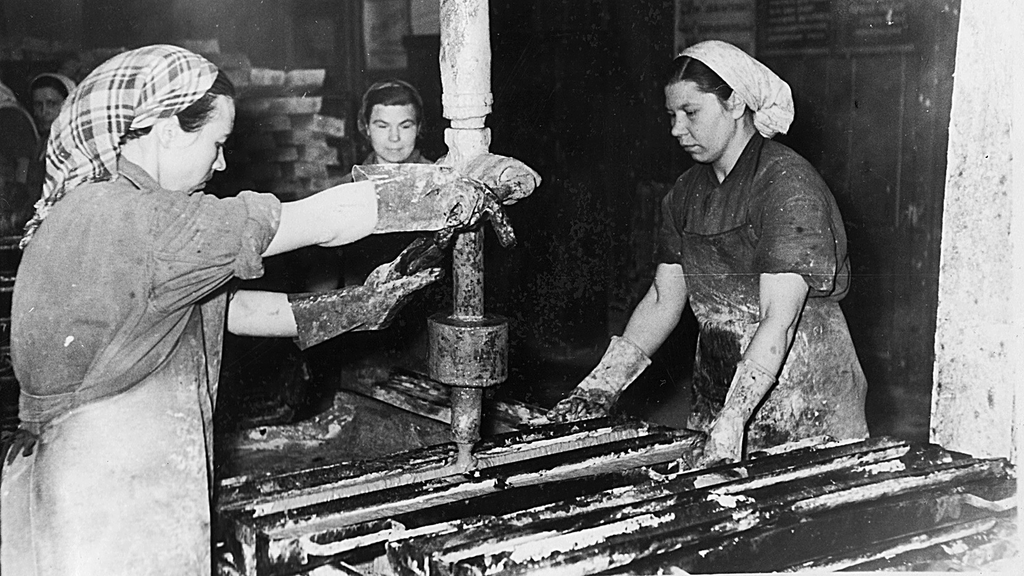
Women dominated some professions particularly medicine and school teaching. The less well educated, especially tough ex-peasant women, became labourers or factory workers. Sarah Davies’ survey of women workers in Leningrad in 1935, showed that women workers in the city made up 44% of the workforce but were likely to be paid less, were less literate and less involved in political and technical education than their male counterparts. Their chances of reaching the top were limited. There were only four women head doctors in hospitals, even though 50-60% of all doctors were women.
Forced labour
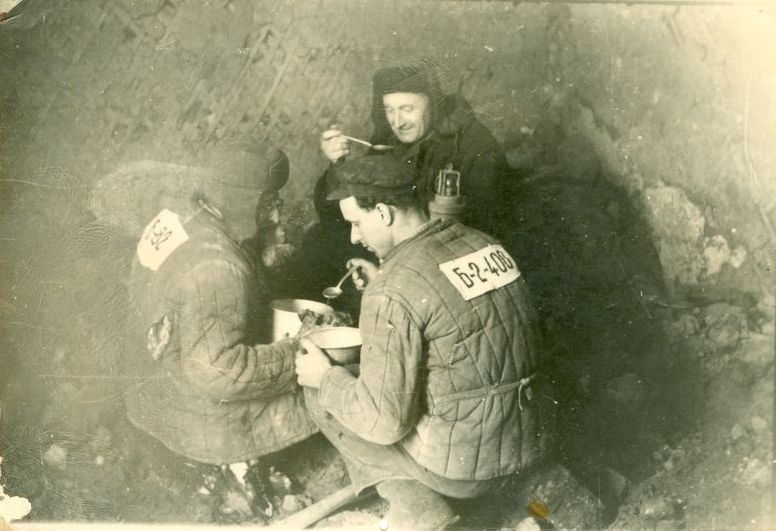
A large proportion of the workforce consisted of forced labour. These workers were made to work hard by compulsion, fear of physical punishment or being denied food. Often the really heavy work involved in constructing dams, canals and building projects such as digging foundations, was done by prisoners, many of whom were peasants sent to labour camps as a result of collectivisation.
Terror
The Trial of the Sixteen (1936)
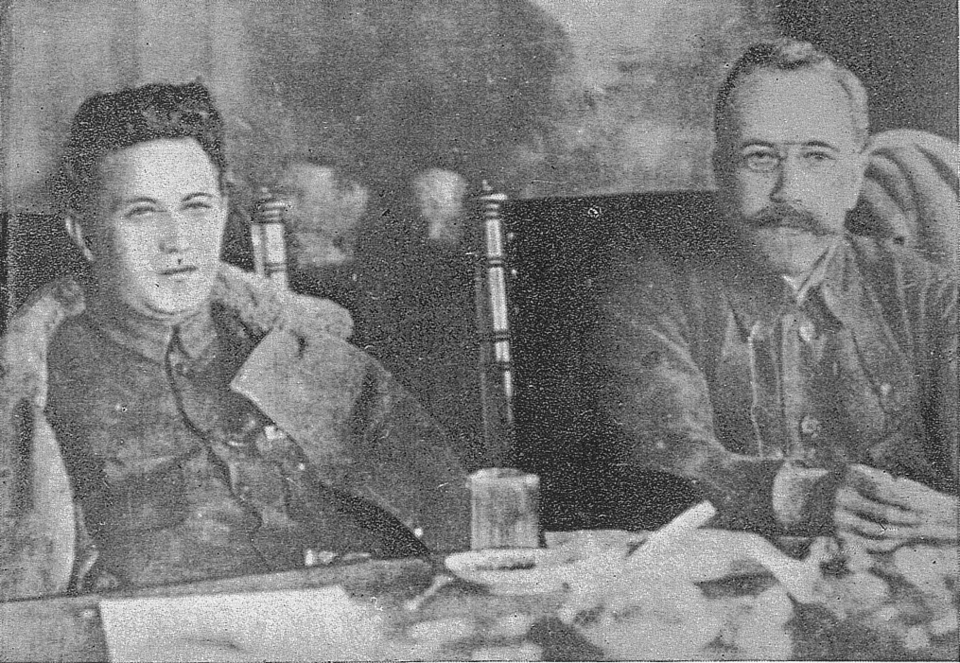
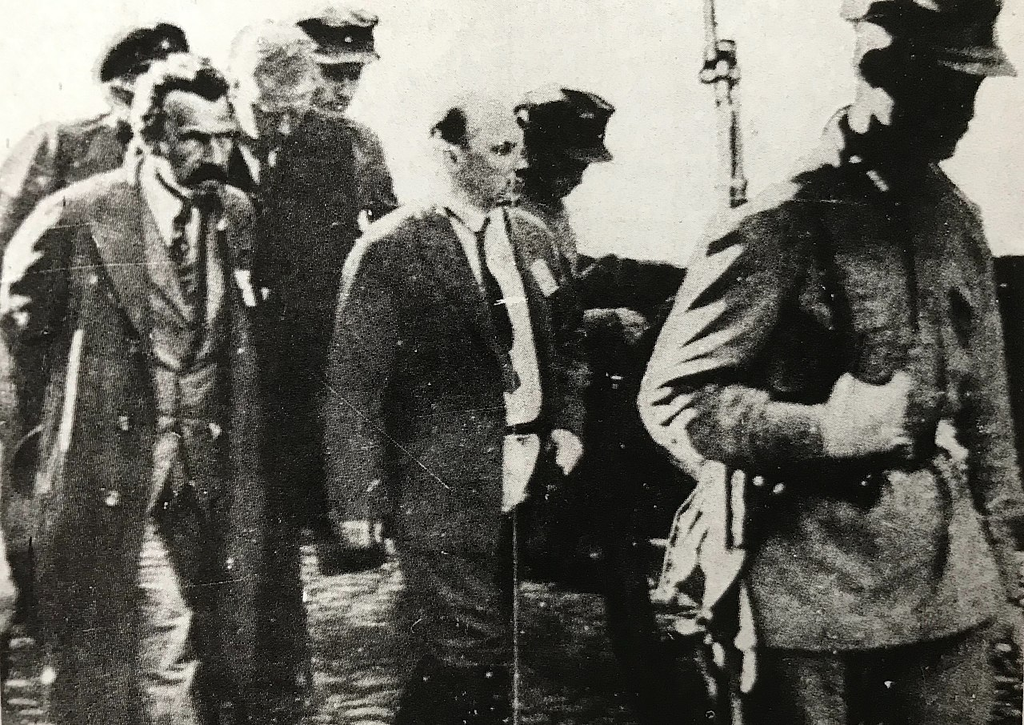
Zinoviev and Kamenev were the main accused of the Trial of the Sixteen. Charged with Kirov’s murder, as well as plotting to disrupt the Five-Year Plans and conspiring with foreign powers to overthrow the government – in prison, they pleaded their innocence. Zinoviev, in a letter to Stalin, stated “in no way, in no way, in no way, am I guilty before the Party, before the Central Committee, or before you personally …. I beseech you to believe my honest word”. Nonetheless, Zinoviev and Kamenev were “persuaded” to confess. It is believed that Stalin promised that Zinoviev and Kamenev would be pardoned following a full confession.
Stalin broke his promise, and neither of them was pardoned. The trial judge, Andrei Vyshinsky, summed up: “Shoot the mad dogs, every last one of them!”. Following this sentence, Kamenev and Zinoviev were both shot. Zinoviev begged for mercy until the very last moment, and had to be carried to his execution, weeping.
The Trial of the Twenty-One (1938)
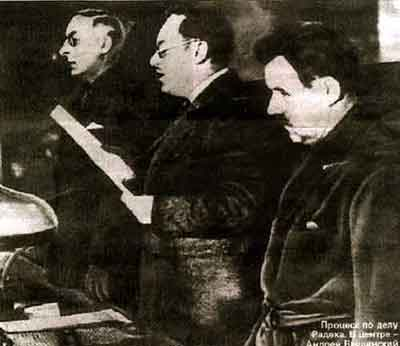
The trial of Bukharin and his “accomplices” was the last of the great Moscow show trials. Once again, the defendants were accused of attempting to overthrow socialism and of the murder of Kirov. However, in this final trial Stalin went further, and Bukharin was personally charged with attempting to assassinate Lenin. Prior to the trial, Bukharin tried to prove his loyalty to Stalin. But Bukharin’s efforts were futile. In contrast to previous defendants, he was never tortured. Rather, Stalin threatened to execute his wife and his newborn baby.
The trial was extraordinarily dramatic. Vyshinsky accused Bukharin and his co-defendants of being a “foul-smelling heap of human garbage”, and he described Bukharin specifically as “a damnable cross of a fox and a swine”. Bukharin was sentenced to death, but continued to hope for mercy. He wrote to Stalin volunteering to go to America where he “would smash Trotsky’s face in” but Bukharin was shot. According to contemporary reports, “Bukharin died with curses against Stalin on his lips. They died standing up – not grovelling on the cellar floor, weeping for mercy like Zinoviev and Kamenev.”
The Trial of the Seventeen (1937)
The second show trial dealt with Trotsky’s former allies – charges included plotting with foreign powers, terrorism, sabotage and contact with Trotsky. This was the first product of Nicolai Yezhov’s “conveyor belt system” of interrogation. Essentially, torture, sleep deprivation and questioning were continued relentlessly until the defendants confessed. Thirteen of the seventeen on trial were executed. The remaining four were sent to gulags, where they soon perished. As in the first show trial, the evidence was concocted and forged by the NKVD.
Widening the Terror 1937 + Purging the party:
In the spring of 1937 Stalin made it clear that he thought traitors and spies had infiltrated the party at all levels. He encouraged lower-ranking party members to criticise and denounce those in higher positions. This resulted in a flood of accusations as members denounced each other to get their jobs or settle old scores, others to deflect criticism away from themselves.
Purging society:
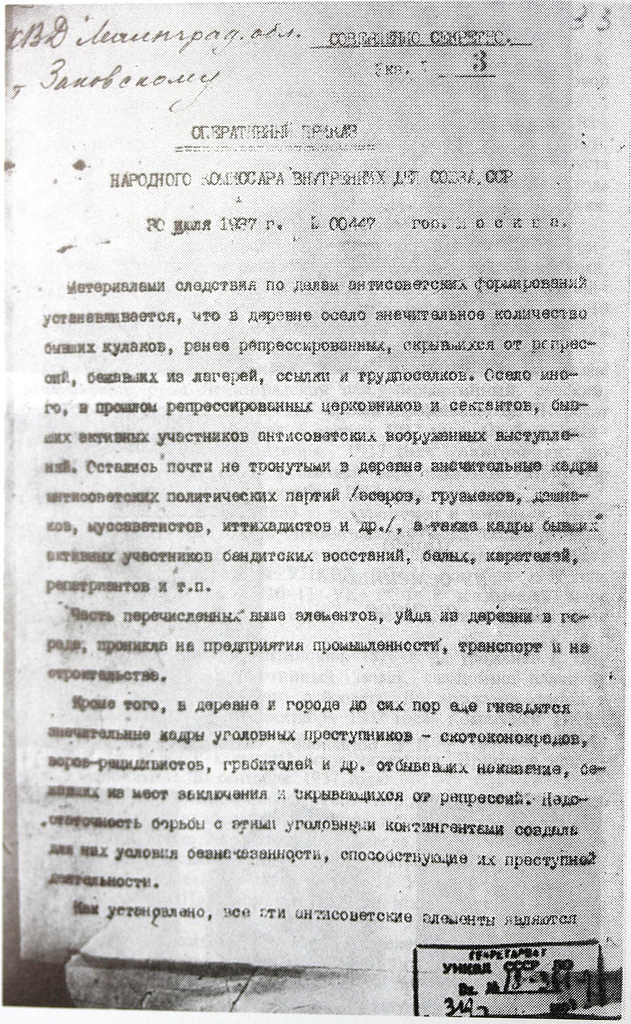
July 1937, the Politburo passed a resolution condemning ‘Anti-Soviet Elements’ in Russian society. An arrest list of over 250,000 scientists, artists, writers, musicians as well as managers and administrators was drawn up. Historians were particularly vulnerable and many were accused of leading terrorist groups. A quota system was applied to geographical areas and to public bodies. A huge propaganda campaign was launched to encourage ordinary people to help seek out the “hidden enemies”. Once suspects had been arrested and subjected to interrogation by the NVKD, they always came up with names of accomplices. Workmates, friends, husbands and wives, sons and daughters – all could find themselves arrested because they had connections with someone who had been accused. They number of victims increased exponentially.
PURGING THE ARMY
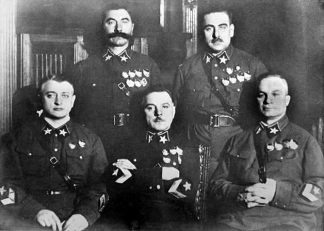
In 1937 it was the turn of the armed forces. Stalin was convinced that he could not count on the army to follow his policies. The leaders of the army were tough and difficult to intimidate. Marshall Tukhachevsky was the hero of the Civil War, but during this period he had come into conflict with Stalin. Stalin claimed that the army was plotting to overthrow him. Tukhachevsky and other generals had confessions beaten out of them (Tukhachevsky’s written confession actually had blood stains on it) and were then executed. The NKVD then worked its way through the rest of the armed forces to devastating effect. That Stalin should risk wiping out his best commanders when the prospect of war loomed is a powerful indication of how far the terror had gone. It was estimated that up to 90% of Russia’s generals were purged.
ENDING THE GREAT PURGES
Stalin called a halt to the purges towards the end of 1938. By this time, Yezhov had been replaced by Beria. Arrests slowed down as it was felt that the purges were destabilising Russian society. Stalin blamed Yezhov and the NKVD for the excesses of the terror, which is probably true. Yezhov himself became a victim of the terror and was executed in 1940. Also in 1940, a hitman, on Stalin’s orders murdered Trotksy. Now virtually all of the old Bolsheviks had been wiped out.
Religion under Lenin and Stalin
Anti-Religious Policy under Lenin
“Worshipping any god is ideological necrophilia,” Vladimir Lenin, the Bolshevik leader, once wrote to Maxim Gorky. Crushing religion generally and Orthodoxy, in particular, was a central part of their program. Nonetheless, the Bolsheviks never banned the Church entirely “only” oppressing it instead. To begin with, they deprived priests of the right to vote and closed several monasteries and cathedrals.
In 1918 the Bolsheviks introduced the Decree on the Separation of the Church from the State and School from the Church. This banned the teaching of any religion in any educational institution.
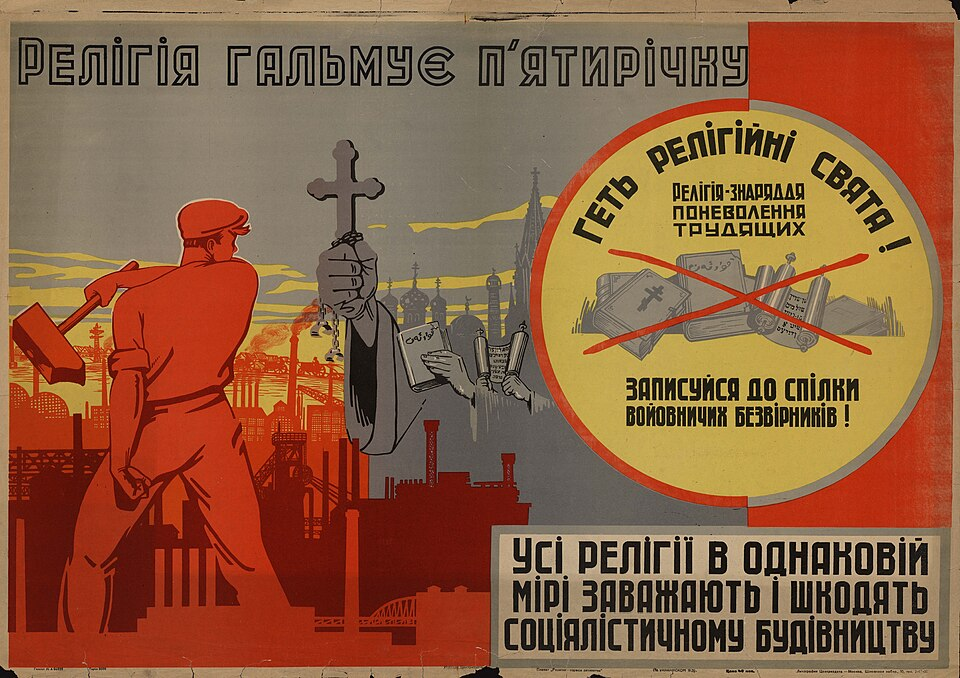
During the Civil War many churches were closed and their property was confiscated. Anti-religion pressure groups designed to encourage atheism were formed such as the League of the Militant Godless. This group used all means – including lectures, newspaperandfilms – to inform Soviet citizens that religion was a harmful leftover of the past. By 1941, the League had enlisted around 3.5 million members.
In 1922, Lenin ordered the confiscation of church valuables all over Russia under the pretext of helping the hungry. The violent confiscations led to conflict. Some 2,000 priests and others who sought to protect churches were shot.
Anti-Religious Policy under Stalin
Stalin tried to enforce militant atheism on the republic. The new “socialist man,” Stalin argued, was an atheist one, free of the religious chains that had helped to bind him to class oppression. From 1928untilWorld War Two when some restrictions were relaxed,the totalitarian dictator shuttered churches, synagogues and mosques and ordered the killing and imprisonment of thousands of religious leaders in an effort to eliminate even the concept of God.
The “Godless Five Year Plan” was launched in 1928 and saw a further escalation of anti-religious methods. Leaders of the church were imprisoned and sometimes executed, on the grounds of being anti-revolution. The few clergy who remained were replaced by those deemed to be sympathetic to the regime, rendering the .
still more toothless as a possible focal point for dissent or counter-revolution.
Launched in 1929, the new Soviet calendar initially featured a five-day week, designed to do away with weekends and so revolutionize the concept of labour. But it had a secondary function: By eliminating Fridays, Saturdays, and Sundays, the days of worship for Muslims, Jews and Christians, the new calendar was supposed to render observance more trouble than it was worth.
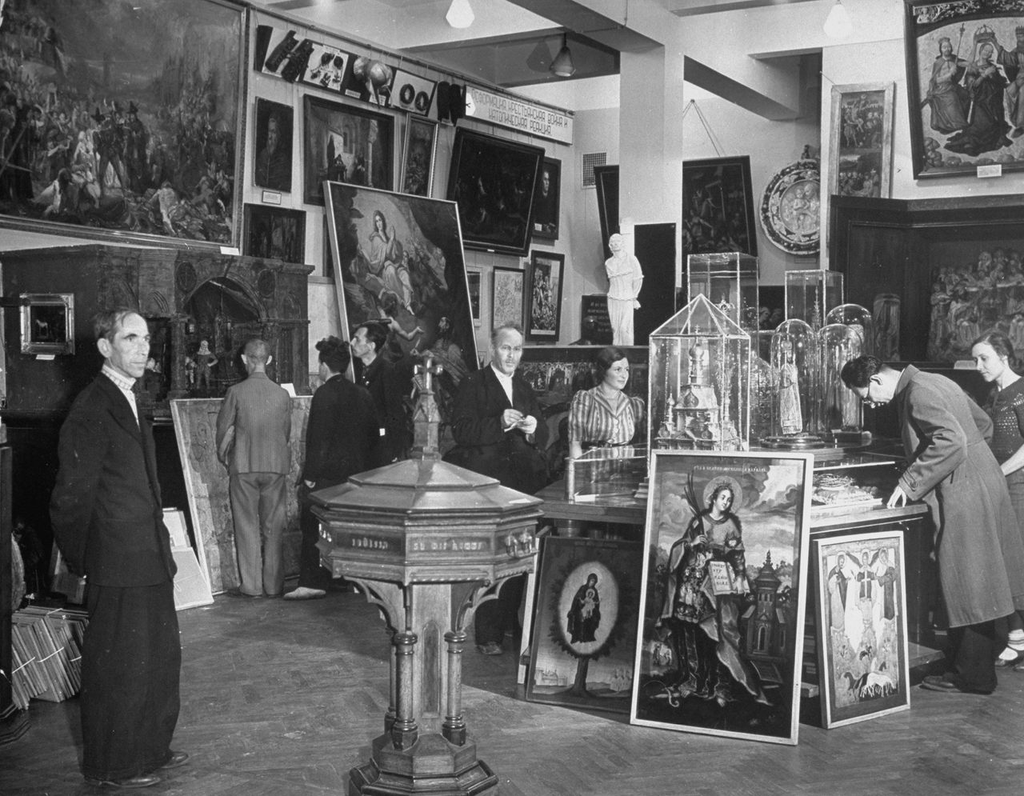
Derelict churches, synagogues and mosques were turned into “Museums of Atheism” where icons and relics were stripped of their mystique and treated as ordinary objects. The general public didn’t seem to have been especially swayed by these exhibits—though they enjoyed the attractions themselves.
By 1938 there were only 16 working Orthodox churches, compared with 224 in 1930 and tens of thousands before the October 1917 Revolution. However, a survey in 1937 revealed that 57% of the population still classed themselves as a “religious believer”.
World War II (The Great Patriotic War (1941–1945) )
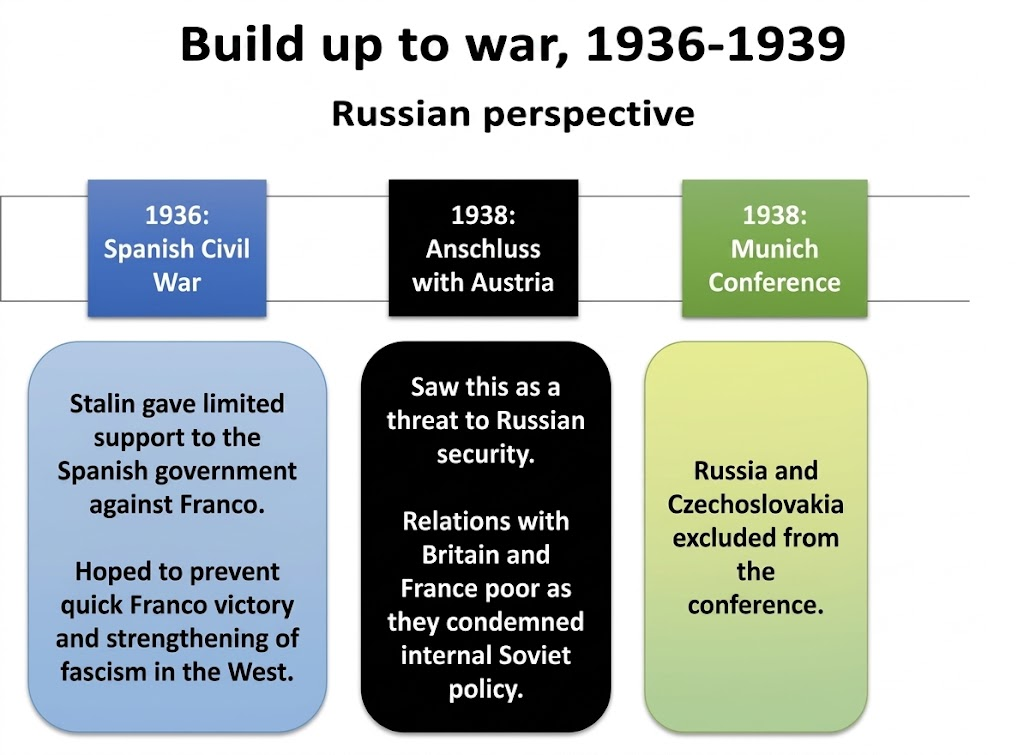
Short-term origins of the Second World War: Russian perspective
Why did the USSR make an agreement with Germany rather than with Britain and France in 1939?
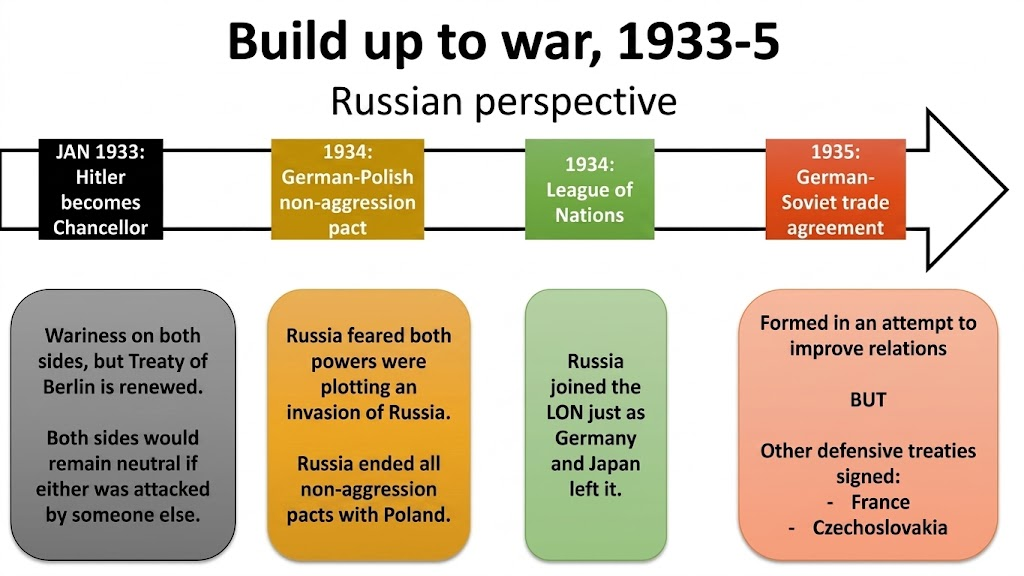
The Munich Conference and its concessions to Hitler must have made the Soviets wonder whether Britain and France would ever stand up to Hitler. However, the USSR did not drop its contact with Britain, although by March 1939 it was beginning to make overtures to Germany. Whatever Stalin’s preference, better terms would be achieved by being known to be negotiating with both sides. It could be argued that Stalin had no preference about whom he came to an agreement with. He was very flexible and was looking for the alliance that would be most beneficial to the USSR. Negotiating with both sides would drive up the terms; Stalin was interested in what both sides had to offer.
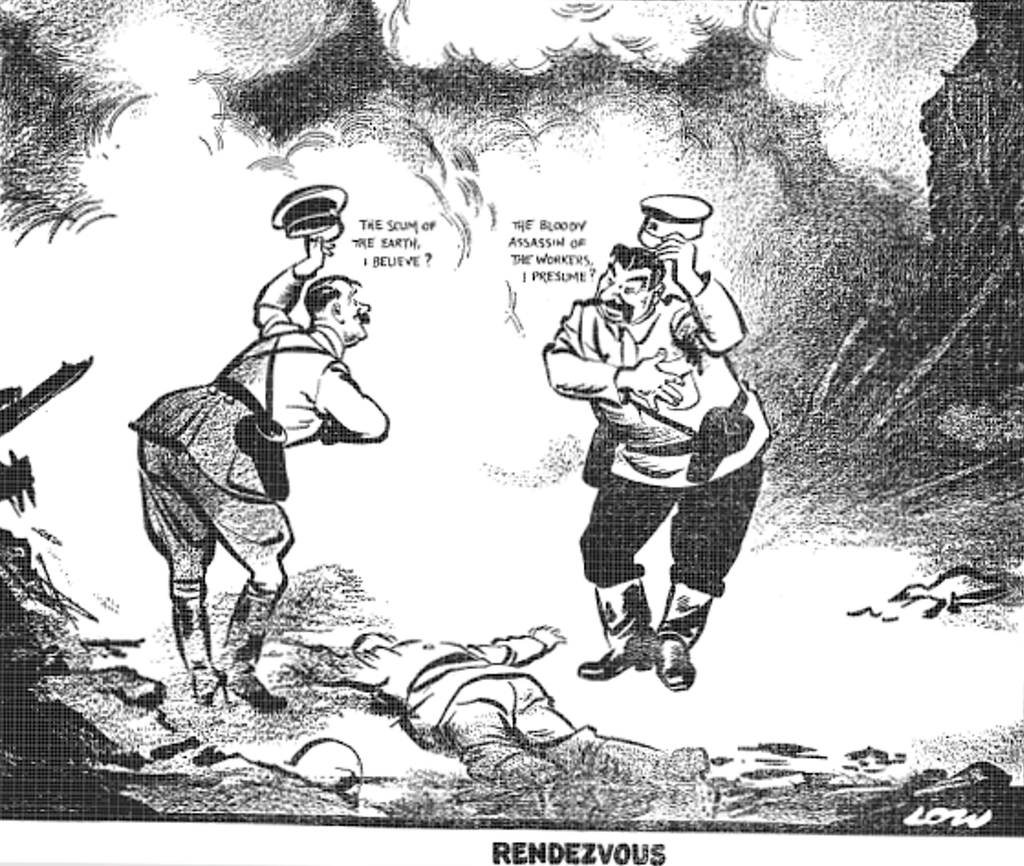
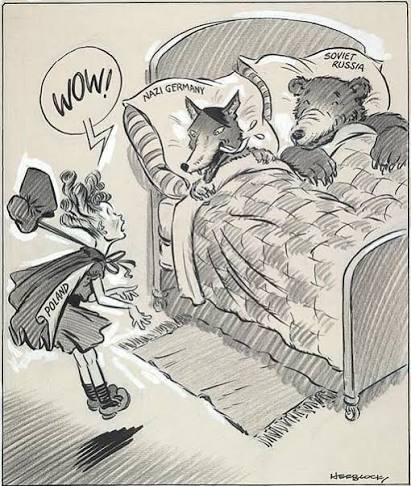
This pact referred directly to the Treaty of Berlin, which committed both countries to refrain from aggression and to observe neutrality in conflicts involving other nations. A secret protocol defined future spheres of influence, with part of east Poland, plus Estonia, Latvia and Bessarabia passing to the USSR.
Germany invaded Poland on 1st September and advanced very rapidly. The Soviet Union joined in on 17th September, attacking from the east. Poland was soon overrun. A new Nazi-Soviet treaty was agreed in 28th September. Lithuania was transferred to the Soviet sphere of influence. Important economic concessions were made by the Soviets to Germany, and the economic agreements made were crucial to Hitler’s plans. The amount of grain and raw materials he gained from the USSR, enabled Hitler to get round any Allied blockade. The Baltic states were persuaded to allow the stationing of Soviet troops on their soil to act as a line of defence for Petrograd and Leningrad. Finland refused a similar demand, resulting in the Winter War (November 1939-March 1940). Despite losing 50,000 men in the conflict – Finland ceded border space to the Russians and this set a precedent for the Baltic states to be forced to become part of the USSR in the summer of 1940. Rebels in this newly occupied territory were brutally dealt with, as illustrated in the Katyn Forest massacre.
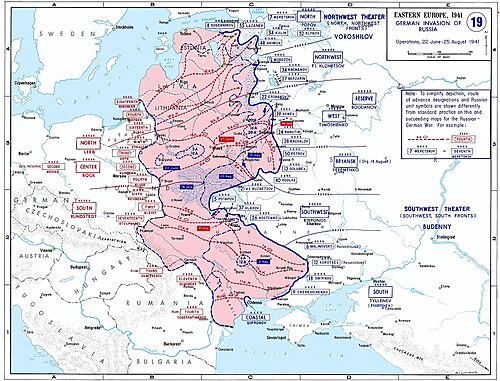
Wariness of a possible German invasion grew by the spring of 1940. Stalin’s response to the Nazi defeat of Denmark, Norway, the Netherlands, Belgium and France was to state that Hitler would move on to “beat our brains in”. With the signing of the Tripartite agreement between Germany, Italy and Japan in September 1940 and the German failure to win the Battle of Britain, it appeared that an attack on Russia was imminent. In December 1940, approval was given by Hitler for Operation Barbarossa, an all-out attack on Russia. On 22nd June 1941, the attack finally started.
Katyn Forest massacre, 1940 Massacre of 5,000 Polish officers by NKVD at Katyn near Smolensk.
Leningrad Affair, 1948
Purge of Zhdanov’s friends and colleagues after his premature death in 1948 due to his alcoholism. Zhdanov had been the head of the Leningrad party.
Domestic impact of “the Great Patriotic War”, 1941-45
POLITICAL
The war had very little impact on the structure of
government in Russia. During the conflict, Stalin became
the chairman of the State Defence Committee, which had absolute control over the lives of Soviet citizens. He also took the role of supreme commander of the military, just as Nicholas II had done during the First World War. The difference was the Stalin actually took advice from his advisers and even relied on others, deemed to be military experts, to make key strategic decisions. In fact, it would be incorrect to assume that the government became even more totalitarian. That would have been difficult given the high degree of control already in place. Besides, all governments of those countries directly involved in the war passed measures that gave them total authority. Unsurprisingly, until his death, Stalin retained the two key political posts in Russia; those of head of government and party secretary.
The composition of the Politburo also remained the same. In 1948, the prominent members included Stalin, Molotov, Voroshilov, Kaganovich, Mikoyan, Andreyev, Zhdanov (the man being groomed to be Stalin’s successor) and Khrushchev. Despite the extremely high number of war casualties, the numbers joining the Communist Party actually increased during the war from 3.76 million in 1941 to 5.8 million by 1945. Much of this was due to additions from the military who were
rewarded for their gallantry with official party membership. By the time of the nineteenth party congress, called in 1952 (for the first time in thirteen years), party numbers had declined, although this did not seem to affect the main function of the party. It continued as an administrative tool, especially when it came to economic affairs.
The NKVD was very active during and after the war. It was involved in the policing of prisons and the deportation of national minorities while the conflict ensued. The secret police were especially harsh on individuals from the Balkans, Chechens, Karachans and Crimean Tartars, all of whom were accused of collaborating with the Nazis. After the conflict, the NKVD reverted to purging the party and other groups of dissidents. Of special note was their involvement in the resolution of the Leningrad affair, which resulted in over 200 supporters of Zhdanov being purged.
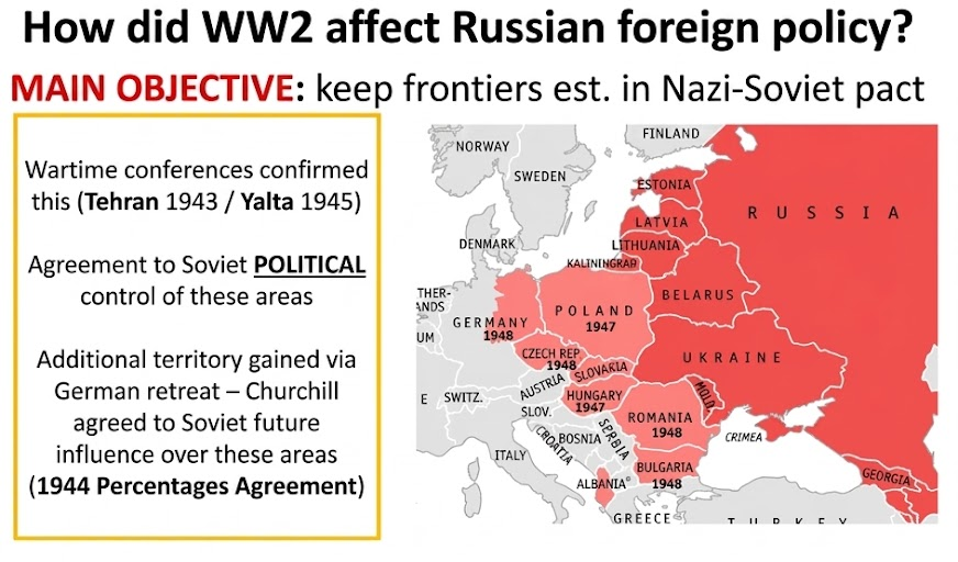
It has been argued that of all of the wars Russia had fought in the 100 years previously, the Second World War had the least effect politically, partly because it was one of the major wars of the period which Russia actually won. Russia emerged with the losses of 1918 restored to her. All the lands in eastern Europe which she had been forced to give up, now became part of a new Red Empire.
SOCIAL
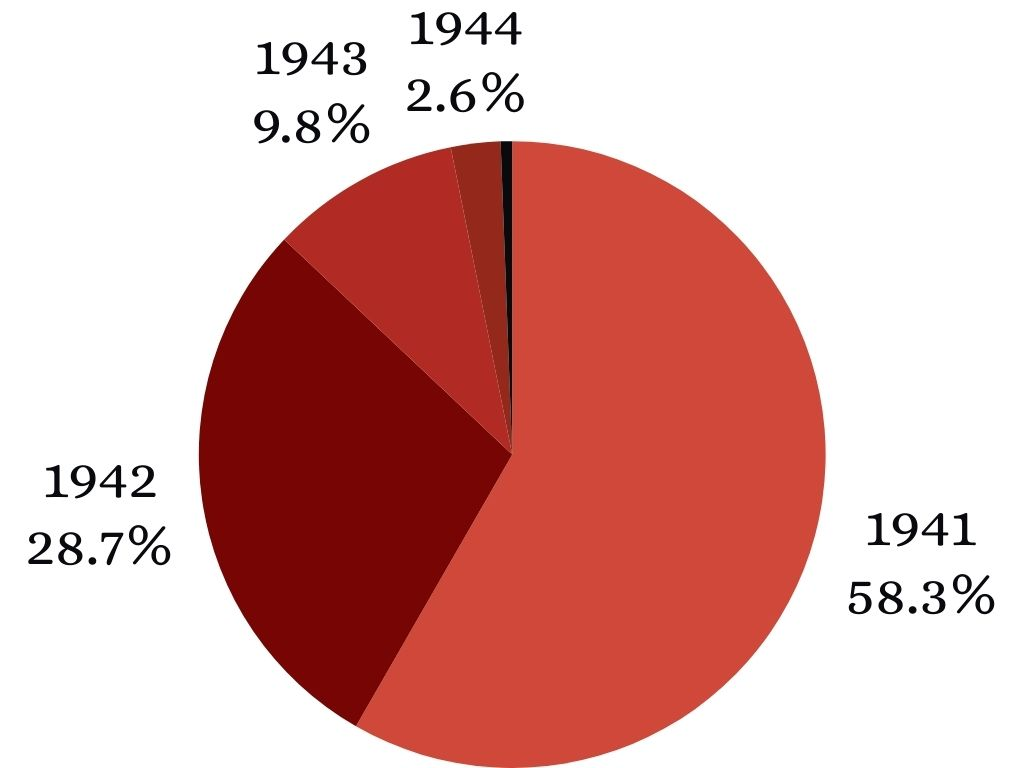
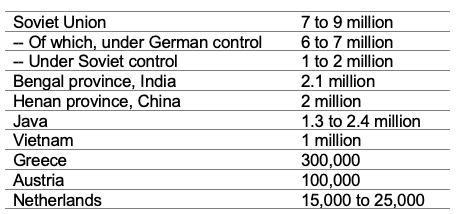
The human cost of the war to the nation was enormous. Over 27 million Russians were killed; representing around 10% of the Russian population. Civilians constituted two-thirds of this total; 1 million alone died in the siege of Leningrad and there were 1.1 million casualties as a result of the Battle of Stalingrad. Politicians in the post-war years were thus faced with the problem of a shortage of all types of labour, which was essential if Russia was to move successfully into the new technological age.
At certain points during the war it is estimated that 85 million Russians found themselves under the control of the Germans and 5 million prisoners were taken by the Germans. A significant number switched sides; the historian Anthony Beevor has indicated that around 50,000 Russian citizens fought on the side of Germany at the Battle of Stalingrad. Stalin viewed all prisoners of war was traitors and if they managed to return home they were treated harshly. Despite the patriotic fervour was whipped up, there was still desertion from the armed ranks. About 13,000 deserters were shot.
Living standards were significantly diminished by the war. Electricity supplies to the general population were ended in late 1941, and were only restored once the war was over. Workers were sustained by meagre rations, while the government took 90% of the produce from the collective farms. For the Russian population under siege in Leningrad, the population were sustained on little more than “blockade bread”, made largely from sawdust. Citizens were also sustained by eating birds, rats, their pets and – in extreme cases – by resorting to cannibalism.
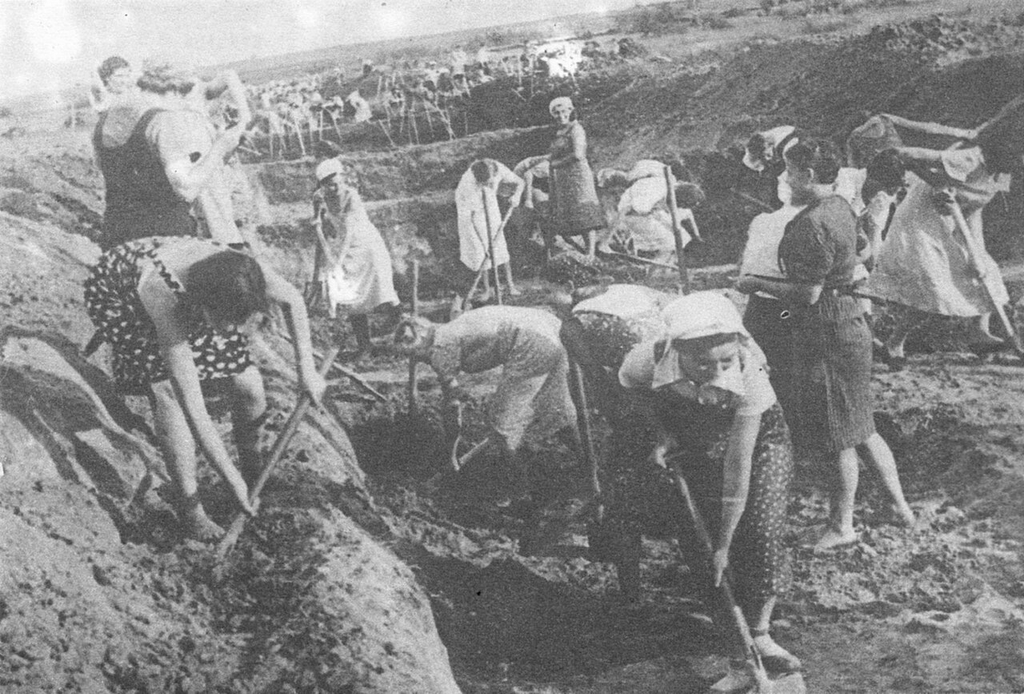
It has been argued that Russian women bore the brunt of the Russian war effort. They were expected to work in the factories and fields, whilst at the same time continue to care for their families. Women made up the majority of the workforce during the war, and in some areas were expected to carry out the tasks usually performed by machines. For example, in many areas women were yoked to ploughs in the absence of tractors and horses. During the counter-offensive and the March on Berlin, Russian troops reportedly raped over 2 million women. When challenged over the behaviour of the typical Russian soldier, Stalin allegedly retorted with “what is so awful about his having fun with a woman?”
Stalin’s treatment of prisoners of war, deserters and non-Russian women did little to enhance the relations with the Allies both during wartime conferences and afterwards, when proposals for economic aid and reconstruction were discussed.
ECONOMIC
German forces quickly occupied a large part of Russian territory, and by 1942, they had gained control of one third of Russia’s industry and agriculture. At the same time, Russian labour was being conscripted into the armed forces. Both of these facts led to a significant downturn in production during the war. In 1942 Russia’s industry was producing only 59% of its 1940 output. The government had a huge challenge in addressing the damage to the industrial and rural infrastructure. Much physical damage was caused both by the German military through shelling and by Stalin’s scorched earth policy. Factories, production plants, mines, dams, roads, bridges and the railways were all badly affected. Overall, it is believed that 70,000 villages, 32,000 factories and 65,000km of railway were destroyed as a result of the war. Such physical damage was made worse by the fact that during the war industrial enterprises had to be relocated to the Urals, Volga basin and Central Asia to be protected. However, these were not necessarily the best areas for the organisation of efficient and effective production. Also, many factories had to be reconverted from munitions production back to their original function. All of this was a costly business, especially given that the government ran a command economy and was therefore responsible for all industrial enterprise.
The Soviet government’s reconstruction programme revolved around a fourth Five Year Plan (1946-50). The specific aim of this was to get the Soviet economy back to growth levels achieved immediately before the war. The plan would then be followed by two others, which would accelerate the development of heavy industry. As with the first three Five-Year Plans, the production of consumer goods was neglected. Interestingly, the targets set by the fourth plan were achieved after three years, way ahead of schedule. This was due to a number of reasons including:
- The availability of “free” labour (up to 4 million prisoners of war, Soviet prisoners and conscript labour)
- Unilateral trade agreements • External financial aid (from the United Nations, the USA in the form of lend-lease, Britain and Sweden)
- The commitment of the Russian people; ordinary Russian workers continued to labour for excessively long hours and under very challenging conditions to increase production and productivity in all of the staple industries.
However, there were a number of weaknesses in Stalin’s post-war economic strategy:
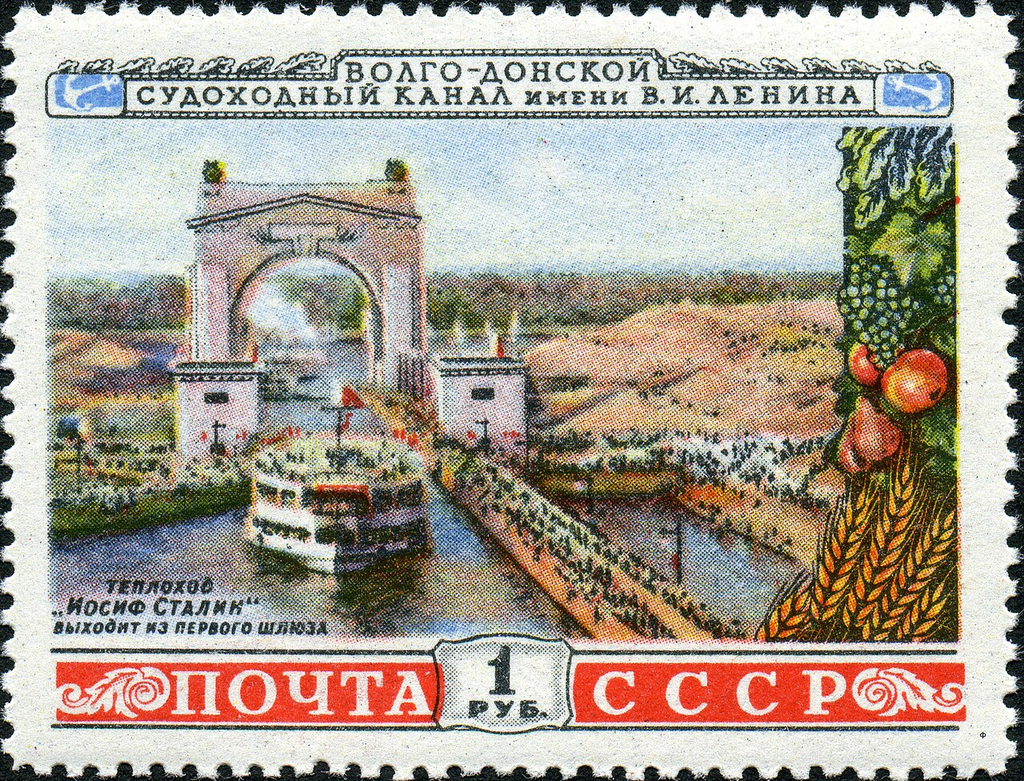
- The biggest flop was his continuation of “gargantuan” projects. Great amounts of capital were ploughed into schemes such as the Volga-Don Canal but with very little economic return.
- Agriculture also suffered, mainly through neglect. The war years had seen a reversion to a kind of small-scale ownership of land plots and a crumbling of some collective farms. Those who acquired private plots were soon hit by exorbitant taxes. The collectives suffered from shortages of labour and materials. The inevitable consequence was a famine in 1947 and rural unrest.
- Khrushchev, as minister for agriculture, attempted to resolve some of the problems through farm amalgamation (joining farms together to make bigger farm units to share costs and raise production), but this had a limited impact.
Russia’s Foreign Policy
Yugoslavia
At the end of the Second World War, Yugoslavia was still a relatively new country, only having been established in 1920. The politicians
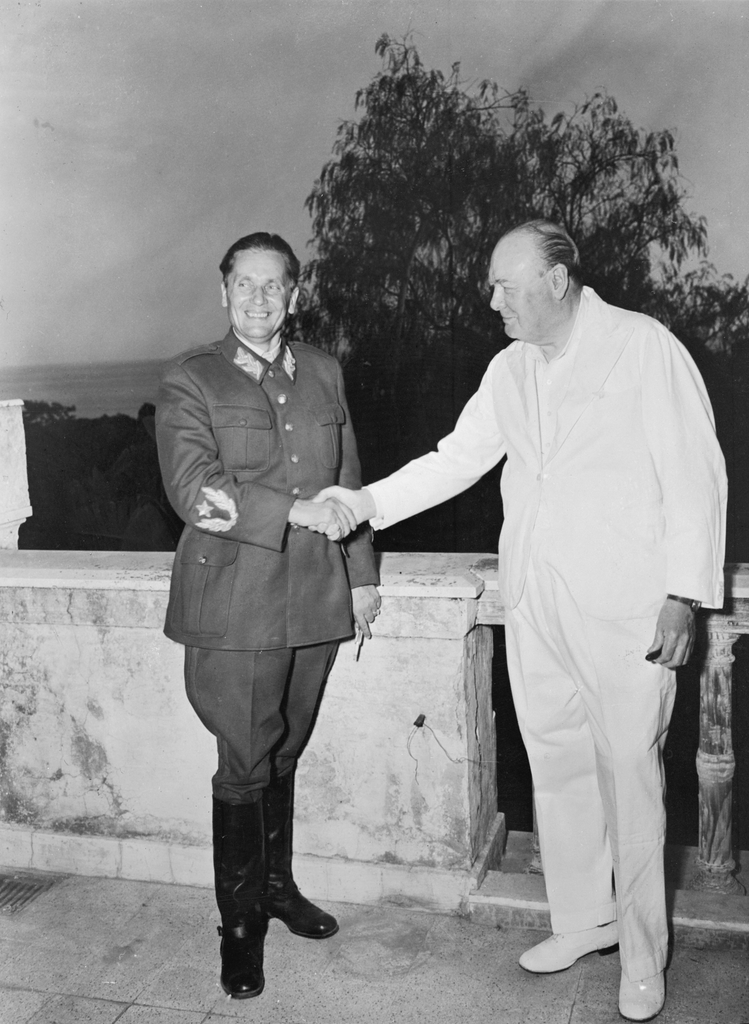
of the newly established state were determined to create a sense of national identity and independence to maintain from external influences. In 1945, new elections were held in Yugoslavia. The outcome was the installation of a communist government led by Marshall Tito.
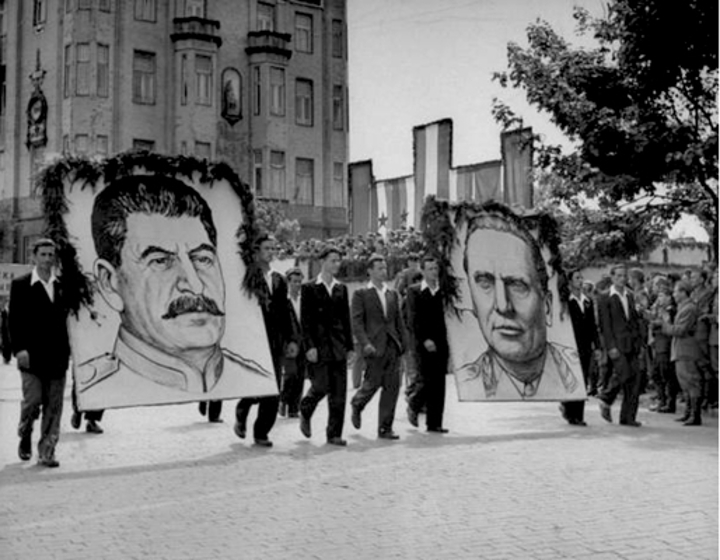
At the time there was no reason to expect that Russia would treat Yugoslavia any differently from any of the other Eastern European states. However, Tito a popular leader with his people, wanted to maintain Yugoslavian independence and prevent it becoming dominated by Stalin’s regime.
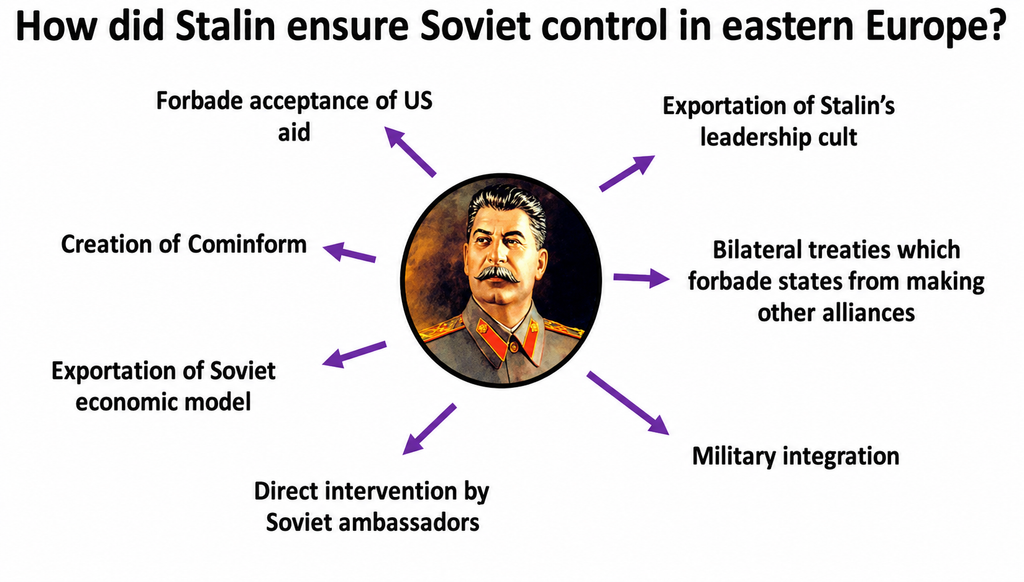
Tito objected to Stalinist communism. In particular, he objected to the overcentralisation of government associated with Stalin. Tito was also aware that under Russian influence Yugoslavia’s freedom to trade with whoever it wished would be curtailed. As a result of Tito’s non-compliance, Yugoslavia was expelled from the Cominform in 1948. In conjunction with this, Russia withdrew economic support hoping that a rapid decline in living standards would break the public’s backing of Tito. The envisaged destabilisation of the Yugoslavian government would make it easy for Stalin to step in and restore order.
Tito maintained his stance and continued to govern according to his own brand of communism. Economic relations with the west were strengthened and the Yugoslav leader even managed to gain economic aid from the International Monetary Fund (IMF). These manoeuvres reassured the people of Yugoslavia that Tito was the right person to govern. With the public support behind him, Tito progressed to make radical changes. These included: • The handing over of ownership and control of industry from the state to workers’ councils. • Establishment of communes and a Commune Assembly. The communes, under the guidance of the assembly, organised their own welfare, health and education.
These policies were popular with most and led to driving up of living standards. The policies stood in stark contrast to Stalin’s governance by centralisation. Some Marxist commentators at the time argued that Tito’s communism was how Marx thought it would emerge. Others, though, were soon to find fault with the system. It was pointed out, for example, that the model leaned towards capitalism which, in turn, led to inequalities between workers.
Relations between Yugoslavia and Russia remained frosty until after the death of Stalin. In 1955, Khrushchev visited Tito to make friends and offer help for the future development of Yugoslavia. Tito continued to govern until his death in 1980. However, in his bid to create a unified Yugoslavia he had kept tight control of national minorities in the state. The rise of Croatian and Serbian nationalism in the 1980s, in particular, signalled the start of the break-up of Yugoslavia.
Czechoslovakia
Like Yugoslavia, Czechoslovakia was created as a new state in 1920.
Initially it consisted of Bohemia-Moravia; Slovakia and Ruthenia. Czechoslovakia was a multinational state and consisted of:
- 6.5 million Czechs
- 2.5 million Slovaks
- 3 million Germans
- 700,000 Hungarians
- 500,000 Ruthenians
- 100,000 Poles
- Pockets of Romanians and Jews
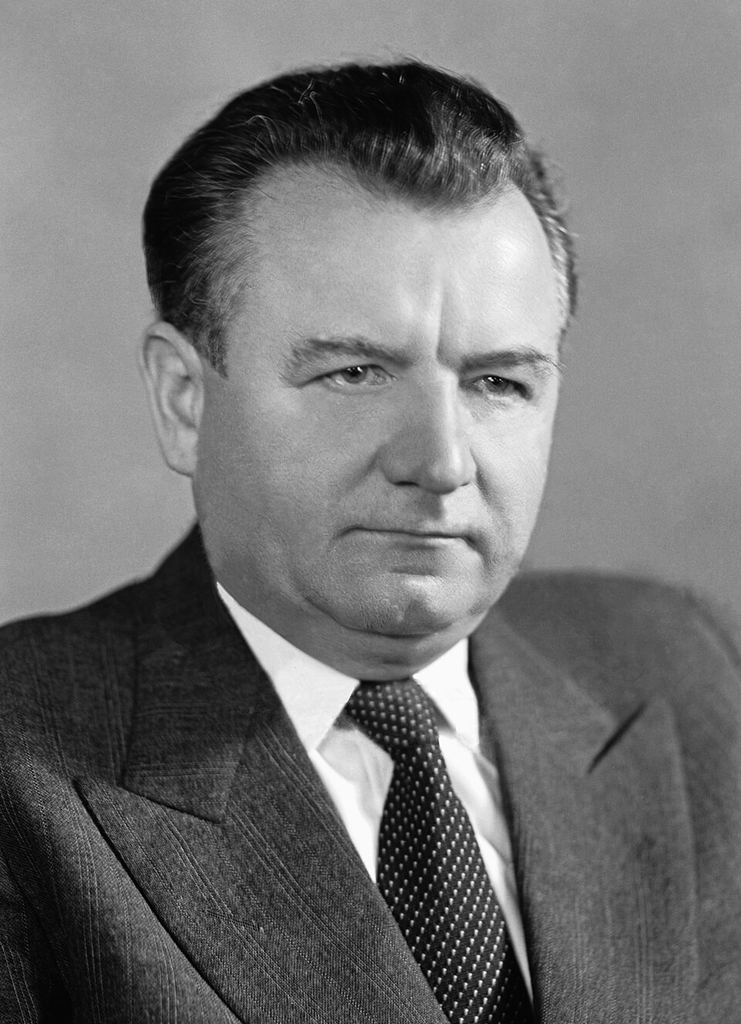
In March 1939, Hitler invaded and secured the whole of Czechoslovakia after having been granted access to the Sudetenland in 1938. Until 1945, Czechoslovakia remained as a German protectorate but with Slovakia allowed by Hitler to break away and become independent. After the end of the war, free elections were held in Czechoslovakia (1946) and a coalition government consisting mainly of left-wing parties including communists was elected. In fact, the communists gained over a third of the votes, seats in parliament and cabinet positions. A communist, Klement Gottwald, was elected as prime minister but other key positions were allocated to non-communists. The coalition appeared unified enough to enable Czechoslovakia to remain independent of outside influences. The new government pushed ahead with economic policies designed to develop trade with the west and to gain a share of Marshall Aid.
Just before new elections, scheduled for May 1948, the communists in Czechoslovakia dramatically seized power through a military coup. The reasons for that coup appear to be:
- They were losing the support of the people, who blamed them for the eventual rejection of Marshall Aid.
- They had lost the co-operation of many non-communist cabinet members.
- They had established control over the police, military and trade unions. Taking power by force therefore would have been very easy.
- They were prompted by Stalin in the take-over. Russia was concerned at the attempt to accept American aid (or “dollar imperialism” as they called it) and more generally stronger ties that had started to develop between Czechoslovakia and the west.
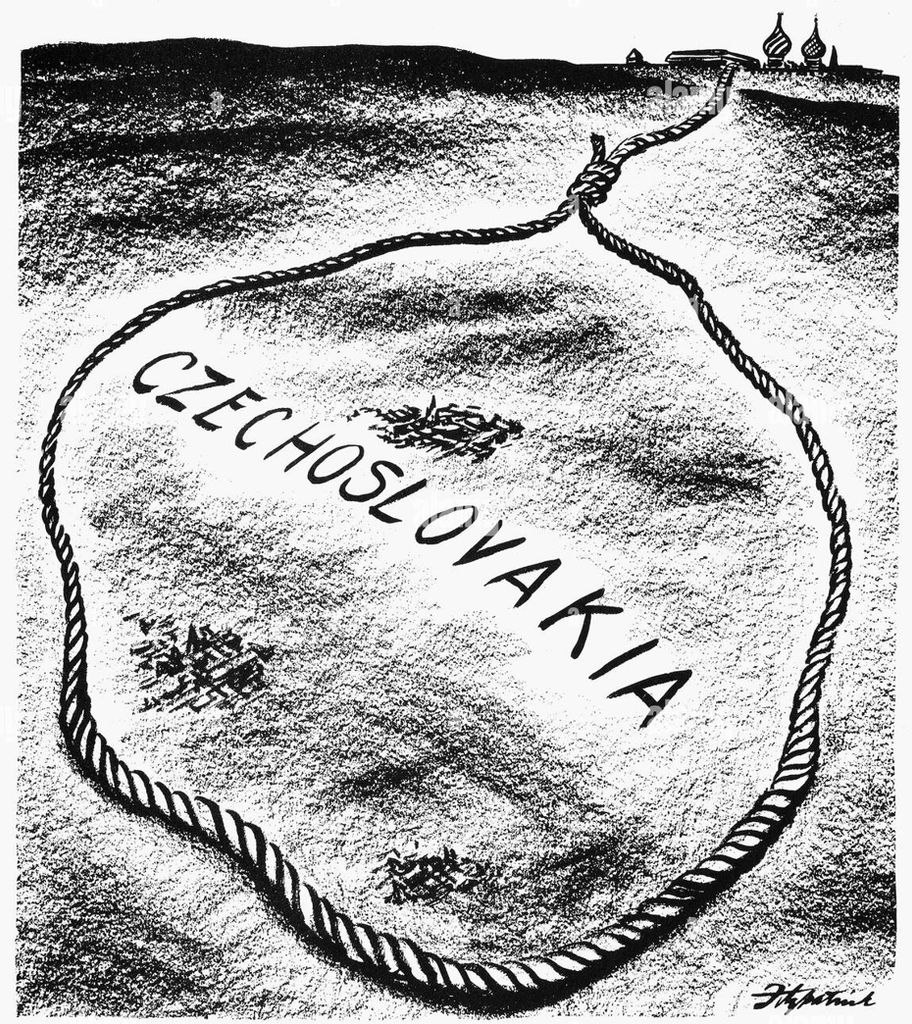
The coup resulted in the resignation of all non-communist members of the coalition except the president and foreign minister. A new cabinet was formed which agreed to bow down to orders sent from Stalin and preparations were made for new elections. Unsurprisingly the elections were rigged. Under Russian guidelines, voters were given a list of candidates to vote for, all of whom were communists. In turn, the candidates were obliged to carry out policies approved by the Russian government.
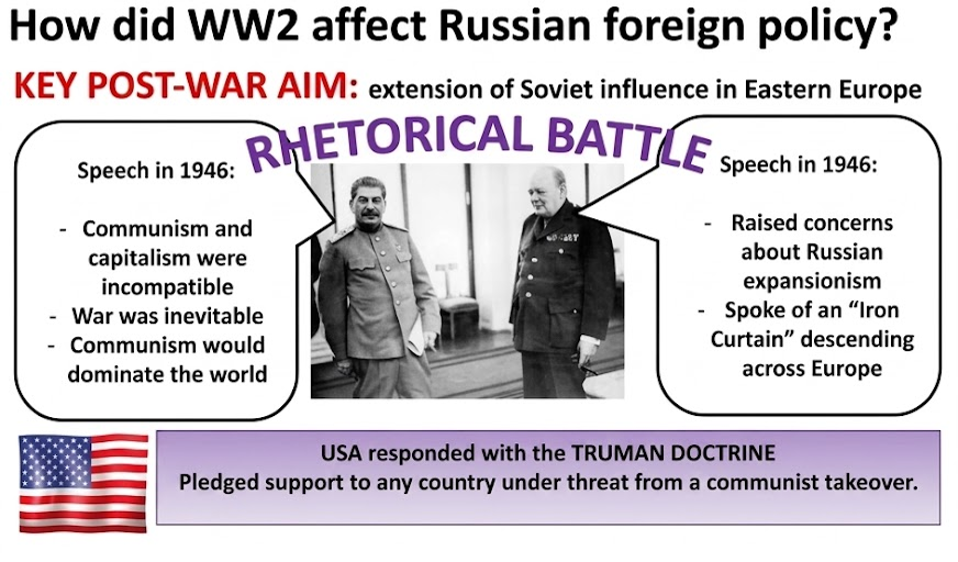
The communist takeover in Czechoslovakia caused concern in the West. It had been the last of the Eastern European democracies. Churchill’s Iron Curtain was fully drawn across Europe. The takeover subsequently caused a backlash from the west. In March 1948, Belgium, Britain, France, Luxembourg and the Netherlands signed the Brussels Pact in direct response to the coup. The pact stated the agreement to defend any member attacked by an external aggressor. It also paved the way for a “special” agreement to be made with the USA; the result of this was the formation of NATO. Thus Stalin’s intent to spread Soviet influence in the east seemingly heightened political tensions that emerged in the early years of the Cold War.
Hungary
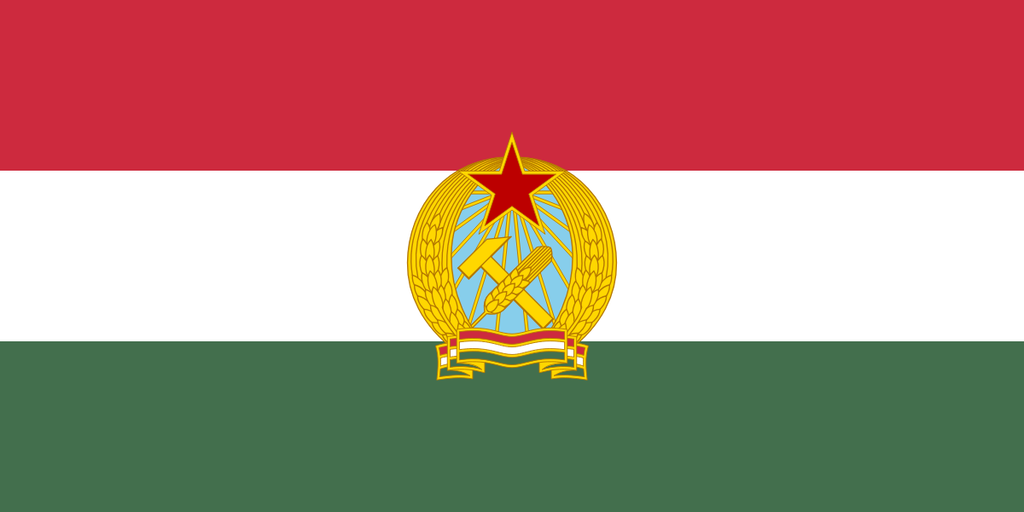
Hungary emerged as an independent republic in November 1918. For the majority of the Second World War Hungary had operated as a pro-Nazi satellite state under the leadership of conservative Admiral Horthy. Hungary had been directly occupied by the Germans in 1944. At the end of the war, there was a significant change in the governance of Hungary. As with other east European states, “free” elections were held in Hungary but despite gaining less than a fifth of the votes, the communists ended up dominating the cabinet. Clearly, Stalin had influenced the setting up of the new regime. The Hungarian communists were not all pro-Stalin, but those who opposed Russia were made to suffer. For example, the interior minister, Janos Kadar, was imprisoned and tortured, and the foreign minister, Laszlo Rajk, was hanged. By the end of 1949, nearly a quarter of a million Communist Party members had been expelled.
Until Stalin’s death, Hungary was governed in a repressive manner by the Stalinist leader Matyas Rakosi. Even when a more moderate head of government was installed, Imre Nagy, Rakosi continued to influence government affairs. In 1955, he managed to gain enough support to instigate the overthrown of Nagy. However, the Hungarian people became increasingly dissatisfied with the Stalinists. As a response to this, Khrushchev, with Tito’s backing, persuaded the Hungarian Communist Party to replace Rakosi with a more liberal-minded leader, Erno Gero. Tito was interested to intervene as he believed that a Hungary more detached from Soviet influence would prove to be a useful ally. The appointment of Gero raised hopes and inevitably led to even more demands for change along the lines of what had occurred in Yugoslavia. By October 1956, unrest was developing into a major uprising which developed as follows:
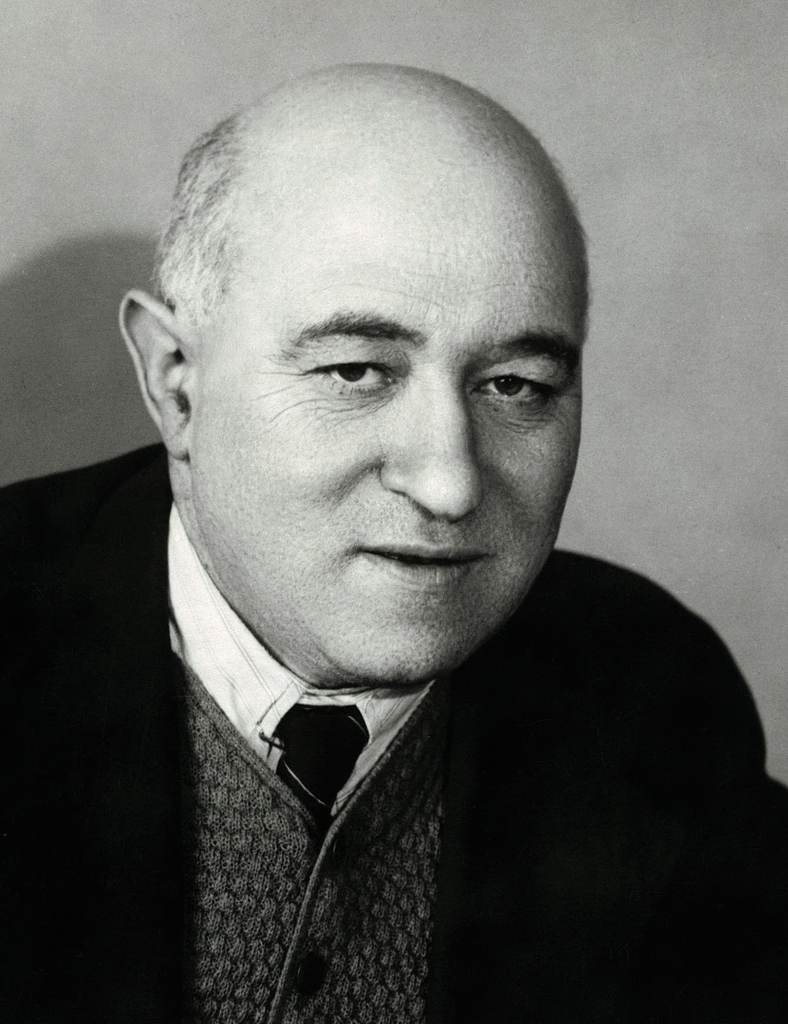
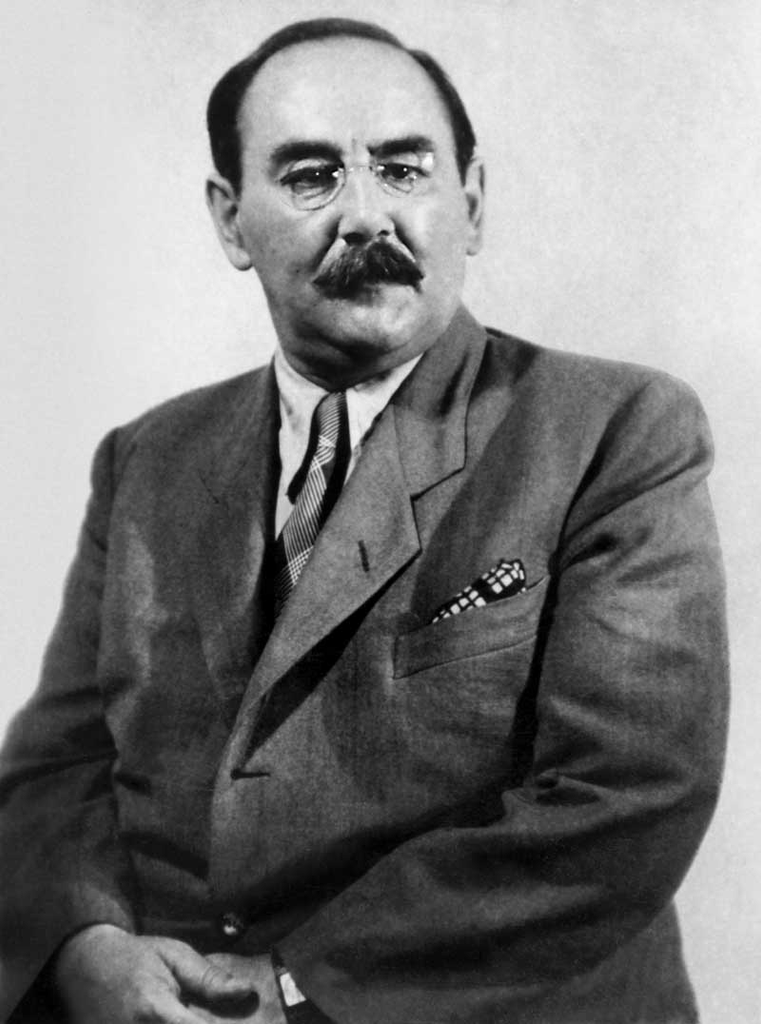
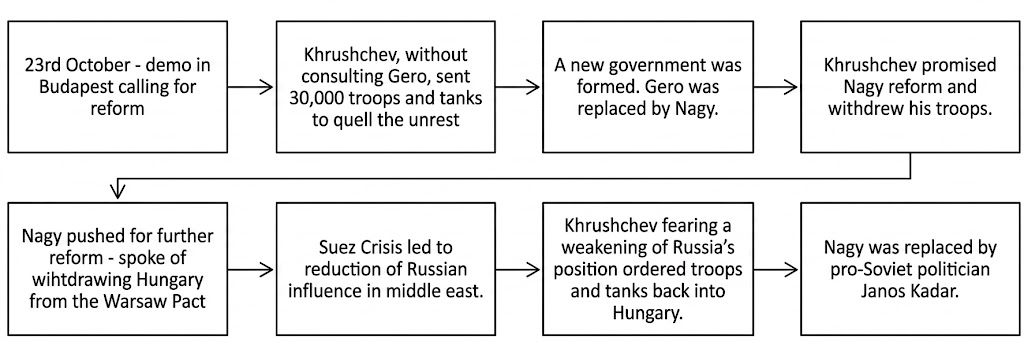
The result of the uprising was three-fold:
- Khrushchev had sent a clear message to Eastern European leaders that he was unwilling, despite de-Stalinisation, to lessen Soviet involvement in their countries.
- The west, especially the USA, realised that Khrushchev was willing to risk a more global conflict occurring by maintaining his authority over Hungary. Therefore, there was a reluctance from the west to intervene.
- Communist China under the leadership of Mao supported Khrushchev’s actions. This temporarily eased some of the tension that had emerged over ideology between the Soviet and Chinese governments.
Germany
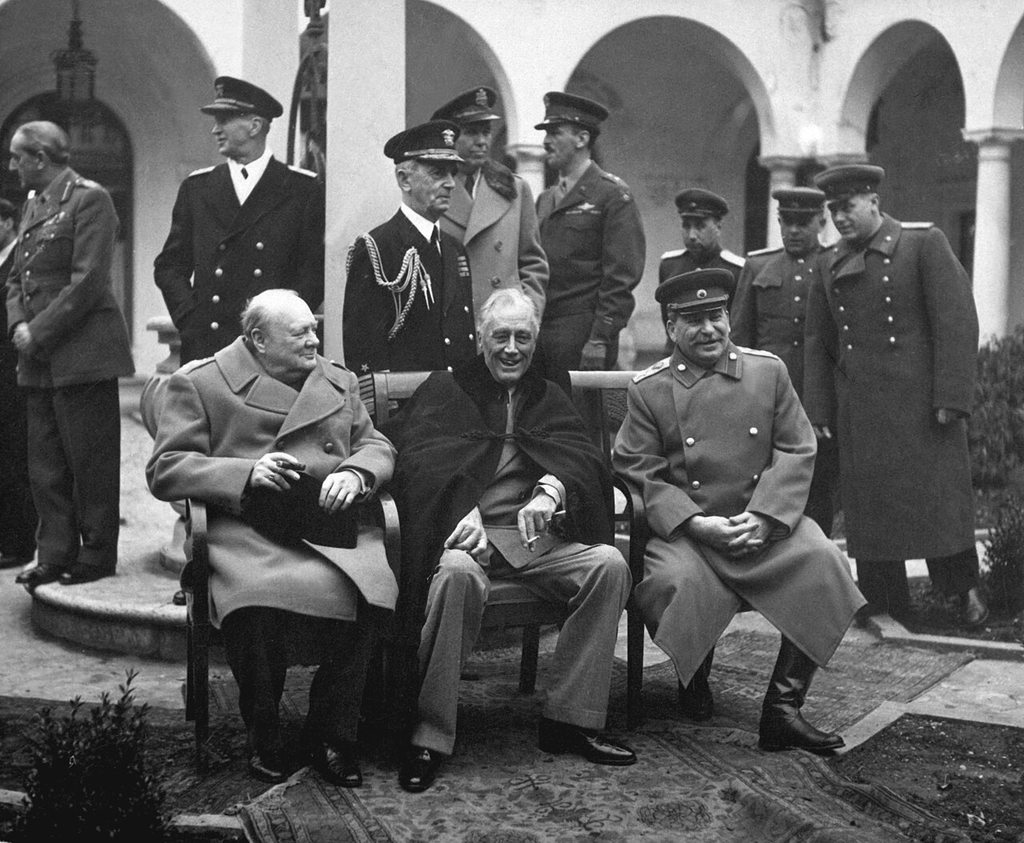
The question of what to do about Germany at the end of the Second World War was broached at the Yalta conference in February 1945 and again at Potsdam in the summer of 1945. At Yalta, each of the allied powers would be allotted a zone within Germany to administer (Berlin was also to be divided into four separate zones), until a foundation for future peace could be laid.
With respect to reparations, the USSR demanded that a very harsh treatment by meted out to Germany. Britain and the USA were against this as they believed it would damage Germany’s ability to purchase imports and have a detrimental effect on their own economies. An agreement was finally reached whereby the parties would be allowed to take reparations only from the zones under their control. As a concession to the Russians, Britain and the USA agreed to pay 10% of their reparations to the Russians and an extra 15% in exchange for any food or raw materials that Stalin had authorised to be moved out of the Soviet zone.
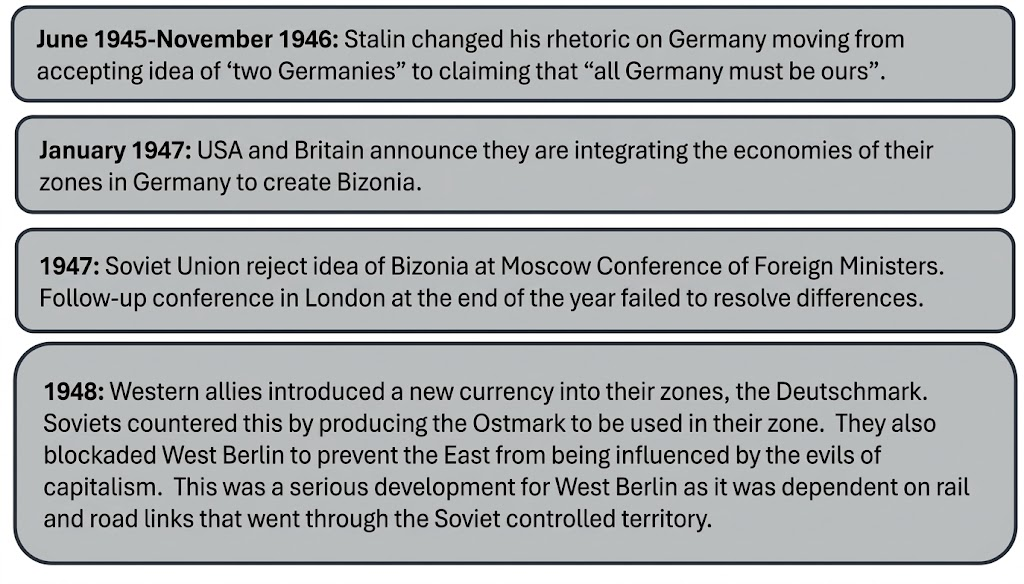
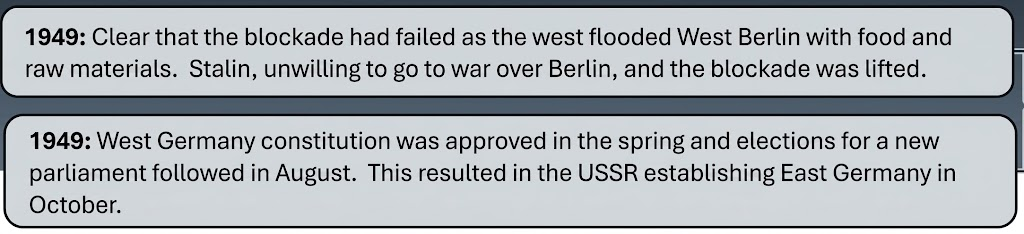
However, the initial agreements made over Germany were undermined by a series of events that resulted in the formal division of Germany into east and west.
Poland
Poland, a nation which had long been a part of the wider Russian Empire achieved its independence in the aftermath of the signing of the Treaty of Brest-Litovsk and had protected that independence from Lenin’s Bolshevik forces during the Civil War. The Soviet view under Stalin however, was that Poland should be incorporated into the USSR and helps explain why Stalin signed the Nazi-Soviet Pact with Germany in August 1939. This led to the invasion of Poland on its eastern borders by Soviet troops.
By the early stages of the war, the Polish government had decided to flee to London and, with the support of a Polish underground movement, to go into exile. One of the aims of the London Poles was to ensure that when the war came to an end Poland would not endure any territorial loss. Relations with Russia continued to be tense, even after Russia joined the war on the side of the allies after they were invaded by Germany. In the summer of 1944, the Russians launched their counteroffensive against the Germans. After pushing German forces out of the homeland, Russian troops were ordered to proceed into Poland. The question of governance of Poland was raised at the Yalta conference. By this time, Warsaw had been liberated and was temporarily governed by the Red Army. Stalin demanded that a new RussoPolish frontier should be established and that the whole of Poland had to be governed by a Soviet backed council. Roosevelt and Churchill gave in and the London Poles were abandoned. The Polish western border was dealt with at the Potsdam conference. Again Stalin won consent from Truman and Churchill to accept a western demarcation line which was well inside ethnic Germany. This paved the way for Russia to fully implement a Soviet-style government across the newly-constituted Poland.
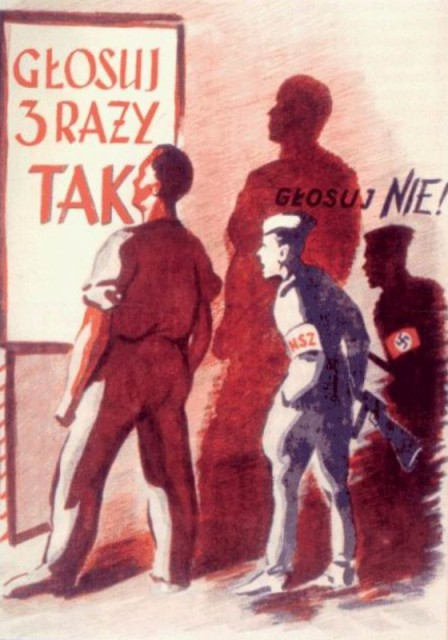
In 1947, a provisional constitution and Council of State was established. The Council had almost total legislative and executive power and was dominated by the Stalinist-influenced Polish Workers’ Party. By 1948, a one-party state had been established. Those who questioned the move away from any semblance of social democracy, such as members of the Church and trade unions, were arrested. In 1950, for example, over 30,000 workers went on strike at various times, only to find that they were quickly rounded up and sent to the newly built concentration camps at Mielcin and Jaworzno. The clampdown was reinforced by the imposition of Soviet-type economic and social reforms. Most notable was the spread of collective farms. In 1952, Poland was officially renamed the People’s Republic of Poland. Historian Adam Zamoyski pointed out “Poland had been hermetically sealed off from the outside world, and not just by the three hundred kilometres of barbed-wire entanglements and 1200 watchtowers surrounding it”.
Under Khrushchev’s leadership controls over Poland eased. In October 1956, Wladyslaw Gomulka was released from prison to take over the leadership of Poland. This led to reforms such as allowing independent peasants to hold small landholdings and the Catholic Church was allowed to teach religion in school.
Exam Zone
This section has been designed to help you build confidence, sharpen your skills, and achieve your best possible results. Whether you are preparing for mock exams, end-of-unit tests, or final assessments, the Exam Zone provides everything you need in one place.
The Exam Zone is not just about testing your knowledge. It is about developing the key historical skills required for success: critical thinking, evaluation, and clear written communication. By practising regularly and reflecting on feedback, you will strengthen both your understanding of the past and your performance in exams.