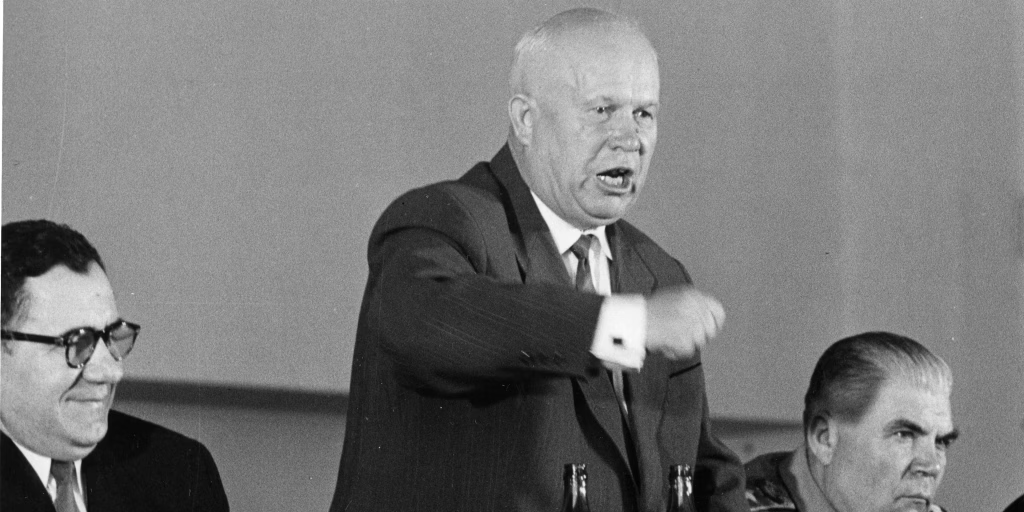
Nikita Khrushchev
Khrushchev’s leadership was marked by a dynamic mix of reform, de-Stalinisation, and Cold War confrontation, as he sought to modernise the Soviet Union while navigating internal opposition and international tensions.
Post-Stalin Leadership
Nikita Khrushchev
Leadership Struggle
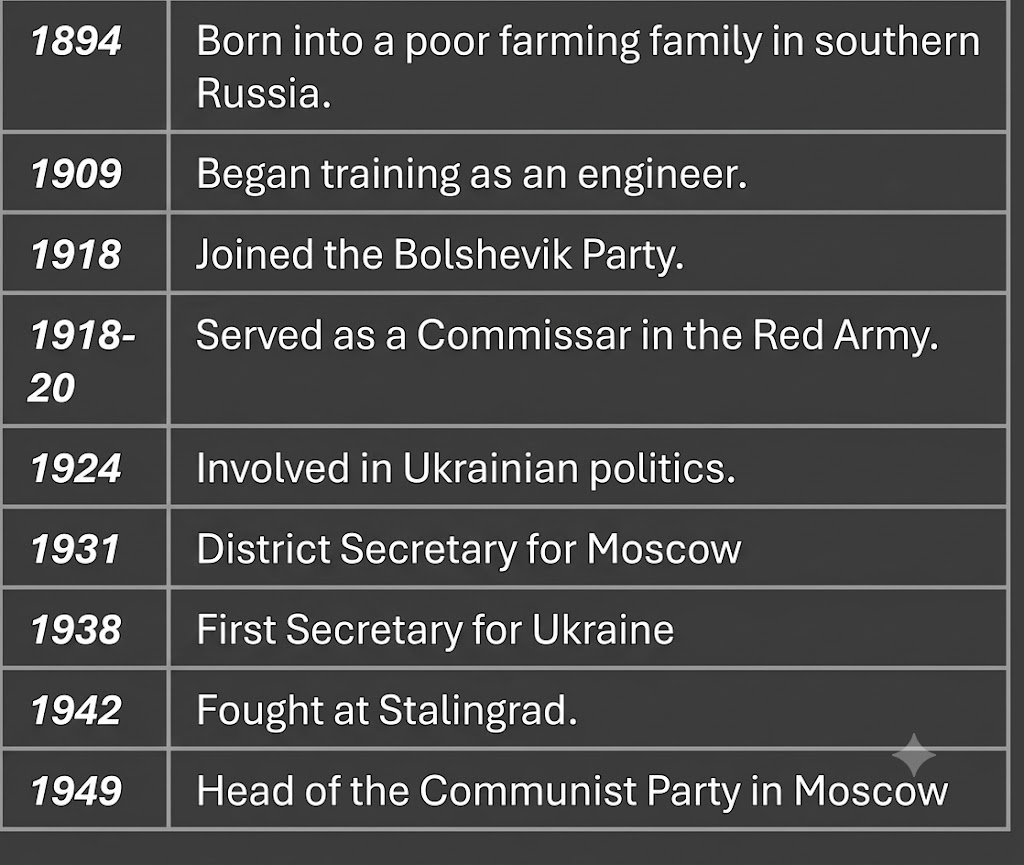
Throughout the 1920s Khrushchev was prominent in Ukrainian affairs, serving as the Party’s district secretary in a number of areas, including the capital, Kiev. In the 1930s he began to climb the party ladder. He moved to Moscow and was appointed a district secretary there in 1931. by 1935 he had become the Party Secretary for the whole capital. Khrushchev’s elevation has to be set against the background of the purges. As with all who rose within the Party or government in this period, Khrushchev was stepping into dead men’s shoes. One man’s imprisonment or execution was another man’s promotion. The price of political survival was unswerving loyalty to Stalin, and Khrushchev was exemplary in his toadying.
For the next three years he played his part in the continuing purge of suspected anti-Stalinists in Moscow. His commitment to the task is evident in a speech he made at a Party meeting in 1936. Just as Comrade Stalin, with his sharp Leninist eye, has accurately pointed out the path for our Party, as for the whole of the construction, so he has pointed our the corners where vermin can crawl out. We have to shoot not only this scum, but Trotsky should also be shot.
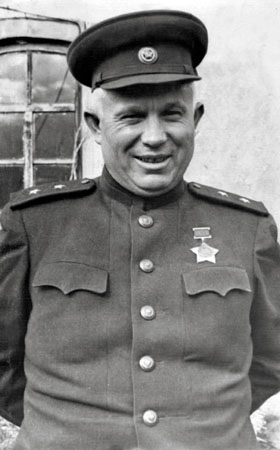
At the end of 1938 Khrushchev went back to Ukraine as First party Secretary to carry out similar work there. His reward was to be made a member of the Politburo. In the war years, 1941-45, during which large parts of Ukraine suffered German occupation, he was a political commissar in the army, involved in organizing military and civilian resistance. He fought at Stalingrad and was among the Soviet forces that liberated Kiev. Immediately after the war Khrushchev returned as First Secretary in Ukraine.
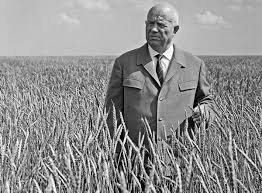
In 1949 he was appointed Secretary to the General Committee and given particular responsibility for the planning of Soviet agriculture, an extension of the specialism he had developed as an administrator in Ukraine. His work was not an outstanding success. One of his schemes for developing agricultural centres in the countryside, known as “agro-towns”, failed to materialize and he was criticised in Pravda. Such lack of success hardly suggested that he was destined for leadership. At the time of Stalin’s death in 1953 Khrushchev was an industrious but not politically outstanding member of the Politburo. His breezy, talkative manner made him appear less devious and scheming than the usual Bolshevik politicians. His colleagues tended to underrate both his ambition and his ruthlessness, and yet by the late 1950s Khrushchev had come to dominate Soviet politics.
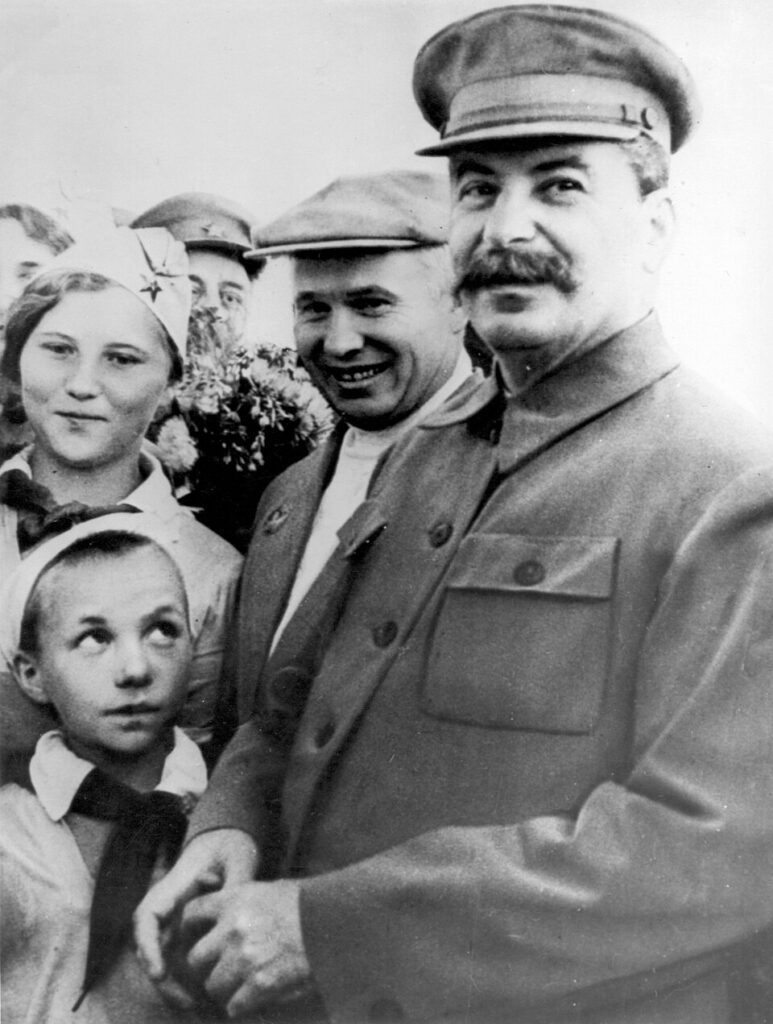
Post-Stalin Collective Leadership
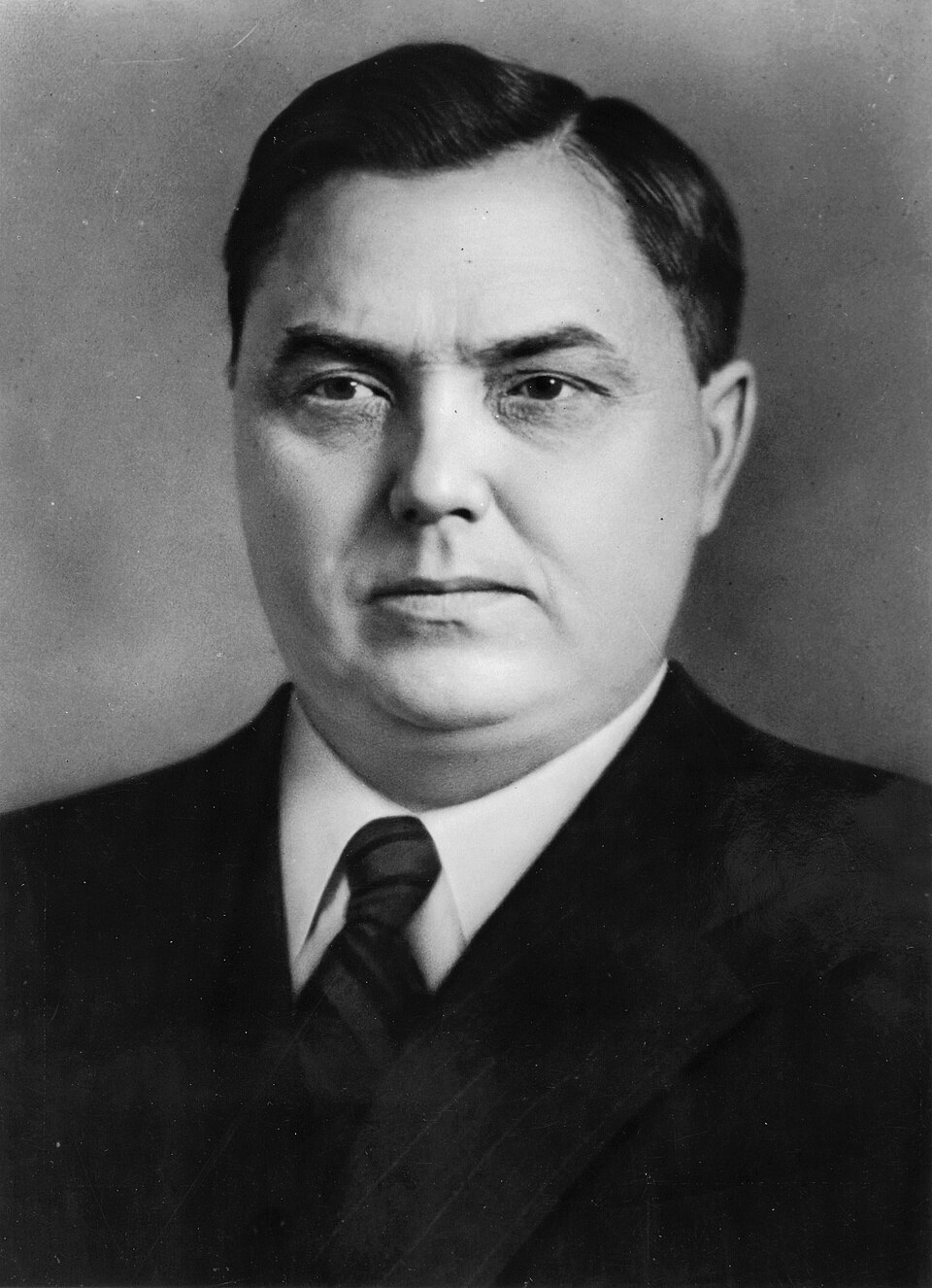
Malenkov:
Head of Soviet Government
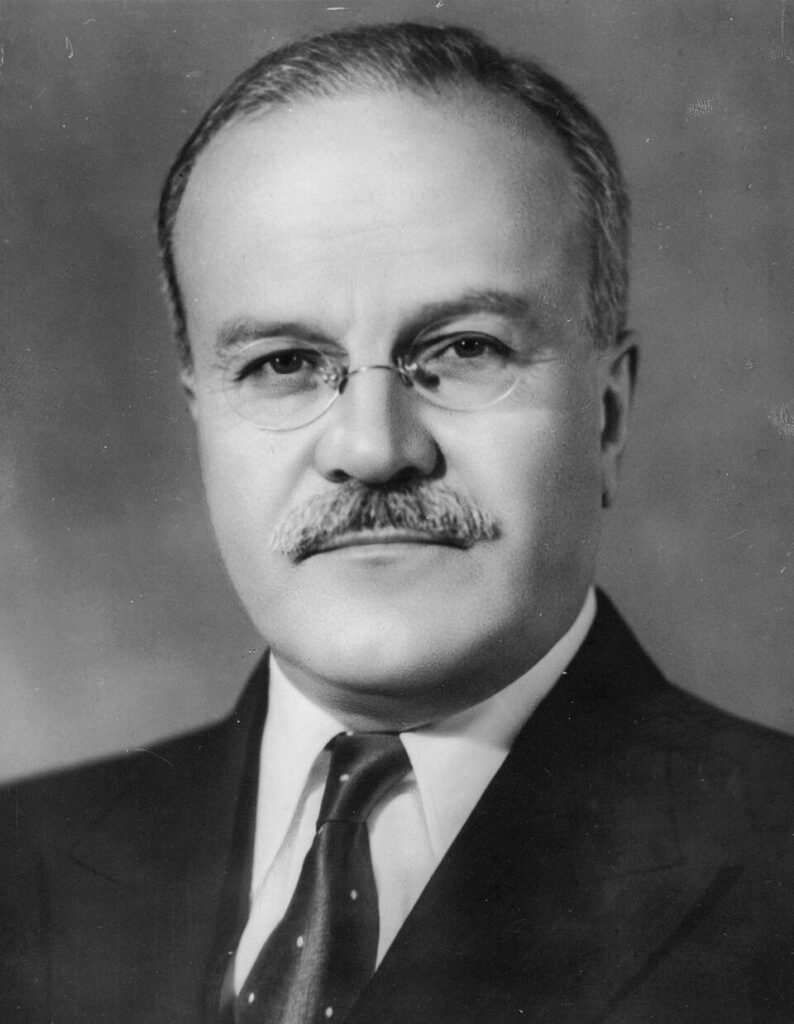
Molotov:
Foreign Secretary
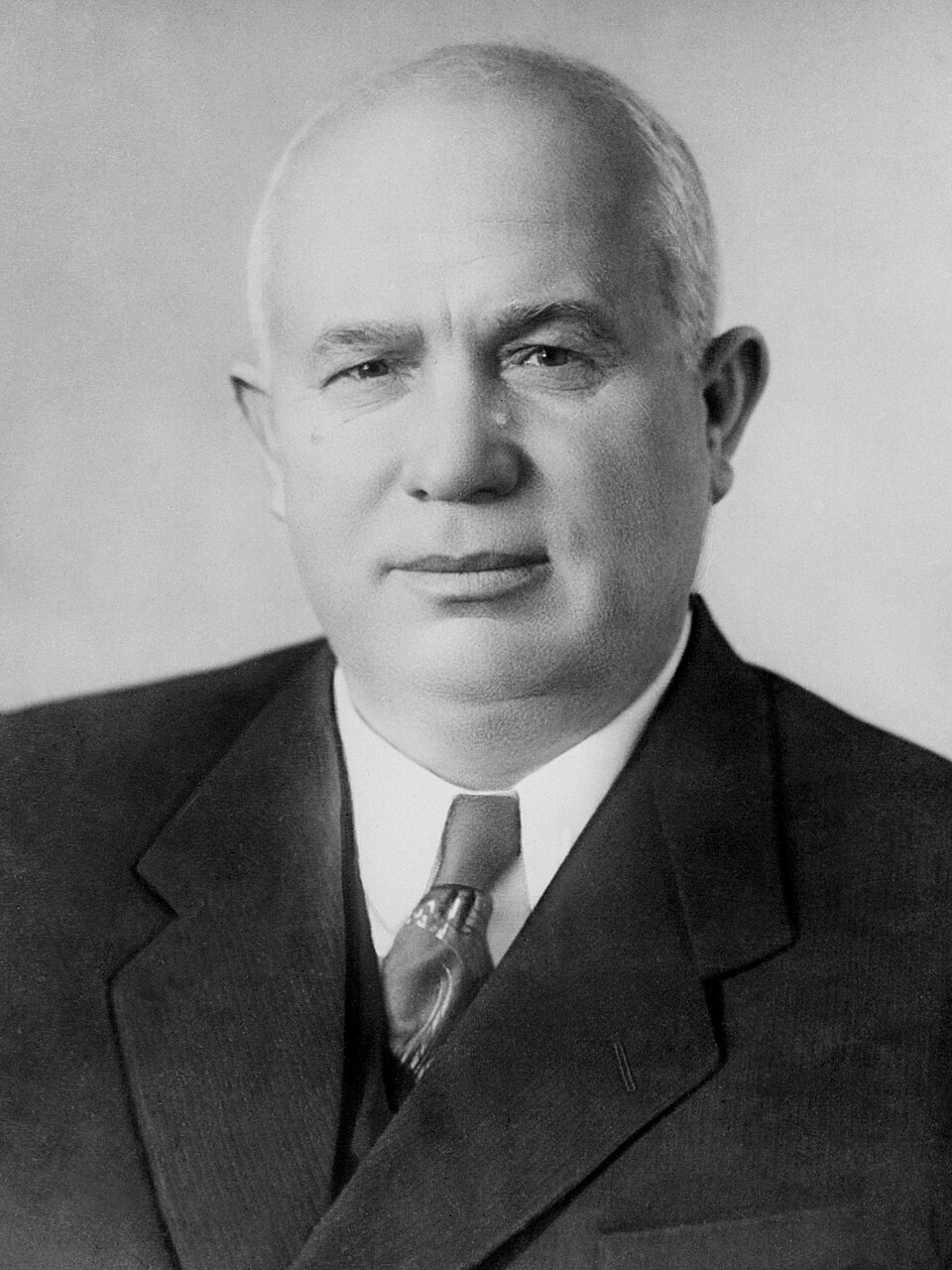
Khrushchev:
Communist
Party
Secretary
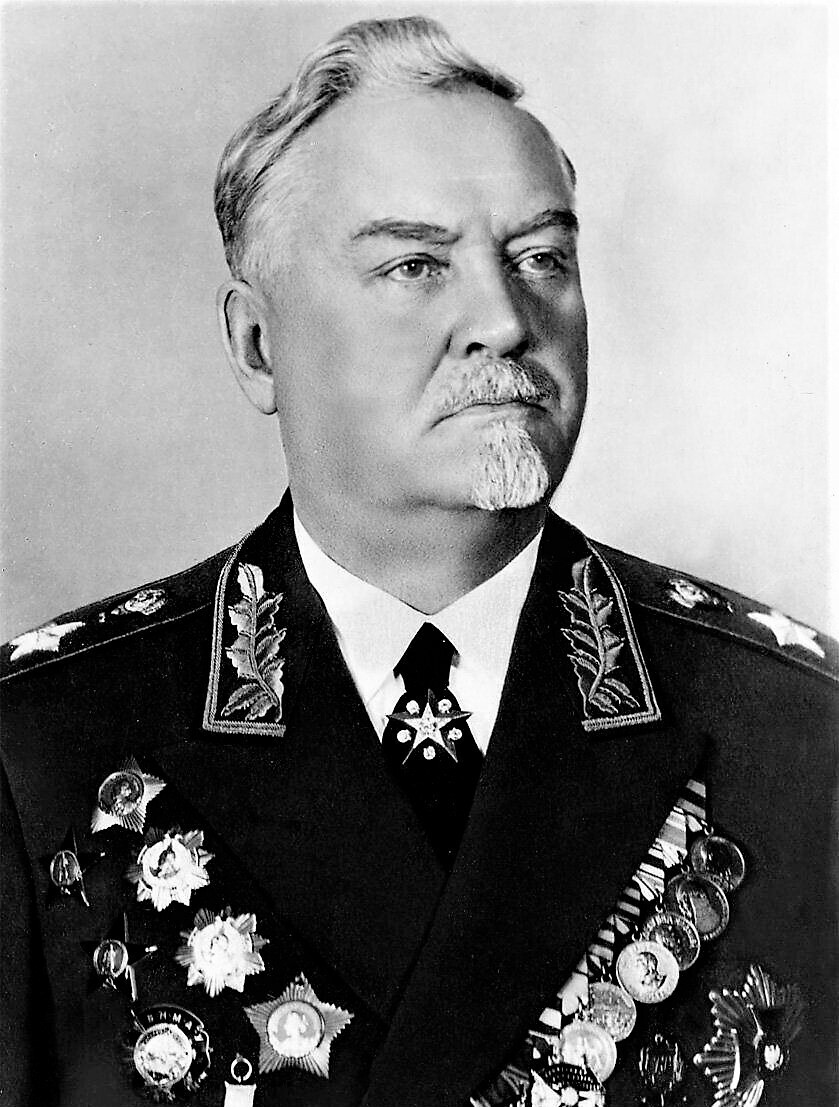
Bulganin:
Deputy
Head of
government
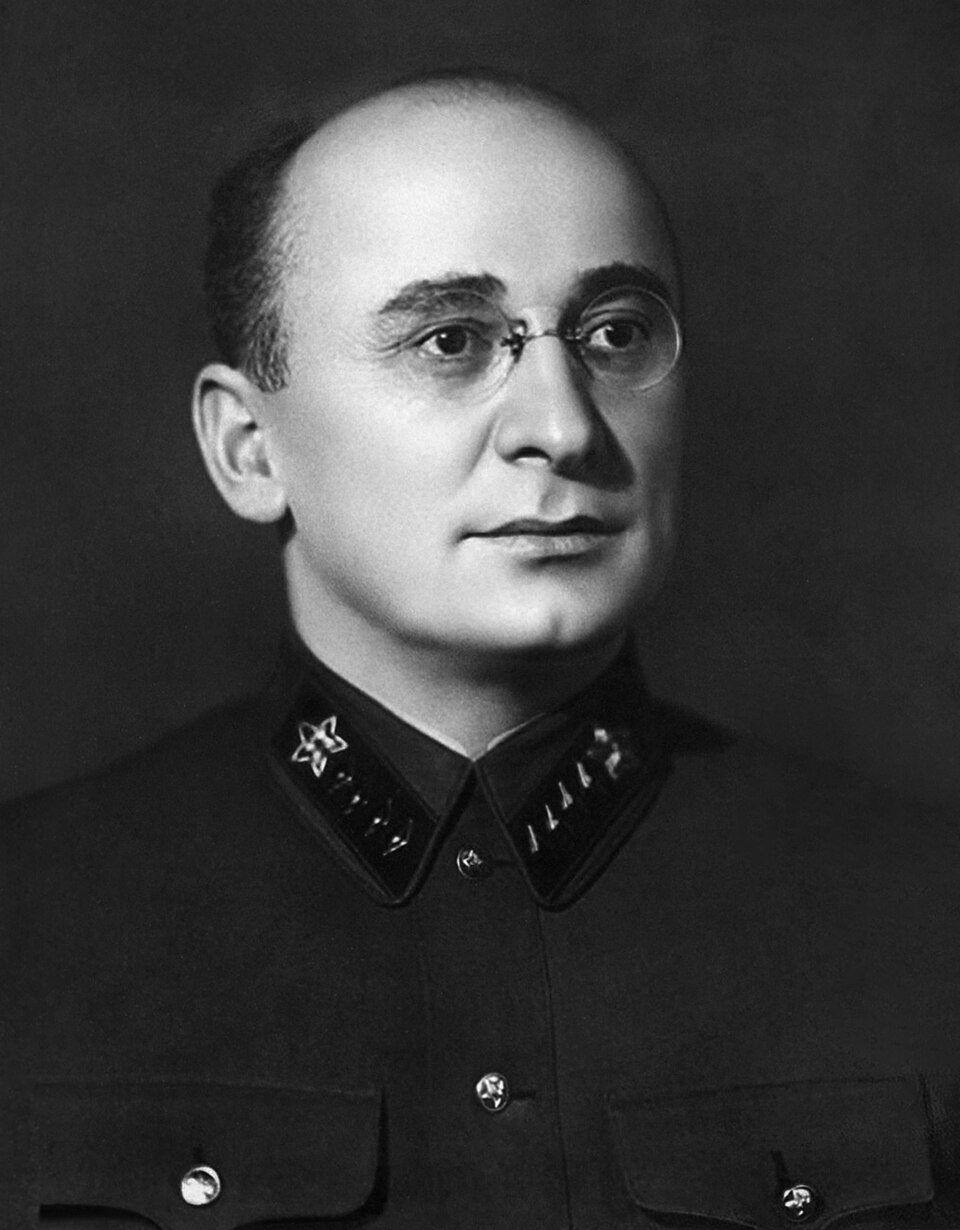
Beria:
Head
of secret
police
(MVD)
Khrushchev’s leadership strategy
Khrushchev’s Steps to Power:
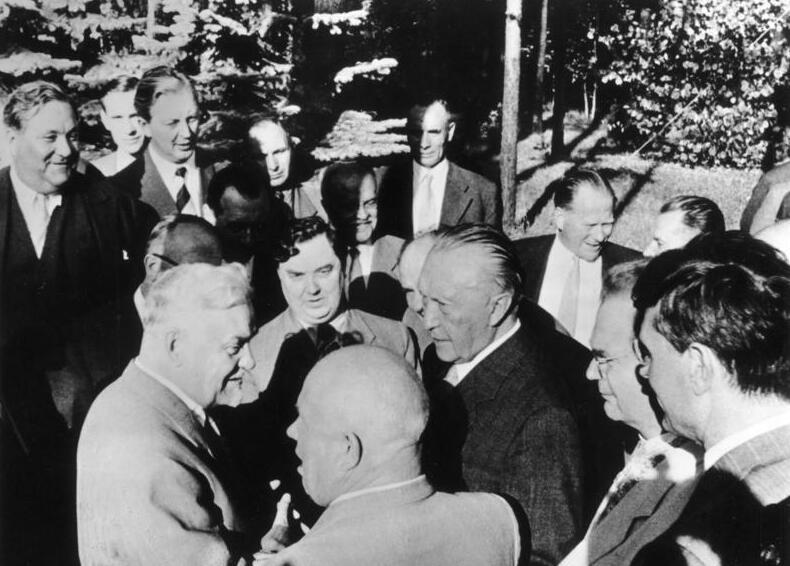
1. Removal of Beria
a) Framed a conflict between Red Army and Secret Police
b) General Zhukov admired Khrushchev
c) Red Army arrested, tried and shot Beria in June 1953
2. Undermining of Malenkov
a) Malenkov viewed as natural successor to Stalin
b) Khrushchev used position as Head of Party over next two years to criticise government policy; travel the country and speak with peasantry; promote his own supporters
c) 1955: Malenkov resigned following poor harvests
3. Dealing with a new threat
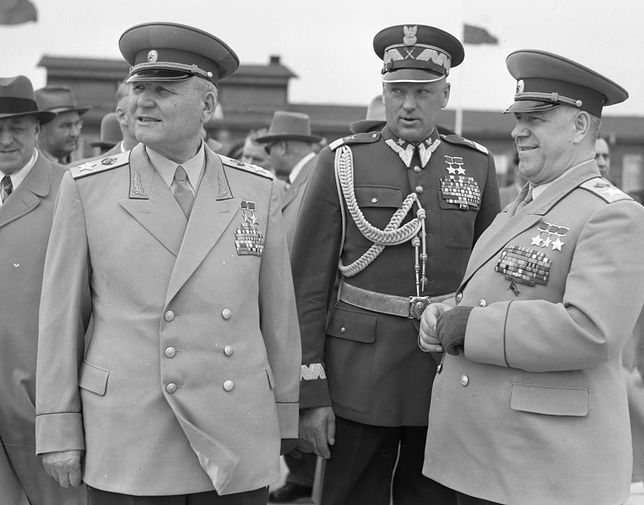
a) Khrushchev turned on former supporter, General Zhukov
b) Accused him of attempting to create a leadership cult around himself.
c) Zhukov forced to retire
4. Side-Lining Bulganin
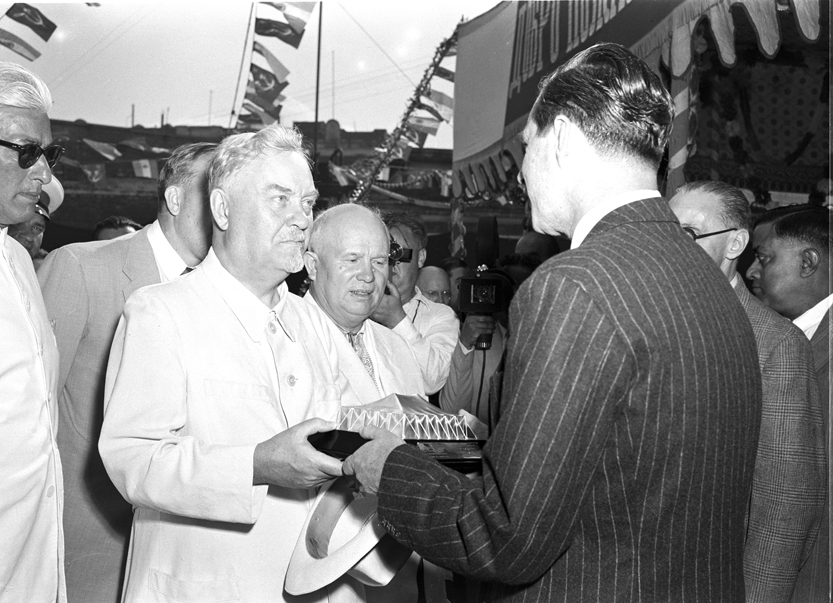
a) Since Malenkov’s resignation Bulganin and Khruschev took joint leadership of country
b) 1958: Khrushchev accused Bulganin of being part of an internal faction ‘The Anti-Party Group’
c) Bulganin forced to resign
d) Khrushchev took over his position as
Head of Government
The Secret Speech and DeStalinisation
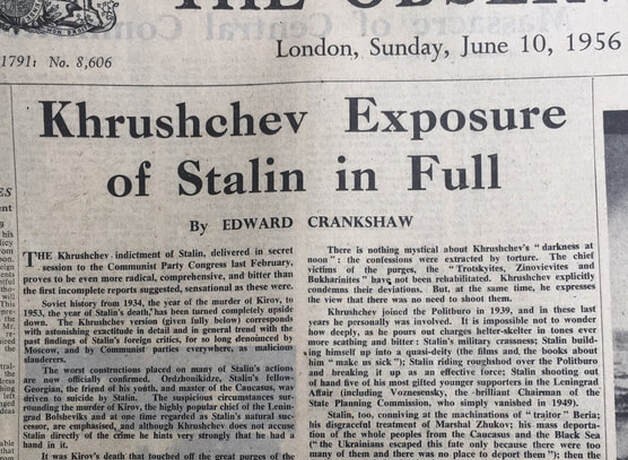
A key feature of Khrushchev’s campaign to exert his control over the Communist Party was to orchestrate a move away from Stalin’s policies. Khrushchev was keen to move Russia away from governance based on
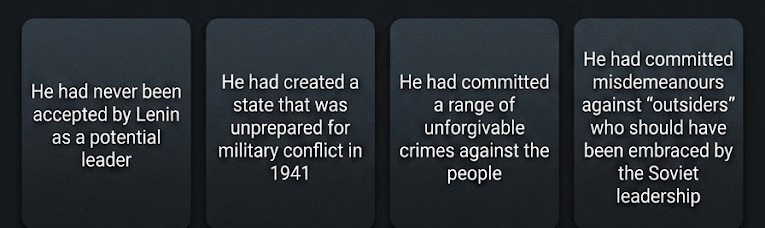
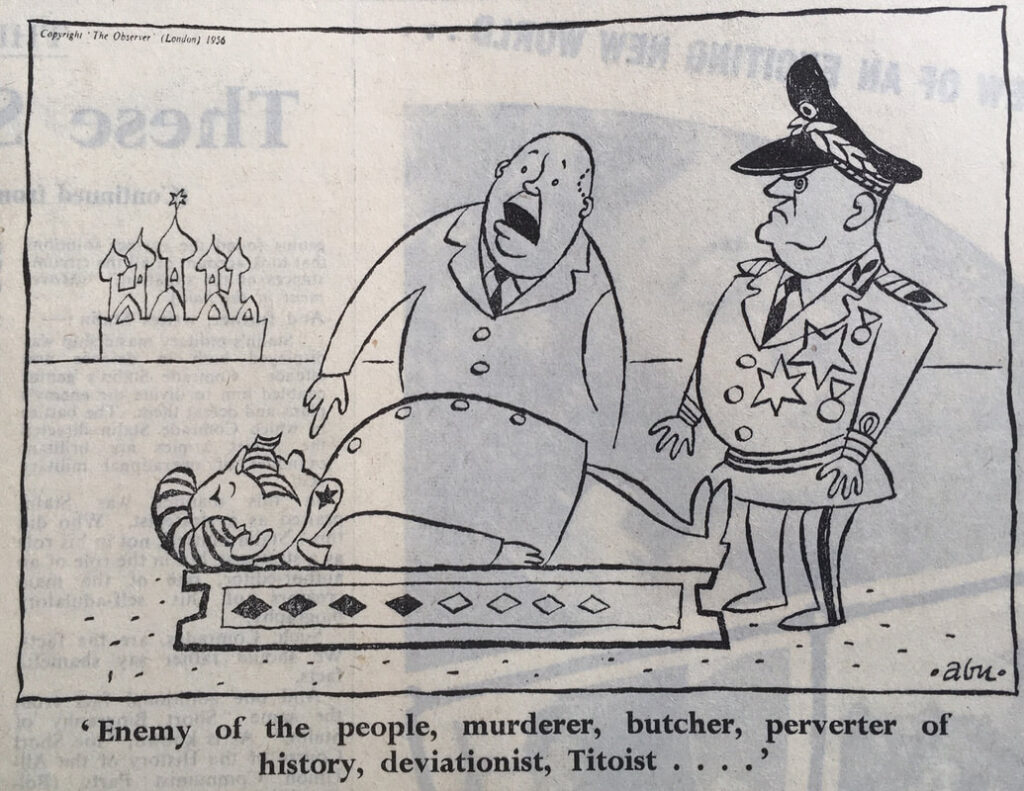
extreme repression. He believed that this had tarnished the USSR’s image overseas, and was unhelpful at a time of increasing international tension. He also thought that many people would welcome an alternative to the repressive nature of Stalinist rule. Khrushchev thus launched a scathing attack on Stalin, which formed the start of a process known as de-Stalinisation. The denunciations began at the Twentieth Party Congress in 1956. Khrushchev made a speech on “The Cult of the Individual and its Consequences”. The contents of the speech were never published (and became known as his “secret” speech) but the key points were leaked to the Communist Party organisations so that they would be familiar with Khrushchev’s position. The following criticisms were made of Stalin:
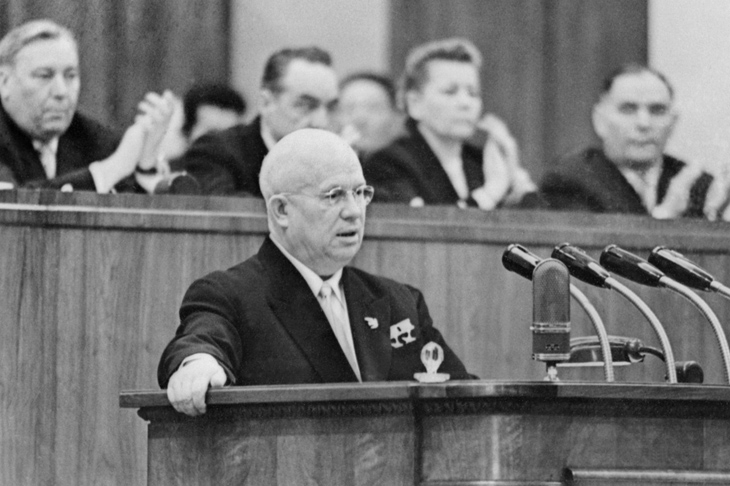
Why did Khrushchev make the “Secret Speech”?
De-Stalinisation had three basic aims:
- To justify the introduction of more progressive economic policies;
- To make peaceful co-operation with the West easier;
- To absolve Khrushchev and the other Soviet leaders from their complicity in Stalin’s errors.
Khrushchev knew that he was taking a risk in undermining Stalin’s reputation. He knew that he was laying himself open to the charge of having been an accessory to the offences that he was now condemning. After all, he had helped carry out the purges in Moscow and the Ukraine. But Khrushchev calculated that, since all the Soviet leaders had climbed to their current positions by carrying out Stalin’s orders, none of them had a clean record. Their shared guilt would prevent any serious challenge being offered to his denunciation of Stalin.
The impact of the “Secret Speech”
Although the contents of the “Secret speech” were not officially disclosed until 1961, it still caused an outcry among senior party members. The withering attack on Stalin’s character and record staggered party officials and made them fear for the future because, in one obvious sense, they were all Stalinists. They had all survived to hold their current positions because they had participated in, and benefitted from Stalin’s terror. Many of them were finding it difficult to adapt to life without Stalin. An opposition group to Khrushchev emerged, known as the “Anti-Party Group”. Early in 1957, while he was temporarily absent on one of his many visits abroad, the opposition made plans to remove him. They attempted to abolish the post of first secretary of the party, which would have destroyed Khrushchev’s power base. The chief protagonists, Molotov, Kagonovich and Malenkov, were quickly dealt with by Khrushchev, who pointed out that only the party Central Committee could change the party organisational structure. The actions of the three opponents were therefore illegal, and they were swiftly removed from the Presidum. Having previously used the support of the army, Khrushchev now took steps to prevent them becoming a threat. This involved undermining the position of his loyal supporter – Marshall Zhukov. Zhukov was accused of creating his own “cult of personality” and was forced to retire. He was replaced by Marshall Malinovsky. It only remained for Khrushchev to demote Bulganin, which he did by forcing him to confess to being implicated in the Anti-Party Group. In March 1958, Bulganin resigned as Premier and lost his place on the Central Committee. Shortly after, Khrushchev took over that post himself. For the first time since Stalin’s death, one man held the offices of Prime Minister in the government and First Secretary in the party.
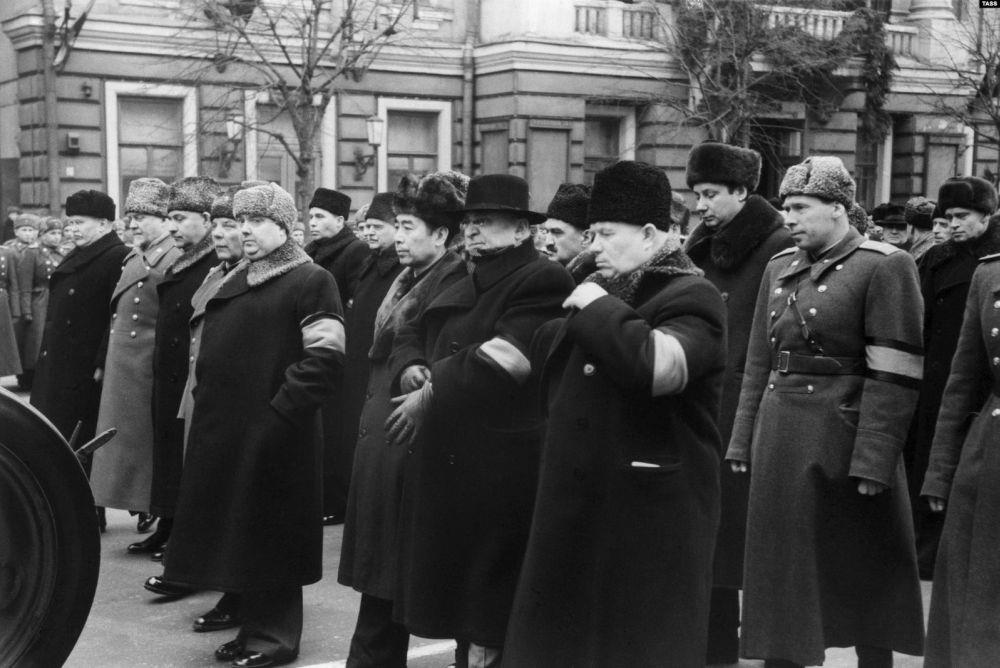
Key Features of De-Stalinisation
- Release of political prisoners from labour camps
- Relaxation of censorship – leading to a raft of works published criticising Stalin
- End of cult of personality. Stalingrad renamed Volgograd and his body removed from the Lenin mausoleum and buried in a concrete-filled hole beneath the Kremlin
De-Stalinisation and the satellite states
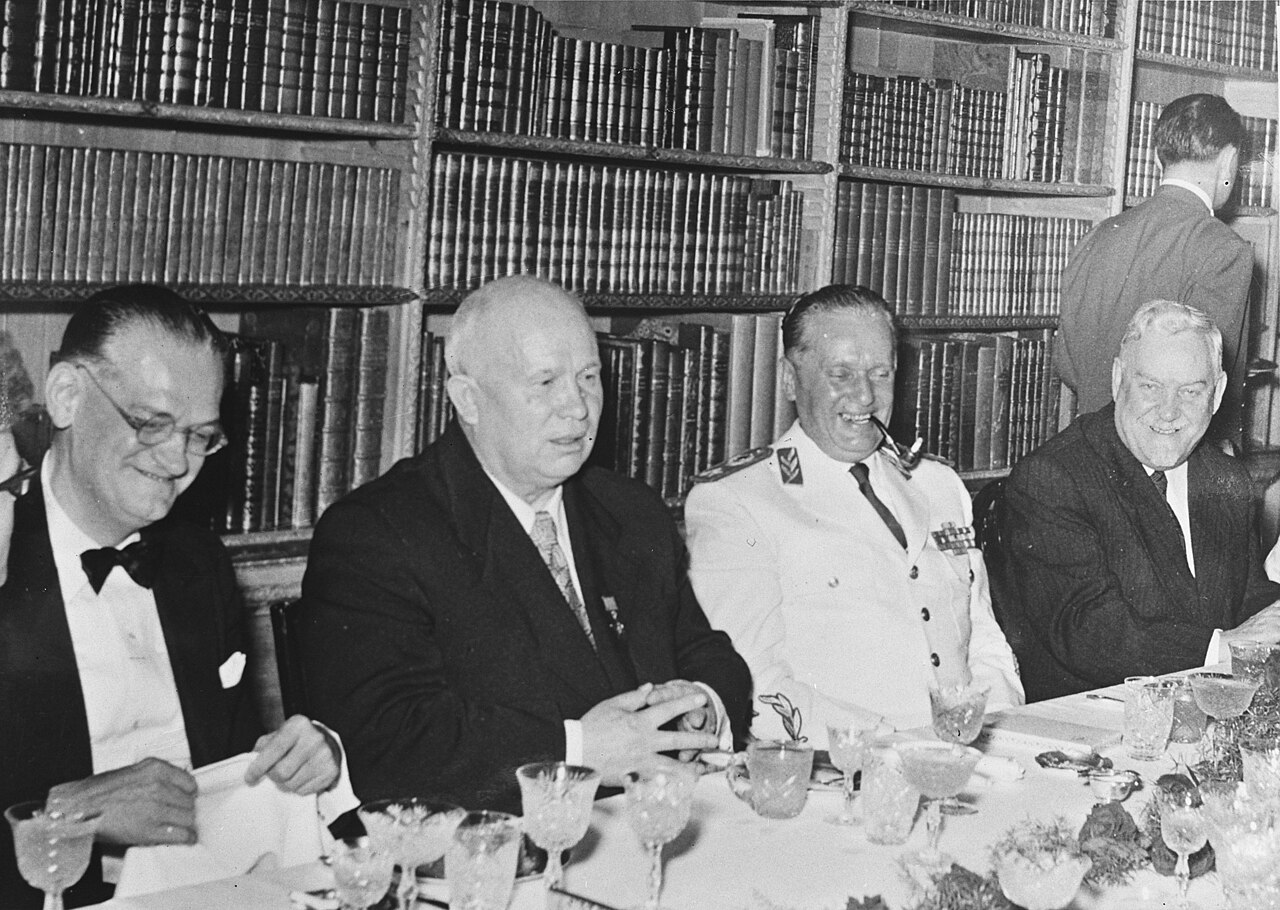
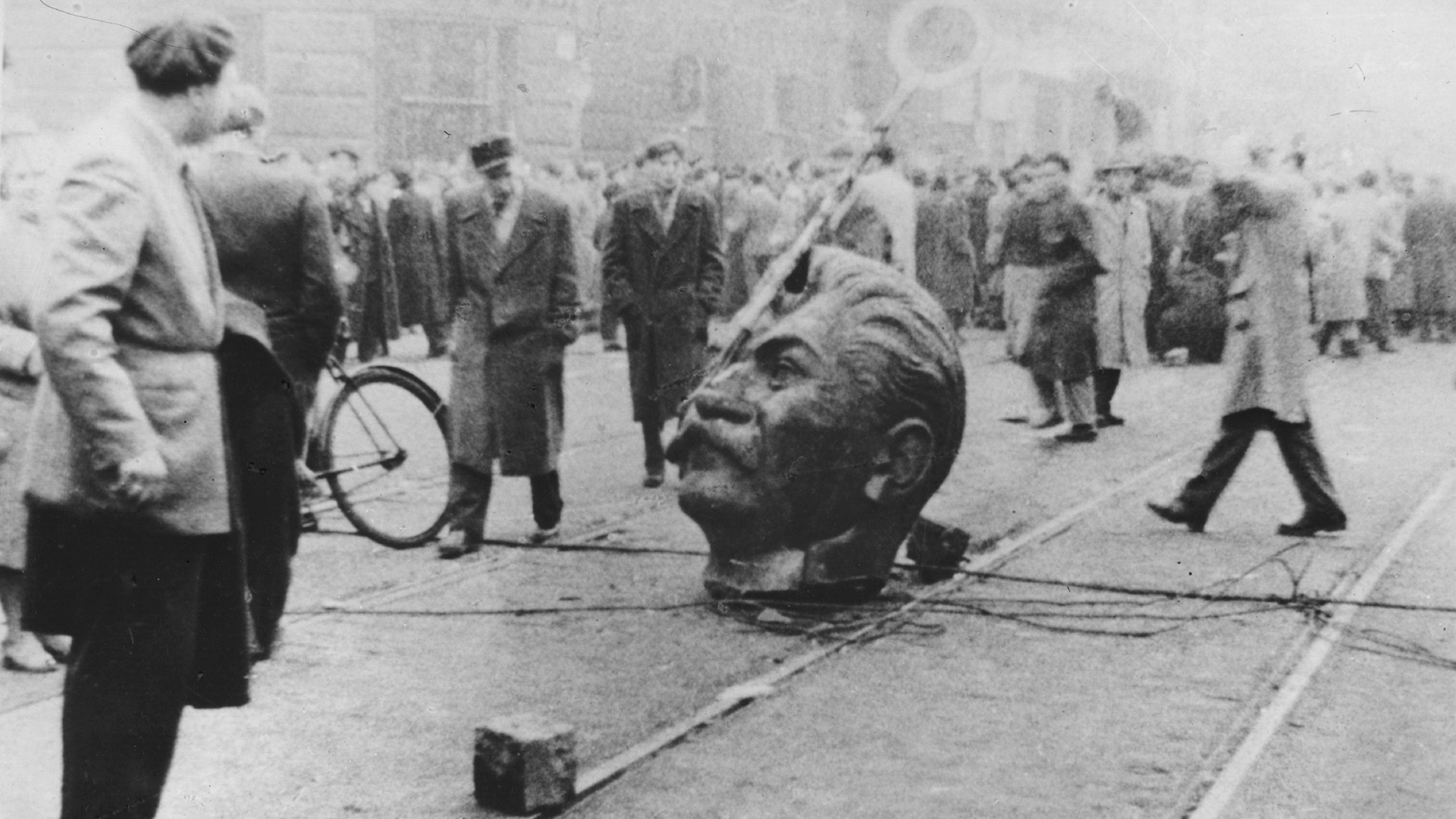
Yugoslavia had been the one eastern-European country to have successfully resisted Soviet domination in the post-war period. It remained Communist but independent of the USSR. Khrushchev made great play of Stalin’s mishandling of Tito and the Yuogslav Communists. Khrushchev contended that, had Stalin shown any real understanding of Tito and the national cause he represented, Yugoslavia would have maintained closer ties with the Soviet Union. His main purpose appears to have been a reveal Stalin’s foreign policy failures. He was not calling for a revision of Eastern-bloc Communism. Nevertheless, that was how many of the satellites saw it. They read Khrushchev’s attack on Stalin as an invitation to seek greater national independence for themselves. Khrushchev visited Tito in 1955 and 1956. Throughout the Eastern-bloc there were stirrings of independence – most notably in Poland and Hungary. How determined the USSR under Khrushchev was to maintain its grip was clearly revealed in its reaction to events in Hungary in 1956. When the Soviet Union felt its own security threatened or its control of the Eastern-bloc challenged, it was prepared to use force against the satellites. De-Stalinisation was a false dawn for those who thought it signified genuine independence for Eastern Europe. Khrushchev was as determined as his predecessor had been to assert the USSR’s right to dictate to the rest of the socialist world. This resulted in post-Stalinist Russia strengthening, no weakening its hold over its satellites.
Economy and Society
In the aftermath of Stalin’s death the Soviet leaders began to admit that the collectivisation of agriculture had not solved the problem of food production and supply in the years following the Second World War. In 1953 Khrushchev informed the Central Committee that grain stocks under Stalin had been lower than under Nicholas II. Major changes were needed, and viewing himself as an “expert” in rural matters as a result of his peasant upbringing, Khrushchev outlined a range of new policies.
Agriculture, Peasants, and the Virgin Land Campaign
Khrushchev’s agricultural policies
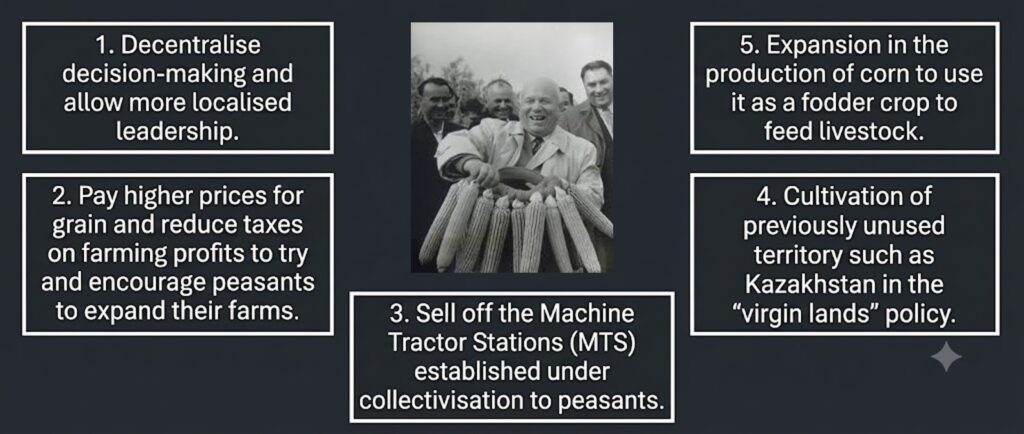
The Virgin Land Campaign
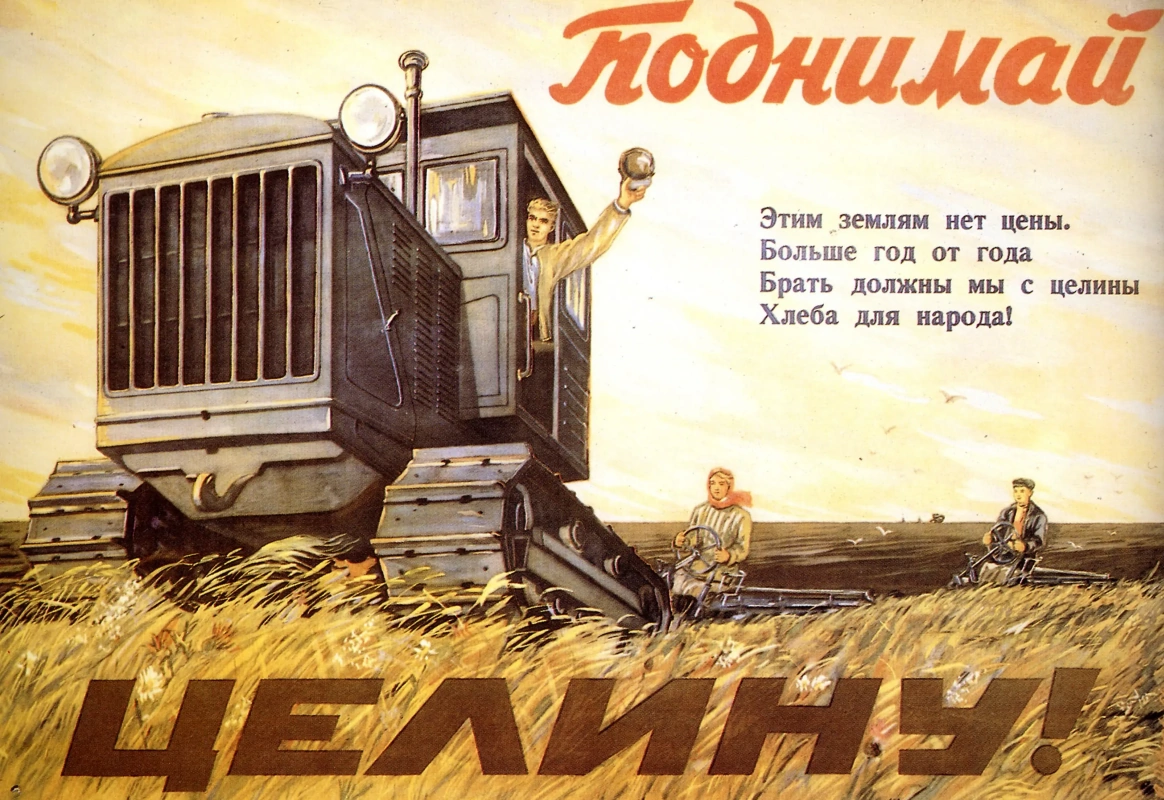
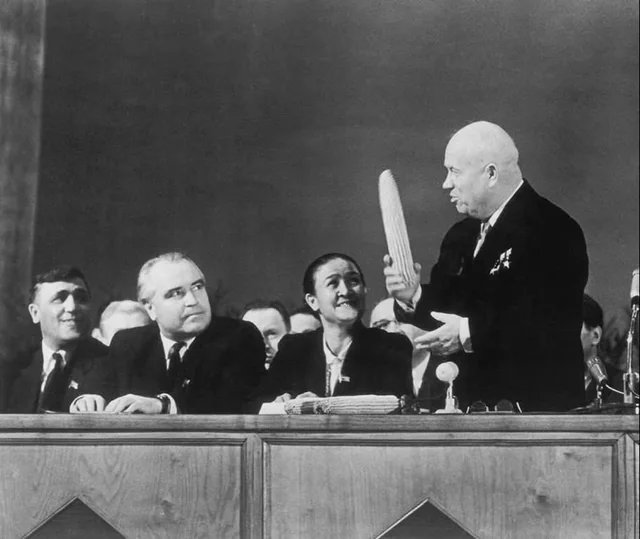
The Virgin Land Campaign began in 1954 and developed into a massive project for exploiting the previous unused areas of the USSR for crop production. Over a quarter of a million volunteers, mainly drawn from the Komsomol (the Young Communist League), were enlisted to work in these regions. Considerable financial and material investment was put into the scheme, most spectacularly in the provision of 120,000 motorized tractors. Six million acres were freshly ploughed in the virgin lands in the first year of the scheme. A corn research institute was established in Ukraine and sown acreage of corn rose from 4.3 million hectares in 1954 to 18 million hectares in 1955. Thanks to favourably hot weather during two successive years’ growing seasons, corn harvests were abundant. It appeared that “Mr. Corn” (“Kukuruzshchik”) had achieved an agricultural “miracle.” In 1950, 96 million acres of land were given over to the production of wheat, by 1964, this increased to 165 million acres. Between 1952 and 1958 farm-workers incomes more than doubled with the prospect of real economic advancement for the individuals being greater than at any time since the NEP.
However, poor management and short-sighted planning caused significant issues for the long-term success of these policies. For example, crops were often sown in unsuitable soil and the effects of climate tended to be ignored. The necessary fertilizers were seldom available in sufficient quantity. In the drive to convert to foodstuffs, successful crops such as cotton were replaced by crops such as maize (as part of the corn plan) which simply refused to grow. This occurred notably in Kazakhstan where the “maize mania” often led to whole areas abandoning their traditional planting for the lure of a crop whose yield then proved so poor that it was not worth harvesting.
The policies also suffered as a result of a lack of agricultural workers required in the virgin lands to keep pace with the localised schemes. For example, in Kazakhstan by 1960 total acreage of corn productions had increased to 28 million hectares and reached 37 million by 1962. This inevitably meant that more farmers would be required in this region. However, again poor planning was an issue as any skilled farmers were reluctant to move to these areas because of the bad living conditions such as a lack of adequate housing. Unfortunately, many towns and villages saw the Virgin Land Campaign as an opportunity to send orphans, abandoned children and criminal to the newly cultivated regions. This affected the quality of the work force, the land not being cultivated properly and therefore poor productivity levels. The much promised mechanisation of agriculture also failed to materialise and by 1959 there was only one tractor for every 200 hectares of land. Furthermore, if tractors broke, there were inefficient parts to mend them. 1963 brought a bad harvest to the farmers of the Virgin Lands where grain production dropped from 140 million tonnes to 107 million tonnes. As a result of this, riots broke out at the Budyenni Locomotive Works in Novocherkassk where the KGB killed 23 protesters.
Industry and the Urban Population
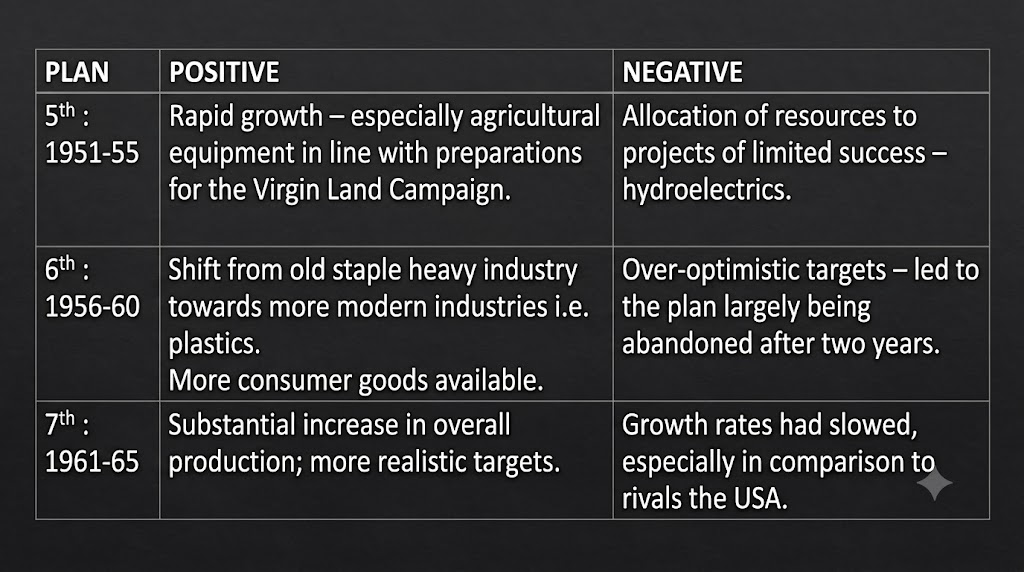
There was nothing original about the industrial policies adopted by Khrushchev as he continued with the approach of Stalin’s Five Year Plans. However, Khrushchev did want to alter the direction of the Soviet economy by lessening its dependence in heavy industry and giving greater prominence to light engineering and chemicals. He emphasized the need for sustained effort, but whereas Stalin has used coercion, Khrushchev offered incentives. Stalin’s neglect of consumer goods was replaced by the promise of material rewards. In a radio broadcast Khrushchev excited the interest of many Soviet women, by suggesting that if they continued to work hard they would soon be able to buy nylon underwear.
The ‘Space Race’
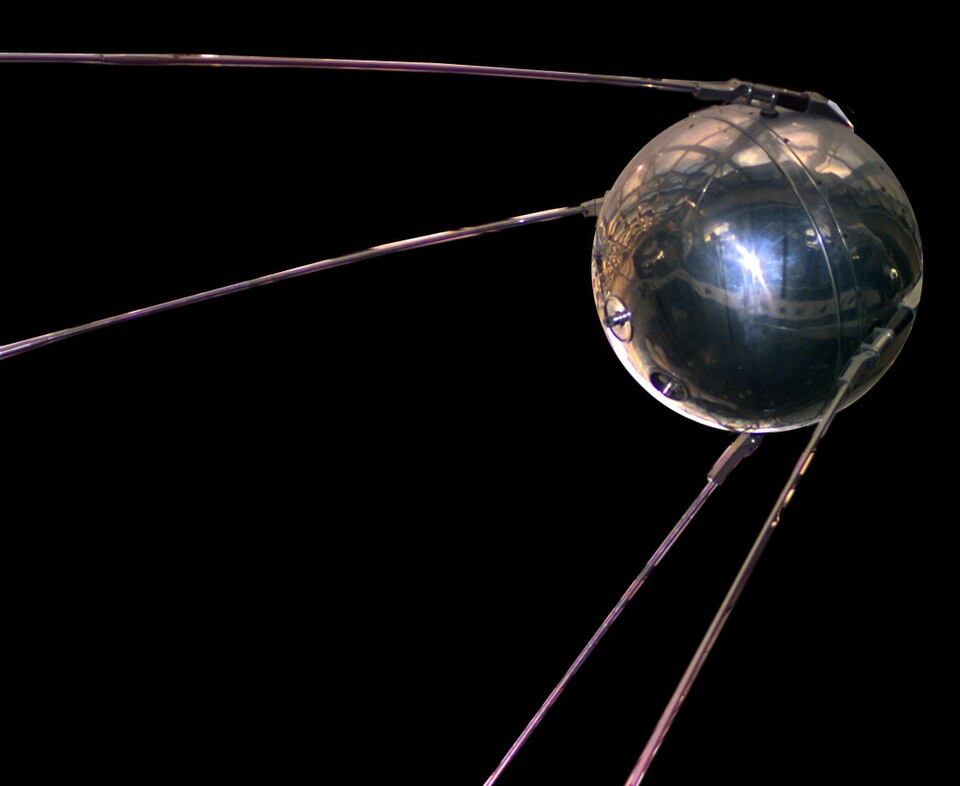
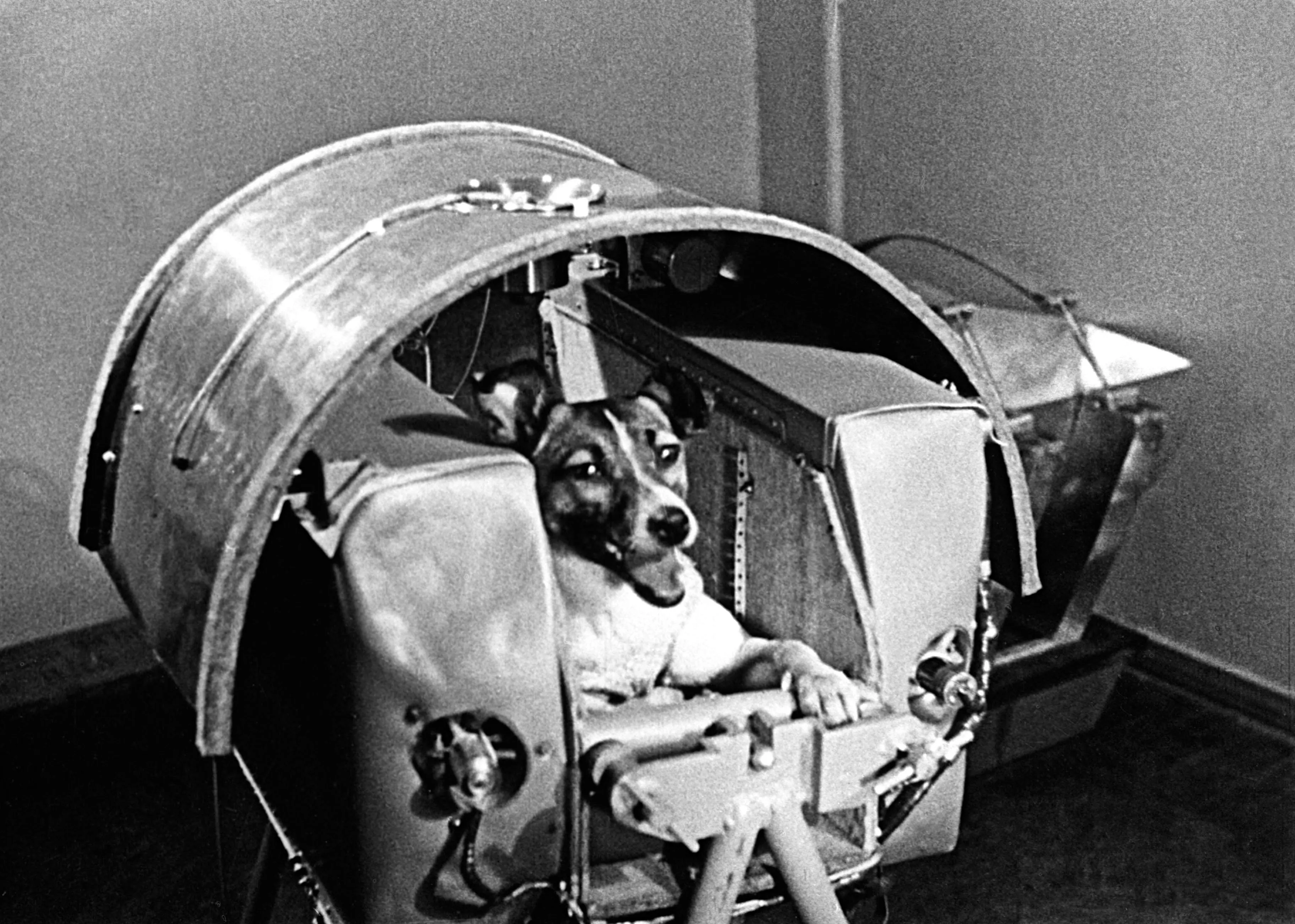
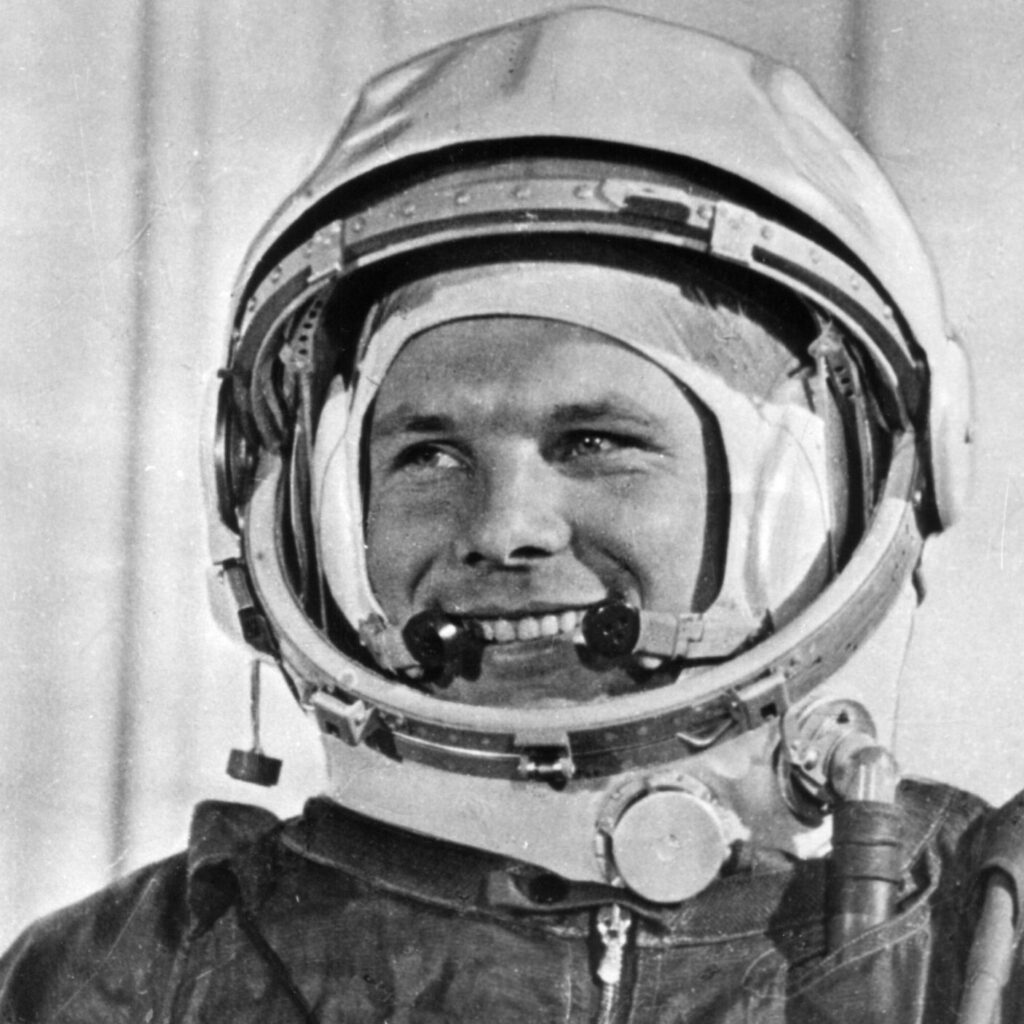
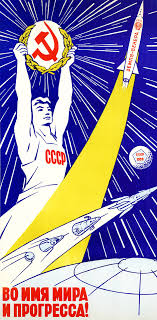
A new focus of the Cold War in the later 1950s and 1960s became competition with the United States to be the first leading world power to dominate space. Large amounts of investment and resources were given to these space projects in the 6th and 7th plans and did lead to significant technological development in the Soviet economy.
October 1957:
USSR launched its first satellite, SPUTNIK
Nov 1957:
Laika the first living creature to orbit Earth
April 1961:
Yuri Gagarin the first man in space
Significance:
International prestige Superior economic systems Rivalry with USA
Living and Working Conditions
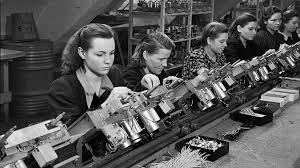
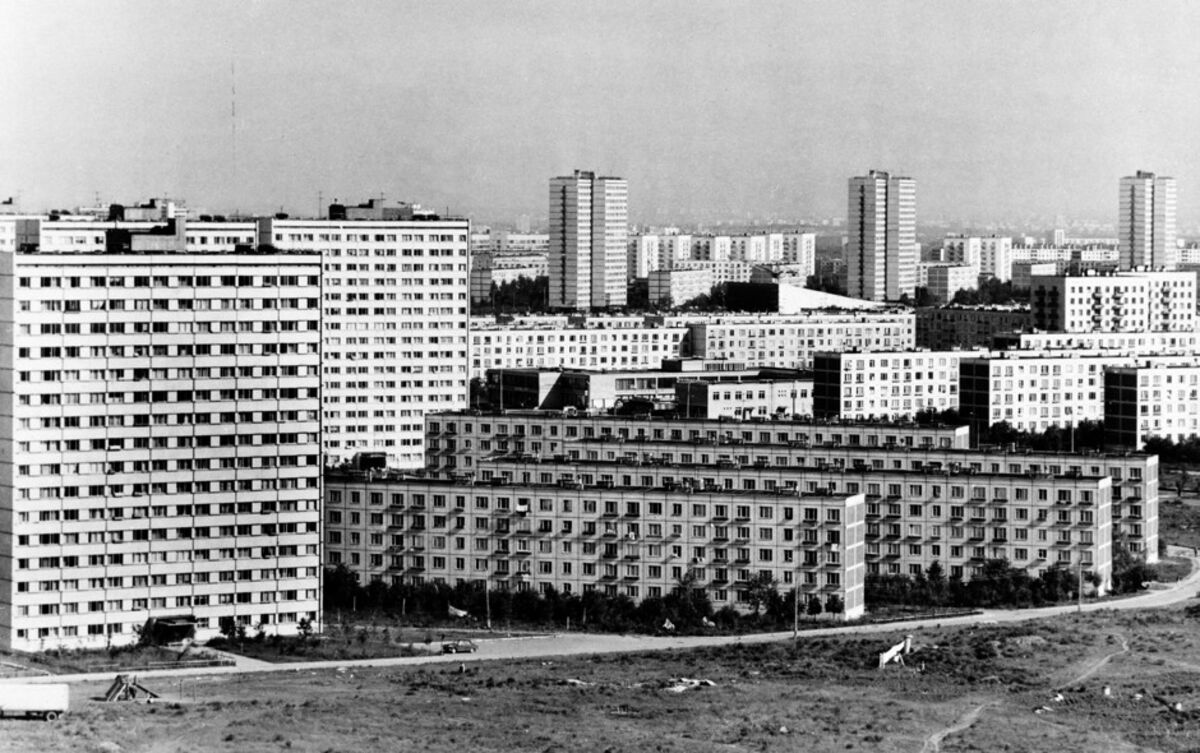
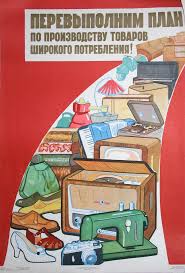
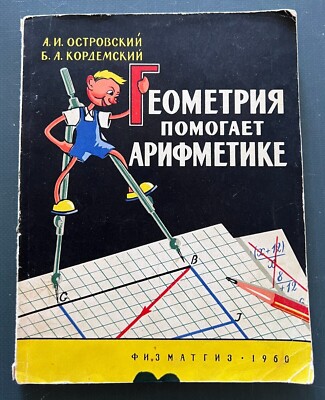
Average Working Day:
7 Hours.
Wages 1954: reached early 1920s levels
Housing
1955-1964:
Housing stock doubled, communal
living abandoned QUALITY?
Consumer goods:
more readily available
Education:
Free secondary education for all/ re-writing of textbooks. Polytechnics and academies
Censorship eased: 20s-50s number of
books published x2/
1959-135,000 libraries/ 60m newspaper
readership
The Cold War
‘Peaceful Coexistence’
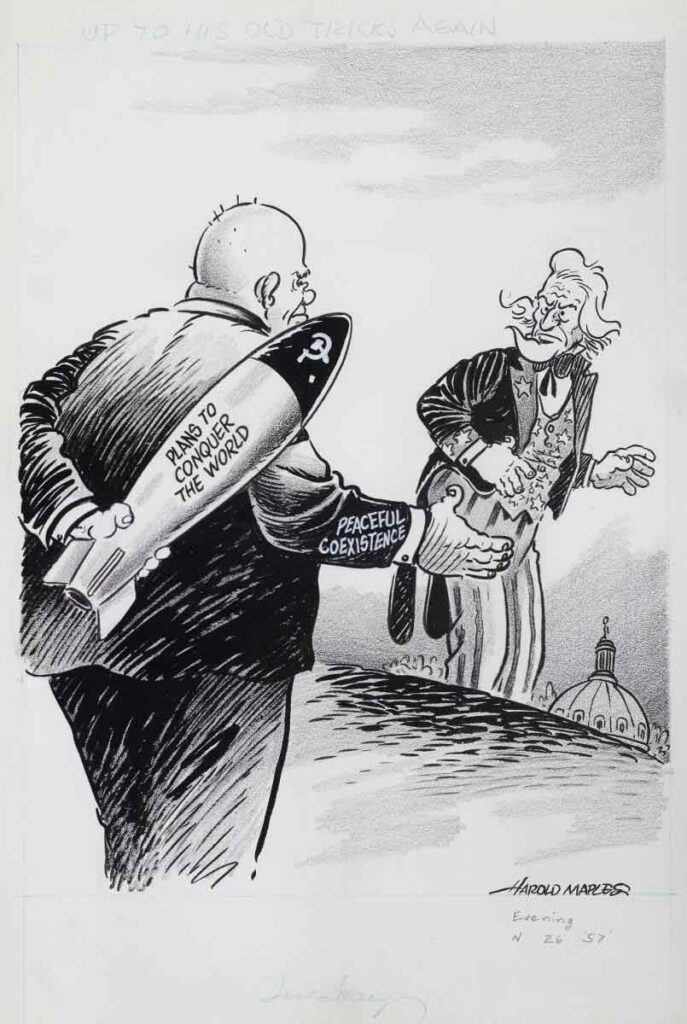
Following the death of Stalin in 1953, and after much manoeuvring, in February 1955 Khrushchev was able to bring about Malenkov’s dismissal as temporary Soviet premier. Like the rest of the Soviet leadership, Khrushchev had been profoundly affected by the Great Patriotic War of 1941-45. Fully aware of the human and economic devastation his country had suffered, and genuinely fearful of the risks posed by the escalating nuclear arms race, Khrushchev developed his own foreign policy agenda – one known as “Peaceful Coexistence”. In a move away from the early post-1917 policies of encouraging “world revolution” and the spread of Communism, Khrushchev declared that violent conflict between the communist and capitalist world was not inevitable in the way that Lenin had described.
However, Khrushchev’s pursuit of this policy during the period 1955-64 was at times inconsistent. He was more of a risk-taker than either Stalin or the collective leadership that replaced him following 1953. nonetheless, Khrushchev tried to achieve real détente between East and West, to avoid the risk of a devastating nuclear world war. However, under Khrushchev “Peaceful Coexistence” also involved a clearly competitive element based on the belief that the socialist system would soon prove to be economically superior to the capitalist system. Ultimately, he argued, there could be a peaceful global transition to socialism.
The Warsaw Pact, 1955
In May 1955, just as the USSR had feared, West Germany became a member of NATO. Shortly thereafter, the Soviet Union announced the formation of its own military alliance. The Warsaw Pact – so called because the treaty was signed in Warsaw – was a mutual military assistance alliance that include the Soviet Union and all the Eastern European allies. In particular, it included East Germany, as the lack of agreement on the German question had finally persuaded the Soviet Union of the need to prop up the communist government in East Germany. However, the USSR did not give up on the possibility of achieving a European agreement on collective security. In fact the Warsaw Pact even had a clause which stated that, if a general European treaty on collective security was signed, then the Warsaw Pact would be dissolved.
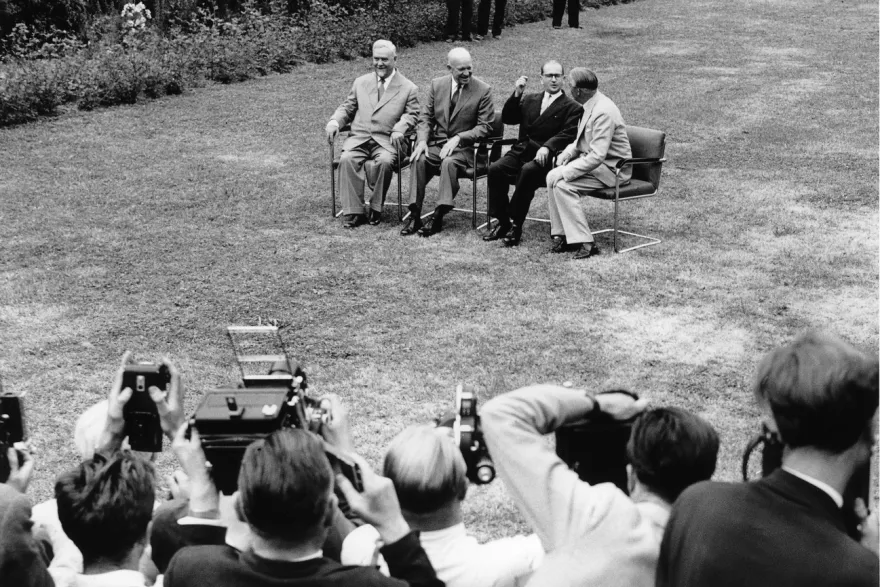
The Geneva Summit, July 1955
In July 1955, the first summit meeting occurred between the leaders of the “big four” powers – the first since the Potsdam Conference in 1945. The meeting was not significant for any particular agreements reached, but rather for the spirit of friendship in which the meeting was conducted and certainly seemed to more discussions on from the Truman-Stalin era of diplomacy.
There were some areas of disagreement:
- Soviet proposals to resolve the “German question” by holding elections on reunification were rejected
- Eisenhower’s “Open Skies” proposal that each side would allow the other to undertake aerial reconnaissance of military sites was rejected by Khrushchev.
But on a more positive note, following the meeting
the USSR did establish diplomatic and trade links
with West Germany.
Khrushchev’s “secret” speech, 1956
In the secret speech Khrushchev attacked Stalin’s foreign policy and accepted that there could be “national roads to socialism” that did not just include the exportation of the Soviet model. In fact, as early as 1955, Khrushchev had made attempts to secure Yugoslavia as a definite ally of the Soviet Union – something which Stalin had failed to achieve. Khrushchev soon announced the dissolution of Cominform, from which Stalin had expelled Yugoslavia, and he encouraged its membership of the Warsaw Pact. Tito refused to go this far, and only agreed to restore diplomatic relations. The secret speech was circulated in the Eastern European satellites, which gave hope to reform communists and non-communists who sought a reduction in Soviet control of their countries. Two counties particularly affected were Poland and Hungary.
Poland
Reform Communists in Poland were led by Wladyslaw Gomulka.
He had been imprisoned by the Stalinist regime in the late 1940s – and was only released from prison following Stalin’s death.
Khrushchev and Gomulka met in 1956 and it was agreed that Soviet military
intervention in Poland would end, as long as Poland remained in the Warsaw Pact.
This action inspired leaders in other satellite states to seek further reform in their relationship with Moscow.
Hungary
Pro-reform Communists organised protests in Budapest which rapidly got out of control.
Khrushchev allowed the reformist Communist leader Imre Nagy to form a government but his decision to legalise opposition parties and withdraw from the Warsaw Pact persuaded Khrushchev to opt for military intervention in Hungary.
After intense fighting, a pro-Soviet government was installed and in the purge that followed Nagy was arrested, taken to the USSR and in 1958 executed.
Sputnik, 1957
On 4th October 1957, much to the surprise of the West, the USSR launched the world’s first satellite into space. Despite the huge propaganda victory this gave the USSR in the “space race”, the US continued to have an overwhelming nuclear superiority throughout the decade. The launching of Sputnik also enabled the US President Eisenhower to justify the establishment of NASA (National Aeronautics and Space Administration) in 1958, to further promote US development of missiles and space exploration.

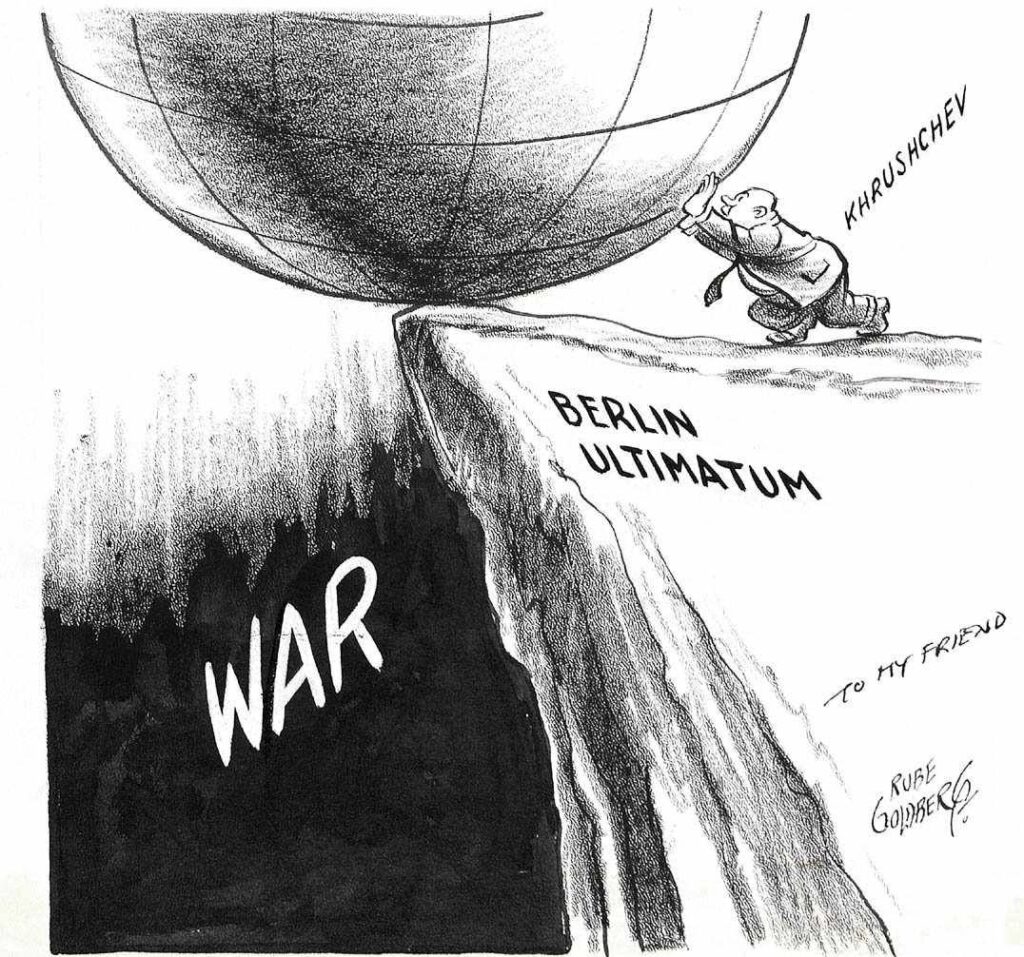
Berlin crisis, 1958
On 27th November 1958 Khrushchev issued his first “Berlin Ultimatum”. This was an attempt to push the West into concluding a formal peace with Germany and agreeing that West Berlin should become an international and demilitarised area – Khrushchev was particularly concerned that NATO would make West Germany a nuclear power. Khrushchev warned that if such agreements were not forthcoming, the USSR would sign a separate peace with the GDR, including handing over control of the access route to West Berlin.
Camp David, 1959
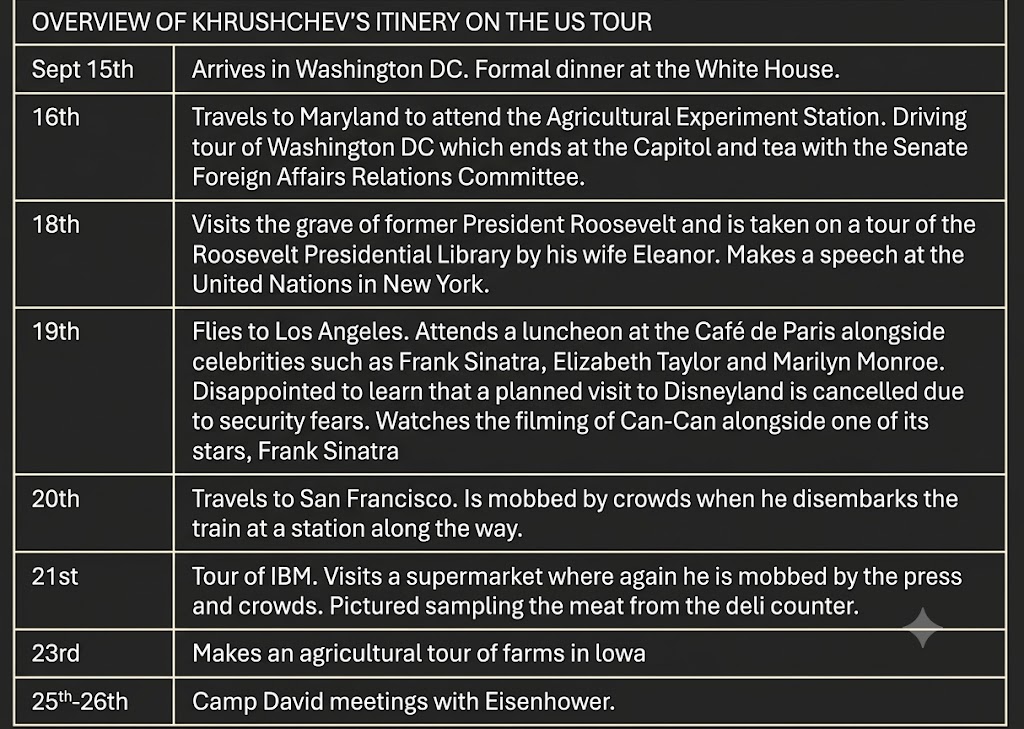
In an attempt to break the deadlock on the Berlin discussions, Eisenhower invited Khrushchev to visit the US for talks. The notion that a Soviet leader would visit the US was a ground-breaking move and the talks at the Presidential country residence of Camp David were considered so constructive that they gave rise to the term “the spirit of Camp David” as an expression of the improve Soviet-American understanding. Khrushchev withdrew his previous Berlin ultimatum and it was agreed that further talks would take place at the Paris Summit planned for May 1960.
The Paris Summit and the U-2 incident, May 1960
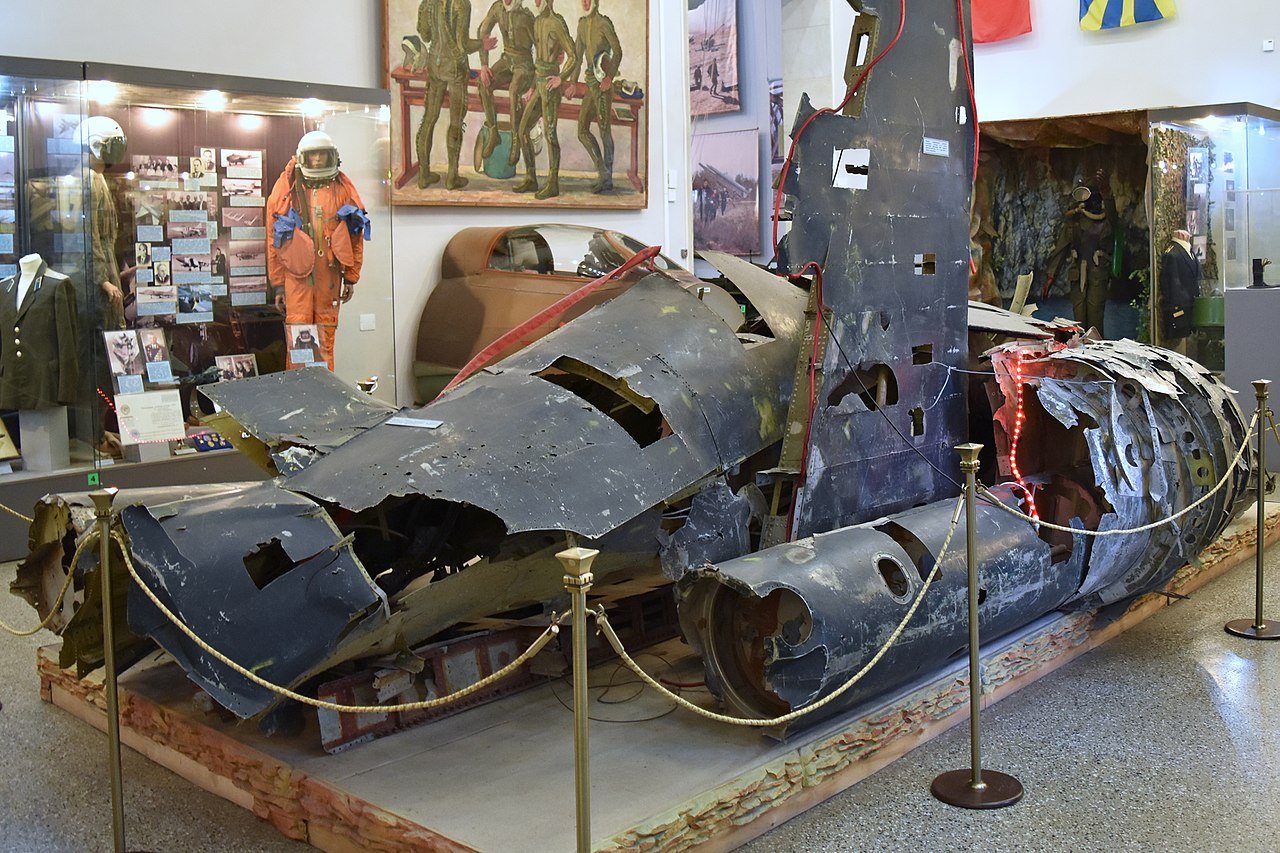
By the time the leaders met in Paris, the situation had already altered. The US has discovered, via its spy planes, that the USSR was already well behind the US, while West Germany was no longer prepared to make any concessions on West Berlin. Then on 1st May (during the conference), came the announcement that a Soviet missile had successfully brought down a US U2 spy plane over the USSR. Eisenhower, embarrassed that his previous denials of the existence of spy places (he had claimed they were weather planes) refused to apologise. The incident soured the rest of the talks. As discussions on Berlin dragged on, an ever increasing number of East Germans migrated to the West. By 1959, these numbered around 200,000 a year – many of them young technicians and skilled workers. This was having a serious effect on the weak East German economy, and was thus encouraged by the West. Not surprisingly, the GDR leader, Walter Ulbricht, began to press for action. Ideally Ulbricht wanted West Berlin to be added to East Berlin, removing the Western presence in the GDR.
The Vienna Summit, June 1961
The first meeting between Kennedy and Khrushchev was not a success, as Kennedy still refused to make concessions on Berlin or Germany. Kennedy increased US military spending and ordered more nuclear fallout shelters. In response, Khrushchev gave provisional permission for Ulbricht to begin preparations for physically dividing Berlin. He then announced that he was reimposing a six-month deadline for West Berlin to become demilitarised.
The Berlin Wall, August 1961
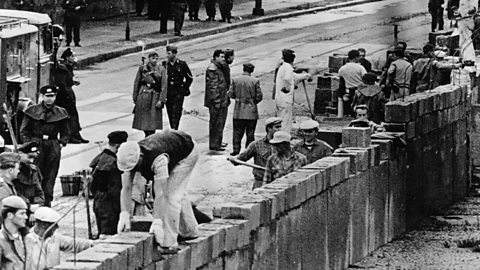
As tensions increased, the number of East German refugees increased dramatically, to over 20,000 a month, and was soon double the rate for the 1950s. The formal division of Berlin began to halt this. At first a barbed-wire fence was erected. The West did not react, so on 13th August, the GDR authorities rapidly completed the building of the Berlin Wall, which became a very visible image of the Cold War divisions. The wall stopped the mass emigration from the East and this, along with Soviet aid, eased the GDRs economic problems and moved the focus of the Cold War away from Europe.
The Cuban Missile Crisis, 1962
When Fidel Castro, the revolutionary leader of Cuba since 1959, openly declared himself a Communist, Khrushchev saw the possibility of a major Cold War coup. He moved quickly, offering a package of economic support for Castro’s regime. The Soviet Union hoped, and the USA feared, that the creation of a Russian-backed Marxist state in Cuba, would be the prelude to the rapid spread of Soviet-style Communism throughout central and South America.
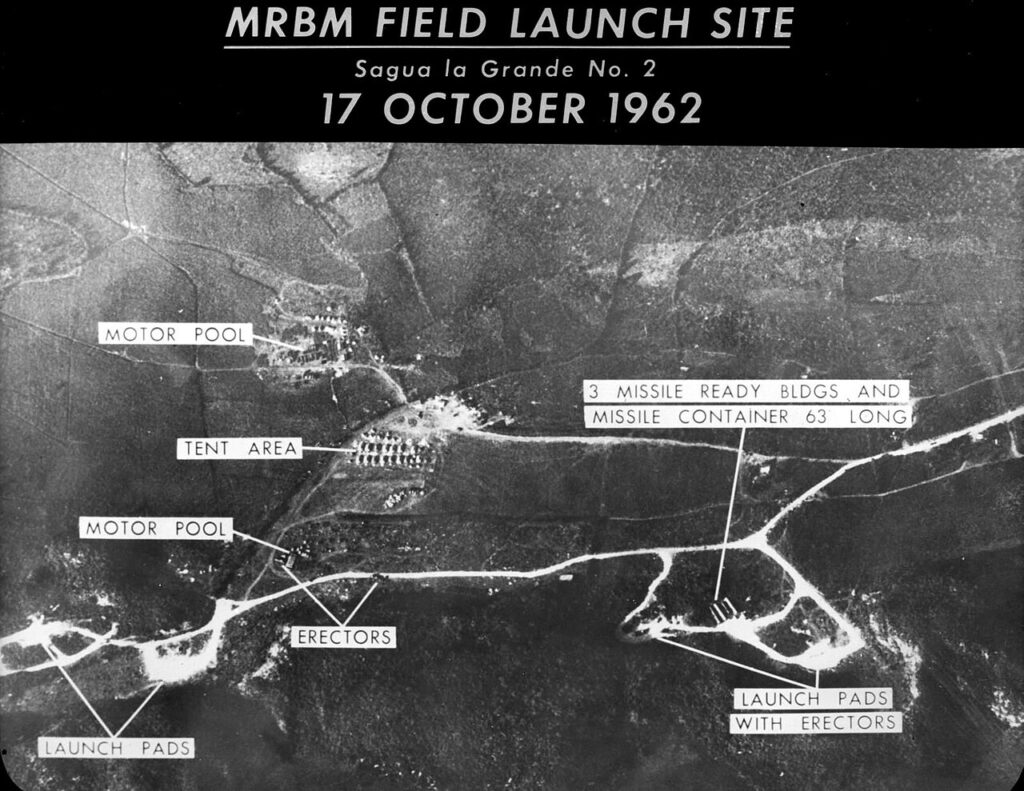
The Soviet Union increased its investment and involvement in Cuba, culminating in Operation Anadyr, the installation on the island of Soviet nuclear missiles, capable of reaching the USA. Khrushchev was involved in every aspect of the planning and privately spoke of “putting one of our hedgehogs down the Americans’ trousers”.
Kennedy announced a naval blockade of Cuba until the missiles were removed, and let it be known that if any attempt were made to use them against the USA he would order a retaliation in kind. Kennedy backed his ultimatum by placing US armed forces on nuclear war alert. Faced by such as uncompromising determination, Khrushchev chose not to risk a full-scale nuclear confrontation. He gave the order to the Soviet ships not to challenge the American naval blockade. With the tension broken, direct contacts by letter and phone were made between Kennedy and Khrushchev. These exchanges produced a compromise; the Soviet leader agreed to the withdrawal of Soviet missiles from Cuba and the American President gave a commitment to reduce the USA’s bases in Turkey. Khrushchev’s critics back in the USSR viewed this as a diplomatic victory for the USA and worsened his position.
The Kitchen Debate
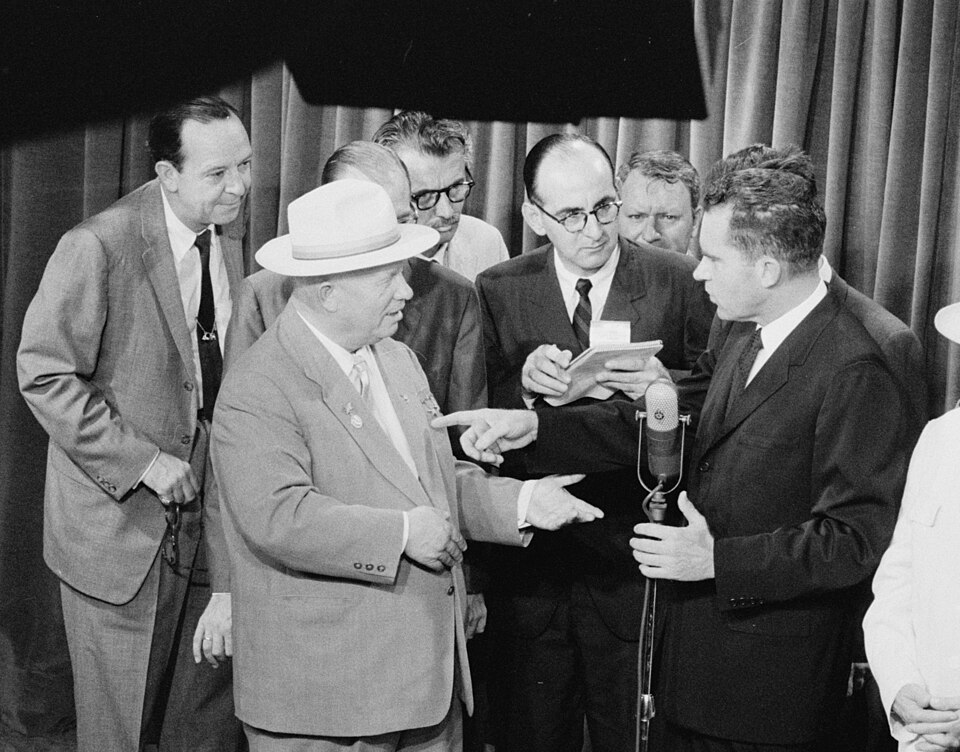
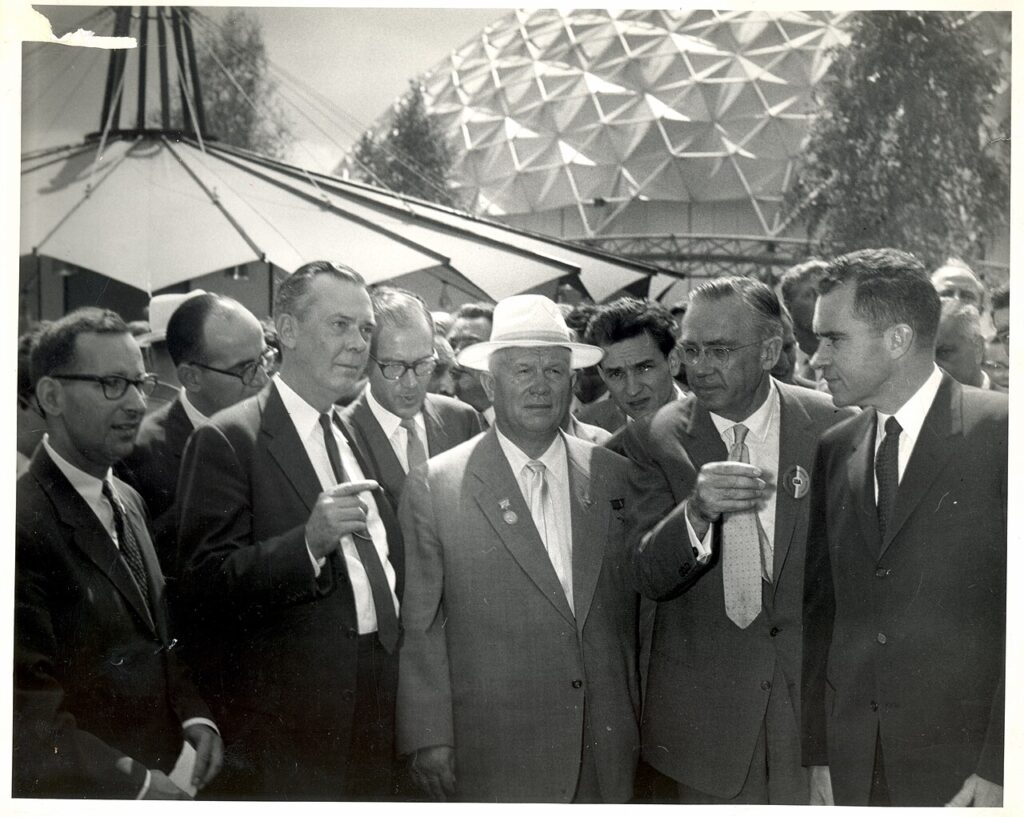
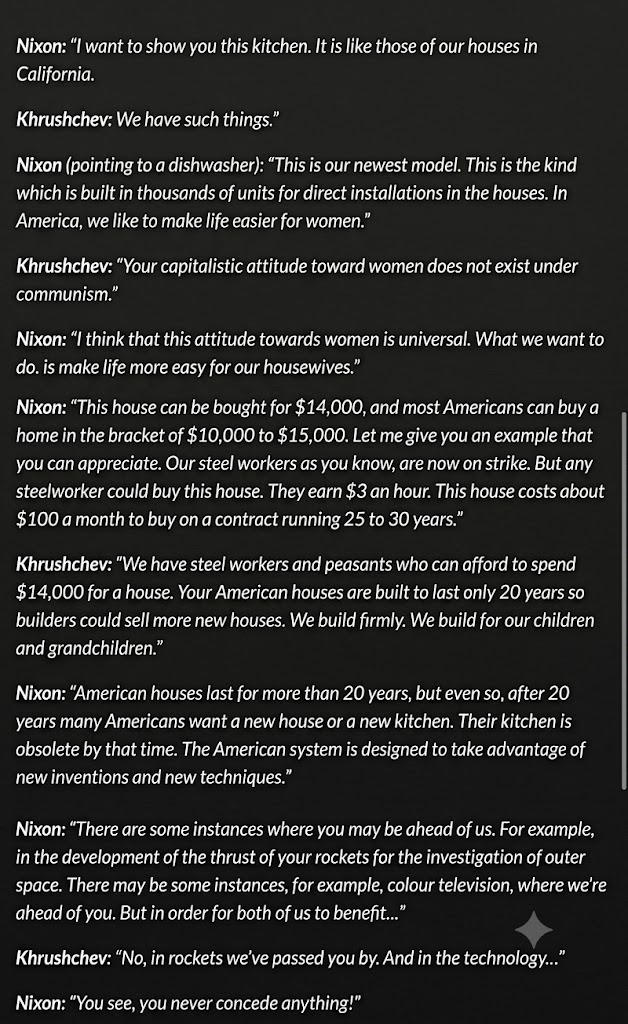
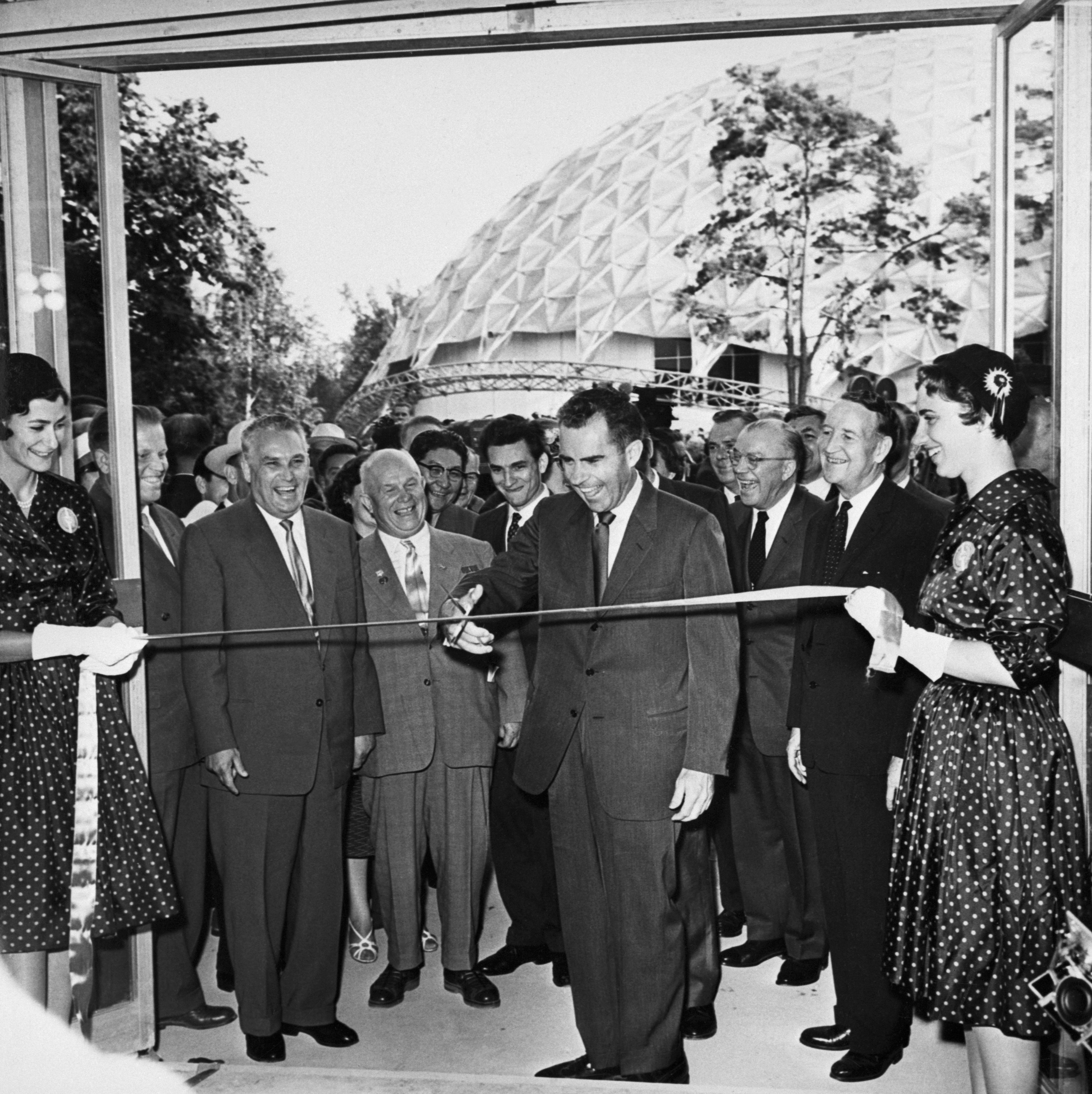
The ‘Kitchen Debate’ was a 1959 exchange between United States vicepresident Richard Nixon and Soviet leader Nikita Khrushchev. In this informal conversation, conducted in Moscow in front of press reporters and television cameras, Nixon and Khrushchev engaged in some verbal tussling, debating the merits of their respective ideologies.
Who was Nixon?
The American exhibition opened in Moscow in late July 1959 and was attended by Soviet leader Khrushchev and US vice-president Nixon. At the time, the two had held high office for around six years. Nixon’s rise had been steeper and more rapid than his Russian counterpart. A lawyer bytraining, Nixon was an active anti-communist.
Nixon arrived in Moscow on July 23rd. Prior to visiting the American exhibition, he attended a public reception hosted by Khrushchev. This event was outwardly friendly but, as one might expect, there were several prickly moments. Khrushchev was known for his combative and sarcastic manner – and having Nixon, one of the most vocal of America’s anticommunist agitators, as his guest proved too good an opportunity to pass. At the reception, Khrushchev welcomed the vice-president to “a land of captive people” (a sarcastic reference to one of Eisenhower’s earlier remarks about the Soviet bloc). The Soviet leader then went on to deride America as “imperialists”, “monopolists” and interferers in the affairs of communist nations.
US exhibition in Moscow
The American exhibition opened the following day. The Soviets hindered the construction of the exhibition, allocating a ten-acre site in a remote forest, well outside Moscow. As a result, much of the US government supplied funds were spent on building access roads, clearing trees and connecting power and water. It soon fell behind schedule. The Americans complained that their Russian counterparts, several of whom were women, were lazy, poorly equipped and unable to follow instructions. Under the terms of the US-Soviet agreement, no overt political material was displayed in either exhibition. Nevertheless, both governments viewed the exhibitions as opportunities for Cold War propaganda. The American exhibition was less concerned with industrial and technical achievements than promoting the idea that Americans enjoyed a better standard of living. Because of this, there was a strong focus on consumer goods like motor cars, electrical appliances and labour saving devices.
An entire suburban house was constructed inside the American exhibition building, offering Russian visitors a look inside the average suburban home in the US. This model home contained the latest products: a dishwasher, colour television, frozen meals and Pepsi-Cola. There were displays of American culture including films, television programs, art, books and games. The American exhibition was very popular with Soviet citizens. Almost three million Russians attended, despite a lack of easy transportation from Moscow. There were long queues for free samples of American food and drink, like Pepsi-Cola. The book displays had to be constantly restocked because of petty theft. Four sets of Monopoly – ironically the most capitalist board game of its era – were also pilfered and had to be replaced.
Khrushchev and Nixon toured the exhibition the day before its public opening, with a large press contingent in tow. While in the display home, the two men gave impromptu comments that morphed into a friendly but sometimes heated exchange.




Relations with China
Key tensions in Stalinist era
RUSSIA claimed China could not be viewed as a fully developed Communist state due to its overwhelmingly agricultural population.
CHINA claimed Russia had betrayed principle of world revolution by not pushing for extension of revolution in West.
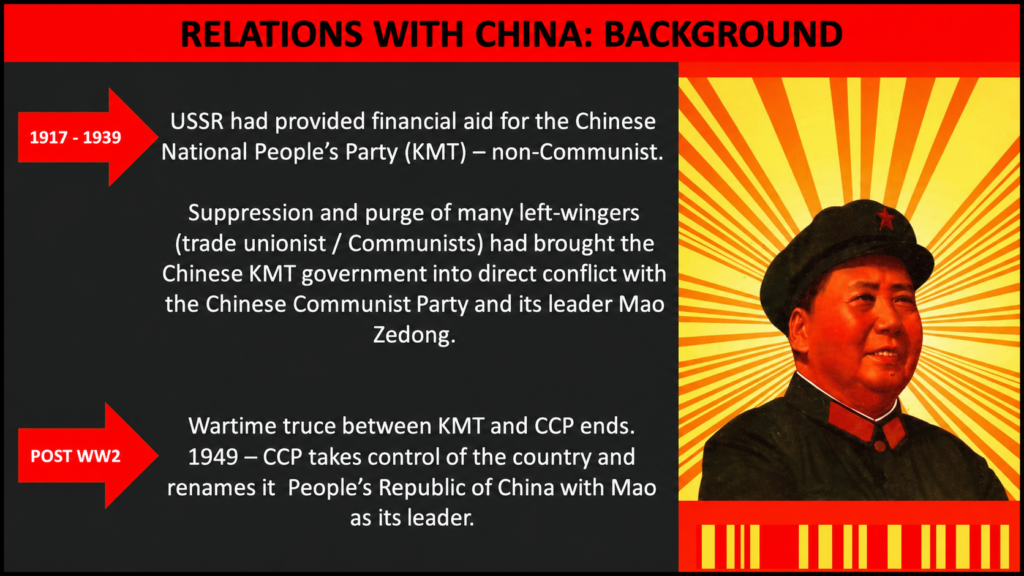
Despite Soviet support for the KMT, after Mao secured his control over China he initially accepted the hegemony (leadership) of Stalin when it came to attempts to spread communism in the post-war era and until Stalin’s death in 1953, relations between the two remained cordial. Under Khrushchev the friendship rapidly deteriorated and by the 1960s border disputes were emerging.
The coming to power of the Chinese Communist Party (CCP) under Mao Zedong in China in 1949 had been greatly welcomed in Moscow. It was logical for the Soviet Union to think that it now had a major Marxist ally in its Cold War struggle with the West. Indeed, that is precisely what the West feared, the formation of a huge Soviet dominated Marxist power-bloc. But appearances were deceptive. There was little real harmony between Moscow and Peking.
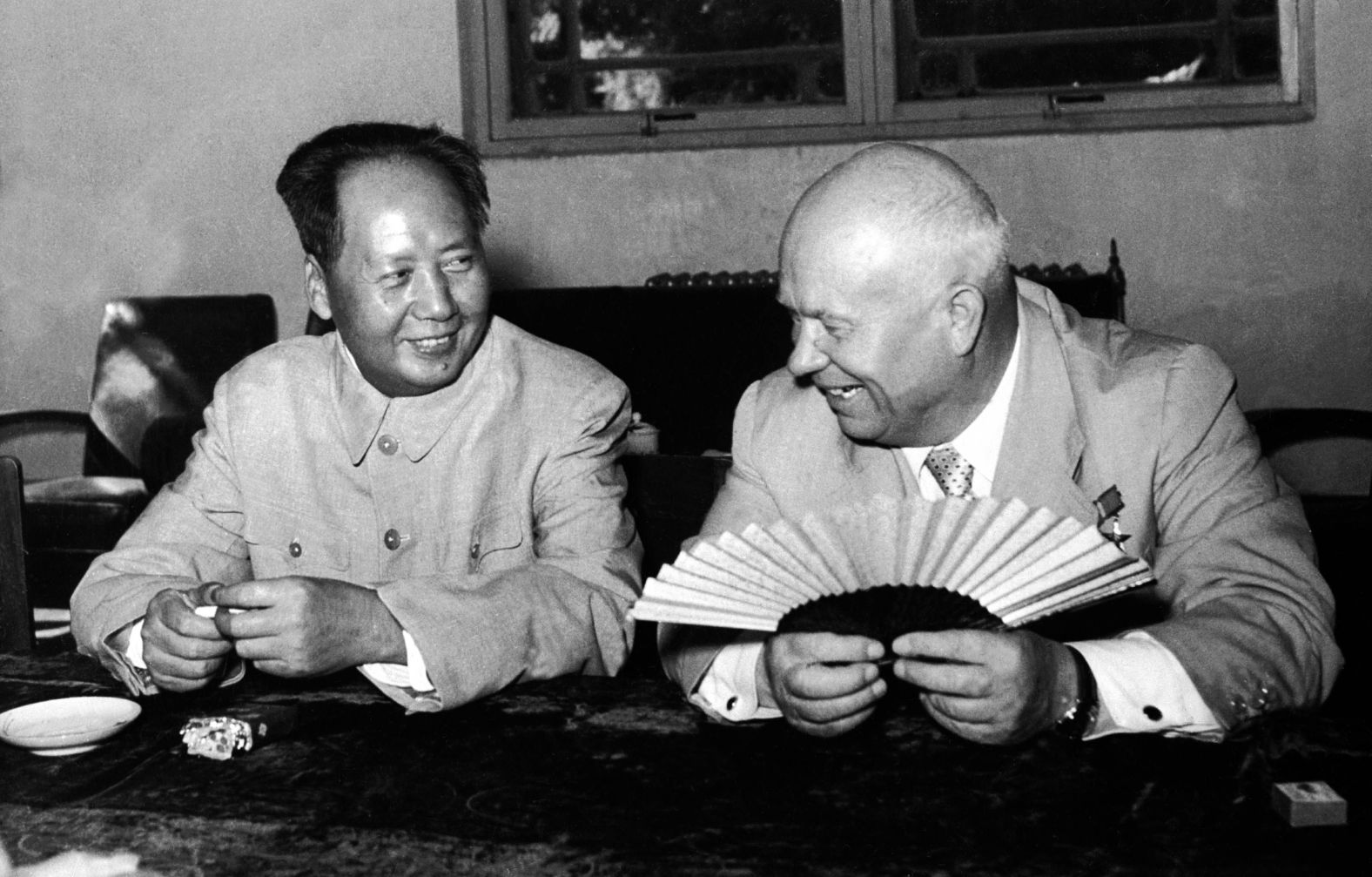
The fundamental issue in Sino-Soviet relations was the competition to decide which power was the real leader of the Communist world. Was it the USSR, product and guardian of the great 1917 revolution of the People’s Republic of China, with its fresh revolutionary ideas and massive population? However, it appeared a more cordial relationship could be possible when in 1949, Mao and Stalin signed a Treaty of Friendship, Alliance and Mutual Assistance. Despite occasional appearances of understanding, Sino-Soviet relations grew more embittered in the 1950s. The Chinese were particularly critical of Khrushchev’s “secret speech” and moves towards de-Stalinisation. His extraordinary attack on Stalin’s “cult of personality” was interpreted in China as an attack on Mao’s own brand of leadership. Mao responded to the implied criticism of his own style of leadership by introducing his 100 Flowers Campaign, which allowed the Chinese leadership to be discussed and criticised. Mao was equally critical of what he viewed as Khrushchev’s “toadying” to the West.

The Hungarian Revolt, 1956
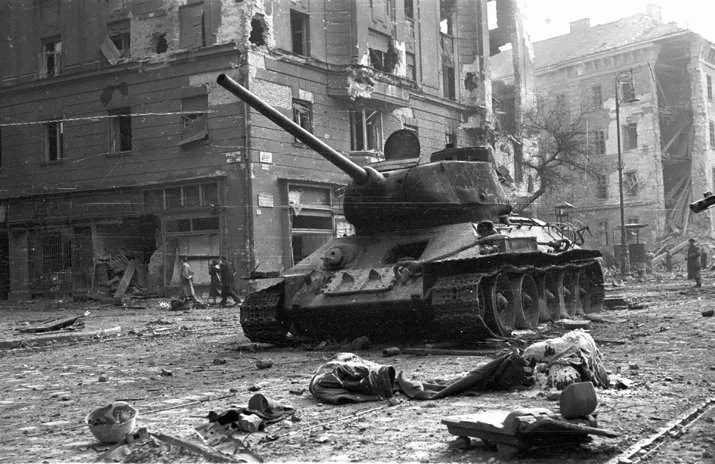
On October 23rd 1956 police fired on demonstrations in Budapest against Gero, the secretary of the Hungarian
Communists. Demonstrations grew with the crowds calling for more reforms and the return of the more moderate former premier Nagy. Soviet troops based in
Hungary were sent out, and backed up by Khrushchev sending an extra 30,000 troops to be used against the Image result for Hungarian revolt demonstrators. Khrushchev allowed a new government to be formed by Nagy and promised him more freedom from Soviet influence. Nagy continued to press Khrushchev to fulfil these promises by for example, calling for the communists to share power with other political groups in Hungary. Khrushchev concerned about the potential for the international world to view concessions as a sign of Soviet weakness ordered troops back into Hungary and replaced Nagy with the pro-Communist Janos Kadar.
Significance of Khrushchev’s actions:
For many Khrushchev’s decisions during the Hungarian Revolt revealed how determined he was to maintain its grip over its satellite states. His heavy-handed response was clear proof that de-Stalinisation had never been intended as a softening of the USSR’s fundamental attitude. When the Soviet Union felt its own security threatened or its control of the Eastern bloc challenged, it was prepared to use force against its satellites. De-Stalinisation was a false dawn for those who thought it signalled genuine independence for Eastern Europe. Khrushchev was as determined as his predecessor to assert the USSR’s right to dictate to the rest of the socialist world.
Chinese reaction to Hungarian Revolt, 1956
After some prevarication, communist China supported Khrushchev’s actions. Mao approved of the strong Soviet response for two reasons. He believed the strong response was exactly the line that communist governments should take in order to maintain communist authority. He appeared relived by the knowledge that the USSR had merely been flirting with liberal ideas.
Key Events
1957: Chinese rejected Soviet offer of assistance in the development of their own nuclear weapon as in return Russia wanted control over Chinese defence policy.
1958: Russia refused to back Mao’s regime in its conflict with US backed nationalists in Taiwan. Mao was forced to back away from an invasion of Taiwan, and viewed Khrushchev’s actions as further signs of his weakness on world revolution.
1962: Russia stayed neutral in a border war between China and India.
1963: China refused to sign up to the Test-Ban Treaty with the USA and USSR. Moscow viewed this as further evidence of Mao’s irresponsibility.
Khrushchev and Mao – Personal relationship
Khrushchev and Mao developed a deep personal distaste for each other. Khrushchev referred to Mao as “a living corpse”, while Mao spoke of the Soviet leader as “an old boot to be thrown into the corner because it is no longer of any use”. Western observers often found such exchanges comic, but behind the insults was a deeply serious battle for ascendancy in the Communist
Wider look at Russian expansionism in the Far East
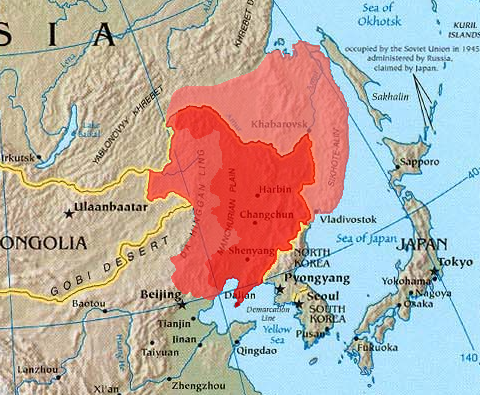
Manchuria
Manchuria was under Japanese influence from 1905 to 1931, and then from 1931 to 1945 the Japanese went a step further and occupied the territory. The occupation meant control over Port Arthur, a base of strategic importance to both the Japanese and Russians. So important was this port that tensions over it had led to war between the two nations in 1904 – a war that had led Russia to lose its influence over the Port and Manchuria. In 1945 Soviet troops liberated Manchuria from Japanese control and Stalin handed it back to China. However, the Soviet Union kept control of Port Arthur until the death of Stalin in 1953.
Korea
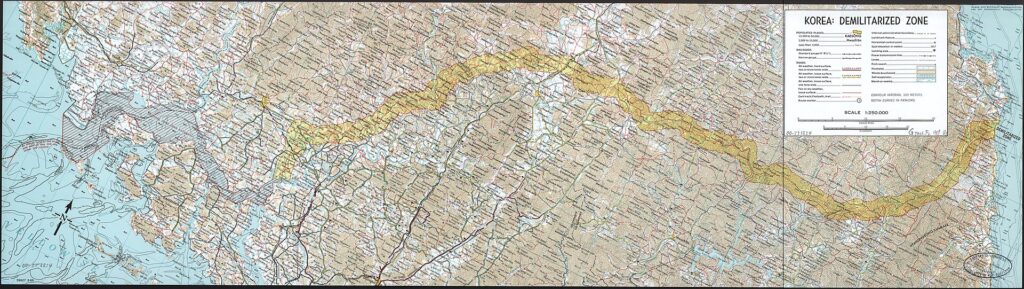
Korea came under Japanese control in 1910. With the defeat of Japan in 1945, Korea was divided into two zones: the North (above the 38th parallel) was to be overseen by Russia and the South by the USA. The plan was to help Korea reconstruct and develop a new system of government, but animosity between the two protecting powers caused the division between North and South to become entrenched. In June 1950, the North Korean leader Kim Il Sung (probably encouraged by Stalin and Mao) decided to invade the South with the aim of reuniting the two halves. A full-blown war ensued, with China backing the North and the USA supporting the South. The Korean War ended in 1951 but the dispute over the border between North and South was not resolved until 1953. In July 1953, the dividing line was established at the 38th parallel, which was where it had been placed at the end of 1945. The Soviet Union played no direct role in the war but it was still blamed by the US president, Truman, for influencing the initial invasion by Kim. This heightened Cold War tensions and undoubtedly encouraged Khrushchev, when he gained power, to introduce his policy of “peaceful coexistence”.
Fall of Khrushchev
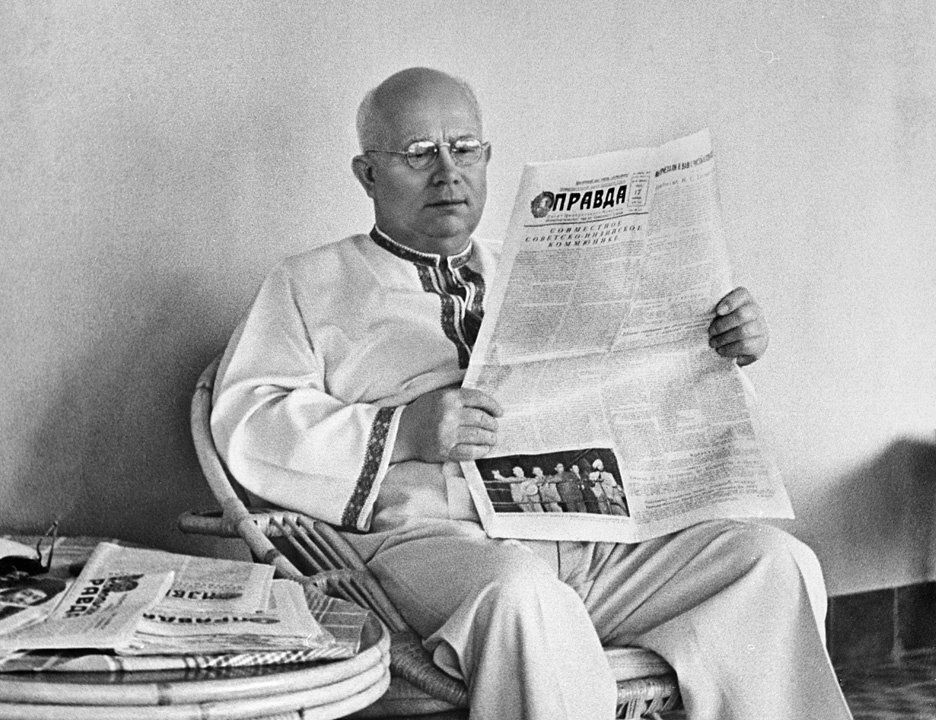
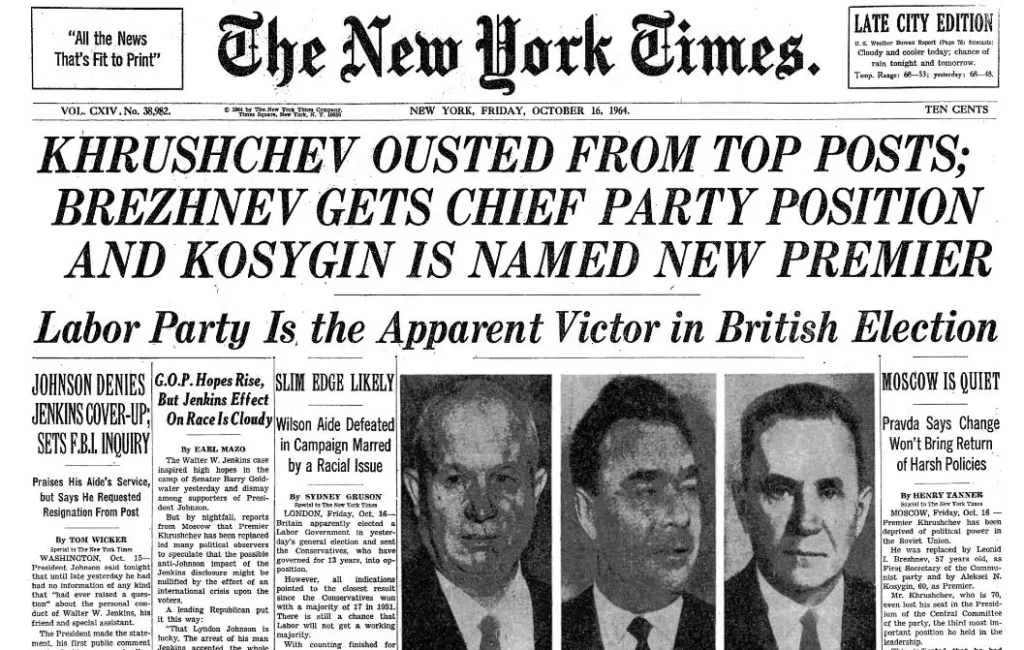
In October 1964 Khrushchev took a holiday at a Black Sea resort. During his absence from Moscow the Politburo met and decided on his removal as leader. It is now known from KGB archives that serious consideration was given to having Khrushchev assassinated, but in the end a milder fate for him was decided on. A meeting of the Central Committee was convened and Khrushchev was summoned back to Moscow to appear before it. He was informed that he had been retired through age and poor health and that he had been replaced by Leonid Brezhnev and Alexei Kosygin. The news was publicly announced on the radio and in Pravda.
Accepting that he had been completely outmanoeuvred and had no allies, Khrushchev slipped away into obscure retirement. Some days later Pravda published a lengthy editorial in which, without referring to him by name, Khrushchev’s weaknesses and errors were listed. The manner of Khrushchev’s demotion and the substance of Pravda’s criticisms are instructive. Whatever his achievements may have been in the previous decade, it is clear that by the autumn of 1964 he was politically friendless and isolated. However necessary de-Stalinisation may have been, Khrushchev in introducing it had provided the grounds for his own eventual dismissal. The attack upon the “cult of personality” created the language and the precedent for removing any subsequent leader whose personal authority grew too large. In Stalin’s time, his subordinates were too frightened to oppose him. This had never been the case with Khrushchev. He had had to overcome challenges to him in the 1950s, and the reason that there was no organised move against him until 1964 is to be explained by a lack of opportunity rather than by a lack of will. All Stalin’s colleagues had owed their positions directly to his patronage. Khrushchev never wielded that same authority. It is true that some of the middle and lower rank officials were his proteges, but he never had the control of the Party and government machine that Stalin had possessed.
Equally Khrushchev did not have complete control over the Party and was ultimately answerable to the Politburo and Central Committee whose members were his political equals. In the early years of his leadership his gregarious and jocular personality had been a welcome change from the grim joylessness of Stalin, but these attributes were of advantage only when things were going well for him. As the Pravda editorial made clear, when his reputation began to wane his style and manner were characterised as personal weaknesses.
Khrushchev had been a highly visible leader of the Soviet Union. He took a direct part in a wide range of domestic and foreign affairs. This close personal involvement had its obvious advantages, but it also made him vulnerable. When policies failed, he appeared responsible in a way that a less energetic leader would not have been. There was no single event that caused his fall into disfavour. It was rather that as time went on his policy failures tended to outweigh his successes. Dissatisfaction accumulated. In retrospect, it is possible to identify those areas of growing opposition and to determine why, by 1964, he had no significant political support on which he could rely.
The Leninist Party is the enemy of subjectivism,
individualism and drifting in Communist
construction, of hare-brained scheme-making, of
half-baked conclusions and hasty decisions and
actions taken without regard to realities. Bragging
and phrase-mongering, bossiness, reluctance to
take account of scientific achievement and
practical experience are alien to it.It is only on the Leninist principle of collective
leadership that it is possible to direct and develop
the increasing creative initiative of the Party.Extract from Pravda, October 1964
De-Stalinisation:
It had been a huge psychological wrench for many of the party old-guard to admit that their old leader has been wrong. Some such as Molotov and Kaganovich, could never bring themselves to accept the total destruction of the Stalin legend. For the sake of expediency, they went along with it as they remained fearful about what may be revealed about their past. However, they did not easily forgive Khrushchev.
Armed forces:
In his rise to prominence in the mid-1950s, Khrushchev had been able to rely on the backing of the Red Army, but by 1964 that support had evaporated. this was mainly the result of his wish to cut or redirect military spending. By the mid-1950s the USSR could genuinley be defined as a superpower: it possessed the H-bomb and was making significant advances in missile development. Khrushchev thought that this justified a cut-back in coventional forces. in 1960 he proposed reducing the armed services by over a million men – a cut of one third.
Foreign Affairs:
Despite devoting much of his time to foreign affairs, he also suffered a decline in fortunes in this area. In personal terms, there was no doubt that he had become a great international statesman. despite this, there were few successes to which he could point. He had entered a long an unresolved conflict with China to retain the moral leadership of the USSR in the communist world. He had awakened hopes of independence in the Eastern-bloc countries, only to dash them with military intervention and the reimposition of Soviet control. He had fought a running Cold War battle with the west over Germany, but had been unable to achieve much. Almost as a last throw he had tried to recover his diplomatic losses by the installation of Soviet missiles in Cuba, only to have to back down in the face of American determination. These undeniable failures aroused bitterness in his Kremlin colleagues.
Economy:
Khrushchev had promised a more productive Soviet economy, geared to the interests of the consumer but still capable of overhauling the west. It was a brave but unreaslitc boast. advances were made, but the basic problems inherited from Stalin were still there in the mid-1960s. Ironically, his most far-sighted policy, the reclamation of the virgin lands, was the one which brought him the greatest criticism and discredit.
Those involved in the plot to oust him in 1964 could be confident that the range of Soviet interests angered or disillusioned by Khrushchev’s polices during the previous eight years was such that there would be little resistance to his removal.
Exam Zone
This section has been designed to help you build confidence, sharpen your skills, and achieve your best possible results. Whether you are preparing for mock exams, end-of-unit tests, or final assessments, the Exam Zone provides everything you need in one place.
The Exam Zone is not just about testing your knowledge. It is about developing the key historical skills required for success: critical thinking, evaluation, and clear written communication. By practising regularly and reflecting on feedback, you will strengthen both your understanding of the past and your performance in exams.