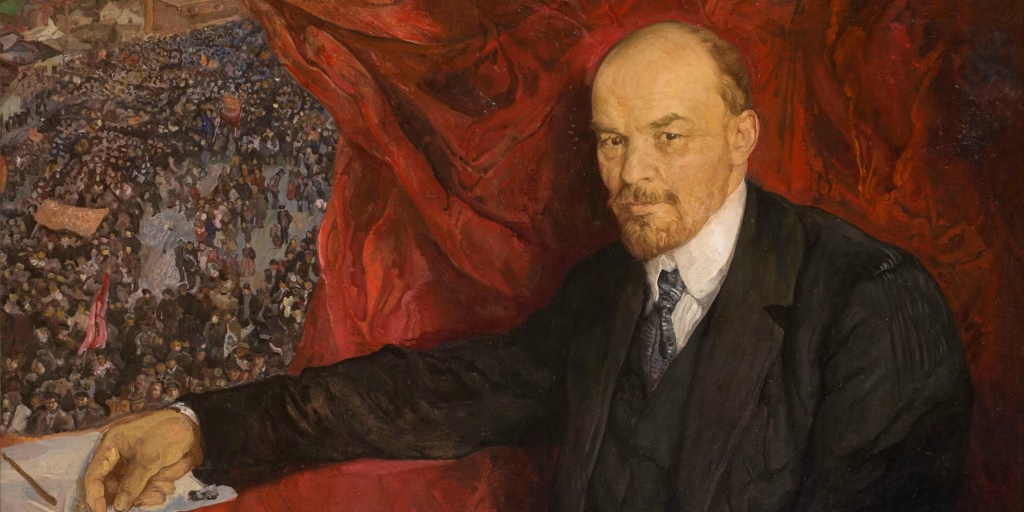
Vladimir Lenin
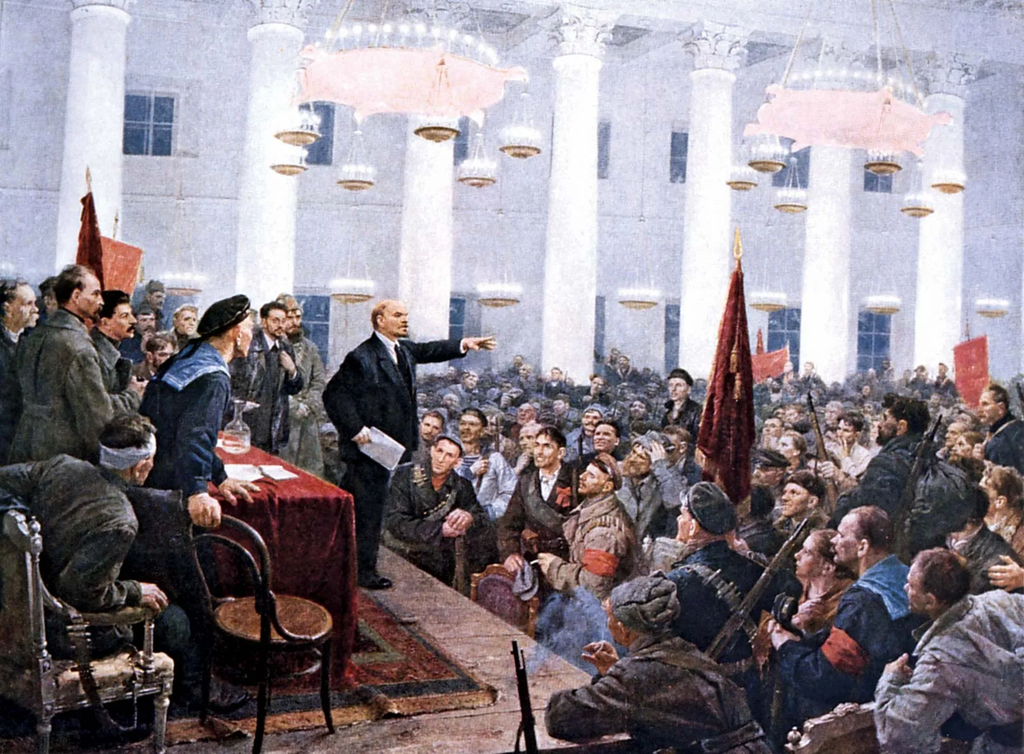
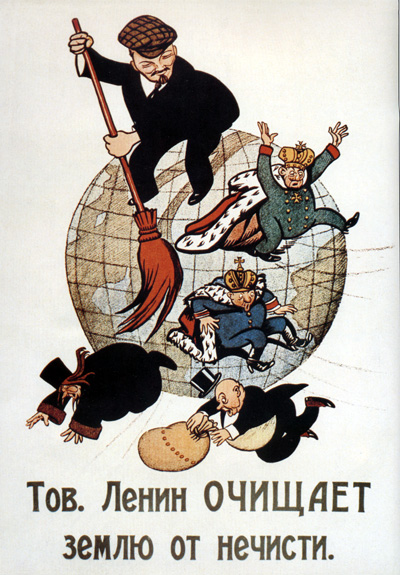
Lenin’s rule after the October Revolution was defined by rapid consolidation of power, radical economic and political changes, and the use of force to overcome internal opposition and secure Bolshevik control of Russia.
Consolidation of Power
What problems faced Lenin and the Bolsheviks in the immediate aftermath of the October Revolution in 1917?
Source 1 – O. Figes, A People’s Tragedy: The Russian Revolution 1891-1924, 1997.
Five days after the Bolshevik seizure of power, Alexandra Kollantai, the new People’s Commissar of Social Welfare, drove up to the entrance of a large government building on Kazan Street …. She was coming to take possession of it. An old liveried doorman opened the door and examined Kollantai head to foot (but would not let her in) ….. Kollantai tried to force her way through, but the doorman blocked her way and closed the doors in her face ….. The employers of the Ministry had joined a Civil Servants’ strike in protest at the Bolshevik seizure of power….The early weeks of the new regime were frustrated by similar strikes and campaigns in all the major ministries and government departments, the banks, the post and telegraph office, the railway administration, municipal bodies and other vital institutions …. Trotsky was greeted with ironic laughter when he arrived at the Ministry of Foreign Affairs and introduced himself to a meeting of officials as their new Minister; when he ordered them back to work, they left the building in protest …. The refusal of the State Bank and the Treasury to honour the new government’s cash demands was the most serious threat of all. Without money to pay its supporters, the Bolshevik regime could not hope to survive for long.
Source 2 – R. Pipes, Russia under the Bolshevik Regime 1912-24, 1994.
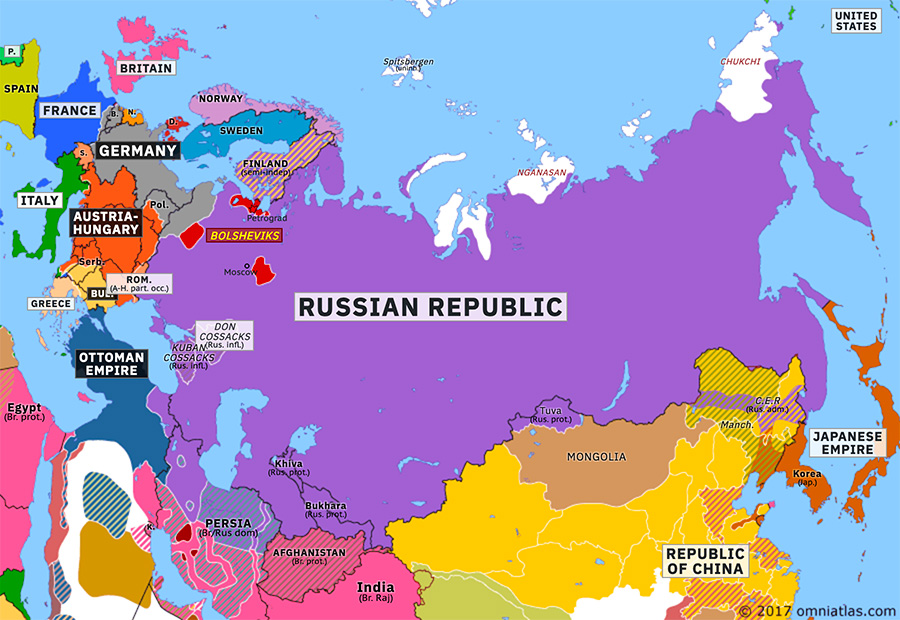
The Bolsheviks were masters only of central Russia, and even there they ruled only the cities and industrial centres. The borderlands of what had been the Russian Empire, inhabited by peoples of other nationalities and religions, had separated themselves and proclaimed independence …. The Bolsheviks, therefore, had literally to conquer by force of arms the separated borderlands as well as the villages in which lived four-fifths of Russia’s population. Their own power base was not very secure, resting on at most 200,000 party members and an army then in the process of dissolution.
Source 3 – Striking workers in the Sormovo factory, June 1918
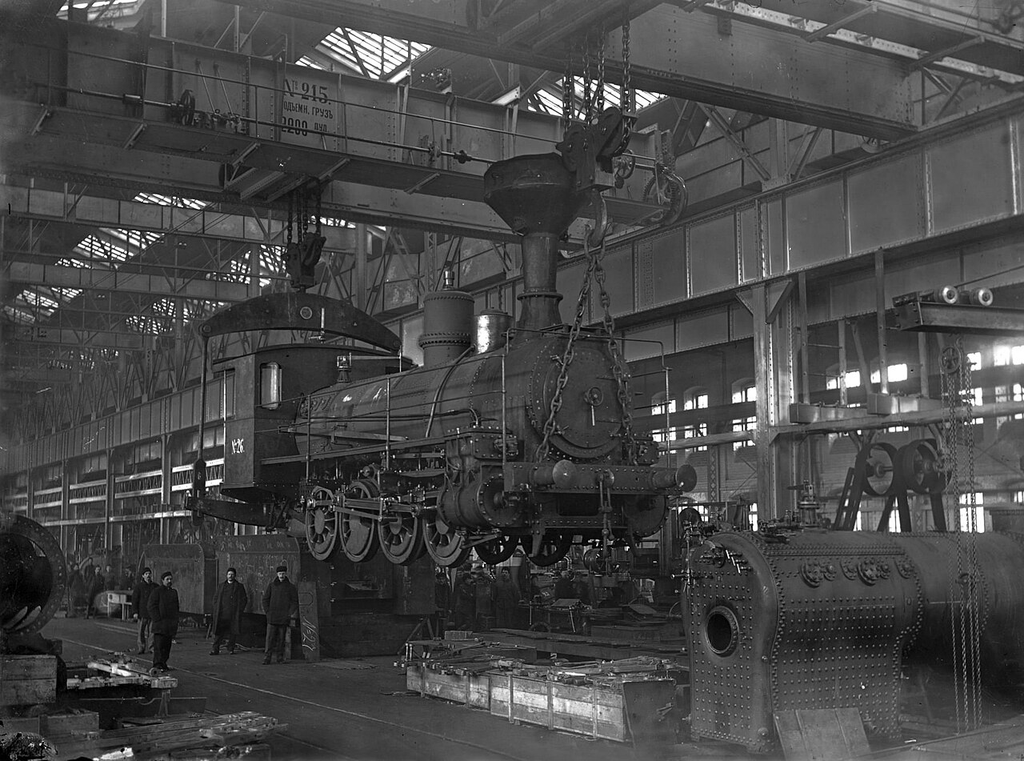
The Soviet regime, having been established in our name, has become completely alien to us. It promised to bring workers socialism but has brought them empty factories and destitution.
Source 4 – C. Read, From Tsar to Soviets: The Russian People and their Revolution 1996
There was significant opposition to the uprising from within the Soviet itself. No major Soviet leader or group rallied to the Bolsheviks …. The Menshevik leaders organised forces loyal to themselves to put pressure on the Bolshevik leaders to relinquish their power and to share it more broadly. In particular, through the railwaymen’s union, they threatened a paralysing strike.
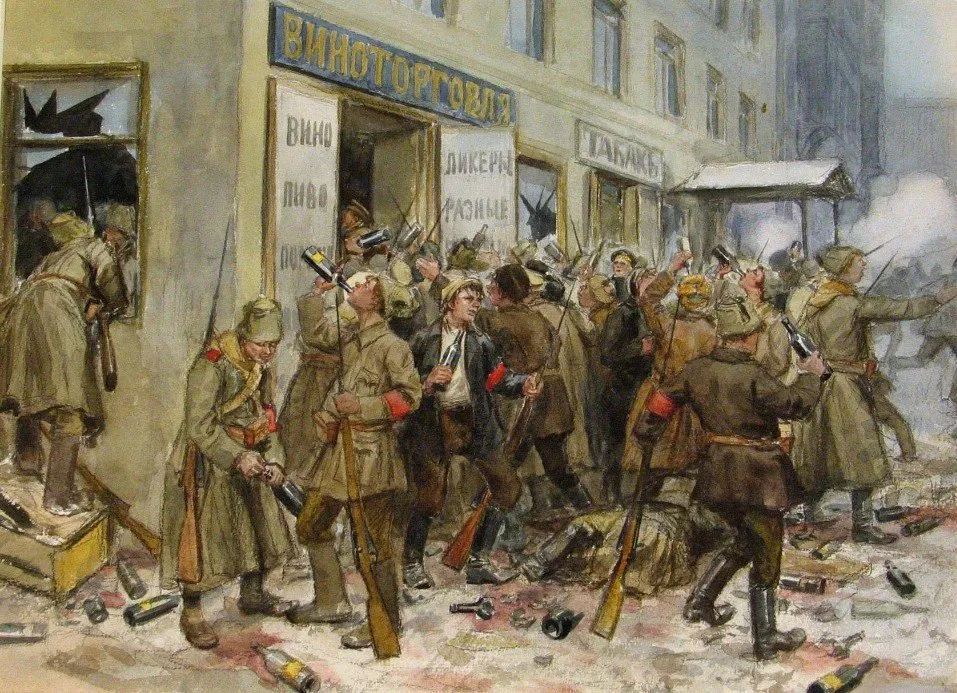
Source 5 – O. Figes, A People’s Tragedy, 1997, describing what happened when the crowds found thousands of bottles of alcohol in the wine cellar in the Winter Palace.
The drunken mobs went on the rampage …. Sailors and soldiers went round the well-to-do districts robbing apartments and killing people for sport …. The Bolsheviks tried to stem the anarchy by sealing off the liquor supply …. They posted guards around the cellar – who licensed themselves to sell off the bottles of liquor. They pumped the wine on the street but crowds gathered to drink it from the gutter …. Machine guns were set up to deter the looters – but still they came. For several weeks the anarchy continued – martial law was even imposed – until at last, the alcohol ran out with the old year, and the capital woke up with the biggest headache in history.
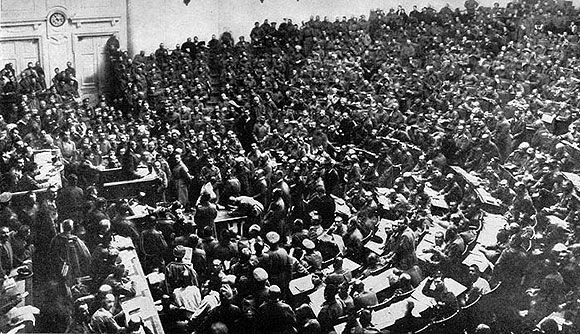
The Constituent Assembly:
Lenin was forced into holding the elections for a Constituent Assembly as promised by the Provisional Government in November 1917, he expected a
Bolshevik victory which would give further legitimacy to his regime.
Lenin allowed the Constituent Assembly to meet for one day – 5th January 1918 – then the doors were closed and the deputies were told to go home by the Bolsheviks Red Guards. A crowd which had gathered to protest about this were fired on by soldiers under Lenin’s orders. He
then established his own government – named SOVNARKOM.
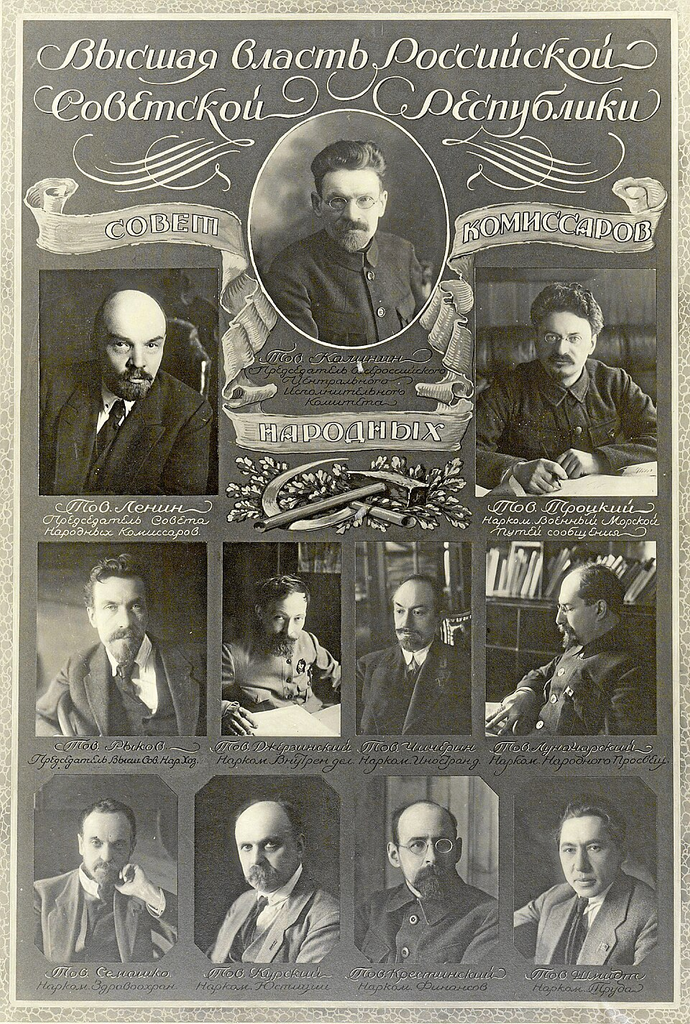
Decrees made by Sovnarkom in the first few months of power:
NOVEMBER:
- Max. 8 hr working day / 48 hr working week for industrial workers
- Employment insurance for workers for injuries, illness and unemployment
- Abolishment of all titles and class distinctions – use of the title “comrade” for everybody
- Women declared equal to men
- All non-Bolshevik newspapers banned
DECEMBER:
- Liberal party – the Kadets banned
- All factories put under the control of workers’ committees
- All banks nationalised
- Army to be made more democratic – officers to be elected; no ranks or saluting
- Church land confiscated by the state
- Divorce made easier – marriages do not have to take place in church
KEY DECREE: Decree on Land (November 1917
Gave peasants the right to take over the land of the nobility. This legalised the land seizures which had occurred in the aftermath of the February Revolution.
Land could no longer be bought or sold; it belonged to the “entire” people
Establishment of the Cheka (December 1917)
Lenin’s secret police. Led by the cold and incorruptible character of Felix Dzerzhinski, its headquarters were set up in Moscow. Many considerable a threat to the revolution were arrested, and often shot without trial. Lenin also used the Cheka to deal with peasants hoarding grain in an attempt to break the food crisis.
Treaty of Brest-Litovsk
Ending the First World War was of crucial importance to Lenin. The war was hugely unpopular with the Russian people and a promise to end it had been a key pledge in Lenin’s “Peace, Land and Bread” slogan throughout 1917. The war had helped lead to the collapse of two previous governments (Nicholas II and the Provisional Government) and Lenin recognised that his failure to end the conflict could also topple his new regime.
NEGOTIATION PROCESS:
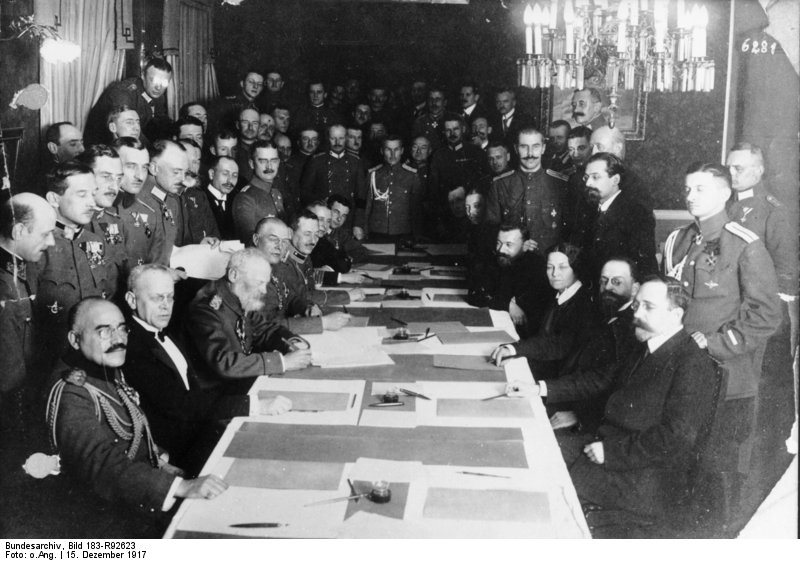
A Bolshevik delegate, led by Trotsky met the Germans in November December 1917 in the Belorussian town of Brest-Litovsk. Trotsky attempted to drag out the negotiations in the hope that the revolutionary mood would spread into Germany.
Aware of Trotsky’s “game-playing”, the Germans applied pressure by entering into separate negotiations with Ukraine and discussed support for their campaign to gain independence from the Russian Empire.
Lenin disagreed with Trotsky and other members of SONVARKOM (such as the SR representatives) that negotiations should be extended and the war should be used to start a revolutionary wave across Europe. Lenin ordered Trotsky to complete the negotiations as swiftly as possible. However, events were running away from the Russians.
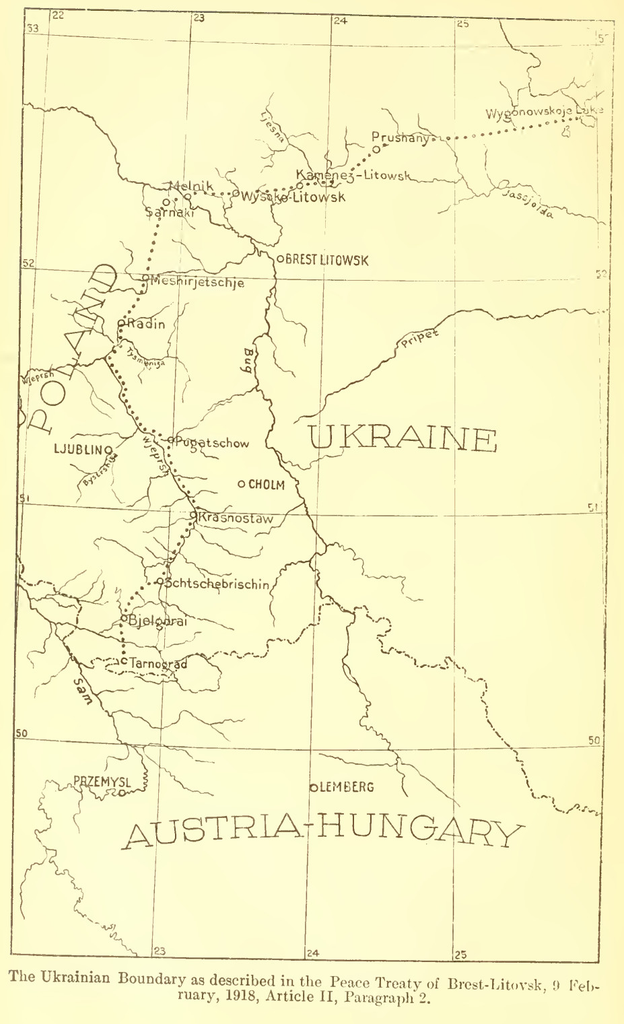
Germany signed a separate peace treaty with the Ukrainians on 9th February 1918 and on the 18th February ordered a force of 700,000 troops to push further into Russian territory. It took them only 5 days to advance over 150 miles towards Petrograd. Emboldened by these successes the Germans pushed for more stringent terms in their peace talks. Under pressure, Lenin stated the terms should be accepted and on the 3rd March the Treaty of Brest-Litovsk was signed.
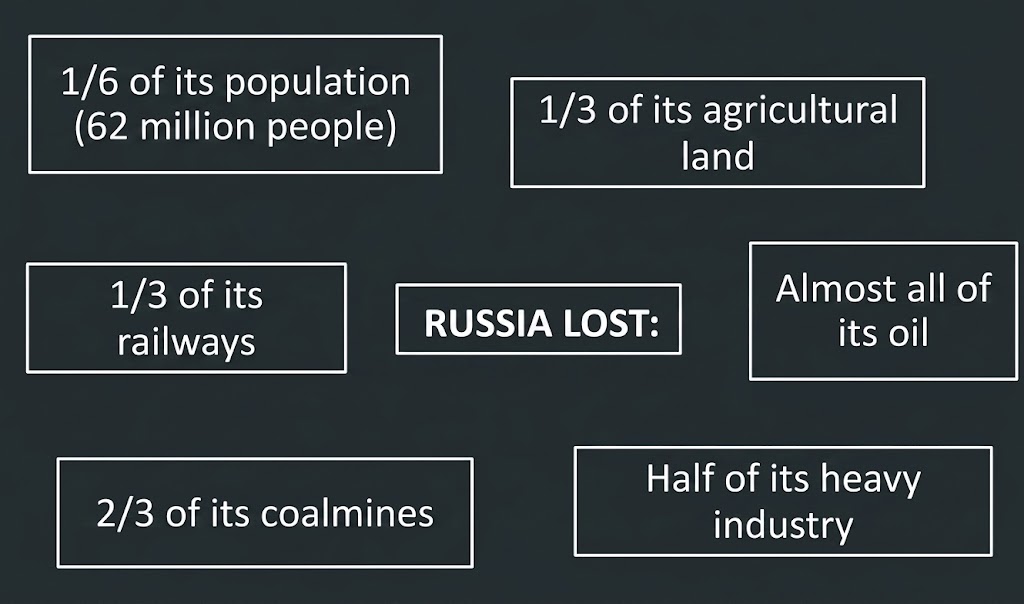
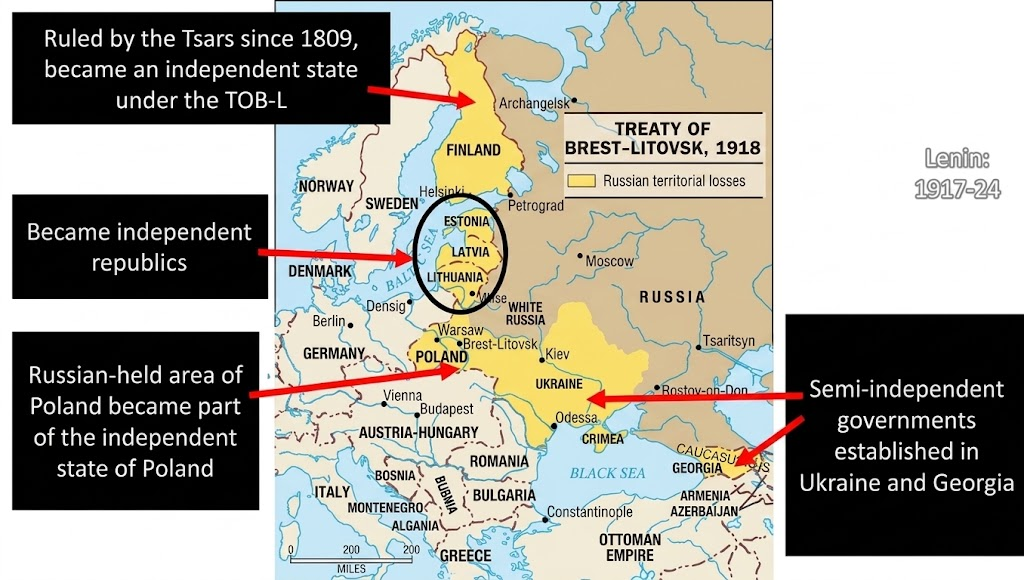
What happened in the newly-independent territories following the Treaty of Brest-Litovsk?
Case Study 1: Poland
Despite gaining independence from Russia in the Brest-Litovsk treaty, the country continued to be occupied by Germany until the German defeat in World War One in November 1918.
Josef Pilsudski, a key figure from the Polish Socialist Party was appointed as Chief of State. Pilsudski had a long-running record of radicalism (for example, he had been a member of the People’s Will and had been arrested in 1887 for his part in the plot to assassinate Tsar Alexander III. Despite this radicalism Pilsudski set about leading a coalition government. Despite facing huge structural and economic devastation caused by the war – his government did achieve some notable reforms such as introduction of an 8 hr working day, free school education and women’s suffrage.
Polish sovereignty was formalised German defeat in WW1 and the Treaty of Versailles.
Case Study 2: Ukraine
Following the signing of the Treaty of Brest-Litovsk, Ukraine became a virtual puppet state of the German government. Ukraine found themselves heavily reliant on Germany for both military and financial support and the German government’s influence in the region remained strong. Ukraine became a key source of food stuffs that could be extracted and sent back to Germany.
A conservative-style government was established in Ukraine and some improvements were made – for example millions of Ukrainian language textbooks were printed and thousands of schools set up. However, politically Ukraine remained very unstable – especially as German defeat in the war approached. In November 1918 a socialist government was declared in Ukraine, and following German defeat in the war the USSR annulled the Treaty of Brest-Litovsk with Ukraine and launched a series of attacks.
Civil War
Origins of the Civil War
The origins of the Civil War can very much be found in the events which emerged in the aftermath of the October Revolution. The Bolshevik seizure of power in October 1917 marked chaos throughout what was still the Russian Empire. Different political and regional groups reacted accordingly to their individual wants, needs and concerns. For some the new government was wholly unacceptable and they wanted a counter-revolution to remove the Bolsheviks from power. For many of the national minorities it offered an opportunity to attempt to gain long-awaited independence from Russian control.
Who were the different sides in the conflict?
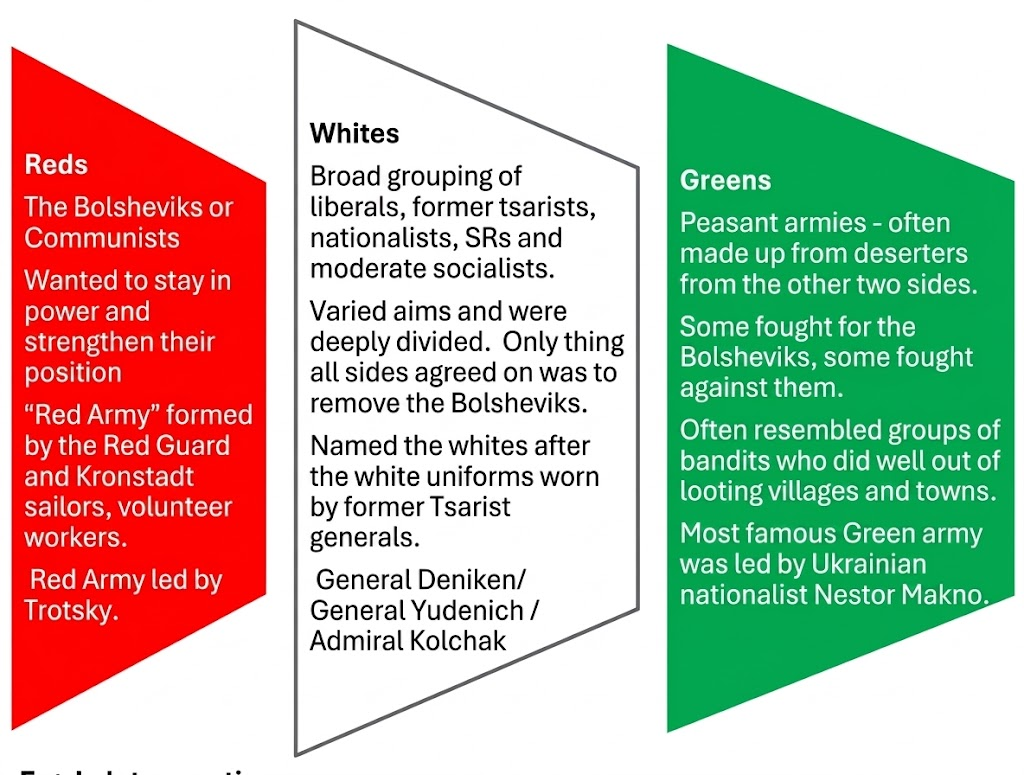
Foreign intervention
The Whites also had support from foreign powers. Britain, France, Japan and the USA, along with several other countries sent forces to help them. Their governments did not want to see Bolshevism spread across Europe. However, many have argued that the intervention of foreign countries helped the Communists. They portrayed the Whites as being used by foreign capitalist powers, while they themselves were the defenders of ordinary Russian people from foreign invaders. In the face of a series of White army defeats – the foreign powers withdrew their support by the end of 1919.
Reason for Bolshevik victory – Geography
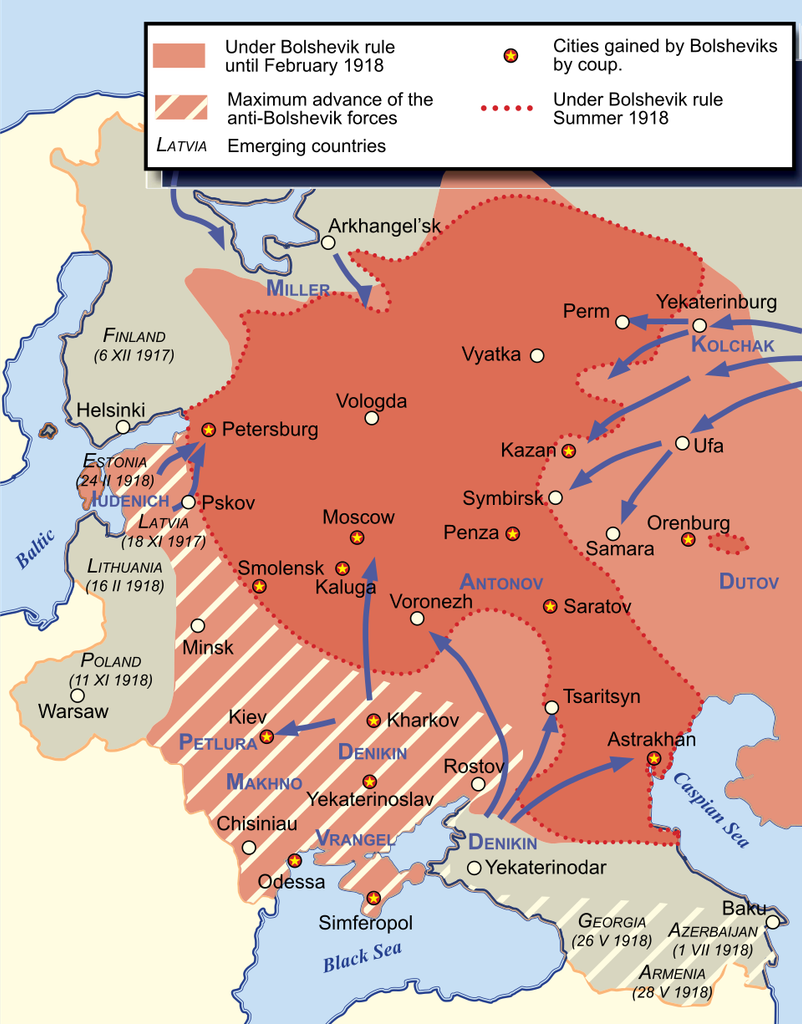
The Communists dominated the heartland of Russia – an area between Petrograd, Moscow and Tsaritsyn, with a population of approximately 60 million. Moscow and Petrograd were important industrial centres and the area included most of Russia’s railway network. This territory was continuous and unbroken by areas of opposition control. This was a huge advantage to the Communists for the following reasons:
- They could produce more munitions than the White armies, who had to rely on foreign support.
- They could use the railways to distribute munitions to the various Fronts.
- They could use the railways to quickly send troops to wherever they were needed.
- They could communicate more effectively because their territory was continuous, allowing them to coordinate attacks against their enemies. By contrast, the Whites were geographically dispersed.
- In addition, White generals launched offensives at different times, allowing Red forces to move around and defeat them one by one.
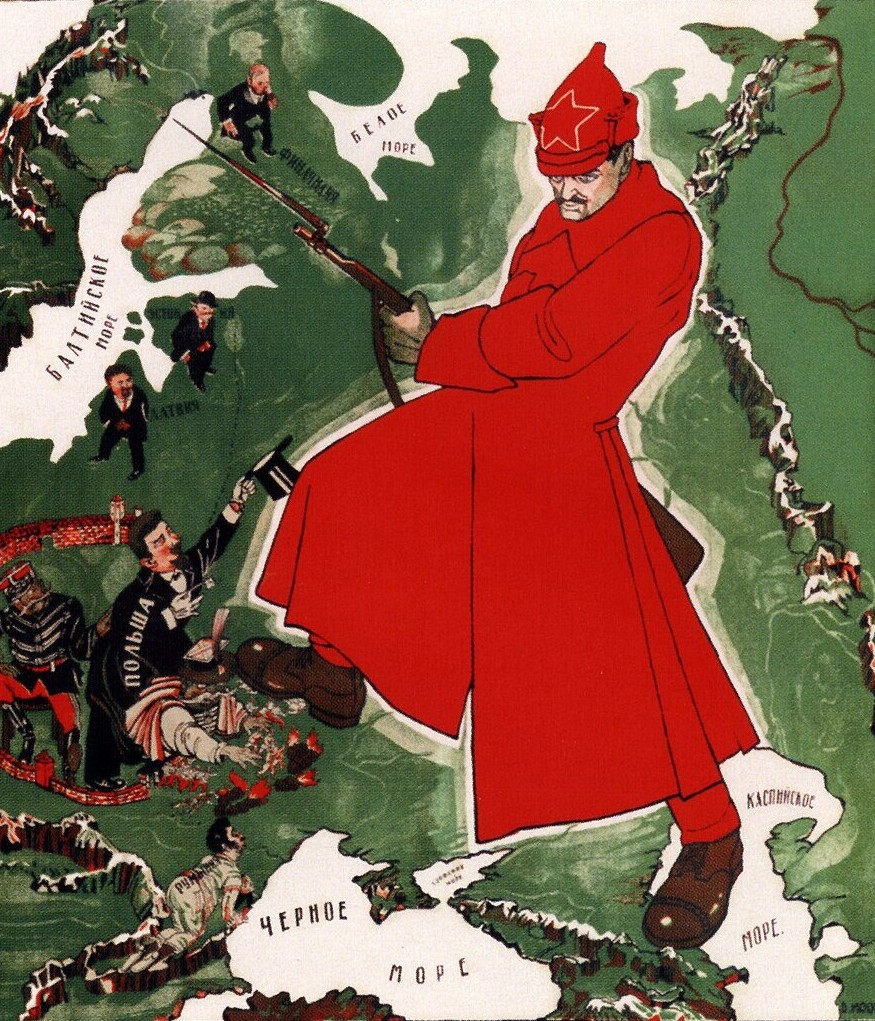
Reasons for Bolshevik victory – Trotsky
When Trotsky was made Commissar for War in 1918, the army was on the point of disintegration. He restored discipline and professionalism and turned it into an effective fighting force. Conscription was introduced and he reorganised the army along strict hierarchical lines and brought back thousands of formers tsarist officers to train and command army units. Many of these officers were unemployed, hungry and poor, and seized the opportunity to get back into the world they knew best. To ensure their loyalty, Trotsky had their families held hostage. Trotsky appointed a political commissar to each army unit to watch and report on the actions of the officers and make sure they were politically correct. Trotsky ended the democratic activities of the army which had emerged after the October Revolution, such as the election of officers. This was not well received by the soldiers. But Trotsky went further – he re-established harsh military discipline, bringing back the death penalty for a range of offences such as desertion or selling your weapon. He thought that this was essential to make men fight. However, Trotsky was also able to inspire his men through his intense energy, passion and bravery. Travelling in a specially equipped train, he often rushed to the points where the fighting was fiercest to provide support. His presence did seem to make a difference and he genuinely inspired men in a way that other leaders, especially the White leaders, could not.
CIVIL WAR IN POLAND
The Russian Civil War created the prospect of Poland losing its newly
found freedom – Lenin believed that the Polish proletariat would welcome him – but this did not happen. Russian forces were halted outside Warsaw before being forced to retreat.By October 1920, an armistice between Russia and Poland was signed:
- Polish independence was confirmed.
- Western Ukraine and Western Belorussia would come under Polish authority.
CIVIL WAR IN UKRAINE
Following the signing of the Brest-Litovsk Treaty, activity in Ukraine against Lenin’s Bolsheviks fell into guerrilla style fighting. However, these campaigns (First Winter Campaign 1920 and Second Winter Campaign 1921) ultimately were unsuccessful. In a treaty in 1922 Ukraine formally became an SSR – “Socialist Soviet Republic”. Throughout the 1920s Ukraine was allowed to have its own government and a period of “Ukrainization” led to the promotion of Ukrainian language and culture.
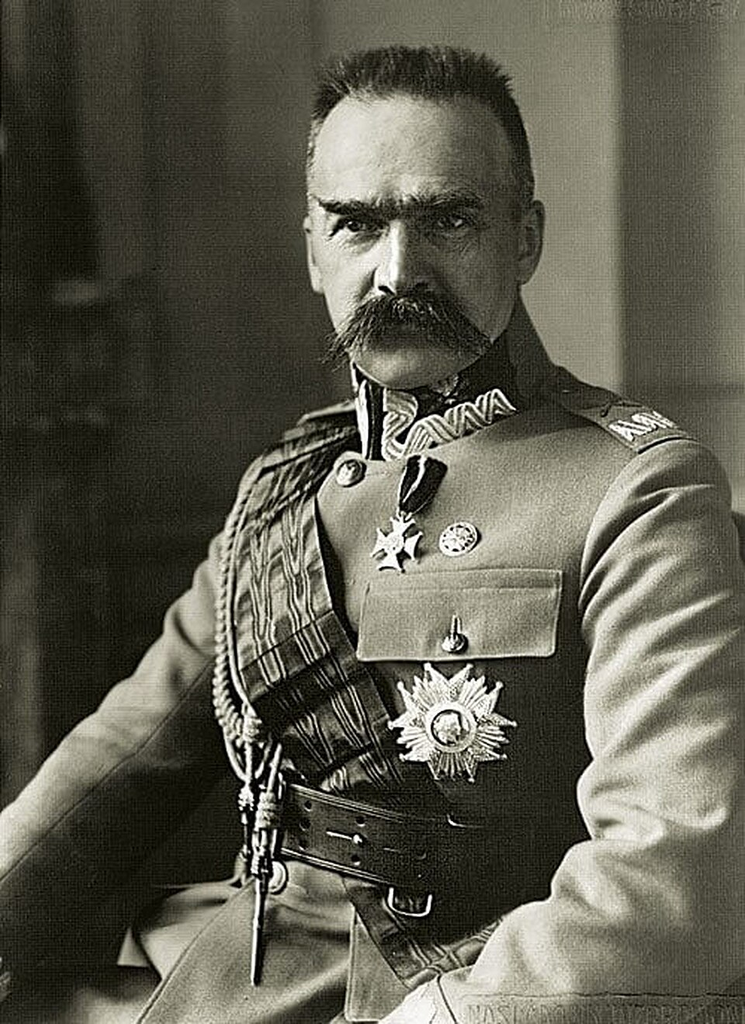
Jozef Pilsudski:
Dominant Polish statesman during 1920s. Despite having been involved in the creation of the newly independent Polish state, he became disillusioned with democracy staging a coup in 1926.
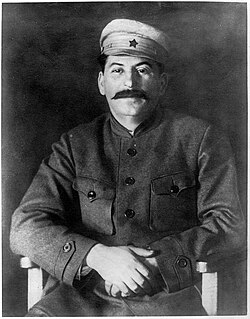
Josef Stalin:
Commissar for Nationalities under Lenin. Cautioned against the idea that national minorities would willingly join USSR believing their nationalist feeling was too strong.
War Communism
In order to support the Red Army during the civil war, Lenin introduced a new economy policy called War Communism.
War Communism: Key features:
- A Supreme Economic Council was formed to run the economy.
- Nationalisation of industry. The Decree on Nationalisation in the summer of 1918 made all large industries liable to nationalisation without compensation. By 1920 around 37,000 businesses had been nationalised.
- Private trade was banned.
- Grain surpluses were seized from the peasants. -Anyone caught withholding grain was liable to be shot.
- A steep decline in the use of money. This was replaced by rationing organised by the state.
- The use of terror, slave labour and seizure of goods and grain by the state.
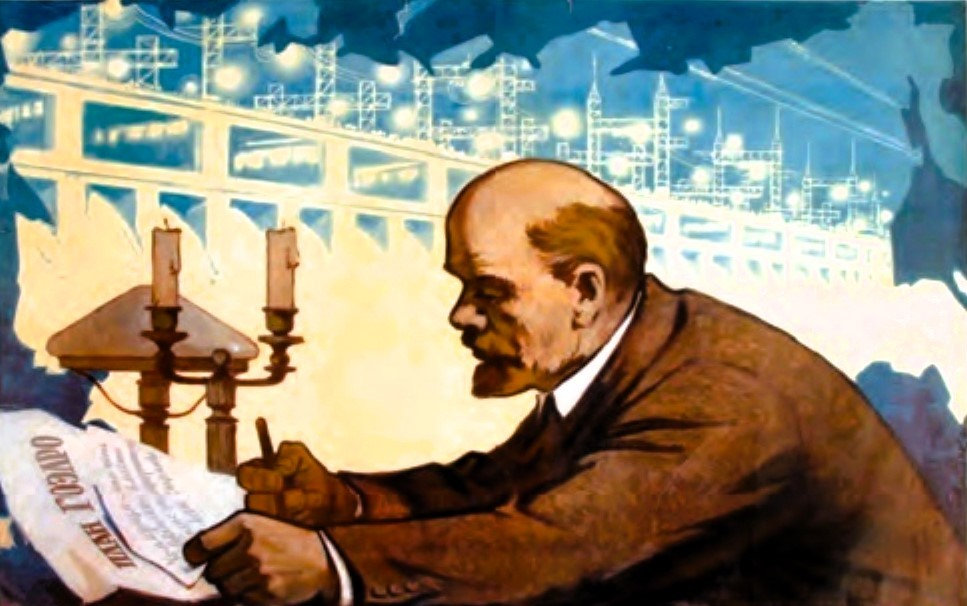
POLICY IN TOWNS …
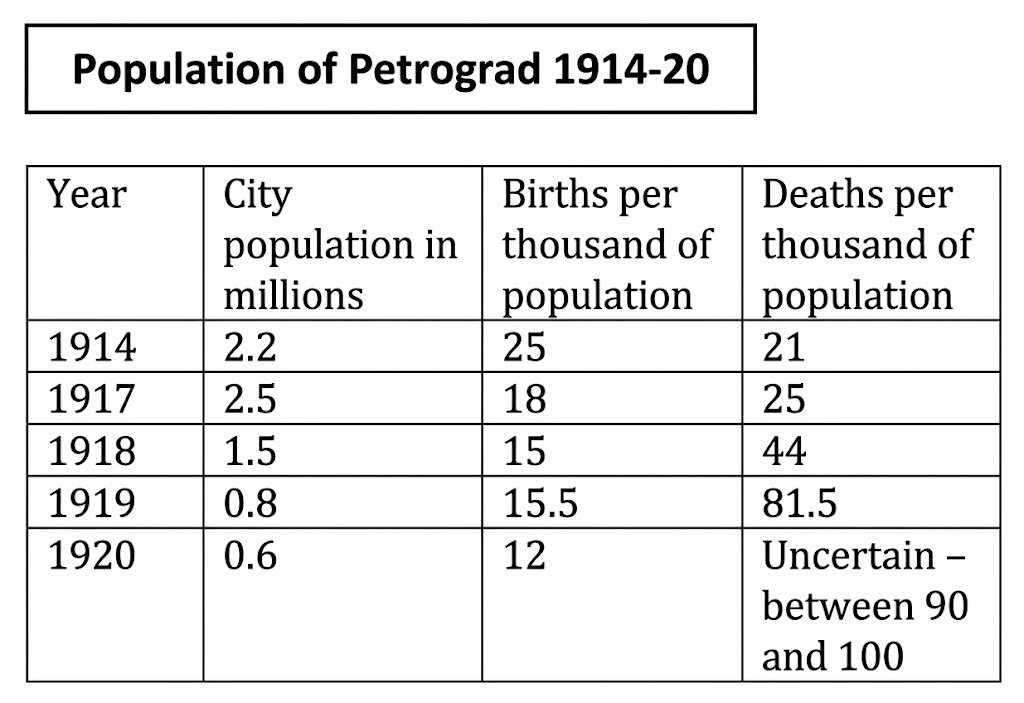
The state took control of industry and told factories what to produce. The factories had been handed over to the control of workers’ committees in 1917, but the committees had proven ineffective. Lenin, now put in his own managers, and strict discipline was imposed on the workers. Trade unions were banned and workers were prevented from leaving the cities. Food was rationed, but people were only entitled to a ration card if they were working.
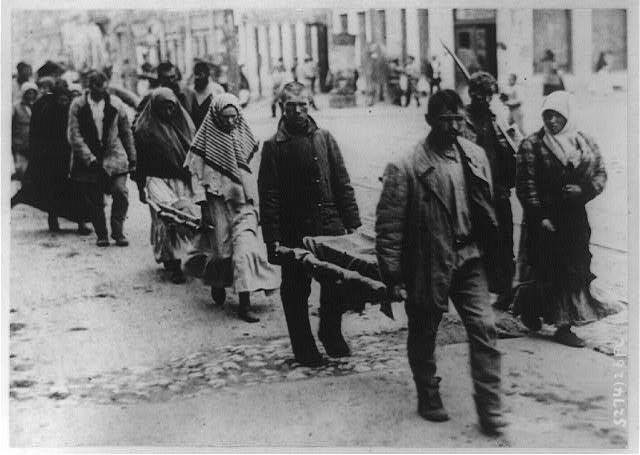
The bread ration was meagre – sometimes as low as 200 grams a day. Larger rations were only accessible for essential workers and soldiers. The only other way of getting food was via the illegal black market.
Money became virtually worthless (the rouble of 1920 was worth only one % of its 1917 value). By 1920, wages were often paid in food or other goods, and many people bartered goods instead of using money.
POLICY IN COUNTRYSIDE ….
Lenin desperately needed food to feed the workers. Since the peasants were often unwilling to sell their grain for money which had no value, he
sent out units of the Cheka to seize surplus food. Those found hoarding supplies were punished harshly. The peasants resisted, and this became a bitter struggle. Many peasants decided to produce less grain, because they knew it would simply be taken away. This only worsened a desperate situation
Source 1 – an eye-witness account of the Black Market
“ The Black Market sells everything. There are former rich selling their last
items. The best grand piano sells for half the price of an ordinary record player… The formerly richest and most spoiled are now satisfied if they get some black bread and potatoes each day. An acquaintance of mine, formerly owner of a palace in Moscow, was given, as his place of residence, the bathroom of his former home.”
Source 2 – From V. Serge’s Memoirs of a Revolutionary
“Parties which were sent into the countryside to obtain grain by requisition
might be driven away by the peasants with pitchforks. Savage peasants would slit open a Commissar’s belly, pack it with grain and leave him by the roadside as a lesson to all”.
Russia in 1917
By 1921 Russia had been at war (either against external enemies – i.e. Germany, or internal enemies – i.e. Civil War) for 8 years and the country was at near collapse.
There is no word of strong enough force to use when one comes to the situation in Russia in those years. Total industrial output fell to around 20 per cent of prewar levels ….. Total output of finished products in 1921 was 16% of 1912 levels. For unfinished products it was 12%. Production in key sectors was down to around 29% in mining; 36% in oil; less than 10% in the metal industries; 7% in cotton textiles; 34% in wool. Transport (mainly rail and river) also collapsed to about 20% of the pre-war level. Agricultural production was more robust but it became centred on the subsistence of the producers. Surpluses became smaller and smaller. The grain harvest in 1921 was only 48% of the 1913 figure.
From C. Read: From Tsar to Soviets, 1996
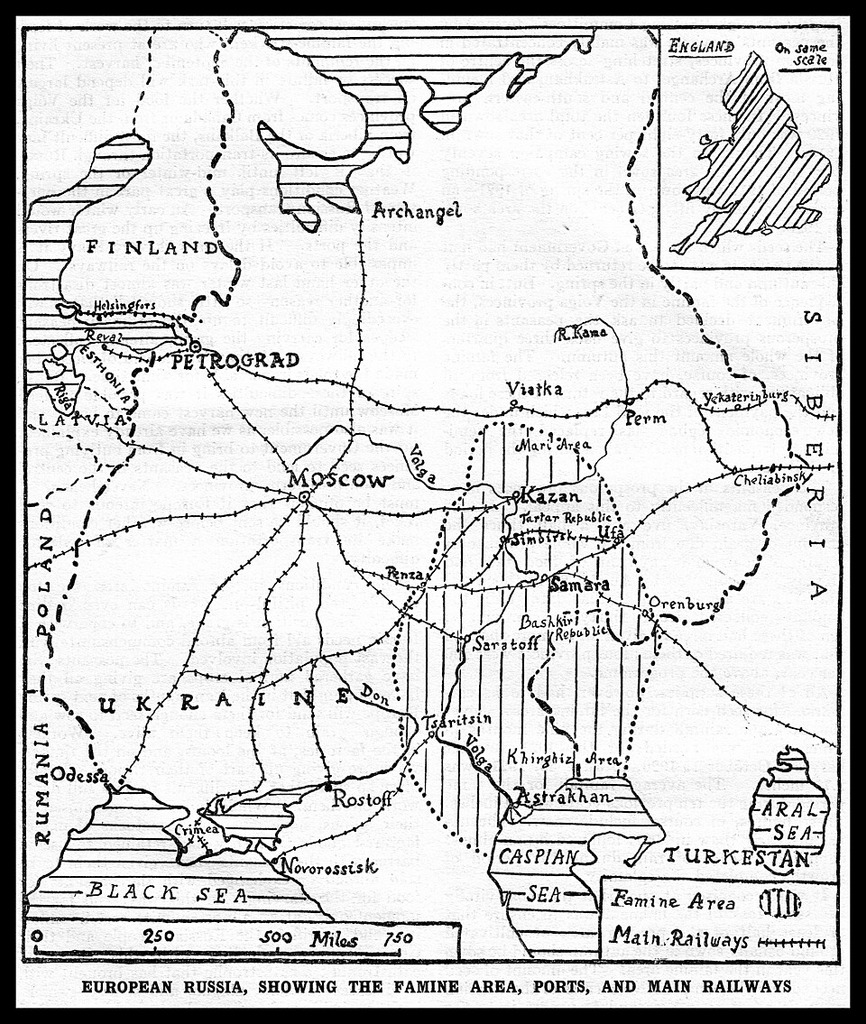
The famine of 1921 may have killed as many as 5 million people. It was partly caused by a drought in southern Russia which led to crop failure. But it was also caused by Bolshevik grain requisitioning programme which had depleted the peasants’ reserve stocks of grain. The net result was one of the worst famines in the 20th century. It was so bad that it attracted international aid from the USA. In some areas there were reports of cannibalism.
According to Cheka sources there were 118 separate risings throughout Soviet Russia in February 1921. But the best known and most widespread
was the Tambov uprising which began in August 1920 and lasted until June 1921. At the height of the rebellion, large parts of the countryside of three districts of the Tambov province were no-go areas for Soviet power.
By March 1921 Soviet power in the countryside had virtually ceased to exist. The consignment of grain to the cities had been brought to a virtual halt within the rebel strongholds. As the urban food crisis deepened and more workers went on strike it became clear the Bolsheviks were facing a revolutionary situation. Lenin was thrown into panic … “ We are barely holding on,” he acknowledged in March. In March 1921, sailors at the Kronstadt naval base (just outside Petrograd) staged an uprising because life under the yolk of the Communist dictatorship has become more terrible than death.’ The sailors had been strong supporters of the Bolsheviks
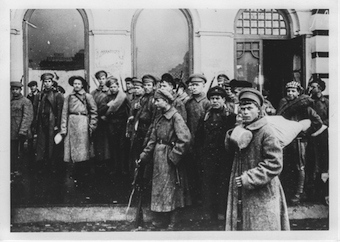
during the Revolution. By 1921 these were not the same men – most had gone off to fight in the Civil War – but the uprising was still a shock to the government. Lenin described the rebellion as the ‘flash that lit reality more than anything else’. Trotsky had used troops to crush them, and 20,000 men were killed and wounded in the attack. The sailors were executed in batches or sent off to labour camps.
New Economic Policy
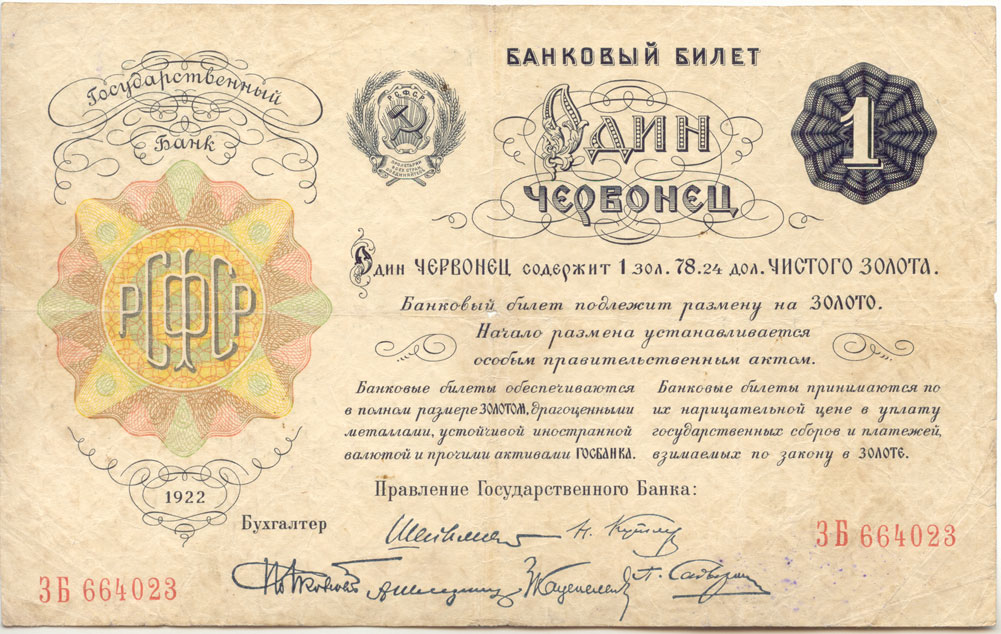
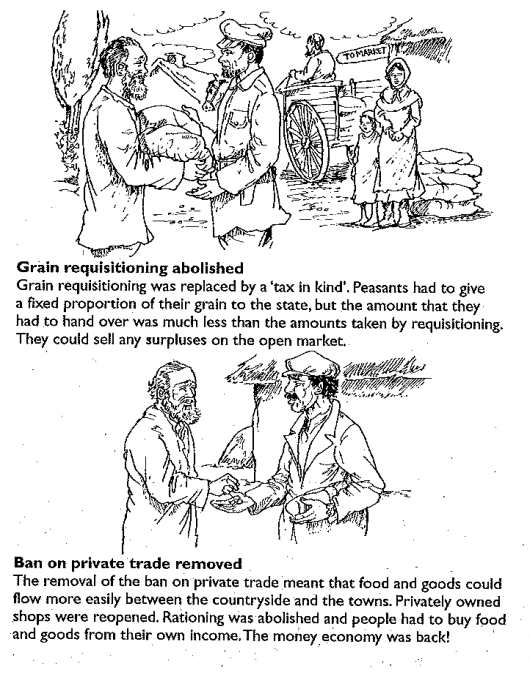
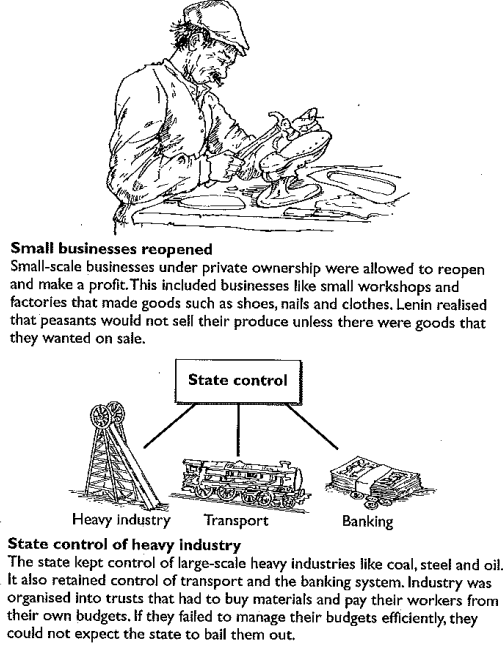
In March 1921, faced with economic collapse and widespread rebellion, Lenin felt compelled to make a radical turnaround in economic policy abandoning War Communism and making significant concessions to private enterprise. This turnaround is called the New Economic Policy (NEP). The details of the NEP were worked out among members of the Politburo and
presented to the party with the full support of the party heavy hitters.
However, the policy was presented to the party in a very delicate way, as many party members considered the NEP to be a betrayal of the principles of the October Revolution.
‘I ask you comrades, to be clear that the New Economic Policy is only a temporary deviation, a tactical retreat’.
Zinoviev
‘We are making economic concessions to avoid making political concessions’.
Bukahrin
Lenin compared the NEP to the Treaty of Brest-Litovsk, something that had to be done but which would not last forever.

Impact of the New Economic Policy
The shock of the Kronstadt rebellion worked to help Lenin to gain the support of the party for the NEP. However, he followed up the passing of the NEP with further calls for unity and an end to splits and factionalism within the party. At the Tenth Party Congress in 1921 a “ban on factions” was passed.
This meant that once party policy was agreed by the Central Committee then everybody was expected to accept it and not form “factions” to challenge the party line.
The penalty for factionalism was expulsion from the party. Therefore, the introduction of the NEP saw a loosening of economic controls, but a tightening of political control. From March 1921, Russia was governed by a dictatorship more absolute than any government under the Tsarist autocracy.
The economic results of the NEP were better than anyone expected:
- There was food in the markets in the cities and brisk trade in other goods. Shops, cafes and restaurants opened and life began to flow back into the cities.
- By 1923, cereal production had increased by 23% compared with 1920.
- Industrial production also made a rapid recovery as small-scale enterprises responded quickly to surging demand. From 1920 to 1923, factory output rose by almost 200%.
- By 1923, so much food was flooding into the cities that the prices dropped significantly whilst the price of industrial goods rose because they were in short supply. Trotsky called this the “scissors crisis”, as the earnings of peasants were increasing stretched. This imbalance was problematic because it made peasants reluctant to supply food. The government were forced to intervene to bring down industrial prices.
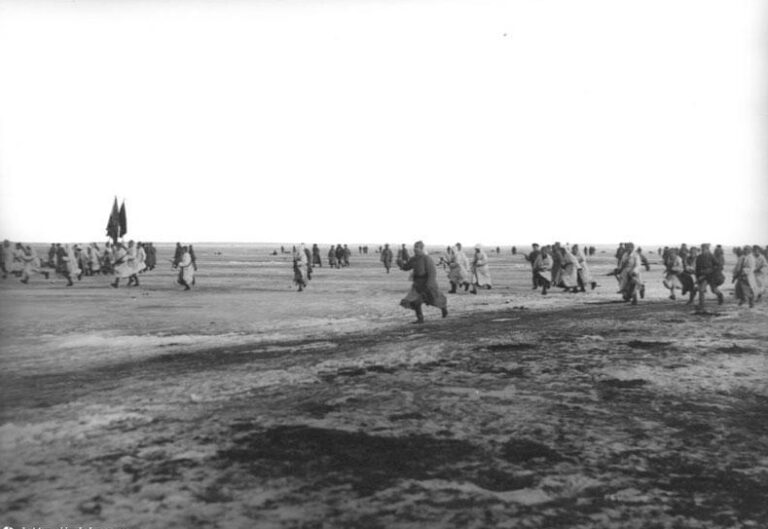
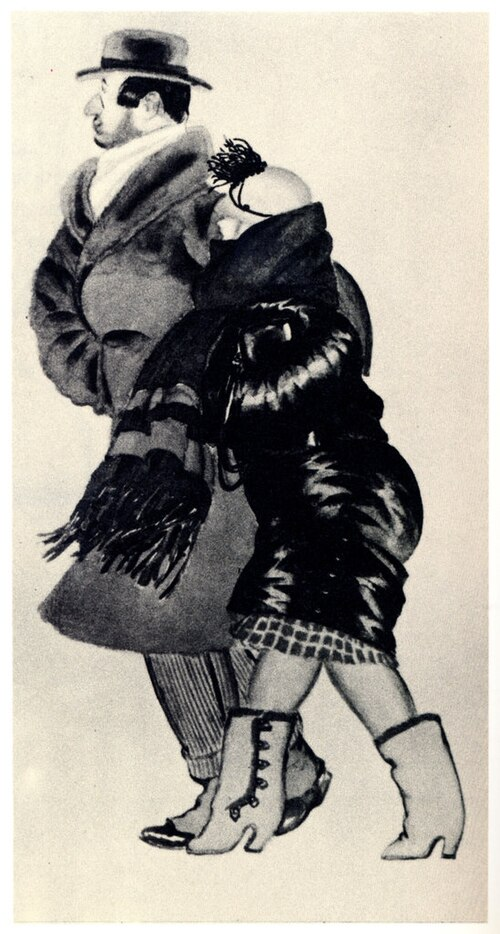
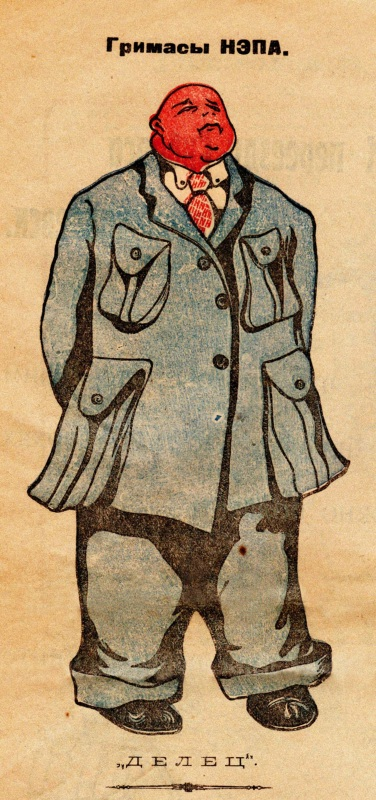
One of the biggest changes lay in the revival of the private traders – “Nepmen” as they came to be called. They scoured the villages buying up produce – grain, meat, eggs, vegetables – to take into the markets in the cities and sell for a small profit. This group expanded quickly, and by 1923 Nepmen handled as much as three-quarters of the retail trade. This group made deals, often acting in corrupt ways.
Lenin had inadvertently created a “get-rich-quick” society and the Nepmen openly displayed their accumulating wealth. They crowded the restaurants, where dinners with French wine cost $25 a head, and then went on to gaming clubs or brothels. Prostitution and crime flourished.
The kulaks did do well out of the NEP. Many made money from selling to the Nepmen and were able to farm their land without too much state interference.
Many people inside and outside of Soviet Russia thought that the NEP marked the end of the Communist experiment. They believed that Lenin’s government had realised that centrally directed industry and food supply could not work and had returned to the capitalist fold. Foreign powers wanted to encourage this trend and started to make trade agreements, Germany in 1922 and Britain in 1924.
Terror
How did Lenin deal with threats from people who opposed him?
CENSORSHIP:
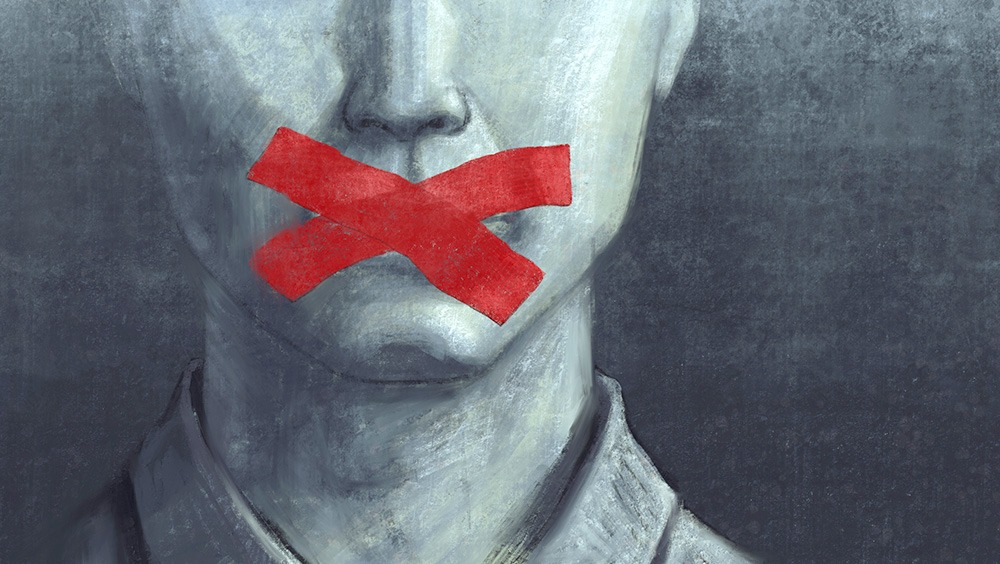
One of his first measures was to close down the opposition press:
first the newspapers of the centre and the right, and later the
socialist press.
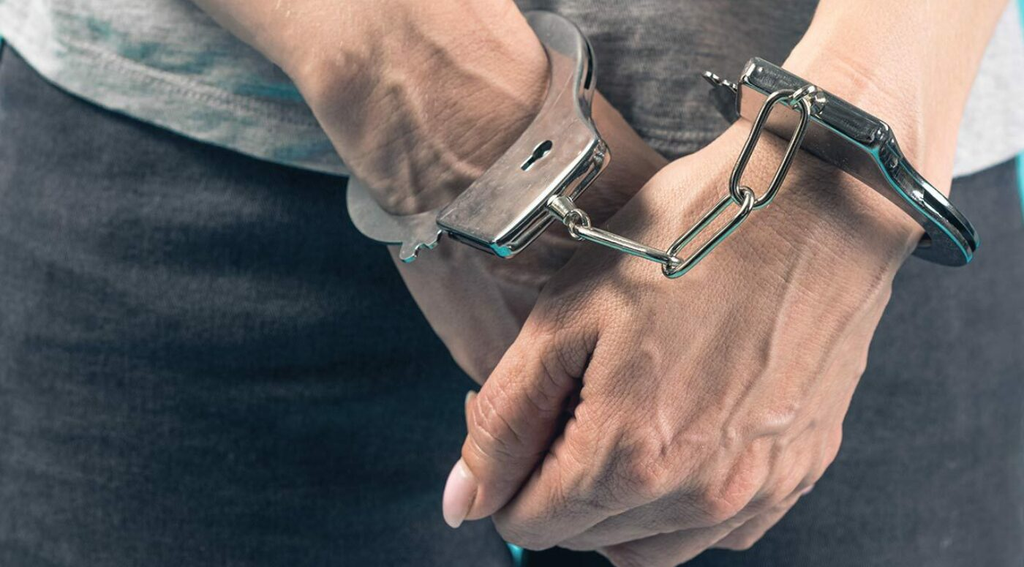
ARREST:
The Kadets, who had done fairly well in the elections to the
Constituent Assembly were denounced and outlawed. Leading
Kadets were arrested and two were brutally beaten to death by
Bolshevik sailors. The Kadets were soon followed into prison by
leading right-wing Socialist Revolutionaries and Mensheviks – all
before the end of 1917. This pattern continued with 5000
Mensheviks being arrested in 1921.
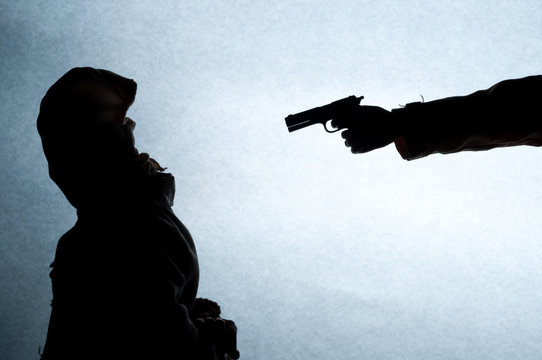
ASSASSINATION:
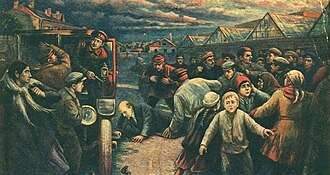
After addressing a meeting of workers in August 1918, Lenin was
shot in the neck and badly wounded by a Ukrainian SR called Fanya
Kaplan. She claimed that she was protesting about the signing of the
Treaty of Brest-Litovsk. This assassination attempt prompted the
Cheka to launch the Red Terror in the summer of 1918. Following
three days of torture from the Cheka, Kaplan was executed.
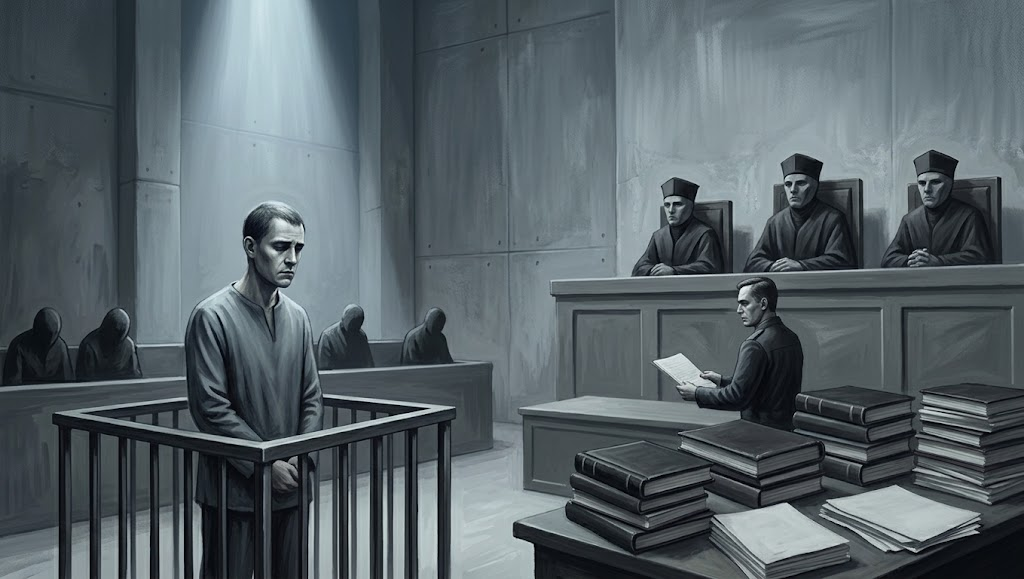
SHOW TRIALS:
In the aftermath of the introduction of the NEP – former members of
the SRs who were already in prison were put on trial for their
supposed links to attempting to assassinate Lenin. Many of the
accused were actually already in prison when the crimes they were
accused of had occurred. 34 were found guilty and 11 executed.
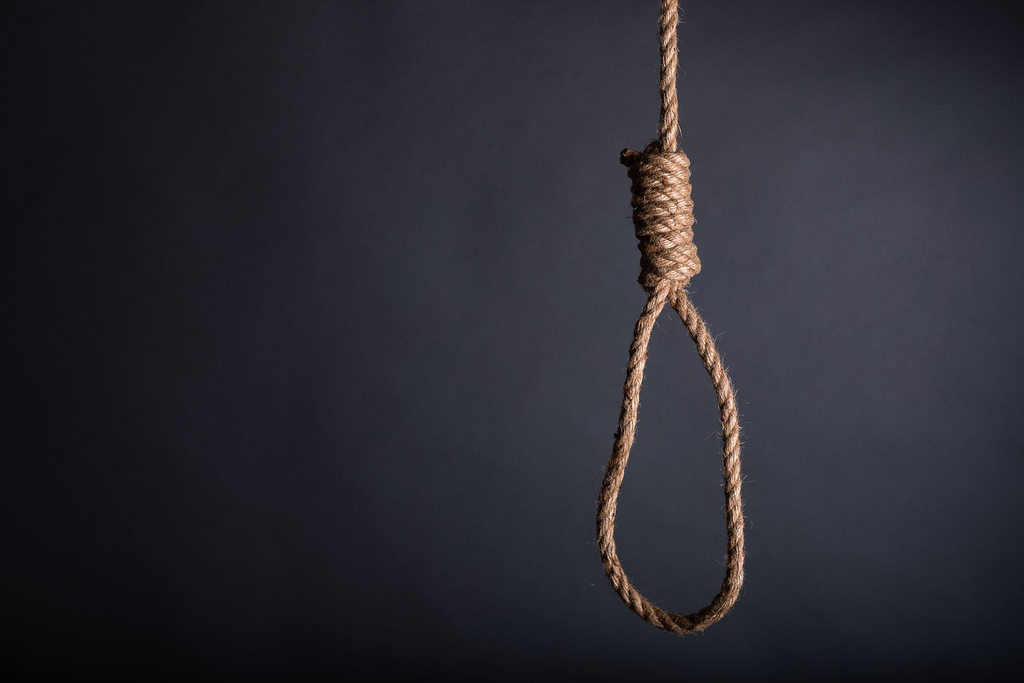
EXECUTION OF THE ROMANOVS:
During the Civil War, the former royal family were consistently
moved around Communist controlled territory to prevent the White
army freeing them. In July 1918, the order was given to deal with the
problem of the existence of the Romanov’s once and for all and they
were executed in Ekaterinburg.
THE CHEKA:
Main instrument of Lenin’s terror. Examples of how Lenin used the Cheka:
During the civil
war: White officers had their epaulettes nailed to their shoulders in some areas and some naked Polish officers were impaled on
branches of trees.
Officials records put the figure for the deaths at the hands of the Cheka for the years 1918-20 at nearly 13,000, but others estimates that the real number was closer to 300,000.
The Cheka was particularly active in the countryside, helping grain requisitioning squads collect grain from the peasants. Peasants did resist – murdering Bolshevik party officials. One Cheka man was found with his stomach slit open and stuffed with grain as a lesson to others. In another village, the twelve members of a grain requisitioning brigade were decapitated and their heads were put on poles.
However, the Cheka responded to resistance in a fierce manner. They were supported by Lenin: in a telegram to Bolshevik leaders in Penza he wrote, “Hang no fewer than a hundred well-known Kulaks, rich-bags and bloodsuckers and make sure the hanging takes place in full view of the people”.
Creation of the USSR
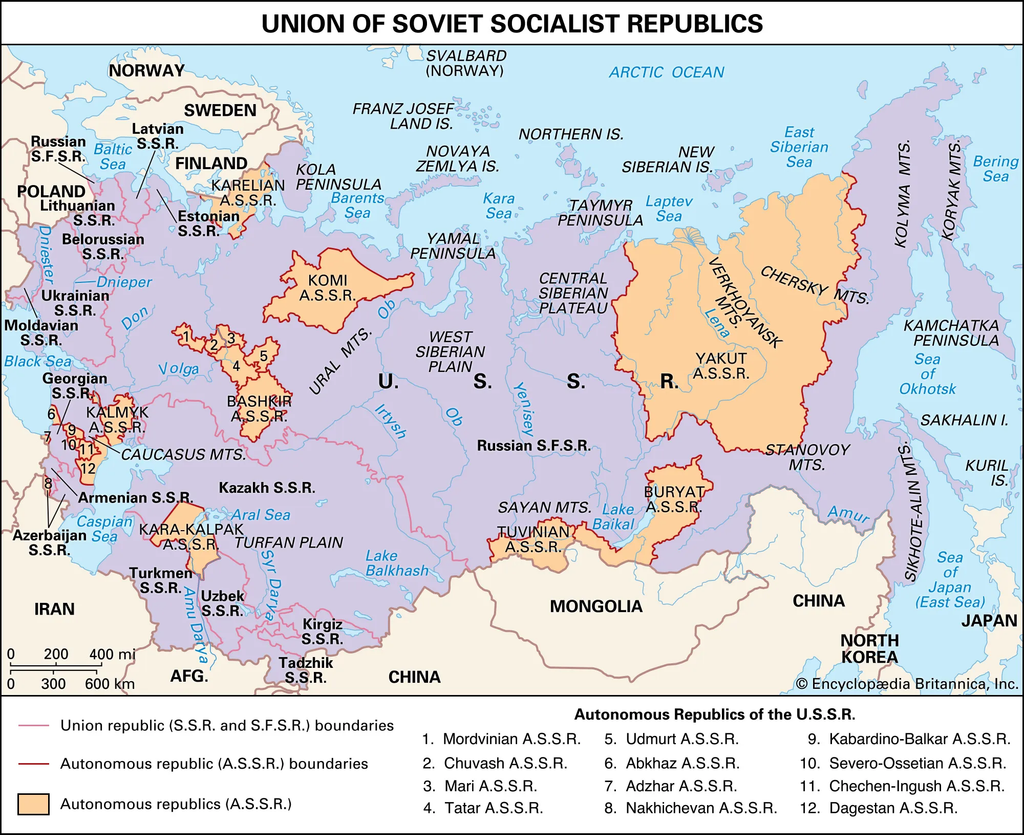
The Russian Soviet Federal Socialist Republic (RSFSR) had been proclaimed in January 1918. Its constitution, introduced in July, defined the state as “a dictatorship of the urban and rural proletariat”. Its job was to ensure transition to a socialist society. It employed the principle of “he who does not work shall not eat”.
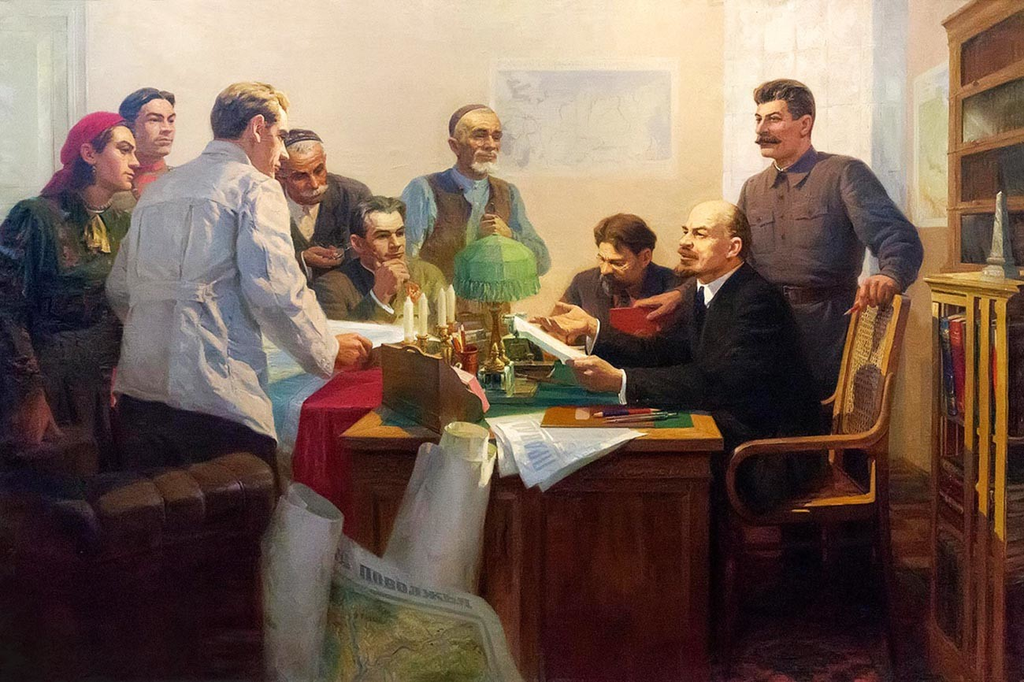
During the civil war, areas conquered by the Red Army were taken into the RSFSR, or in the case of larger areas, with a history of independence, such as the Ukraine, Belorussia or Georgia, it was made into a separate republic. The RSFSR was regarded as “Russia” (since the majority of the population was Russian) and was far larger and more powerful than the other republics. The status of the smaller republics in relation to the RSFSR led to an acrimonious debate between Lenin and Stalin, the Commissar for Nationalities. Stalin wanted all of the republics to be more directly controlled by Moscow. Lenin wanted a federation of soviet republics in which all were on a more or less equal footing. Lenin won the argument and at the end of 1922 the Union of the Soviet Socialist Republics (USSR) was formally established.
However, despite Lenin’s victory in the debate, the republics were never really free to govern themselves. Communist Party organisations in the republics were considered as regional branches of the Russian Communist Party and the governments of the republics were regarded as regional branches of Sovnarkom.
By this point in time both Sovnarkom and the Communist Party Central Committee were controlled by the Politburo – meaning that by extension the republics were too. The Communists were keen to avoid any suggestion that the way they controlled the republics was in any way similar to the tsarist empire, in case this led to national revolts. They tried to establish the idea that they were all part of a benign brotherhood of different ethnic groups and deliberately encouraged the development of national consciousness – setting up native language schools and encouraging theatre and cultural events reflecting national traditions.
Death of Lenin
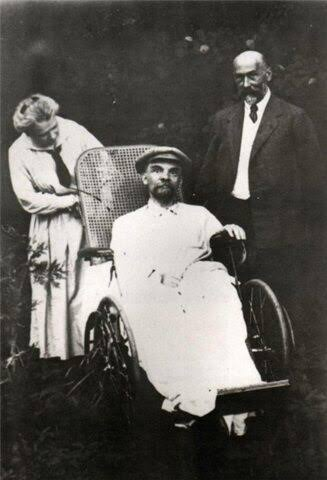
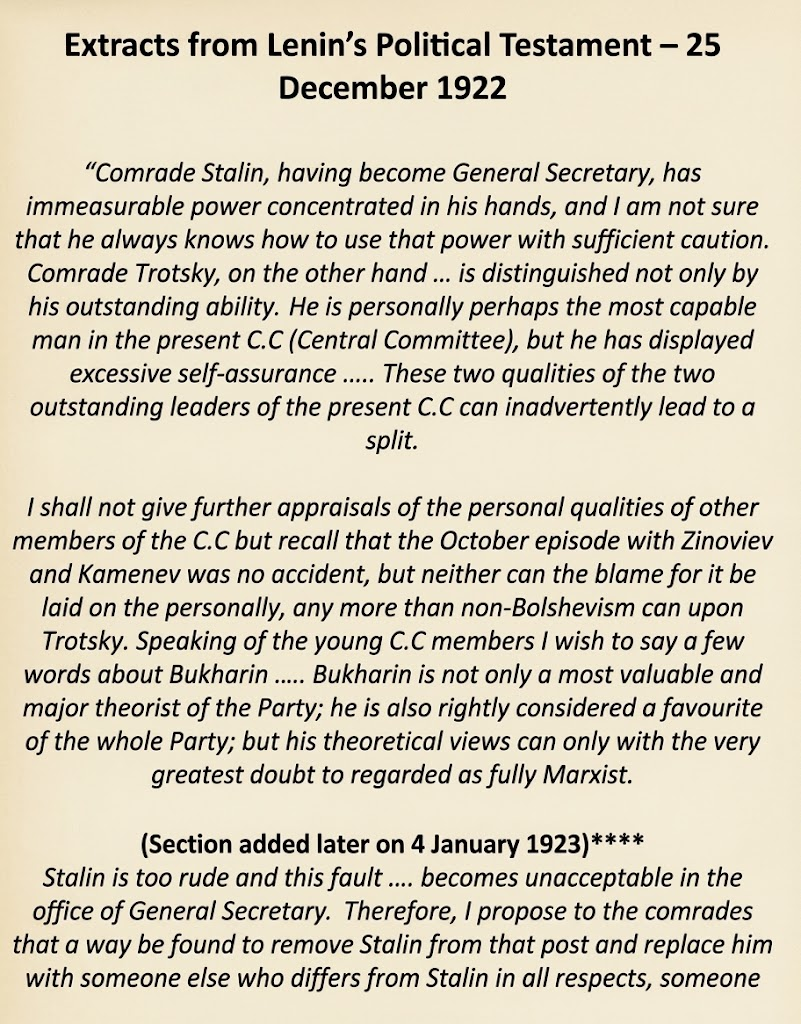
Lenin died in January 1924, aged 53. Suffering a series of strokes since 1922, when doctors examined his brain, they found that it had shrunk to almost half of its normal size. Lenin had spent much of the period from 1922 until his death, out of the public eye and the day-to-day work of running the government, This gave Lenin time to think about the progression of the party – especially after his death. After the second of his strokes in December 1922, Lenin began drafting his last political testament, a ‘letter to the part congress’ to be read after his death.
Stalin and Krupskaya
It is thought that this additional comment on Stalin came after Stalin insulted Lenin’s wife Krupskaya. Fearing that Lenin was positioning Trotsky as his successor, Stalin tried to visit the very sick Lenin. Krupskaya refused to let Stalin do this, and in a telephone conversation he insulted her, using crude and abusive language. Lenin was extremely angry at this.
Lenin’s funeral and the Lenin cult
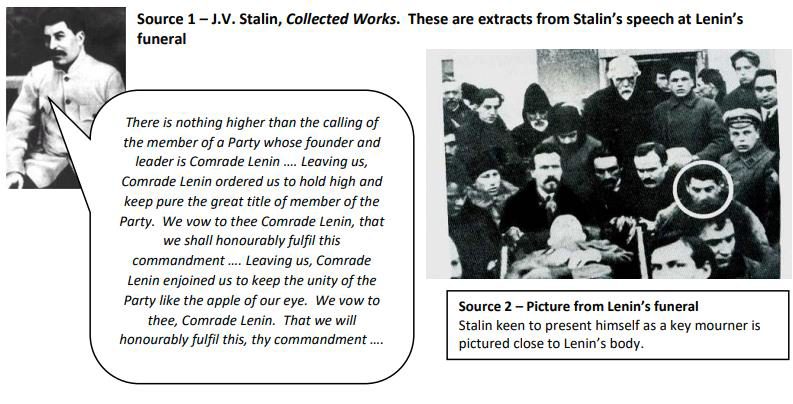
The unexpected news of Lenin’s death led to widespread displays of public grief. Theatres and shops were closed for a week while portraits of Lenin draped in red and black were displayed in windows. Over three days, three and a half million people queued for hours to file past his body lying in state. However much they hated the regime the people seemed to have a genuine affection for Lenin, much as they had for the tsars.
Stalin made the most of Lenin’s funeral to advance his position in the party. Just before Lenin’s death, Trotsky was ill and had been sent to the south of Russia for a rest-holiday. Stalin contacted him and tole him that he (Trotsky) would not be able to get back in time for the funeral. So Trotsky did not attend and it looked as though he could not be bothered to turn up. His reputation and political prestige were severely damaged by his non-attendance. Stalin, on the other hand, acted as one of the pallbearers and made a speech in which he appeared to be taking on the mantle of Leninism. Stalin hoped to transfer to himself the prestige, respect and loyalty associated with Lenin. He set himself up as Lenin’s disciple, the person who would carry on Lenin’s work. He was already thinking of the looming power struggle.
Exam Zone
This section has been designed to help you build confidence, sharpen your skills, and achieve your best possible results. Whether you are preparing for mock exams, end-of-unit tests, or final assessments, the Exam Zone provides everything you need in one place.
The Exam Zone is not just about testing your knowledge. It is about developing the key historical skills required for success: critical thinking, evaluation, and clear written communication. By practising regularly and reflecting on feedback, you will strengthen both your understanding of the past and your performance in exams.