Joseph Stalin
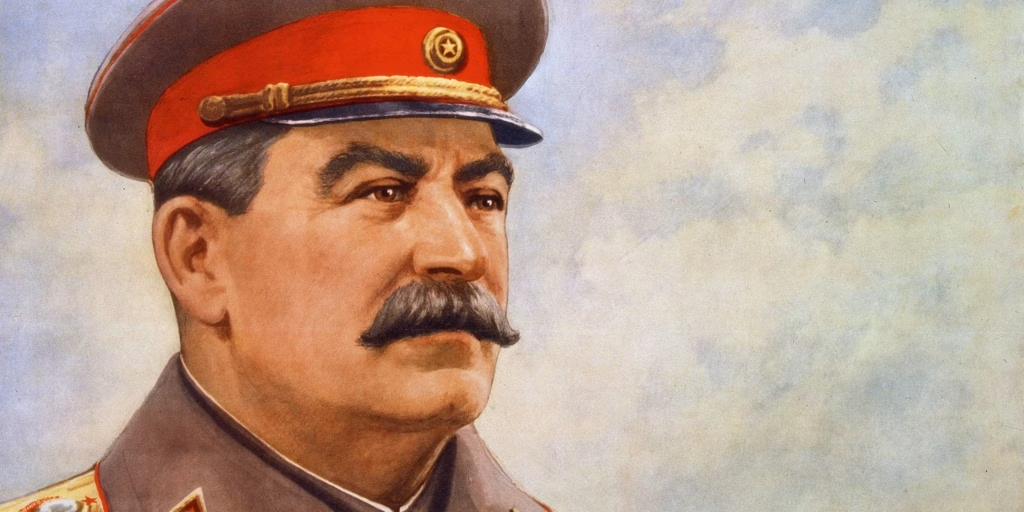
Stalin’s rule was characterised by a ruthless consolidation of power, rapid industrial and agricultural transformation, widespread terror, and the emergence of the USSR as a major global superpower.
The Leadership Struggle and Early Ideological Shifts (1924–1927)
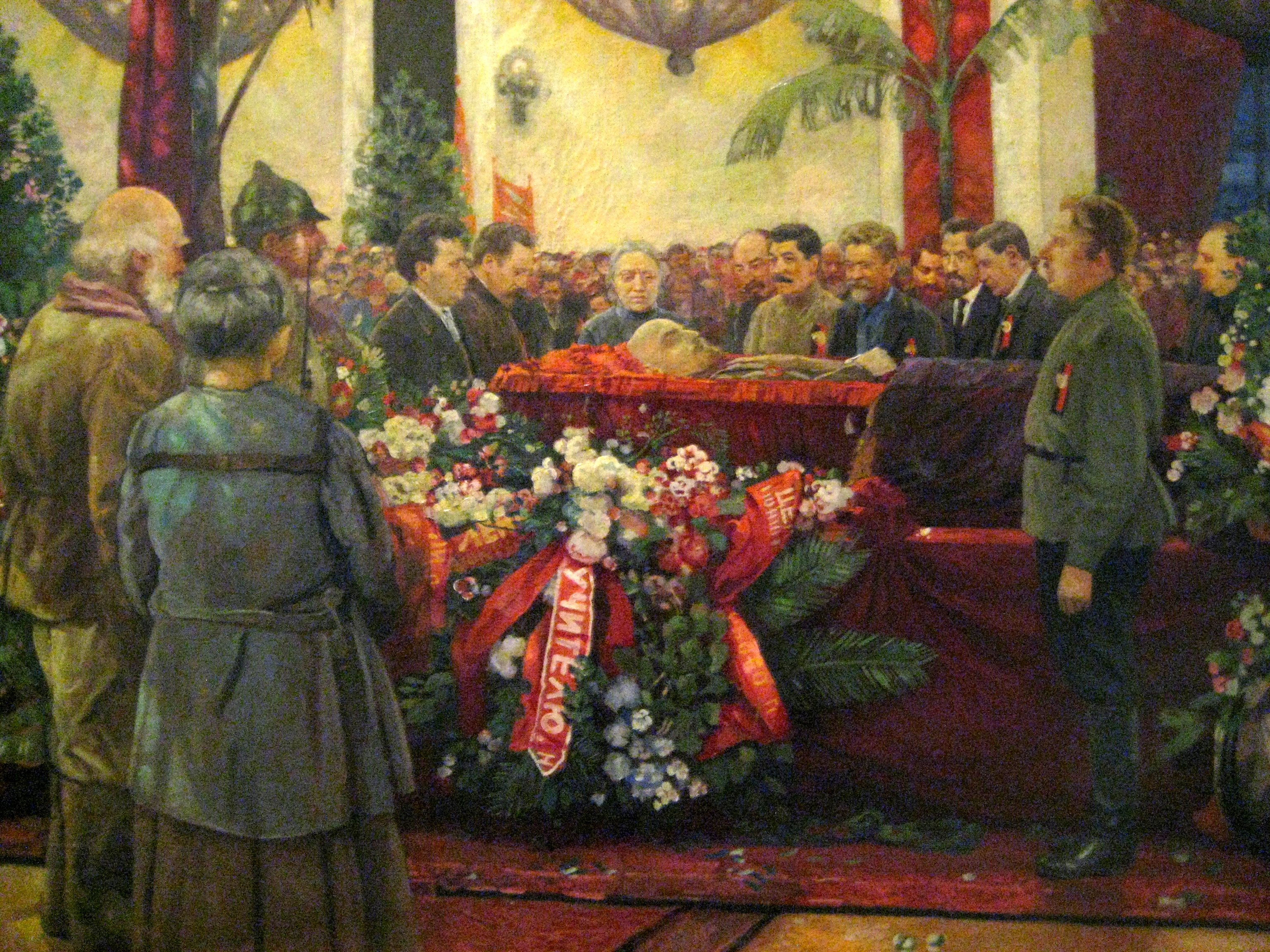
Following Lenin’s death in 1924, a power struggle emerged among five key figures: Trotsky, Stalin, Kamenev, Zinoviev, and Bukharin. Stalin, the General Secretary of the Communist Party, struck his first significant blow by tricking Trotsky into missing Lenin’s funeral and using the event to deliver an impassioned speech, setting himself up as Lenin’s disciple. In May 1924, Lenin’s widow handed his last political testament—which recommended Stalin’s removal—to the Central Committee; however, the Stalin-dominated committee suppressed the document, saving Stalin’s career. At the Thirteenth Party Congress in 1924, a “triumvirate” of Stalin, Kamenev, and Zinoviev worked together to easily defeat Trotsky’s calls for greater party democracy, using a “ban on factions” to prevent him from appealing.
By 1925, Stalin began aligning with the right wing of the party, particularly Bukharin, supporting the New Economic Policy (NEP) and promoting the popular nationalist theory of “socialism in one country”. In response, Kamenev and Zinoviev attacked Stalin, calling for an end to the NEP, and in 1926 they joined forces with Trotsky to form the United Opposition. Stalin swiftly accused them of factionalism, leading to all three losing their party positions and being entirely expelled in 1927.
The “Great Turn” and the First Five-Year Plan (1927–1933)
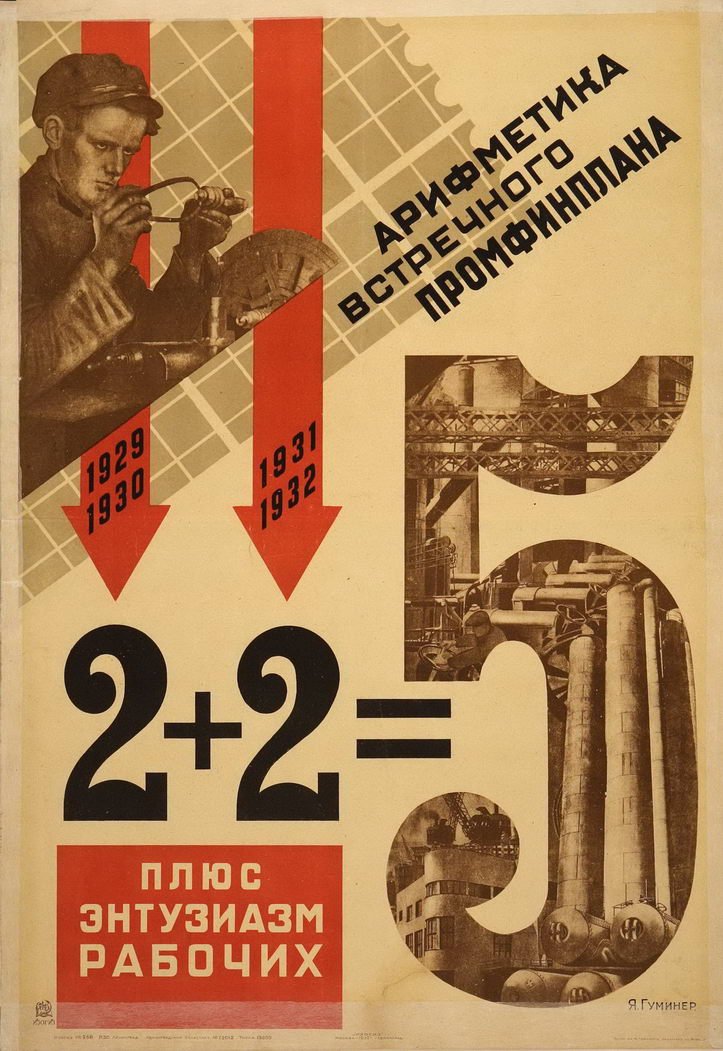
By the late 1920s, the NEP was failing, characterized by grain procurement crises and high urban unemployment. At the Fifteenth Party Congress in December 1927, Stalin announced his “Great Turn”—a major shift away from the NEP toward a “command economy” governed by intense state economic planning. The First Five-Year Plan explicitly favoured heavy industries like iron, coal, steel, and oil over consumer goods to lay the foundation for future industrialization and rearmament. To oversee this, the state agency Gosplan set sweeping targets that triggered a wave of “target-mania”.
When ambitious targets were not met, officials covered up mistakes or blamed “bourgeois specialists” (pre-1917 managers and engineers). In March 1928, staff at the Shakhty coal mine were accused of counter-revolutionary sabotage in a public show trial, resulting in five executions and long prison sentences to intimidate the workforce. Similarly, the “Industrial Party” show trial was held in November 1930 to blame professionals for plan failures. To rapidly industrialize, massive projects were undertaken, such as the construction of Magnitogorsk; here, a quarter of a million workers—including 40,000 prison workers and dedicated volunteers—lived in mud huts and tents to build Russia’s largest steel factory from scratch.
Collectivisation, Famine, and the War on Religion (1927–1933)
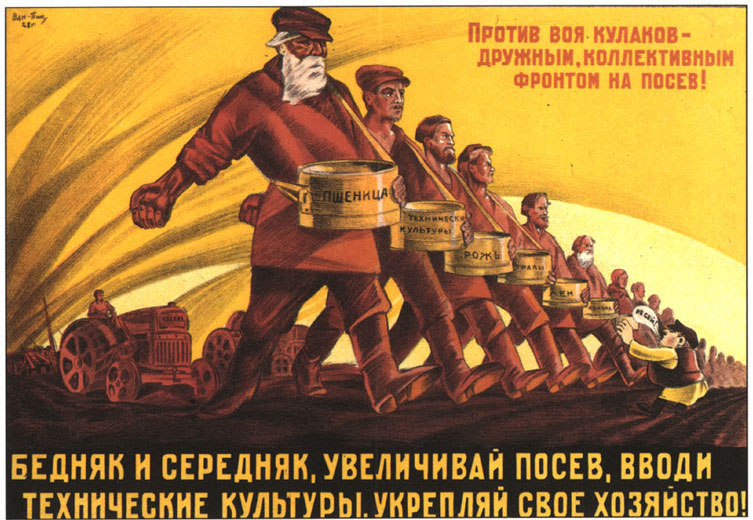
Simultaneously with industrialization, Stalin aimed to modernize agriculture to feed workers and generate export surpluses. Voluntary collectivisation was introduced in December 1927, aiming to unite inefficient peasant farms into collective units (Kolkhoz, Sovkhoz, or Toz). When peasants ignored this, Stalin sent out grain requisitioning squads in 1928 and made collectivisation compulsory in 1929. Peasants rebelled by burning crops and killing livestock, contributing to a devastating famine in 1930 that forced Stalin to temporarily suspend the policy.
When collectivisation restarted in 1931, further resistance led to a massive famine between 1932 and 1933, during which an estimated 5 million people perished in Ukraine alone. Stalin used terror and propaganda to blame the wealthy “Kulak” peasants, declaring in 1932 that they must be “liquidated as a class” through execution or deportation to the Gulag. By the end of this campaign, approximately 3 million Kulaks were killed. Concurrently, Stalin launched the “Godless Five Year Plan” in 1928 to enforce militant atheism. In 1929, he introduced a new Soviet calendar with a five-day week to eliminate traditional days of worship.
Stakhanovism and the Consolidation of Power (1933–1937)
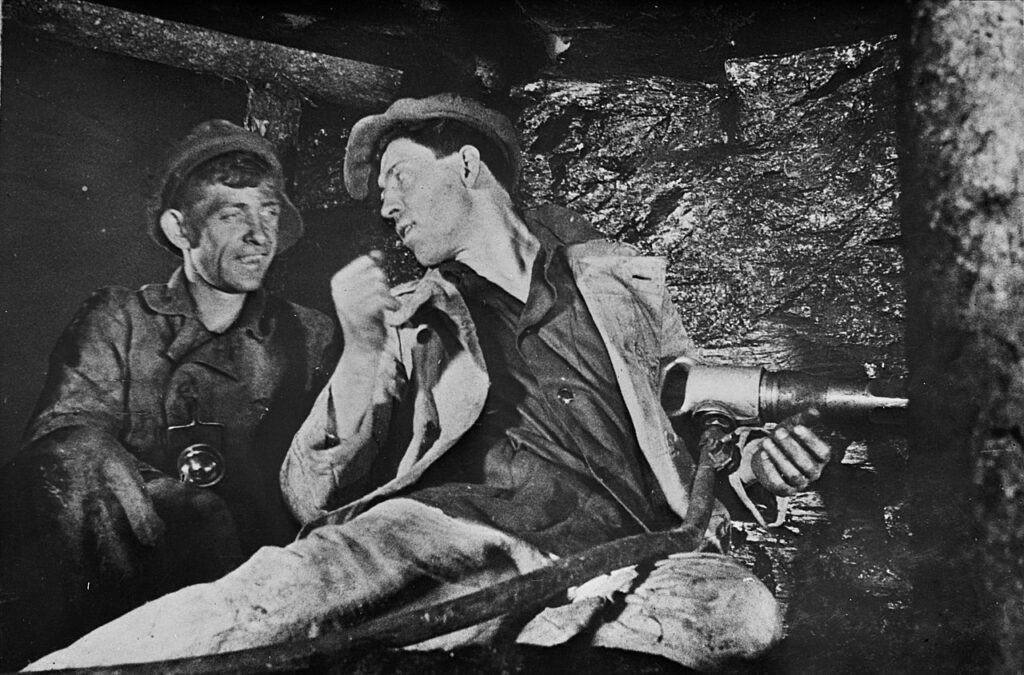
The Second Five-Year Plan (1933–1937) featured more achievable, scaled-down targets and focused on consolidation and infrastructure, leading the years 1934 to 1936 to be known as the “three good years”. To maximize output, a huge propaganda campaign promoted the “Stakhanovite movement,” named after Alexei Stakhanov, a coal miner who supposedly mined 14 times his quota in one shift in 1935. Workers who exceeded targets received better housing and cash prizes, while “slackers” faced harsh punishments, including the loss of ration cards or imprisonment. By 1937, agricultural resistance had also been broken, with 93% of land collectivised and grain production rising to nearly 100 million tonnes.
The Great Purges and Show Trials (1936–1940)
Despite economic stabilization, Stalin’s paranoia culminated in a massive wave of terror. The Trial of the Sixteen in 1936 saw Zinoviev and Kamenev falsely confess to murdering Sergei Kirov and plotting against the state after Stalin falsely promised them pardons; the trial judge, Andrei Vyshinsky, ordered them shot. This was followed by the Trial of the Seventeen in 1937, which targeted Trotsky’s former allies using Nicolai Yezhov’s “conveyor belt system” of relentless torture.
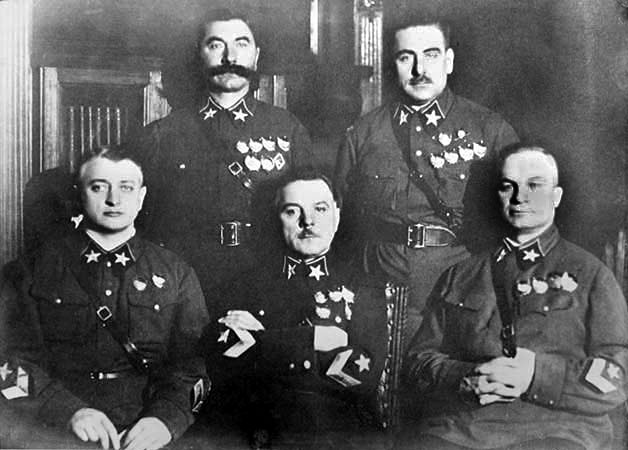
In July 1937, the Politburo passed a resolution condemning “Anti-Soviet Elements,” drafting an arrest list of over 250,000 scientists, artists, writers, and managers. That same year, Stalin purged the armed forces, executing Civil War hero Marshall Tukhachevsky and wiping out an estimated 90% of Russia’s generals. The final major Moscow show trial, the Trial of the Twenty-One, occurred in 1938; Bukharin was forced to confess after Stalin threatened to execute his wife and newborn baby, and he was subsequently shot. Stalin finally called a halt to the purges in late 1938, blaming Yezhov, who was replaced by Beria and executed in 1940. In 1940, a hitman acting on Stalin’s orders murdered the exiled Trotsky, wiping out virtually all the old Bolsheviks.
The Build-Up to War and the Nazi-Soviet Pact (1938–1941)
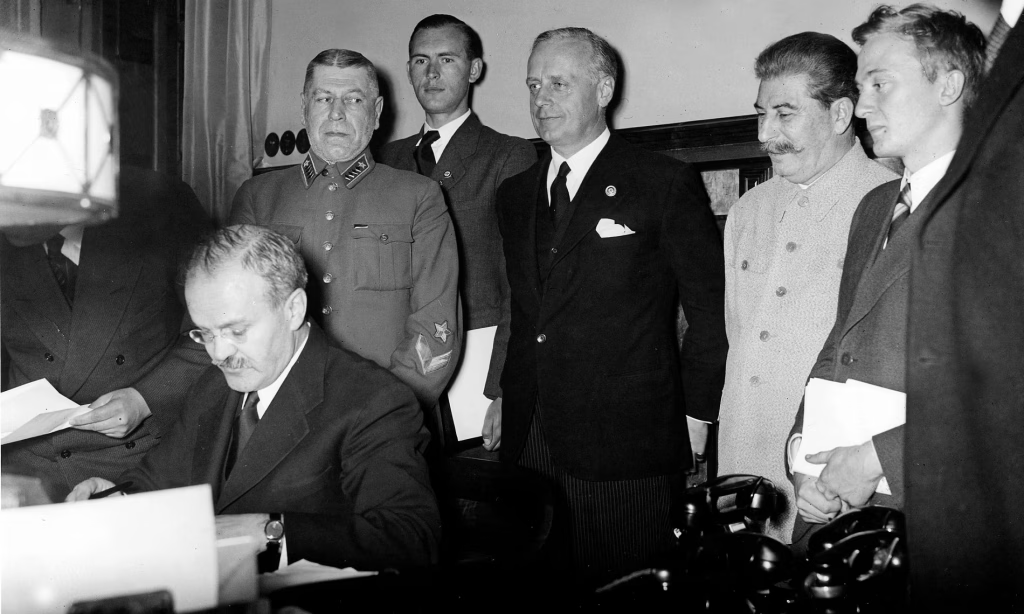
In foreign policy, Stalin grew deeply suspicious of Western appeasement following the 1938 Munich Conference, from which Russia was excluded. Seeking to secure Soviet borders, Stalin agreed to the Nazi-Soviet Pact in August 1939. A secret protocol divided Eastern Europe into spheres of influence, allowing Germany to invade Poland on September 1, 1939, and Soviet forces to invade from the east on September 17. When Finland refused to allow Soviet troops on its soil, Russia launched the Winter War (November 1939–March 1940); despite losing 50,000 men, the Soviets forced Finland to cede border territory. In 1940, the NKVD brutally massacred 5,000 Polish officers in the Katyn Forest. However, the alliance collapsed when Hitler approved Operation Barbarossa in December 1940, launching an all-out attack on Russia on June 22, 1941.
The Great Patriotic War (1941–1945)
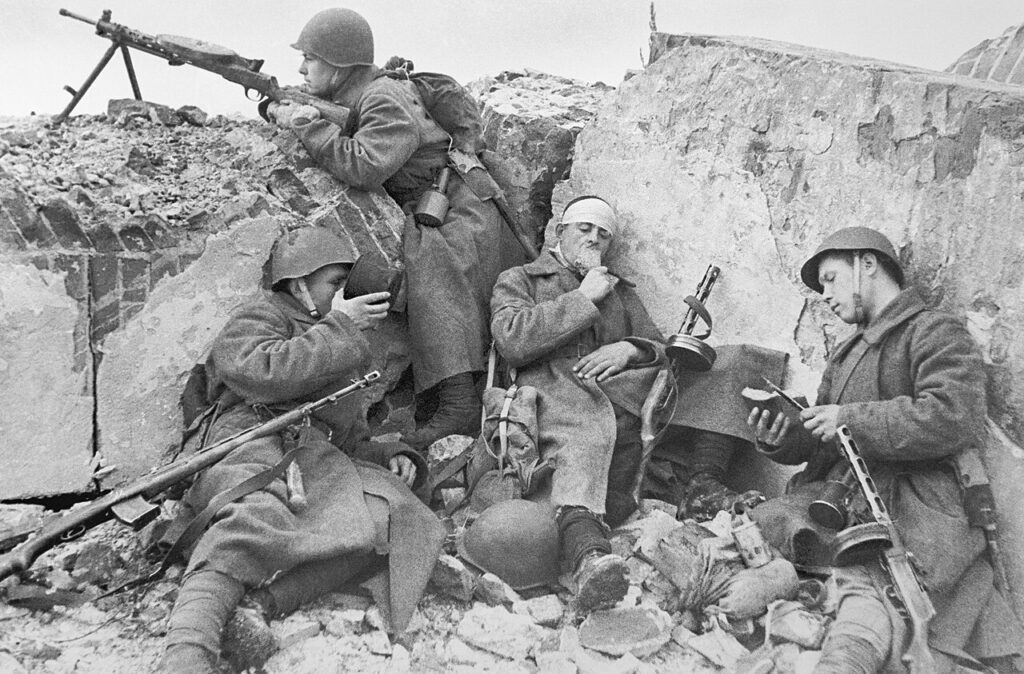
During the “Great Patriotic War,” Stalin appointed himself chairman of the State Defence Committee and supreme commander of the military. The human and economic costs were staggering: over 27 million Russians were killed (10% of the population), including 1 million civilians in the siege of Leningrad and 1.1 million casualties at the Battle of Stalingrad. The war caused immense physical devastation due to both German shelling and Stalin’s scorched earth policy, destroying 70,000 villages, 32,000 factories, and 65,000km of railway. By 1942, Russia was producing only 59% of its 1940 industrial output. Despite the brutality—where Stalin ordered 13,000 deserters shot and treated returning prisoners of war harshly—the USSR ultimately emerged victorious, with the Communist Party ironically growing from 3.76 million members in 1941 to 5.8 million by 1945.
Post-War Reconstruction and the Eastern Bloc (1945–1953)
After the war, Stalin initiated the Fourth Five-Year Plan (1946–1950) to restore the economy, successfully reaching targets in three years through the use of 4 million prisoners of war and forced labor, alongside extreme civilian effort. However, agriculture was neglected, leading to a devastating famine in 1947. Politically, the NKVD reverted to purging dissidents, highlighted by the 1948 “Leningrad Affair,” which saw over 200 supporters of the deceased politician Zhdanov purged.
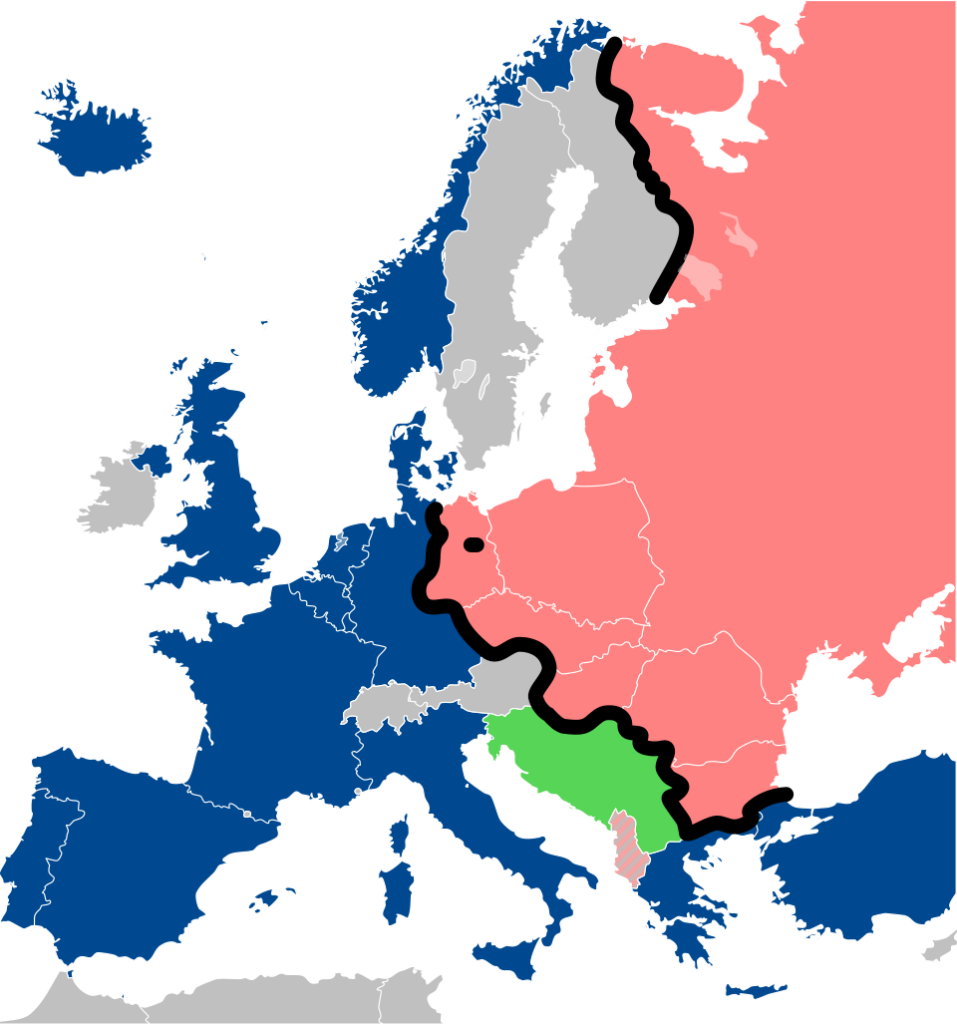
In foreign affairs, Stalin successfully extended a Soviet “Iron Curtain” across Eastern Europe. In Poland, the London-based exile government was abandoned at Yalta (1945), and by 1948 Stalin had established a one-party communist state. In Czechoslovakia, communists dramatically seized power in a military coup in May 1948, prompted by Stalin to prevent the country from accepting US Marshall Aid. In Germany, escalating tensions led Stalin to blockade West Berlin in 1948; when this failed, the blockade was lifted in 1949, and East Germany was formally established later that year. The only major defiance came from Yugoslavia, where Marshal Tito objected to Stalinist over-centralization and maintained independence, resulting in Yugoslavia’s expulsion from the Cominform in 1948. Stalin remained in total control of the Soviet state and its satellite empire until his death in 1953.
Exam Zone
This section has been designed to help you build confidence, sharpen your skills, and achieve your best possible results. Whether you are preparing for mock exams, end-of-unit tests, or final assessments, the Exam Zone provides everything you need in one place.
The Exam Zone is not just about testing your knowledge. It is about developing the key historical skills required for success: critical thinking, evaluation, and clear written communication. By practising regularly and reflecting on feedback, you will strengthen both your understanding of the past and your performance in exams.