Discover Thatcher and the end of consensus 1979–1997
This section explores how Thatcher’s governments from 1979 to 1997 reshaped Britain—ending post‑war consensus through free‑market reforms, union confrontation, social change, and political division leading to her fall and Major’s 1997 defeat.
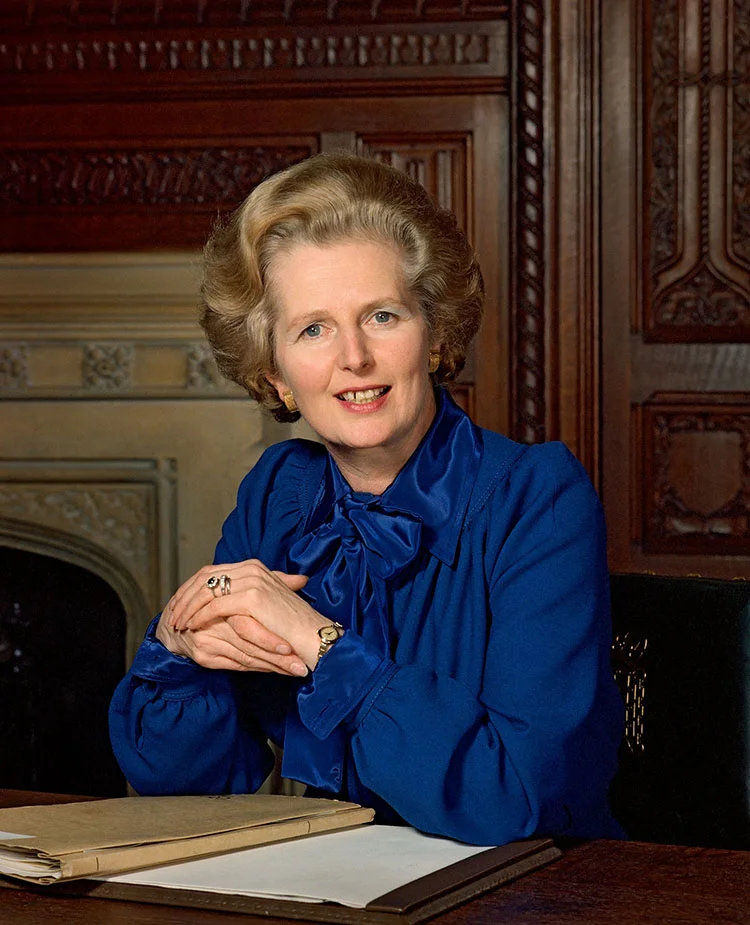
Margaret Thatcher 1979-1990
Why did Thatcher win three elections in a row?
1979 Election
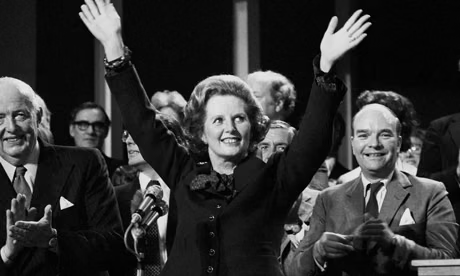
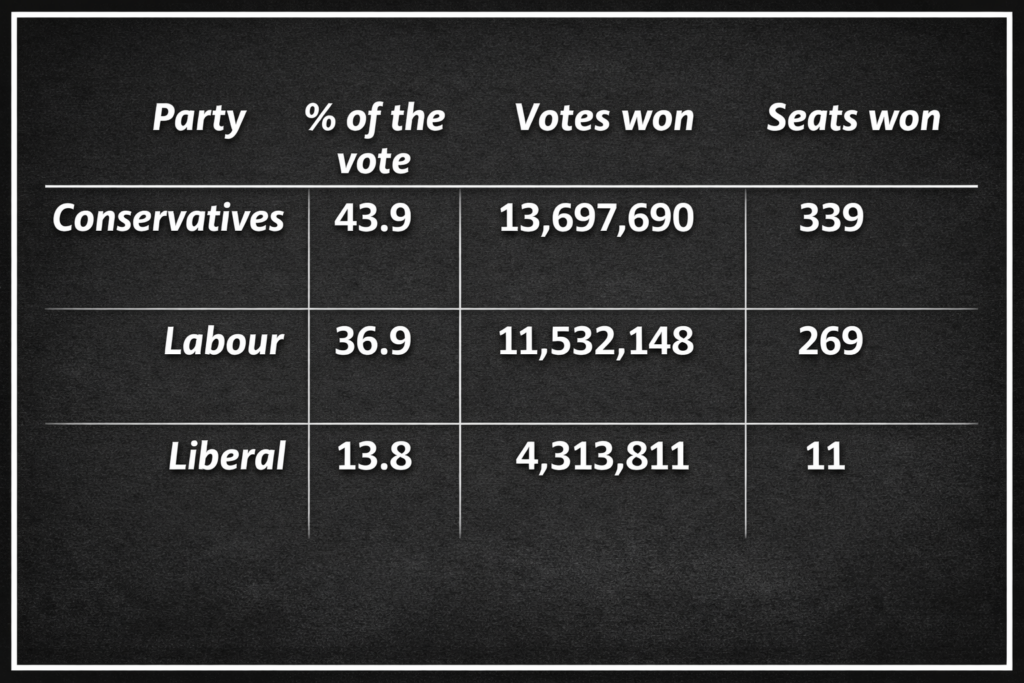
The 1979 election was decided largely in London, the south of England and the Midlands where approximately 40 seats changed hands from Labour to the Conservatives. These voters were punishing Labour for its perceived failure to deal with inflation, unemployment and the all too powerful trade unions, which had culminated in the depressing scenes of the so-called “winter of discontent”. The previous decades had created an enlarged middle class who felt increasingly resentful about strikes and trade union power. The piling up of rubbish during the strikes in 1979 seemed symbolic of a decline in standards.
As in previous elections, the Liberal vote was also significant in determining the election outcome. Although the Liberals held on to most of their seats in their strongholds, their total vote dropped by over a million because some voters blamed them for keeping Callaghan’s government in office since 1977. In many constituencies in the Midlands and south, the collapse of the Liberal vote was enough to hand the seat to the Conservatives even though the Labour vote did not significantly decline (and in some cases had increased!) In actual fact, Labour succeeded in retaining its traditional support in the industrial north, Scotland and Wales where it won twice as many seats as the Conservatives. This explains why Labour won more votes in 1979 than it had won in 1974. As the Financial Times observed on the day after the election, “this is a very divided country”.
Falklands War, 1982
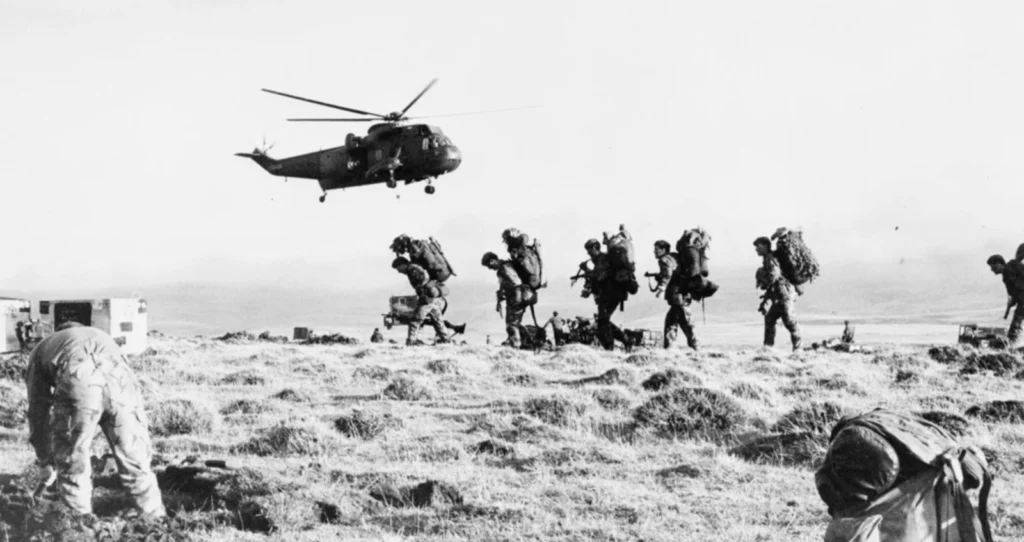
In April 1982 the Argentinian dictator, General Galtieri, sent forces to capture the British colony of the Falkland Islands, 400 miles from the coast of South America and 8,000 miles from Britain. The Argentinians had always claimed the islands, but the population was almost entirely British. Thatcher immediately sent British forces to recapture the islands. A short war followed in which some 655 Argentinians and 255 British servicemen died and the Argentinian forces surrendered in June.
1983 Election
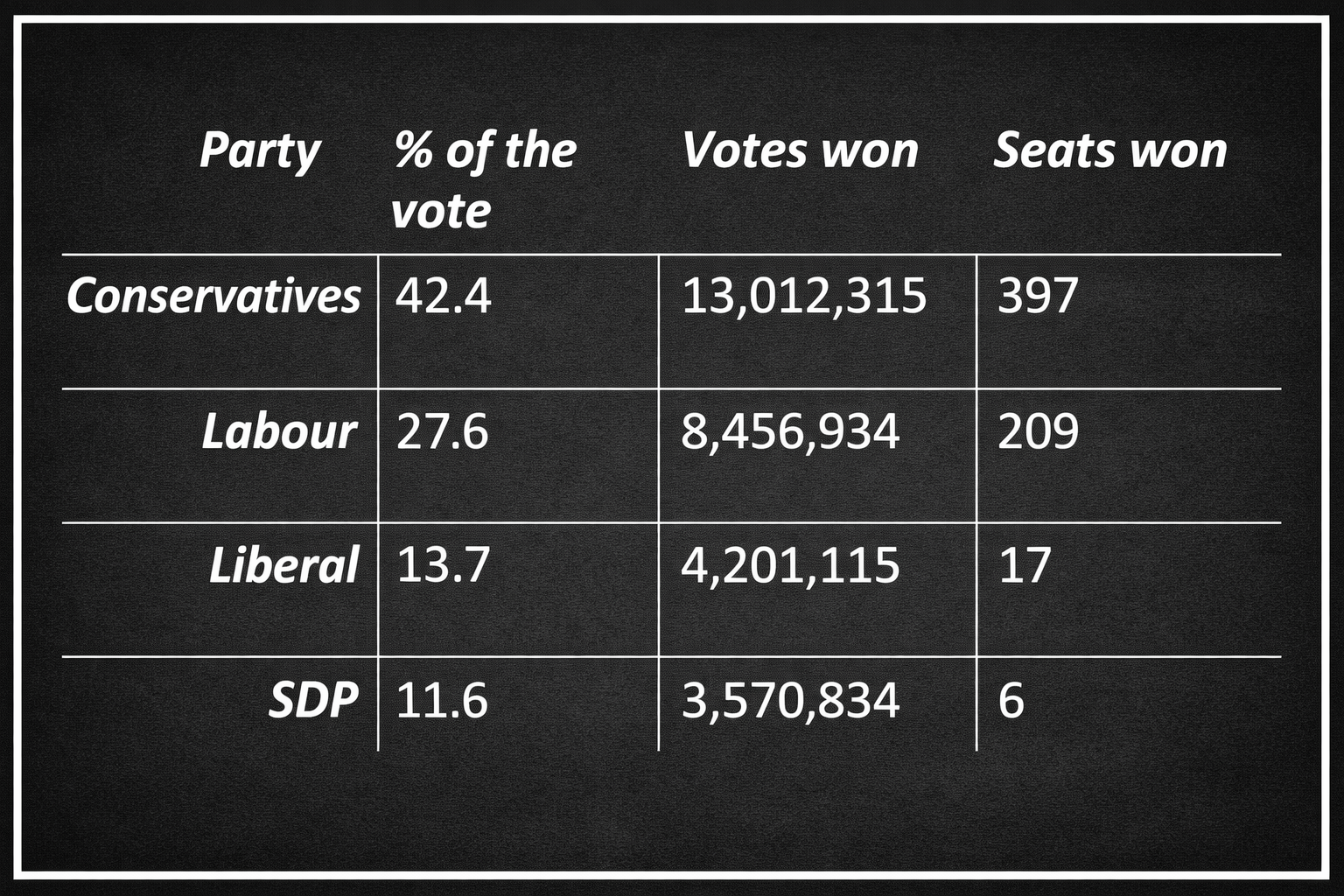
The rise in unemployment and economic problems had reduced the popularity of the government by 1981, but the election of 1983 saw another Conservative victory, even with a reduced popular vote. The victory in the Falklands war was seen as a great sign of Britain’s greater confidence and unity. It increased the personal popularity of Thatcher in her own strongholds.
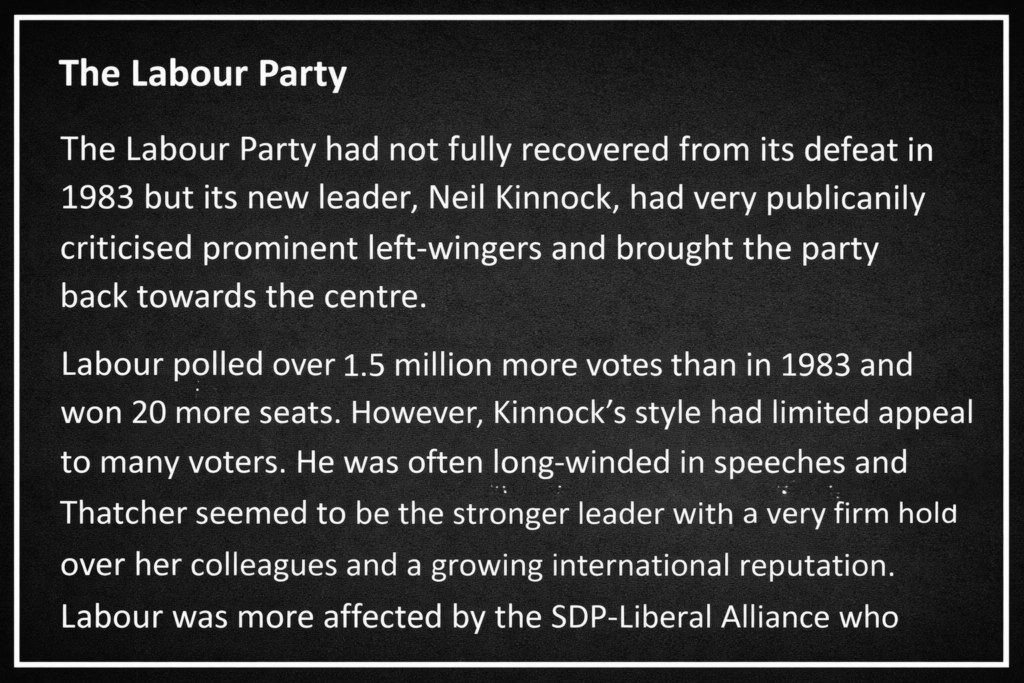
However, the disastrous split in Labour and the selection of Michael Foot as leader in November 1980 played an important part in the outcome. Foot lacked an assured manner on television, and his belief in unilateral nuclear disarmament, further nationalisation of industry and government regulation seemed old-fashioned. He and his policies made little appeal outside traditional Labour voters. The more moderate elements in the Party split away to form the SDP in March 1981, massively damaging the Labour Party. The Labour manifesto was described as “the longest suicide note in history” because it was so out of touch with the country as a whole. The Alliance between the Liberals and the SDP – the beginning of the modern Liberal Democrats – succeeded in splitting the anti-Thatcher vote. This allowed Conservative gains in some traditional Labour seats in the north.
1987 Election
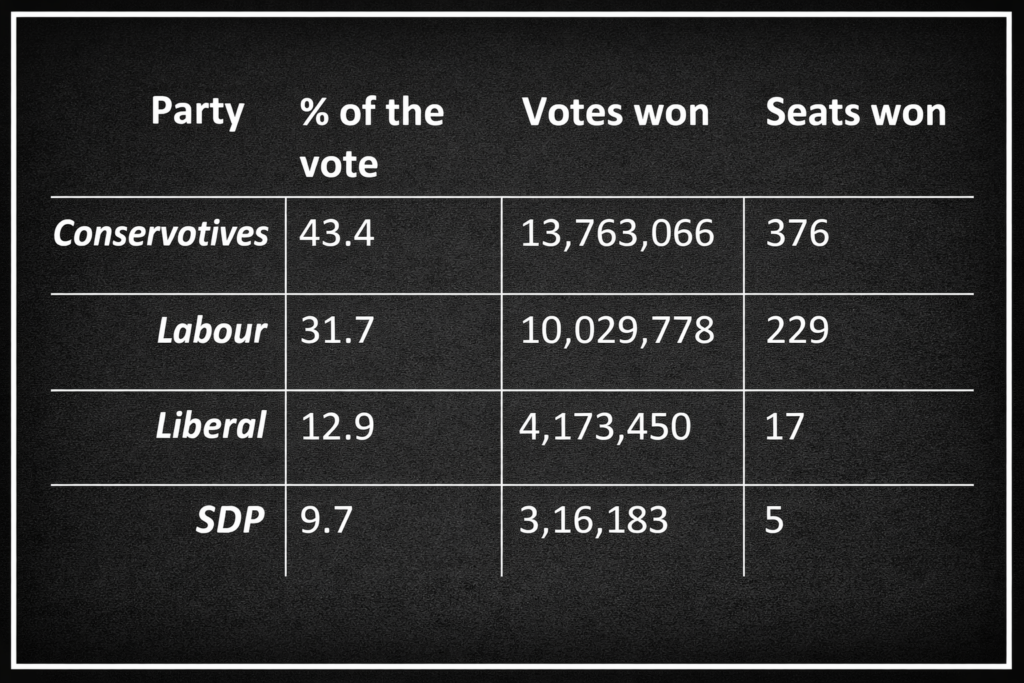
The Conservative Party won more votes than in 1979 or 1983 but lost 21 seats. The particular elements that allowed for victory in 1983, such as the weakness of the Labour leadership and the split in the party, were no longer as important and there was no “Falklands factor” or “winter of discontent”. However, there had been policies that were popular among key sections of the electorate and there was the sense that the economy was doing well. When Thatcher called an election in June 1987 the Conservatives were ahead in the opinion polls.
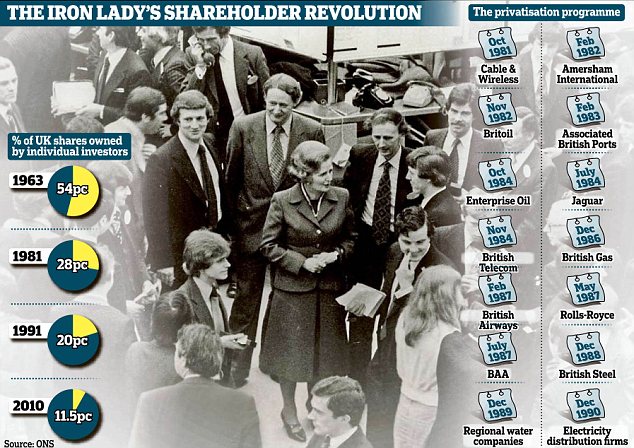
→ The government’s policies of selling council houses and shares in privatised industries appealed to many middle class and skilled working-class voters.
→ These people were either better off, or believed that the government supported their desire to increase their wealth and status.
→ Unemployment was falling and the pound was strong.
→ In both the 1983 and 1987 election the Conservatives benefited from a split of the left-wing vote
Thatcher’s Economy
Thatcher’s views on the economy
- Inflation. Prices had doubled the 1970s.
- Lack of investment, modernisation and economic stagnation.
- Costly and unprofitable publicly owned industries and services.
- A lack of incentive to modernise and increase productivity.
She strongly believed that her views were the only way to tackle these problems. Essentially, she thought that the state sector had been allowed to grow too much at the expense of private business and that state enterprises should be privatised and enterprise encouraged through the reduction of direct taxation. Government should not support “lame duck” enterprises.
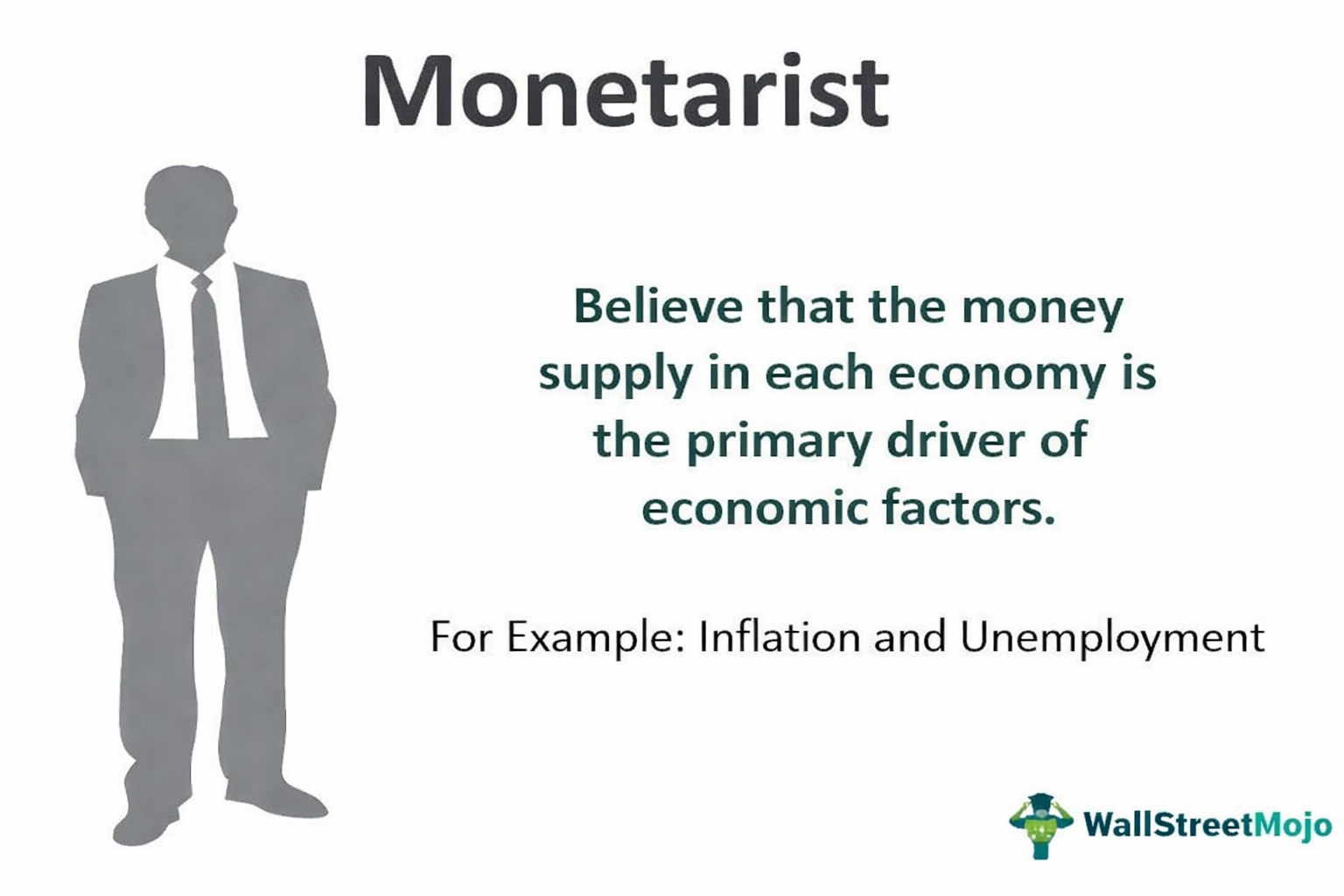
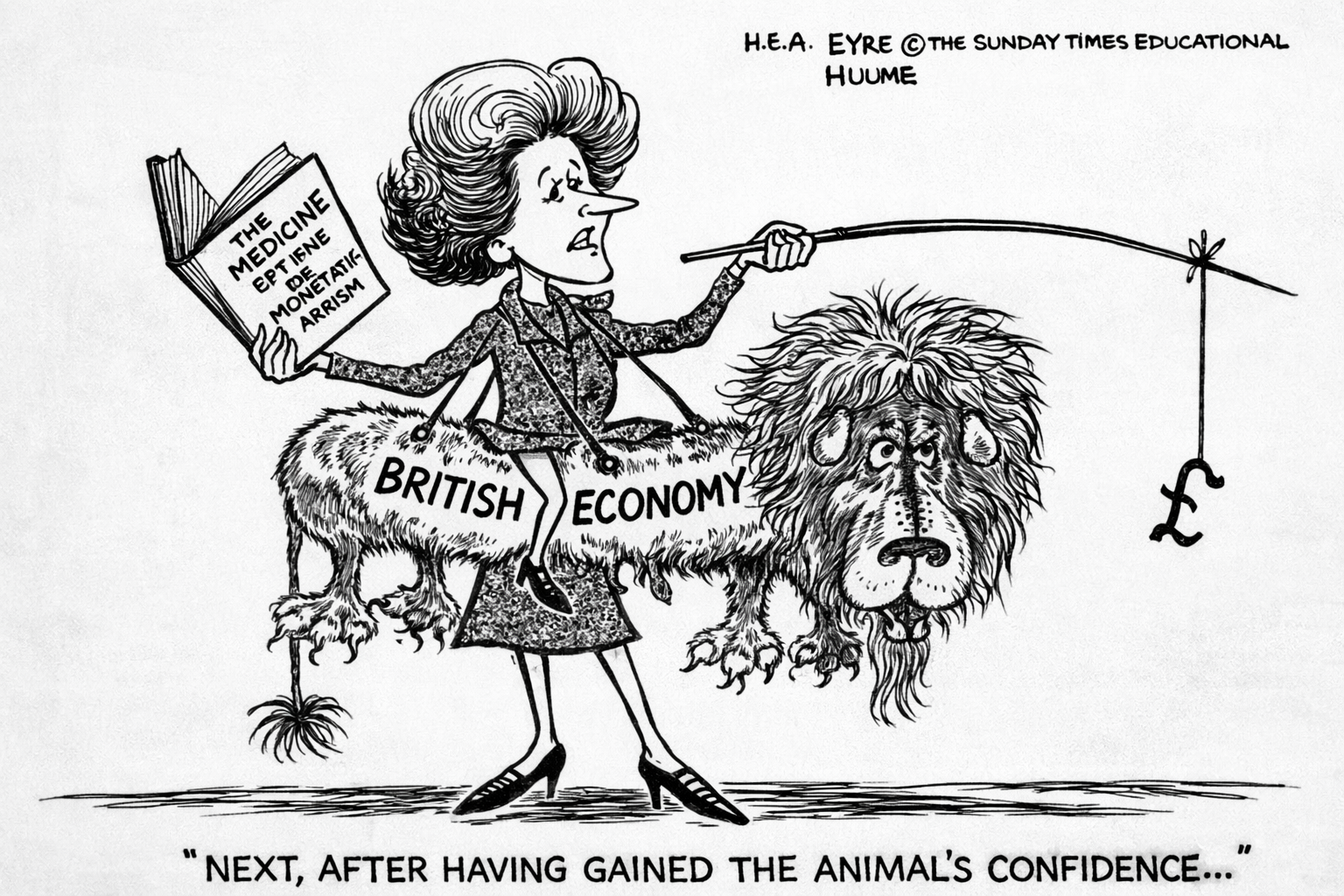
Thatcher saw dealing with inflation as a priority, and believed prices should be controlled by reducing the amount of money in circulation. According to Thatcher, regulation of wages and, therefore, incomes would not work; instead, the market must be allowed to determine prices and wages. Unemployment was preferable to continued inflation.
Thatcher’s economic policies
- Privatisation began in October 1979 with the sale of British Petroleum and continued through the 1980s.
- Government no longer supported failing industries and these were allowed to stop production even though this resulted in unemployment.
- The budgets of 1980 and 1981 aimed to reduce money in circulation by reducing government spending and raising indirect taxation.
- The government’s policies increased confidence abroad and the value of the pound rose.
- Direct taxes and taxes on businesses were reduced to free up money for investment.
- Interest rates remained high through the 1980s. – The Financial Services Act of 1986 deregulated dealing in stocks and shares and opened up share trading.
Impact
Prices fell from 18% in 1980 to 4.5% in 1983 and there was a further fall in 1985-6. The stronger pound, changes in taxation and financial deregulation led to a growth in financial services while cuts and ending subsidies and rescues meant that weaker businesses failed. Unemployment rose sharply in the early 1980s: initially, 1.5 million was seen as high but the figure rose to 3 million by 1983 and did not begin to fall substantially until 1986. It was still over 2 million by 1990. Foreign investment increased; for example, the Japanese car firm Nissan established a plant in the North East. However, many new industries which emerged in the 1980s were not big employers and unemployment remained high.
Was there an economic revolution?
In many ways, there was an economic “revolution”. There was a shift from the public sector to the private sector. Privatised industries remained in private hands, even after the end of Thatcher’s period in office. There was more encouragement of enterprise, small businesses and investment on the stock market, as well as more home ownership and more individual shareholding. Industries were forced to become more competitive, and there was fewer restricted practices and lower labour costs. Critics of Thatcher’s policies pointed to a selfish, “get-rich quick” culture and less concern for the rights and conditions of workers. There was also a decline in the manufacturing industry. Overall Britain lost 15% of its manufacturing base and there was a greater divide between prosperous areas in London, the Midlands and the south-east and older industrial and mining areas. Government spending as a percentage of GDP did fall after 1984- 85. However, this was not a permanent feature of economic life. Figures for 2010-11 were actually higher than in 1979. Thatcher’s reductions in expenditure were not a new policy and the labour Chancellor of the Exchequer Denis Healy had made unpopular cuts in the 1970s.
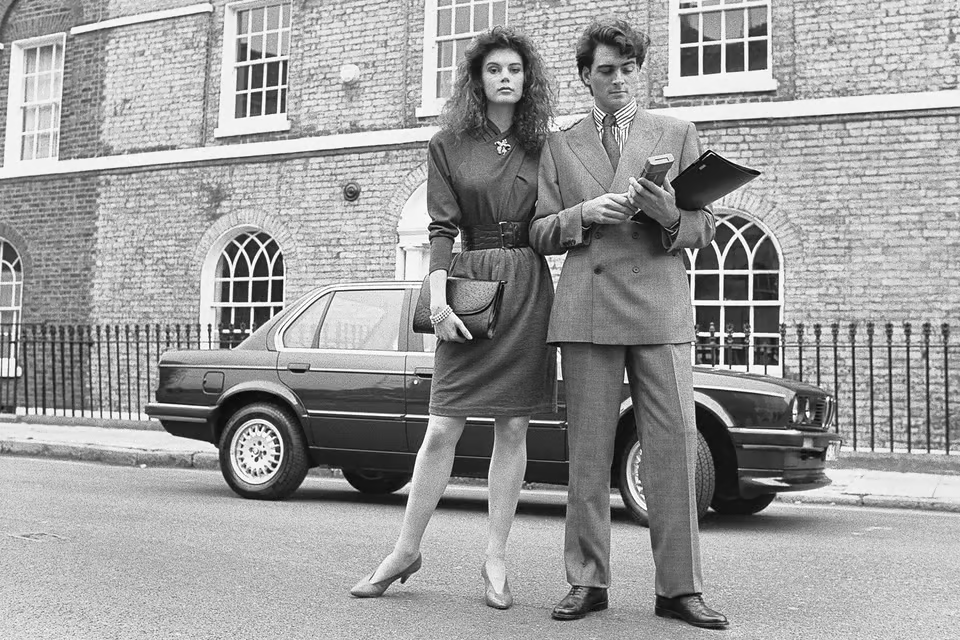
After Thatcher, the economy offered more consumer choice; the balance between the state’s role in the economy and that of the private sector did change, and the movement in employment from traditional industries towards services was accelerated.
Industrial Relations
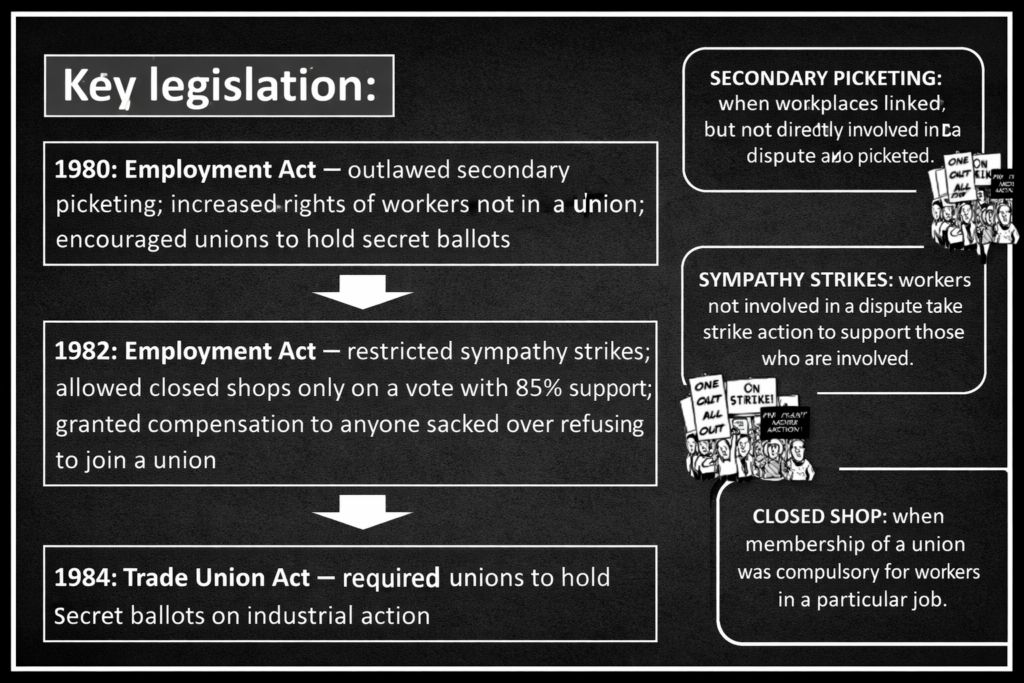
Thatcher knew she would have to tackle the power of the trade unions. She believed that:
- Existing laws on industrial relations had been abused to protect workers’ rights and over-manning, to underpin strikes, and to coerce workers into joining unions and participating in industrial action against their “better judgement”.
- Union power made British firms uncompetitive because high labour costs and restrictive practices meant that business was lost to more efficient overseas companies.
- Jobs would become available once British industry adjusted to market conditions and unions lost their power to control labour conditions
Thatcher and the Miners’ Strike, 1984-85
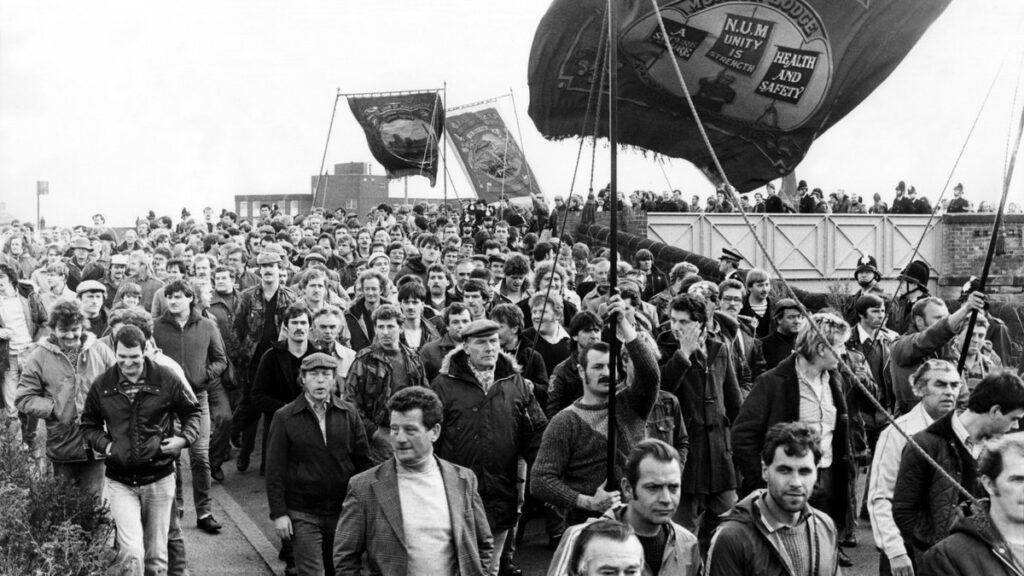
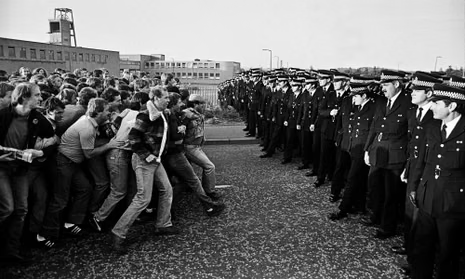
The central drama of Thatcher’s second term was the great miners’ strike of 1984-5. The National Coal Board was facing a loss of £250 million for 1983-84 alone. To demonstrate that the government was serious about refusing to support loss-making nationalised industries, a pit closure programme was announced. This was bound to provoke opposition from the powerful mining unions, who had previously successfully challenged the Heath government. The coal strike began in March 1984 in response to an announcement that twenty uneconomic pits were to close, with the loss of 20,000 jobs. The dispute became exceptionally bitter and violent because neither side was prepared to compromise.
Arthur Scargill
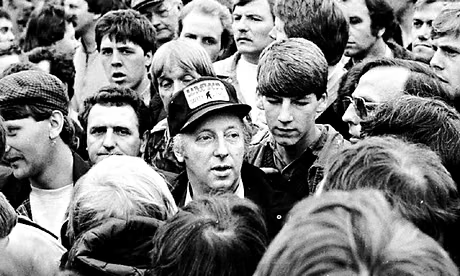
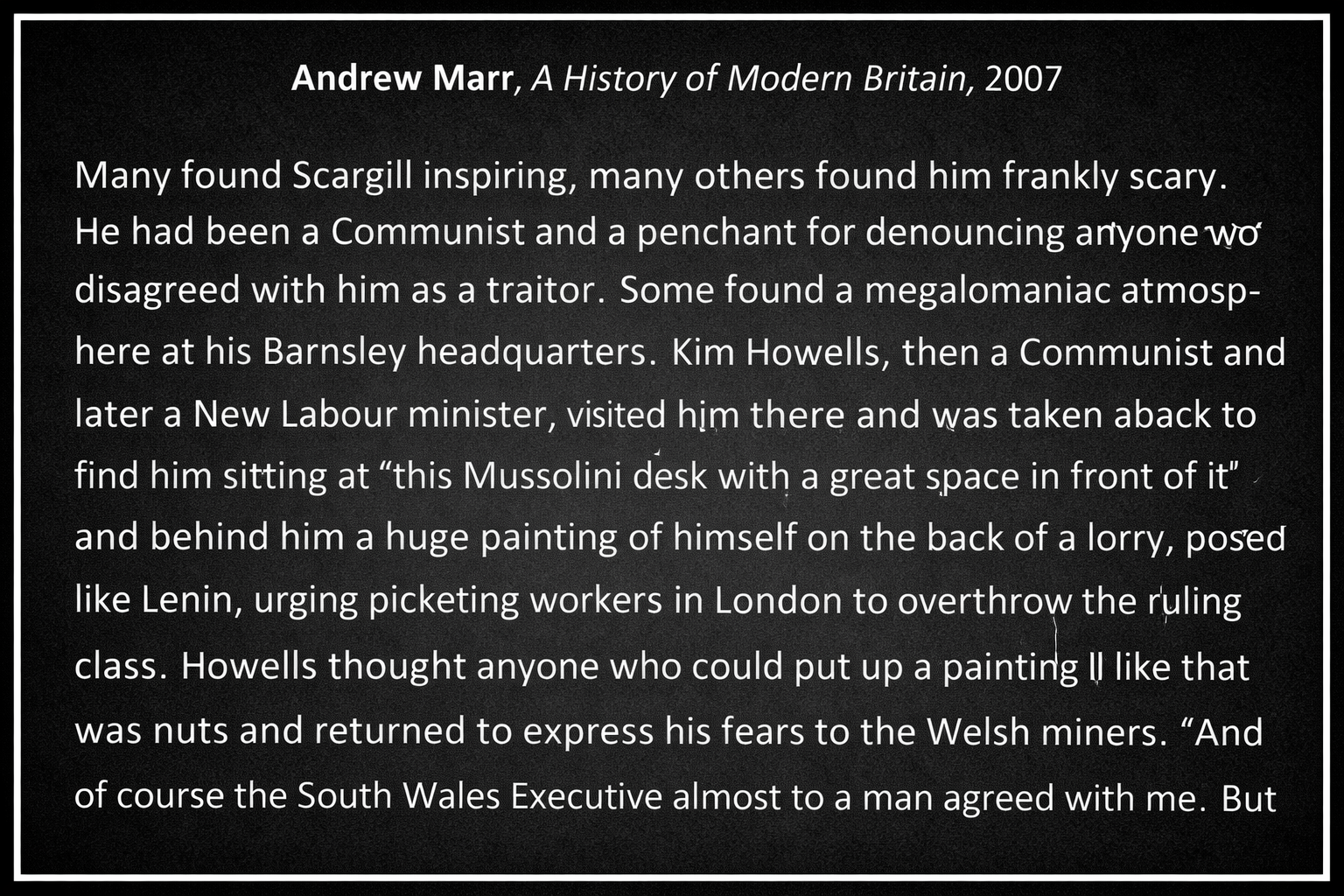
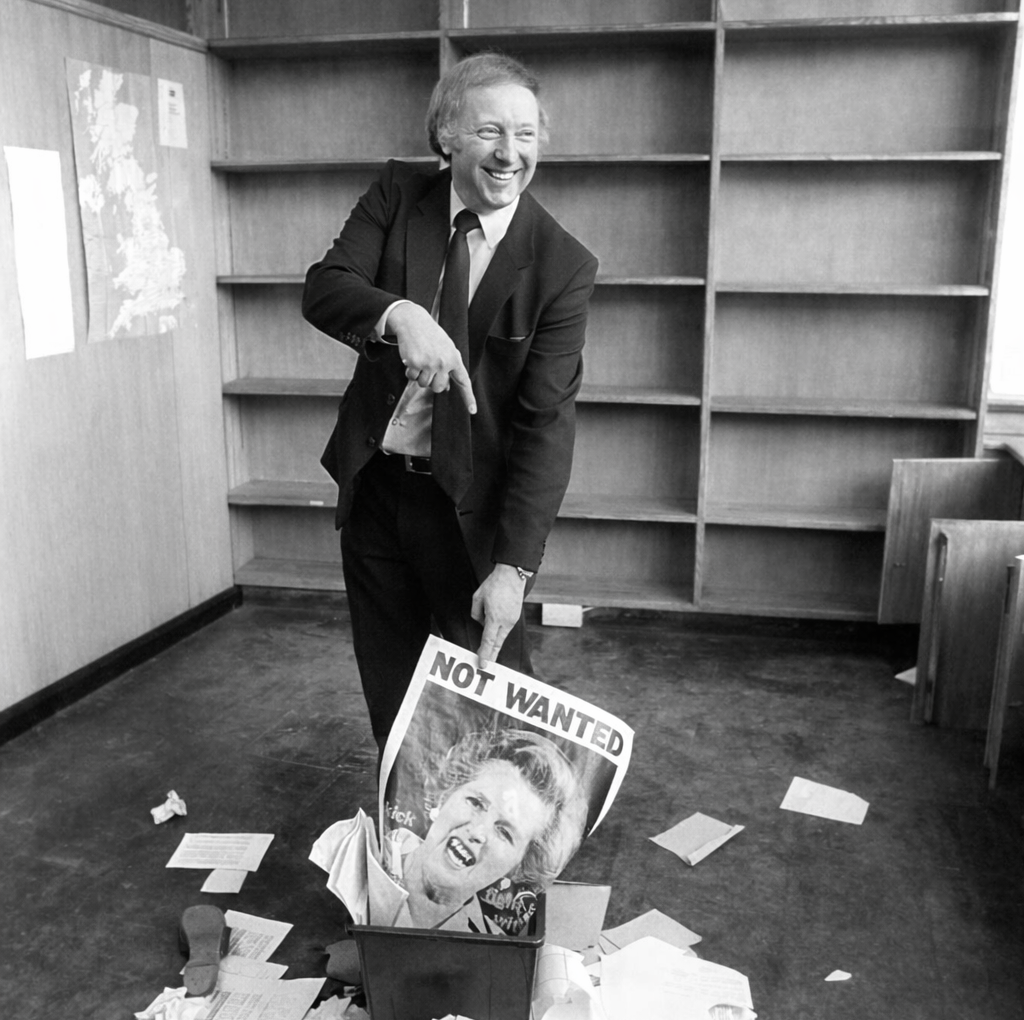
Scargill was the leader of the National Union of Mineworkers (NUM). He had pioneered the use of “flying pickets” which had been successful in the 1972 strike against the Heath government. Scargill saw the strike as an opportunity to inflict another defeath on a Conservative government. He wanted a national strike, but some mining areas voted against strike action. Scargill sent flying pickets to deter them from working and prevent the movement of coal. as a result, some miners fought with each other and with the police.
Government preparations for the strike:
The government had prepared carefully before taking on the coal miners:
- In 1981 a secret government committee was set up to organise the stockpiling of enough coal to keep the power stations running through a long dispute
- The Central Electricity Board built up large stocks of coal and oil in the power Stations
- Home Secretary, Leon Brittan, set up a National Reporting Centre in New Scotland Yard as soon as the strike began. This was to ensure central control of policing, co-ordinating intelligence and the movement of police officers to trouble spots.
Impact of the strike
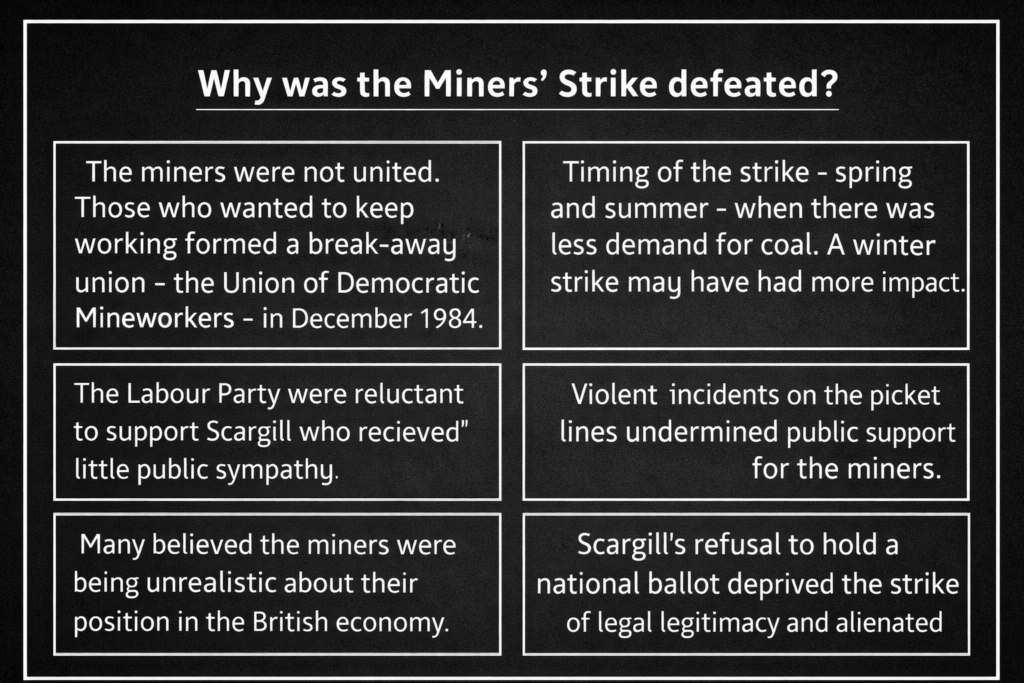
NUM membership dropped from 250,000 in 1979 to under 100,000 in 1987 and the union ended the strike virtually bankrupt. The miners’ strike divided opinion on Thatcher more than any other issue.
The strike ended in March 1985 without a deal. For Thatcher, it was a victory over what she termed the “enemy within” and signalled the end of the post-war consensus where unions held a veto over government policy. For the mining communities, it led to the closure of dozens of pits and long-term economic hardship in the North, Scotland, and Wales.

Social Policy
Council housing
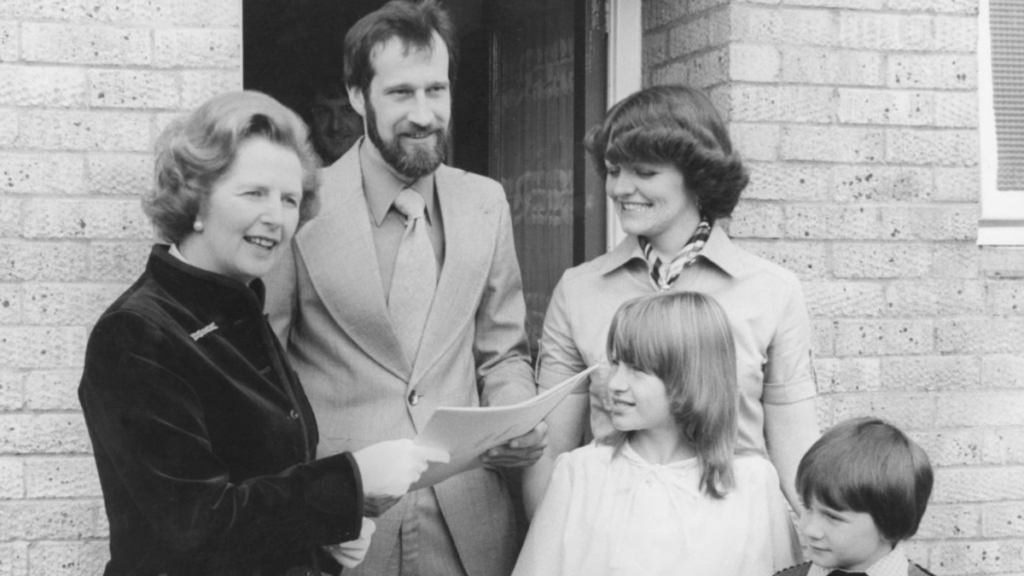
Thatcher wanted to create what she called “a property owning democracy”. She wanted to reward those who shared the values she admired – hard work, self-reliance, and initiative – by enabling them to buy their own homes. She believed that owning property gave people a stake in their communities and made them less likely to support socialism.
POLICIES
- 1980 – Housing Act allowed long-term council tenants the right to buy their homes.
- Homeowners were granted tax relief on their mortgages.
- Government money spent on subsidising mortgages doubled and property ownership grew by 12% under her premiership.
The NHS
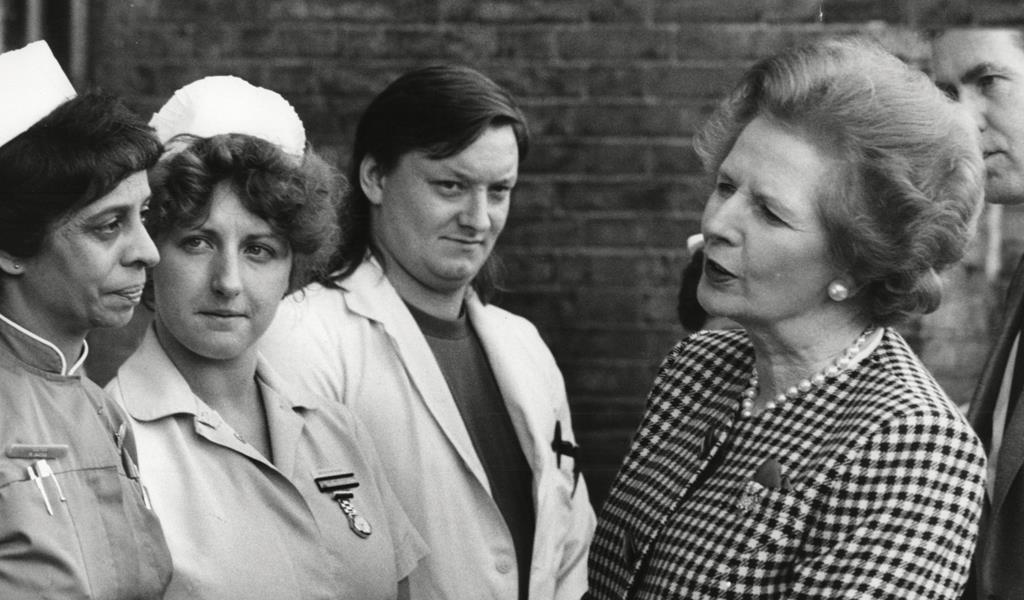
Government reforms aimed to make the National Health Service, which had become one of the biggest employers in the country and which took a considerable proportion of government spending, more efficient by applying business principles to its administration.
POLICIES
- Hospitals were allowed to become self-governing NHS trusts in control of their own budgets
- NHS services were expected to compete with each other to provide the most cost-effective service
- GPs were left in control of their own budgets.
Schools
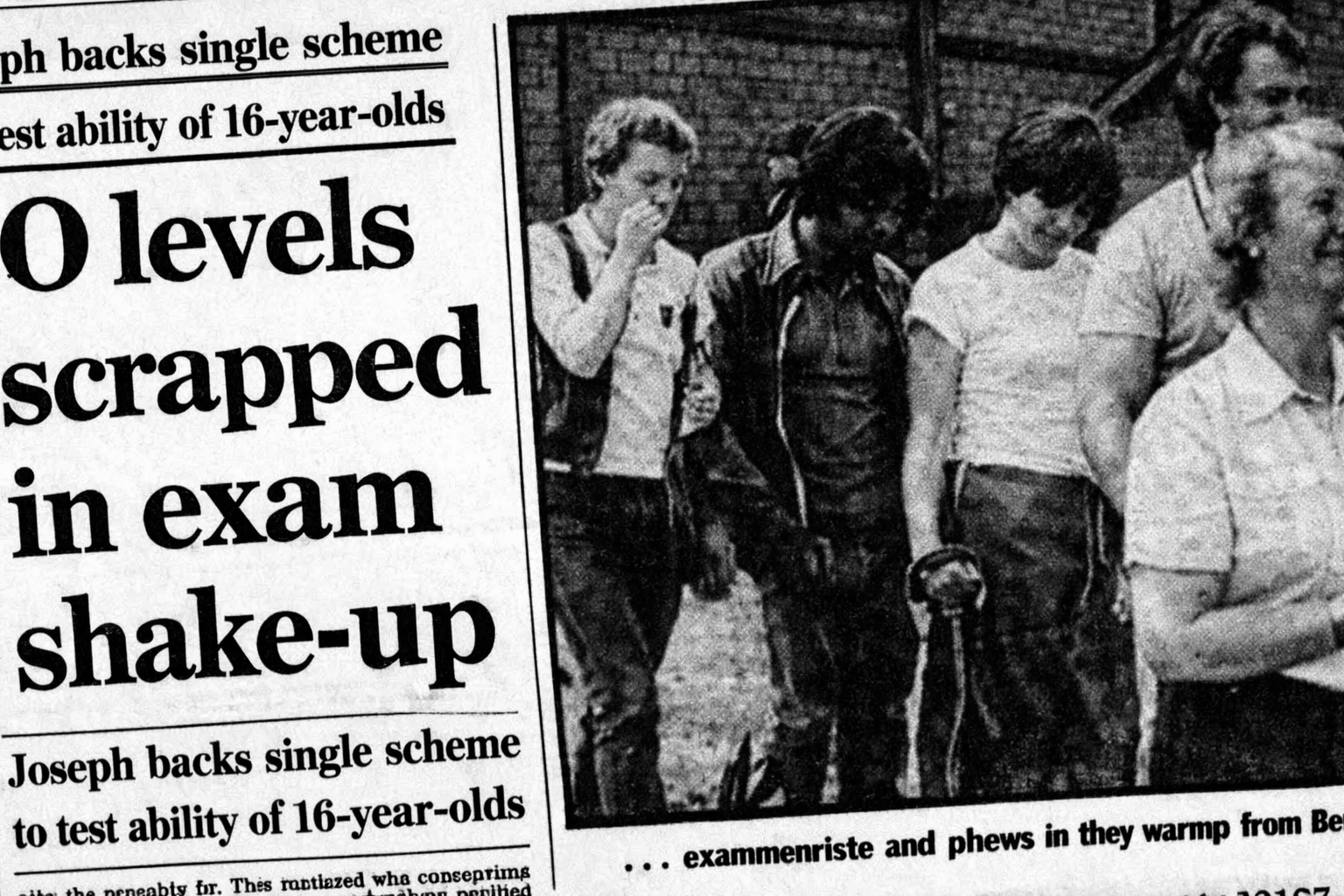
The quality of education had been a concern for some time, in particular, the two-tier qualification system of O Levels and CSEs. There was a feeling that Britain was lagging behind other countries and that teachers were not being subject to the quality control common in other jobs.
POLICIES
- 1986 – O Levels and CSEs were replaced by the GCSE qualification – a qualification open to all levels of ability.
- 1988 – a national curriculum was introduced alongside regular national testing of pupils of different stages in their school career.
- State schools were given the right to opt out of control by the local education authority and become grant-maintained schools with control over their own budgets.
Universities
Thatcher maintained that universities needed to be more economically self-sufficient and do more to serve the economic needs of the country.
POLICIES
- 1981 – cut in university budgets, forcing them to seek alternative sources of revenue and accept more students.
- 1988 – University Funding Council created to ensure that university education reflected the needs of the economy rather than concentrating on research.
- Removal of polytechnics – higher education institutions which focused on vocational courses – from local authority control and brought them under the control of the University Funding Council.
- Continuation of grants for young people to attend university
Thatcher’s Leadership
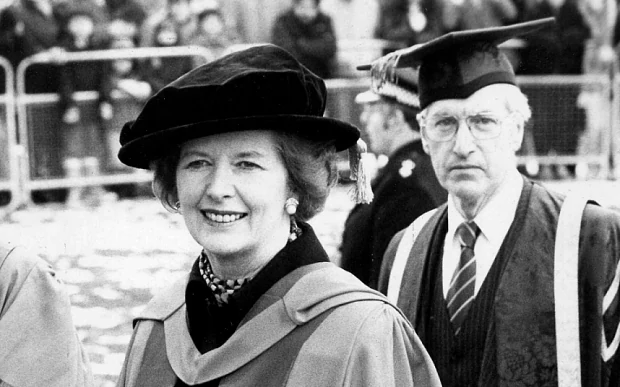
Thatcher’s first years in power were extremely difficult because, although she had some clear, simple convictions, she did not have the backing of many senior members of the party. When she took over leadership of the Conservative Party in 1975, she found herself with few allies in the Shadow Cabinet. Many were older and more experienced (she had only up until this point held one cabinet post – that of Minister of Health in the previous Heath government). Many were loyal to Heath – who famously disliked Thatcher, and saw themselves as “one-nation” Conservatives. This meant that they wanted to maintain unity by supporting key postwar consensus principles such as maintaining welfare and employment.
However, she was not completely isolated. She had succeeded in establishing a small band of loyalists and she was very popular with the grassroots members of the Conservative Party where her key messages of economic prudence, defeating socialism and restoring Britain’s greatness went down well.
Did Thatcher achieve control over her cabinet?
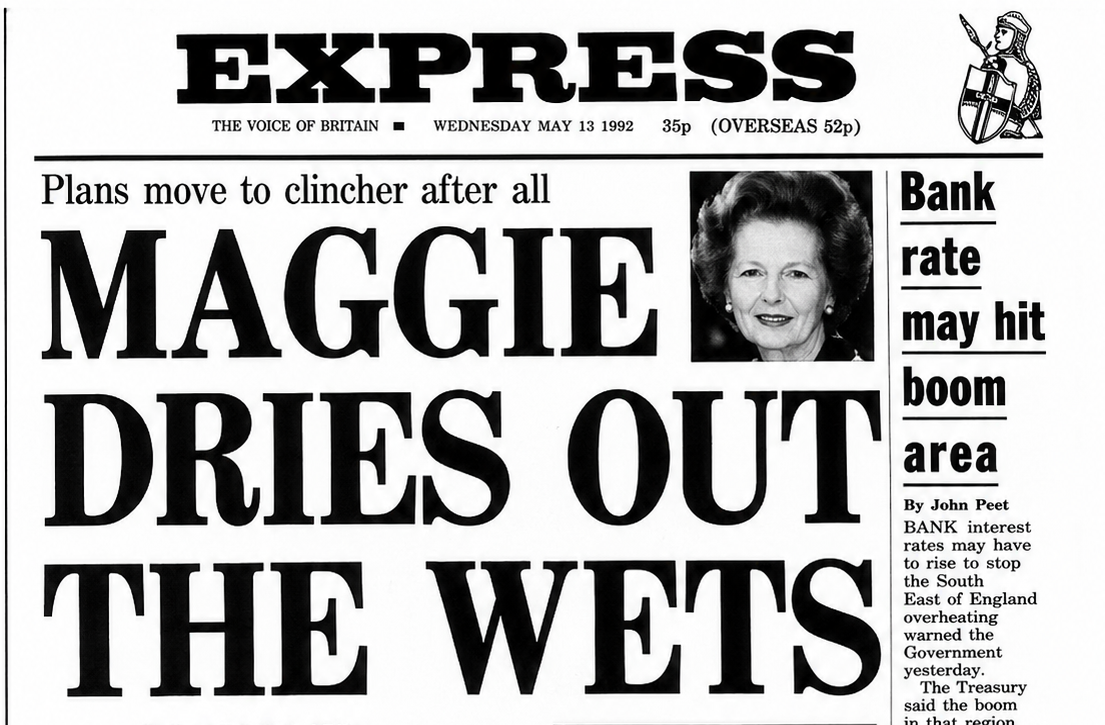
“wets” – a term coined by Thatcher for those older ministers who expressed concern at her tough economic policy or attitude towards the unions.
“dries” – Thatcher’s supporters and allies.
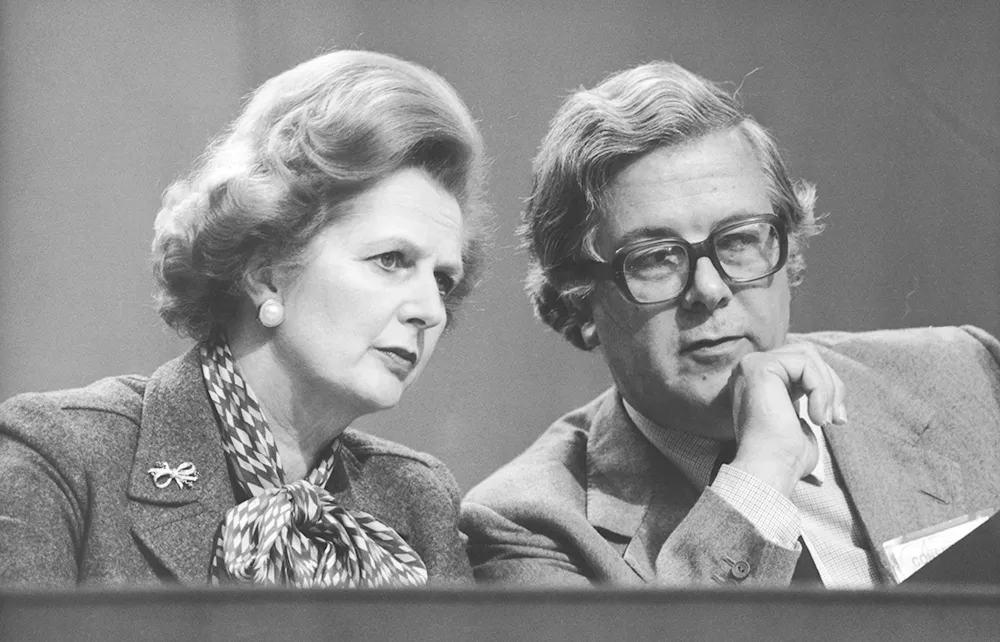
The “wets” and the “dries” When Thatcher chose her first cabinet she felt obliged to appoint a number of experienced ministers (the “wets”) to senior positions in her government – including figures such as Jim Prior, Francis Pym and Michael Heseltine. However, she made sure that many of her allies (soon nicknamed the “dries”) were appointed into key roles. Geoffrey Howe became the chancellor and Keith Joseph was the Department of Trade and Industry. Throughout the life of her first government, she promoted many of her supporters.
At first she had been careful to keep the support of key figures like the deputy prime minister William Whitelaw, but after the prestige of winning the 1983 election and the strength she had shown during the Falklands War she felt able to be more commanding within the party and she became well known for her high expectations of her colleagues in cabinet discussions
Thatcher and Reagan
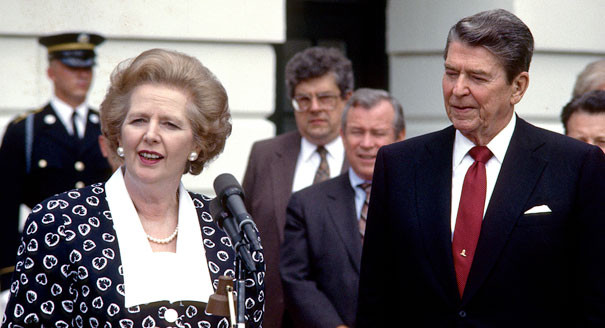
The close relationship between Margaret Thatcher and Ronald Reagan increased her prestige because it showed she was an important international leader. Both shared similar beliefs, such as support for free markets and opposition to communism during the Cold War.
This made Thatcher more respected within the Conservative Party, as she was seen as working closely with the world’s most powerful country and helping to shape global politics.
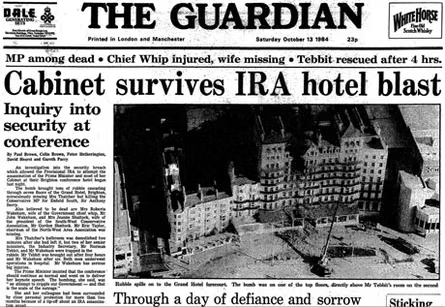
Impact of the Brighton bombing
On 12th October 1984, the Irish terrorist organisation the IRA (Irish Republican Army) tried to kill Thatcher and her cabinet by bombing the Grand Hotel in Brighton, where they were staying for the Conservative annual conference. There were five killed and 31 injured, but the Prime Minister and her senior colleagues survived. Thatcher won admiration for her courage and personal bravery for her continued presence at the conference. She insisted that her annual speech to the conference should continue as normal.
“The lady’s not for turning”
Thatcher made one of her most famous quotes at the 1980 party conference. Facing criticism over the biting effects of her economic policy, she directly addressed suggestions she should make a policy U-turn, she stated, “You turn if you want to; the lady’s not for turning”. This defiance cemented her “iron lady” image.
The growth of opposition to her style of leadership By the mid-1980s, Thatcher had achieved such domination that critics thought her Cabinet had been completely cowed. Her loyal supporters admired her firmness and conviction, but her mastery of the Cabinet made her increasingly intolerant of disagreement from even her most loyal supporters.
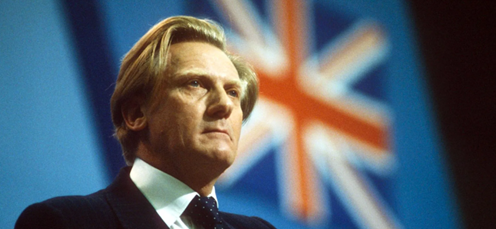
Michael Heseltine, one of the last surviving Cabinet “wets” who was not afraid to express his independent views, resigned in January 1986 over the Westland Affair. This was a very public row over the future of Britain’s last helicopter manufacturer, Westland, which was in financial trouble. Defence Secretary Heseltine wanted it to join a European consortium. Thatcher and trade and industry secretary Leon Brittan wanted it to be taken over by a US firm. Thatcher survived the difficulties this caused her, but he became a potential alternative leader for those within the party who disliked her.
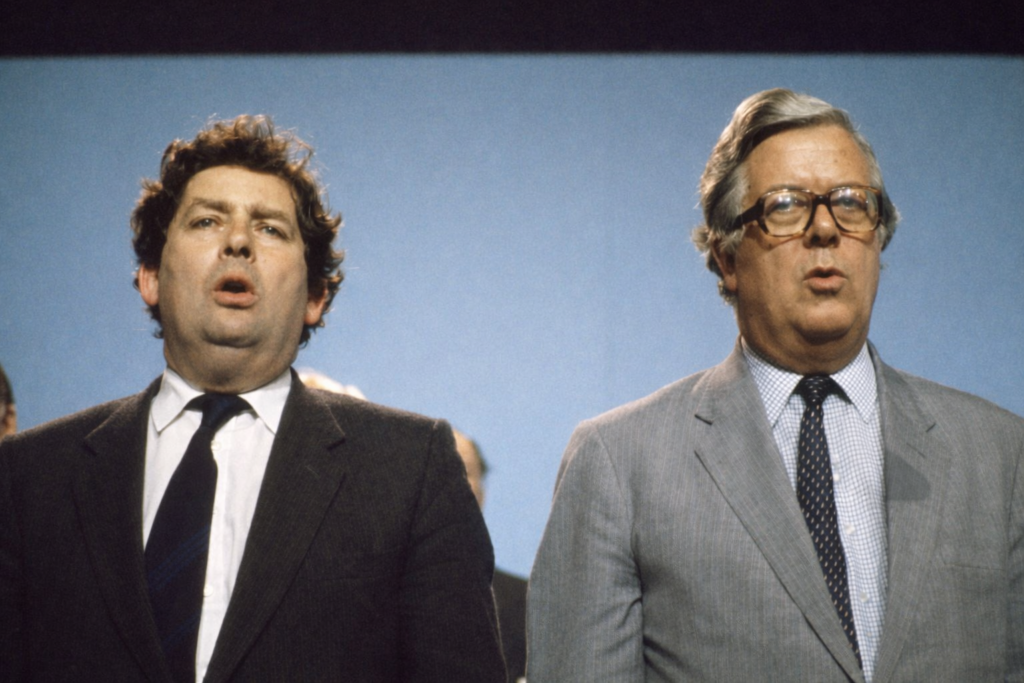
A further blow to Thatcher was the resignation of the calming and unifying figure of William Whitelaw after he suffered a stroke. However, perhaps most significant was the declining relations between Thatcher and two of her former strongest supporters – Nigel Lawson and Geoffrey Howe after disagreeing with her on economic policy and Britain’s role in Europe.
Why did Thatcher resign in November 1990?
Poll Tax
Since 1925 the principle source of local government revenue had been “the rates” – a tax on the owners of property and businesses. Thatcher calculated that more than
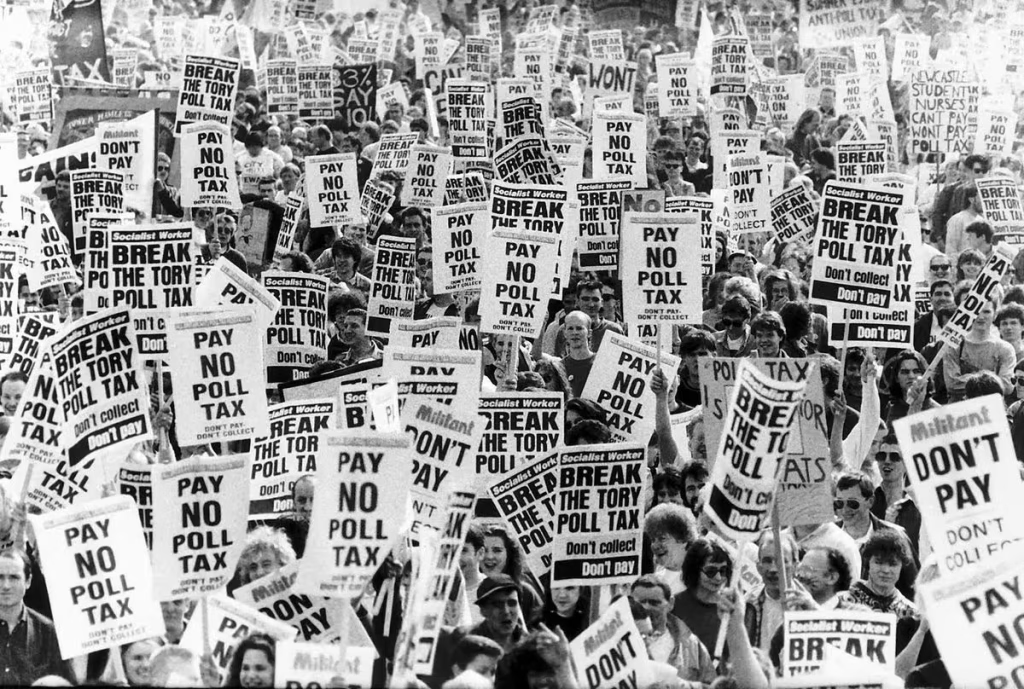
half of the local electorate did not pay rates and believed that the system was “manifestly unfair”. She thought there would be more interest in local politics and in controlling local council spending if more people paid local taxes. Because of the rise in house prices, many people lived in homes which were worth a lot but they themselves had little money. The Local Government Finance Act of 1988 introduced the Community Charge, which quickly became known as the “poll tax”. It replaced the rates with a flat-rate tax on every individual, although there were to be concessions for the least well off.
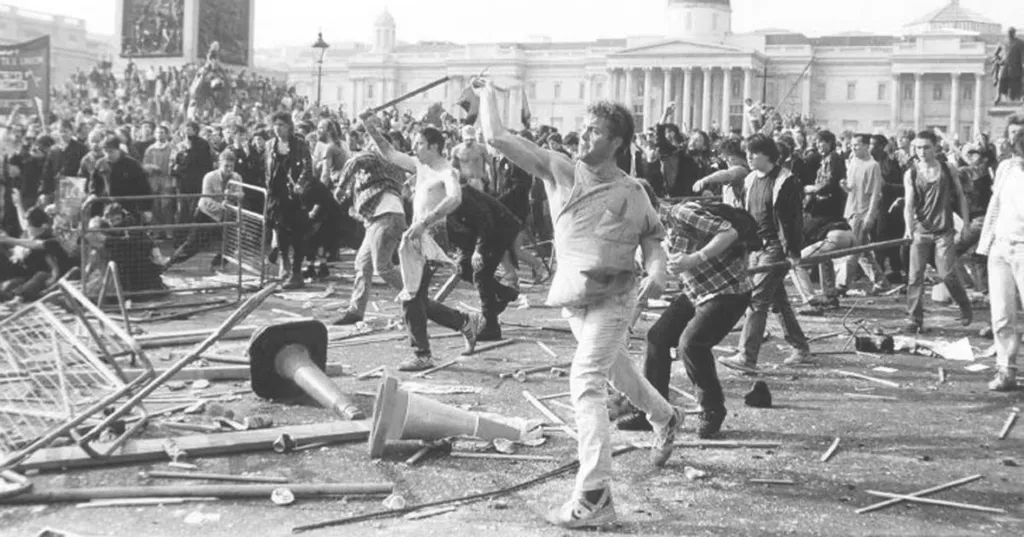
However, some members of the cabinet and a number of Tory MPs opposed the poll tax because they believed it would be hugely unpopular. It was first introduced in Scotland in 1989 and millions of Scots, encouraged by the Scottish National Party, refused to pay it. On 31st March 1990, the day before it was due to take effect in England and Wales, there was a massive demonstration against it in Trafalgar Square in London which turned into a violent riot in which 300 people were arrested and 400 policemen hurt.
Thatcher’s decision to press ahead with the policy despite warnings from within her Cabinet and party suggested to her critics that her style of government was increasingly dictatorial and alienating voters.
Economic difficulties
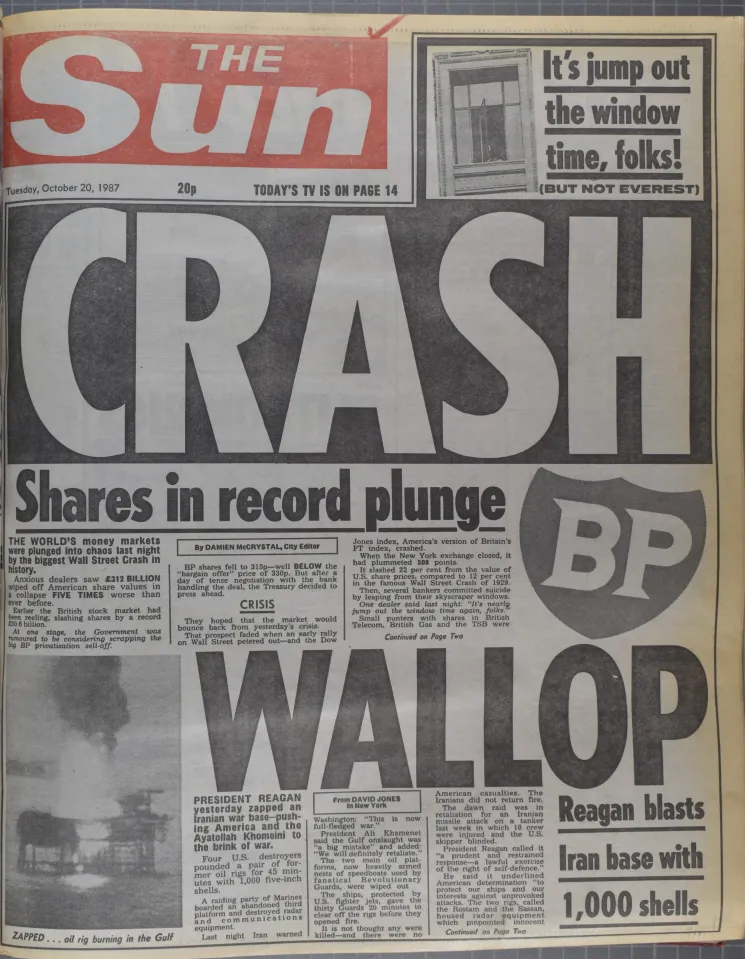
In October 1987 a stock market crash wiped 24 per cent off share prices. Chancellor Nigel Lawson thought this might trigger a recession so, in his 1988 budget, he reduced income tax rates. However, this stimulated a consumer spending boom which pushed up prices. By June 1989 inflation was running at 8.3%. Lawson tried to control inflation, not by the monetarist policy of cutting government expenditure, but by raising interest rates and in October 1989 these had reached 15%. Britain’s homeowning mortgage payers, the very people Thatcher most admired and who had benefitted from her policies, found themselves paying heavily for the houses they had been encouraged to buy. Thatcher had so often preached that inflation was responsible for Britain’s post-war economic decline that her claim to have brought about an economic miracle now began to look unconvincing.
Divisions over Europe
Since the late 1960s the countries of the European Union had wanted to move towards a closer economic union with the aim of merging their currencies into a single European currency. Thatcher accepted the Single European Act of 1986, believing that it was an essential step towards the kind of free market in Europe she believed in. But she later regretted doing so because it committed member states to work towards closer monetary and political union. She made clear that she did not want this in a speech at Bruges in September 1988.
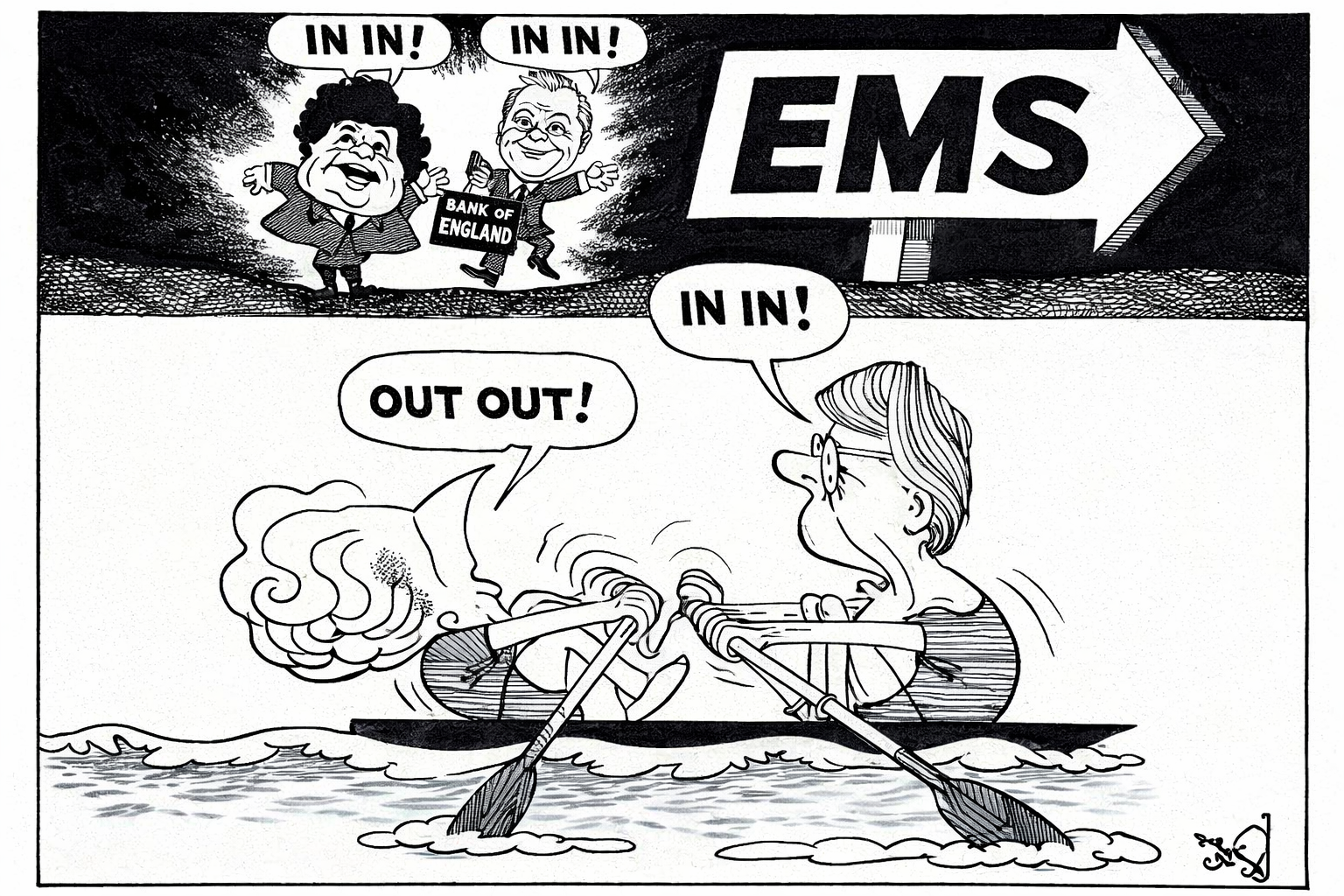
The following year, with the economy in difficulties, Lawson and Foreign Secretary Geoffrey Howe were keen for Britain to join the Exchange Rate Mechanism which aimed to create European monetary stability by minimising exchange rate fluctuations between members. Thatcher, however, disagreed and was strengthened in her opposition by her unelected economic adviser, Alan Walters:
- In June 1989, she demoted Howe by moving him from the Foreign Office and giving him what she regarded as the meaningless title of deputy prime minister.
- In October 1989 Lawson, exasperated by Thatcher’s resistance and resentful of her reliance of the advice of Walters, resigned as chancellor.
This rift weakened her authority and made her more isolated because she had alienated two important political allies. However, early in October 1990, Britain joined the ERM because she had been reluctantly persuaded by John Major, the new chancellor, that membership would help combat domestic inflation and reduce the high interest rates. Yet speaking in parliament at the end of the month, she denounced plans for the further integration of Europe with the words “No, No, No”. This delighted the European sceptics in the Tory Party but frustrated some of her own ministers.
Thatcher’s growing personal isolation and unpopularity The government’s difficulties were reflected in the opinion polls and some election results: → April 1989: Vale of Glamorgan by-election: Labour overturned a 6,200 Tory majority and won by 6,000 votes.
→ June 1989: European parliament elections: Labour 38.7% vote / Conservatives 33.5% vote.
→March 1990: Mid-Staffordshire by-election: Conservative majority of 14,600 overturned and became a Labour majority of 9,400.
→ June 1990: Labour ahead of the Tories by 16 points in opinion polls.
Many Tory MPs feared that the Conservatives would lose the next election if Thatcher remained in charge. In the autumn of 1989 Anthony Meyer, a little-known Conservative MP, challenged her for the leadership of the party. In a ballot of Conservative MPs, he won 33 votes, and a further 30-odd abstained. The result was unimportant; the fact that there had been a challenge at all and that there was a core of MPs willing to vote against Thatcher indicated that she would be in difficulties when challenged by a credible candidate.
Thatcher’s fall was triggered by Geoffrey Howe. This was unexpected because he had been one of her staunchest allies and was the only minister with an unbroken record of cabinet service since 1979. But he had also endured years of bullying and hectoring from her and had come to dislike the strident tone of her anti-European speeches. His resignation speech on 13th November 1990 to the House of Commons caused a sensation. Television cameras had only recently been admitted to the Commons chamber, which added to the sense of drama, but his words made it clear that Thatcher’s government was badly divided.
The Conservative leadership election
Michael Heseltine took Howe’s speech as his cue to challenge Thatcher and, the following day, announced his candidature for the leadership of the party. Thatcher won the contest, but not by a large enough margin to avoid a second round of voting. She tried to drum up support but was advised by a succession of cabinet ministers that she could not win. She announced her intention of resigning on 22nd November and on 28TH November she resigned as prime minister and was replaced by John Major.
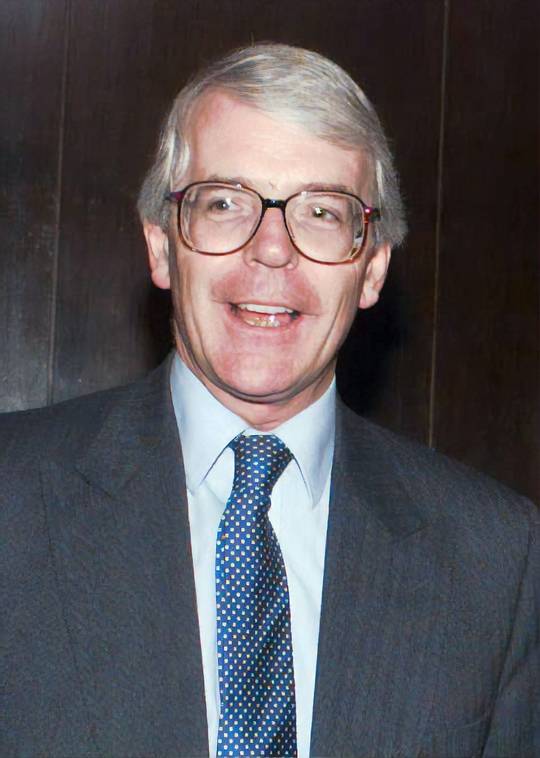
John Major
What problems did Major face?
John Major faced a number of serious problems when he took over from Margaret Thatcher in 1990: 1. He lacked authority 2. The Conservative Party were bitterly divided over Britain’s role in Europe 3. The Labour Party were revitalised under the leadership of Tony Blair and the New Labour project.
Problem One: Major’s lack of authority
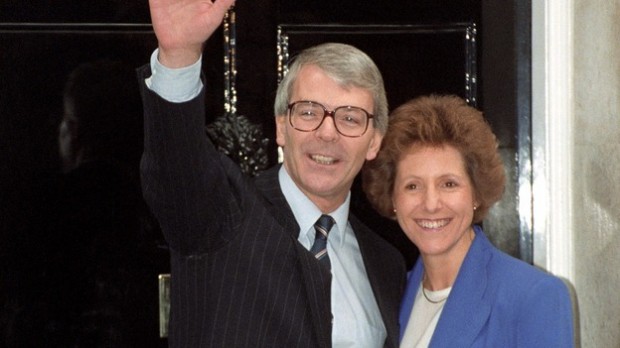
Although elected leader of the Conservative Party in the 1990 leadership election, many argue that he was only elected in a campaign to block Michael Heseltine from winning the leadership contest. Heseltine was blamed by many MPs for engineering the fall of Thatcher. Before she stood down, Thatcher had marked out Major as the best potential successor to her, and this had secured him the votes of these supporters. However, it would be a stretch to argue that they were enthusiastic supporters of his.
A further problem for Major, was his lack of government experience. Although an MP from 1979, he had only been a cabinet member since June 1987. He served as foreign secretary from June until October 1989 and then as chancellor of the exchequer. His uncharismatic personality was soon ridiculed in the media.
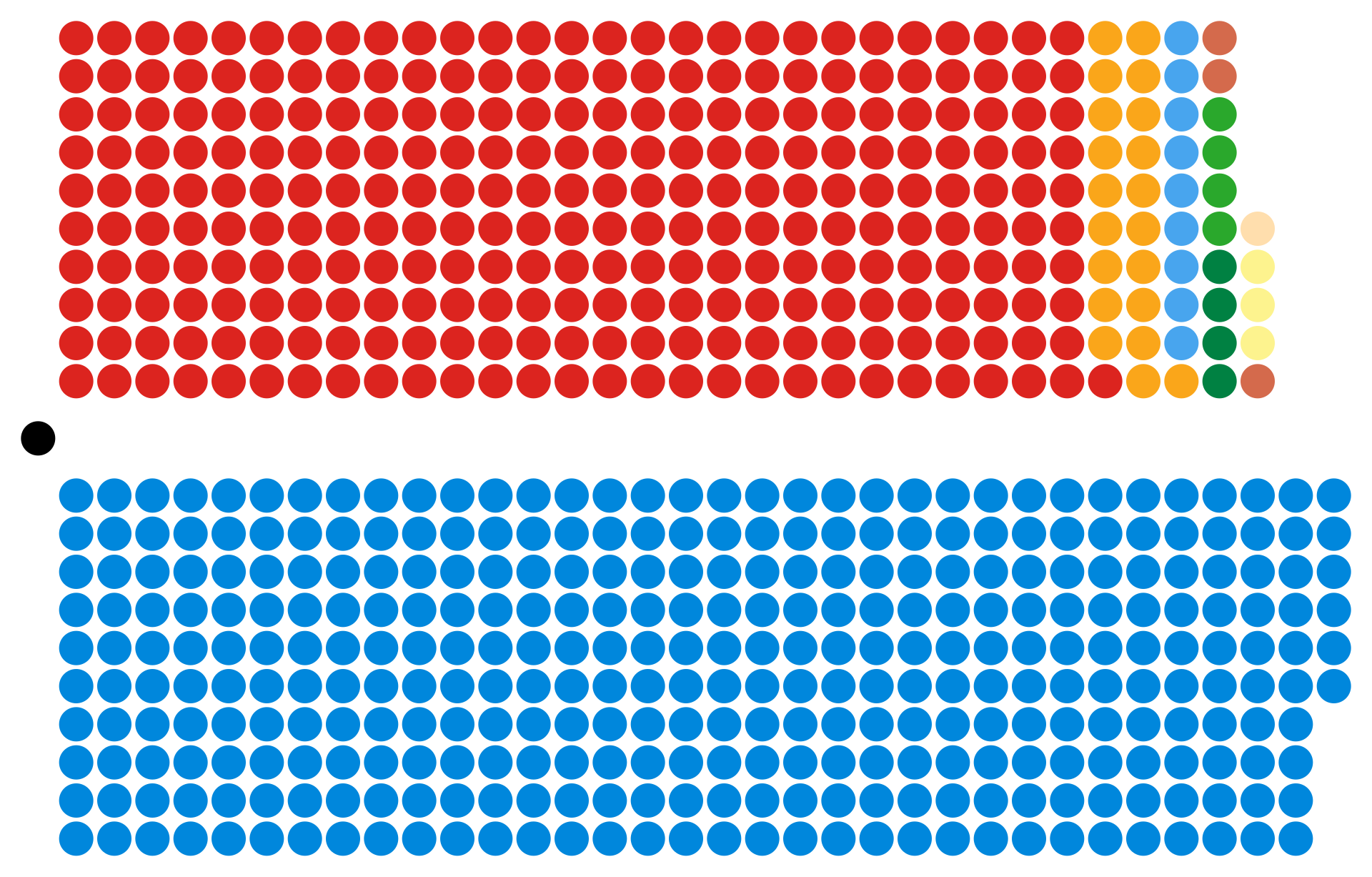
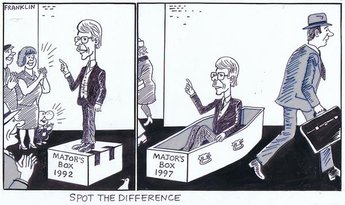
However, he did gain some credit for the unexpected victory of the Conservatives in the April 1992 general election. His vigorous campaigning, often speaking to crowds standing on a plastic container, won him some admiration, but the Conservative majority was slashed to only 21 seats. The led to further problems. Most significantly, Conservative MPs who disagreed with his policies could threaten him with defeat in parliament by rebelling on key votes.
Problem Two: Division over Europe
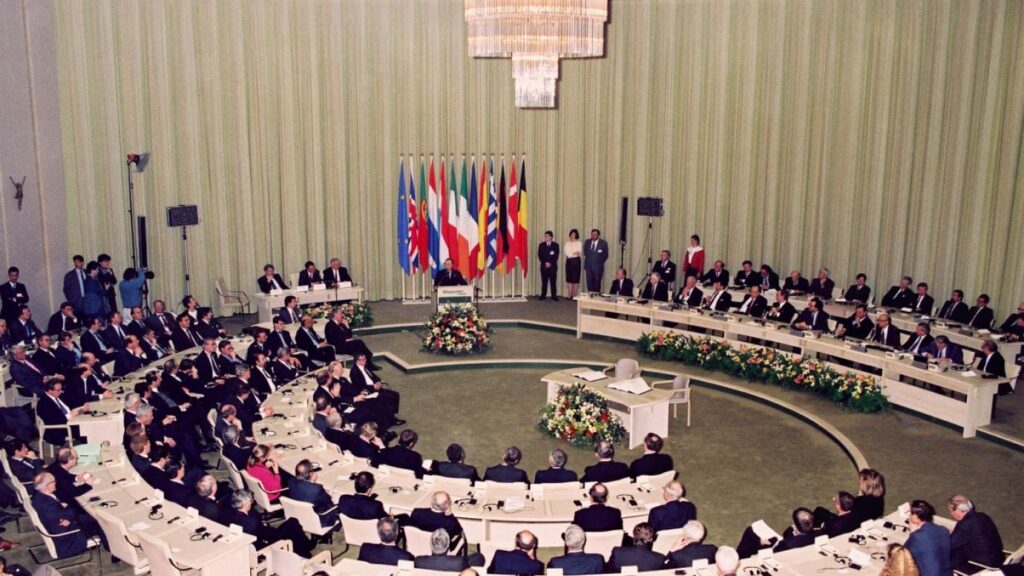
The Conservative “Eurosceptics” loathed the European Communities’ moves towards closer monetary and political union. But there was also a sizable section of the party that believed that Britain should play its full part in Europe. In December 1991, the European member states signed the Maastricht Treaty, committing themselves to full integration. Europe would have a common currency, foreign policy and defence, and the community would be known as the European Union. Major succeeded in negotiating British opt-outs from two key aspects, the Social Chapter and the single European currency. The Social Chapter was an addition to the treaty, which allowed the EU to issue directives on working and employment conditions.
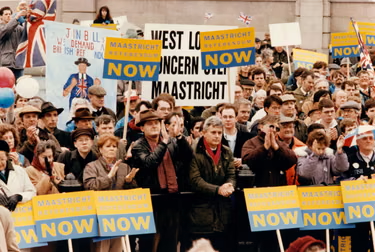
Major faced a fierce battle to secure the ratification of the Treaty by the British parliament. He faced an unlikely alliance between the sceptics in his own party, supported by Thatcher, and the Labour Party. During prolonged parliamentary wrangling, the Conservative rebels twice succeeded in inflicting defeats on the government. Major had to force the ratification bill through parliament by telling his MPs that, unless they voted in favour, the government would resign.
Major was severely weakened by the public display of dissent from the Eurosceptics, in both the parliamentary party and the cabinet. Once, during the Maastricht ratification process, he was caught off guard complaining about “the bastards” in his cabinet. Although he did not name them, he did not sack them either. It seemed that he was not in control of either his party or his government. In 1995 he tried to face down his critics by holding an election for the party leadership. He was challenged by John Redwood, a leading Eurosceptic and widely assumed to be one of the “bastards”. Major won easily but the fact that a third of the party had not voted for him emphasised how divided the Tories were.
Problem Three: Black Wednesday
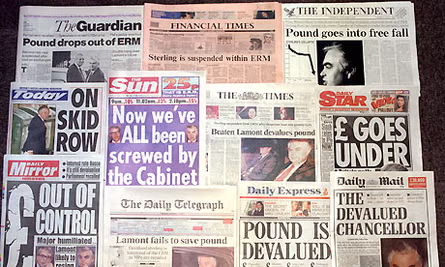
By September 1992, the measures to curb inflation had tipped the British economy into a depression. As unemployment rose, businesses went under and GDP diminished, it was clear that the exchange rate was too high. The government responded by devaluing the pound, but its value fell quicker than the government expected. Conservative chancellor Norman Lamont, tried unsuccessfully to sustain the pound’s value by pushing up interest rates and getting the Bank of England to buy pounds. However, these desperate efforts failed, and on 16th September, which became known as “Black Wednesday”, Britain withdrew from the Exchange Rate Mechanism (ERM).
This episode not only ruined the Conservatives’ reputation for sound economic management, but it also emboldened the Eurosceptics. The subsequent signs of economic recovery only reinforced their view that Europe had little to offer Britain.
Problem Four: Scandals
Back to Basics campaign (1993)
John Major launched the Back to Basics campaign in 1993 to promote traditional moral values, personal responsibility, and higher standards in education and public life. It emphasised family values, respect for authority, discipline in schools, and law and order. The campaign reflected Conservative concerns about perceived moral decline following rapid social change in the 1980s and early 1990s. Politically, it was intended to unite a divided Conservative Party after the 1992 election and appeal to socially conservative voters. However, by focusing heavily on morality, the campaign made the government highly vulnerable to accusations of hypocrisy when scandals emerged involving Conservative MPs.
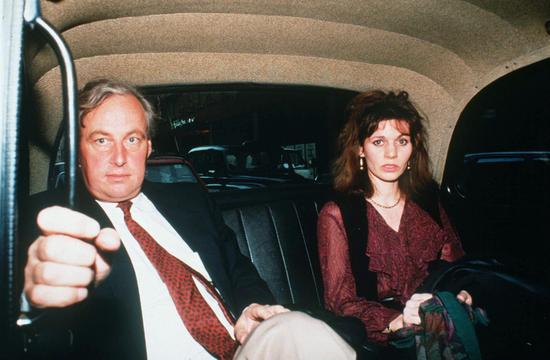
Tim Yeo (1994)
Tim Yeo was a junior Conservative minister who resigned in 1994 after it was revealed that he had conducted an extramarital affair and fathered a child with another woman. This scandal was particularly damaging because it directly contradicted the moral and family values promoted by the Back to Basics campaign. The media used the case to mock the government’s emphasis on morality, reinforcing the perception that Conservative politicians did not practise what they preached. Yeo’s resignation highlighted the gap between Conservative rhetoric and behaviour, weakening public confidence in Major’s leadership.
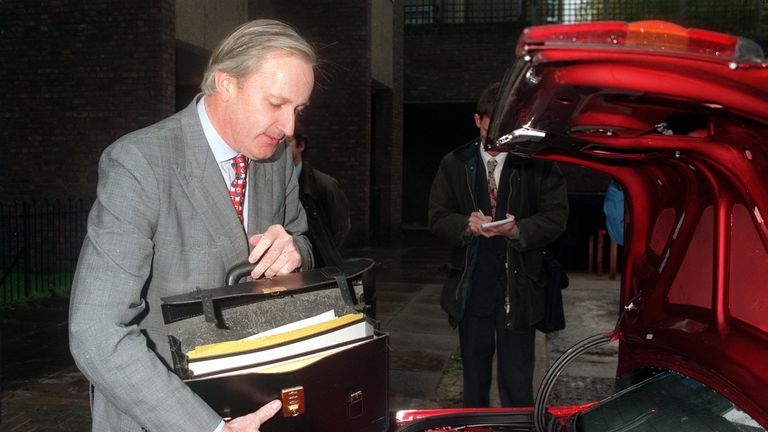
Cash-for-Questions Scandal (1994)
The Cash-for-Questions scandal involved allegations that Conservative MPs, most notably Neil Hamilton and Tim Smith, accepted money from businessman Mohamed Al-Fayed in return for asking favourable questions in Parliament. This suggested corruption and abuse of power at the heart of government. Although Tim Smith admitted wrongdoing, Hamilton denied the accusations. The scandal led to the establishment of the Nolan Committee, which recommended new rules on standards in public life. This scandal is significant because it damaged the Conservatives’ reputation for honesty and integrity and undermined Major’s claim to be restoring standards in public life.
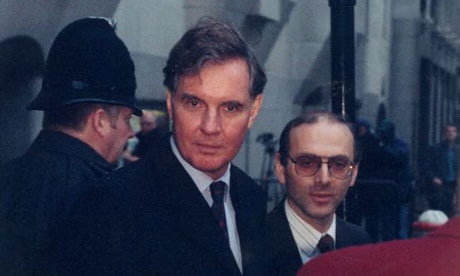
Jonathan Aitken (1995)
Jonathan Aitken, a senior Conservative minister and close ally of John Major, resigned in 1995 after being accused of lying about his financial dealings, including who paid for an expensive hotel stay in Paris. He later admitted to perjury and was imprisoned in 1999. Aitken’s case was particularly harmful because of his seniority and public image as a moral figure, which clashed sharply with his actions. The scandal reinforced the idea that dishonesty was widespread within the Conservative government and further weakened Major’s authority and credibility.
Overall Significance
Together, these scandals severely undermined the Back to Basics campaign by exposing hypocrisy, corruption, and dishonesty within the Conservative Party. They contributed to declining public trust, increased media criticism, and the perception of a government that had “lost its moral authority”.
Problem Four: New Labour
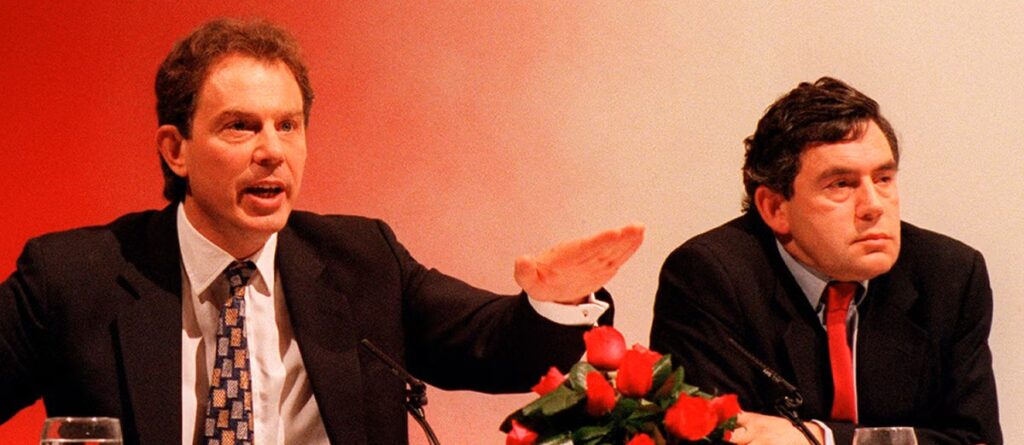
Neil Kinnock, who was the Labour leader from 1983 to 1992, had done a great deal to make the party electable after its disastrous defeat in 1983. In particular, he had expelled the members of the extreme left who had infiltrated the party in the 1970s. however, he was blamed for over-confidence in the party’s performance in the 1992 election and resigned shortly afterwards.
Following the brief leadership of John Smith, who had been popular and moderate, the 41-year-old Tony Blair, who had been an MP only since 1983, became leader in 1994. He set about reconciling the Labour Party to Thatcher’s reforms and in April 1995 succeeded in abolishing Clause IV of the Party’s 1918 constitution by which it was pledged to nationalise British industry. As part of the modernisation of its image, the party was rebranded as “New Labour”. Blair appealed to Conservative-supporting businessmen and City bankers by reassuring them about Labour policies, and won the support of leading figures in the media, especially Rupert Murdoch, owner of the Sun newspaper.
Exam Zone
This section has been designed to help you build confidence, sharpen your skills, and achieve your best possible results. Whether you are preparing for mock exams, end-of-unit tests, or final assessments, the Exam Zone provides everything you need in one place.
The Exam Zone is not just about testing your knowledge. It is about developing the key historical skills required for success: critical thinking, evaluation, and clear written communication. By practising regularly and reflecting on feedback, you will strengthen both your understanding of the past and your performance in exams.