Provisional Government
The events of 1917 in Russia were marked by political upheaval, social unrest, and competing centres of power, ultimately leading to the collapse of the Provisional Government and the rise of Bolshevik rule.
The Provisional Government and its Problems
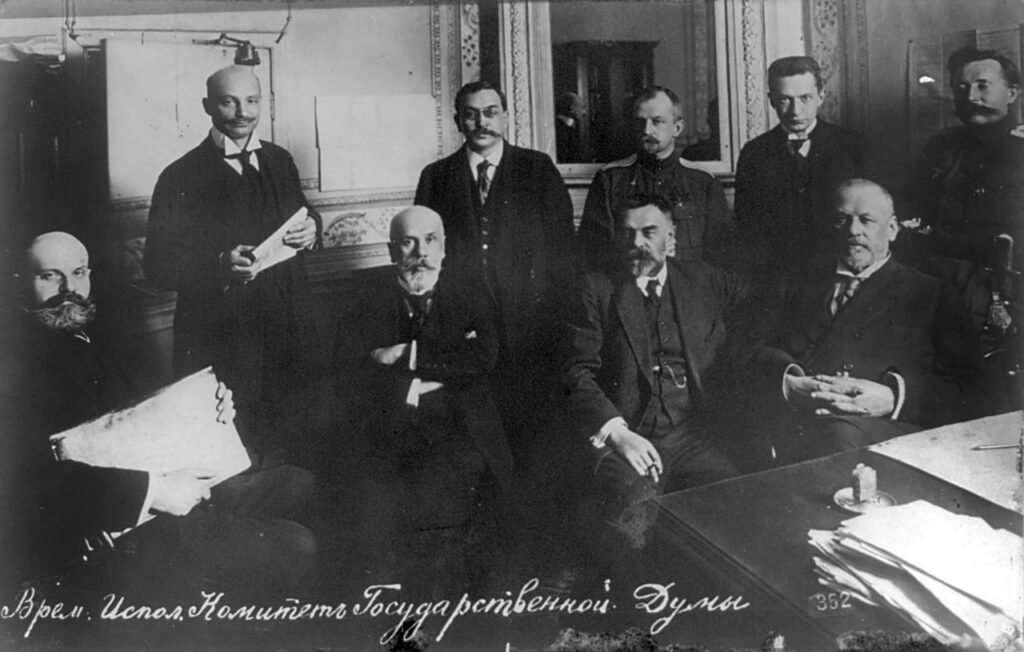
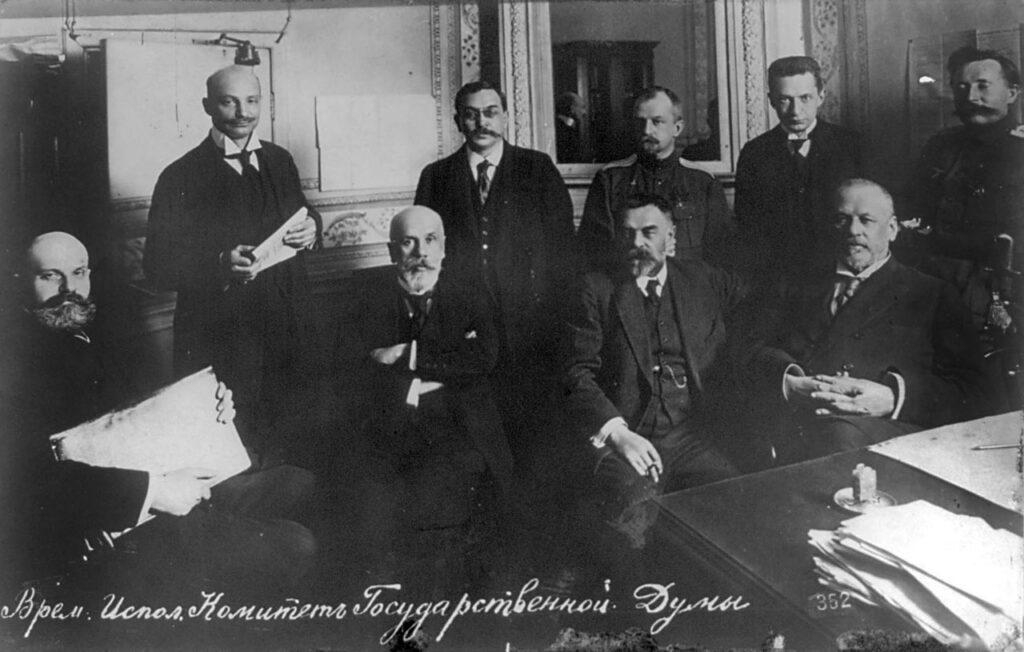
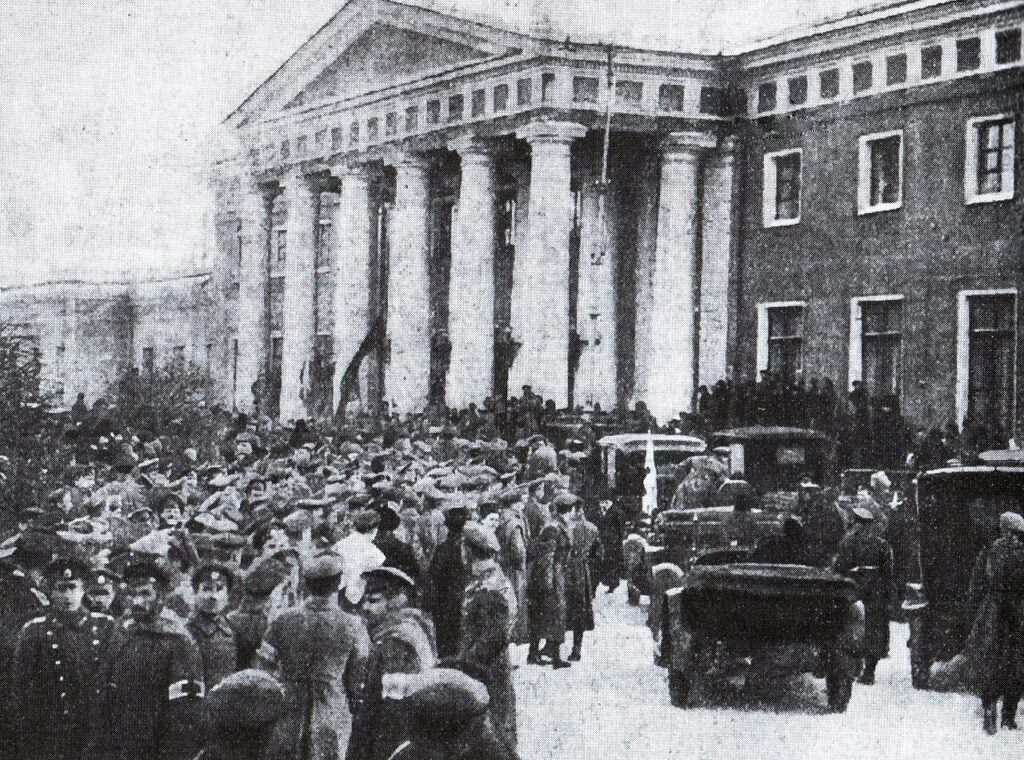
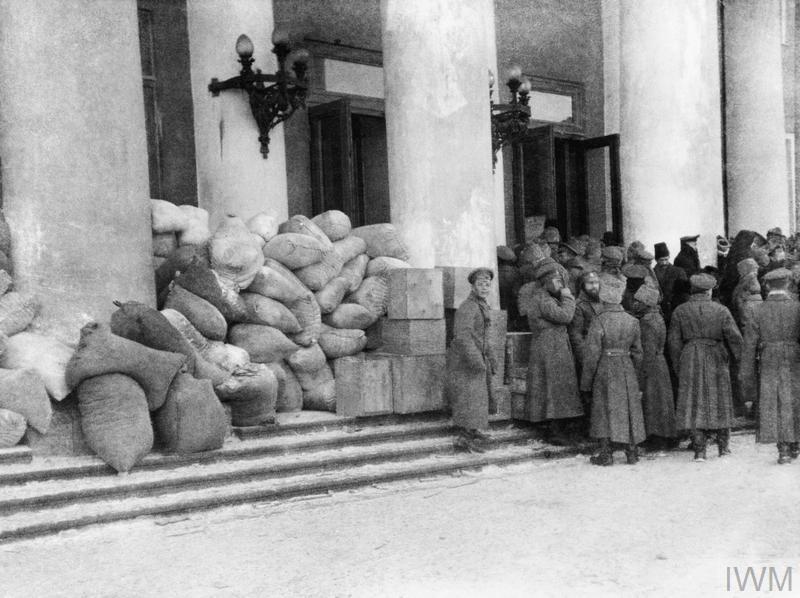
Who was going to rule Russia now that the Tsar had been thrown out? Crowds gathered outside the Tauride Palace, demanding that the Duma take charge. Inside, the members of the Duma were worried and frightened. What if generals loyal to the Tsar arrived with troops to execute them for treason? Some slipped away into the crowds and left the city. Those remaining discussed and argued long into the night. They decided to form a temporary government – a Provisional Government. This would run the country until elections could be held to choose a government and decide how Russia was to be ruled in the future.
The New Government
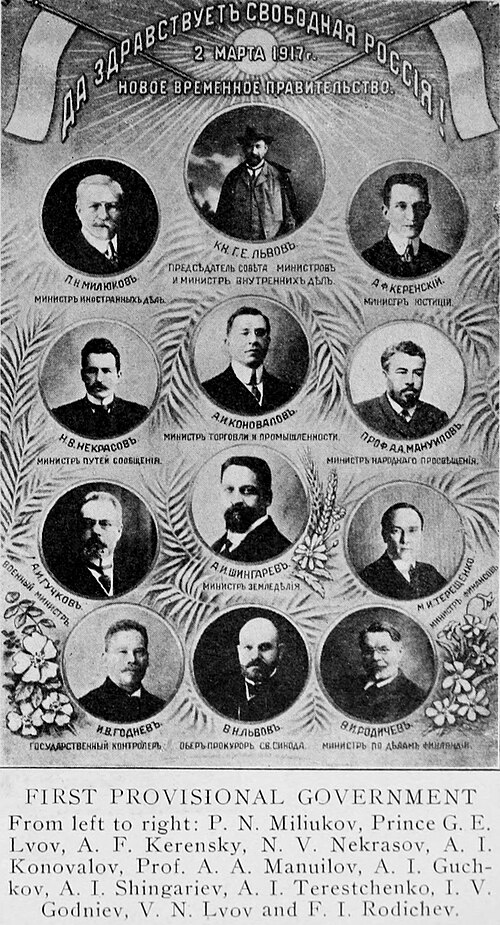
The new government was made up of former members of the Duma including leading figures from the Kadets and Socialist intellectuals and other Liberal parties. The PG had been chosen by a committee of the Duma and had not been elected by the people.
Their role was to run the country until a central assembly had been elected by the people.
The Petrograd Soviet
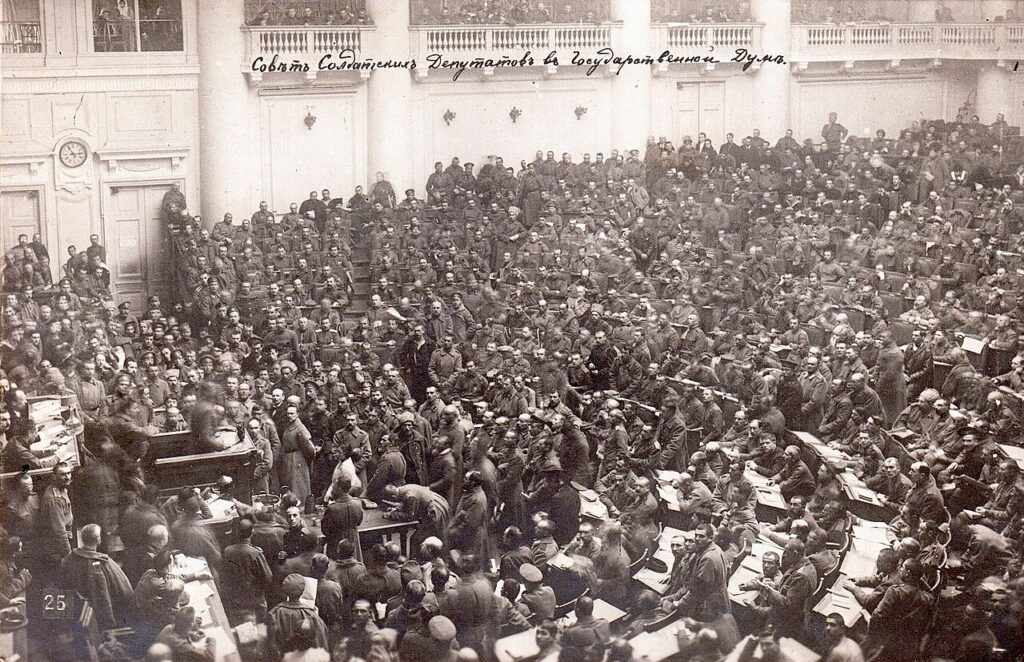
As the Provisional Government was being formed, another body, the Petrograd Soviet, was taking shape in a different part of the same building. Workers and
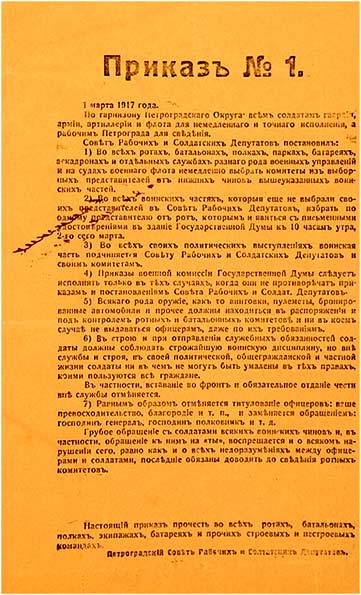
soldiers sent representatives to form a soviet to look after their interests. In the next few weeks, soviets appeared all over Russia, but the Petrograd Soviet was the most important. The first thing the Soviet did was to issue Order No. 1, which gave it control of the armed forces in Petrograd.
Socialist intellectuals formed the leadership of the Petrograd Soviet which was made up of workers’ and soldiers’ representatives as well as Mensheviks and Socialist Revolutionaries. Its role was to protect the interests of the working classes and soldiers.
Dual Power
It was a strange situation: the Provisional Government was accepted as the government, but it could carry out decisions only if the Soviet agreed. Most people were in favour of the first measures taken by the new government. Political prisoners were freed, and the government announced that there would be freedom
of the press, freedom of speech, the right to strike and an end to social discrimination and the death penalty. Russians had more freedom now than they had had for centuries.
Key Members
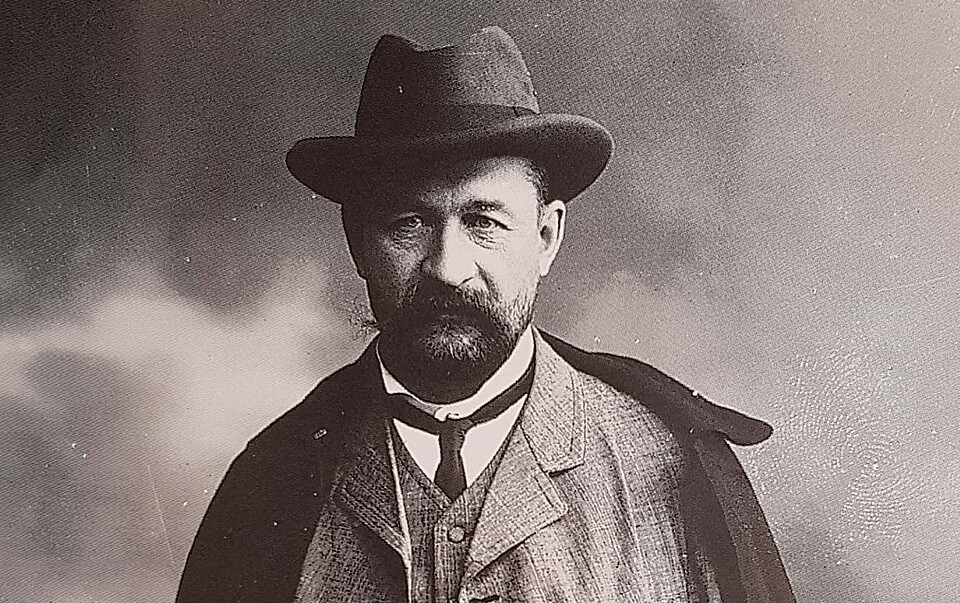
Prince Georgii Lvov – Prime Minister
A wealthy aristocratic landowner and former liberal Kadet leader
who has served in the First Duma and had been leader of the
Russian Union of Zemstva in 1914 and leader of Zemgor in 1915.
He had helped organise the war effort under the Tsarist regime.
He favoured the further development of government away from
the Tsar but was essentially traditional in outlook. He retired on
July 4th having found it impossible to control the mixture of
liberals and socialists within the Provisional Government.
Pavel Milyukov – Minister of Foreign Affairs
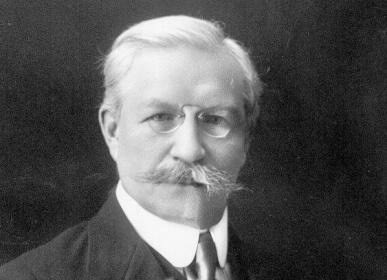
A liberal academic who had become leader of the Kadets. He served in the State Dumas and had been part of the Progressive Bloc in 1915. He had favoured a constitutional monarchy and had no sympathy with the socialists. He was determined to continue the war effort. But, following his “note” to Britain and France in April 1917, promising continued support, he was forced by the military to resign in May.
Alexander Kerensky – Minister of Justice
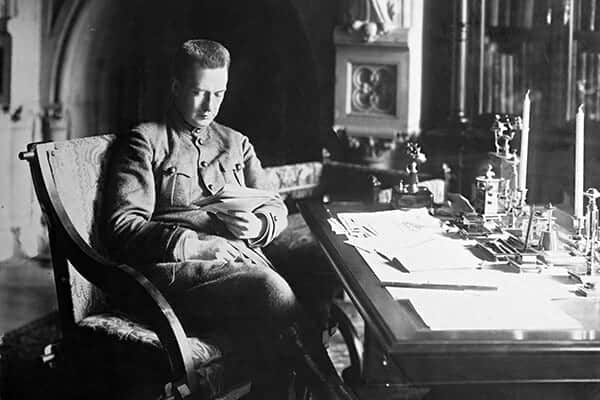
Was a member of the Social Revolutionary party and his position on the executive of the Petrograd Soviet, where he was Vice-Chairman, made him an invaluable link between these two bodies. He also served as Minister of Justice as part of the Provisional Government.
Order No. 1
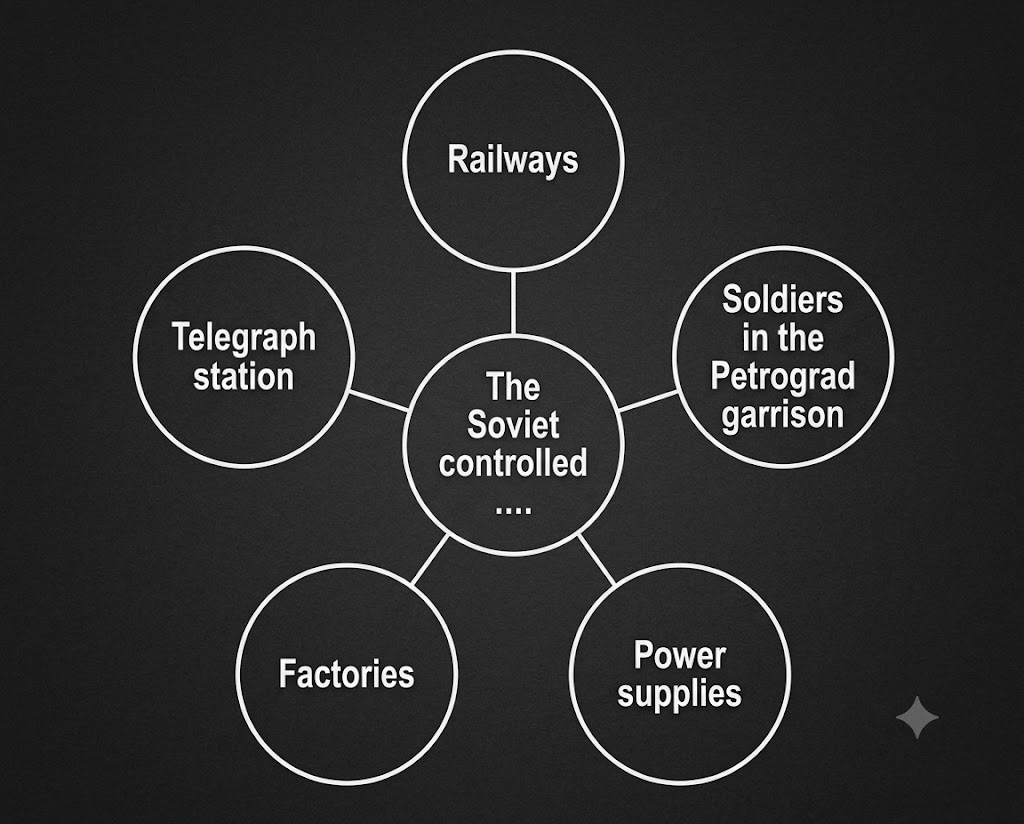
Order No 1 was extremely significant. It not only gave the soldiers representation but also gave their committees control of all weapons. It stated that soldiers would only obey the orders of the Provisional Government if the Soviet agreed. Thus a situation known as “dual power” was created. The PG was the popularly accepted, although unelected government but the real power lay quite clearly with the Soviet. The PG could not move around or send a message without the Soviet’s knowing. The Soviet could determine which factories stayed open and which services, such as electricity, would be provided. The policy of the Soviet was to keep its distance from the middle-class PG, to act as a sort of watchdog to make sure that it did nothing to damage the interests of the working-class. It decided not to participate directly in the government. There was one exception – Alexander Kerensky. He was vice-chairman of the Soviet and Minister of Justice in the PG. He served a useful role, running, sometimes literally, between the two to make sure there were no misunderstandings.
It was essential that the Petrograd Soviet gave the new government support since it controlled the factories, essential services and the military, without which the government could not function. This was achieved in an uneasy compromise, whereby the Soviet did not press for the redistribution of land or state control of industry, while the Provisional Government promised to carry out most of the Soviet’s other demands, allowing:
- A complete amnesty for all those charged with religious, terrorist or military crimes
- Freedom – of speech, of the press, to form trade unions, to hold meetings and to strike; – self-government for the army
- A promise of independent judges, trial by jury and the abolition of capital punishment and exile
- The garrison of St Petersburg (Petrograd) to retain its weapons and remain in the city (i.e. not to be sent to the front).
Despite the significant change taking place for the first two months of the Provisional Government’s existence, as reforming measures were passed, tsarist officials rounded up, arrested and imprisoned and the secret police disbanded, there was an air of optimism. It looked as though stability had been restored. Even the Bolsheviks, led by the recently returned Stalin and Kamenev (Lenin was still out of the country), joined the other socialist parties in giving the government support.
Key Debate: To what extent was the Provisional Government doomed to fail
form the start?
Adapted from Ian Thatcher, Memoirs of the Russian Provisional Government in Revolutionary Russia, 2014.
Following the Tsar’s abdication there could be of course any number of institutions that could claim power just as at one time there had been several pretenders to the throne. The key question was authority. Legitimacy without authority is hollow. The memoirs of the leading Russian liberal V. D. Nabakov have been influential in the pessimist view of the Provisional Governments lack of authority. Nabakov was astounded by the Provisional Government’s naivety in administration. One of its first acts was to abolish the governors and deputy governors. The dismantling of the old state also led to the loss of a functioning police force, the cessation of the State Council, and the mass dismissal of civilian and military
personnel. It is little wonder that one of the main problems facing the Provisional Government was that of its authority or the availability of some armed defence. For the Octobrist. N. V. Savich, real authority lay with Soviet of Workers Deputies from the outset.
Problems Facing the PG
War
Many historians would argue that it had been the disastrous performance in the First World War that led to the overthrow of Nicholas II in February 1917. Therefore, it was clear from early on that the progression of the war under the Provisional Government would be crucial to the survival of the revolution.
The official stance of the Provisional Government was that no decision should be made on the continuation of the war until a new government had been elected. This meant that in the short-term, Russia’s participation in the conflict would continue.
The official stance of the Provisional Government was that no decision should be made on the continuation of the war until a new government had been elected. This meant that in the short-term, Russia’s participation in the conflict would continue.
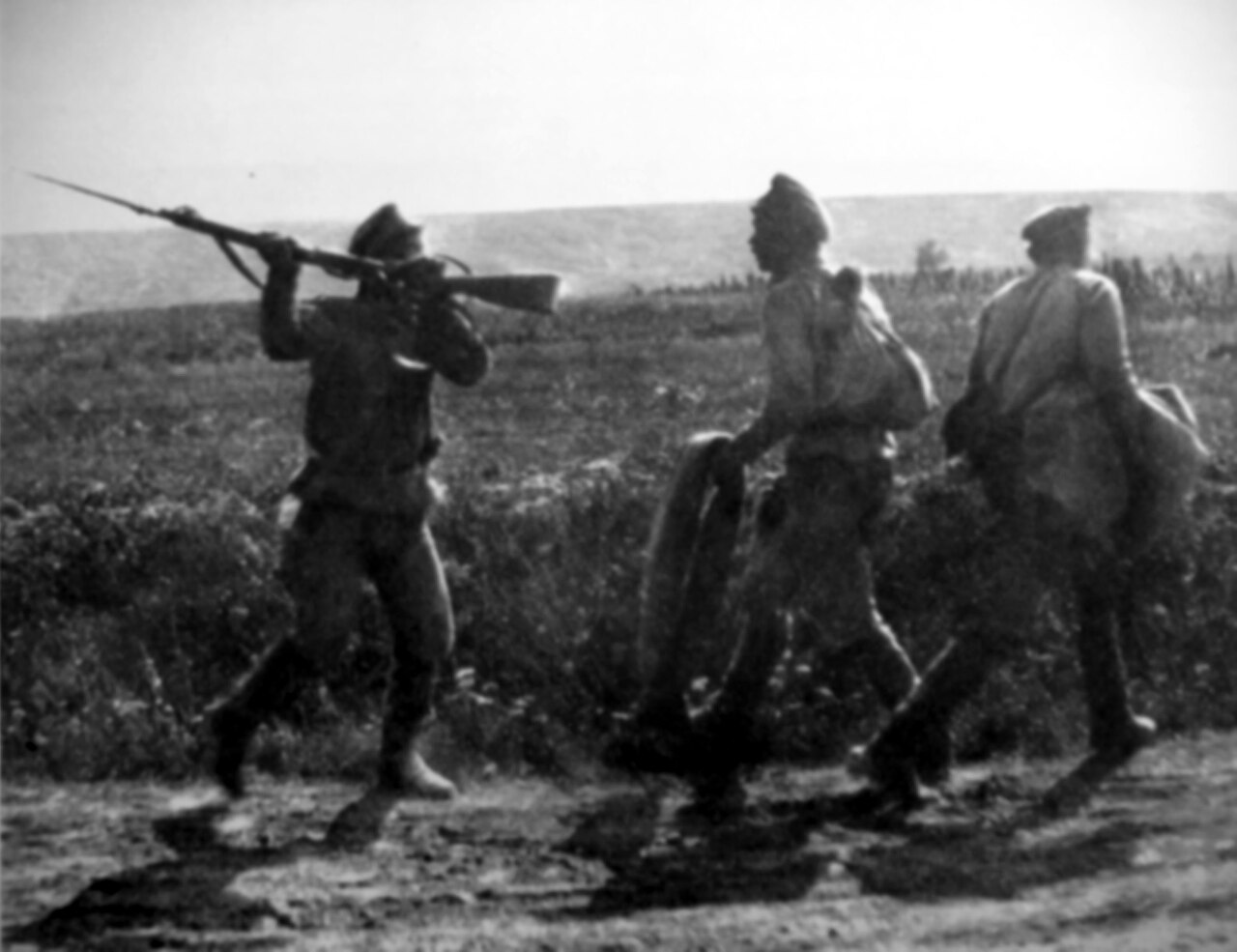
In the summer, the new Minister of War Alexander Kerensky launched a new offensive – the June Offensive. Despite his enthusiasm this was a disaster as thousands of Russian troops deserted the front lines, killed their officers and fraternised with German troops. The failure of the offensive produced an immediate effect in Petrograd – an armed uprising in early July known as the July Days.
Land
Problems and unrest in the countryside continued despite the fall of the Tsar. The peasants were hungry for land and the collapse of the Tsarist government meant that there was no one to stop them from taking it. They had always believed that the land belonged to them and had felt betrayed by the emancipation of 1861. Now they saw a chance to complete the process that had been started then. However, they wanted government approval to give legitimacy to their actions.
Liberals in the Provisional Government were not willing simply to hand over the land to the peasants. They wanted it to be done within the framework of law set down by the new government once elected and they believed that landowners should be compensated.
When the SRs joined the Provisional Government in May, it seemed that a better relationship might develop between government and peasants. Chernov, their popular leader, was Minister of Agriculture and the SRs had played a leading part in helping to organise peasant soviets. But, broadly, the SRs too urged that the land problem needed to wait until a new government had been elected.
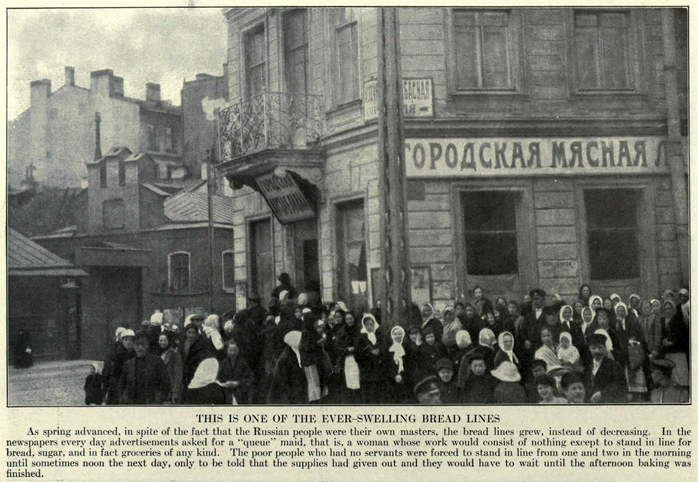
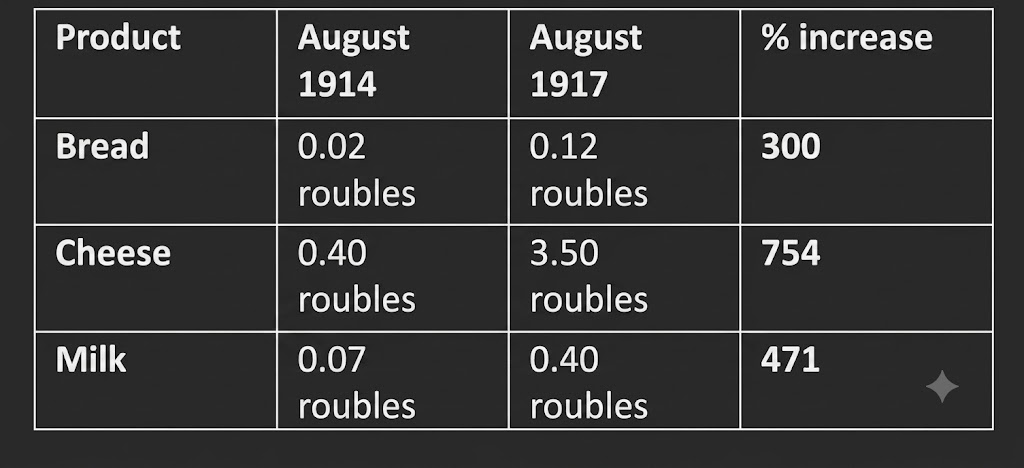
During the summer, land seizures increased – 237 cases were reported in July. Peasants became frustrated with the Provisional Government’s policy in relation to grain and food shortages. Following a bad harvest in 1917, grain prices doubled between February and June, but peasants remained reluctant to bring their grain to sell in the cities, as there were few goods to buy. The Provisional Government seemed unable to do anything about the shortages and resorted to the Tsarist policy of sending out grain requisitioning squads to forcibly take grain from the peasants. Many peasants responded to this activity with violence. Once again the Provisional Government modelled their response on the Tsarist regime by sending in the army to deal with rebels.
Economy
Food shortages, unemployment and high prices had been important factors in bringing about the February Revolution. These problems did not go away when the Provisional Government took power.
Shortages of fuel and raw materials led to factories cutting output or closing and laying off workers; 568 factories in Petrograd closed between February and July with the loss of 100,000 jobs.
The workers had expected social reform after February, with higher wages, better working conditions, shorter hours and more influence in the workplace. But wages were becoming worthless as inflation rose and employers were using lockouts to bring the workers to heel. Strikes began to increase and workers’ committees began to take over the running of some factories completely.
Discontent
Return of Lenin
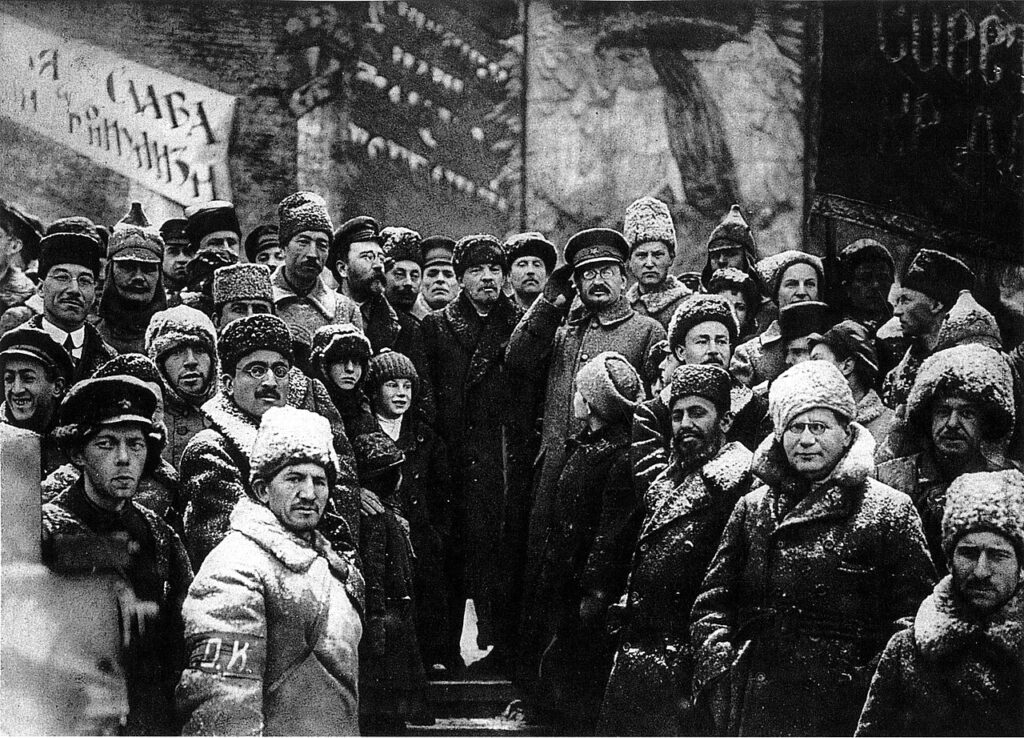
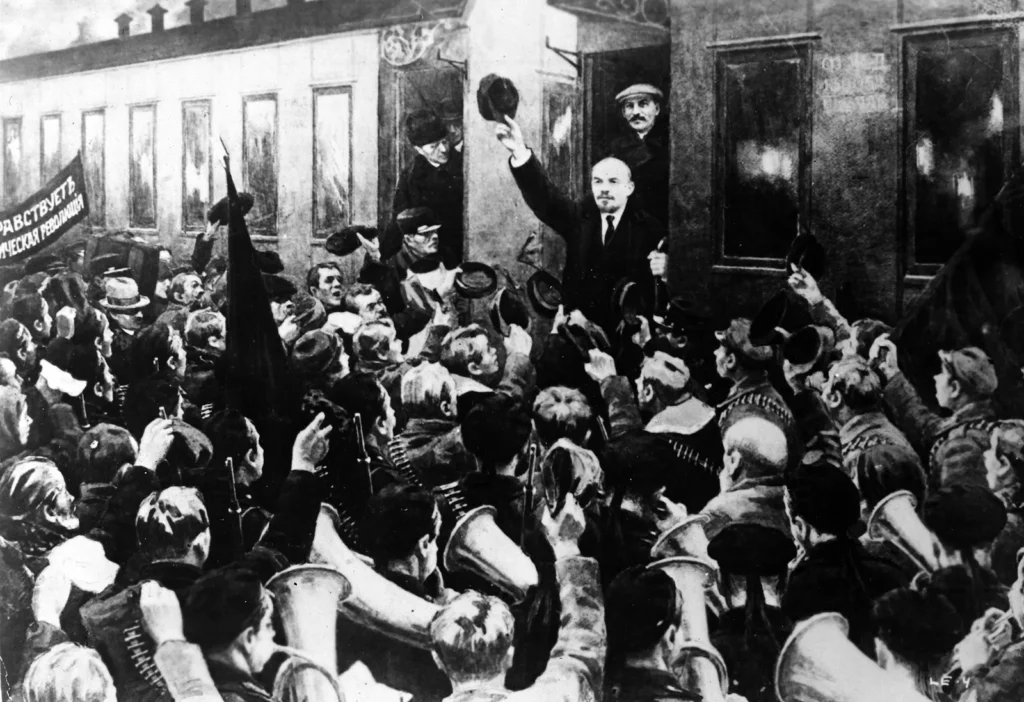
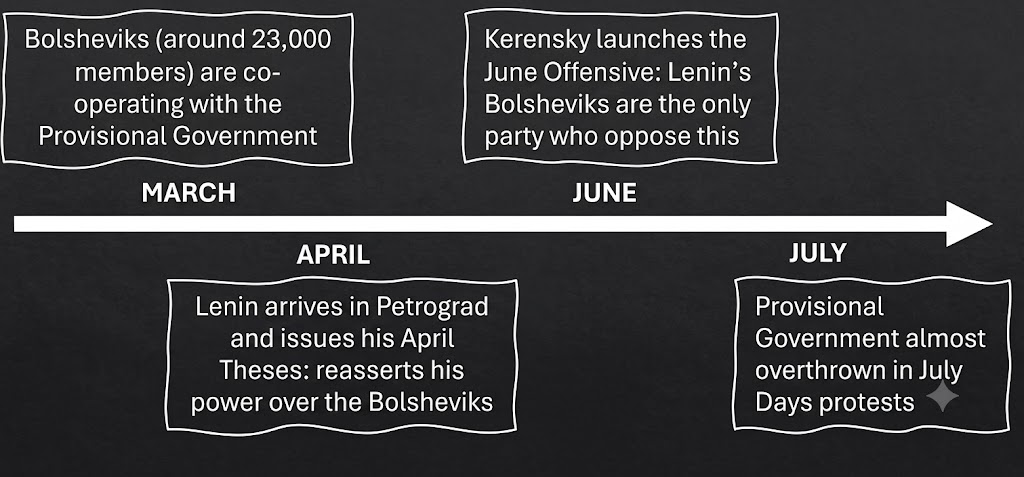
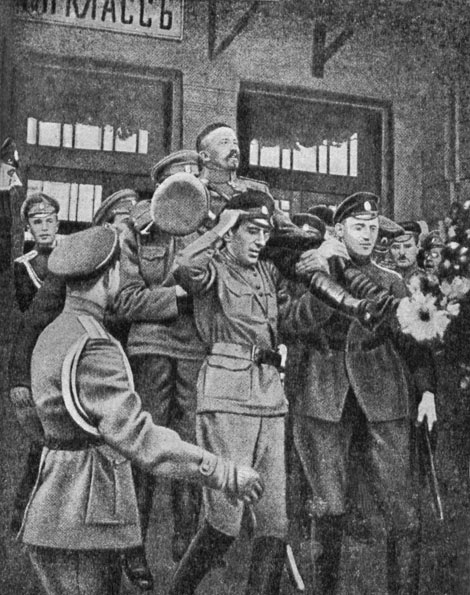
Lenin returned to Russia on April 3rd, helped by the Germans who expected him to seize power and make peace. He had travelled in a railway carriage (which had been locked and sealed as it passed through Germany), from exile in Switzerland, through Germany to Sweden and thence to Finland and Petrograd.
He greeted the crowds at the Finland Station in Petrograd, where he arrived with a rousing speech, prepared during his long journey. The gist of his words were later written down in the so-called “April Theses”, although some of these were actually written in May, after Trotsky’s return to Russia. They were published in the party’s official newspaper – Pravda.
Lenin wrote:
The specific feature of the present situation in Russia is that the country is passing from the first stage of the revolution – which placed power in the hands of the bourgeoisie – to its second stage, which must place power in the hands of the proletariat and the poorest sections of the peasants. No support should be given to the Provisional Government. The utter falsity of its promises should be made clear. The masses must be made to see that the Soviets of Workers’ Deputies are the only possible form of revolutionary government.
The April Theses demanded that:
- Power should be transferred to the Soviets
- The war should be brought to an immediate end
- All land should be taken over by the state and re-allocated to peasants by local soviets.
These demands have often been summed up as a demand for “Peace, Land and Bread” and “All power to the Soviets”. Lenin argued that the Russian middle class was too weak to carry through a full “bourgeois revolution” and that to allow the middle classes to continue in power, was to hold the inevitable proletarian revolution back.
The initial reaction was mixed:
- The Bolsheviks had only 26,000 members and were still in a minority among the socialists.
- The Bolsheviks were divided over whether to co-operate with the Provisional Government or not.
- Some Bolsheviks feared that Lenin had grown out of touch and that his radical proposals would do more harm than good.
- There were allegations that Lenin was in the pay of the Germans
- The Mensheviks feared Lenin would undermine what they had been doing, and, by stirring up discontent would provoke a right-wing reaction.
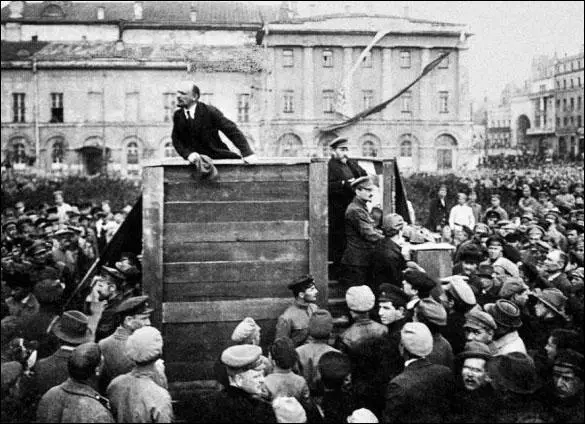
However, Lenin gradually won over support with his speeches – which largely recognised much that was already happening. The peasants did not seize land because Lenin told them to do it – it was already happening, but Lenin could claim the credit. By the end of April, Lenin had won over the majority of the Central Committee of the Bolshevik Party to his view that the Bolsheviks had to lead the opposition to the Provisional Government.
Impact of Lenin’s Return
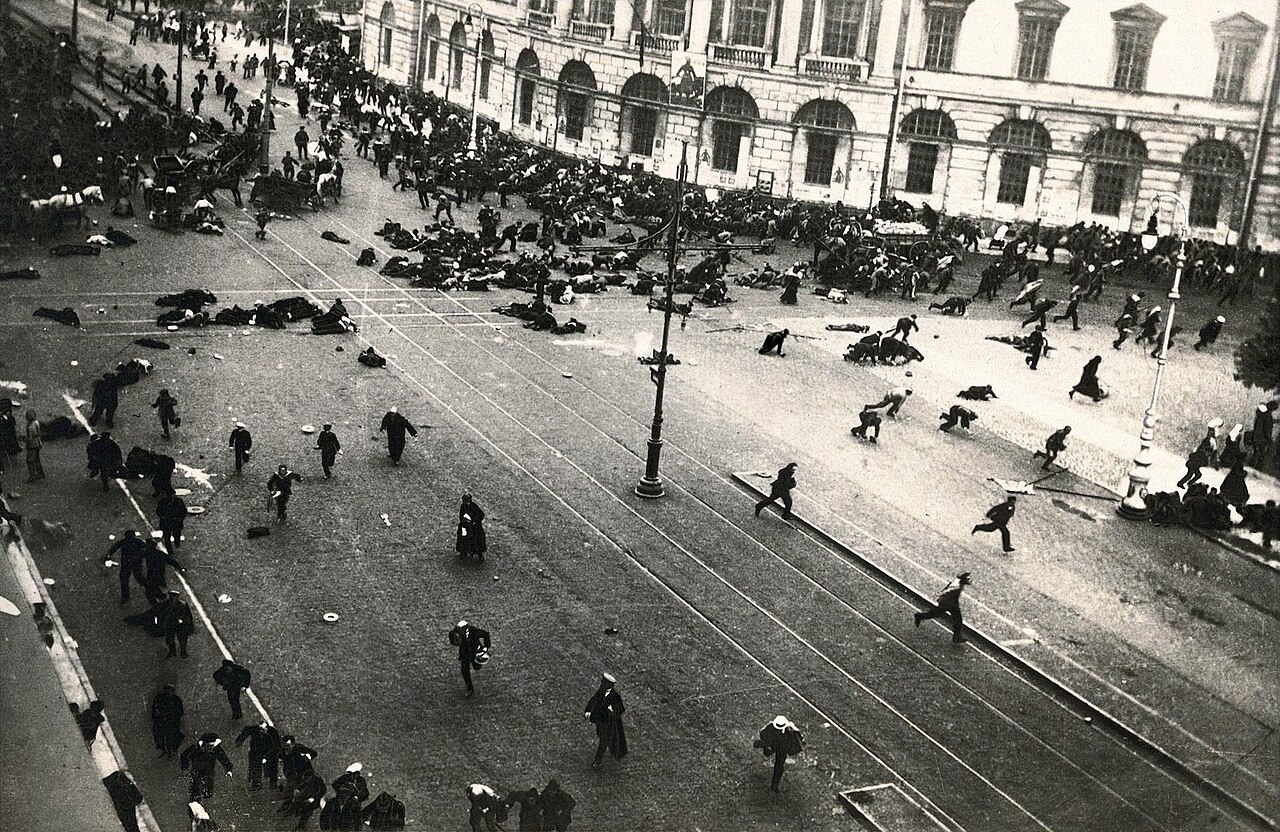
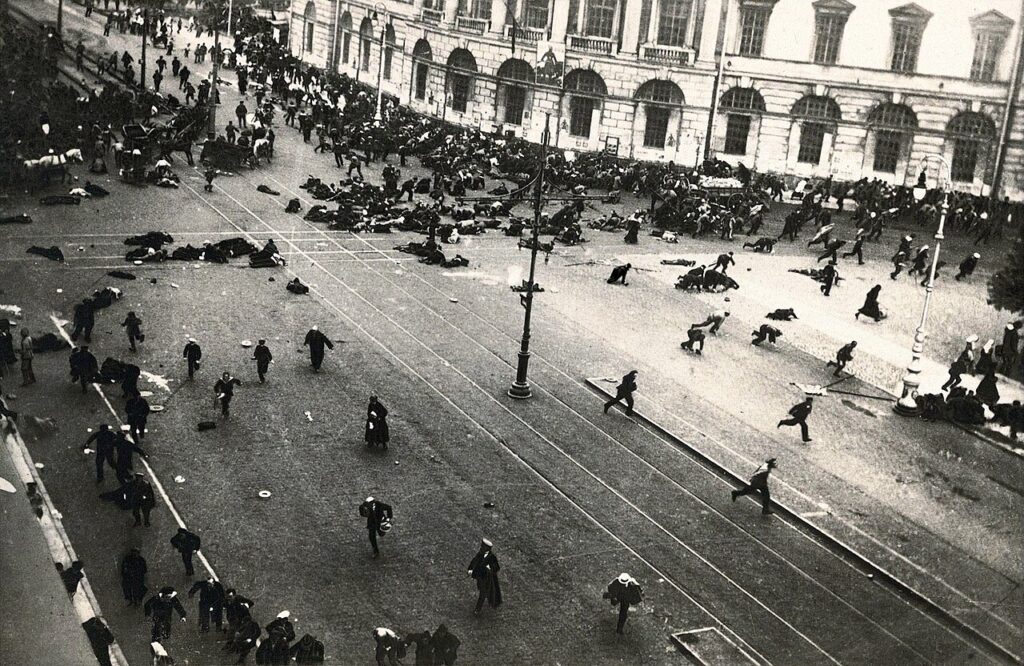
under machine gun fire, 17 July 1917
The July Days
The July Days were a series of protests and demonstrations against the Provisional Government. The Provisional Government managed to keep control of the country.
Soldiers and 20,000 armed sailors from nearby Kronstadt joined the workers in the streets chanting slogans, such as “All Power to the Soviets”, attacking property, looting shops and seizing the railway stations and other key buildings. Many of the protestors headed for the Bolshevik headquarters to speak to Lenin. Lenin, who had actually been on holiday when the rioting broke out, rushed back to Petrograd and made a rambling speech to the crowd. Lenin’s attitude to the protests appeared ambivalent. He urged the Central Committee of the Bolshevik Party to restrain the workers and call off a rising planned for the next day. However, he did not condemn the rebellion either and it may have been that he was waiting to see how things turned out. He later claimed that the Bolsheviks had risen too soon and had failed to wait for his own direction, but this observation could easily have been the product of hindsight and self-justification.
The Provisional Government issued warrants for the arrest of the Bolsheviks, whom they blamed for stirring up the troubles, and several, including Trotsky, were sent to jail. Lenin quickly fled into exile in Finland, minus his beard which he had to shave to disguise himself as a working man. Certainly the affair did not do the Bolshevik cause much good. Troops loyal to the Soviet dispersed the crowds and the Soviet newspaper Izvestia denounced the role of the Bolsheviks, suggesting that Lenin was working in the pay of the Germans and against Russia’s best interests. Bolshevik propaganda was burned and the offices of the Bolshevik newspaper Pravda closed. Lenin’s reputation fell, for fleeing rather than leading, whilst other leaders languished in gaol. Some believed their moment had passed.
Kerensky replaced Prince Lvov as prime minister on July 8th as he seemed to be the only man who could bring the various faction together as he was a leading member of both the PS and the PS. He was anxious to stop a
drift to civil war. Whilst the balance in the Provisional Government had moved to the left, which is where he stood, he nevertheless wanted to keep a coalition which
included liberal Kadets in an attempt to provide stable government.
The Kornilov Affair
General Larv Kornilov was appointed as Commander-in-Chief of the Army in July by the new Prime Minister Kerensky. Kornilov was well known for his toughness and as a condition of his acceptance he asked for the reintroduction of death penalty and court martial for the army. However, the Provisional Government refused to agree as this would have contravened the Soviet Order No 1 and was vigorously opposed by the Soviet. However, many welcomed his appointment as a chance to restore military discipline.
Kornilov made other suggestions such as:
- Disbanding of the regiments involved in the July Days
- Reduction in numbers of sailors at the Kronstadt naval base to 100,000
- Banning of strikes
- Troublesome workers should be sent to the front lines to fight
- Bring loyal troops into the capital to defend the capital from further left-wing protests.
The Provisional Government was in a very difficult position. Kornilov’s demands would have helped curb the disruptive strikes and restored military discipline, but many of these tougher measures would destroy much of what they had tried to change about Russia since the fall of the Tsar. Therefore, they failed to agree to many of Kornilov’s suggestions.
What actual negotiations had taken place we shall now never know, but when Kornilov demanded that martial law be proclaimed in Petrograd, Kerensky clearly panicked. He believed that Kornilov was moving troops into the capital in order to stage a right-wing military revolution. He ordered the removal of Nicholas II and family to Tobolsk and he called on the Petrograd Soviet to help him defend the city from counter-revolution. The soldiers, sailors and workers again took to the streets, this time, supposedly in defence of the Provisional Government. The Bolsheviks seized the opportunity to organise armed bands of workers commanded by their “red guards”, a militia they had trained in secret to act in support of the Bolsheviks. Kerensky even supplied them with arms.
As bands of Russian cavalry troops began to advance towards Petrograd on August 27th, Kerensky ordered Kornilov to surrender his command. After several tense days, railway workers halted the trains carrying Kornilov’s troops and persuaded them to desert. Kornilov and his fellow generals were arrested on September 1st .
The October Revolution
The Bolshevik Revolution
Kerensky was well aware that the Bolsheviks wanted to seize power. He responded by sending some of the more radical army units out of the capital. This provided a reason for the Bolshevik-controlled Soviet to claim that Kerensky was abandoning the capital and that the Germans could easily invade. Trotsky argued that he needed to protect the capital from this and established the “Military Revolutionary Committee”. This comprised 66 members – 48 of them Bolsheviks – and it appointed Commissars to military units, to issue orders and organise weapon supplies. The Committee controlled 200,000 Red Guards, 60,000 Baltic sailors and 150,000 soldiers of the Petrograd Garrison and while its declared purpose was to control troop movements (in the face of a German threat) in reality Trotsky was gathering forces to help carry out the revolution.
On October 10th Lenin harangued the Central Committee of the Bolshevik Party all night and finally succeeded (with a vote of 10-2) in persuading them that “an armed rising is the order of the day”. Only members Zinoviev and Kamenev refused to agree and published their own views in a newspaper declaring that, “If we take power now and we are forced into a revolutionary war, the mass of soldiers will not support us”.
Kerensky tried in desperation to close down two Bolshevik newspapers and restrict the Military Revolutionary Committee’s power. He even ordered the bridges linking the working class areas to the centre of Petrograd to be raised. However, his actions, which Bolshevik propagandists suggested were a betrayal of the Soviet and an abandonment of the principles of the February Revolution, gave the Bolsheviks an excuse to act.
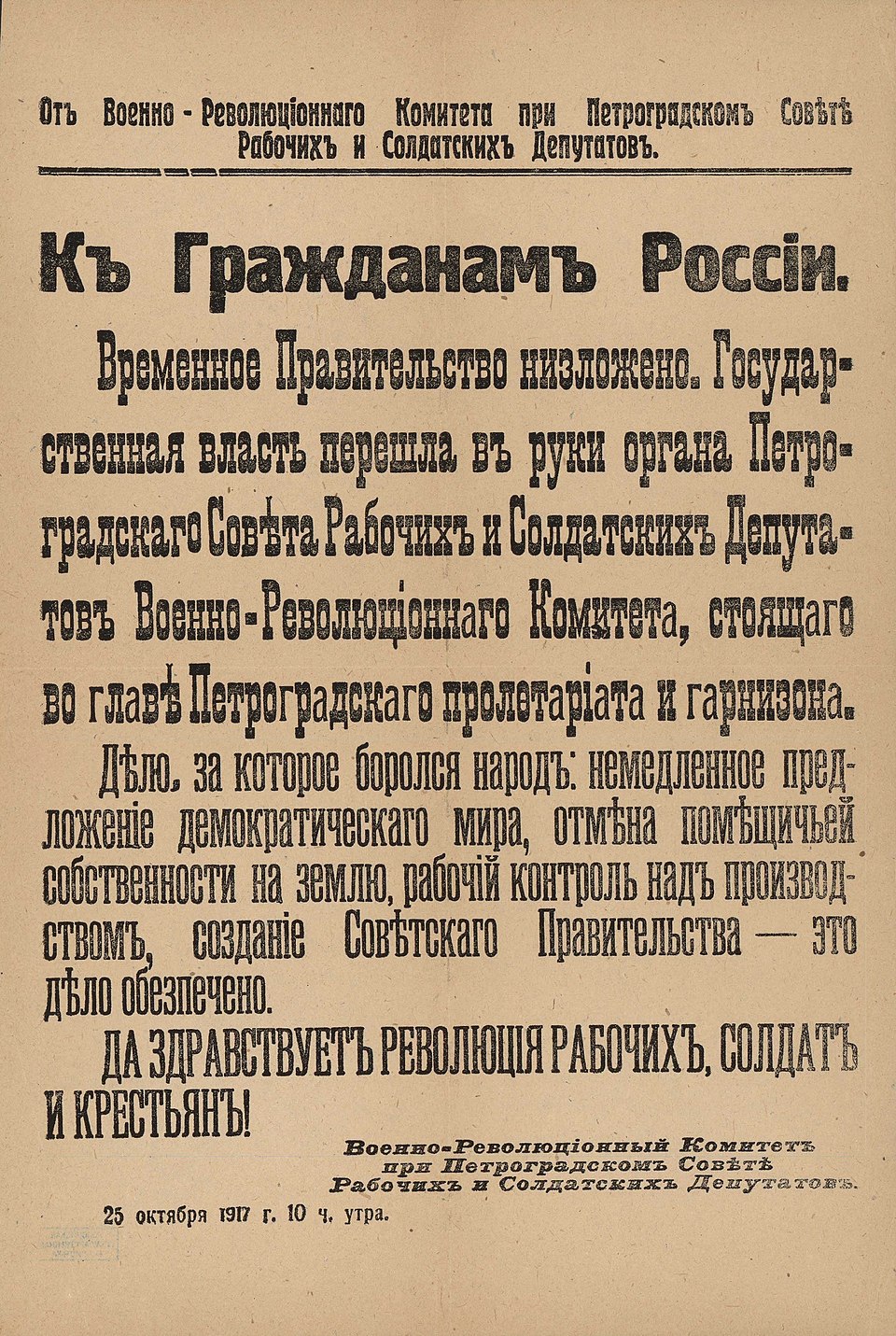
It therefore just remained for Trotsky, with his tremendous power and influence on the Military Revolutionary Committee, to organise the final stages of the Bolshevik revolution. Through the night of October 24th , 5,000 sailors and soldiers from Kronstadt moved into the city and Bolshevik Red Guards seized key positions around the capital. These included the telephone exchange, post office, railway stations, news agency, state bank, bridges and power stations. Although they encountered some resistance at the main telegraph office, the troops on duty generally gave in without resistance. In the morning a further 3,000 troops arrived.
Since Kerensky could not rely on the Petrograd troops to defend the Provisional Government, he left for the Front – borrowing a car from the American Embassy and disguising himself as a nurse. He hoped to be able to make contact with loyal troops who would march to the city and defend it. The rest of the government met in emergency session in the Winter Palace where on the evening of October 25th, as Red Guard soldiers and sailors surrounded the palace, a blank shot from the guns of the battleship Aurora was heard at 9.40pm. This was the signal for the beginning of the Bolshevik attack. Further shots followed, including some from the St Peter and Paul fortress, the headquarters for the Military Revolutionary Committee, across the River Neva from the palace. However, only one shot hit the palace and most went into the river.
The Storming of the Winter Palace
The storming of the Winter Palace Once the Bolshevik Communists were in power in Russia, they spread the myth that the storming of the Winter Palace by the Red Guards, supported by the masses, was an act of great bravery and heroism. On the tenth anniversary of the event in 1927, a famous film entitled October was made by Sergei Eisenstein. This made the attack appear a desperate feat undertaken against the odds by committed crowds desperate to ensure their revolution was carried through. The dramatic pictures of the masses breaking down the gates and storming in were entirely fictitious. The troops that were left at the palace gave in easily. When the Aurora fired, the Women’s Battalion became hysterical and all agreed they should leave whilst most of the troops used little resistance and preferred to lay aside their arms and go home rather than fight. Some of the Red Guards simply walked in through the back doors where there was no-one on guard and wandered around until they found the remaining members of the government. There was never a real “break-in”. Originally, some sort of attack had been planned for that afternoon until the evening and by then several government members had already departed, unnoticed, out of the building’s many exits.
The Role of Lenin
27th September
Lenin writes to the Central Committee of the Bolshevik Party from Finland. There was still a warrant out for his arrest following the July Days, so he had to try to impose his will on the Central Committee by letter. He urged them to seize power stating, “Otherwise the Bolsheviks will cover themselves with eternal shame and destroy themselves as a party …. History will not forgive us”. However, other leading Bolsheviks were more cautious: Kamenev and Zinoviev wanted to wait, and, Trotsky suggested waiting until the All-Russia Congress of Soviets (on which the Bolsheviks seemed likely to have a majority) on 20th October.
7th October
Lenin returns to Petrograd in disguise, calling for an immediate seizure of power.
10th October
The Central Committee of the Bolshevik Party meets in an all-night session. They agree with Lenin that the time is getting ripe to seize power, but no specific plans are made. Indeed, Kamenev and Zinoviev publish their view, to wait a bit, in a newspaper. Travel difficulties lead to the All-Russia Congress of Soviets, planned for 20th October, being postponed until 25 October. The Bolsheviks make use of the time gained and now begin to plan in earnest.
20th October
The Soviet sets up a Military Revolutionary Committee with three Bolshevik and two SR members. Trotsky is one of the three Bolsheviks; Lenin is not. All Petrograd garrisons are put under the control of the MRC.
22nd October
MRC puts Red Guard groups on armed readiness.
23rd October
Garrison in the Peter and Paul Fortress declares support for the
Bolsheviks. The actions so far were very cautiously done. Lenin, Trotsky and the Bolshevik leaders seemed uniformed about the strength of their support and many doubted whether, if it came to it, workers and soldiers would fight against government forces. Then Kerensky hands Lenin a gift: on the evening of the 23 October he shuts down two Bolshevik newspapers. Lenin portrays this rather puny action at the start of a counter-revolution.
24th October
Far from being confident, Lenin, Trotsky and the Bolsheviks are very nervous about their plans. There were so many uncertainties: would enough troops stay loyal to the Provisional Government to prevent the Bolshevik assault? Would the working people of Petrograd support them? At dawn, under Trotsky’s orders Red Guards take control of Petrograd’s bridges and railway stations. They still fear that armed units loyal to the Provisional Government will try to storm the city. Kerensky, however, can find no one prepared to fight for him. It takes some time for the Bolsheviks to realise this, so that their capture of the city is virtually bloodless, but very slow.
25th October
All of Petrograd is now in the hands of the Bolsheviks except for the Winter Palace. At 11am Kerensky, Prime Minister of the Provisional Government, flees from Petrograd in a car “borrowed” from outside the American embassy. This leaves the remainder of the Provisional Government in a room in the Winter Palace, defended by two companies of Cossacks, some young officer cadets and 200 members of the Women’s Battalion. In fact, the defending garrison not only has very little ammunition but almost no food. By the evening all except about 300 people have quietly disappeared. The Bolsheviks could have walked in. However Bolshevik propaganda painted a very different picture. However, they are delayed by their own problems. The assault on the Winter Palace has to be postponed several times by late arrivals and miscalculations. It should have taken place at 3pm, but the Aurora does not fire its blank shot until 9.40pm. At once most of the remaining defenders of the Winter Palace flee, but not until nearly 2am, on 26 October does a handful of Bolsheviks find the ministers and put them under arrest.
Exam Zone
This section has been designed to help you build confidence, sharpen your skills, and achieve your best possible results. Whether you are preparing for mock exams, end-of-unit tests, or final assessments, the Exam Zone provides everything you need in one place.
The Exam Zone is not just about testing your knowledge. It is about developing the key historical skills required for success: critical thinking, evaluation, and clear written communication. By practising regularly and reflecting on feedback, you will strengthen both your understanding of the past and your performance in exams.