Nikita Khrushchev
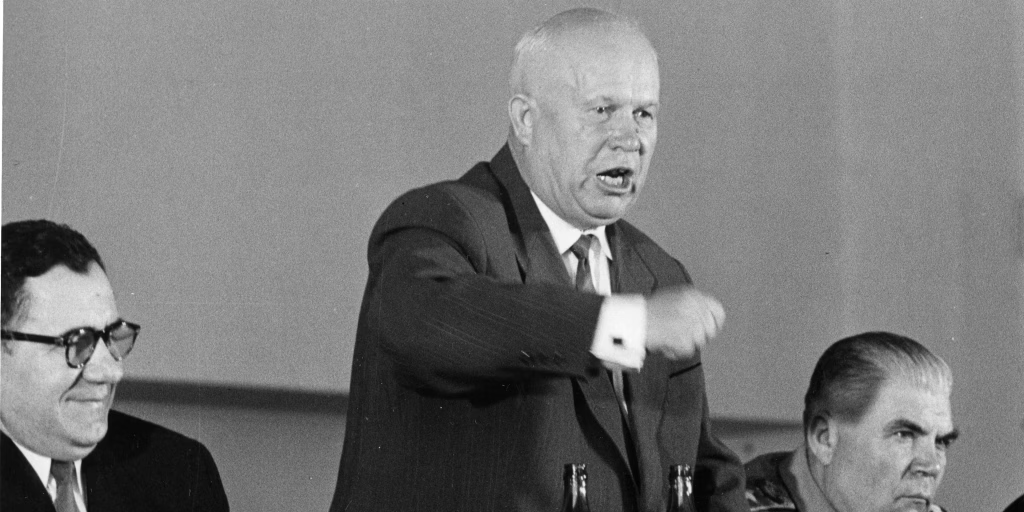
Khrushchev’s leadership was marked by a dynamic mix of reform, de-Stalinisation, and Cold War confrontation, as he sought to modernise the Soviet Union while navigating internal opposition and international tensions.
The Post-Stalin Power Struggle (1953–1958)
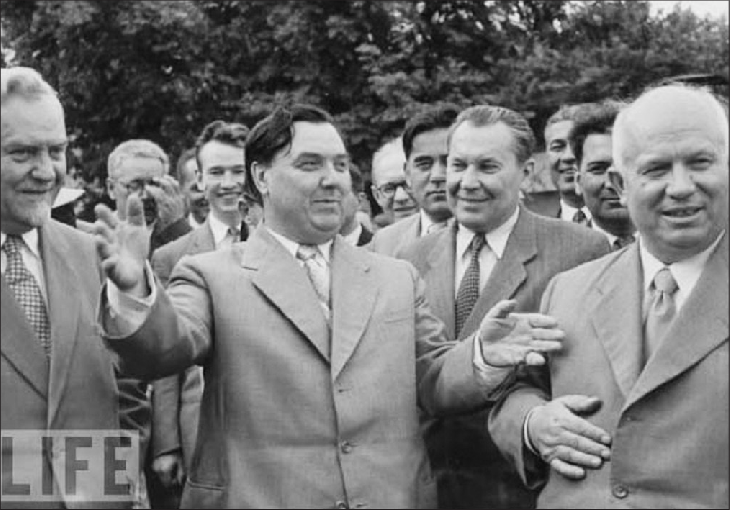
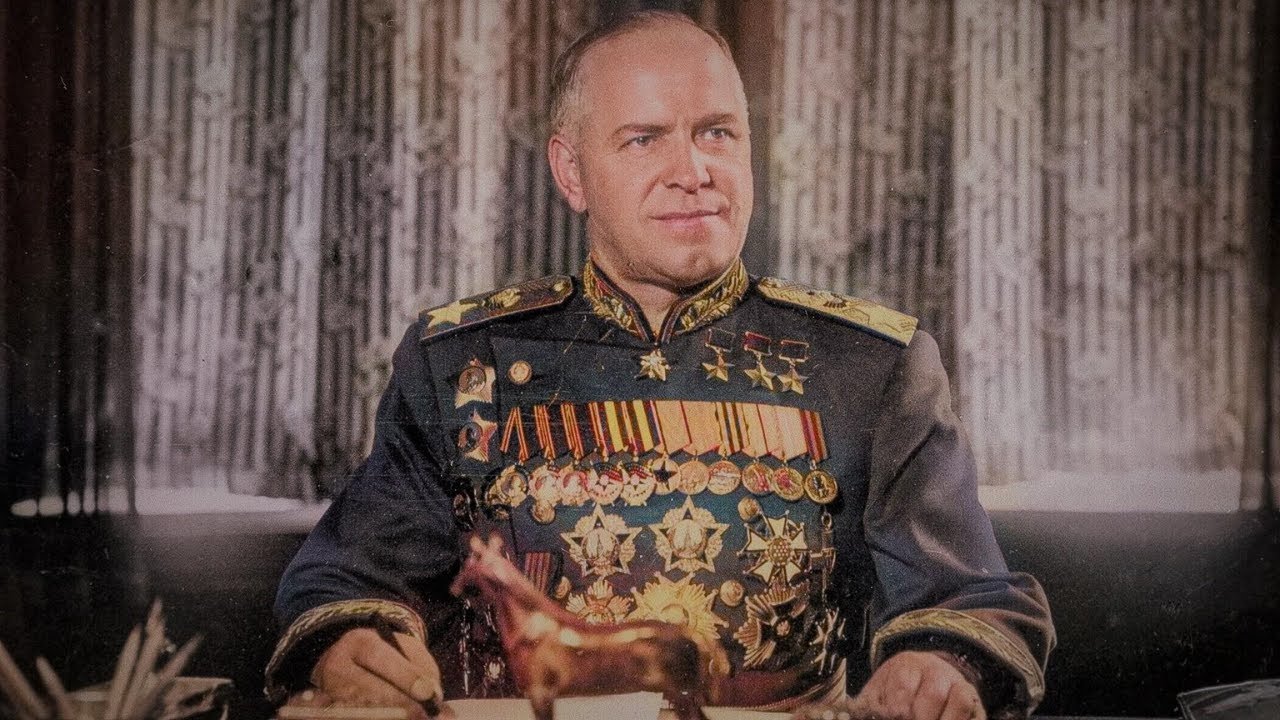
At the time of Stalin’s death in 1953, Khrushchev was an industrious but not politically outstanding member of the Politburo, whose breezy, talkative manner made him appear less devious and scheming than his colleagues. Following Stalin’s death, a collective leadership emerged, but Khrushchev quickly began a strategic climb to absolute power. His first major move was the removal of Beria, the Head of the Secret Police (MVD). By framing a conflict between the Red Army and the Secret Police, and enlisting the help of General Zhukov, the Red Army arrested, tried, and shot Beria in June 1953. Next, Khrushchev undermined Malenkov, who had been viewed as the natural successor to Stalin. Khrushchev used his position as Head of the Party to criticize government policy and promote his own supporters, eventually forcing Malenkov to resign in 1955 following poor harvests.
Having secured his footing, Khrushchev faced an opposition group known as the “Anti-Party Group” in early 1957. While Khrushchev was temporarily abroad, the chief protagonists, Molotov, Kaganovich, and Malenkov, attempted to abolish the post of first secretary of the party to destroy his power base. Khrushchev successfully argued that only the party Central Committee could change the organisational structure, declaring their actions illegal and swiftly removing them from the Praesidium. Having used the army’s support to survive this challenge, Khrushchev then turned on his loyal supporter, General Zhukov, accusing him of creating his own “cult of personality” and forcing him to retire. Finally, Khrushchev sidelined Nikolai Bulganin by forcing him to confess to being implicated in the Anti-Party Group, leading to Bulganin’s resignation as Premier in March 1958. Khrushchev took over this post, becoming the first man since Stalin to hold both the offices of Prime Minister and First Secretary.
The “Secret Speech” and De-Stalinisation (1956)
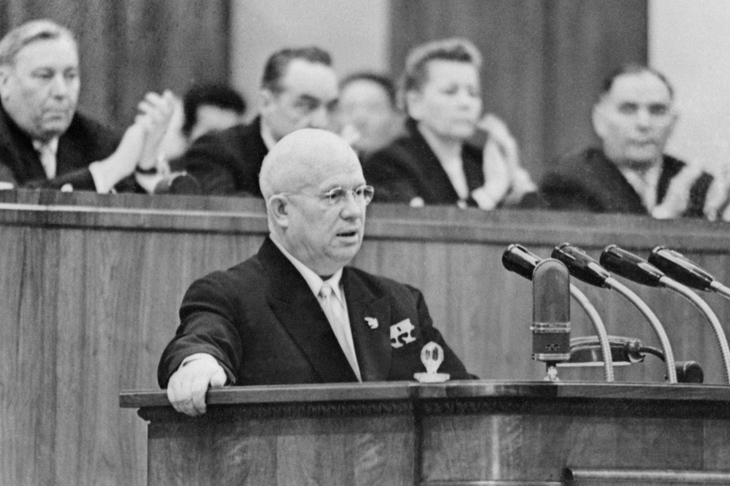
A central feature of Khrushchev’s campaign to exert control was orchestrating a move away from Stalin’s policies through a process known as de-Stalinisation. This began at the Twentieth Party Congress in 1956, where Khrushchev made a scathing attack on Stalin in a speech titled “The Cult of the Individual and its Consequences”. The contents were never officially published—earning it the name the “Secret Speech”—but key points were leaked to Communist Party organizations. The speech attacked Stalin for crimes against the people, military unpreparedness in 1941, and his foreign policy failures. De-Stalinisation aimed to justify progressive economic policies, ease peaceful co-operation with the West, and absolve Khrushchev and other leaders from their complicity in Stalin’s errors.
Key features of this period included the release of political prisoners from labour camps, the relaxation of censorship, and the end of Stalin’s personality cult, which involved renaming Stalingrad to Volgograd and moving Stalin’s body from the Lenin mausoleum to a concrete-filled hole beneath the Kremlin. The reaction to de-Stalinisation included strikes involving newly released gulag prisoners, riots, and protests for greater freedoms, especially from satellite states. However, Khrushchev maintained order through the MVD and did not intend to move far from authoritarian rule, maintaining the one-party, one-leader state.
The Virgin Land Campaign and Agricultural Reforms (1954–1963)
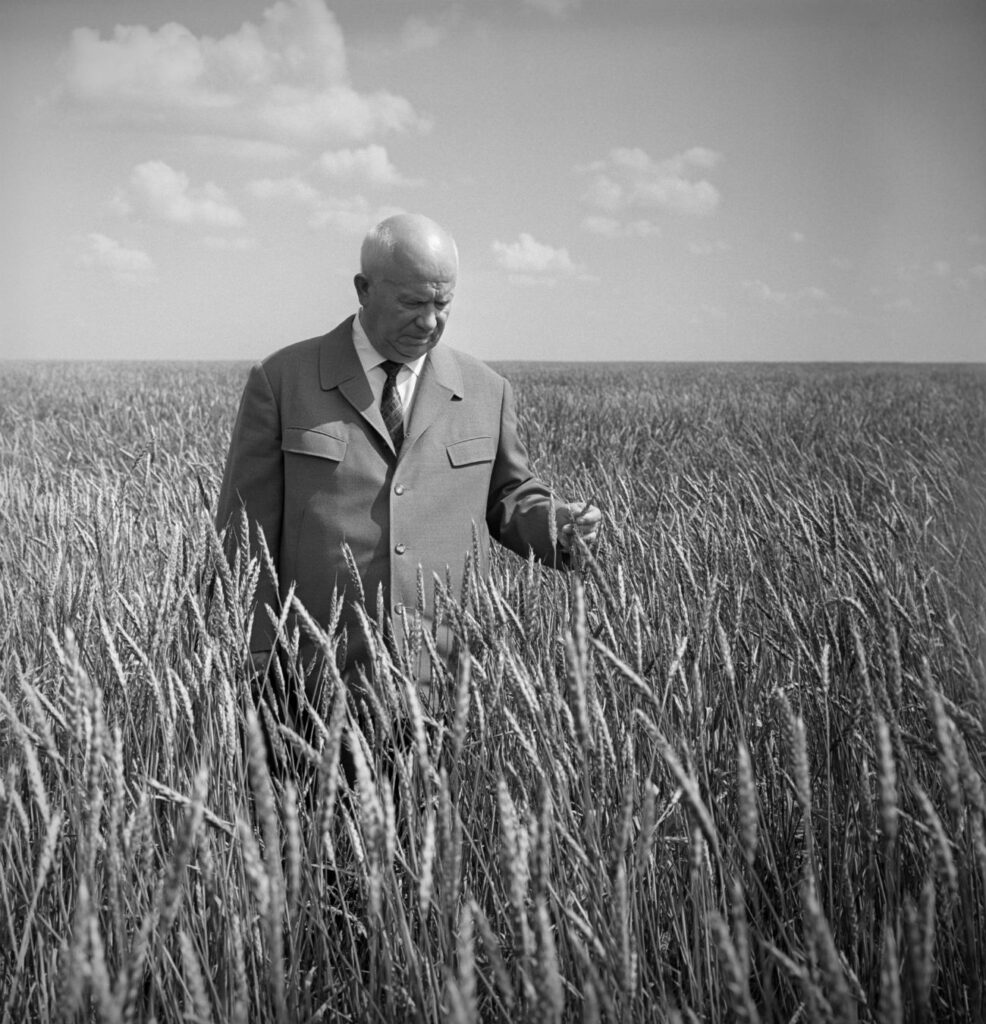
In 1953, Khrushchev admitted to the Central Committee that grain stocks under Stalin had been lower than under Nicholas II, signalling a desperate need for major agricultural changes. The Virgin Land Campaign began in 1954 as a massive project to exploit previously unused areas of the USSR, such as Kazakhstan, for crop production. Over a quarter of a million volunteers, mainly from the Komsomol (Young Communist League), were enlisted, and considerable financial investment provided 120,000 motorized tractors. In the first year, six million acres were freshly ploughed. Sown acreage of corn rose dramatically from 4.3 million hectares in 1954 to 18 million hectares in 1955, earning Khrushchev the nickname “Mr. Corn” (“Kukuruzshchik”). Between 1952 and 1958, farm-workers’ incomes more than doubled.
However, poor management and short-sighted planning caused long-term issues. Crops were sown in unsuitable soil, climate effects were ignored, and fertilizers were seldom available in sufficient quantities. In Kazakhstan, “maize mania” led to traditional crops being abandoned for maize that simply refused to grow. Furthermore, many towns sent orphans, abandoned children, and criminals to the newly cultivated regions, resulting in poor productivity. Mechanization failed to materialize, leaving only one tractor for every 200 hectares by 1959. In 1963, a disastrous harvest hit the Virgin Lands, dropping grain production from 140 million tonnes to 107 million tonnes. As a result, riots broke out at the Budyenni Locomotive Works in Novocherkassk, where the KGB killed 23 protesters.
Industrial Shifts and the Space Race (1951–1965)
Khrushchev continued the approach of Stalin’s Five-Year Plans but sought to alter the economy’s direction by lessening dependence on heavy industry and giving greater prominence to light engineering, chemicals, and consumer goods. Whereas Stalin used coercion, Khrushchev offered incentives, famously suggesting in a radio broadcast that if Soviet women continued to work hard, they would soon be able to buy nylon underwear. The Sixth Five-Year Plan (1956-60) shifted towards plastics and consumer goods but was largely abandoned after two years due to over-optimistic targets. The Seventh Five-Year Plan (1961-65) saw substantial increases in overall production with more realistic targets.
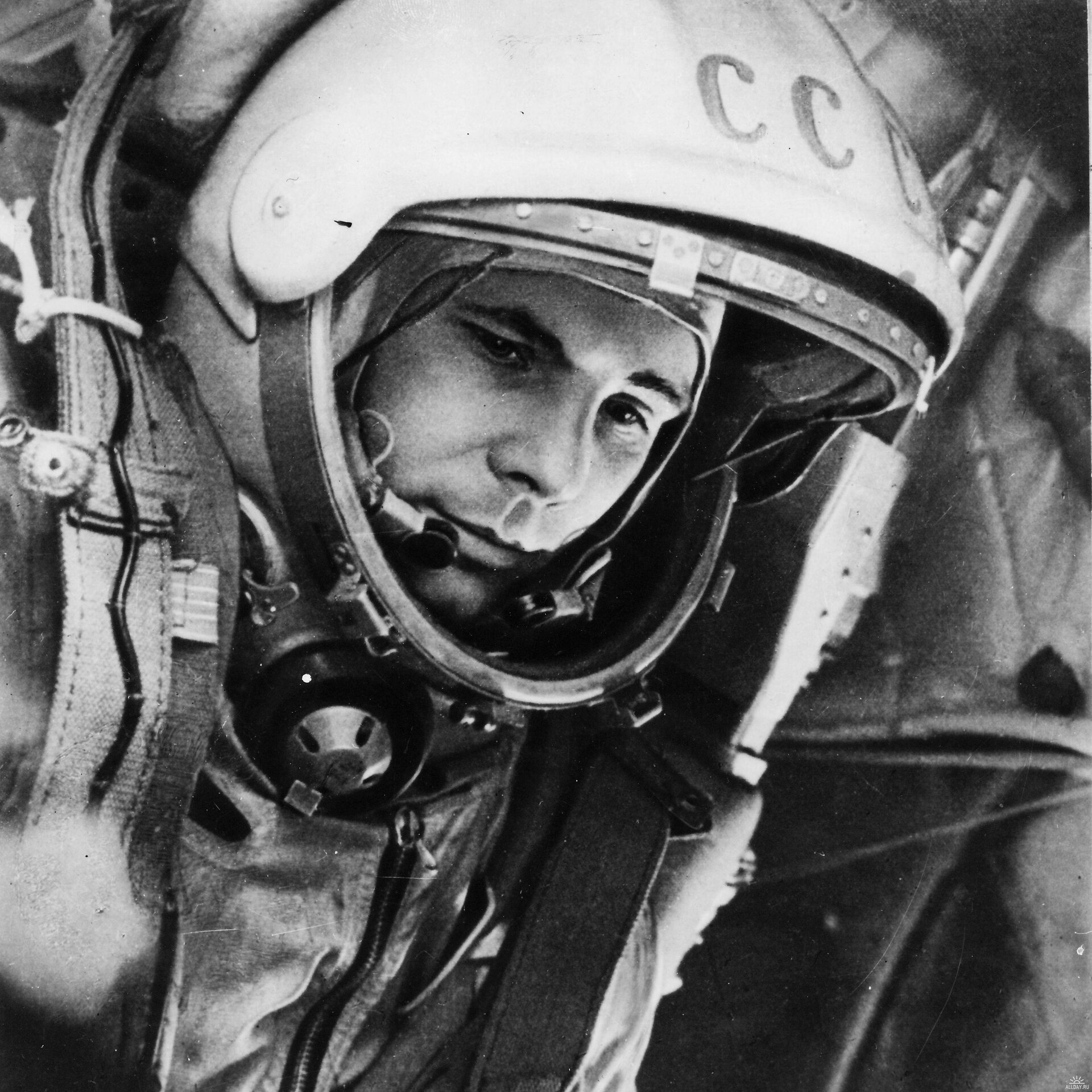
A major focus during this period was the ‘Space Race’ against the United States, receiving large amounts of investment. This led to significant milestones: the USSR launched its first satellite, Sputnik, in October 1957; sent the first living creature, Laika, into orbit in November 1957; and successfully put the first man in space, Yuri Gagarin, in 1961. Domestically, living and working conditions improved: the average working day was reduced to 7 hours, the housing stock doubled between 1955 and 1964 as communal living was abandoned, and wages reached early 1920s levels by 1954. Additionally, free secondary education was provided for all, and censorship eased, resulting in a doubling of book publications between the 1920s and 1950s.
Peaceful Coexistence and the “Kitchen Debate” (1955–1959)
Fearful of the risks posed by the escalating nuclear arms race, Khrushchev developed a foreign policy known as “Peaceful Coexistence”. Moving away from encouraging world revolution, he declared that violent conflict between the communist and capitalist worlds was not inevitable, though he competitively believed the socialist system would eventually prove economically superior. In May 1955, in response to West Germany joining NATO, the Soviet Union formed the Warsaw Pact, a mutual military assistance alliance for Eastern Europe. The Geneva Summit in July 1955 was the first meeting of the “big four” powers since Potsdam; while no major agreements were reached, it was conducted in a spirit of friendship.
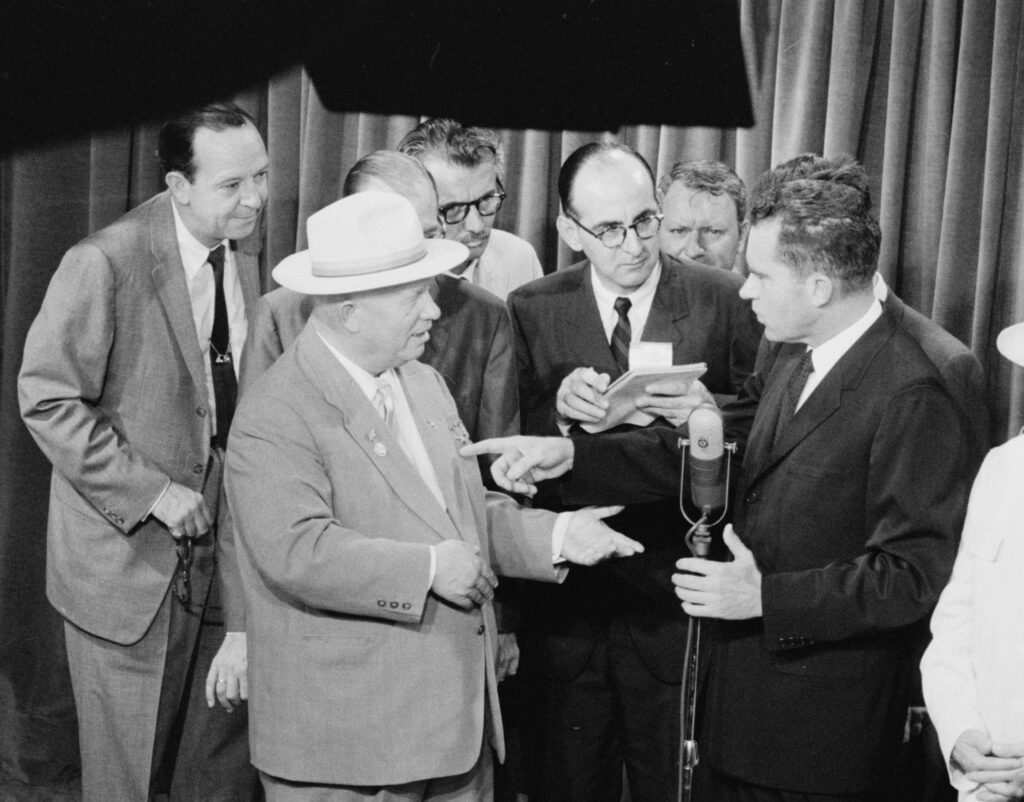
In July 1959, the ideological competition was famously highlighted during the ‘Kitchen Debate’ in Moscow. An American exhibition, which prominently featured an entire suburban house filled with consumer goods like a dishwasher and Pepsi-Cola, was attended by nearly three million Russians. Khrushchev and US Vice-President Richard Nixon engaged in an informal but heated verbal tussle over the merits of their respective ideologies and standards of living. Following this, Eisenhower invited Khrushchev to the US in September 1959, resulting in highly constructive talks at Camp David.
Cold War Crises and the Sino-Soviet Split (1956–1963)
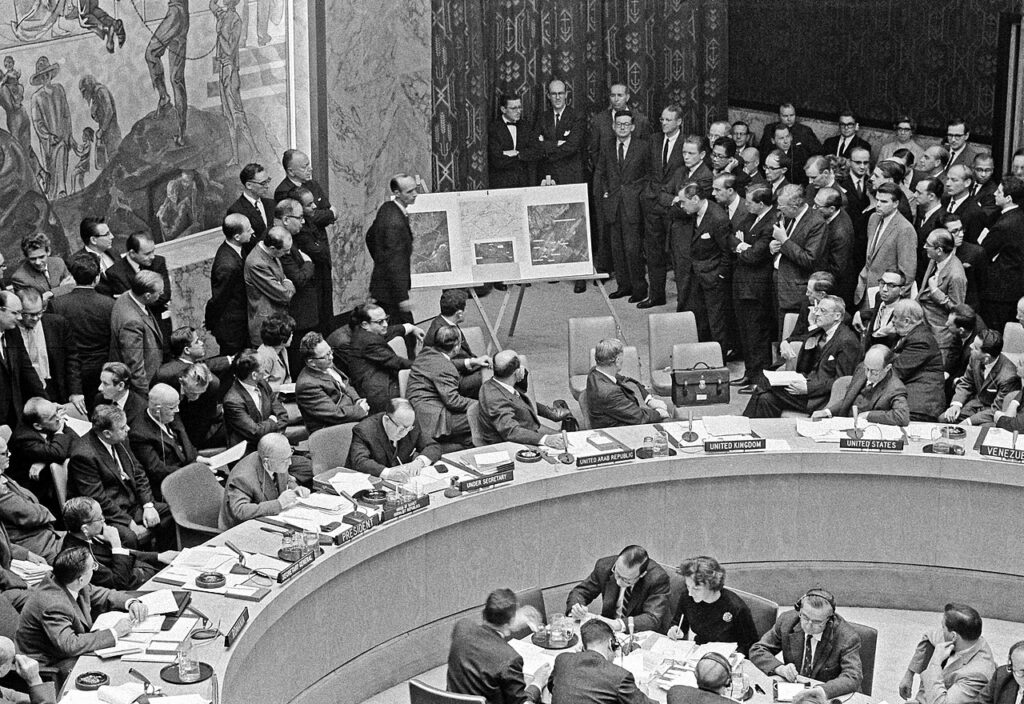
Despite talk of coexistence, Khrushchev aggressively maintained Soviet control over Eastern Europe. In 1956, after his “Secret Speech” inspired reformist protests in Hungary, Khrushchev sent 30,000 extra troops and tanks to crush demonstrations in Budapest. After reformist leader Imre Nagy declared intentions to leave the Warsaw Pact, Khrushchev ordered a military intervention, installed a pro-Soviet government, and eventually had Nagy executed in 1958. Tensions over Germany led to the Berlin Wall’s rapid construction on August 13, 1961, effectively halting the mass emigration of East Germans to the West. The most severe crisis occurred in 1962 during the Cuban Missile Crisis. Khrushchev initiated Operation Anadyr, installing Soviet nuclear missiles in Communist Cuba. When US President Kennedy announced a naval blockade and placed forces on nuclear alert, Khrushchev chose not to risk a full-scale confrontation and agreed to withdraw the missiles in exchange for a US commitment to reduce bases in Turkey. Khrushchev’s critics at home viewed this compromise as a humiliating diplomatic victory for the USA.
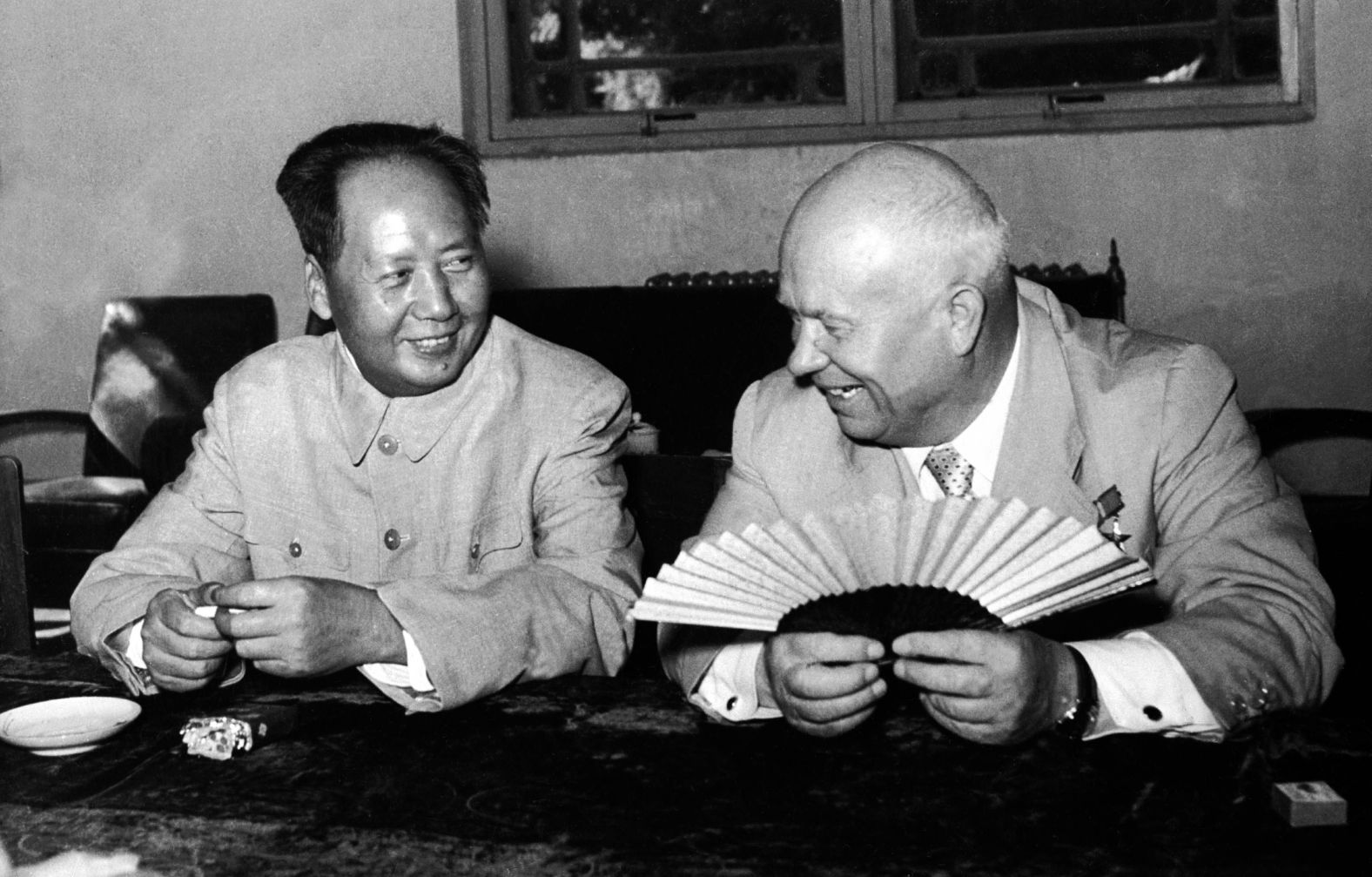
Simultaneously, relations with Communist China deteriorated into a bitter ideological split. The Chinese were highly critical of de-Stalinisation and Khrushchev’s “peaceful coexistence” with the West. Tensions escalated when the USSR rejected China’s request for nuclear assistance in 1957, refused to support Mao over Taiwan in 1958, stayed neutral in a 1962 border war between China and India, and watched China refuse the Test-Ban Treaty in 1963. The relationship became deeply personal and hostile, with Khrushchev calling Mao “a living corpse” and Mao referring to the Soviet leader as “an old boot”.
The Fall of Khrushchev (1964)
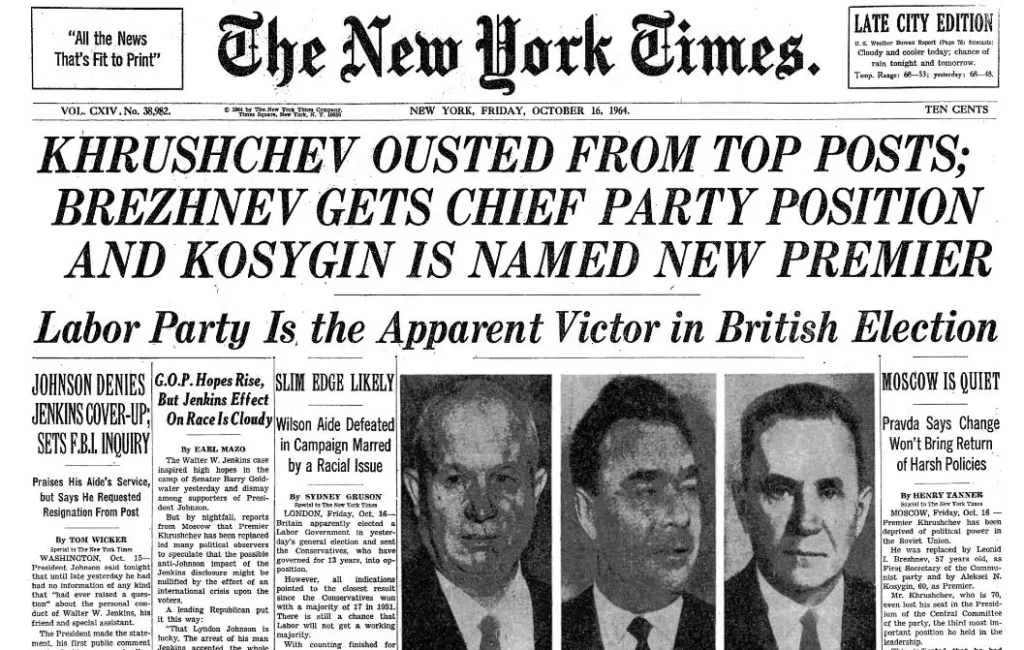
In October 1964, while Khrushchev was taking a holiday at a Black Sea resort, the Politburo met and decided to remove him from power. Summoned back to Moscow, he was informed that he had been retired due to age and poor health and was replaced by Leonid Brezhnev and Alexei Kosygin. A few days later, a Pravda editorial listed his weaknesses, condemning his “hare-brained scheme-making,” “hasty decisions,” and “bossiness”.
Several factors contributed to his downfall. De-Stalinisation had angered the party’s old guard, such as Molotov and Kaganovich. Khrushchev lost the backing of the Red Army after proposing a one-third cut (over a million men) to the armed forces in 1960. His foreign affairs record was plagued by undeniable failures, including the ideological split with China and the diplomatic embarrassment in Cuba. Furthermore, his economic promises went unfulfilled, with the Virgin Lands scheme ultimately bringing him heavy criticism. Because Khrushchev never possessed the absolute, terror-driven control of the party machine that Stalin had, his highly visible and energetic leadership made him acutely vulnerable when his policies failed, leaving him politically friendless and isolated by the autumn of 1964.
Exam Zone
This section has been designed to help you build confidence, sharpen your skills, and achieve your best possible results. Whether you are preparing for mock exams, end-of-unit tests, or final assessments, the Exam Zone provides everything you need in one place.
The Exam Zone is not just about testing your knowledge. It is about developing the key historical skills required for success: critical thinking, evaluation, and clear written communication. By practising regularly and reflecting on feedback, you will strengthen both your understanding of the past and your performance in exams.