Nicholas II
Trace the reign of Tsar Nicholas II from his accession in 1894 through political repression, economic change, war, and revolution, culminating in the collapse of the Romanov dynasty in 1917.
Accession, Autocracy, and Early Economic Shifts (1894–1901)
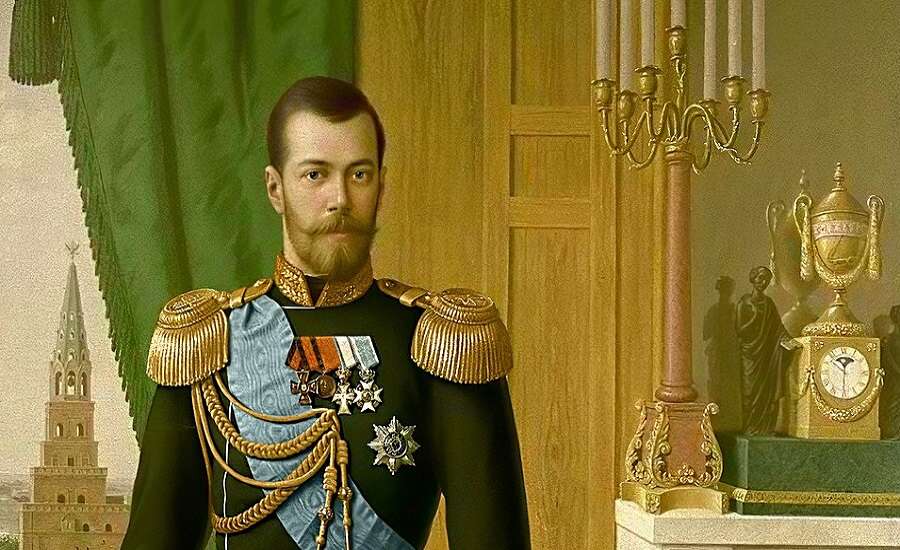
Following the sudden death of his father in 1894, Nicholas II found himself ruler of Russia at the age of 20. He immediately had to deal with the growing opposition that had developed throughout his father’s reign, particularly the Marxist Social Democratic Party, which subsequently split into the Bolsheviks and Mensheviks. In 1895, Nicholas met a delegation of representatives of the zemstva who hoped he would extend their power; however, Nicholas shattered these hopes by calling them “senseless dreams” and insisting Russia was to remain an autocracy. Despite this rigid political stance, economic modernization continued under Minister of Finance Sergei Witte, who put Russia on the Gold Standard in 1897 and created a new rouble to increase economic confidence. Labor legislation also advanced slightly, with the hours of work being reduced to eleven and a half per day in 1897. However, by 1901, a new opposition group called the Social Revolutionaries formed, focusing on the peasantry as a potential revolutionary class.
Economic Slump and the Road to War (1902–1904)
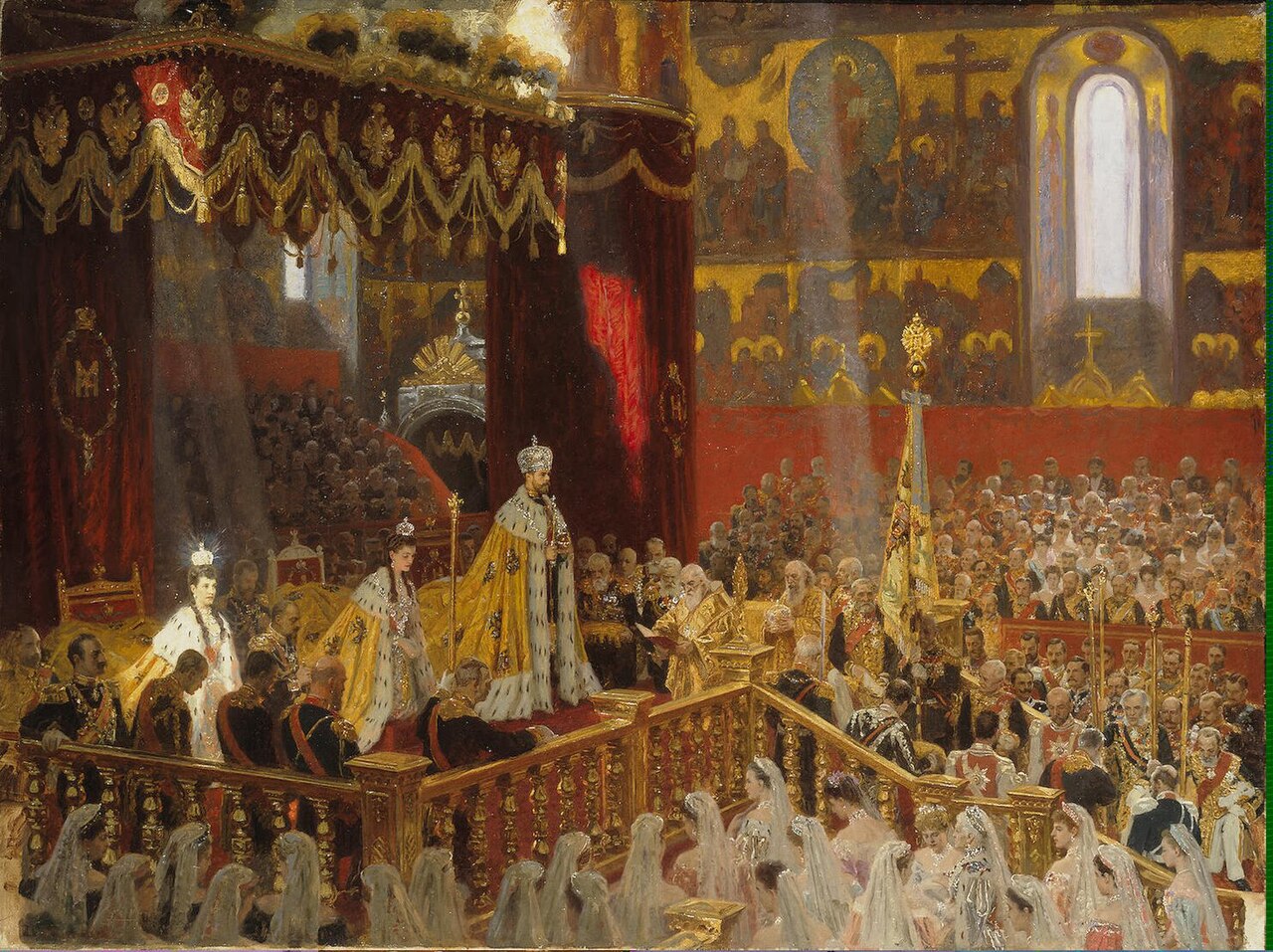
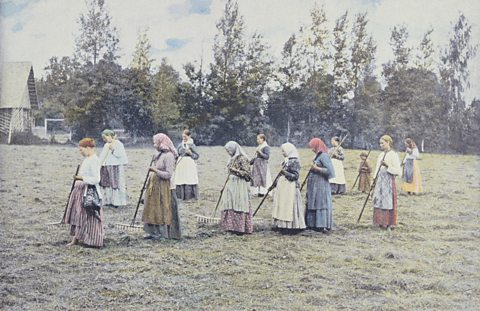
After a decade of strong economic growth, Russian industry was hit with a slump in 1902. A drop in trade led to the collapse of many businesses and a rise in unemployment, sparking demonstrations and strikes across many cities to which the government responded with force. In 1903, the government expanded the provision for factory inspection, but protests continued. Throughout 1903 and 1904, peasants across Russia began to set fires to the property and land of former landowners, an uprising that became known as the “Red Cockerel”. Meanwhile, the government’s attention had shifted eastwards toward China, securing a 25-year lease of Port Arthur in Manchuria and turning it into a naval base. Japan felt threatened by Russian expansionism, and negotiations failed. In January 1904, Japan launched a strike on Port Arthur without warning or an official declaration of war, officially beginning the Russo-Japanese War.
The Russo-Japanese War and Bloody Sunday (1904–1905)
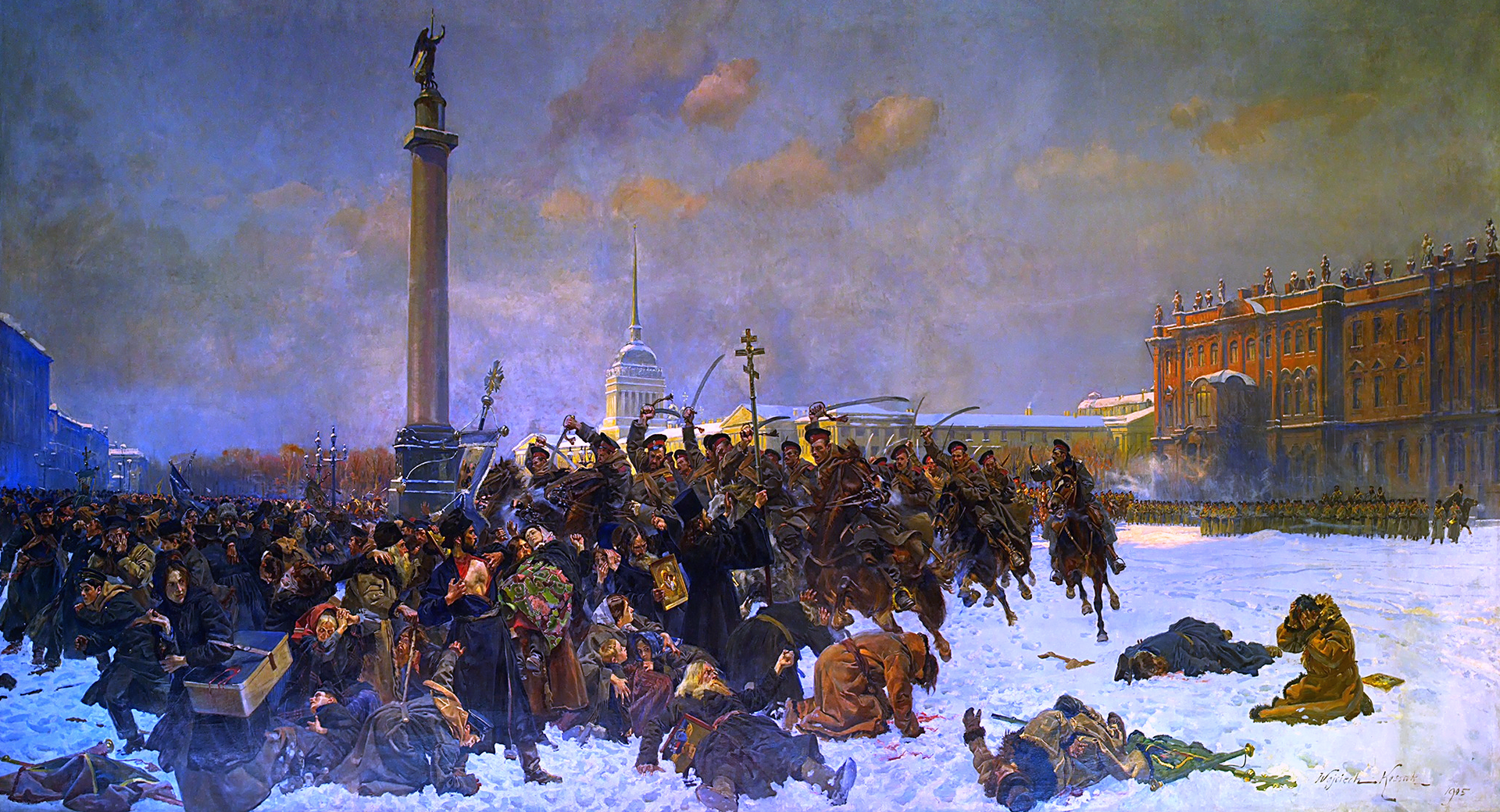
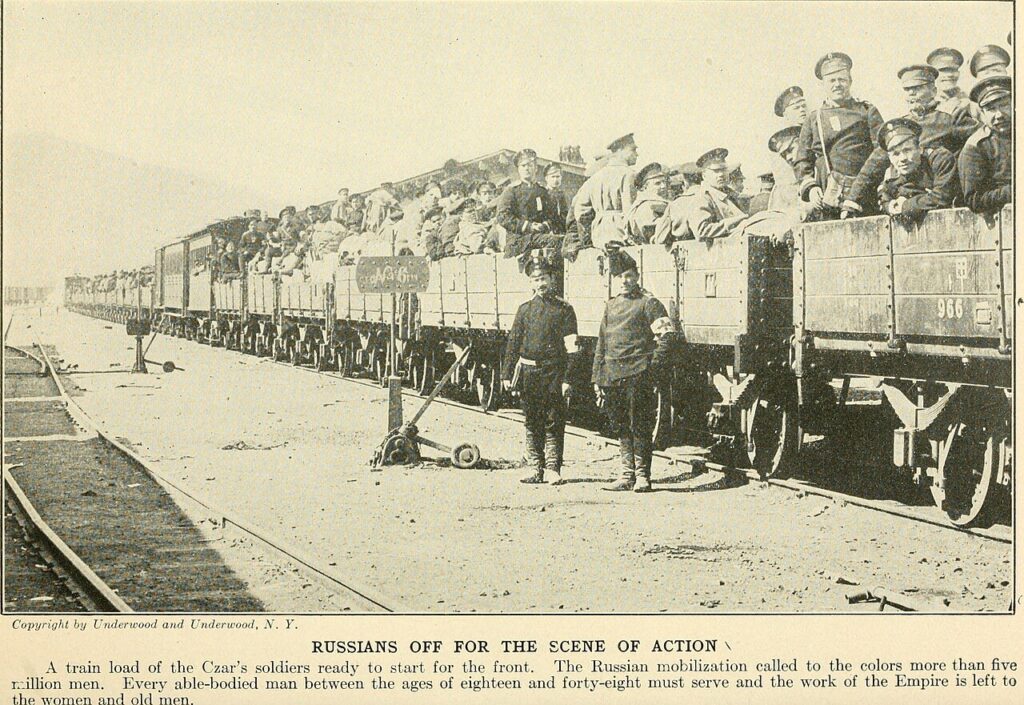
The Tsar was determined to fight back against Japan, but running a war 6,000 miles from the capital proved chaotic, especially since troops had to be sent on a six-day journey across the single-track Trans-Siberian railway. Russian forces endured a long siege at Port Arthur, which ultimately fell on January 2, 1905. Back home, the economic slump, poor working conditions, and the ongoing war caused massive unrest. On Sunday, January 9, 1905, a priest named Georgy Gapon led thousands of workers toward the Winter Palace in St Petersburg to present a petition—signed by more than 150,000 workers—pleading for reforms such as an eight-hour workday and a minimum wage. Nicholas II was not present at the palace, and panicky soldiers opened fire on the approaching crowd. This event, known as “Bloody Sunday,” resulted in the deaths of somewhere between 96 and over 200 civilians. Nicholas II was condemned as a murderous tyrant and dubbed “Bloody Nicholas,” completely shattering the population’s respect for the Tsar.
The 1905 Revolution and the October Manifesto (1905)
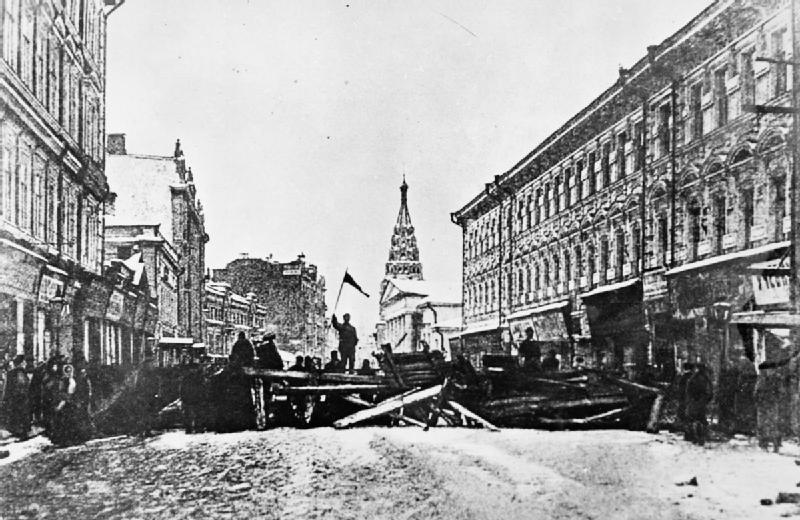
Bloody Sunday triggered the 1905 Revolution. By the end of January, more than 400,000 workers were out on strike in St Petersburg. On February 4, the Tsar’s uncle, Grand Duke Sergei, was assassinated in Moscow by a Socialist Revolutionary bomb. In May, moderate liberal professionals formed a “Union of Unions” led by Pavel Milyukov to demand full civil and political rights. In June, sailors of the battleship Potemkin mutinied, and peasant riots became widespread in the countryside. By September, a peace treaty (the Treaty of Portsmouth) was signed between Russia and Japan, allowing the government to use returning troops to put down domestic unrest. In October, a general strike spread from Moscow, and the St Petersburg Soviet of Workers’ Deputies was formed to co-ordinate strike action. Facing massive bloodshed, the Tsar gave in and issued the October Manifesto on October 30, promising an elected parliament (Duma), civil rights, and uncensored newspapers. By December, the Tsar used returning troops to forcibly close down the St Petersburg Soviet and crush armed uprisings.
The First Dumas and Stolypin’s Repression (1906–1907)
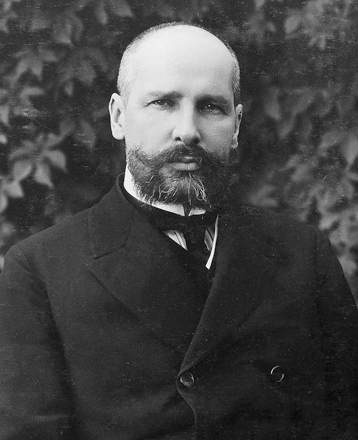
The First Duma met in May 1906 and was overwhelmingly liberal, leading to immediate clashes with the Tsar. Nicholas ordered his new conservative Prime Minister, Ivan Goremykin—who had replaced Sergei Witte—to reject the Duma’s demands for reform, and the First Duma was dissolved after just 10 weeks. Following this, Pyotr Stolypin became the Chairman of the Council of Ministers (Prime Minister) in 1906 and initiated a dual policy of fierce repression and agricultural reform. To combat ongoing terrorist attacks—which murdered around 1,200 government officials in 1907—Stolypin used field court martials to hand out 1,144 death sentences between October 1906 and May 1907, leading the hangman’s noose to be nicknamed “Stolypin’s neckties”. Concurrently, he introduced reforms: in September 1906, state land was made available for peasants to buy, and in November 1906, peasants were given the right to leave the commune to consolidate their land into individual farms. As promised in 1905, redemption payments were officially abolished as of January 1, 1907. The Second Duma met from February to June 1907; it was nicknamed the “Duma of National Anger” due to its intense oppositional stance. Stolypin fabricated a story about a Social Democrat plot to assassinate the Tsar in order to dissolve the Second Duma and subsequently introduced an emergency law to drastically alter the electoral franchise in favor of the gentry.
The Third Duma and Pre-War Developments (1907–1914)
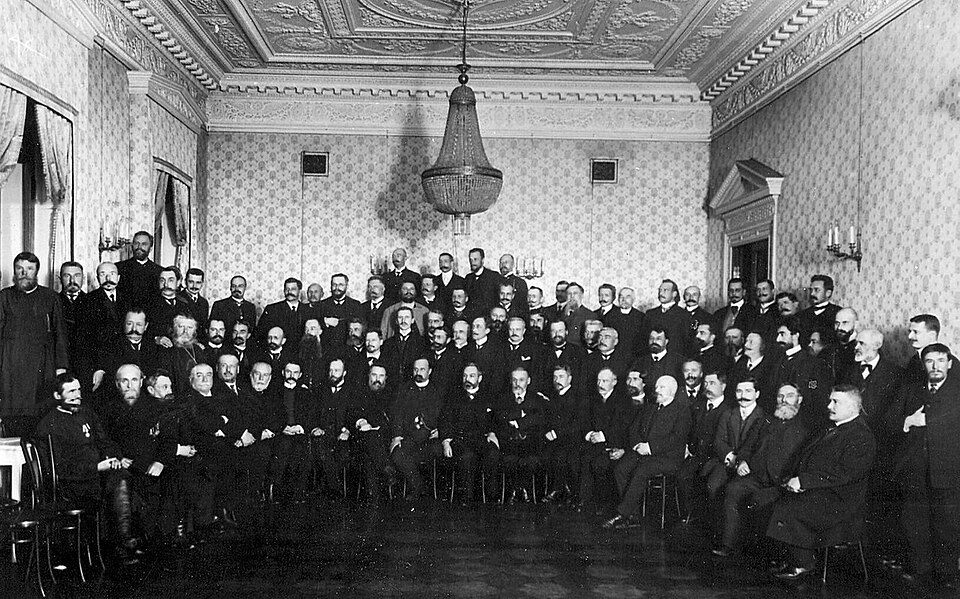
With the altered franchise, the Third Duma (November 1907–June 1912) was much more submissive, earning the nickname the “Duma of Lords and Lackeys”. It agreed to 2,200 of the 2,500 government proposals presented to it, including Stolypin’s agricultural reforms. In June 1910, all communes which had not redistributed land since 1861 were officially dissolved. Stolypin was assassinated in 1911 and replaced by Kokovtsov. In 1912, the government introduced health insurance for workers. The Fourth Duma convened in November 1912, but it remained a relatively docile body, frequently ignored by the Prime Minister. Despite economic progress and educational improvements, industrial wages remained low, inflation rose, and severe worker grievances led to a revival of direct action and strike activity down to the outbreak of war in 1914.
World War I and the Collapse of Authority (1914–1916)
When World War I began in 1914, the country was initially filled with a strong sense of patriotism, but the military was drastically under-supplied. In August 1914, the Russian advance into East Prussia was stopped at the Battle of Tannenburg, resulting in a crushing defeat with 30,000 Russian troops killed or wounded and 95,000 captured. 1915 proved to be a turning point; the Austro-German Gorlice-Tarnow Offensive drove Russian forces completely out of Russian Poland. In September 1915, Nicholas II made the disastrous decision to dismiss his Uncle Nikolai, take personal command of the army at the front, and leave the government in Petrograd in the hands of his wife, Tsarina Alexandria, who was heavily influenced by Rasputin. In the same month, Nicholas suspended the sittings of the Duma after a “Progressive Bloc” of deputies demanded a government of public confidence. The final major Russian offensive, the Brusilov Offensive, took place from June to August 1916 but ultimately failed due to poor transportation and a lack of supplies. By Christmas 1916, 1.6 million Russian soldiers were dead, 3.9 million were wounded, and massive desertions plagued the military. Economically, the war was a disaster: railway locomotive production halved, severe fuel shortages occurred, and urban unemployment soared.
The February Revolution and Abdication (1917)
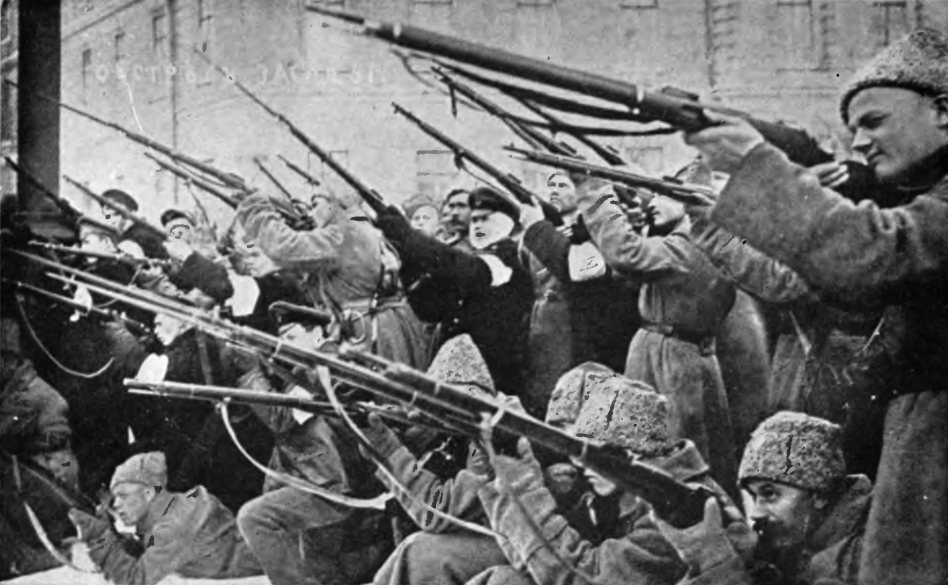
The crisis came to a head in early 1917. On January 9, 140,000 workers went on strike in Petrograd to commemorate Bloody Sunday. On February 14, 100,000 workers struck to protest food shortages, and the reconvened State Duma openly attacked the government. On February 19, authorities announced that bread rationing would begin in March, leading to panic buying. On February 23, tens of thousands of women took to the streets for International Women’s Day, merging with strikers to form a crowd of over 100,000. By February 25, the number of demonstrators swelled to 200,000, and critically, Cossack troops refused to fire on them. On February 26, the elite Pavlovsky Life Guards mutinied and refused orders to shoot. In response to the crisis, the Tsar dissolved the State Duma, but the deputies refused to disband and instead formed a twelve-man Provisional Government. On March 1, the Petrograd Soviet was formed and issued “Order Number 1,” demanding that all army officers be elected by their men, fatally undermining military authority.
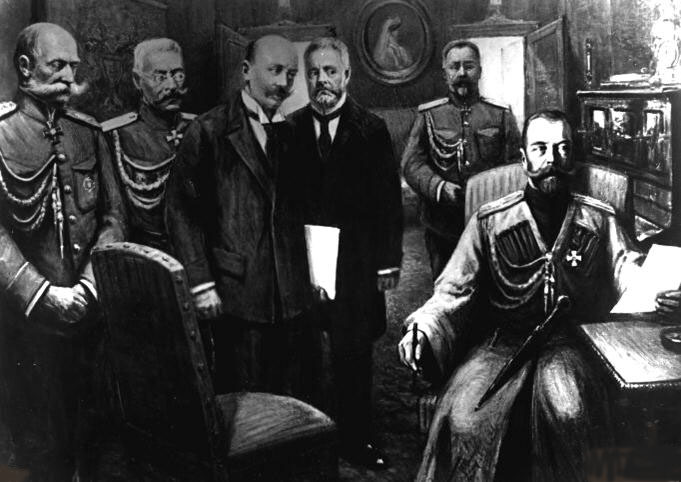
On March 1, Tsar Nicholas II attempted to return to Petrograd by train but was stopped by anti-government soldiers at Pskov on March 2. Members of the State Duma visited him in his train siding and asked him to abdicate. Nicholas II agreed, abdicating the throne on behalf of himself and his haemophiliac son, passing the crown to his brother, Grand Duke Michael. However, on March 3, Grand Duke Michael refused the throne. With this act, Russia ceased to be a monarchy, the Romanov dynasty came to an abrupt end, and Prince Lvov was announced Prime Minister of the Provisional Government.