
The Development of British
Hegemony in America up to 1763
Colonial America in this period was a rapidly expanding, diverse and increasingly self‑confident set of British settlements whose economic growth, political structures and conflicts with France and Native Americans laid the foundations for Britain’s rise to dominance in North America.
Key characteristics of British, French and Spanish colonies
Gateway to Colonial America
The nature of the colonies
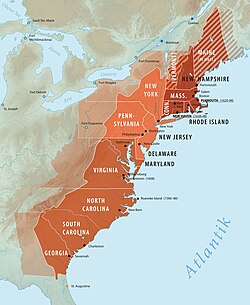
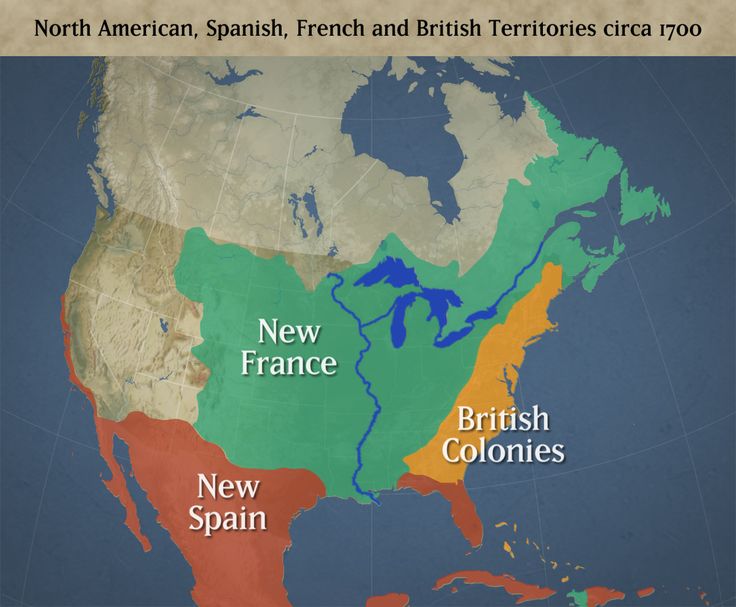
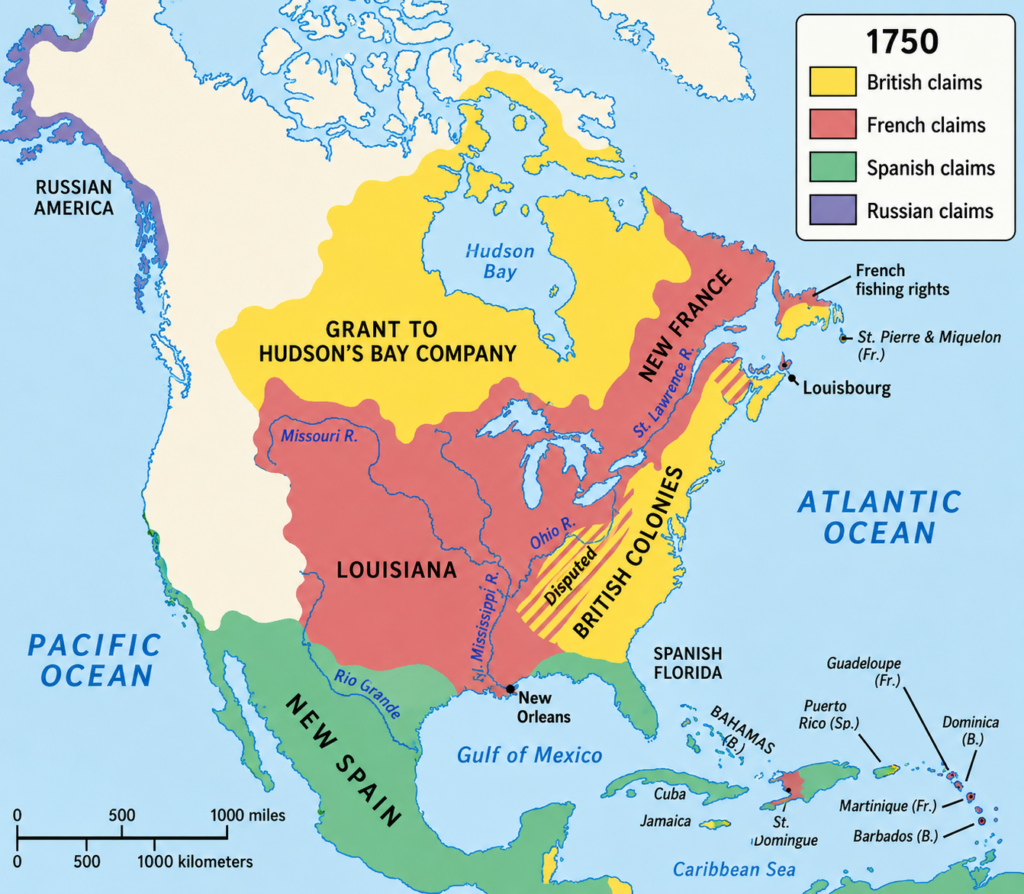
North America contained three main European settlements by 1750: 13 British colonies along the Atlantic coast; Spanish colonies in Florida, California and New Mexico (including parts of the modern-day states of Texas, Colorado, Nevada, Utah, Oklahoma, Kansas and Wyoming); and French colonies in the Mississippi Valley, Canada and in the great area of Louisiana. The nature of the colonies was very different. The Spanish colonies had a relatively small population and many isolated outposts. They were ruled as part of the Spanish Empire in the new world by viceroys. There was little population growth and limited economic prosperity. The French Empire was essentially based on fur trade and missionary activity and ruled directly from France. Its population had not expanded as rapidly as that of the British colonies, which had more diverse economic activity, more developed self-government and higher levels of prosperity. The British colonies had been founded at different times for different reasons and New England, the Middle colonies and the Southern colonies had their own characteristics and were more diverse than the colonies of Spain and France.
Economic life
- There were no substantial cities in New Spain.
- Quebec and New Orleans were important urban settlements in French North America. In the British colonies there were only four substantial cities. Most of the people (80-90 per cent) lived and worked in the countryside, with better developed farms in the British colonies.
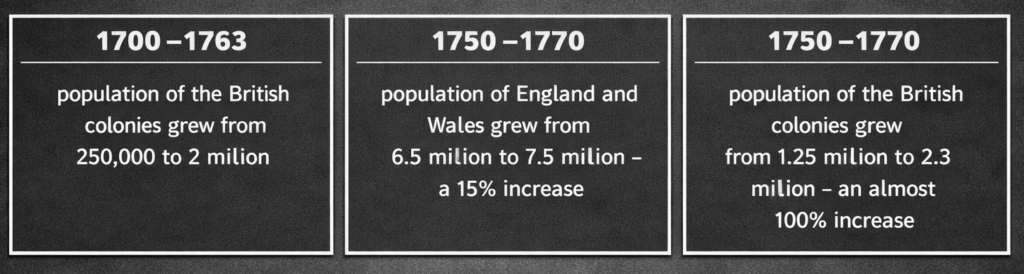
- British colonies saw a population growth from 300,000 in 1700 to over 2 million by 1775.
- British colonies had more diverse economies with different types of agriculture: from the arable farming in the North to the tobacco, rice, indigo and cotton of the middle and southern colonies. The French were active traders, especially in furs.
- British exports were more diverse and there was some small-scale manufacturing.
Government
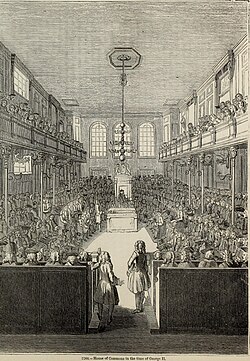
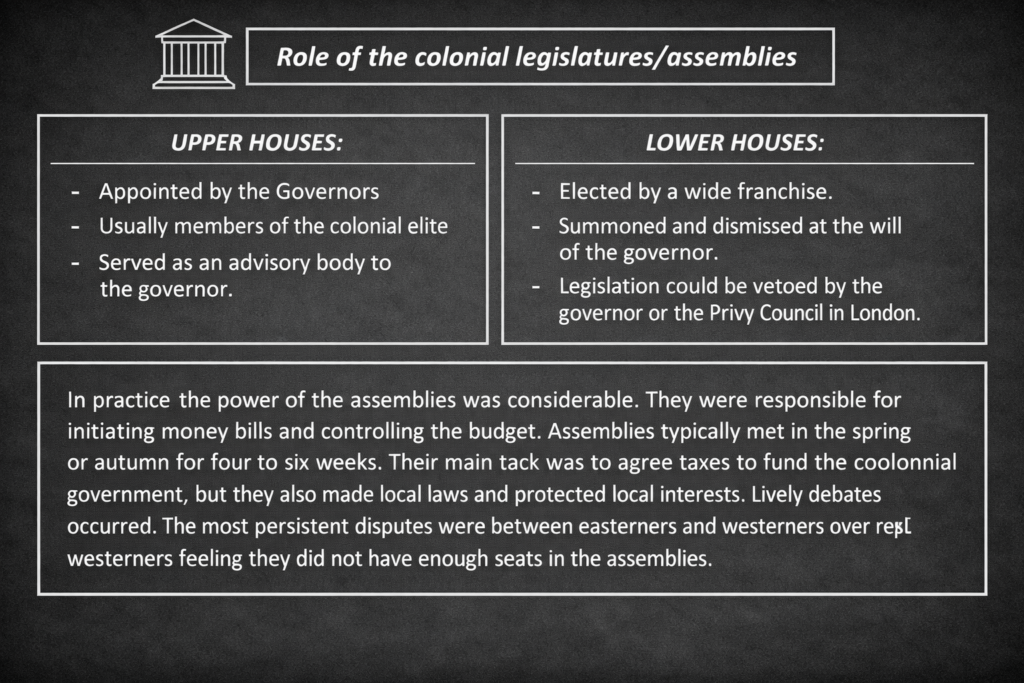
- There was little colonial self-government in the French and Spanish colonies, but the British colonies had representative assemblies.
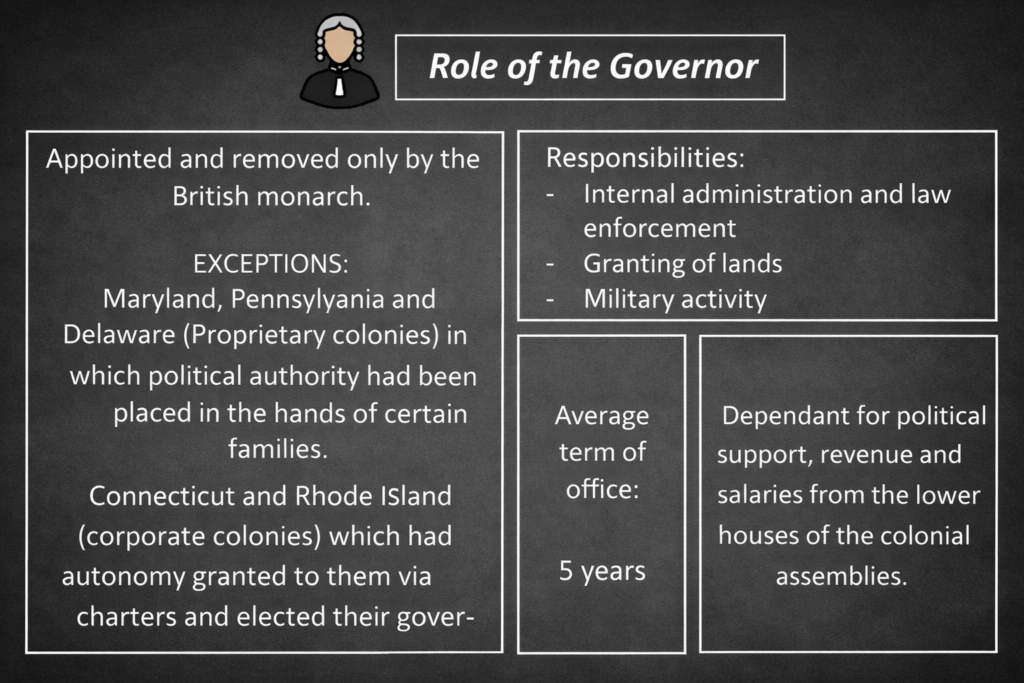
- These local parliaments could be overruled by royal governors who were mostly appointed by the British crown.
- They had a restricted franchise – women, slaves (who were 20 per cent of the population) and one half of the white male population did not vote for the assemblies.
- There were more democratic ideas and more freedom to prosper by owning land and starting businesses.
- In terms of equality of political rights, democracy in a modern sense was limited.
Freedom
- Nine colonies were ruled by royal governors.
- Georgia and Pennsylvania remained the property of their founders and Rhode Island and Connecticut elected their own governors.
- Britain hardly interfered with the colonies in 1750 and British rule has been described as ‘statutory neglect’. Laws controlling trade were ignored and there was little attempt to tax the colonies.
- The French and Spanish crowns also, in practice, allowed their colonists freedom from control.
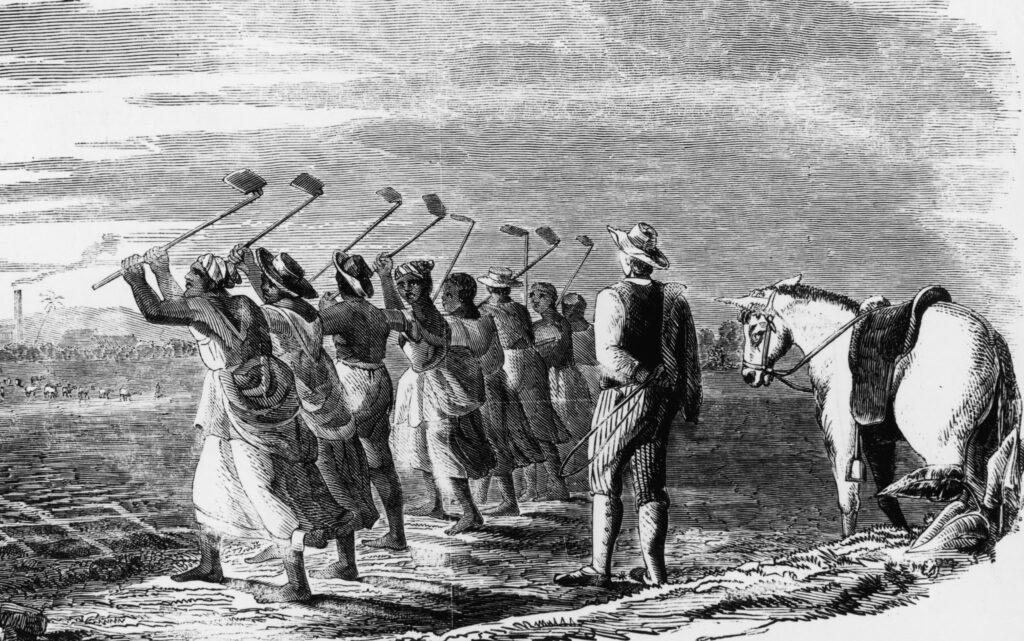
- African slaves, who made up a large proportion of the workforce and population in the Southern colonies, did not have freedom.
- Many white colonists were indentured servants contracted to work often for long periods for their masters.
Expansion
There was a great desire for expansion among the colonists and this led to conflict.
Spanish expansion into modern day Nebraska was halted by French opposition in 1720.
There were clashes between British and Spanish colonists in Florida, and French and British settlers where the territories met.
The population growth in the thirteen colonies led to pressure to move west and this brought colonists into conflict with the Native Americans.
Religion and culture
French and Spanish areas were predominantly Catholic, though there were French protestant colonists.
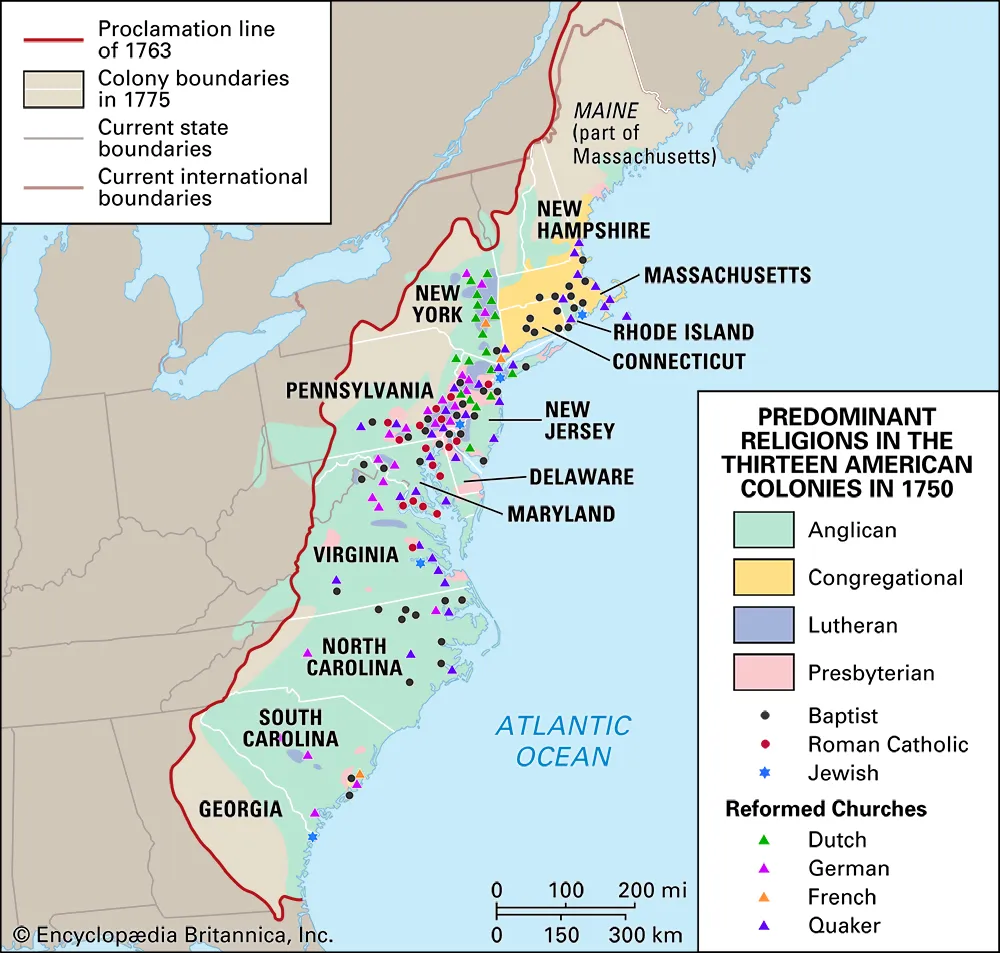
British colonists were diverse with Anglican, Presbyterian, Congregationalist, Quaker, Catholic and some Jewish settlers.
Many were not religious despite a religious revival or Great Awakening in the 1730s and 1740s.
Educational development was greater in the British colonies with the growth of schools and colleges, the impact of Enlightenment thinkers from Europe and also from the colonists, such as Benjamin Franklin.
Colonies Characteristics
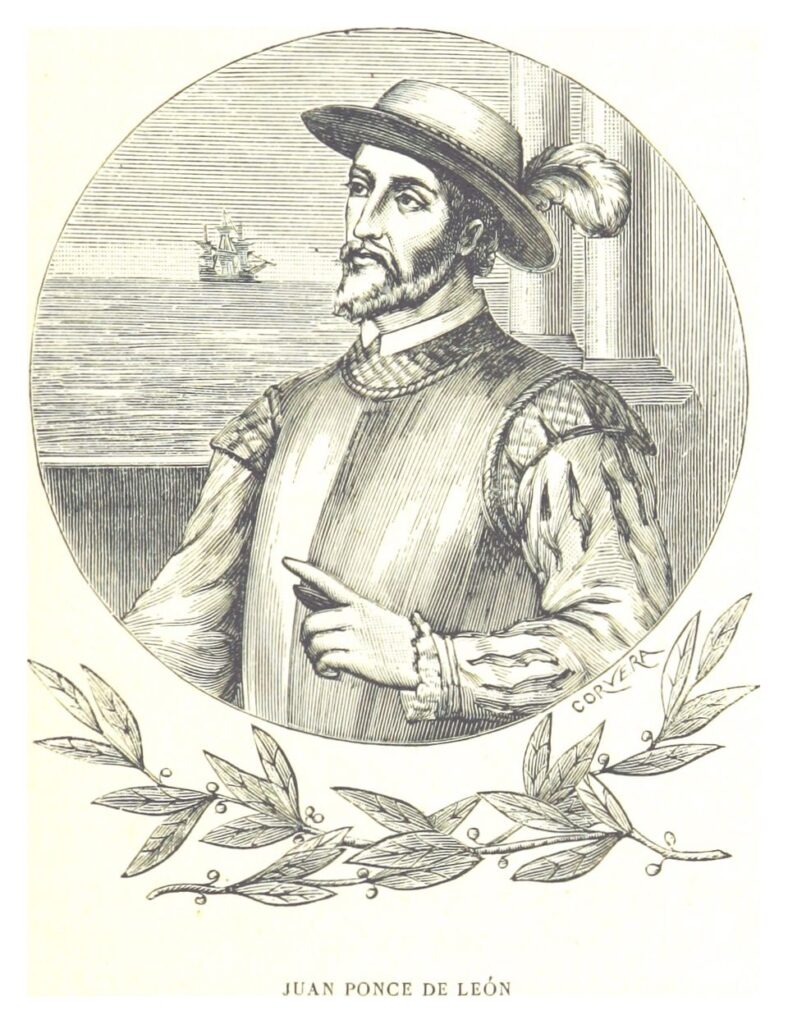
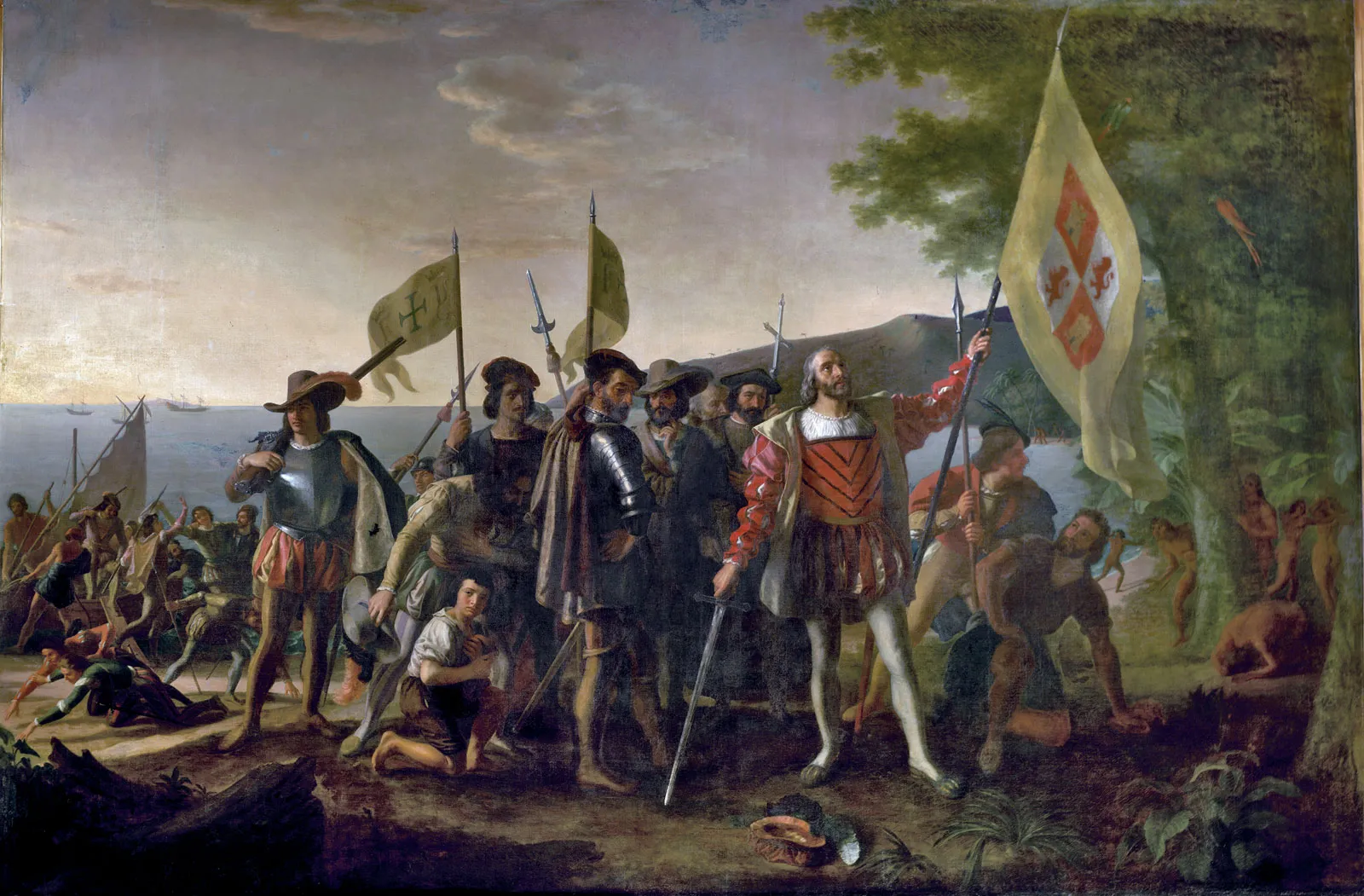
The Spanish colonisation of America followed Christopher Columbus’ first voyage to the New World in 1492. Although the Spanish did colonise parts of North America and establish New Spain, much of their empire in the Americas was in the south. However, they did control the south-west and Florida. The French arrived in North America in the 16th century
and established control over the Mississippi River – lands that ran from the Gulf of Mexico through to modern day Canada. Britain was the last of the Western European powers to establish settlements in North America, with the first permanent colony, Virginia, established in 1607. By the 18th century Britain had established a series of thirteen colonies.
British influence also extended into Canada as the Hudson Bay Company had been incorporated by charter in 1670 and acted as the government for the area. Britain also had numerous holdings in the Caribbean, most notably Jamaica, which would be of strategic importance in the later American Revolutionary War. However, the colonies of the three powers differed considerably in their economic, social and political outlook.
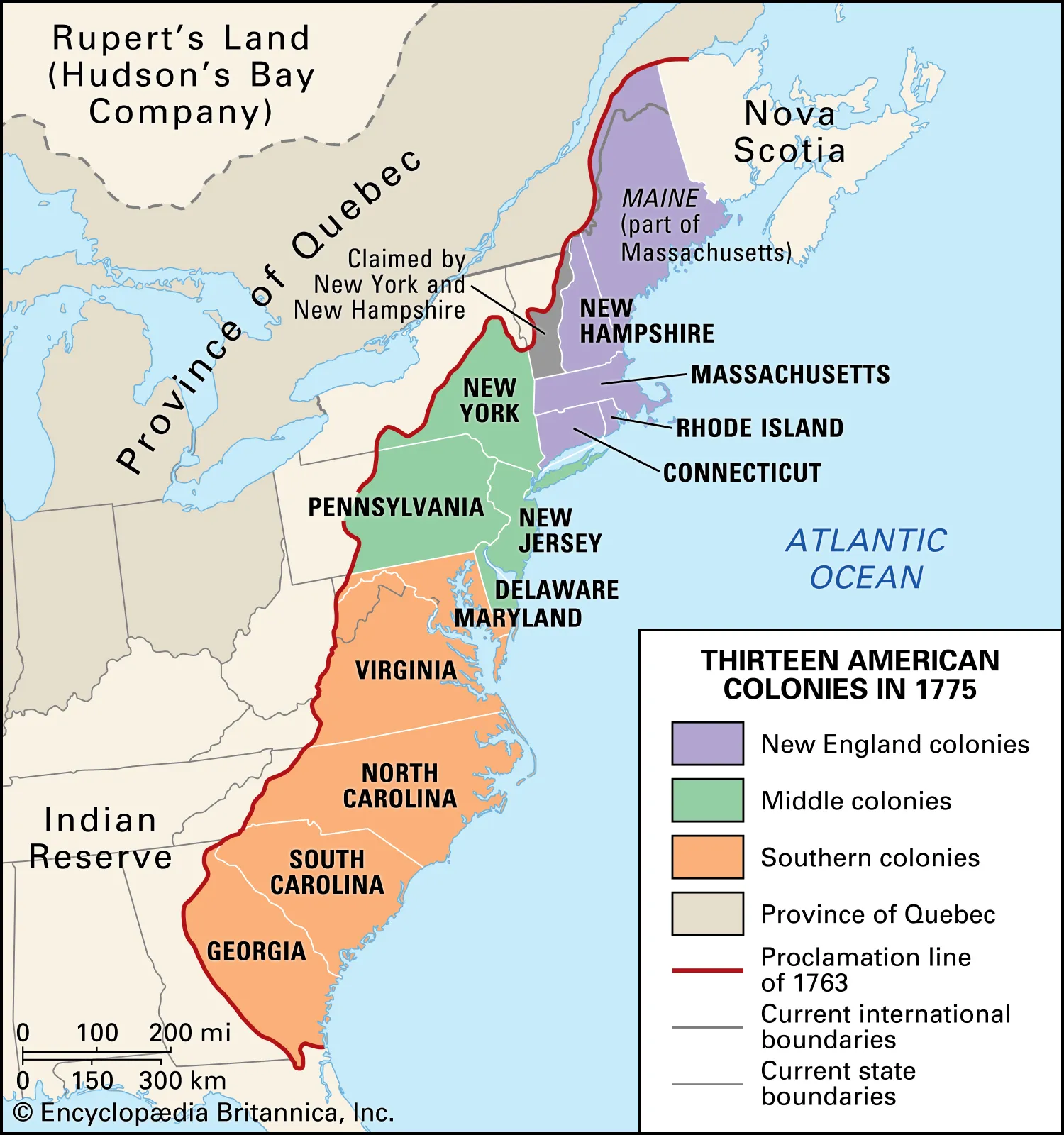
The thirteen colonies were divided up into three colonial groups:
NEW ENGLAND COLONIES
New Hampshire, Massachusetts, Rhode Island and Connecticut
MIDDLE COLONIES
New York, New Jersey, Pennsylvania and Delaware
SOUTHERN COLONIES
Maryland, Virginia, North Carolina, South Carolina and Georgia.
British influence also extended into Canada as the Hudson Bay Company had been incorporated by charter in 1670 and acted as the government for the area. Britain also had numerous holdings in the Caribbean, most notably Jamaica, which would be of strategic importance in the later American Revolutionary War. However, the colonies of the three powers differed considerably in their economic, social and political outlook.
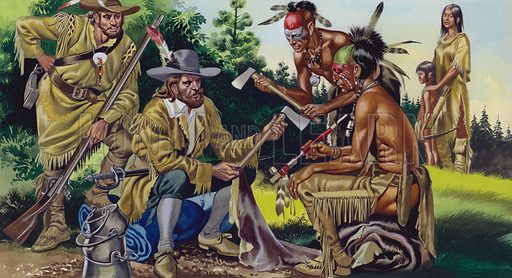
The French in Canada, trading for fur with the native Indians. Ron Embleton, British (1930–88)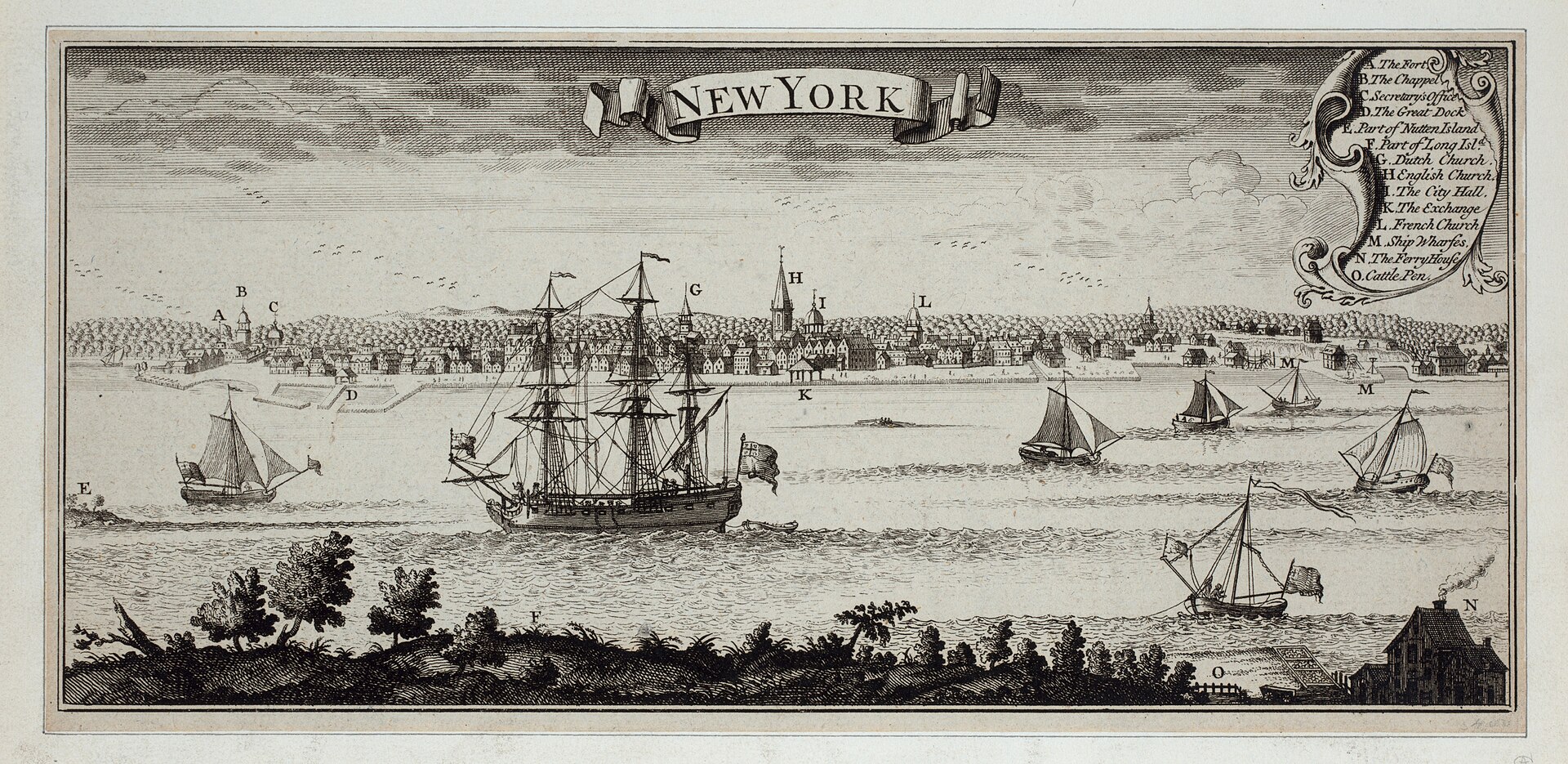
Economic and social differences
The French controlled the interior of America and economically their aim was to supply France with raw materials, particularly furs and fish. This brought them into close contact with the Native Americans with whom they largely enjoyed a good relationship. In contrast, the British were more concerned with farming the new lands, where tobacco was the key crop, and, in contrast with the French, adopted fewer Native American customs. This meant that the Native Americans often joined with the French to raid and attack the western borders of the British possessions.
The colonies’ economies were also developing at very different rates. This was not only due to the attitudes of the British, French, and Spanish governments, but also to the attempt at, population growth. There were very few Spanish settlers in New Spain or Florida, which would have hampered any attempted to develop their economies. Similarly, the population of New France or Louisiana was also very low compared with that of the British colonies. By the mid-eighteenth century there were probably no more than 60,000 French settlers, whereas the population of the British colonies had reached 1 million and was growing rapidly, with Virginia the most populous of the colonies. Population growth was reflected in the development of towns. Most French settlements were small, often little more than forts or outposts, while there were five seaports in the British colonies of reasonable size: Philadelphia, New York, Boston, Newport and Charleston.
The political and religious nature of the French and Spanish colonies also had an impact on the development of the colonies. While both the Spanish and French colonies were reluctant to allow in people from other nations or religions, this was not the case with the British colonies. In total, some 400,000 people went to the thirteen colonies in the period from 1700 to 1763, among them migrants from Europe and forced migrants or slaves from Africa. This had a major impact on the nature of the settlers. This diversity led to a much more religiously tolerant outlook in the British colonies compared with those of France and Spain, and also has an impact on the religious composition of the colonies.
Religious differences
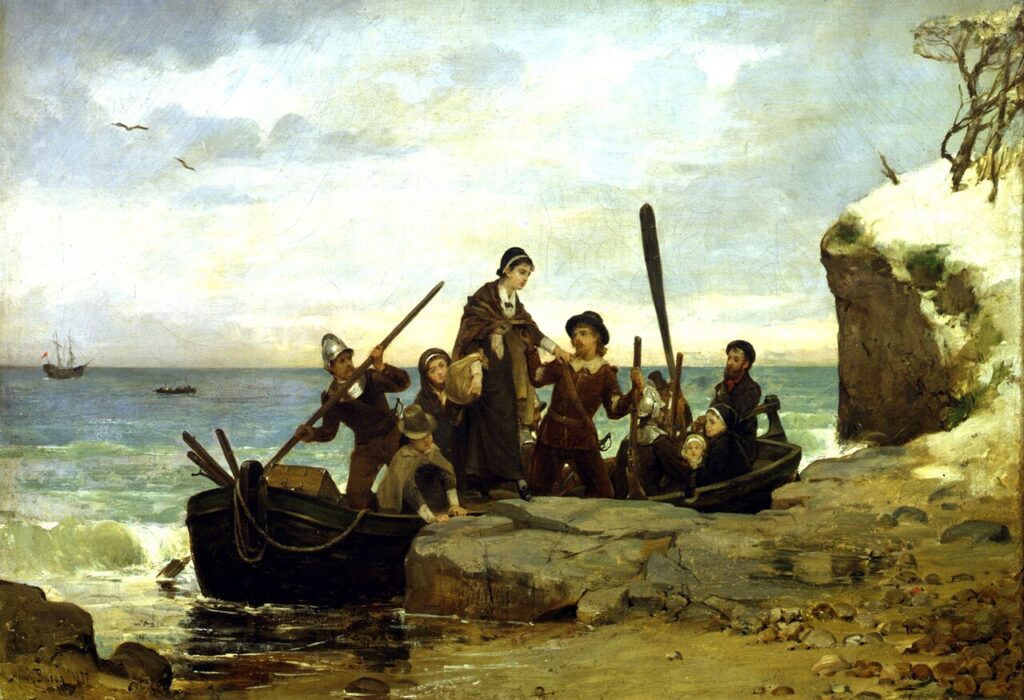
There were religious differences between the colonies, with both France and Spain being Catholic states who did not tolerate other religions. Spain had established an empire with the intention of spreading Catholicism, whereas many of the original British settlers had gone to the New World to escape religious persecution. There were, therefore, fears among the British settlers that the two Catholic powers would join forces to prevent the expansion of British influence, which could not be tolerated for a number of reasons.
Large-scale immigration in British colonies led to religious diversity with a range of different Protestant denominations, including Methodists, Quakers, Baptists, and Lutherans joining with Anglicans. There was no dominant religious group in the British colonies and therefore greater religious tolerance.
Political differences
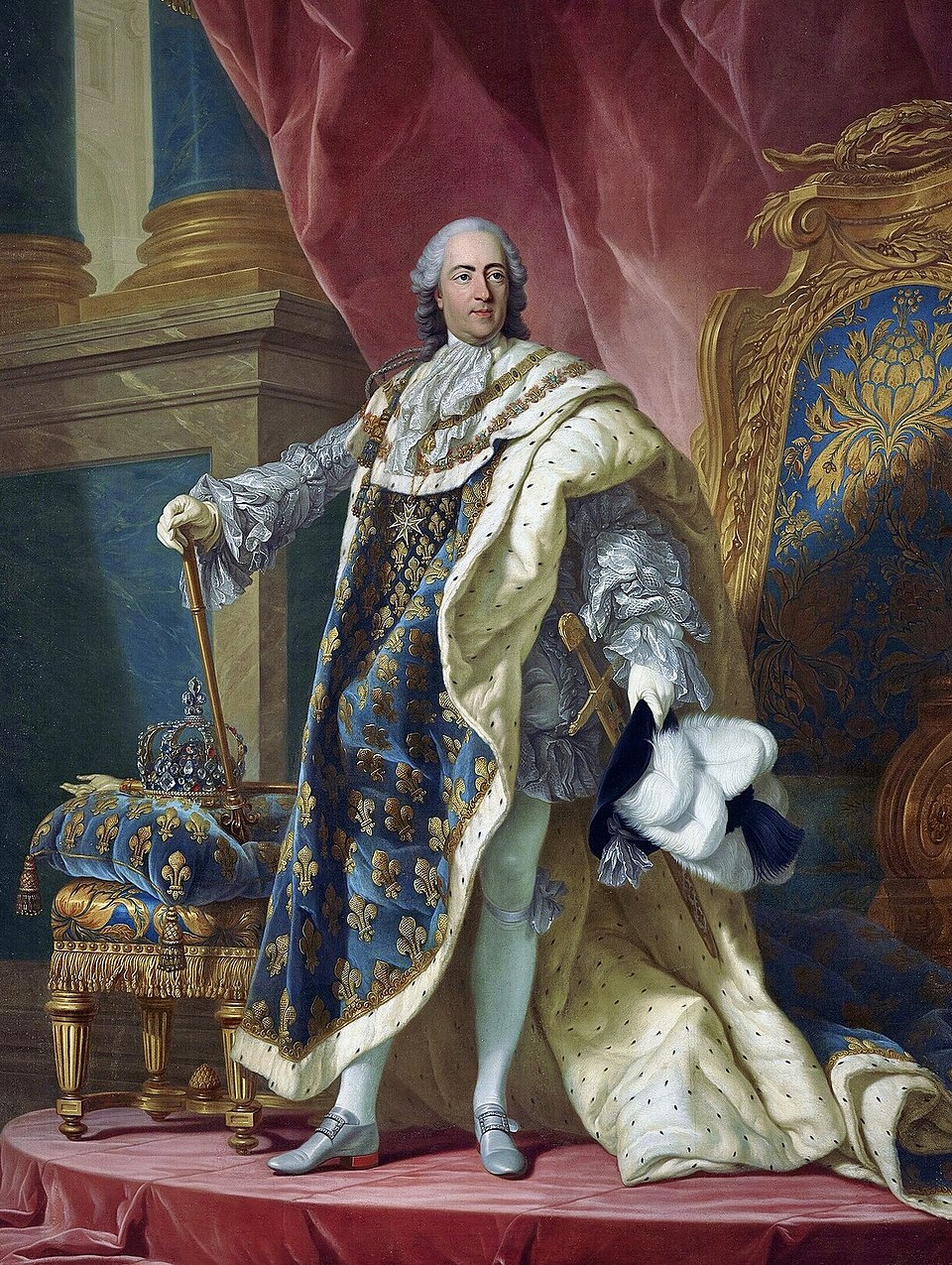
France was still ruled by a divine right, absolutist monarchy. The French state, unlike Britain, still maintained close control over its colonies and was very demanding, conscripting its subjects and levying large amounts of taxation. In comparison with continental standards, Britain was much more liberal had a minimalist, much less powerful central government along with a tradition of freedom of speech, assembly and press. This freedom applied in the colonies and, unlike the French, there was often minimal contact with the home government. These differences meant that British settlers did not want to come under the rule of France, and this led to a great fear of the French among the settlers, which helped to bind them more closely to Britain.
The population growth of the British colonies and the associated economic development would play a significant role in Britain becoming the dominant colonial power in North America. The power of the Spanish in North America was already declining before this period, but in part because of the religious similarities, the Spanish worked with the French to limit British influence. However, given the different economic, political and ideological outlooks of Britain and France it was increasingly likely that the two would be drawn into conflict, whereas the location and size, relative to British lands, of Spanish settlement meant they were not seen as a serious threat.
The colonial melting pot
A significant cause of population growth in the colonies came as a result of immigration. Who were these immigrants, and how did the Native American population interact with the colonising nations?
European settlement
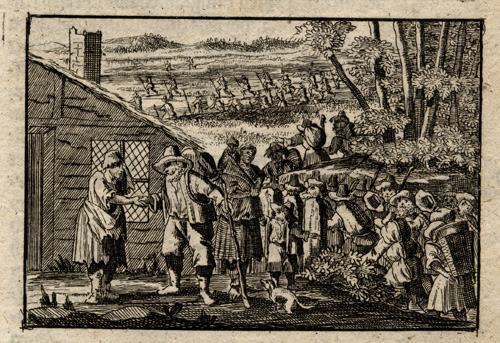
The largest group of immigrants (some 150,000) were Irish Protestants specifically from Ulster. Discontented with the land system, recurrent bad harvests and the decline of the linen trade, most left their homeland for economic reasons. About 65,000 Germans, mainly peasants from the Rhineland, hoping to improve their economic lot and attracted by the religious tolerance in the colonies, crossed the Atlantic. Many settled in Philadelphia, making up almost a third of the colony’s population by the 1760s. Smaller immigrant groups included the Dutch and Swedes. European immigrants crossing the Atlantic tended to travel in groups, either as part of colonisation schemes or, more frequently, under a system of temporary servitude designed to meet the colonies’ severe labour shortage. The system enabled people to obtain free passage by entering into a contract (or indenture) pledging their labour for a specified number of years – usually four. Between a half and two-thirds of all white immigrants during the colonial period were indentured servants.
African settlement
The first black slaves landed in Virginia in 1619. Their numbers at first grew slowly. However, by the eighteenth century the importation of slaves soared. By 1763 there were over 350,000 slaves – 1/6 of the total population. Most came from west Africa. The demand was so high for slaves that the black population in America grew more quickly than the white population. While there were African-Americans in all colonies, 90% lived in the South. They made up less than 5% of the population in New England, but 40% of the population in Virginia, Maryland and Georgia, and 67% of the population in South Carolina.
Native Americans
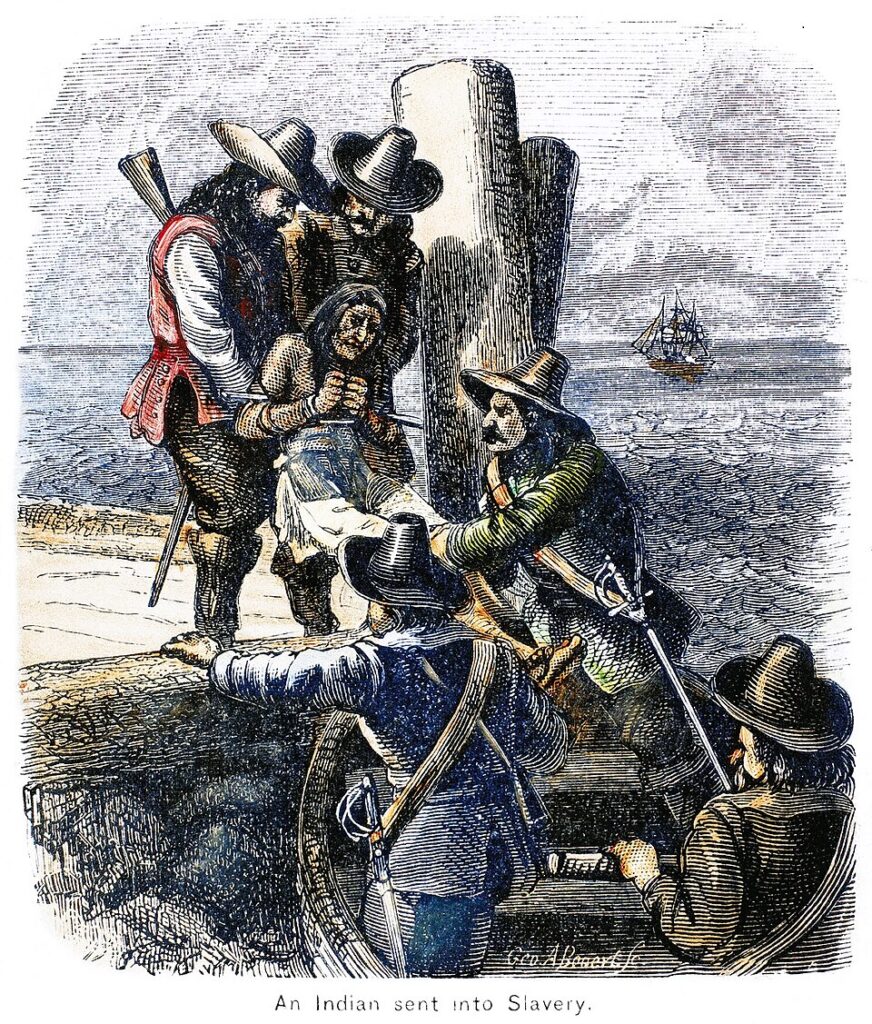
Unlike the French, the British and European settlers did not assimilate with the Native Americans. Divided, less advanced technologically and hit hard by European diseases, the Native Americans had been unable to prevent the newcomers establishing themselves down the Atlantic seaboard. Nevertheless, Native American tribes did remain a powerful force to the west of the Appalachian mountains. The French had a much closer economic relationship with them and allowed them to pursue their own methods of fighting, such as tar and feathering and scalping. French and Native Americans also fought together to destroy villages such as Pickawillany in 1752. Compared with the French, the British did not trust the Native Americans and, at least at the start of the period, were less willing to consider making agreements with them. The support that the Native Americans gave the French was important as they knew the land and by closely cooperating with them the French were able to conduct what became known as La guerre sauvage, or guerrilla warfare, which allowed attacked by small unseen bands, making use of the undergrowth, on large British forces. By the end of the 1750s there was a growing awareness among the British that they needed a closer relationship with the Native Americans.
The results of immigration
By 1760 only about half the American population was of English stock. Another 15% was Welsh, Scottish or Irish. Africans comprised over 20% and Germans 8% of the population. While most European newcomers quickly blended into colonial culture and society, Germans retained an important degree of religious and cultural autonomy.
Colonial Government
By 1760, all the colonies had a similar governmental structure, consisting of a governor and a legislative assembly.
How democratic were the colonial governments?
- Across the 13 colonies between 50% and 80% of American white male adults could vote compared to only 15% in Britain.
- Having the franchise (vote) was tied to property ownership.
- Women and slaves could not vote.
- High property qualifications for office alongside a culture of deference towards men of high social standing meant that great landowners, rich merchants or lawyers were usually elected.
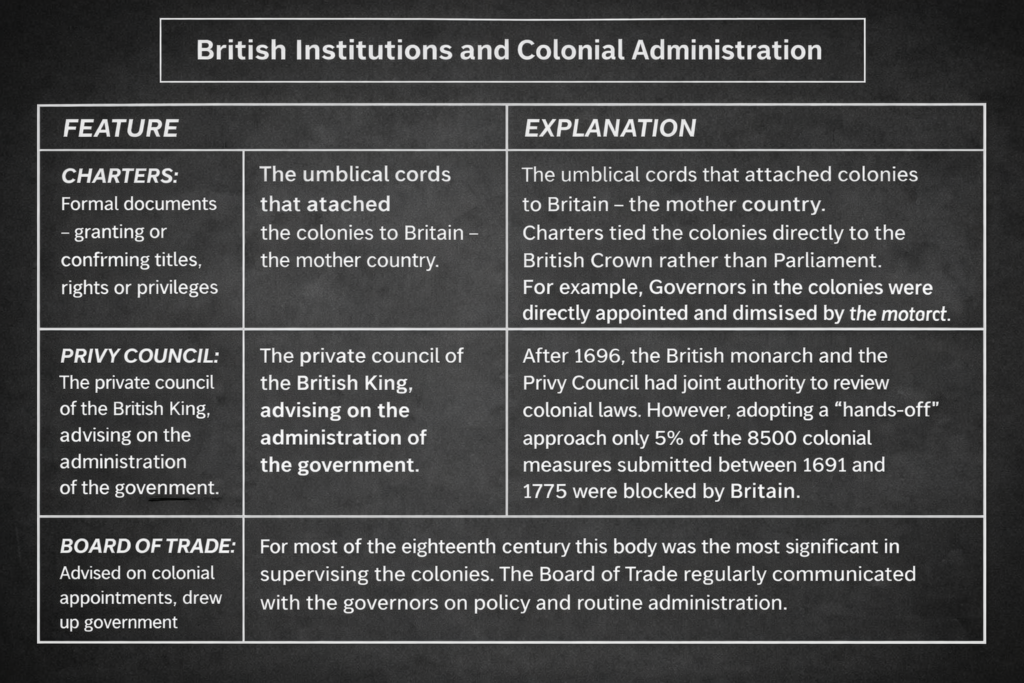
British rule in the colonies was maintained via a system of practices and bodies. However, given an overall lack of central British control of the colonies, confusion and duplication often characterised the bureaucracy in Britain established to oversee the colonies.
Salutary neglect
In the early eighteenth century, British governments realised it was best not to stir up trouble in the colonies. Given that they were 4800km (3000 miles) away from Britain, the colonies were largely left to their own devices. This detached policy if often referred to as “salutary neglect”.
Despite these differences in opinion occurred on both sides of the Atlantic about the relationship between Britain and its American colonies. In Britain, the common presumption was that the colonies were subject to British parliamentary legislation. The colonists did not necessarily agree with this. However, this was not a major issue pre1763 because Parliament was giving so little attention to colonial affairs. Apart from trade regulation, there was hardly a single parliamentary act that touched on the internal affairs of the colonies. Few colonists, therefore, gave much thought to their relationship with Britain. The relationship between Britain and colonists was very strong, mostly because of a fear of the French. Most British settlers believed that the worst thing that could befall them was to fall under French control as France was a Catholic nation.
Colonial Economy, Society, and Culture
Between 1650 and 1770 the colonial economy grew by an annual average of 3.2%. This was the result of several factors:

Farming remained the dominant economic activity, employing nine-tenths of the working population. There was great diversity from region to region.
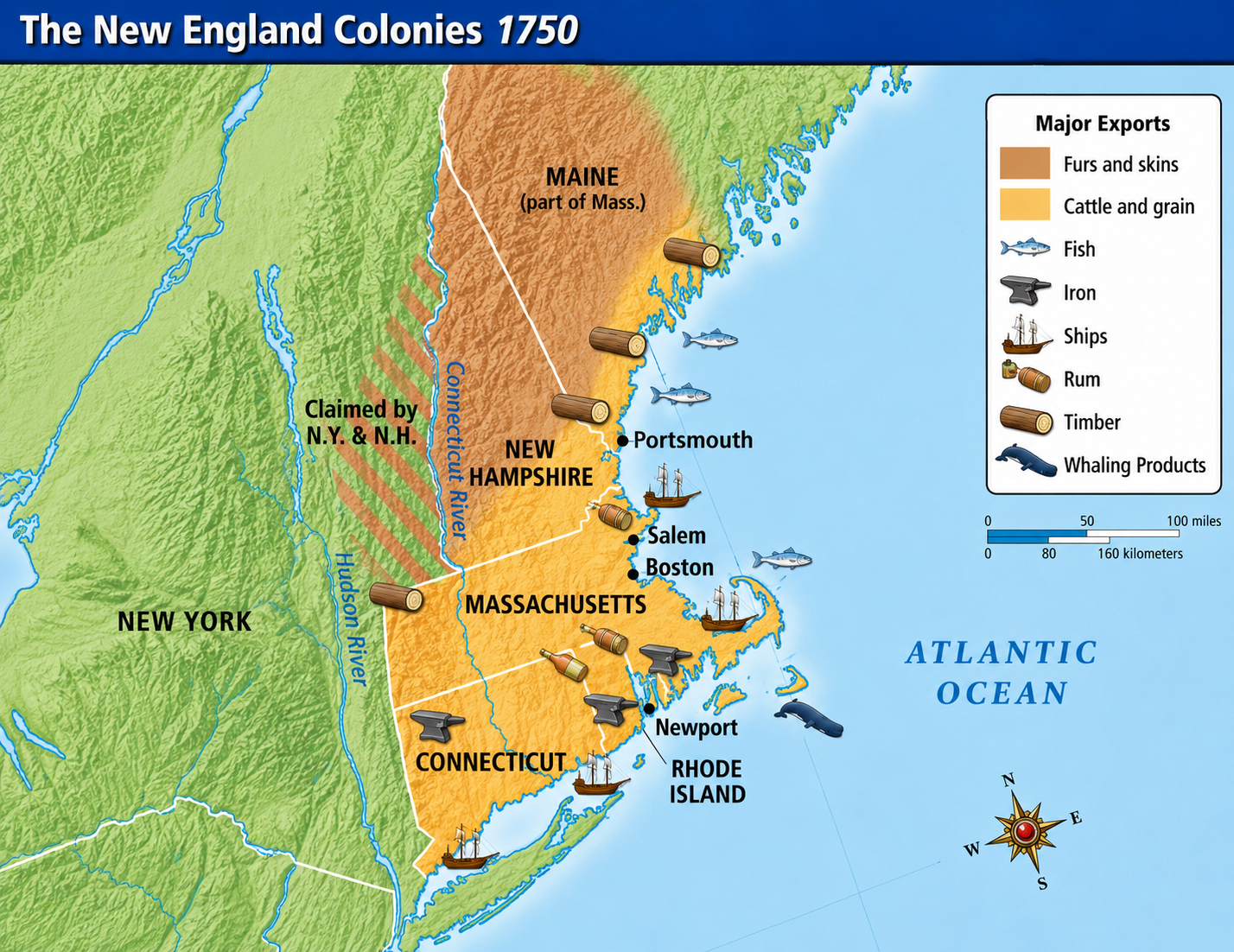
New England Colonies
- Lacked extensive rich soil and therefore remained a land of small subsistence farms
- Access to the sea was its greatest economic strength
- Strong cod trade
- More than half of export trade was with the West Indies which supplied the colonies with sugar, molasses which New England distillers turned into rum.
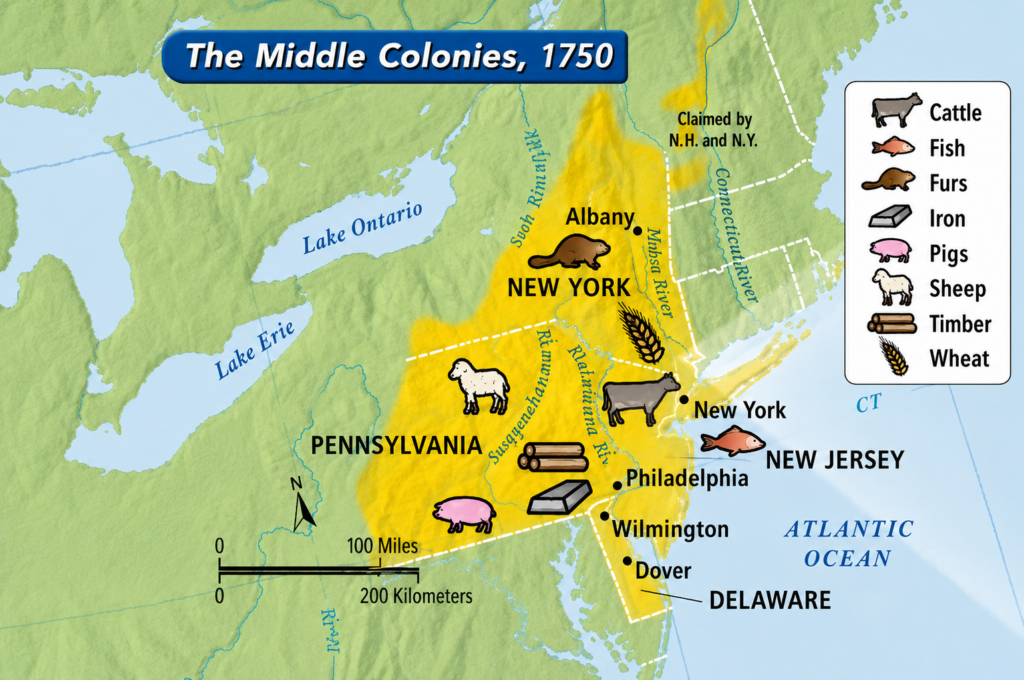
Middle Colonies
- Major source of wheat and flour products for export to other colonies, the West Indies and Europe.
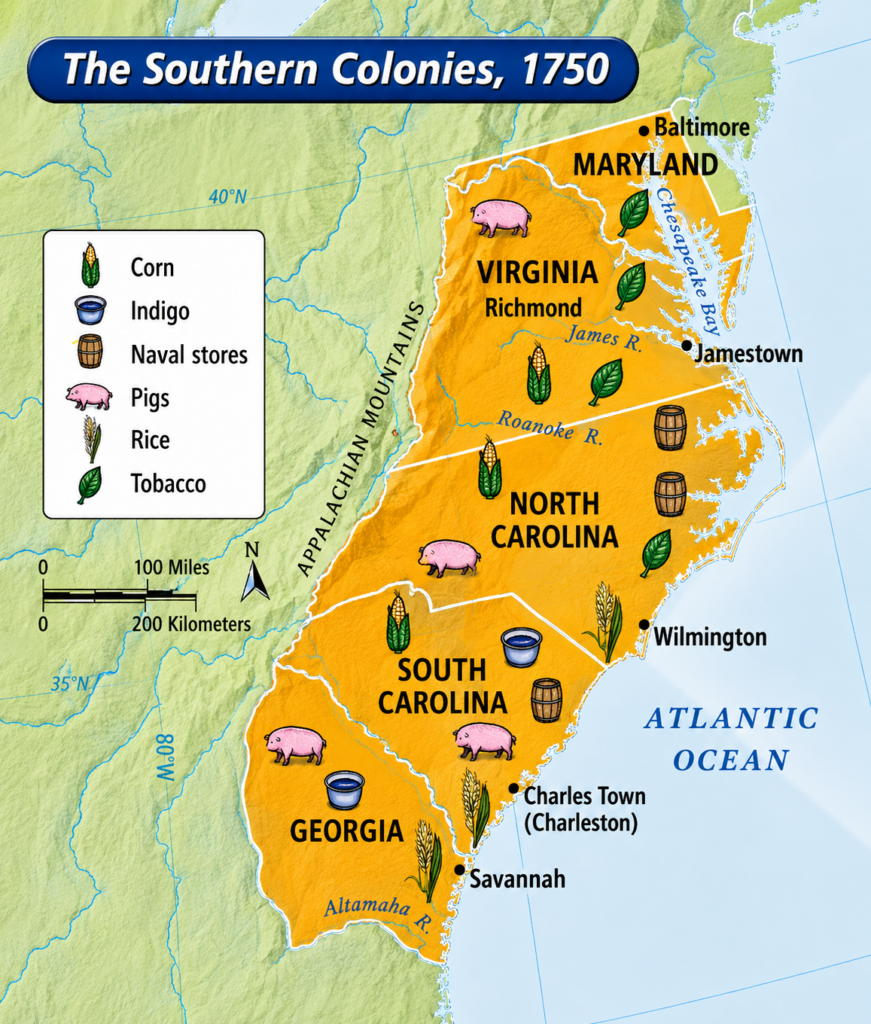
Southern Colonies
- Use of slaves
- Mainstay of the economy – tobacco
- Tobacco exports rose from £14 million in the 1670s to £100 million by the 1770s
- Rice, indigo and grain were also produced for export
Mercantilism
What was “mercantilism”?
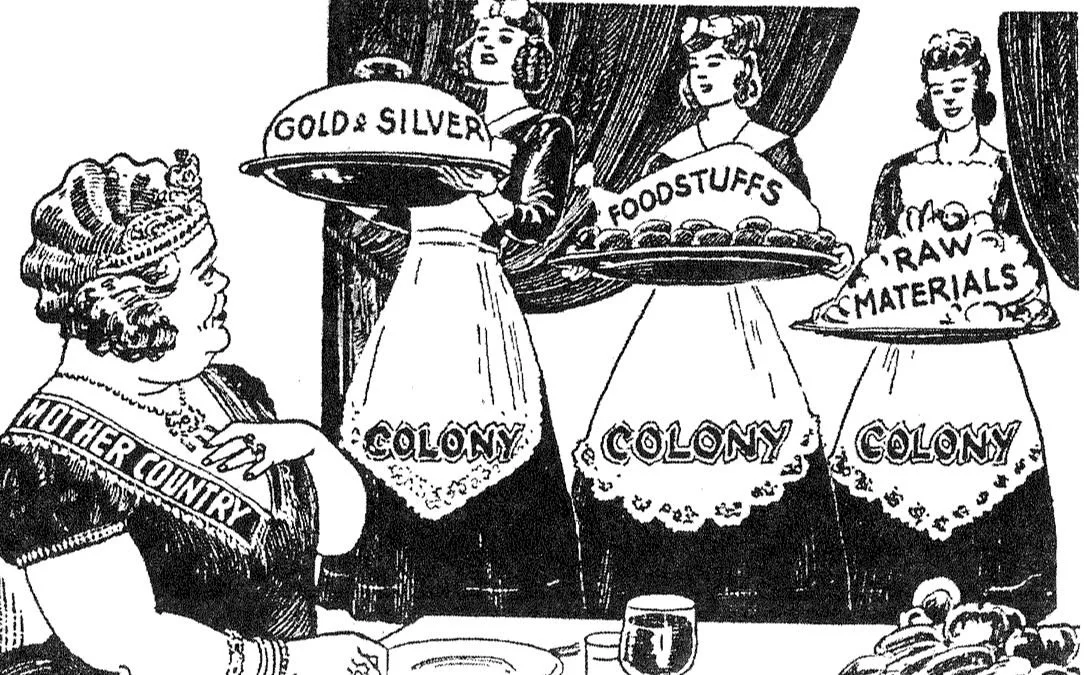
The belief that colonies existed essentially to serve the economic interests of the mother country.
In the seventeenth and eighteenth centuries, most European governments believed in mercantilism and economic self-sufficiency. Mercantilists assumed that colonies existed to supply the mother country with raw materials, buy its manufactures and provide employment for its shipping.
In order to facilitate this system the 1651 and 1673 Trade and Navigation Acts established an English monopoly of colonial trade, markets and certain colonial products. These acts contained the following terms:
- All cargo to or from the colonies were to be carried in ships built and owned in England or the colonies and manned by predominantly English crews.
- Certain commodities – such as sugar, cotton, indigo, dyewoods, ginger and tobacco – could be exported only from the colonies to England even if their ultimate destination lay elsewhere.
- European goods bound from America had, with few exceptions, to be landed first in England and then be reshipped.
British colonial policy remained strictly mercantilist through the early eighteenth century. The list of enumerated commodities (products affected by the Trade and Navigation Acts) was steadily extended until by 1763 it included practically everything the colonies produced except fish, grain and lumber.
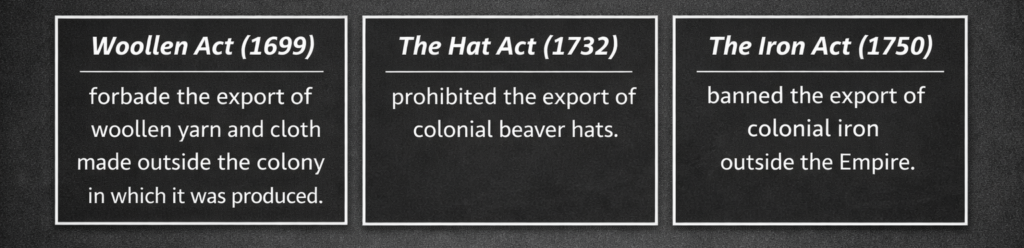
Laws were also passed to restrict colonial manufacturing:
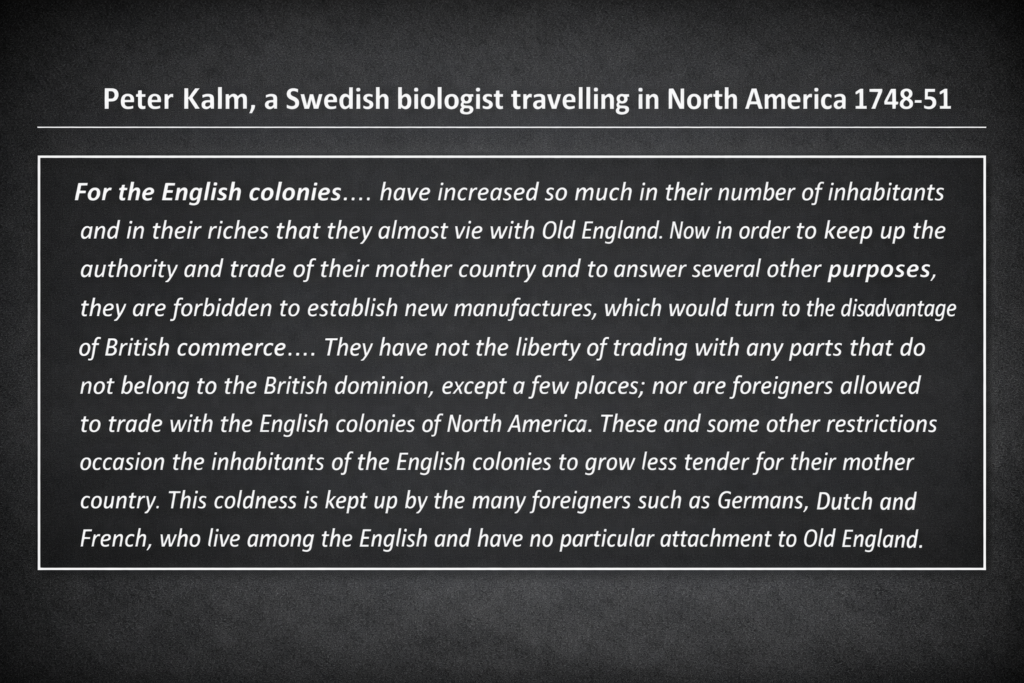
The effects of the mercantilist system
Few Americans complained about mercantilist regulations. This was partly because the system was not well enforced. While the Navigation Acts levied high duties, they were rarely collected. The chief posts in the colonial customs services were sinecures, filled by men who remained in Britain and did very little work. The ill-paid deputies who were sent to perform their duties could be easily bribed by the colonists, ensuring that they turned a blind eye to infractions of the trade laws. The laxity of control particularly prevailed during Prime Minister Robert Walpole’s long rule (1721-42). Although Lord Halifax, president of the Board of Trade from 1748-61, tried to tighten imperial control, the colonies were able to avoid most of the trade laws and smuggling was a fact of colonial economic life.
The few laws restricting colonial production had little effect. The Woollen Act had a limited impact because sheep and wool rarely exceeded local demand. The Hat Act affected an industry of minor importance. The prohibitions of the Iron Act were disregarded. Moreover, the act was not wholly restrictive. Designed to check the expansion of the iron-finishing industry, it aimed to encourage crude-iron production and allowed colonial bar and pig iron to enter Britain free of duty. By the 1770s the colonies had outstripped Britain as producers of crude iron. On balance, mercantilism probably benefited the colonies as American products enjoyed a protected market in Britain and its Empire, and American shipping profited from the exclusion of foreign ships from colonial trade.
As the eighteenth century progressed, colonial trade played an increasingly important role in the British economy. By the 1760s, a third of British imports and exports crossed the Atlantic. The colonies imported British-manufactured goods, exporting tobacco, flour, fish, rice and wheat in return. Both Britain and the colonies benefited from this increased trade.
Colonial society
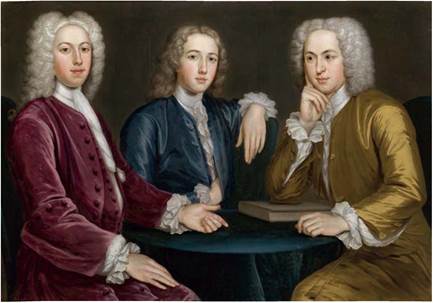
According to historian Richard Hofstadter, colonial America was “a middle-class world”. The groups at the top and bottom of the British social pyramid – the nobility and the poor – were under-represented in America. Despite this, American society was still hierarchical and there were still huge differences between rich and poor. While society may have been more mobile than in Britain, the notion of widespread social mobility should not be exaggerated. Only a few individuals rose from humble beginnings to wealth and power.
The colonial elite
In every colony a wealthy elite – great landowners, planters (Southern landowners who owned more than twenty slaves) and wealthy merchants – had emerged. There dominance was evident in their possessions, lifestyles and in their control of politics. Several landowners received incomes from their lands that rivalled the incomes of the great British landed families. However, the colonial elites did not have the titles and privileges that gave automatic social prestige and political authority to the British aristocracy.
The American elites were hard-working capitalists, intensely and of necessity absorbed in land speculation and in the business of marketing commercial crops. Since their capital was largely tied up in land (and slaves in the South) their liquid assets (wealth in the form of cash) were not impressive by European standards.
The professionals and the property owners
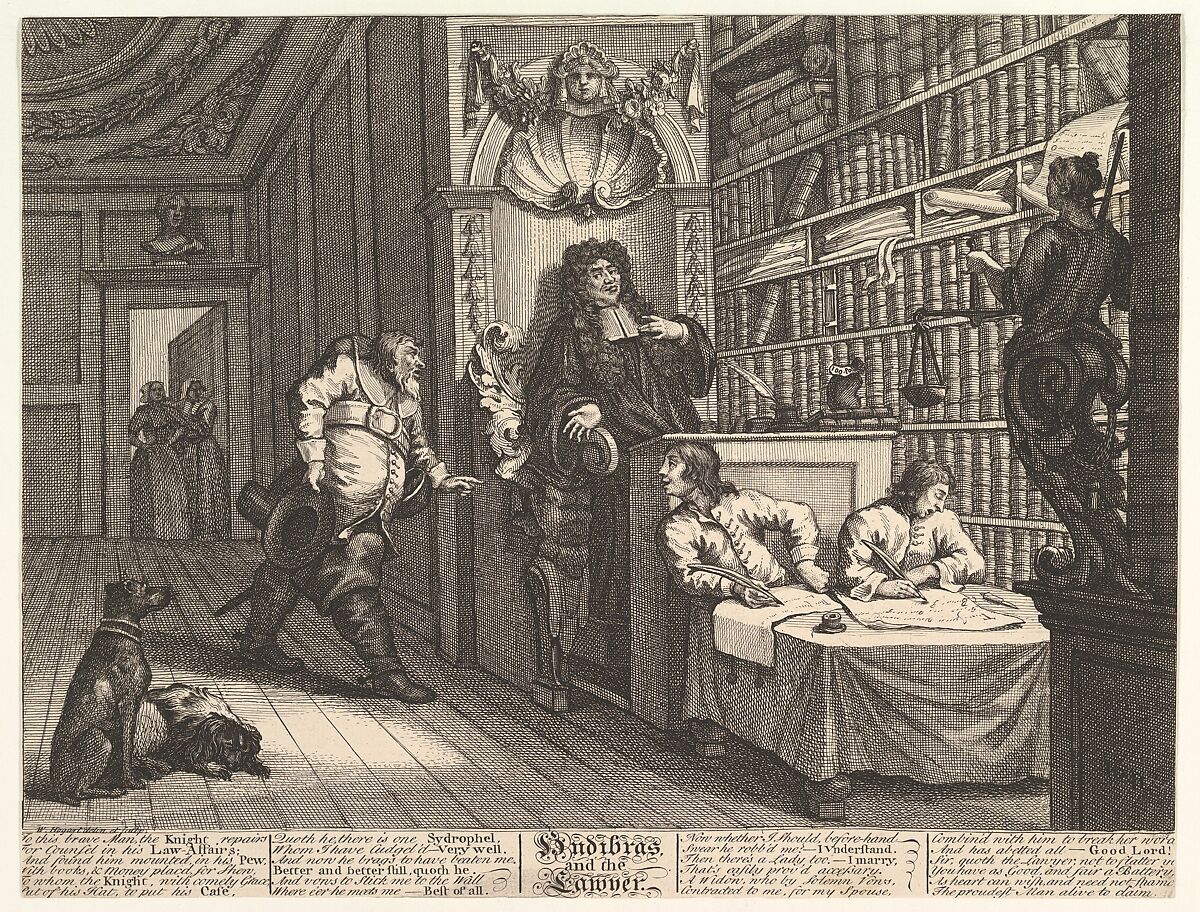
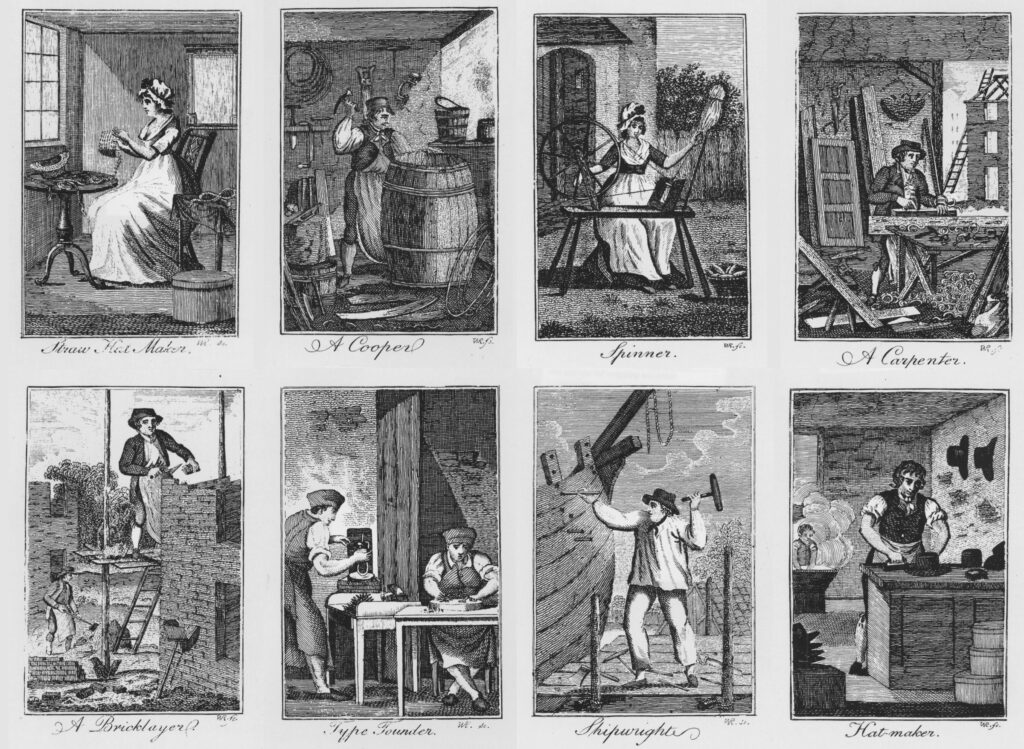
Below the elite were the professionals – ministers, lawyers, doctors, schoolmasters. Respected in their communities, they often held positions of public responsibility. 80% of free males were farmers. Most owned and worked their own land – usually between 50 and 500 acres. In the towns, two-thirds of the population were shopkeepers and self-employed craftsmen.
The labourers
Below the property owners were those who laboured for others. This was a diverse group, ranging from tenant farmers to slaves. Approximately a third of the land was farmed by tenants who rented rather than owned the land. Only about a fifth of adult white males, many of whom were recent immigrants, were landless labourers. The availability of cheap frontier lands limited the number of tenants and landless agricultural workers. In the towns, the propertyless included apprentices, sailors, servants and labourers.
Slaves
Black slaves were at the bottom of the social structure. Slaves were subject to the will of their owners and could be bought and sold. While some slaves were used as domestic servants, most worked on plantations producing tobacco and rice. Most of the slave population was based in the southern colonies.
American Culture
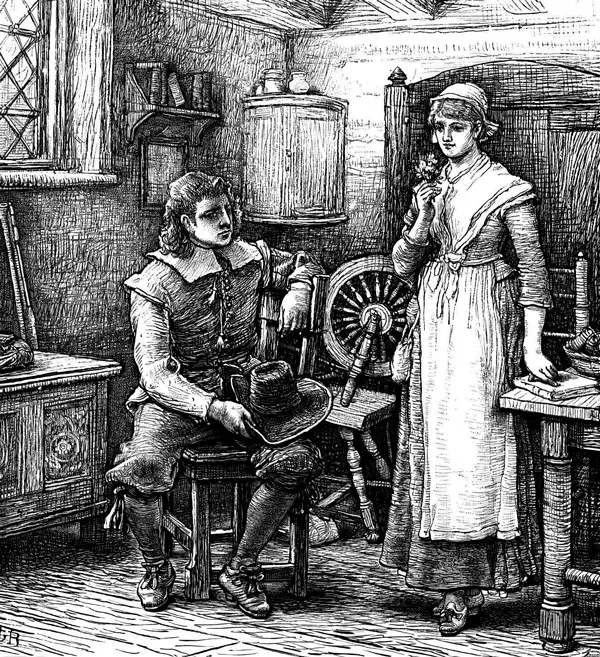
Family
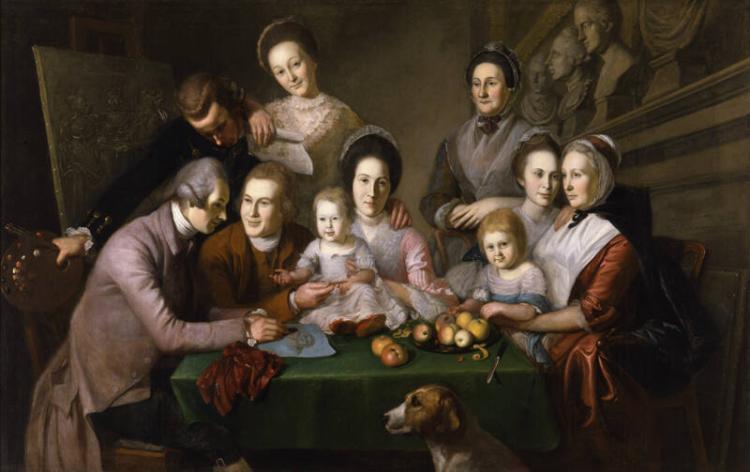
- Hierarchical – children were subordinate to elders, females to males, servants to family, blacks to whites.
- Women regardless of wealth or condition were assigned a subordinate role and were denied the political and civil rights enjoyed by men.
- Wives had no legal right to property.
Education
- By 1763 – 75% of white male American adults were literate, compared with 60% in England.
- By 1763 – nine colleges and universities. By 1763 – 30 newspapers were in circulation.
- Colonial intellectual elite were influenced by the Enlightenment, the ideas of which permeated every branch of thought from science to politics and encouraged people to think about the nature of the society in which they lived.
- 1743 – establishment of the American Philosophical Society by Benjamin Franklin who had gained international attention for his work.
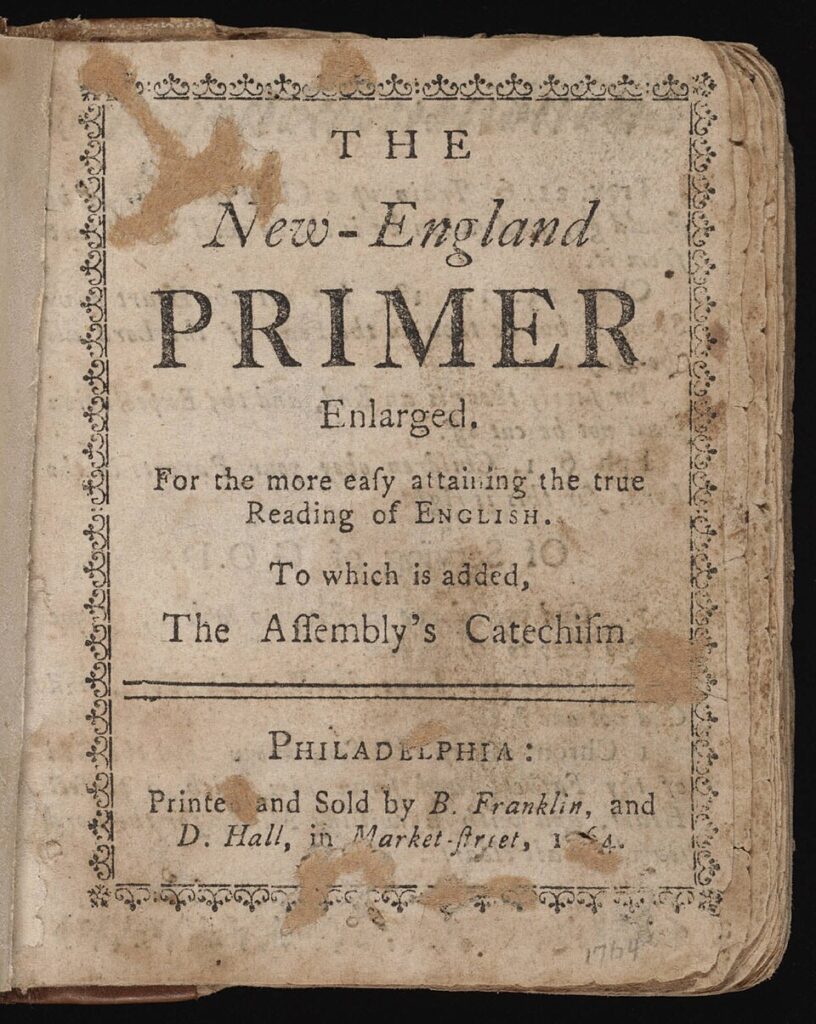
The New England Primer was the first and most popular primer designed to teach reading in the colonies.
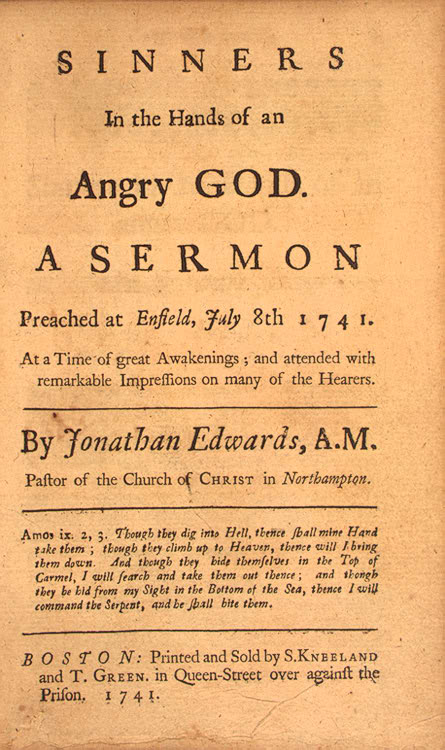
Jonathan Edwards’ 1741 sermon “Sinners in the Hands of an Angry God”
Religion
- Although majority of population were Protestant – there was a great diversity of denominations which had been encouraged by immigration from other countries. This led to a degree of religious tolerance. There was, however, a general anti-Catholic feeling.
- Colonies were affected by “The Great Awakening” at the beginning of the eighteenth century. This movement led by Methodists and Baptists emphasised a personal relationship between the individual and God. It has been argued that this encouraged an egalitarian and democratic spirit among people.
British-French Struggle for Control of North America
Tensions between Britain and the French
The two great European nations had been in a state of almost perpetual tension for the previous century; in this time they had fought a series of wars over matters of empire and politics. The outbreak of war in America, however, was about local rather than imperial issues.
The first three wars began in Europe and were essentially about the balance of power within that continent. Conflict then spread across the Atlantic. That the colonists essentially viewed them as foreign wars in which they had become involved only as subjects of the British crown was evident from the labels that attached to the first three conflicts – linking the name of the British monarch to them. Despite this there was still an eagerness to defeat French and Spanish neighbours whose Catholicism they loathed and whom they regarded with fear and suspicion.
In America the British and the French had been competing for territory in the rich land to the west of the Appalachians; settlers from both nations built forts and laid claim to beaverruns and waterways; each would regularly ignore the claims of the other. The British were especially paranoid about the actions of the French. Not only would French control of the western territory mean that the 13 colonies would be tightly hemmed in; it would also mean the consolidation and possible spread of Catholicism on the American continent.
British-French Wars
| 1689 – 1697 | War of the League of Augsburg / King William’s War |
| 1702-1713 | War of Spanish Succession / Queen Anne’s War |
| 1740 – 1748 | War of Austrian Succession / King George’s War |
| 1756 – 1763 | Seven Years’ War |
The War of Austrian Succession
The War of Austrian Succession, or as the colonists called it, King George’s War, spread from Europe to America in 1744 and the colonists saw this as an opportunity to defeat the French and Spanish, who were on the opposing side.
Britain, too focused on the war in Europe, were unable to send troops to America to help, but the colonists had an advantage of outnumbering the French by nearly fifteen to one. The French, due to the superiority of the British navy also struggled to supply their troops.
However, the advantages that the colonists had were balanced out by the French alliances with the Native Americans and this limited the expansion of British territory. The most notable gain was Louisbourg in 1745 as this fort controlled the passage to Quebec and the St Lawrence River, but this was handed back to France in the Treaty of Aix-la-Chapelle of 1748 (an agreement made in Europe to end the war) – something which horrified the colonists. Despite the signing of the Treaty, many colonists viewed it as no more than a temporary truce.
The Albany Congress 1754
The ending of the War of Austrian Succession in Europe did nothing to end the tensions between Britain and France, British colonists remained eager to expand their territory – particularly into the Ohio Valley, which was west of the Appalachian mountains. Neither Britain nor France had a rightful claim to the land, but it bordered both of their imperial possessions and therefore it was hardly surprising that both sides attempted to assert their influence.
Following the fighting in America during the conflict, the British were aware that there policy of salutary neglect meant that there were few British troops in America (only around 500). Therefore, they began to encourage the colonists to try to gain the support of the Native Americans. This led to the Albany Congress in 1754.
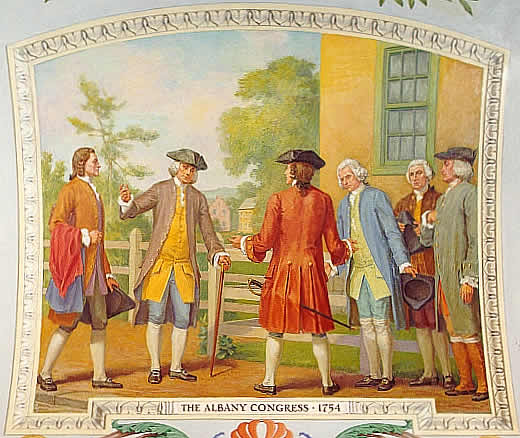
The Albany Congress was a meeting of colonial delegates to discuss a joint Native American policy. Although the Congress failed to reach an agreement with the most pro-British Native American tribe (the Iroquois), it did result in the establishment of a permanent
inter-colonial confederation.
How significant was the Albany Congress?
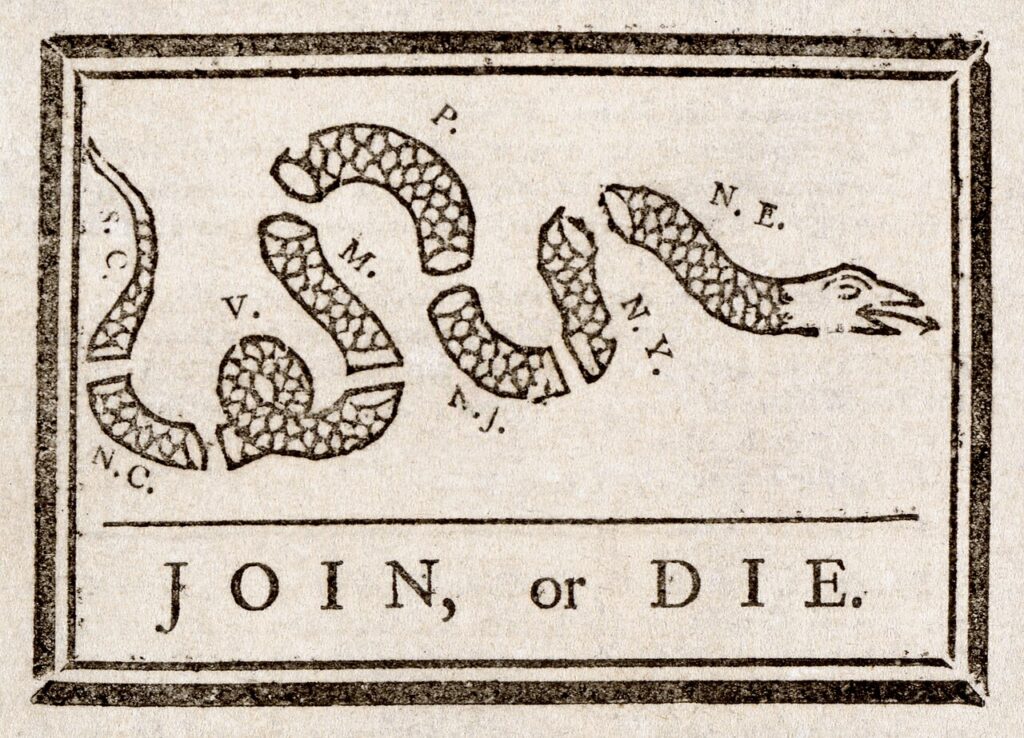
- First time in the 18th century that colonial representatives met to discuss something approaching a formal union of all colonies.
- The delegates debated a plan written by Benjamin Franklin that would have united 11 of the colonies with a president appointed by the British Crown.
- Franklin’s plan exceeded the scope of the congress which was supposed to be discussing Native American affairs, however the delegates voted in approval of Franklin’s plan.
- When the delegates returned to their colonies not a single colonial legislature would ratify the plan fearing for their own autonomy.
Ongoing tensions … Fort Duquesne
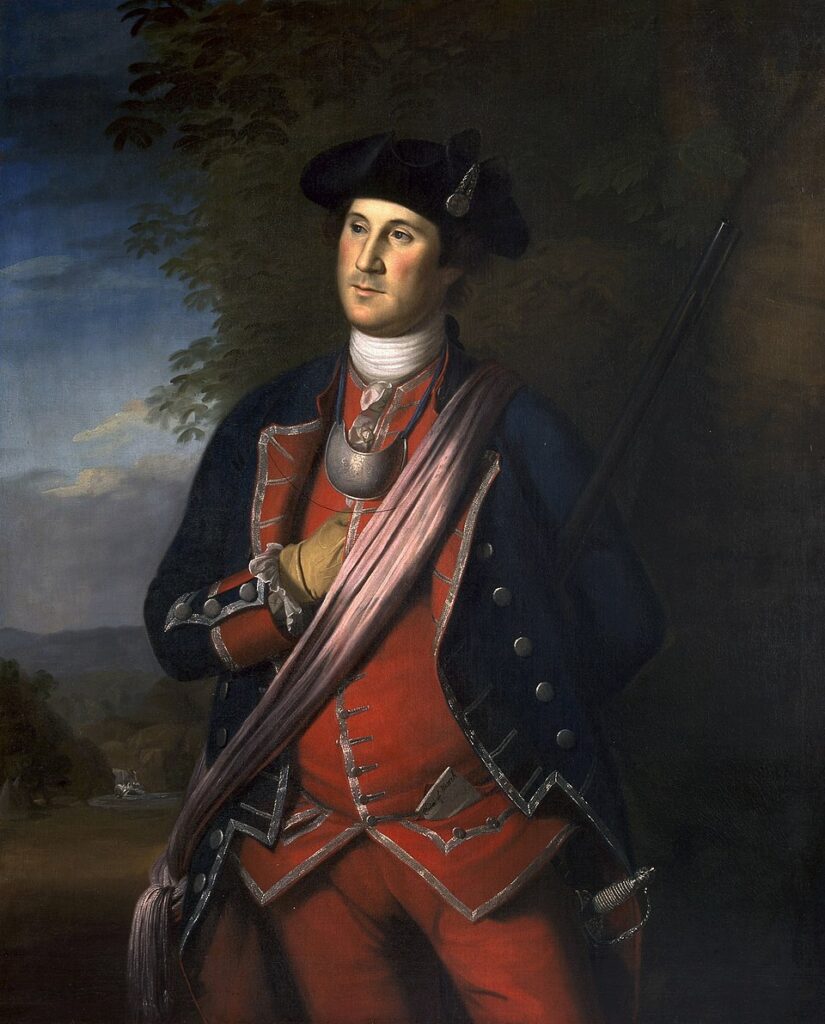
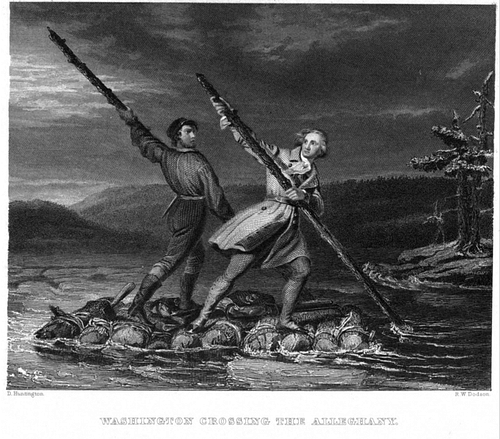
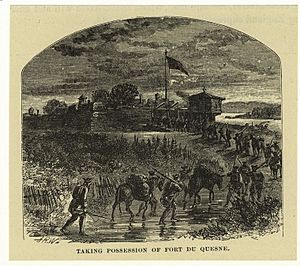
At the same time, speculators in Virginia were granted 200,000 acres of land in the Ohio Valley by the British government. This virtually guaranteed that they would be drawn into conflict with the French. British investors established a series of companies including the Loyal Land Company and the Ohio Company of Virginia, as well as starting to build Fort Prince George to protect the new settlers. It was hoped that the new settlement would also ensure the support of local Native Americans due to the increased potential for trade. Unsurprisingly, this led to a French response and they began to build a chain of forts between Lake Erie and the Allegheny River. A Virginian force was sent under the leadership of George Washington in 1754 to stop the French. When his force arrived, the French had taken over Fort Prince George and renamed it Fort Duquesne. In the fighting that followed, colonial commander Washington was forced to surrender. Although war had still not been formally declared, the British government, feeling that their prestige was at stake, launched a four-pronged attack to try to secure the frontier. This included:
- Two regiments under General Braddock, sent from Britain to secure the Ohio Valley
- An attack on Fort Niagara
- An attack on both Ticonderoga and Crown Point, French forts on New York’s northern border
- Secure Nova Scotia
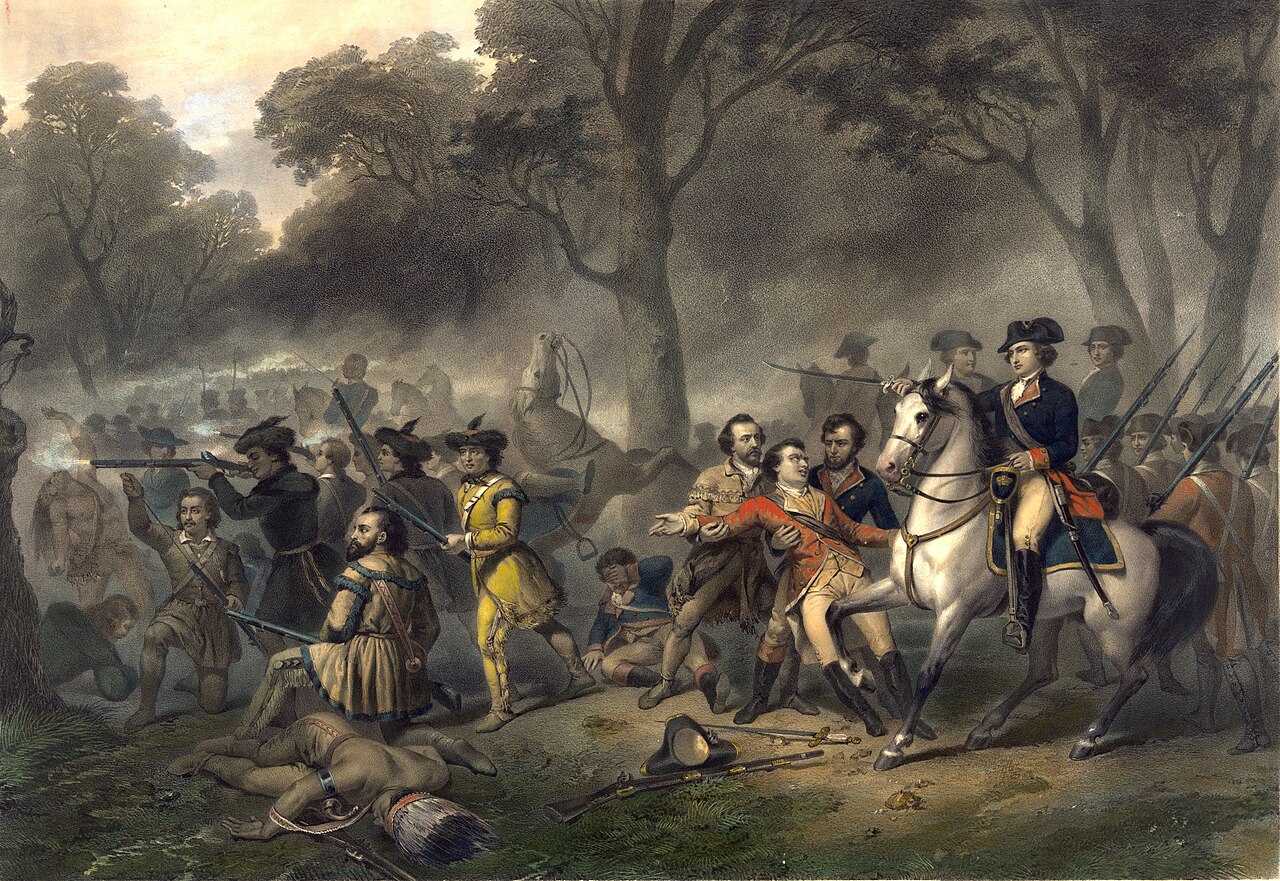
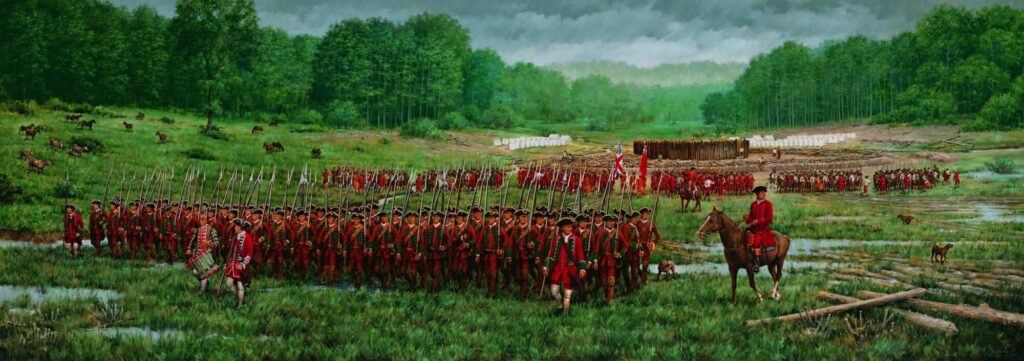
These attacks were not successful because the British were unaccustomed to fighting in a remote and hostile environment. Their red uniforms meant that they were easy targets, and there were frequent ambushes in a conflict that had all the characteristics of guerrilla warfare rather than the set-piece battles that the British were used to fighting.
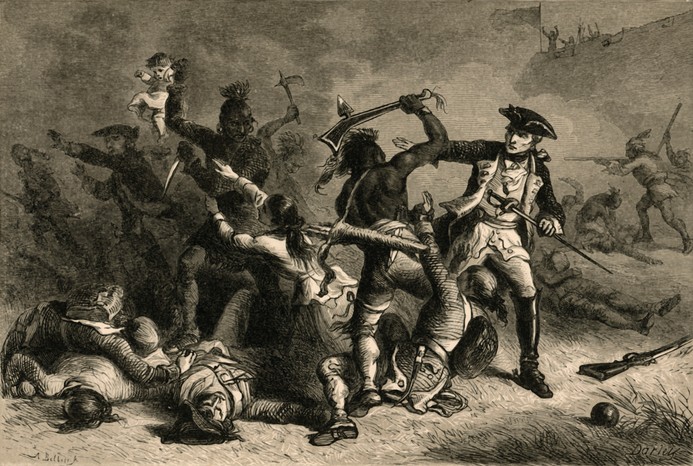
- General Braddock failed to retake Duquesne or assert British control in the Ohio Valley. He was killed in an ambush and his army routed in July 1755 at the Battle of Monongahela (Pennsylvania).
- The assault on Fort Niagara failed and Fort Oswego (both in New York) also fell to the French.
- Failure in the campaign at Crown Point.
- Only success was in the campaign in Nova Scotia with French Forts Beausejour and Gaspereau being captured.
Impact for Britain by 1756
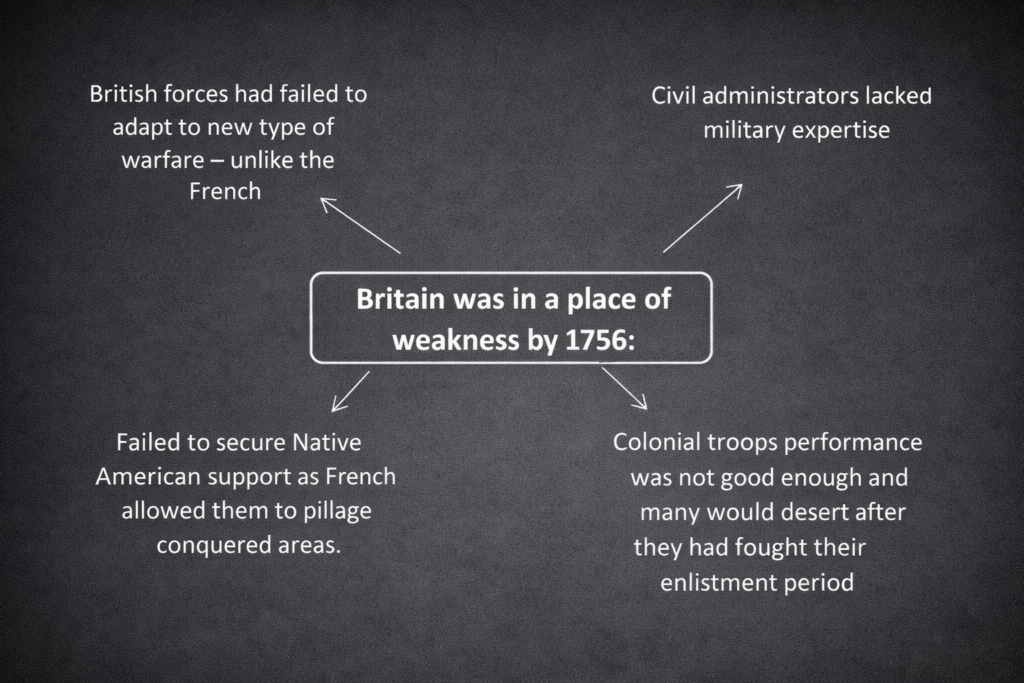
Despite this, the British declared war on the French in 1756 and the Seven Years War began.
The Seven Years War
In 1756 Britain declared war on France. The Seven Years War – or the French-Indian War as it was known in America – developed into a world wide conflict. Fighting was seen in Europe, the West Indies, Africa and India as well as in North America.
As with the previous conflict, the early events were not a success for Britain. A number of losses were seen for example:
- Loss of Fort Oswego on Lake Ontario in 1756
- Loss of Fort William Henry on Lake George in 1757
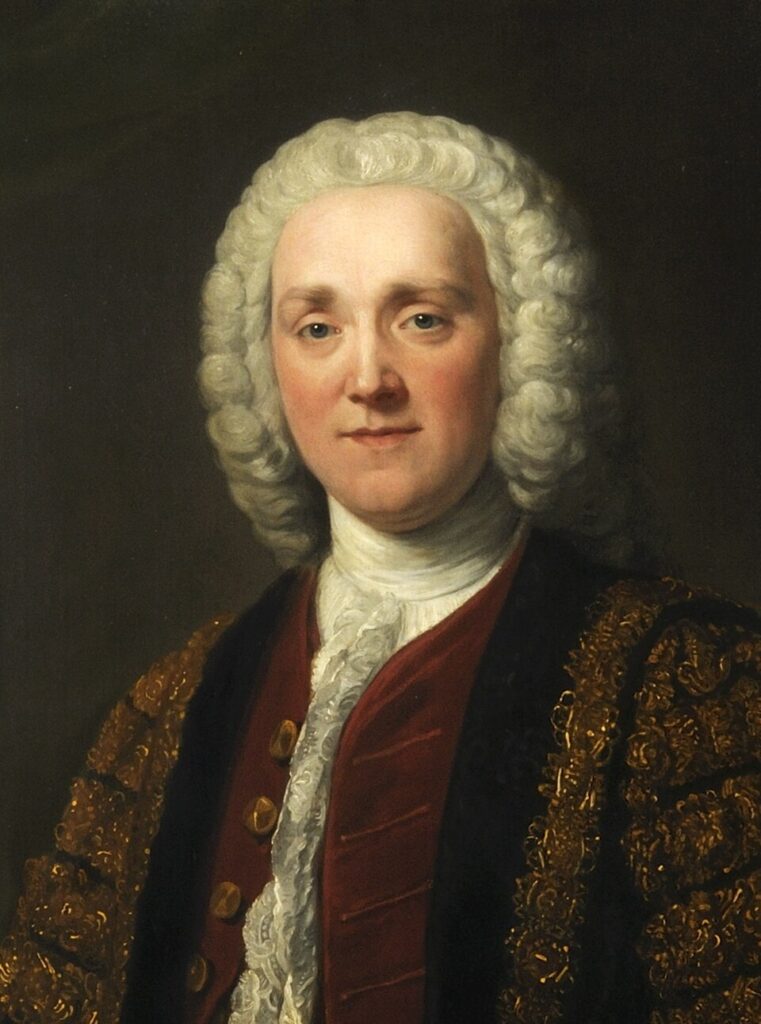
These losses reflected the inability of the British to induce the colonists to unite in their own defence. It was only with the appointment of William Pitt the Elder as Secretary of State, responsible for foreign and colonial affairs and war, under the Prime Minister, the Duke of Newcastle in 1757 that fortunes changed.
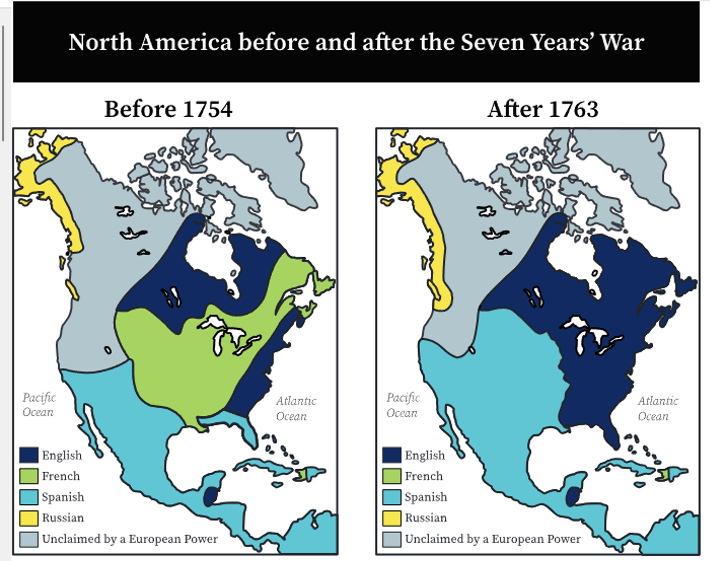
As a result of the conflict Britain was able to expand further into North America:
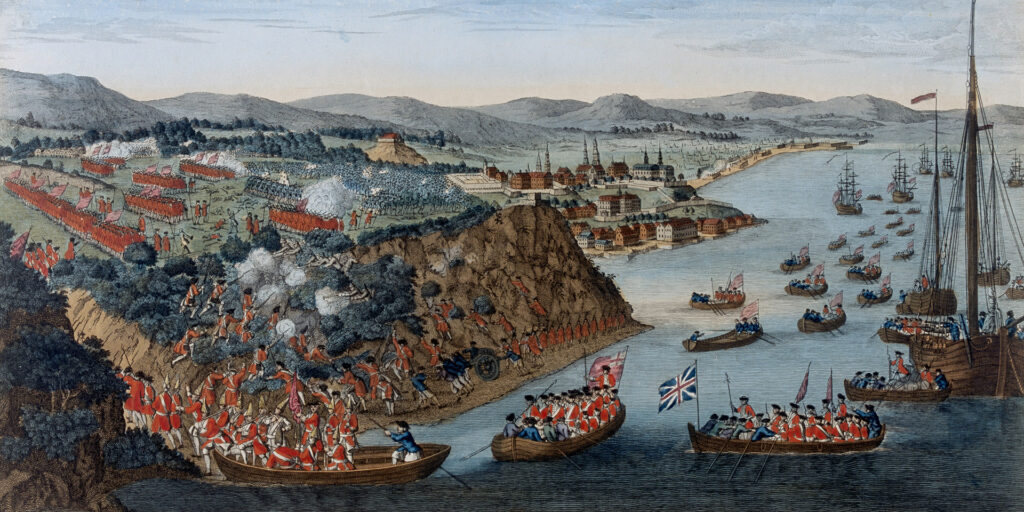
- Captured Canada from the French following the fall of Quebec in 1759 and Montreal in 1760
- Gained all French possessions east of the Mississippi
- Acquired Florida from Spain.
Results of the Seven Years War
- Ironically, the British victory laid the foundations for the American Revolution. French elimination from North America weakened colonists sense of military dependence on Britain.
- Britain was not the world’s greatest imperial power, controlling North America, the Caribbean and much of India
- The war gave training to men who later became senior officers in the American army.
- There was mutual contempt between some American and British soldiers. British officers tended to regard the Americans as a rabble. Americans, in turn, considered British officers haughty and incompetent.
- Americans had expected to benefit from the expulsion of the French.
Analysis – reasons explaining British success in the Seven Years War
The importance of William Pitt
When appointed Secretary of State in 1757 Pitt stated “I believe that I alone can save this nation and that no one else can”. Soon after his appointment British fortunes changed and much of this was due to his policies. Pitt showed a strong control over both policy and administration.
He established a global approach to the broader conflict with France in which priority was given to defeating them in America and the Caribbean. To do this he deployed the most aggressive of his commanders in America, sending 25,000 troops under Lord Amherst and Wolfe. It was Pitt who developed the three-pronged strategy to attack Louisbourg, Ticonderoga and Quebec and to retake Fort Duquesne so that British power was reestablished on the Ohio River.
Pitt was also aware of the importance of gaining the support of the colonists, and he changed the policy of British officers taking precedence over colonial officers regardless of rank. He also ensured that the Crown paid for equipping and provisioning the colonial militias and reimbursed the colonial assemblies for other expenses, all of which helped to generate colonial enthusiasm for the war.
The success of Pitt’s policy was such that the war could be seen as a shared endeavour between Britain and the colonists, with the Crown deploying 45,000 troops by 1758, half of whom were colonial volunteers. The French could only raise 6,800. Pitt’s actions were much more ambitions than that of predecessors in control of the war. Loudon, the previous British commander, had demanded fewer than 7,000 provincial soldiers from the northern colonies in 1758, but Pitt’s policies brought 20,000 within a matter of weeks. The men that Pitt appointed to command these troops were prepared to launch offensives, again in stark contrast to Loudon who had failed to attack Louisbourg in 1757. Pitt promoted ambitious junior officers of good reputation such as George Howe, Jeffrey Amherst and James Wolfe.
Domestic policy was just as important and not only did Pitt gain support from the colonists but he also united the country behind the war. He oversaw the introduction of the Militia Act 1757, which established local militias to protect Britain from possible French invasion. This gave him more front-line soldiers to fight in America. Even in 1759, when there appeared to be a serious threat of a French invasion of Britain, he refused to recall the troops from overseas.
Overall, Pitt’s strategy was crucial to victory in 1763, but he was helped by other people. For example, Pitt and Newcastle maintained a strong relationship with Newcastle helping to secure much of the parliamentary approval for Pitt’s plans. Similarly, although possibly lacking some of Pitt’s energy, Loudon was also largely responsible for the plan to take Louisbourg, Quebec and Montreal.
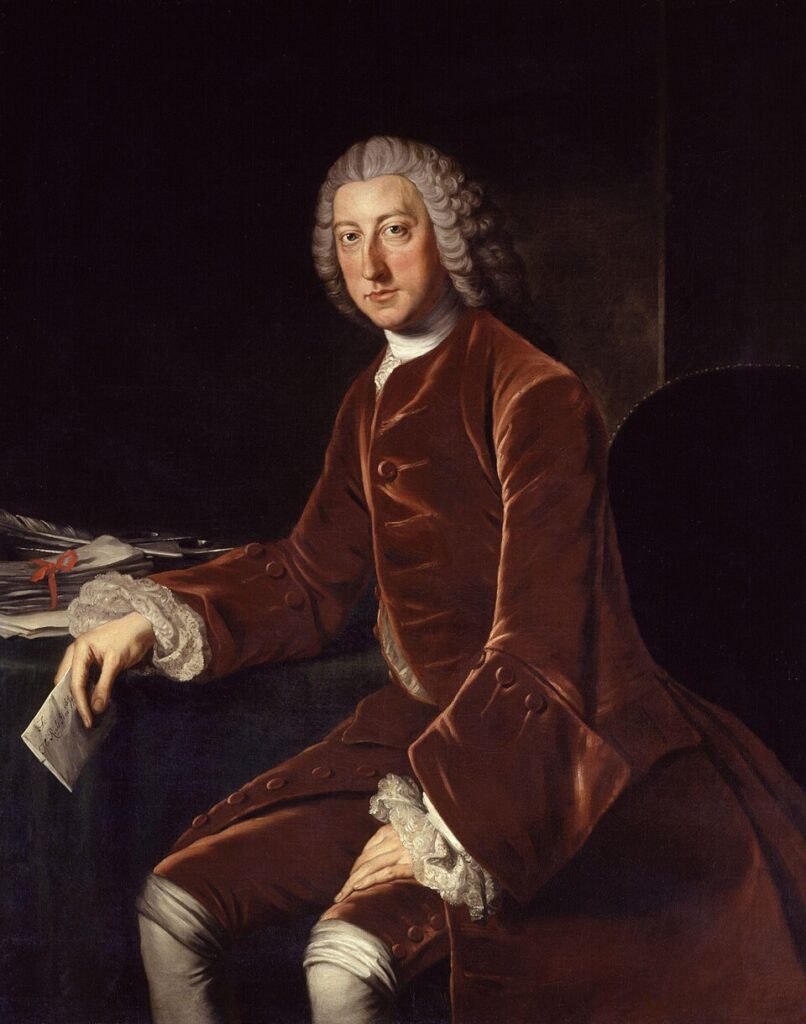
William Pitt the Elder (1708 – 1778)
Pitt came from a wealthy family who had made their fortune in India. After studying at Oxford he became an army officer and then in 1735 a member of parliament. He became part of a group of patriotic Whigs who criticised the government of Robert Walpole from not promoting British colonial interests. He was a popular figure, known as “The Great Commoner”. He took part in war policy in the War of Austrian Succession. He became Secretary of State in 1756 and dominated the government and ran the war. He left office in 1761 but was prime minister 1766-68. He later argued against the policies which led to the War of American Independence.
Finances
Pitt demonstrated a willingness to secure whatever finances were needed to allow his strategy to succeed and in this he was helped by the system of parliamentary government that made it easier for him to secure loans than the French and to raise taxes to finance the war. He was also helped by the growing economy, which was sufficiently prosperous to support the war effort and provide the financial resources that were needed.
An example that highlights his willingness to take big financial decisions to support the war in North America is a deal developed with his ally, Frederick the Great of Prussia. Pitt paid him to attack French forces in Europe. This meant that France was unable to send reinforcements to North America as they were preoccupied in Europe.
The role of the Navy
The navy played an important role in both wars with the French. During the War of Austrian Succession, with British troops being heavily committed in Europe, the navy had been used to prevent France and Spain from sending reinforcements to their colonists in America.
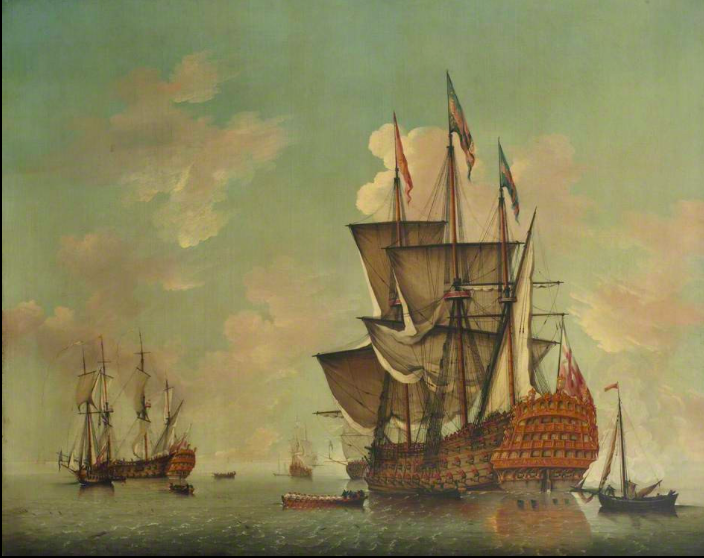
The navy played an even more significant role in the Seven Years War. Pitt realised that preventing the French from supplying their squadrons in New France they could starve them off. The French (unlike the British, did not farm the land and relied upon imports for survival). This policy also led to Britain winning support for the Native American tribes.
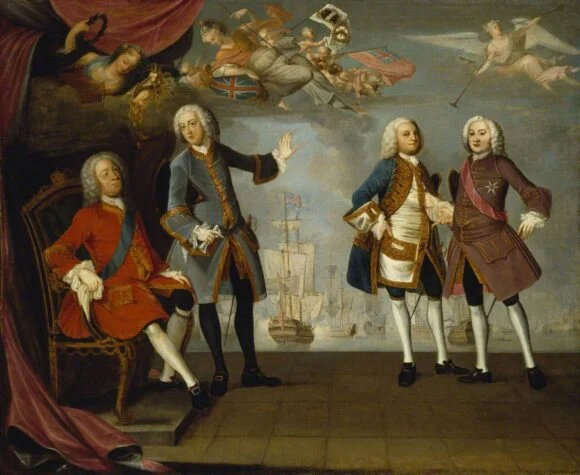
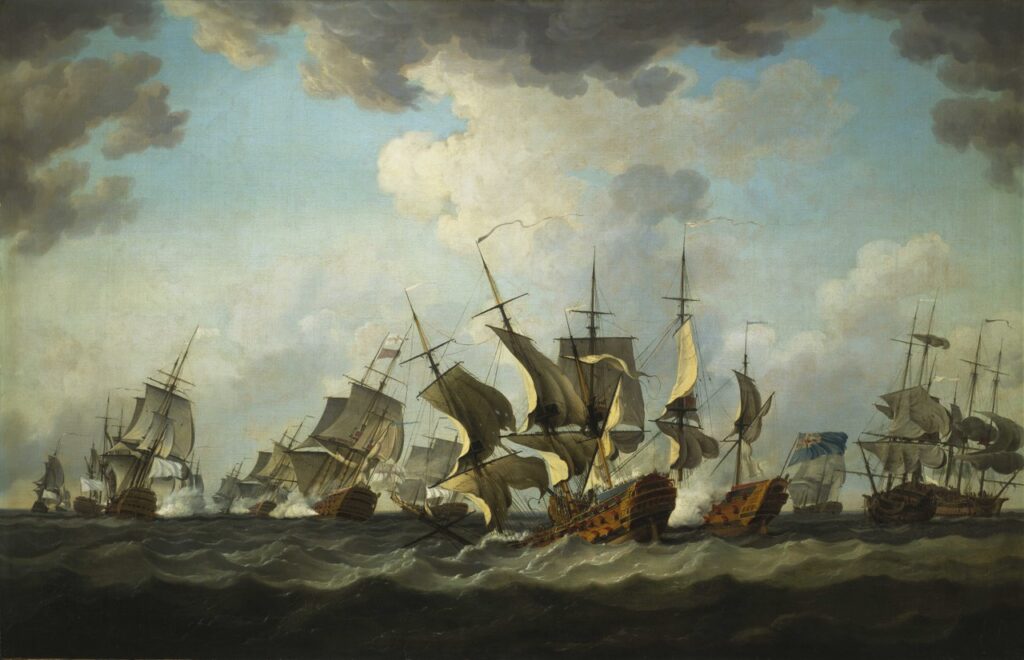
The leadership of Lord Anson, who as First Lord of the Admiralty from 1751 had enacted a series of reforms also deserves credit here. He played a key role in increasing the size of the navy and built up the force so that naval superiority was achieved, which allowed Louisbourg to be seized in July 1758 by a skilful amphibious campaign. Similarly the 18,000 sailors manning over 100 ships had been vital in the taking of Quebec.
These two examples alone ensured that the French virtually gave up any hope of retaking their American colonies, given the impossibility of resupplying them. This was confirmed by Admiral Hawke’s victory at Quiberon Bay in November 1759, which ensured that French aid reaching America was impossible. The importance of these successes became clear in 1760 when French forces came close to retaking Quebec but were prevented by the British being able to send reinforcements from Louisburg up the St Lawrence River.
Role of the Native Americans
At the start of the conflict Native Americans had played an important role on the French side, helping in the defeat of General Braddock on his way to Fort Duquesne and in devastating a number of frontier settlements. However, towards the end of the conflict, Britain began to make effective use of Native Americans. By cultivating their friendship, they were used successfully against the French. Amherst commented on the Native Americans, “They are a pack of lazy, rum drinking people and little good, but if ever they are ever of use it will be when we can act offensively. The French are much more afraid of them than they need be; numbers will increase their terror and may have a good effect.”
Their support was much easier to gain once Britain had secured naval superiority as the prestige of the British colonists grew and the Native Americans looked to them rather than the French. It was now the British who could supply them with goods.
Role of the colonists
Colonial enthusiasm for the war had been lost by Braddock and Loudon because of their high-handed attitude towards the colonial militias. This was seen most closely in the issue of precedence; whereby British officers of whatever rank took precedence over colonial officers, even in the colonial officers outranked them. Pitt’s reversal of this policy and the financial commitments he made helped to generate enthusiasm and patriotism among the colonists. Although colonial troops would play only a limited role in the actual fighting, they contributed to the success by building roads and forts, which did much to free up British troops. This continued even with the increased number of colonial troops, but it still helped to create a sense of shared endeavour. It reversed the attitudes created at the start of the conflict and gained the support of the colonial legislatures.
French weaknesses
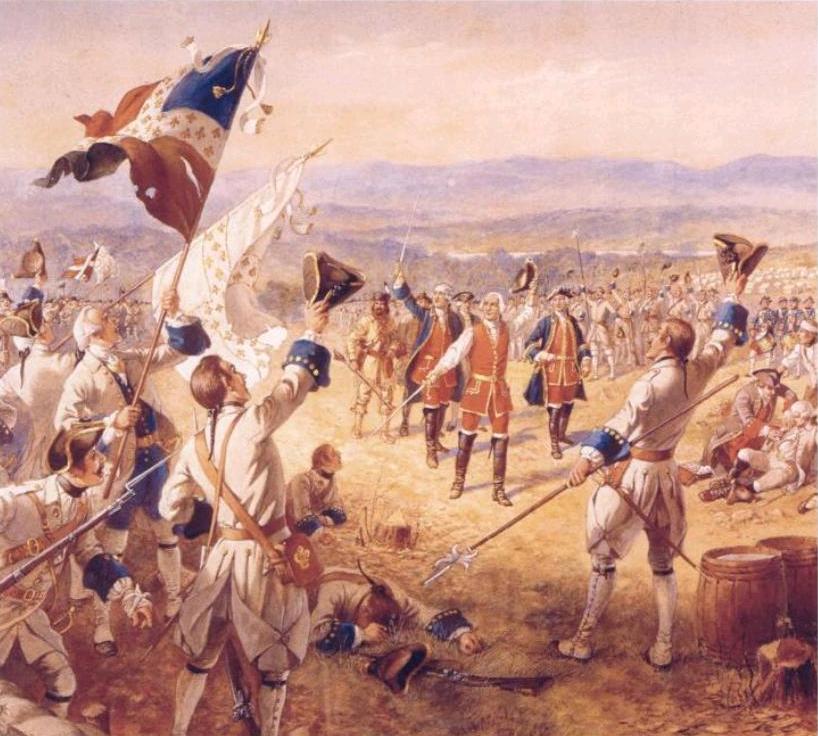
As the war progressed the French found it increasingly difficult to maintain an army in the field. The French colonists were small in number and depended upon supplies from France. They inhabited less fertile regions, and this became more or an issue as Britain gained naval superiority and was able to prevent French supplies from reaching their colonies. This was made worse by poor harvests in 1756 and 1757. the cutting of supplies also had an impact on Native Americans who had supported the French. The French were unable to retain their support and as a direct result the Native Americans were less willing to support the French and instead began to look to the British.
Life in Great Britain by 1763
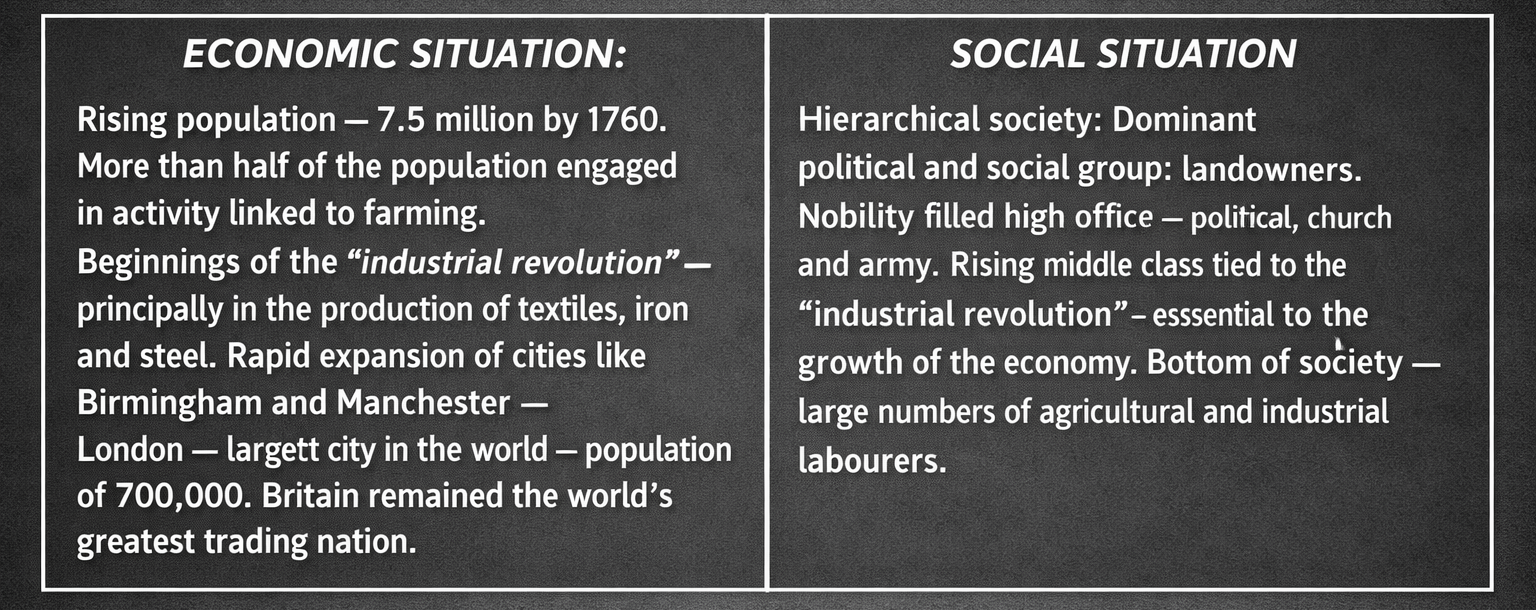
In 1763, Britain seemed a state of modernity, combining economic growth, political maturity and imperial strength.
Political Situation
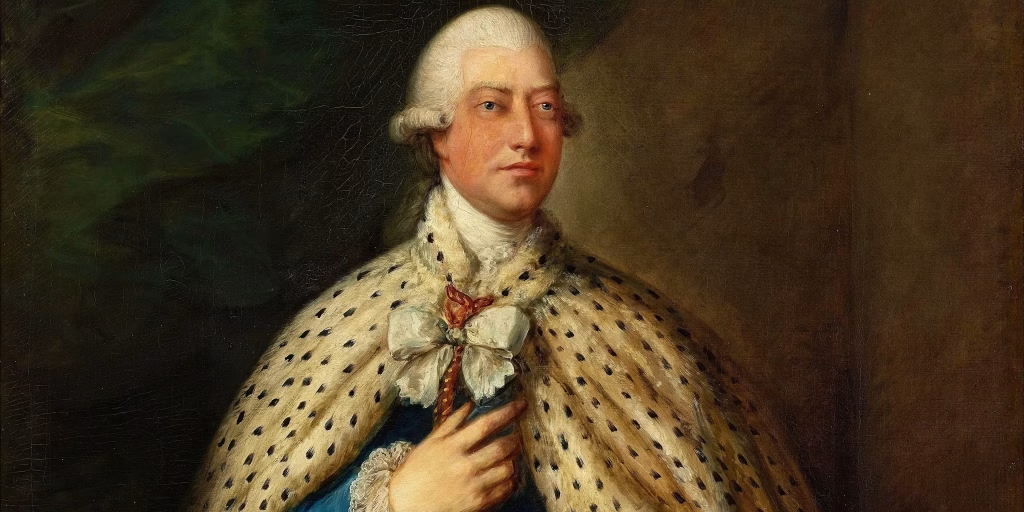
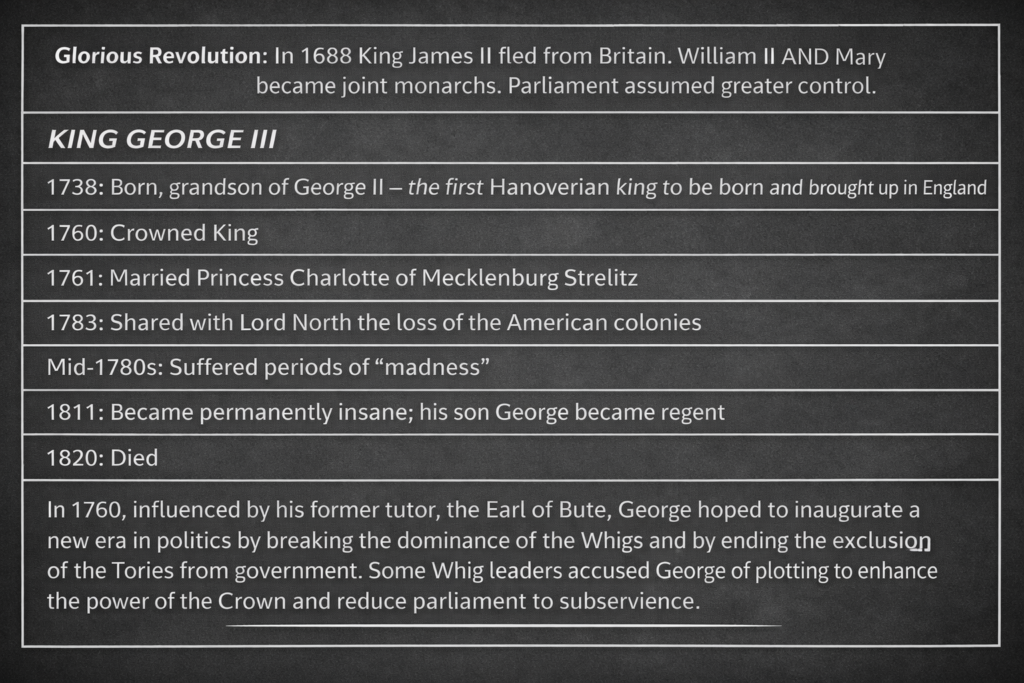
Britain was a parliamentary monarchy. While the Glorious Revolution had reduced the monarchy’s power, all government was – in theory – the king’s. From the lowest official in the parish to the greatest minister of state, service undertaken was done in the name of the monarch. George III (1760-1820) took an active part in government. Within limits, he chose the ministers who served him – the limits being essentially their ability to command parliamentary support.
Far from planning to reduce Parliament’s powers, George III wanted to protect the constitution from the Whigs and the corruption. While George had no wish to be a despot, he was determined to rule as well as reign. He thus did what he could to influence government policy. George has generally bad press. Early 20th century historian Sir George Otto Trevelyan wrote that “he invariably declared himself on the wrong side in every conflict”. Historians today are somewhat kinder but most agree he was headstrong and abstinate. His political prejudices helped to cause ministerial instability in the 1760s. If he had had a greater perception of intelligence he might have moved Britain away from disastrous policies of confrontation with the American colonies.
Parliament
Parliament consisted of the House of Lords and the House of Commons. The Commons’ control of financial matters meant that it had ultimate power. But democracy in Britain was not particularly well developed.
- In the 1761 election only 215,000 reasonably wealthy males were entitled to vote.
- Most of the new, growing cities were not represented in the Commons.
- Rich landowners usually determined who would stand as candidates and who would be elected.
- Few MPs were independent. A half owed their seats to patrons. Nearly a third held offices or honours under the government, usually voting as the government directed.
The political parties
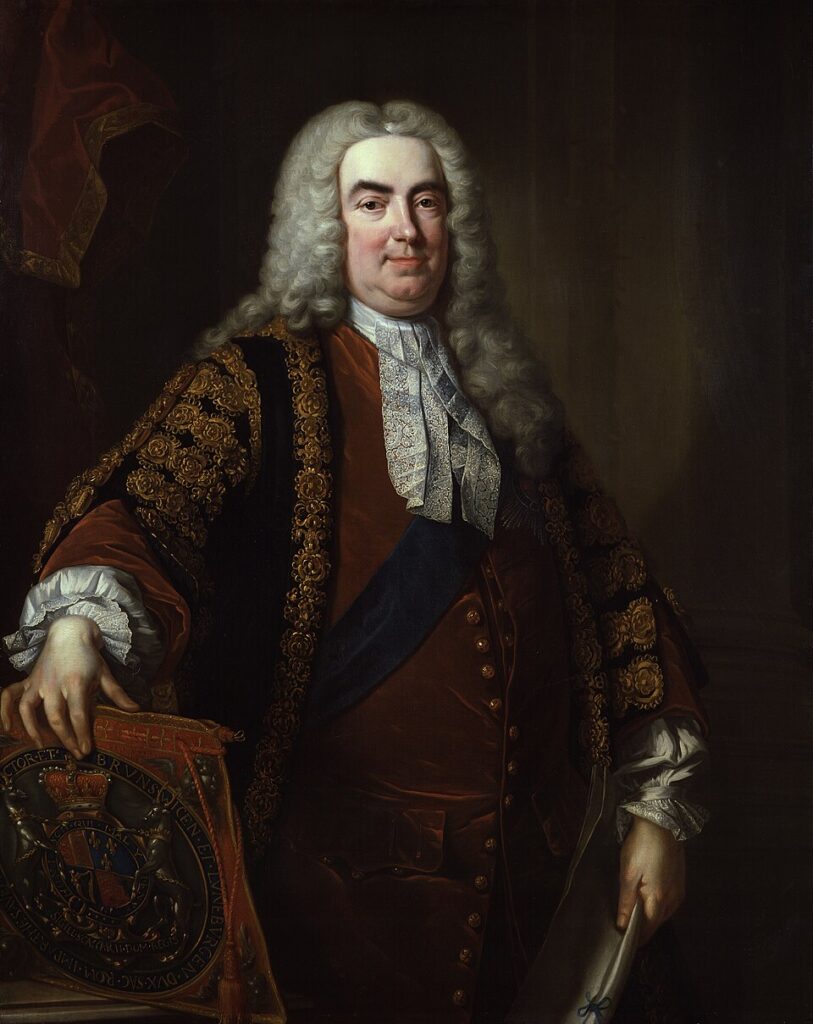
In the early eighteenth century there were two major political parties: the Whigs and the Tories. After the beginning of the Hanoverian dynasty in 1714 (following the death of the childless Queen Anne Stuart), George I (1714-27) and George II (1727-60) were strongly committed to the Whigs. There were only seven years in total in which the Whigs failed to provide Britain with stable and generally successful government.
Politics after 1720 was dominated first by Sir Robert Walpole and then by the Pelhams: Henry Pelham and his brother the Duke of Newcastle. Walpole and the Pelhams were adroit managers of the Commons, using government patronage to skilful effect.
In the late seventeenth century, the Whig Party had stressed government by the consent of the people, resistance against arbitrary rule and the inviolability of the individual’s fundamental rights. However, by 1760 Whiggism – indeed the Whig Party – had little real meaning. Everyone who mattered politically was a Whig. The Whigs were less of a political party than a broad based political establishment with a few great Whig families at its core.
The Tory Party had little influence, with many of its ambitious members joining Whig factions. In the absence of the Whig-Tory framework, politics became factionalised. Several powerful political leaders battled for control. Given the Whig feuding, ministries found it hard to command majorities. There was a constant shifting of support from one faction to another. The result was political instability in the 1760s.
Exam Zone
This section has been designed to help you build confidence, sharpen your skills, and achieve your best possible results. Whether you are preparing for mock exams, end-of-unit tests, or final assessments, the Exam Zone provides everything you need in one place.
The Exam Zone is not just about testing your knowledge. It is about developing the key historical skills required for success: critical thinking, evaluation, and clear written communication. By practising regularly and reflecting on feedback, you will strengthen both your understanding of the past and your performance in exams.