The Events of the American Revolution
Chart how escalating political tension, military conflict and ideological change transformed colonial resistance into a full‑scale revolution that culminated in American independence.
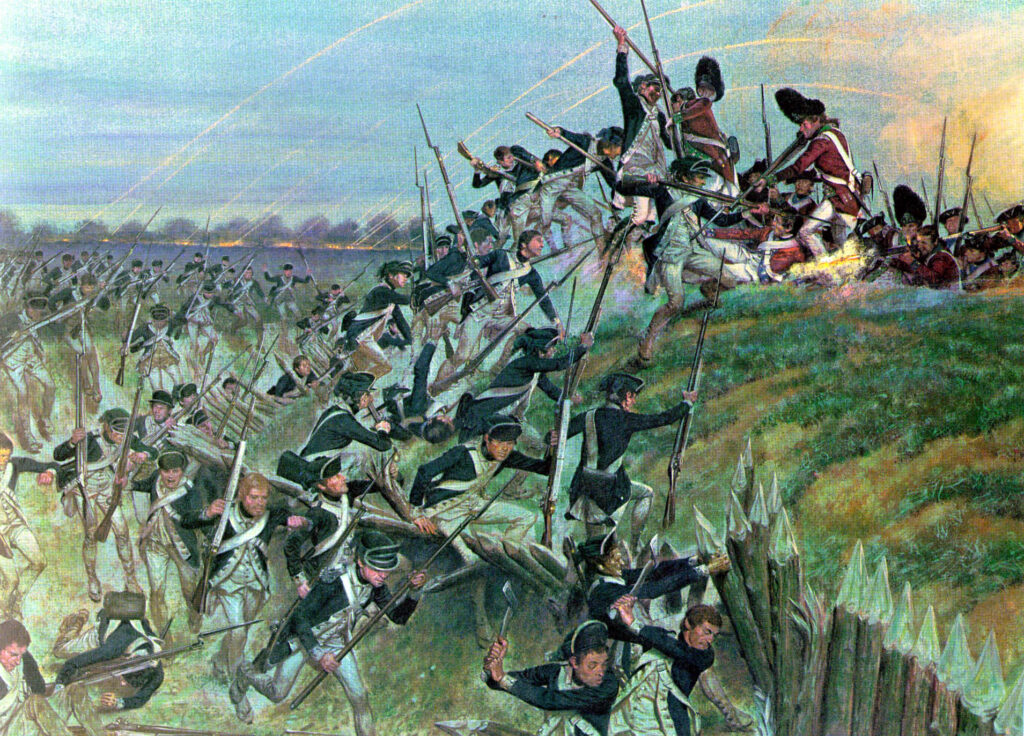
Outbreak of war
Following Parliament’s declaration that Massachusetts was in open rebellion in February 1775, General Gage set about moving against the rebels.
Measures taken by Gage:
- Sent out spies to assess the strength of colonial resistance – looking for rebel weapons stockpiles.
- Hunt began for the colonial leaders in Massachusetts, in particular Samuel Adams. Gage had orders to arrest these leaders.
- In April, Gage sent 700 men to Concord (17 miles from Boston) to seize arms and arrest rebel leaders.
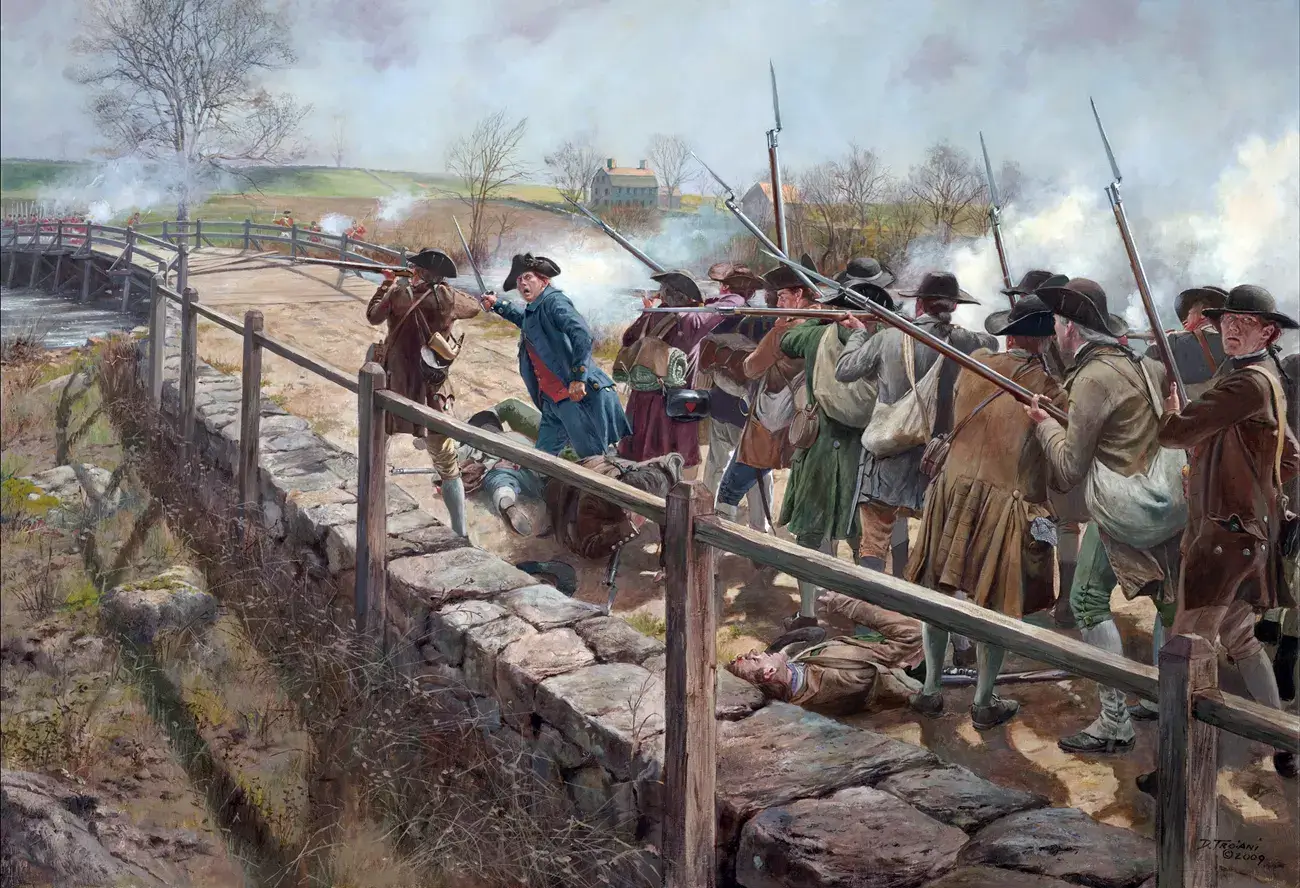
An elite force of younger colonists within the Massachusetts militia. Trained to take action “at a minute’s notice,” they were highly trained and elected their own officers. Four thousand minutemen assembled to block the path of British troops at Lexington.
Lexington and Concord
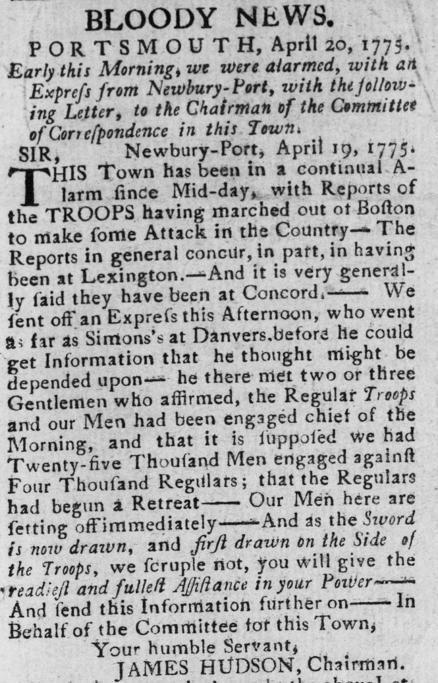
Gage’s movement of troops to Concord did not remain secret. This was the largest expeditionary force that the British had mounted as it was believed the colonists had three large cannon, and it would require significant man (and horse) power to bring them back to Boston. The Massachusetts militia was informed of British intentions by Paul Revere. Revere’s intelligence meant that Samuel Adams, who was staying in the town, could evade arrest.
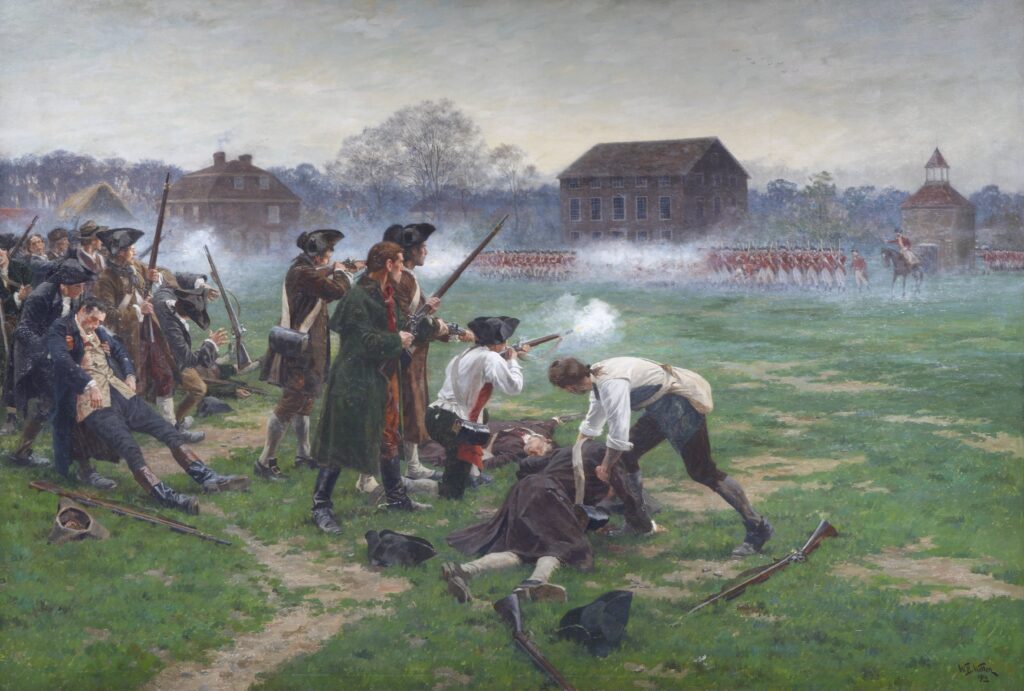
British troops found their path blocked by around 70 minutemen at Lexington. Shots were fired – it is still not clear who shot first – and eight colonists were killed. Radicals were quick to blame the British and rushed news of the “massacre” to Europe. The British pushed on to Concord where they encountered a larger militia force and faced a heavy exchange of fire. After destroying the military stores but failing to arrest the rebel leaders, British troops turned back to Boston. Whilst the British had no reason to continue to push on – they had destroyed the munitions – for the American militias the sight of British troops retreating under fire was a novelty that emboldened the militia that pursued them. Six different New England militias continued to attack the British as they moved back from Concord to Lexington and again back to Boston. From behind walls, houses and trees, the Americans fired at the British column, or waited in quickly organised ambushes to attack the soldiers. By the time that the British reached Charlestown, sixty-five men were dead and 180 wounded.
The results of Lexington and Concord
- Transformed the political dispute between the colonists and Britain into a military struggle in which militiamen had successfully fought against professional soldiers
- New York now offered strong support to Massachusetts and even the conservative Pennsylvania assembly voted to raise 4300 men – more unity amongst the colonies who were beginning to developed an army.
- Colonial commanders were confident enough to order an expedition to Canada to take the war to the enemy
- British were forced out of New England and forced southwards to New York where there was more loyal support
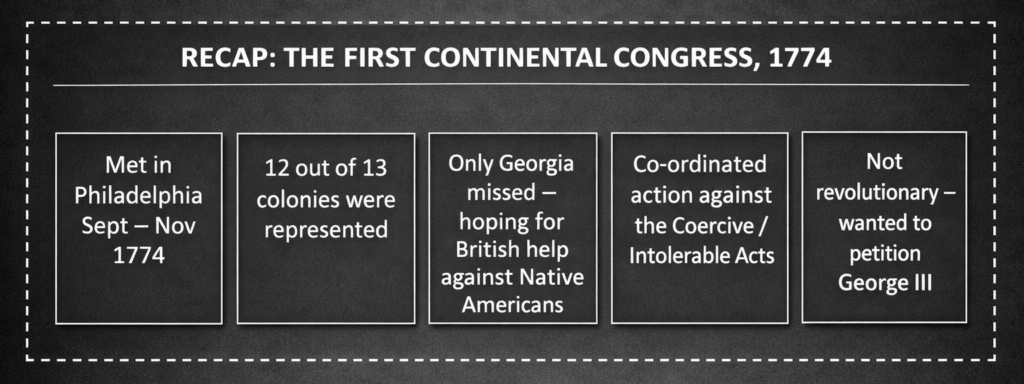
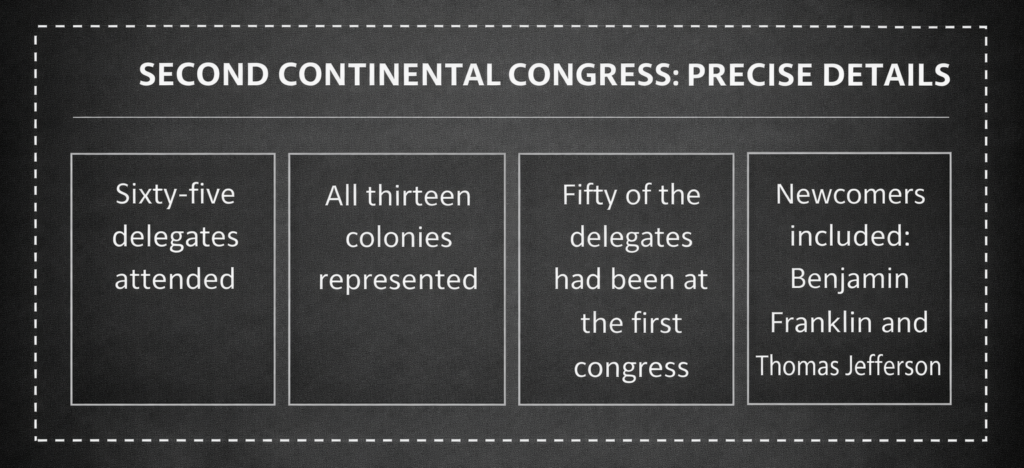
The Second Continental Congress, 1775
The Second Continental Congress, meeting on 10th May 1775, faced a very different set of challenges. By this time the first fighting between the colonists and British had broken out. After the clash at Lexington in April, an unofficial army of militia and volunteers had besieged Boston and the rebellion was spreading. Volunteers under Ethan Allan and Benedict Arnold had taken the British Fort Ticonderoga in upper New York and gained control of cannon large enough to bombard Boston. Unrest was spreading to the South and there was more talk of separation from Britain fuelled by British refusals to discuss peace proposals and inflammatory talk in Parliament and from the King.
The Congress had little choice but to take charge of the conduct of the war, but there was little agreement about declaring independence. Some delegates were forbidden to support moves for individual colonies to reject British rule and form their own governments and assemblies. However, the “flight of the governors” made it necessary to establish some legitimate authority.
Flight of the Governors
As the unrest seen in Boston spread southwards, key figures of the royal government left their colonies fearing the militia men, leaving a power vacuum. This become known as the “flight of the governors”.
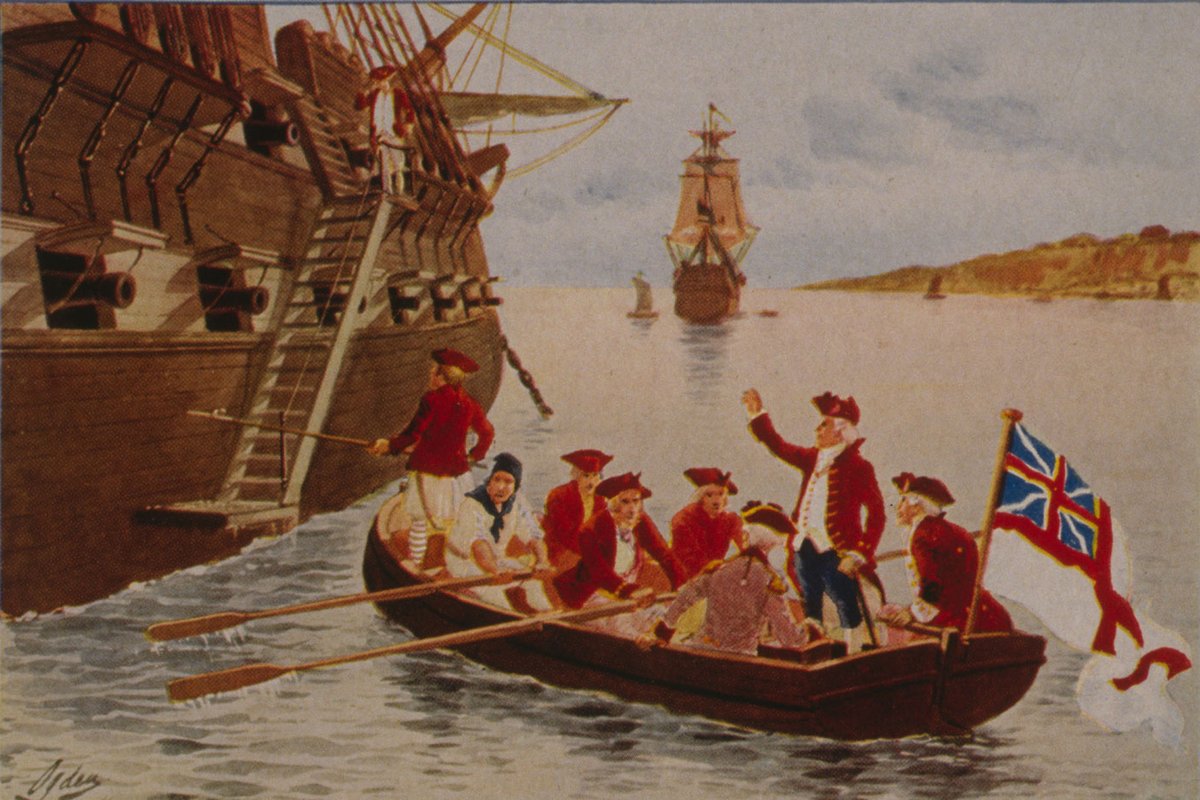
- • Governor of Virginia, Earl of Dunmore fled the capital Williamsburg in June and was taken on board a British naval vessel anchored offshore.
- Governor Josiah Martin of North Carolina fled in July.
- Lord William Campbell left South Carolina in September.
- Sir James Wright left Georgia in February 1776.
Therefore, the Congress, without formally declaring independence, took some steps towards it as they filled the power vacuums in the colonies.
Creation of the Continental Army
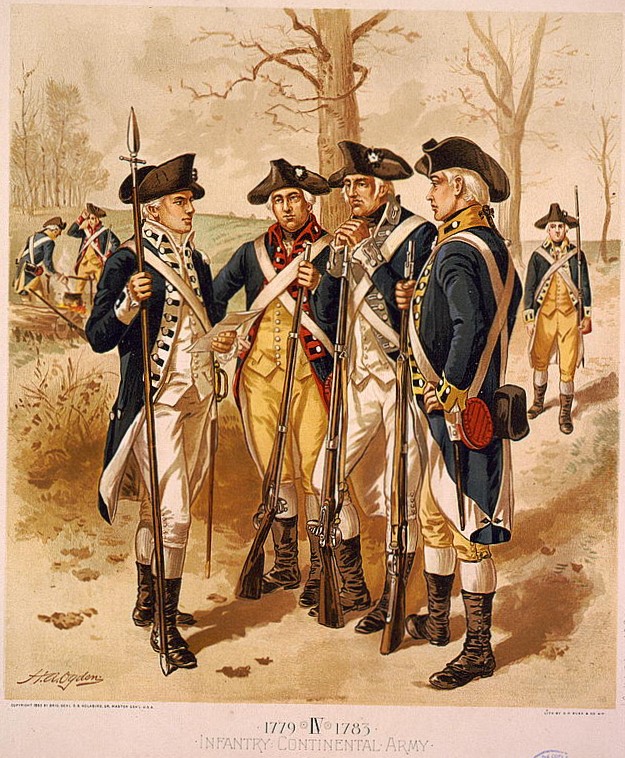
In June 1775 the Continental Congress found itself having to create an army to regularise the various militias and volunteers fighting around Boston and forced a quota on the colonies that would enable the create of a Continental army of 20,000 men. The Congress voted to issue $2mill. in paper money to finance the force. The various militias were combined and placed under the command of George Washington. Washington certainly looked the part – at 6ft 3” and with natural aristocratic manners, he had worn his militia colonel uniform at all the congressional meetings, reminding congressmen of his military experience in the Seven Years’ War. Crucially, Washington was from Virginia. Placing a southerner in command of what was still a predominantly New England army was expected to help cement colonial unity. Moreover, the choice of a wealthy planter – Washington reputedly owned 35,000 acres – would allay fears of radicalism.
Resistance
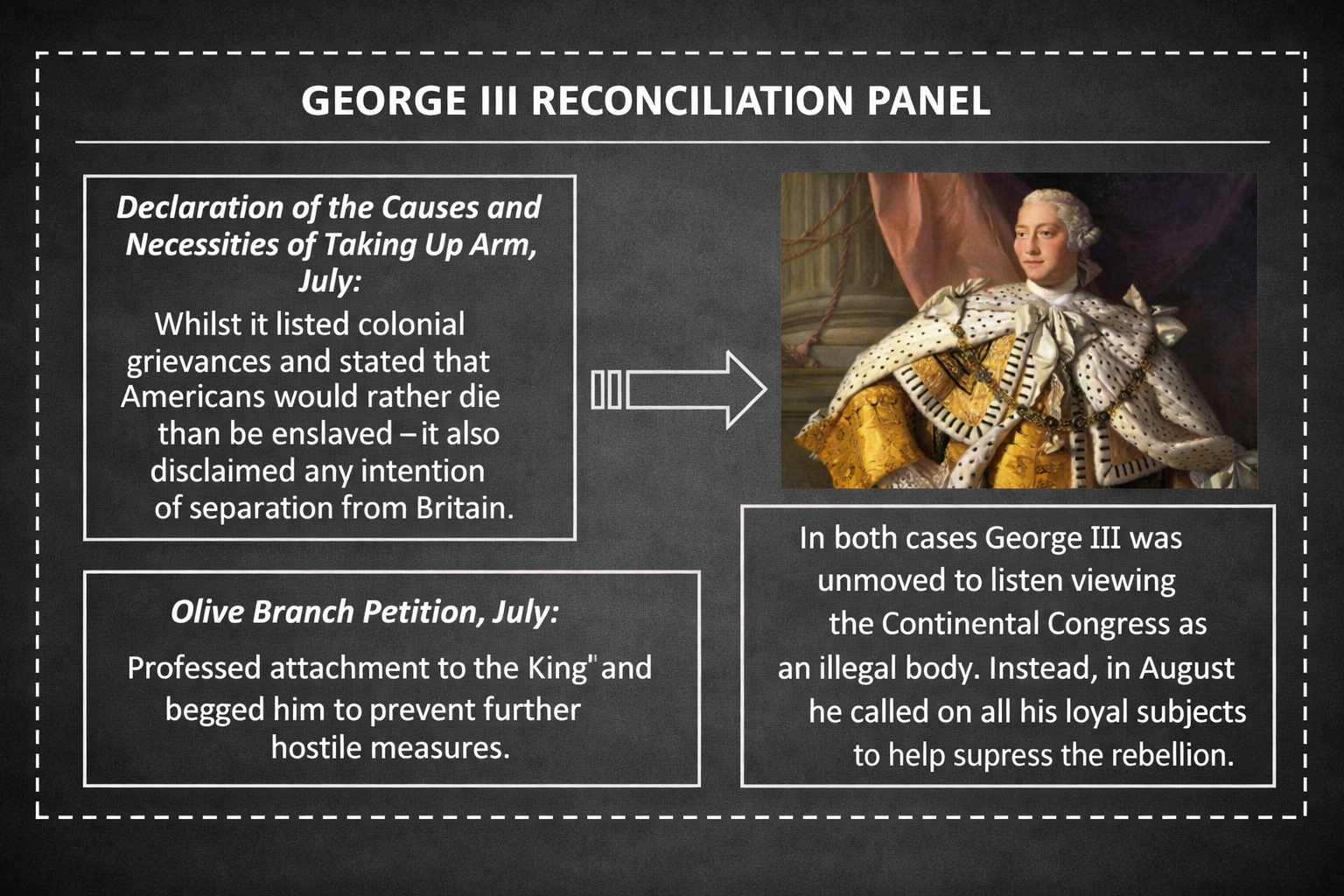
While Congress adopted some of the attributes of the national government, there was still resistance among many of the delegates to any further moves which led to separation from Britain. In fact a number of attempts were made to seek reconciliation with Britain:
Radical members of the assembly began to get more support for their views. John Adams had expressed his view that the time for petitioning Britain was past, instead “powder and artillery are the most efficacious, sure and infallible conciliatory measures we can adopt”. The bloodshed in April 1775 at Lexington and Concord had also hardened opinions and the idea that military action was necessary was only strengthen by the fighting at Bunker Hill – which came after the beginning of the Congress and the decision to form an army.
The British Generals
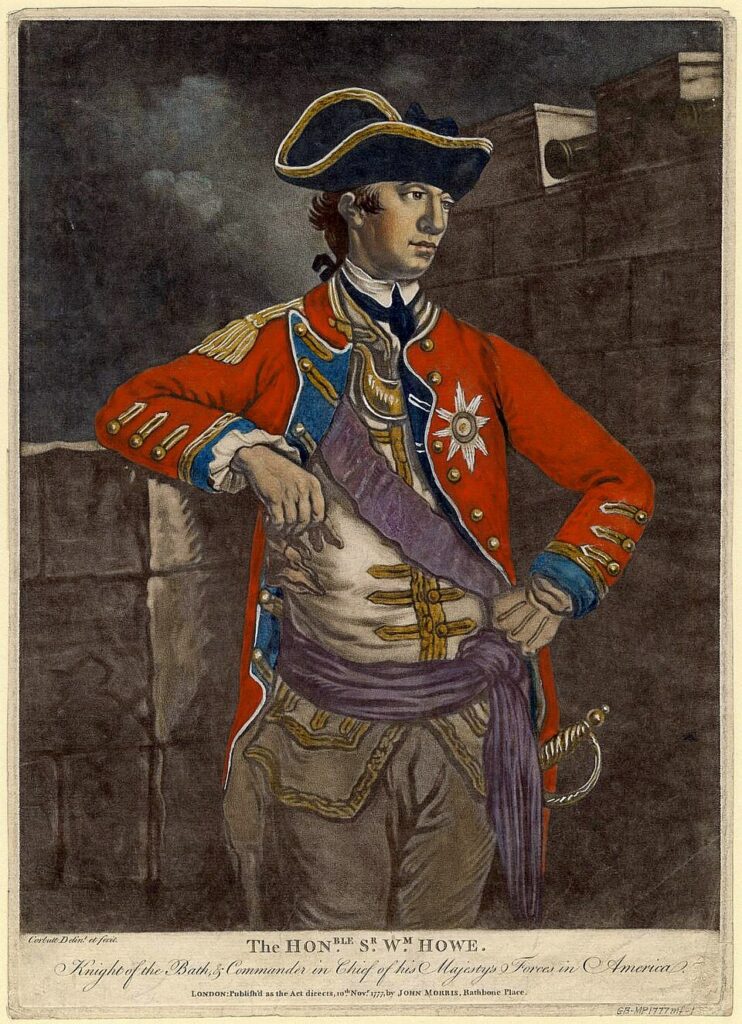
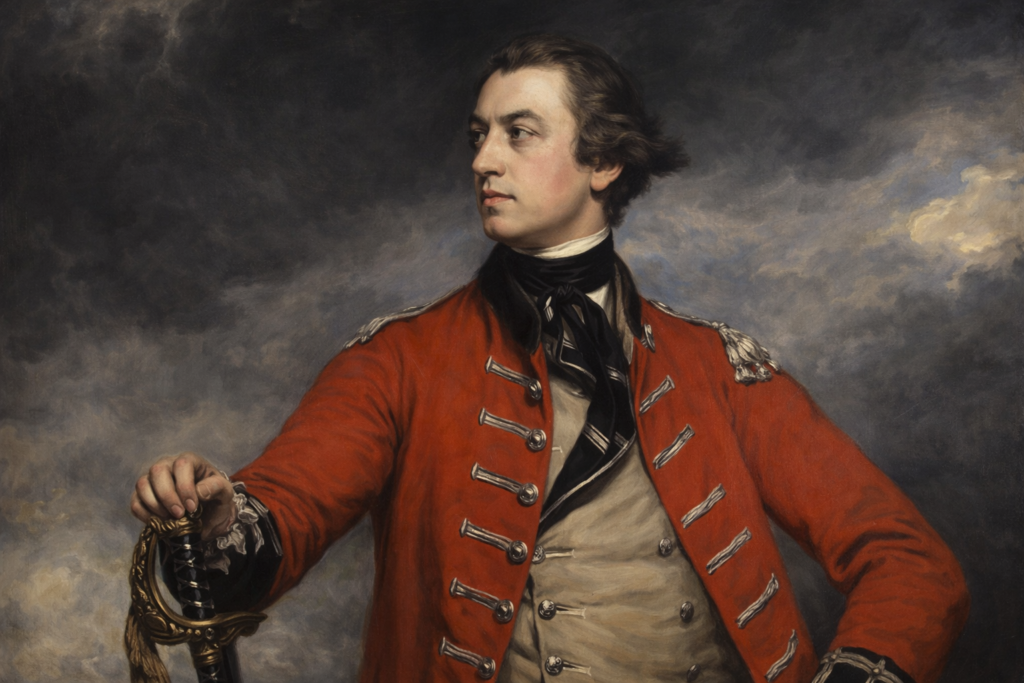
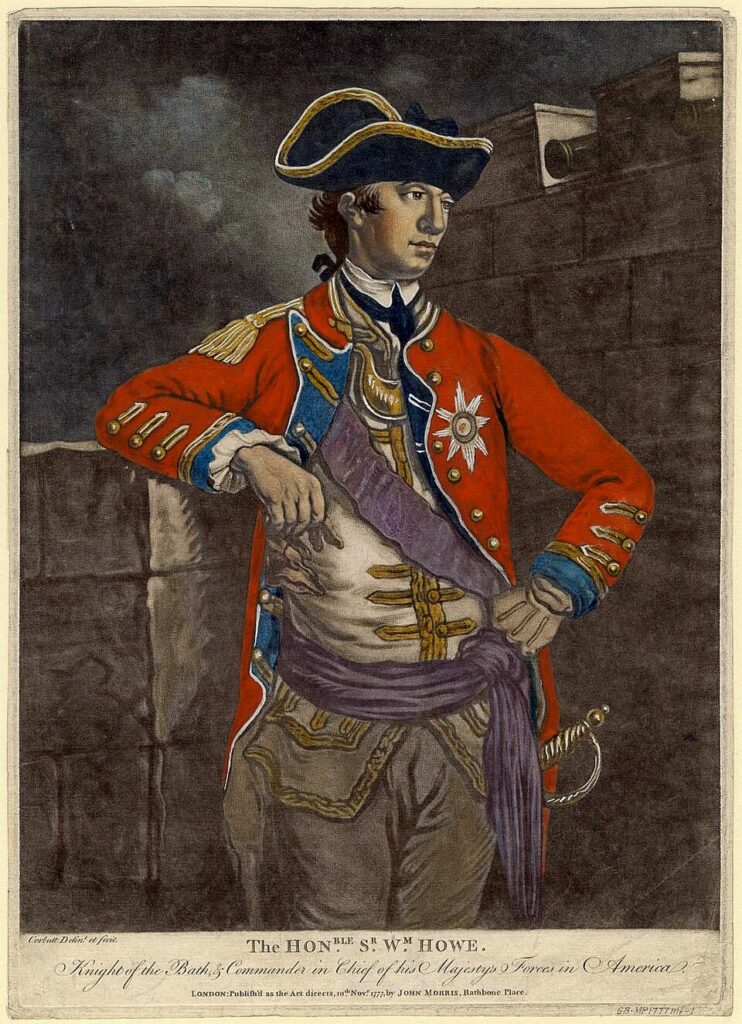
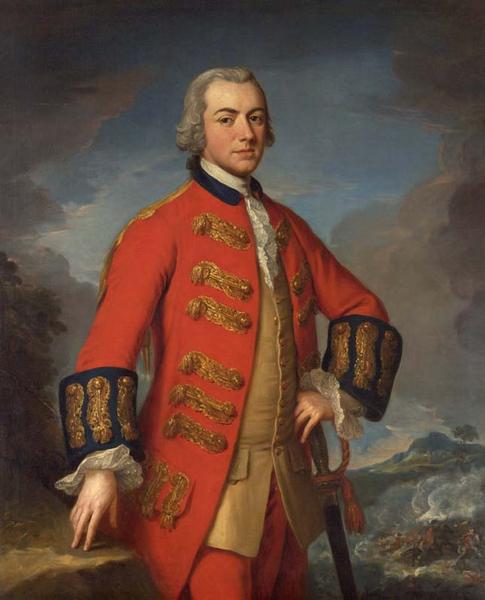
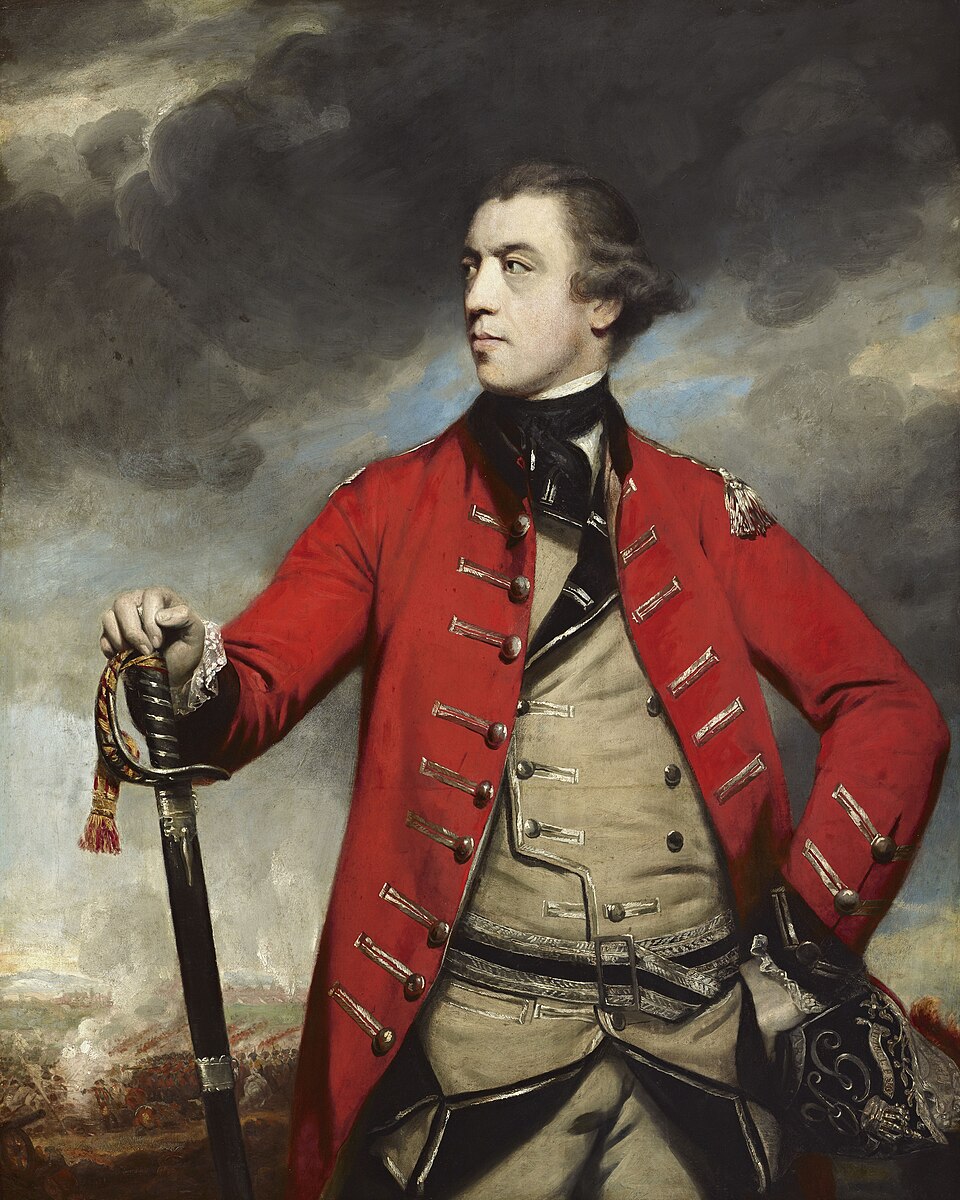
Three new British generals arrived in North America in 1775. William Howe replaced Gage as commander in chief; Henry Clinton came in as second in command. Howe, Clinton and Burgoyne disagreed about everything except that Gage had been too conciliatory to the American rebels. Perhaps he had. Clinton believed that Gage’s American wife had given information to the rebels. Though the allegation have never been proven, Mrs Gage, like most Americans, was torn in her loyalties.
Howe was also torn. Running for Parliament in 1774, he had opposed the government’s policies which he argued were bringing on a war against the Americans, a war he pledged not to fight. His brother George had died leading Massachusetts troops in the Seven Years War, and his family cherished the fact that Massachusetts had contributed to George Howe’s Westminster Abbey monument. His sister Catherine had arranged informal peace talks between their brother Richard, an admiral, and the colonial agent Benjamin Franklin. Now Howe found himself in Boston to direct a war in order to try and restore American loyalty to Britain. He thought that an overwhelming show of force would scatter the Americanmilitia; after that the New Englanders could be reconciled.
Henry Clinton saw the matter differently. Instead of reconciling New Englanders, he believed that Britain should isolate them. Instead of Boston, their base should be New York, a city he knew well since his father had been its governor for ten years. Ten thousand British troops could protect the loyal subjects in the middle colonies, while ten thousand more could be moved down from Canada rallying Loyalists and the Iroquois Native Americans, and cut off New England. This solution would require 20,000 troops and a naval blockade. Clinton thought an alternative would be to withdraw British forces to Canada and Florida. A taste of “anarchy and confusion which must naturally be their lot” would convince Americans that the rebellion was not worth it.
Howe and Clinton disagreed on long- and short-term goals, but also found a situation in Boston that they had not anticipated. When they left England they did not know that an American army surrounded Boston and controlled the countryside.
The Battle of Bunker Hill
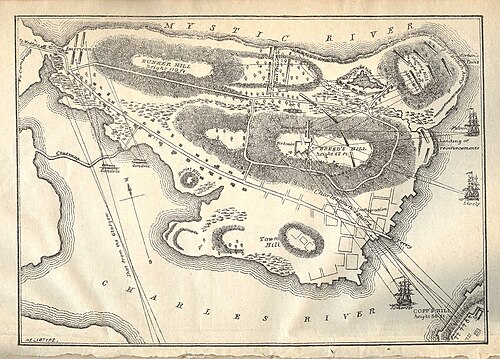
British Generals Howe, Clinton and Burgoyne launch a full-frontal attack on rebel defences in Boston. Although the British dislodged the Americans, the battle was the bloodiest of the war – one eighth of British officers killed in the entire conflict died in this battle. On 17th June, the reinforced British garrison under General Howe launched an attack in what became known as the Battle of Bunker Hill. Without waiting for an artillery bombardment, Howe launched a costly frontal attack. Only a shortage of ammunition for the rebels prevented even heavier British casualties. The larger rebel force suffered 138 killed and 276 wounded. The smaller but more experienced British force had 226 killed and over 800 wounded. Although a defeat for the Americans, Bunker Hill had nevertheless proven that they could fight and left Howe and the British with a new respect for their enemy. Howe, Clinton and Burgoyne realised that Boston, politically and militarily, was a poor British base. They believed that the best option was to leave, but knew that the British government would not tolerate an evacuation.
Washington Takes Command
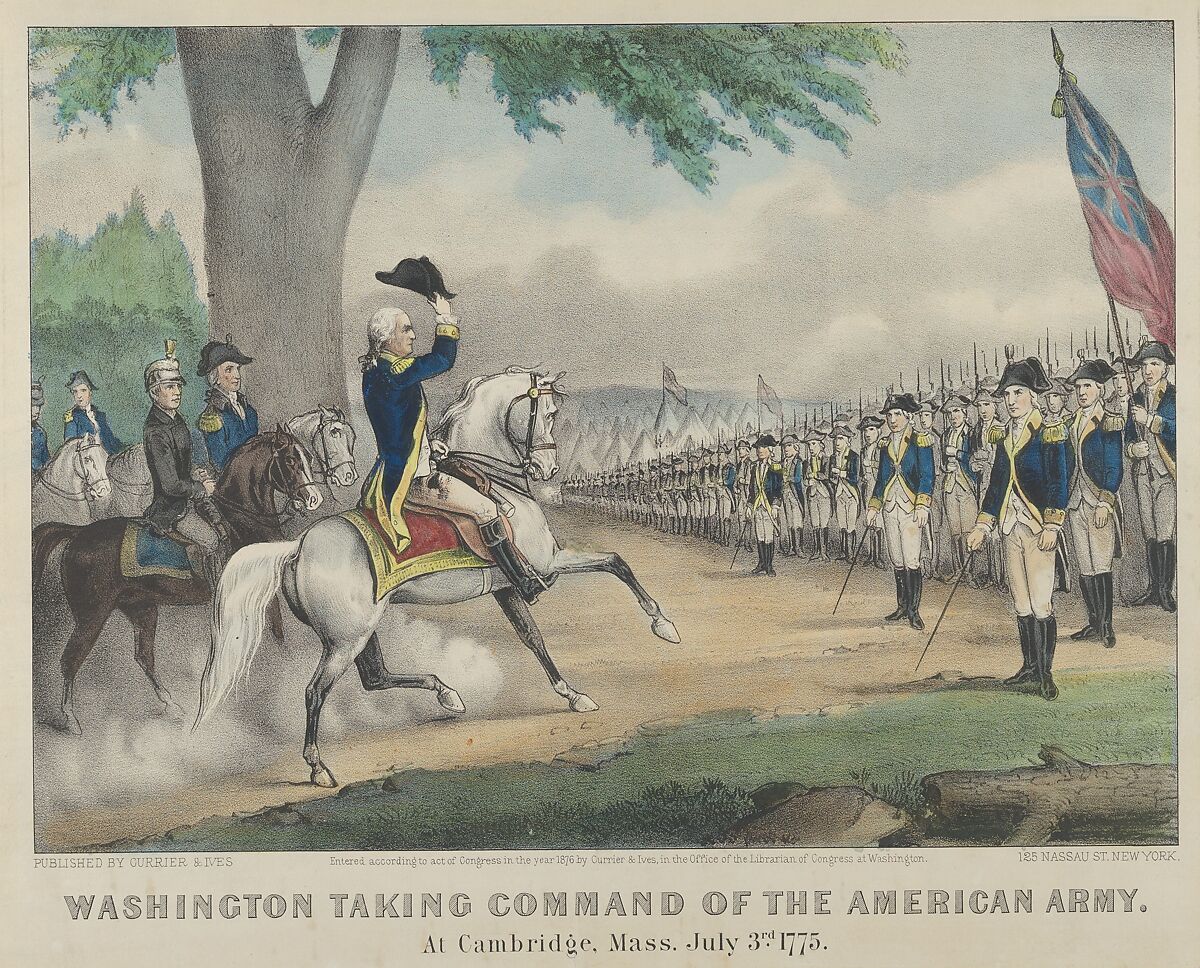
When Washington assumed command of the newly formed Continental army – he was not impressed by what he found. Only 15,000 poorly trained, poor equipped and poorly disciplined troops were fit for duty. They had fewer than 50 cannon, hardly any powder, and few trained gunners. The biggest problem, in Washington’s view, was the fact that the army lacked any kind of military order. Officers – most whom had been elected by the men, failed to inspect their troops or supervise their food and quarters. Washington set about attempting to create a professional army, similar to that of the British.
- Introduction of clear distinctions of rank and a restriction of the army democracy
- Incompetent officers and those guilty of misconducted were removed
- Increased levels of discipline – i.e. offences from card playing to desertion were punished by flogging.
Boston
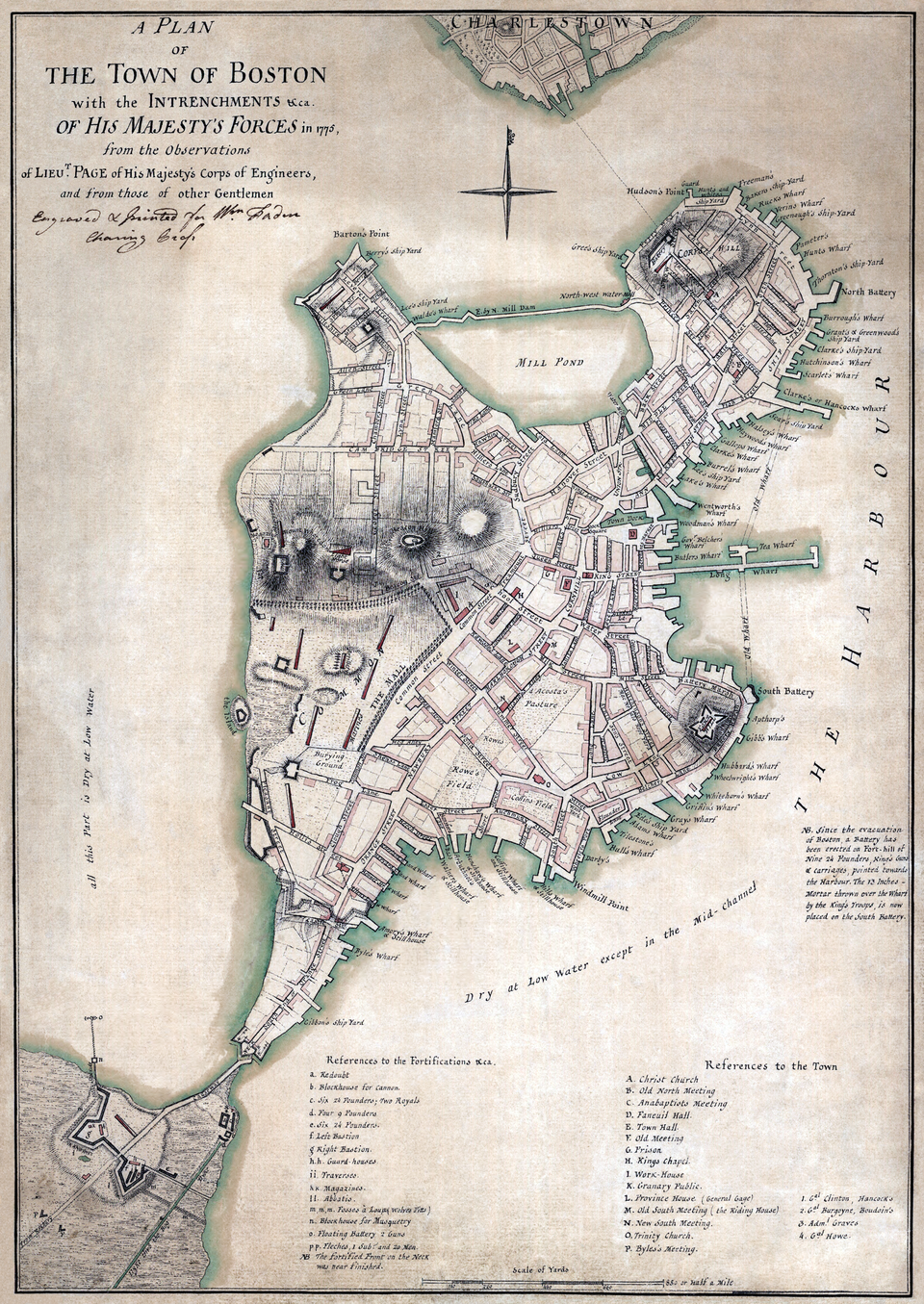
Washington was eager to attack Boston – but was restrained by politicians who feared the town’s destruction. By mid-winter Washington’s army were struggling due to a range of factors including – a shortage of munitions, dysentery and typhus and low numbers in comparison with the British. However, the British failed to take the advantage. British forces under General Howe, did nothing. British inaction was of benefit to the Americans, and it gave them time to consolidate their hold elsewhere.
The Invasion of Canada
In 1775, Congress decided to attack Canada, hoping that the French population would join their rebellion. Rebel commanders Montgomery and Arnold combined their forces in December and faced British General Carleton. The British commander had 1,800 men – French Canadian militia, seamen, and marines from British ships to defend Quebec. The American assault, made in a snowstorm on 31st December, failed: Montgomery was killed, and Arnold wounded. Over the next few weeks, the Americans suffered from a lack of supplies and from smallpox. Many deserted. The arrival of British reinforcements in the spring ended the siege. Montreal was abandoned as the Americans retreated from Canada in disorder.
The War in the South
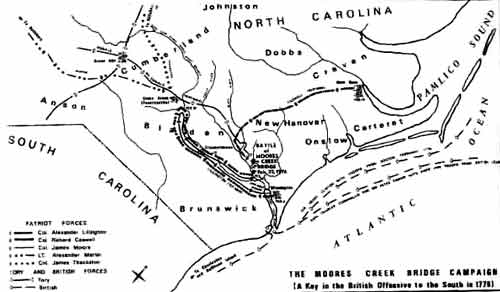
British Commander Lord Dunmore, with 500 loyalists (colonists who remained loyal to Britain) and with the assistance of several warships launched raids of Virginian coastal towns. He issued a proclamation promising freedom to any slaves who fled their rebel masters and aided the British war effort. This only solidified white southern support for the rebels in Virginia. Intelligence from royal governors suggested that co-ordinated operations by loyalists and (minimal) British forces could put an end to the rebellion in the Carolinas and Georgia. North Carolina was selected as the starting point – but the loyalists acted too soon and were defeated at Moore’s Creek (February 1776). General Clinton, with 1500 troops, sailed to South Carolina and tried – unsuccessfully to take Charleston.
The Evacuation of Boston
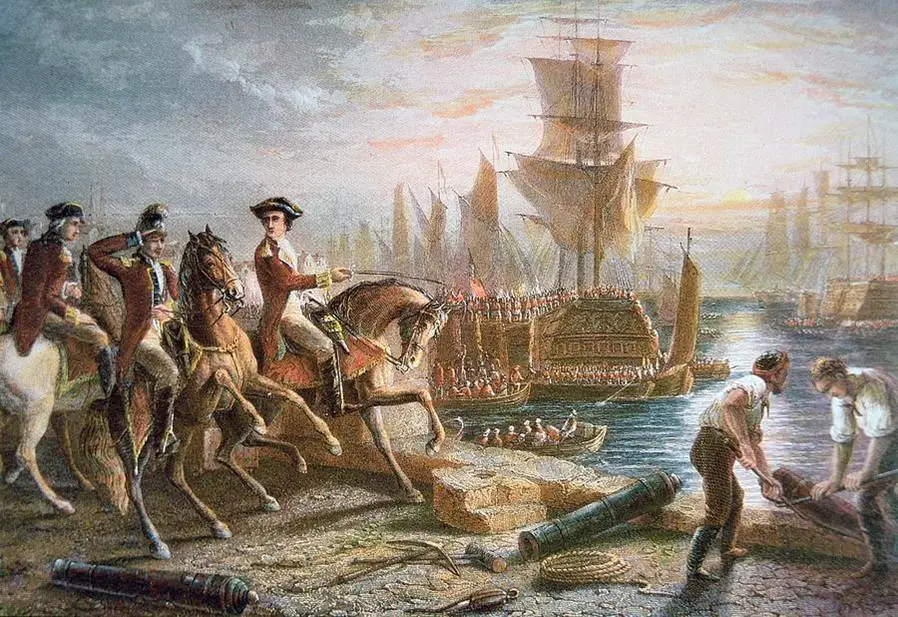
By early 1776 Washington had overcome some of his difficulties around Boston. Thanks to Henry Knox’s efforts, artillery from Ticonderoga was transported by sledge, boats and wagon more than 300 miles to Boston, arriving in February. On 4 March the rebels – 17,000 strong – captured Dorchester Heights over-looking Boston. Expecting an attack from the British, Washington asked his troops “the men of Boston” if they would allow a British triumph on that day (5th March) – the anniversary of the Boston Massacre. However, the attack never came – a northeast snowstorm brought snow and wind and made a British attack impossible. On 17th March Howe’s army, accompanied by more than 1000 loyalists, began evacuating Boston, sailing to Halifax, Nova Scotia – Britain’s main naval base. Congress commissioned a gold medal for Washington after the evacuation of Boston, making it the first Congressional Medal of Honour. Washington is pictured on the front; the reverse shows the view of Boston from Dorchester Heights.
The Declaration of Independence, 1776
Relatively few Americans talked seriously of independence until 1776. Many Americans continued to think of themselves as Britons overseas. Severing the emotional, political, economic and intellectual ties with Britain was no easy matter. Despite all the tension and fighting throughout 1775 many continued to hope for a conciliatory gesture from George III.
However, by early 1776 all hopes of reconciliation had faded:
- It was clear that George III and his ministers were determined not to reach out to the colonist rebels, but instead to subjugate them.
- Several months of fighting had weakened the British-American ties.
- Southern support for separation was strengthened when Governor Dunmore of Virginia offered slaves their freedom.
The importance of “ideas”
As indications grew that opinion in the colonies was moving towards independence – a process described by John Adams as “ripening”. He and his supporters in Congress began to put together a coherent policy – national unity against Britain, negotiations with foreign powers to get allies, strengthening of military forces and a clear statement of aims and values.
The spread of ideas tied to the European Enlightenment were also significant in helping to mould the developing mood. The ideas of English philosopher John Locke had been an important influence. Locke argued for a contractual theory of government – a contract between rulers and their people. If the ruler does not rule in the interests of the people, they have a right to change the government. Thus, rebellion is not a crime or sin, but a natural right of all citizens. The ideas of Montesquieu also appealed – in particular discussion around the separation of powers. This notion of government would protect liberty of citizens by ensuring that the different branches of government – the executive, the legislature and the judiciary – are separate and can block any moves of a government who wishes to oppress the people.
Baron de Montesquieu

“When the legislative and executive powers are united in the same person, or in the same body of magistrates, there can be no liberty… there is no liberty if the powers of judging is not separated from the legislative and executive… there would be an end to everything, if the same man or the same body… were to exercise those three powers.”
John Locke
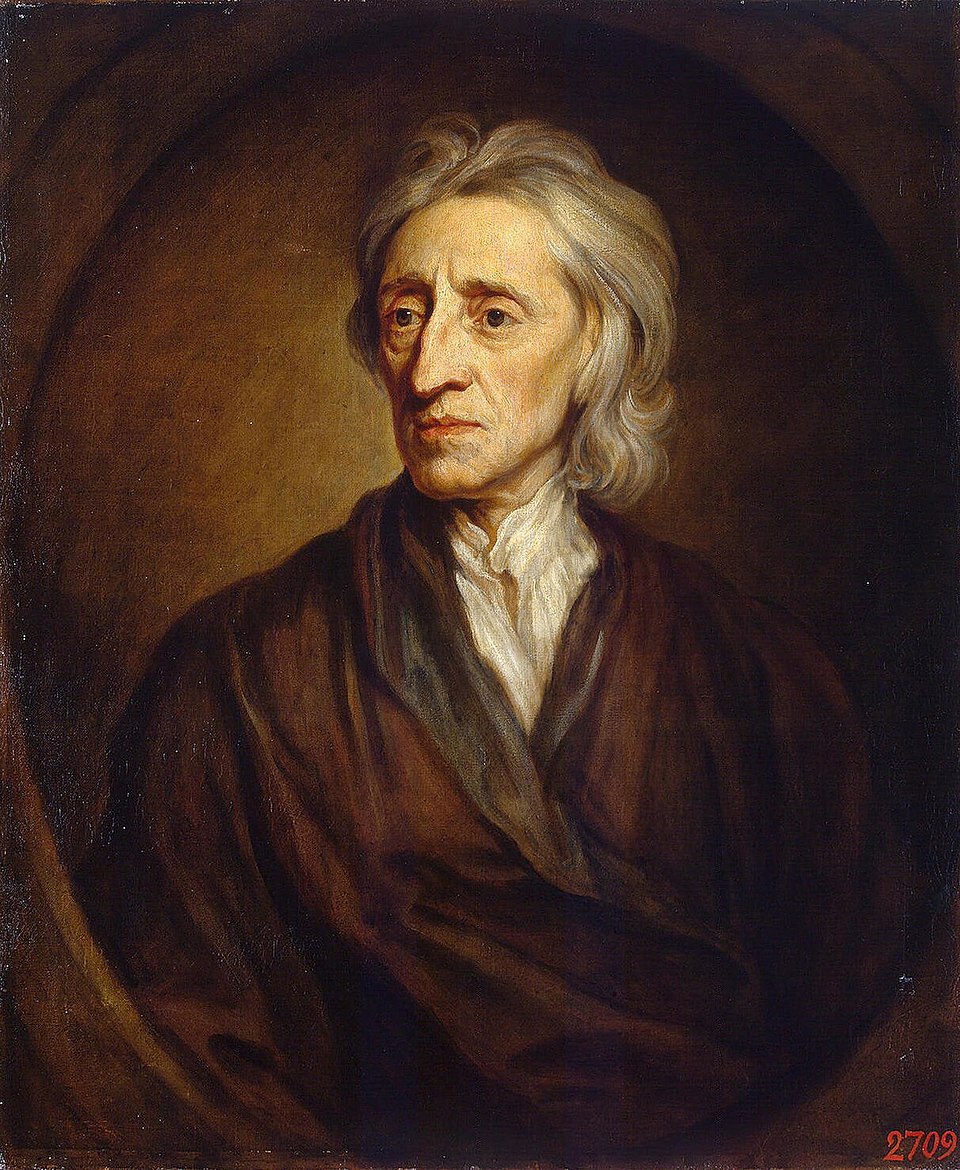
“The state of nature has a law of nature to govern it, which obliges every one: and reason, which is that law, teaches all mankind, who will but consult it, that, being all equal and independent, no one ought to harm another in his life, health, liberty or possessions.”
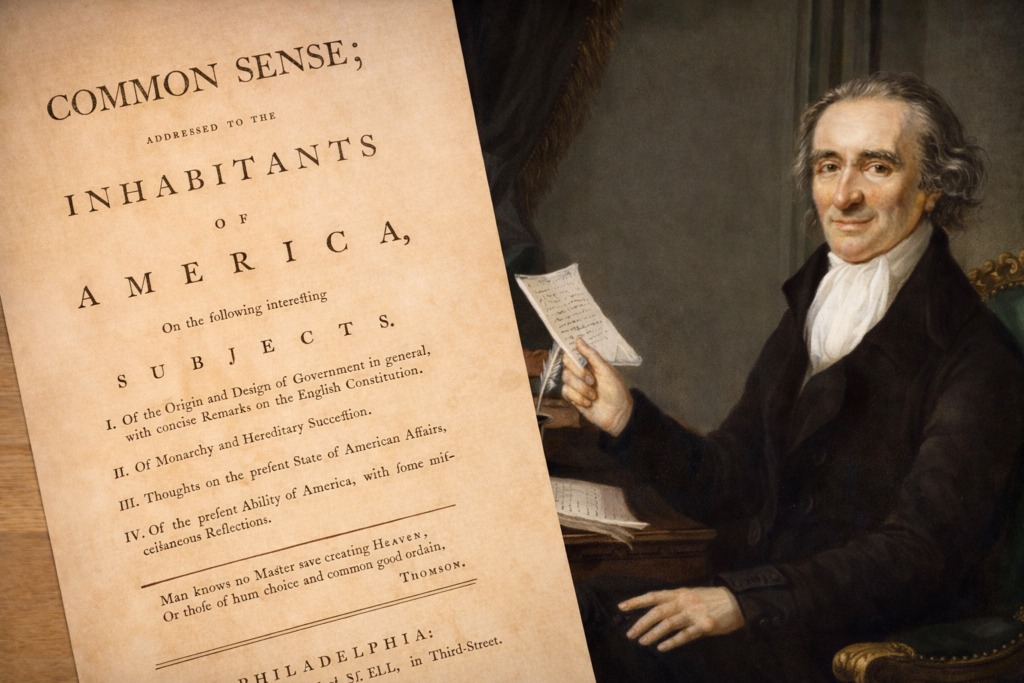
Thomas Paine: “Common Sense”
Thomas Paine, a 37‑year‑old Briton who arrived in America in November 1774, quickly immersed himself in radical politics and became one of the most influential voices of the revolutionary movement. In January 1776, he published Common Sense, a pamphlet that sold an extraordinary 120,000 copies and became perhaps the most successful publication of the entire period. In it, Paine dismissed any hope of reconciliation with Britain as “a fallacious dream” and denounced George III as “the Royal Brute,” using sharp, accessible language to attack the tyranny of kings. He urged Americans to cast off outdated European ideas and seize the opportunity to build a new society founded on virtue, liberty, and republican principles. Independence, he argued, was not only desirable but inevitable, and the colonies should establish a republic based on a broad franchise and annual assemblies. Paine’s bold, eloquent vision helped shift public opinion decisively toward independence and gave the Revolution its most powerful early statement of purpose.
These ideas had been discussed in the colonies and were partly behind the protests of the 1760s. Alone they would not have brought about change, but they provided an important justification for the educated and thoughtful members of congress when circumstances led them to take the crucial decision for independence.
Developments since 1775 had virtually established independence, but it was an important and dangerous step to formally declare it. The thoughts of many were summed up well by Sam Adams who exclaimed:
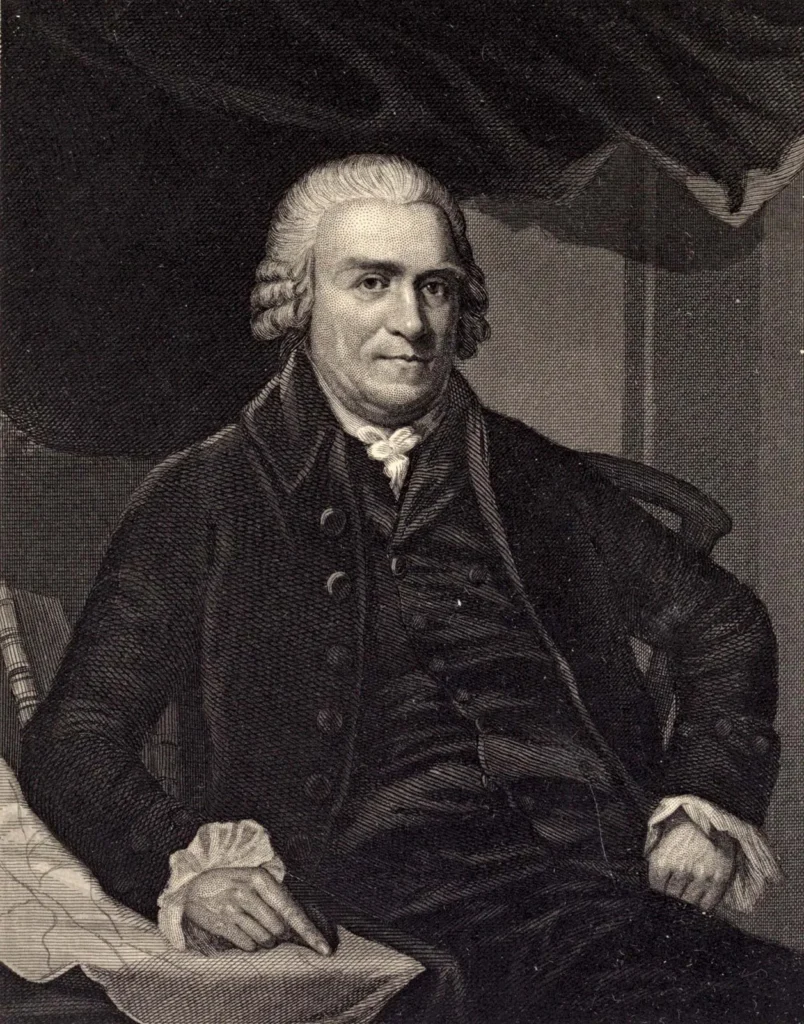
“Is not America already independent? Why then not declare it?
April 1776
Was Sam Adams right? Was America already independent?
Most Congressmen believed that foreign aid was essential to America’s survival as a “new” nation. But it was believed that this foreign aid would not come until the Americans formally declared independence.
By 1776 all royal governors had been replaced by makeshift rebel governments.
Congress exercised sovereign powers: making war, issuing money and preparing to negotiate treaties.
Congress could not declare independence without the prior consent of individual colonial conventions. Therefore, the momentum for independence had to originate in the colonies.
Throughout the spring and summer of 1776 independence was being enthusiastically debated in various bodies and institutions – thus it was not being foisted on the American people via a small group of radical Congressmen.
In May, Rhode Island legislature repealed legislation ordering new officials to take an oath of allegiance to the Crown and removed all references to the king from its charter and laws.
In May, Virginia was the first colony to instruct its delegation to propose independence. Other colonies soon followed.
Pennsylvania, Delaware, New Jersey, New York and Maryland legislatures instructed their delegates not to agree to independence.
Developments in Congress
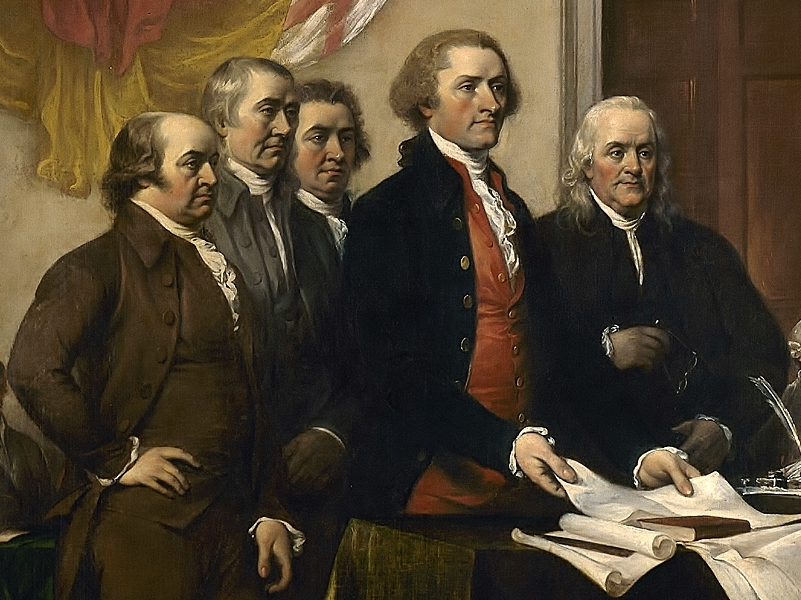
On the 7th June 1776, a delegate from Virginia, Richard Henry Lee, moved a resolution “That these United Colonies are, and of right ought to be, free and independent States”. Recognising the need for agreement a committee was set up to work on a draft declaration. The committee consisted of:
- Thomas Jefferson (VIRGINIA)
- John Adams (MASSACHUSETTS)
- Benjamin Franklin (PENNSYLVANIA)
- Roger Sherman (CONNECTICUT)
- Robert Livingston (NEW YORK)
The work of Thomas Jefferson
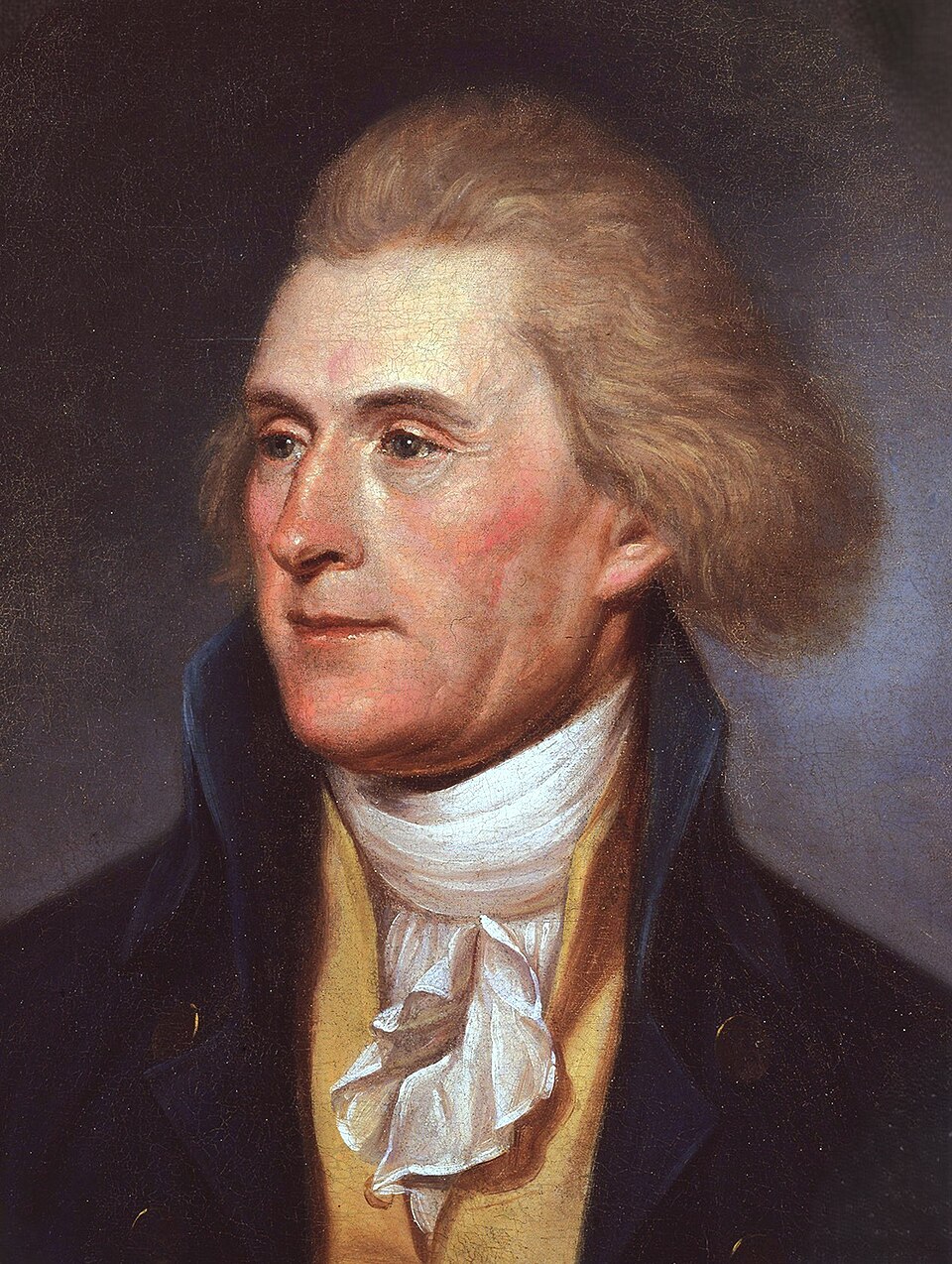
Jefferson, a 33-year-old Virginia planter, did most of the work. He did not have to come up with new ideas or arguments. He drew from the principles set forth by John Locke and the other Enlightenment writers, and from Virginia’s Declaration of Rights. Jefferson worked on the declaration of independence for two weeks, consulting with Adams and Franklin on its content. The draft was presented to Congress on 28th June. The draft was edited, and a lot was cut out, including the unjustified claim that the British were responsible for the introduction of slavery into the colonies – when it had been the colonists themselves who had imported slaves. This amendment was not made on the grounds of historical accuracy, but rather to avoid upsetting the southern slave owners. Although Jefferson claimed that Congress had “mangled his manuscript”, the final document was probably improved by congressional editing.
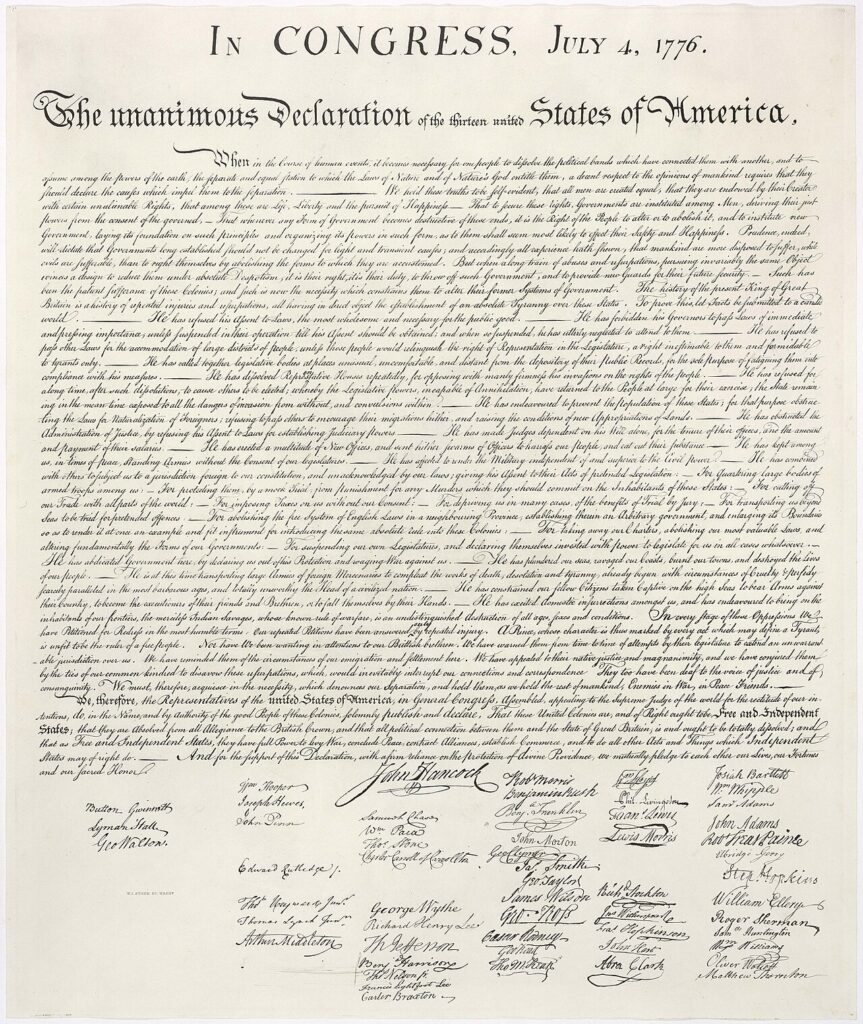
The purpose of the Declaration of Independence was to establish a moral and legal justification for the rebellion. The preamble, a lucid statement of the political philosophy underlying the colonists’ assertion of independence, was the document’s most significant part:
We hold these truths to be self-evident, that all men are created equal; that they are endowed by their creator with certain unalienable rights; that among these are life, liberty and the pursuit of happiness. That, to secure these rights, governments are instituted among men, deriving their just powers from the consent of the governed; that, whenever any form of government becomes destructive of these ends, it is the right of the people to alter or abolish it, and to institute new government, laying its foundation on such principles, organising its powers in such form, as to them shall seem most likely to effect their safety and happiness.
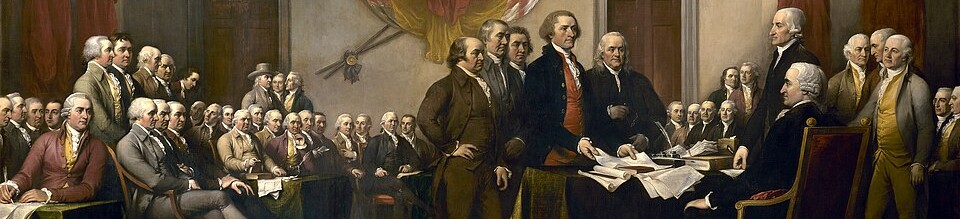
Having asserted that the American people had a right to changes their government if it violated their rights, the Declaration went on to list the wrongs committed against the colonists since 1763, charges ranging from interfering in colonial government to waging war against the colonies. All the charges were laid squarely, if unfairly, at the door of George III, who was accused of seeking to establish an “absolute tyranny over these states”.
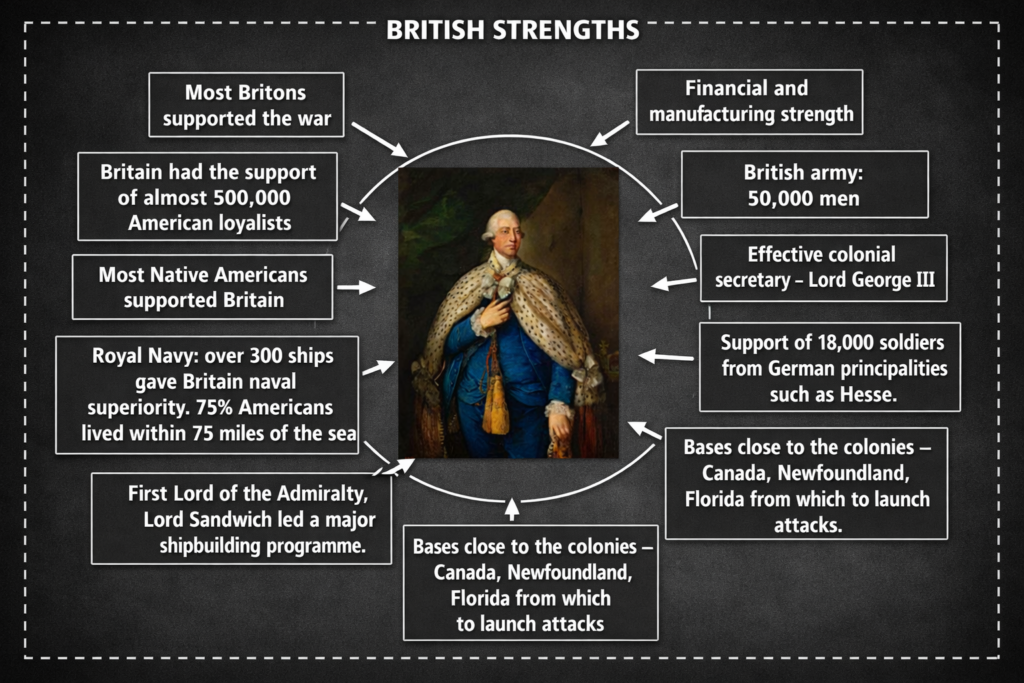
The Declaration of Independence was formally adopted by Congress on 4th July 1776. Over the next few weeks, the document was read to troops and public gatherings. However, it was one thing to declare independence; it was another thing to win it. While Congress was in the process of declaring independence, Britain had 32,000 troops ready for a major assault.
The situation in 1776
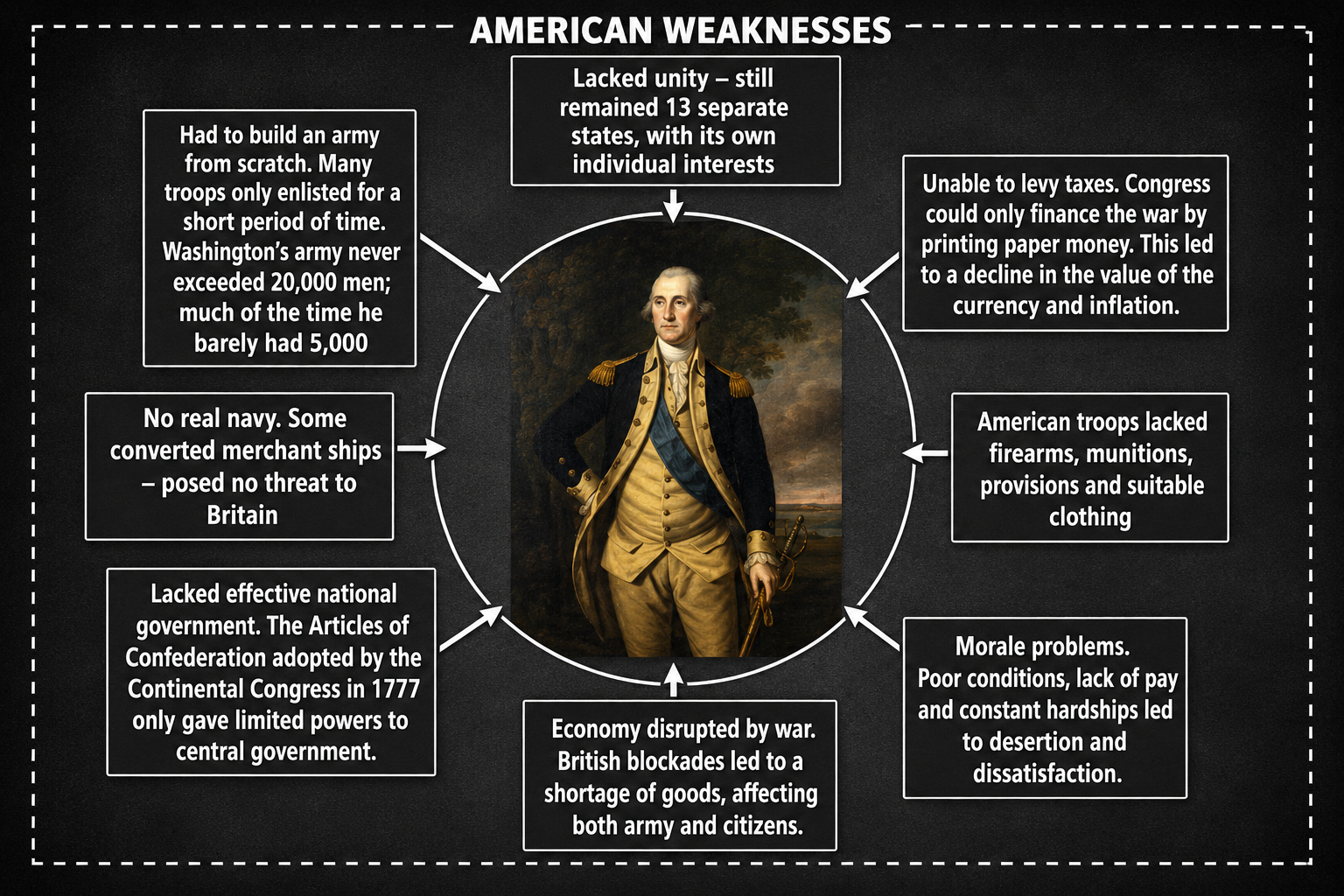
Despite the fact that Congress was in the process of declaring independence, it seemed likely that Britain would crush the rebels in the ongoing military activity.
Military Operations 1776-1777
Why did Britain not win the war in 1776-7?
General William Howe
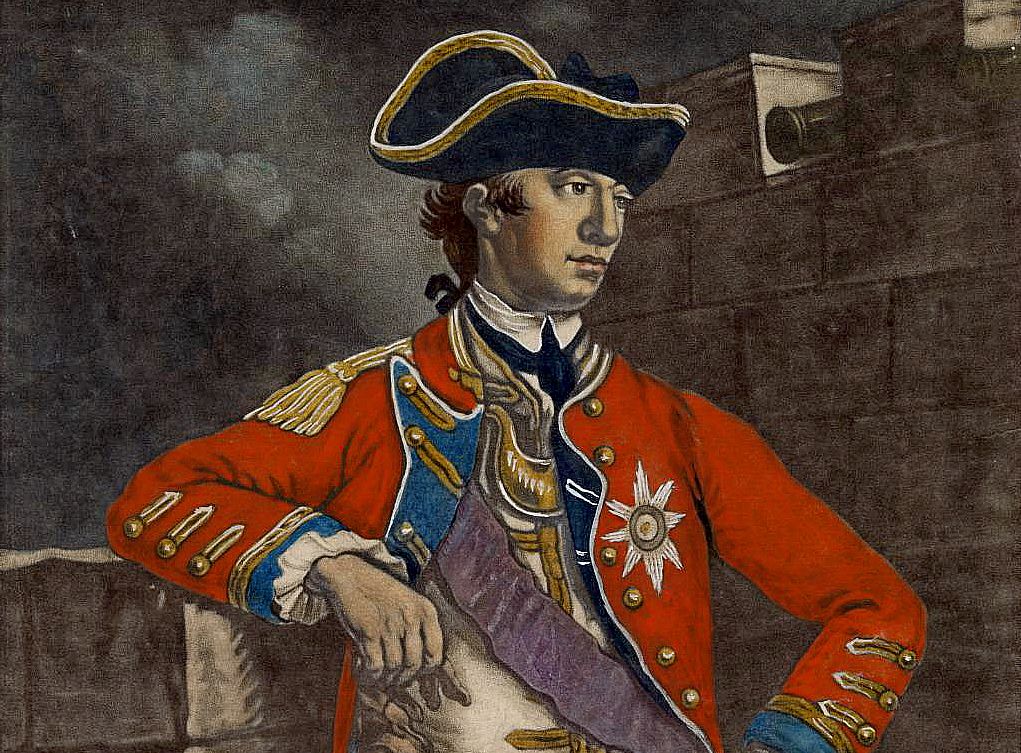
- Second cousin of George III
- Commanded troops in America in 1776
- Had previous successful experience fighting in America during the Seven Years War – helping Wolfe to capture Quebec
- Had previously declared in 1774 that he was against a policy of coercion
- By August 1776 – commanded 32,000 men – the largest transoceanic expedition that Britain had ever carried out
- Questions remain regarding his determination to win.
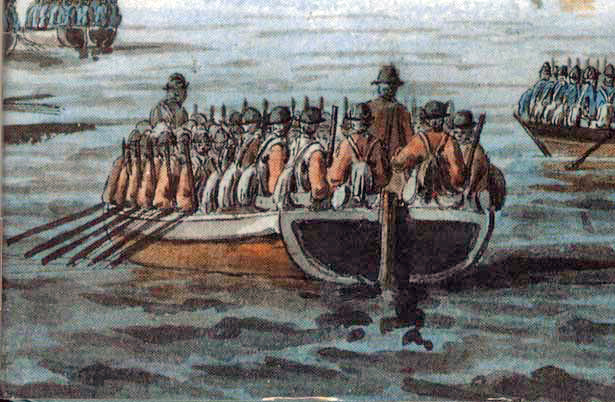
Following his retreat from Boston in March 1776 to Halifax, the British main naval base in Nova Scotia, Howe began to plan an assault of New York city. The assault began with Howe landing his army at Staten Island in July. He had hoped to lure Washington into battle, defeat him and negotiate an end to the rebellion. His army was supported by a fleet commanded by his elder brother, Admiral Lord Richard Howe, who was in overall command of British forces in America. Like William, Richard had some sympathy with the Americans and favoured a policy of conciliation rather than coercion.
New York
Washington, with only 20,000 men, would have been best abandoning New York. Given British command of the sea, the place was indefensible. But as Congress had insisted that Washington fight, he was left with little choice.
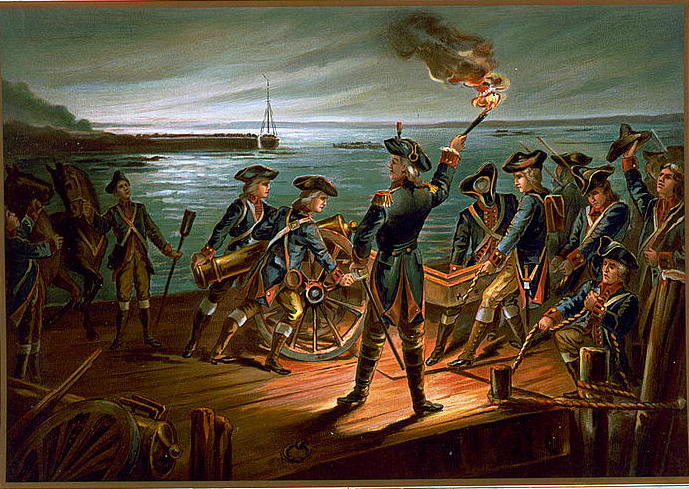
At the Battle of Long Island (August), Howe defeated the Americans, who suffered 2000 casualties, six times as many as the British. Asked to explain the defeat, John Adams said “In general, our generals were outgeneralled”. However, thanks to Howe’s inertia, Washington was able, under a cover of dense fog, to withdraw his army to the mainland. Rather than continue the military momentum, Howe sought to negotiate peace. In September he met with representatives from Congress including Benjamin Franklin and John Adams. However, the recently agreed Declaration of Independence proved a stumbling block, as Howe was not empowered to discuss a treaty between Britain and an independent America.
American retreat
In mid-September General Howe’s troops landed at Kips Bay in Manhattan, between the two halves of Washington’s army. Howe’s caution again gave Washington time to withdraw. Several weeks of stalemate followed and rather than attack, Washington was able to retreat slowly across New Jersey.
On 16th November British forces captured Fort Washington, taking nearly 3000 American prisoners and immense quantities of weapons and supplies – a shattering blow for Washington. For the next three weeks the American army was in full retreat. Many militiamen returned home and by the time the army crossed into Pennsylvania in December, it had dwindled to 3,000 men.
Lord Howe now issued a proclamation offering all who would take an oath of allegiance to the king, “a free and general pardon”. Thousands applied for pardons. In December, British forces seized Newport, Rhode Island. A disconsolate Washington wrote, “I think the game is pretty near up”.
Trenton and Princeton
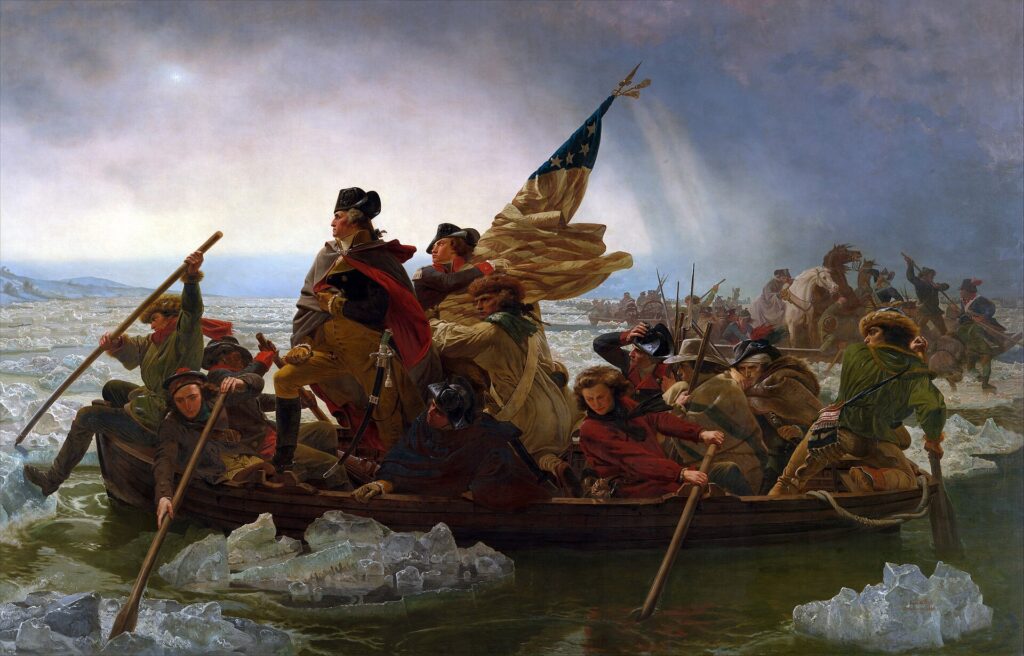
Instead of marching on and making progress towards Philadelphia, General Howe went into winter quarters, throwing away another opportunity to destroy American morale. This respite gave Washington the time to regroup. Reinforced by militia units and recognising the need to end the campaign with a victory, he recrossed the Delaware river with 1,600 men on Christmas Day. Attacking the unsuspecting garrison at Trenton, New Jersey on 26th December, he took more than 1,000 prisoners. American casualties totalled only four wounded.
Washington followed this success with a similar coup at Princeton on 3rd January 1777. Howe was forced to give up most of his gains in New Jersey. More importantly, they breathed new life into the American cause. Taking up winter quarters at Morristown, Washington rebuilt his army. Washington came to realise that he needed to deploy more caution in his tactics moving forward. Knowing that the terms he was fighting on were not equal (Howe commanded more men than Washington had in his Continental army), Washington recognised that he could not risk his entire army in one decisive battle again.
British plans in 1777
Britain moved confidently into the war in 1777. With Canada secure and New York captured they had great hopes that they would win the war. In 1777 there were two large British armies in North America:
General Burgoyne: Based in Canada

General Howe: Based in New York

Aimed to come down the Hudson Valley and isolate New England from the other colonies.
Although ordered by Lord Germain to co-operate with Burgoyne, Howe’s main aim was to capture Philadelphia

Therefore – what was perceived in London as a co-ordinated operation in which both forces would link up in Albany, in reality had become two separate campaigns. Both campaigns were weakened to an extent due to the poor planning by the British government in London. Historian Jeremy Black has described Howe and Burgoyne as “two lacklustre generals, with no overall unity of command and no clearly defined master plan or guidance from Germain”.
Howe’s campaign: the capture of Philadelphia
Howe began his move to Philadelphia in July. Rather than march across New Jersey, he moved in 15,000 strong army by sea. After six weeks crammed on board transports, the sickly soldiers landed at the head of Chesapeake Bay, barely 40 miles closer to Philadelphia than they had been when they left New York.
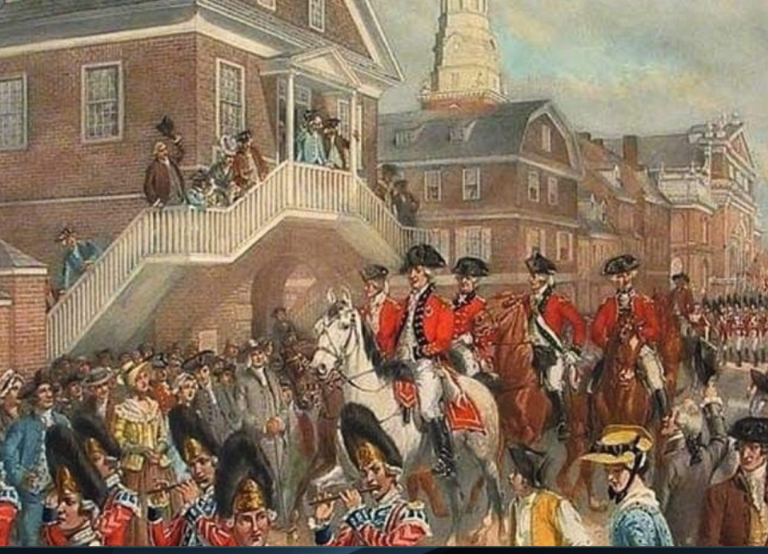
The British experienced successes on the battlefield as they defeated Washington’s armies throughout September and then captured Philadelphia on 26th September. This appeared to be a major triumph. However, Philadelphia’s fall did not lead to the rebellion’s collapse. Although it had symbolic importance, Philadelphia had no strategic value. Congress (which had been based there) simply moved to Lancaster, and as long as Washington commanded an army (which he did – Howe had failed to destroy his army), the rebellion would continue. Howe spent the winter in Philadelphia, having again failed to win a decisive victory against Washington.
Introducing ….. General John Burgoyne
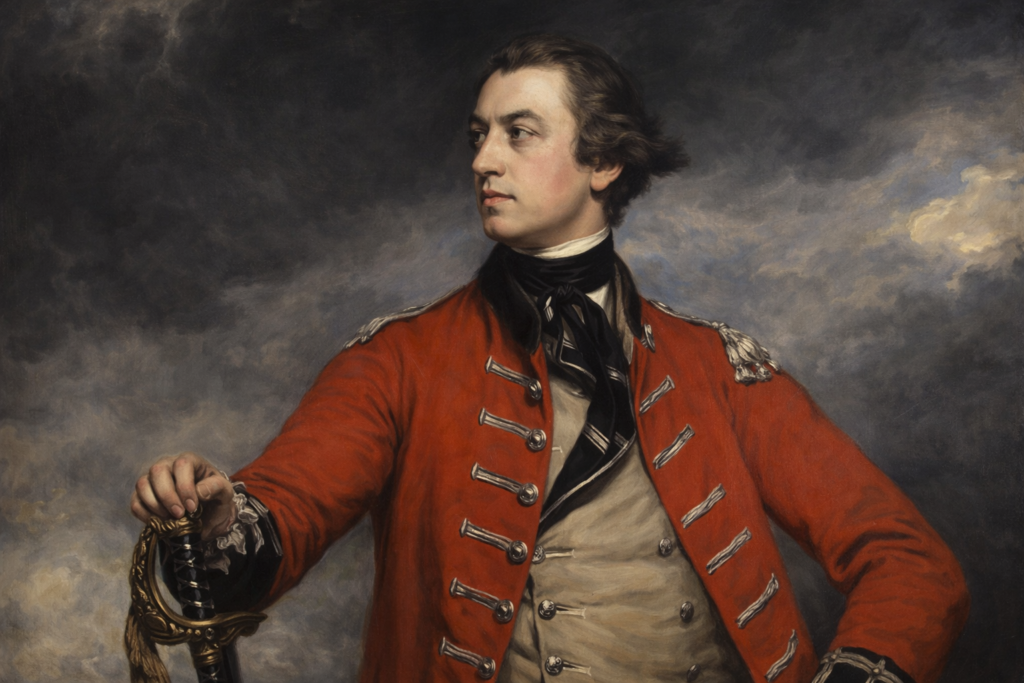
- A professional soldier from a gentry family
- Served in the Seven Years War
- Led an expedition to relieve Quebec in 1775
- Following his failure at Saratoga in 1777 he went on to dabble in politics and was a dramatist.
Burgoyne’s campaign
Leaving Canada in June, Burgoyne’s 9000 strong army recaptured Ticonderoga. However, following this he made a series of bad decisions including choosing inhospitable terrain for the path southwards. Encumbered by an enormous baggage train, his army found movement difficult as patriot militias blocked roads, destroyed bridges and attacked stragglers. It took Burgoyne three weeks to cover the 23 miles to Fort Edward.
He had hoped that loyalists would join his forces; however, this did not happen. In fact, the presence of the British forces actually created rebels out of the normally neutral. Native American allies were also more of a hindrance than a help. During the advance, Iroquois warriors attacked local farms and killed several families. The murder and scalping of Jane McCrea particularly alienated locals who had been sympathetic to Britain. When Burgoyne demanded that his allies identify the culprits, the Iroquois refused and most went home.
A lack of supplies began to cause problems for Burgoyne’s forces. In early August six hundred of his troops who had been out on a foraging mission were killed or captured by the New Hampshire militia. Relief forces of 1600 British troops and Iroquois also failed to link up with Burgoyne as they too struggled with a lack of supplies following skirmishes with local militias.
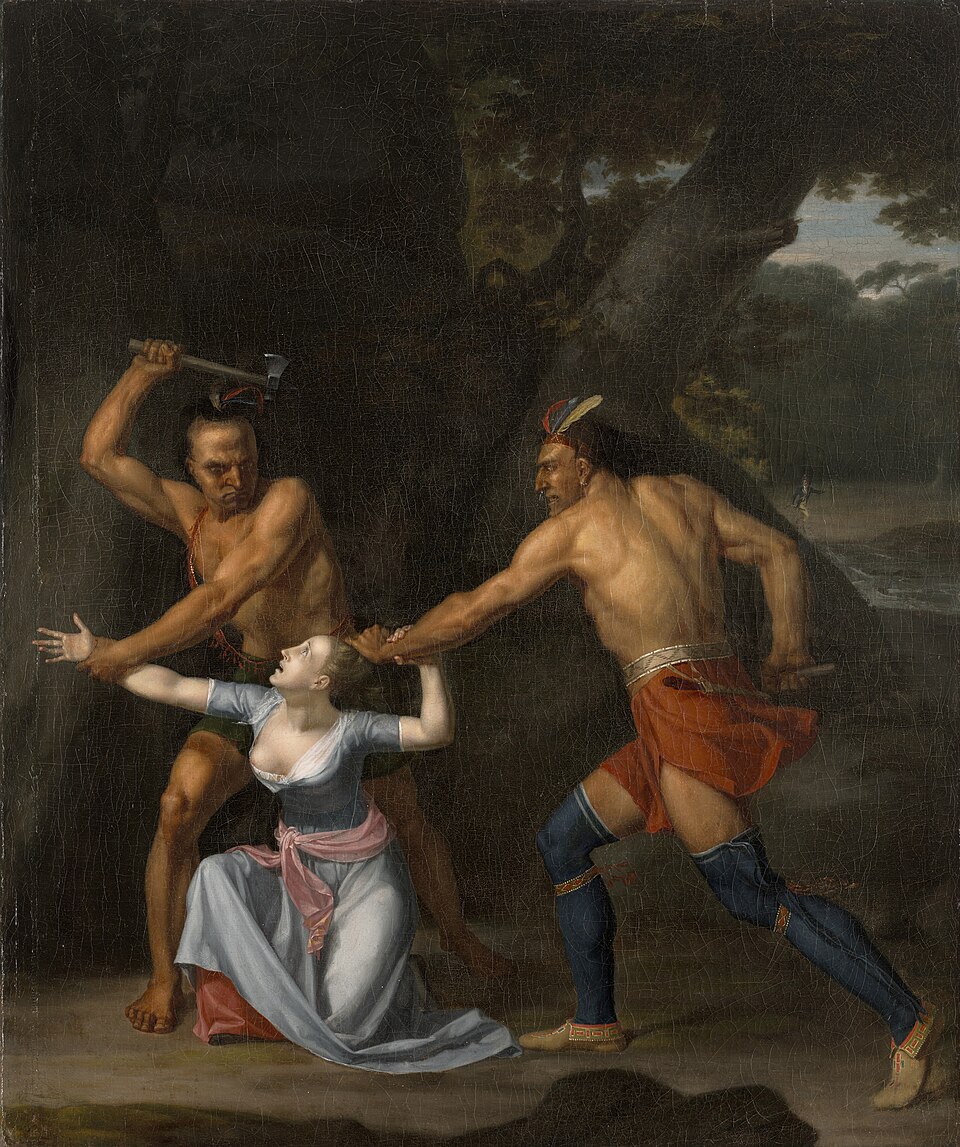
Jane McCrea 1752-77
A young woman engaged to a loyalist officer who was said to have been raped and then killed by Native American allies of the British in 1777. Her death was much publicised and turned many against the British, increasing the determination of the colonial troops to resist.
Saratoga
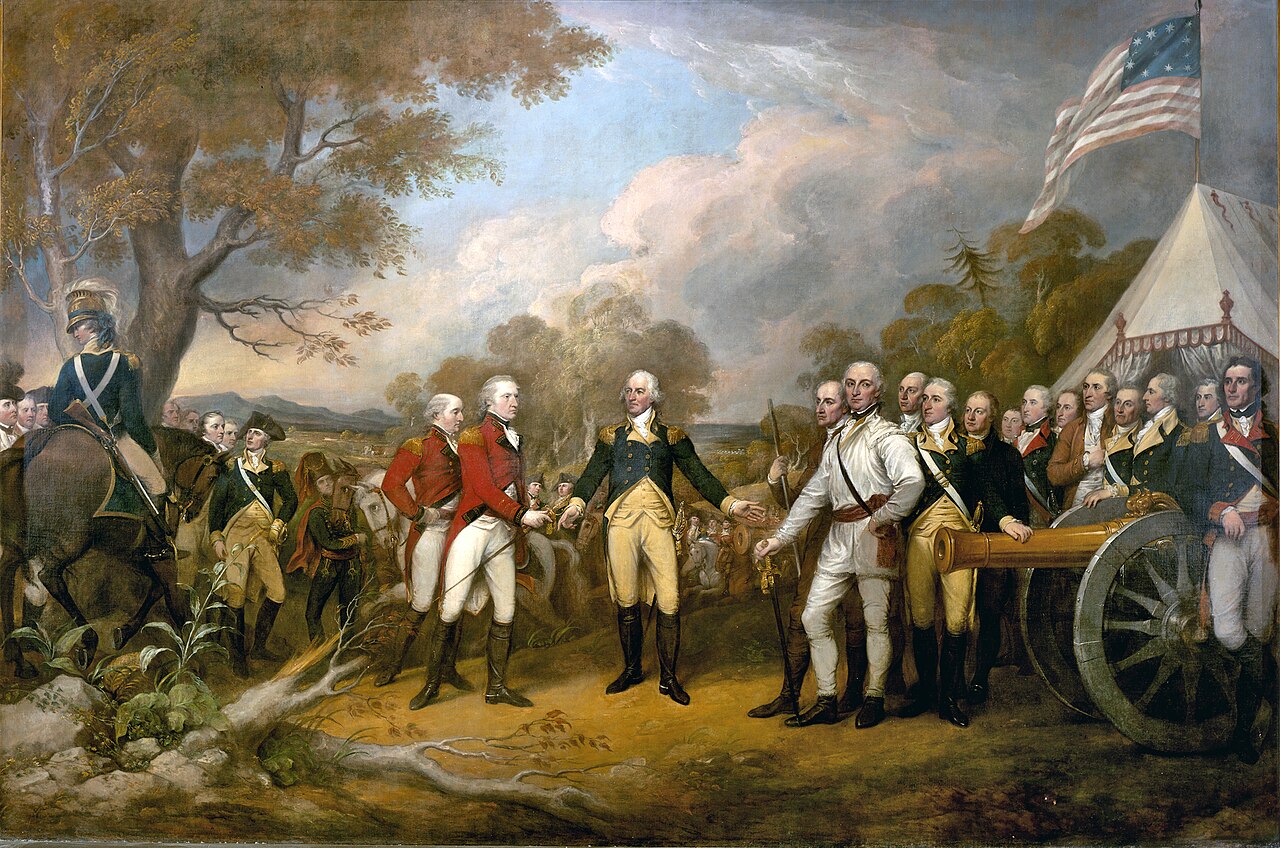
Burgoyne was determined to press on to Albany – however, the Americans were ready for him. In mid-August General Horatio Gates replaced the unpopular General Schuyler as commander of the northern American forces. Gates was a former British officer who sided with the colonists. Aided by able subordinates, such as Benedict Arnold, Gates prepared defensive positions north of Albany and an influx of militiamen meant he had 7000 men by September, equalling the army of Burgoyne.
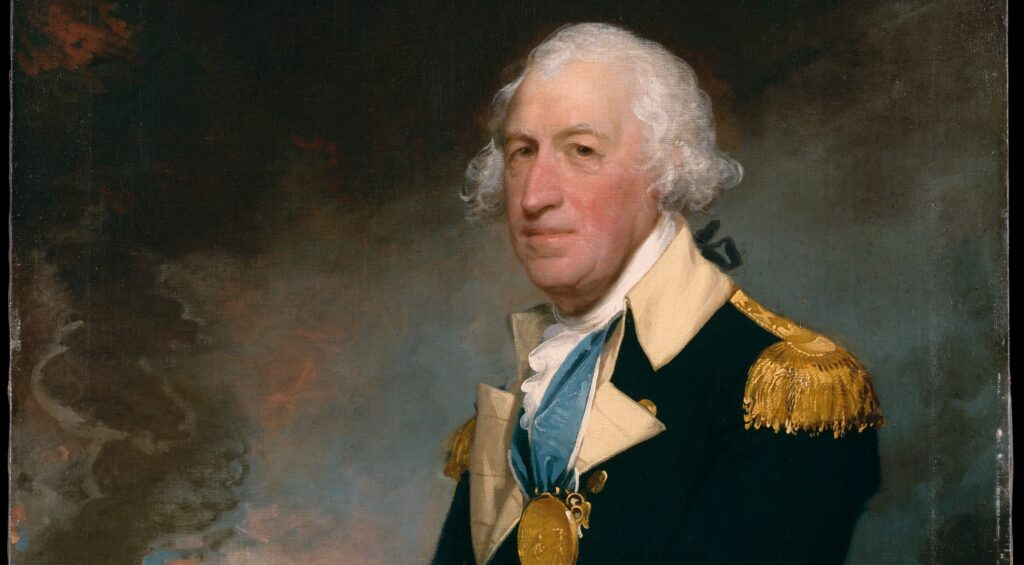
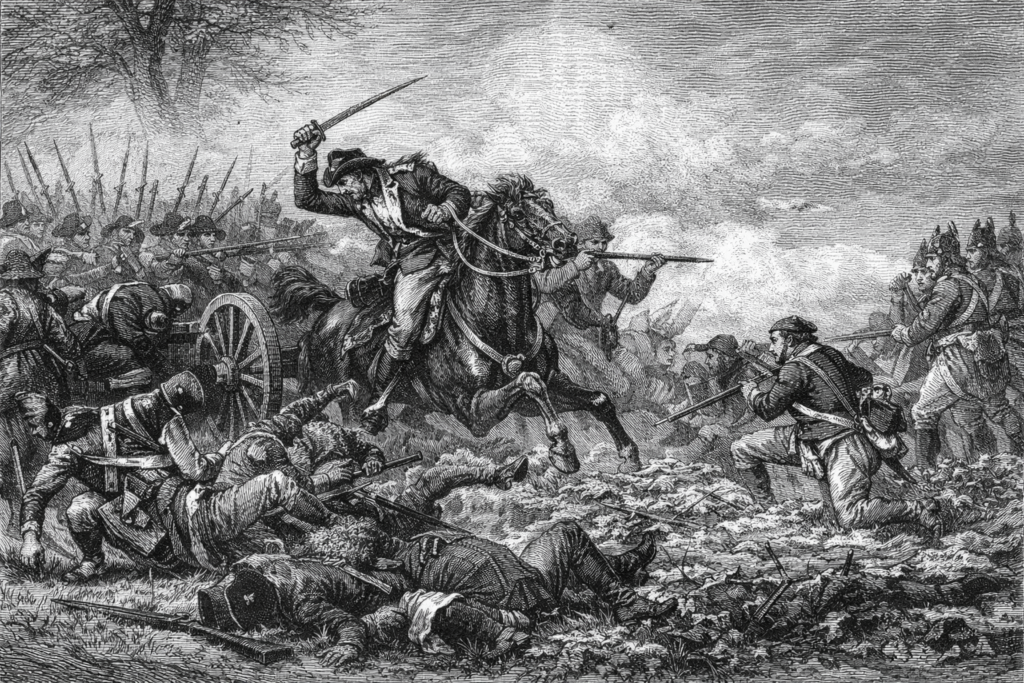
19th September
Burgoyne failed to defeat American forces at Freeman’s Farm. He found himself short of supplies and facing a growing opposition army. News that General Clinton was pushing northwards from New York gave him some hope.
Early October
Clinton left New York with 3,000 troops. This was later than Burgoyne had expected. However, Clinton did secure a number of forts as he drew closer to Albany.
7th October
Burgoyne launched an attack on Bemis Heights. Thanks largely to the bravery of Arnold, Burgoyne’s attack failed. He lost another 400 men, the Americans only 150. Burgoyne now retreated to Saratoga and his hopes that Clinton’s forces would arrive to support him did not materialise.
14th October
Surrounded by twice as many troops, Burgoyne began negotiating with the Americans. His 5900 troops were to give up their weapons, march to Boston and embark on British ships on the condition that they did not serve again in America. Congress later rejected the terms negotiated by Gates and Burgoyne’s troops remained prisoners of war until 1783.
The results of Saratoga
For the first time the rebels had defeated the British in a major campaign. This was a great morale booster. On hearing of Burgoyne’s surrender, Howe wrote to Germain offering his resignation. Concerned about the situation in Pennsylvania, Howe ordered Clinton to send reinforcements and give up the territory in his control in the New York highlands. In December, two days after the news of Saratoga reached London, Lord North dispatched a secret agent to Paris to contact American commissioners Benjamin Franklin and Silas Beane with a view to exploring the possibilities for ending the war. In February 1778 Parliament passed Lord North’s Conciliatory Propositions. Britain agreed to repeal the Coercive Acts and renounce the right to tax Americans. A Peace Commission was appointed to try and negotiate an end to the war. The commissioners could accept the withdrawal of British forces from America and grant the Americans representation in Parliament. However, Britain’s denial of American independence wrecked any hope of successful negotiation.
Expansion of the War 1778-1783
Foreign powers join the conflict
From 1778 the war from Britain’s perspective became a world war rather than just a rebellion. The had important consequences for the direction of the war from this point.
Why did France join the war?
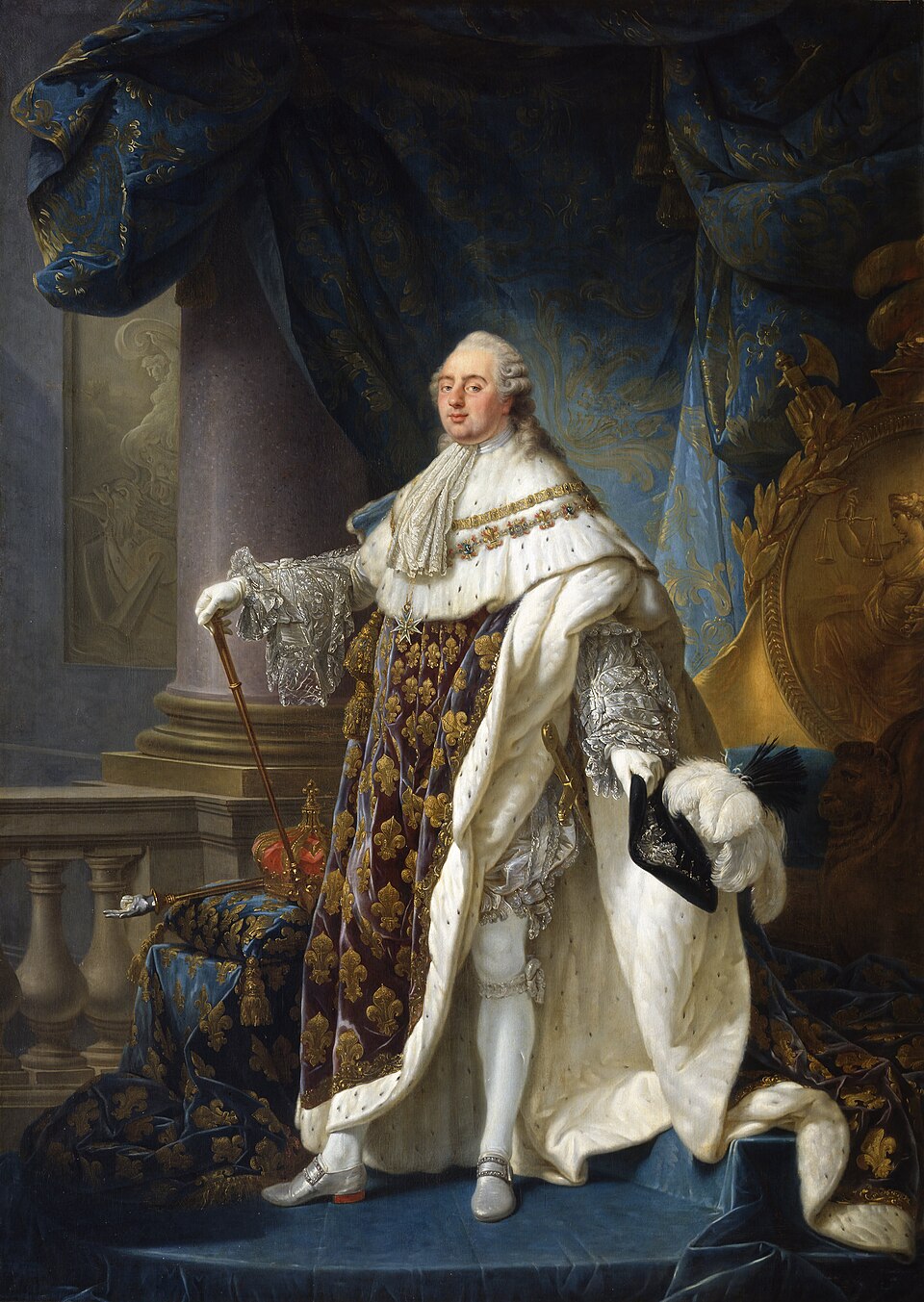
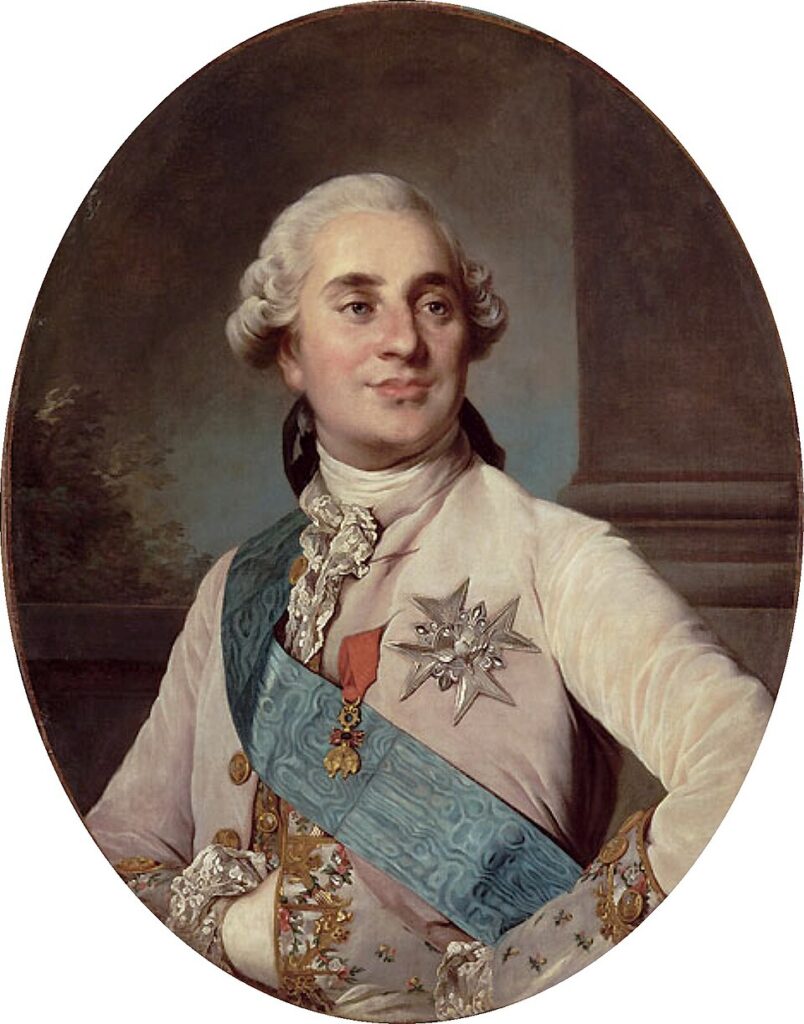
The French absolute monarchy of Louis XVI and the American colonial rebels at first glance did not appear to be natural allies. However, Louis’ government realised that the war offered an opportunity to avenge their humiliating defeat of the Seven Years War and weaken Britain’s power. For Louis – hatred of Britain overruled any concerns he had about the revolutionary spirit spreading the American colonies. Although reluctant to formally recognise American independence until the outcome of the war was uncertain, France did welcome an American delegation headed by Benjamin Franklin in Paris in 1776.
Franklin proved to be an inspired choice as he won over his French audience. The outcome at Saratoga also proved crucial as it reduced French fears of an American collapse and enabled them to overcome and last doubts about sending significant support to the colonists. On 6th February 1778 France and Austria signed two treaties, one a commercial agreement, the other a defensive alliance to take effect when France eventually went to war with Britain – as it did in June 1778. The alliance stated that both countries promised to wage war until American independence was “formally or tacitly assured” and both agreed not to make peace separately.
French support was significant:
- Sending of arms and gunpowder
- French army generals travelled to fight in America. They included the Marquis de Lafayette, who became one of Washington’s favourite officers and a key figure in the later French Revolution.
- Financial support in the range of over 1 billion French livres – this was despite significant financial issues that faced France at this time.
Spain and the Netherlands
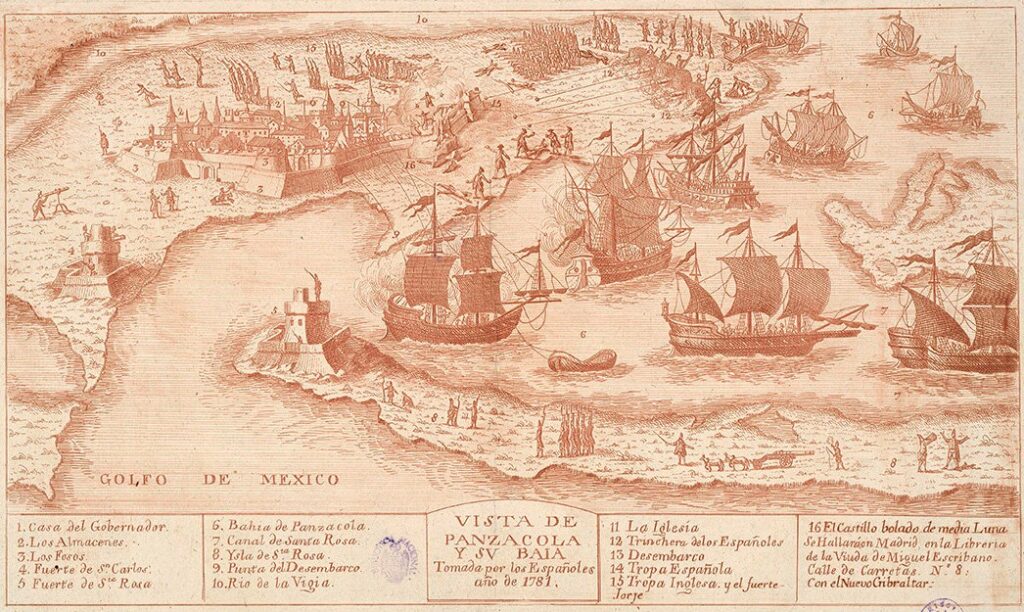
In April 1779 Spain entered the war against Britain – doing so as an ally of France, not America. It joined the war hoping to regain possession of territory lost to Britain: Florida, Minorca, Gibraltar and Jamaica. In 1780 Britain declared war on the Netherlands, which was aiding the French and Spanish.
Impact of French and Spanish intervention
- America became a bit of a sideshow for Britain. Its main concern now was France. France’s population (25 million) was twice the size of Britain’s. With an army of over 150,000 and a growing naval fleet there were fears of a potential French invasion of Britain.
- Britain was now facing having to defend other overseas possessions – particularly in Africa, India and the West Indies (all areas considered to be vital to Britain’s economic prosperity).
- This led to an increase in the national war effort. By 1782 Britain had 150,000 troops, the Royal Navy had 100,000 sailors and more than 600 ships. But Britain could no longer devote the majority of its military resources to America. In 1778, 65% of the British army was in America; this fell to only 29% by mid-1780.
- Fortunately for Britain, its European opponents were not as strong as they seemed, and Britain was able to maintain its influence around the world. However, the Americans had benefitted from the distraction that the European powers had caused.
Key military developments 1778-82 Introducing …. General Henry Clinton
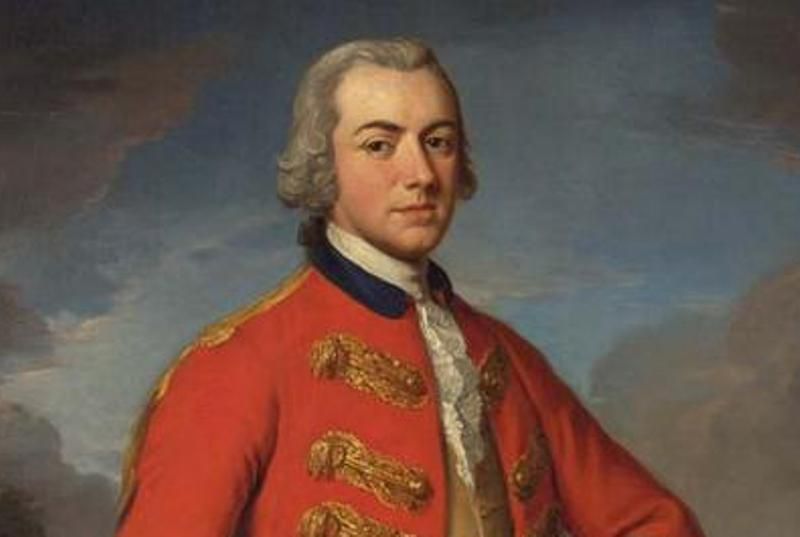
- Replaced General Howe following the failures of 1777.
- Had previous experience of fighting in America during the Battle of Bunker Hill.
- Although he successfully led his forces from Philadelphia to New York his campaign in the South ended in surrender in the Battle of Yorktown in 1780.
Washington’s Strategy
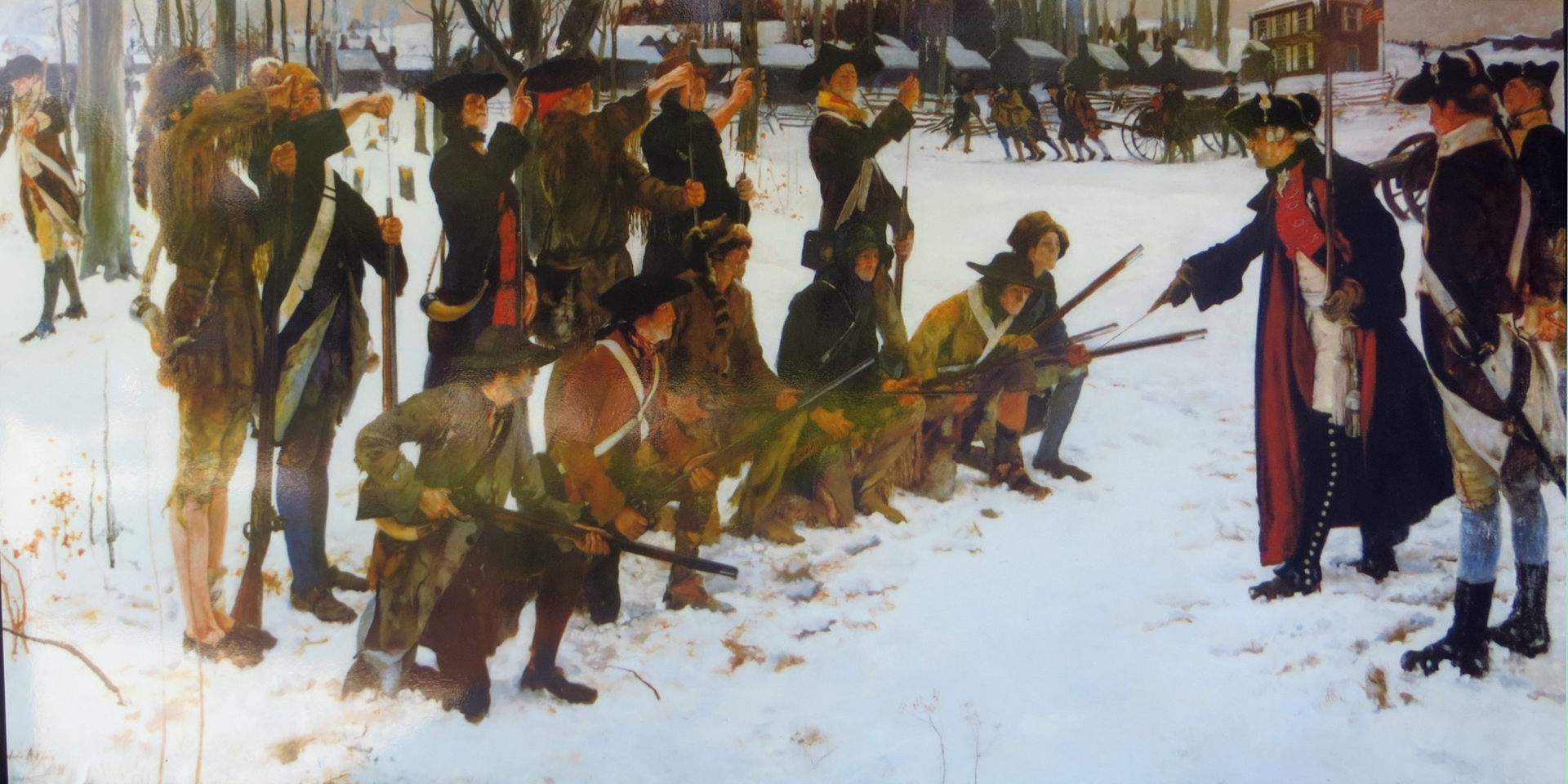
Washington had realised that his forces were largely unsuccessful in traditional head-to-head encounters with the British. He was able to keep his army together during the winter of 1777-8, holed up at Valley Forge in Pennsylvania and in early 1778, his army increased to around 12,000 men and was re-equipped. The support of foreign support also proved crucial. For example, his army was improved by considerable military training led by a volunteer Prussian officer, Friedrich von Stauben. The arrival of the French forces meant that the rebel forces became more professional and disciplined.
British Actions in Philadelphia
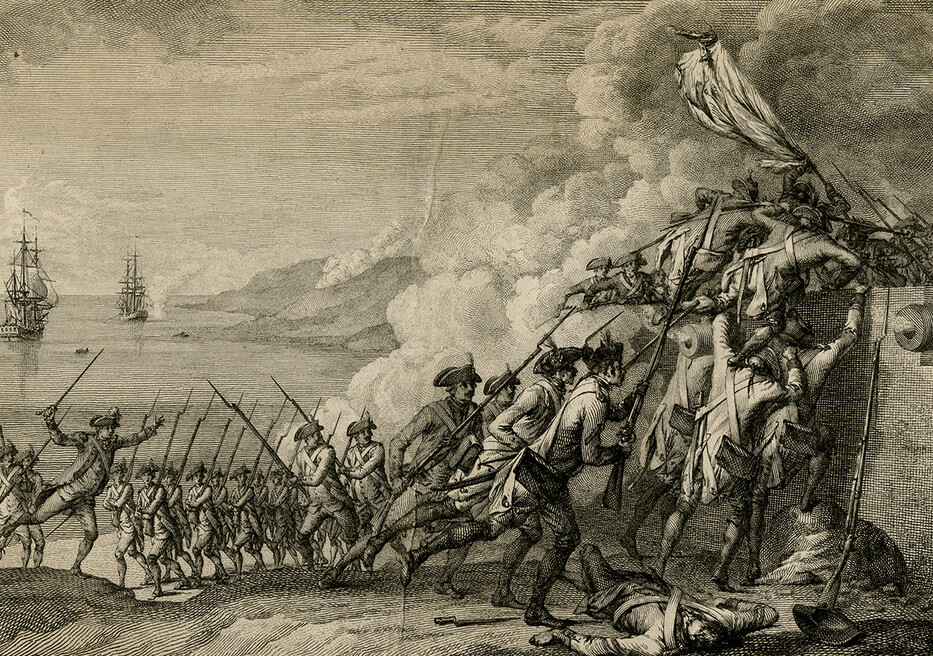
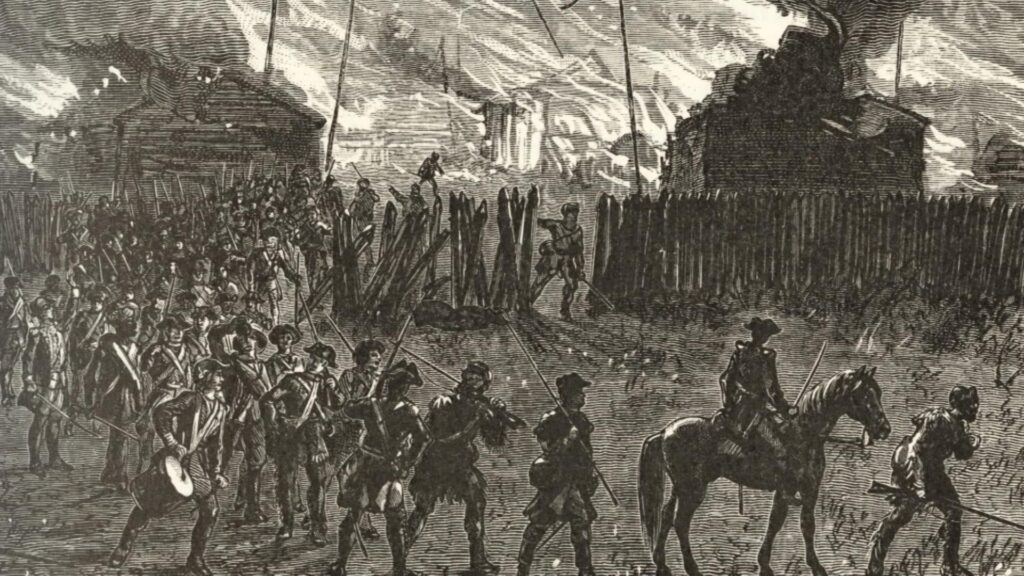
As Britain’s focus shifted more towards protecting their control in the Caribbean Clinton was stripped of 5,000 troops. The reduction of British troops and the lack of loyalist support led to the decision to evacuate Philadelphia and concentrate British forces in New York instead. This evacuation undermined loyalist confidence in British protection.
Clinton Moves the War South
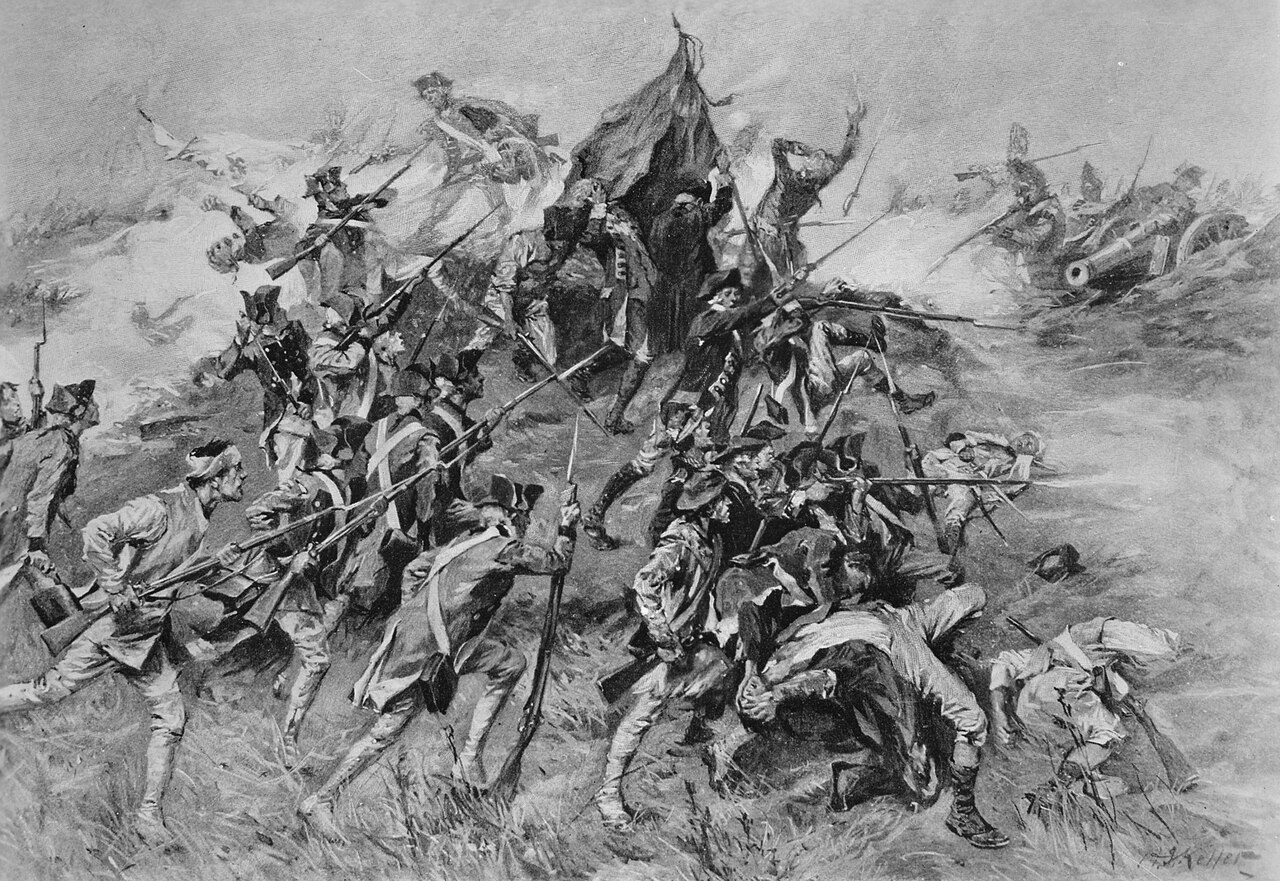
Facing the impossibility of victory in the North, Clinton decided on moving the war to the southern colonies. British troops used the navy to leave New York and invade Georgia. They had more loyal support in the south and Clinton was hoping to capitalise upon this. Savannah was taken in December 1778, and British forces moved into South Carolina.
The War in the West
The widening of the war also involved the western frontiers, and the War of Independence was also a racial conflict. Both sides had attempted to gain the support of the Native Americans, resulting in a civil war amongst the Iroquois tribes, but the majority had chosen to fight alongside the British, seeing the war as an opportunity to push back the American settlers. The militias of Virginia, Pennsylvania and some of Washington’s forces waged a violent struggle against the Native Americans, which continued after the war against Britain had ended.
The final phase of the war: activity in the South
Autumn – Winter 1779
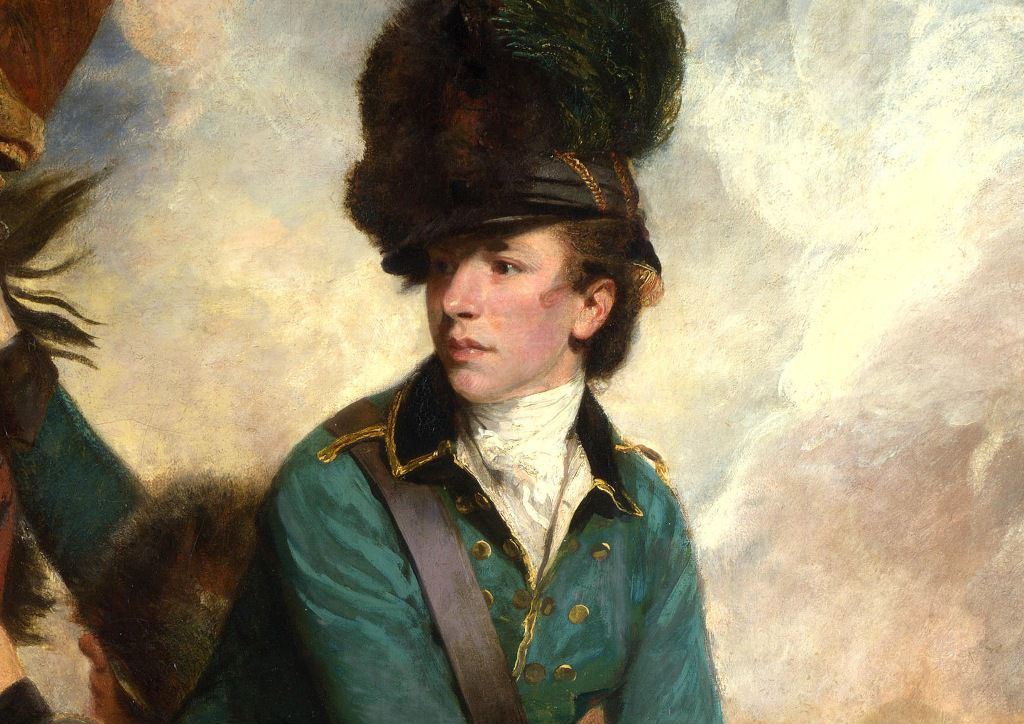
When a French and colonial force attempted to retake Georgia, Clinton sent reinforcements, which maintained control – but the fighting was becoming increasingly brutal. In South Carolina the war escalated into a guerrilla battle between loyalists and patriots. The particularly ruthless British Colonel Banastre Tarleton was sent into the region. He became known for the massacring of prisoners that his troops were responsible for.
Summer 1780
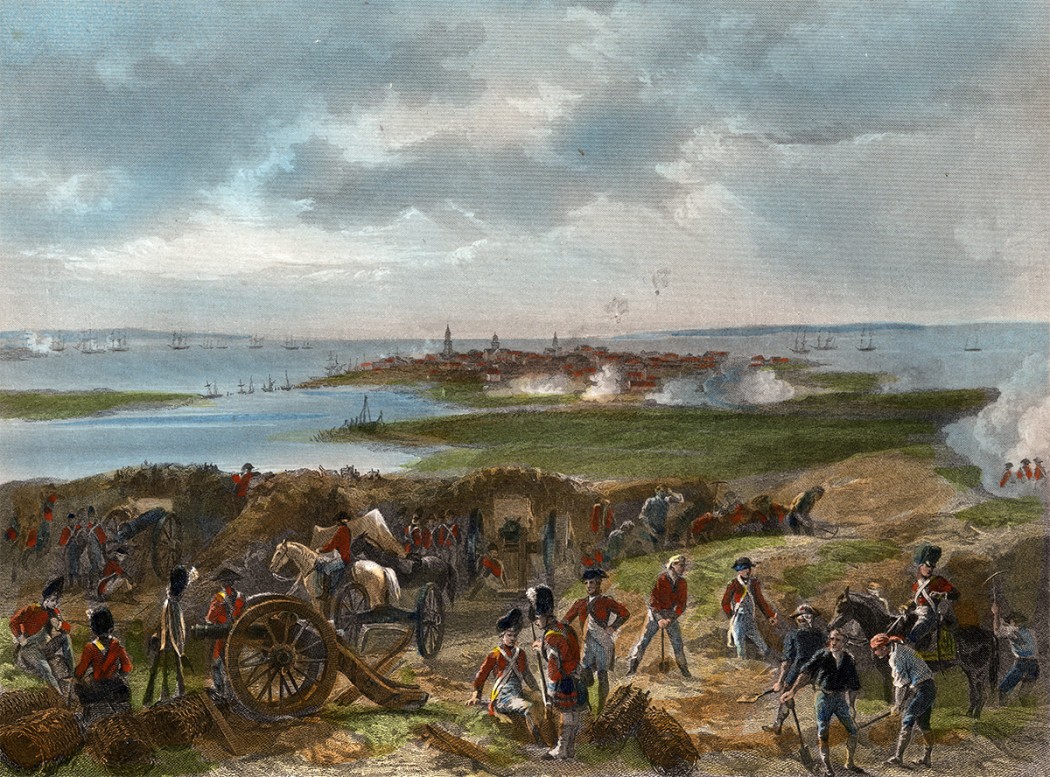
The British army under General Cornwallis took Charleston and defeated an American force led by Horatio Gates at Camden, South Carolina. By June the British held New York, Charleston and Savannah. They had built strong defences in the South and had defeated the regular colonial army.
Autumn – Winter 1780
Having secured South Carolina, Cornwallis began his invasion of North Carolina. Although Gates’ army was in no condition to fight, patriot militias harassed British forces, and once his troops crossed into North Carolina, rebels in South Carolina began a fight back. By October, Cornwallis had abandoned his invasion of North Carolina and returned south.
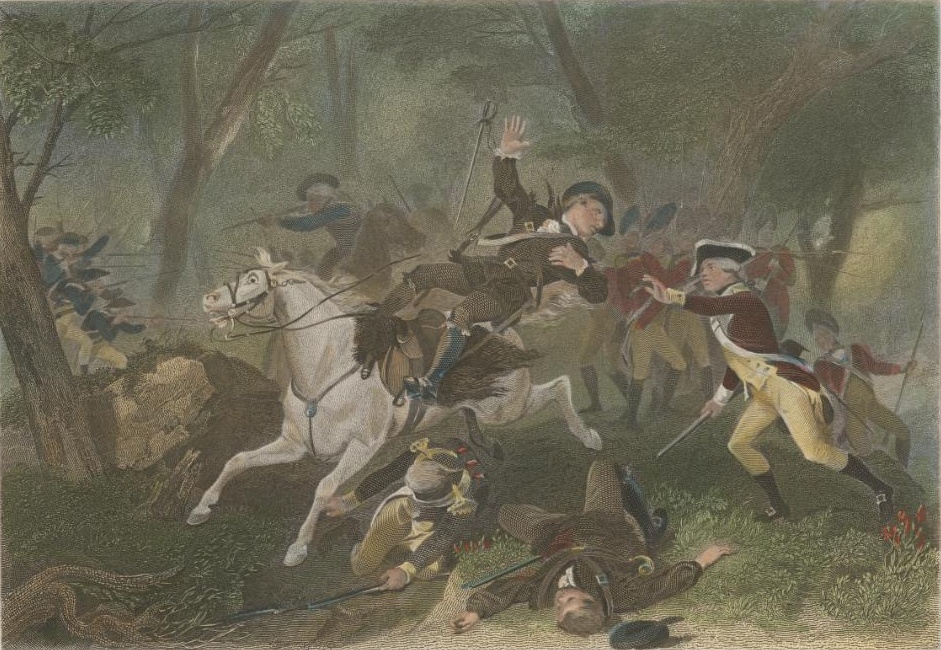
Over the winter, patriot and loyalist militias turned the regions of Georgia and the Carolinas into a wasteland of plunder and slaughter; both sides routinely tortured prisoners and hung their enemies. Protecting loyalist areas became a problem for the British as, short on men, Cornwallis was dependent on loyalists to make up numbers for his army.
Early 1781
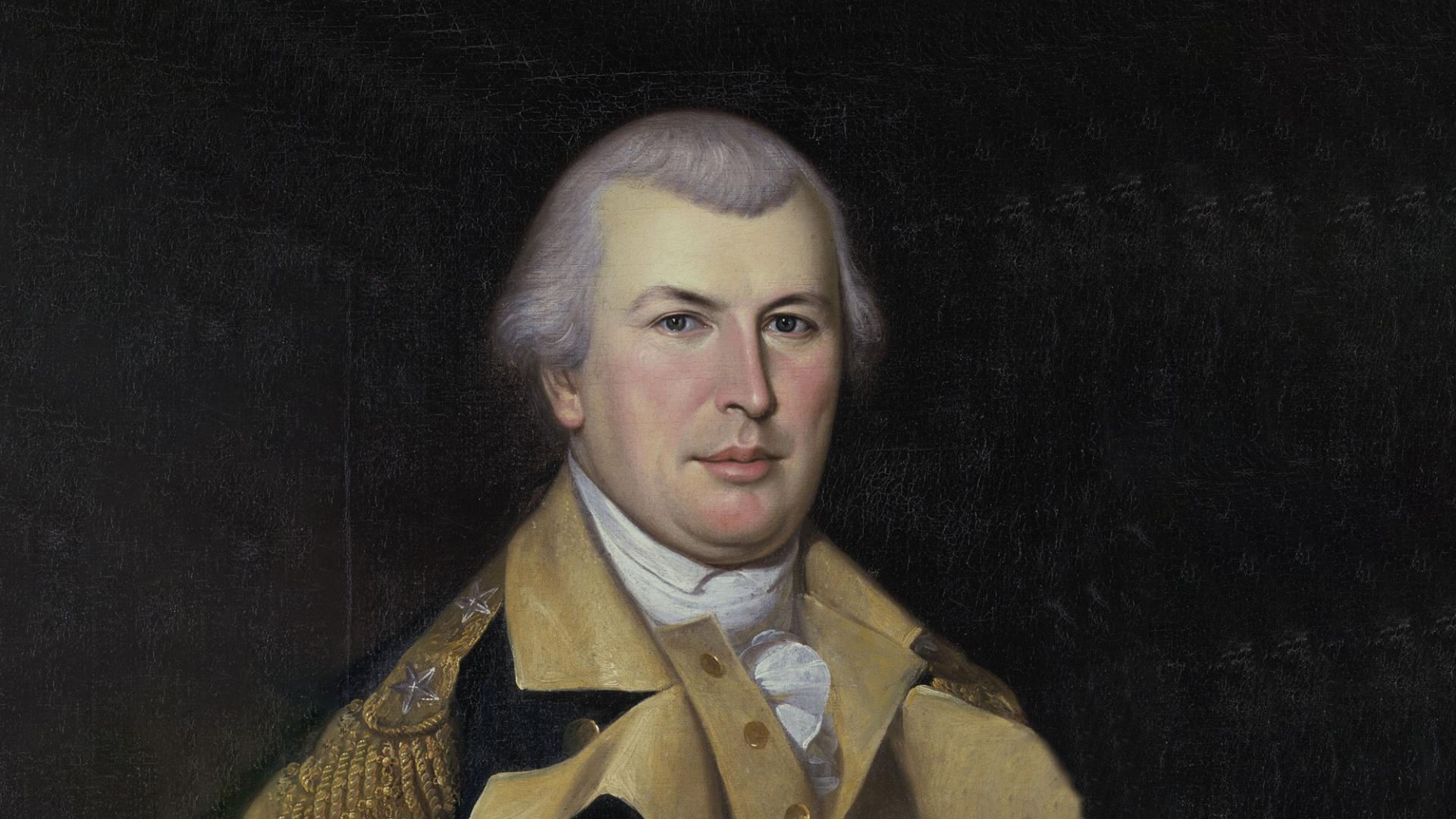
In late 1780 General Nathanael Greene (Washington’s choice of successor should he die) took command of the Continental army in the South. Greene divided his forces and with the support of patriot militias carried out a series of hit-and-run attacks:
- January: British defeated at Cowpens
- March: Cornwallis won a costly victory at Guilford Court House. Britain lost a quarter of its forces in this battle. While Cornwallis’s troops retreated to Yorktown, Virginia, to recuperate and gain supplies from the sea, Greene marched into South Carolina.
- April: only Charleston, Savannah and the remote Fort Ninety-Six remained in British hands in South Carolina and Georgia.
Mid-Late 1781
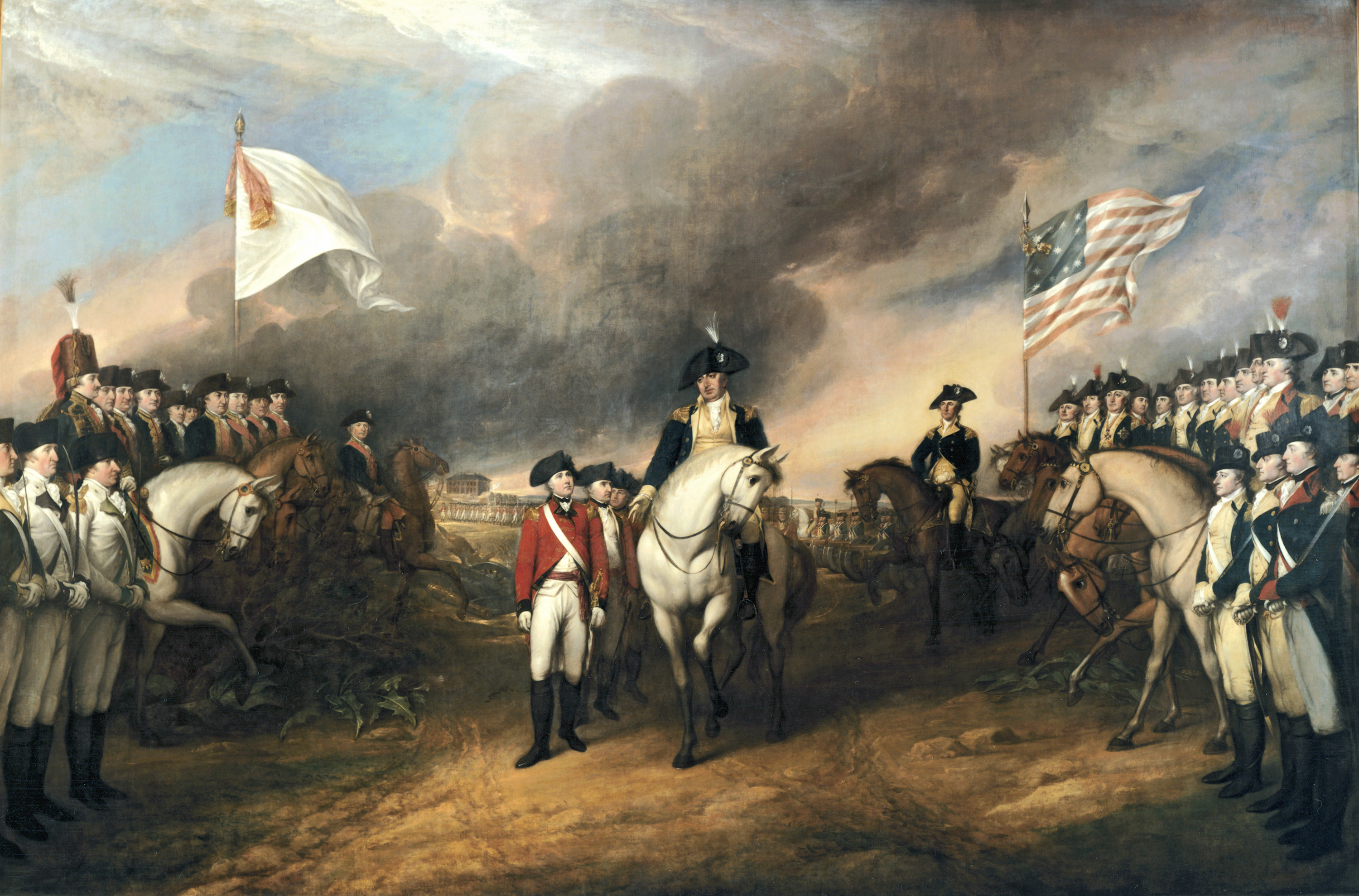
Washington now moved men into Virginia, and the French sent 3,000 troops from the north down to Virginia, meaning that Cornwallis’ 7,000 men faced 16,000 opposition soldiers. At this crucial time, Cornwallis’ ability to resupply his army had been weakened by the fact that the majority of the British navy was in the West Indies. This also meant that Britain was unable to prevent the French navy from moving their troops and Washington’s forces to Virginia. By October, Cornwallis’ army was trapped in Yorktown, and following a three-week siege, he surrendered.
Significance of the Battle of Yorktown
Although Britain still maintained its forces in New York and Charleston – the Battle of Yorktown is regarded as the end of the War of Independence.
The aftermath of Yorktown
- News of Cornwallis’ surrender came as a shock to most Britons. When Lord North heard the news, he said, “Oh God, it is all over”.
- There was not an immediate collapse of the British position in other areas – for example despite the victory at Yorktown, French and American forces failed to cooperate in an attack on Charleston. French forces instead, sailed for the West Indies, and without French naval support the Americans could not achieve much.
- However, support for the conflict from the British public and parliament significantly declined following Yorktown. In February 1782 the Commons resolved to end military activity in America.
Peace negotiations
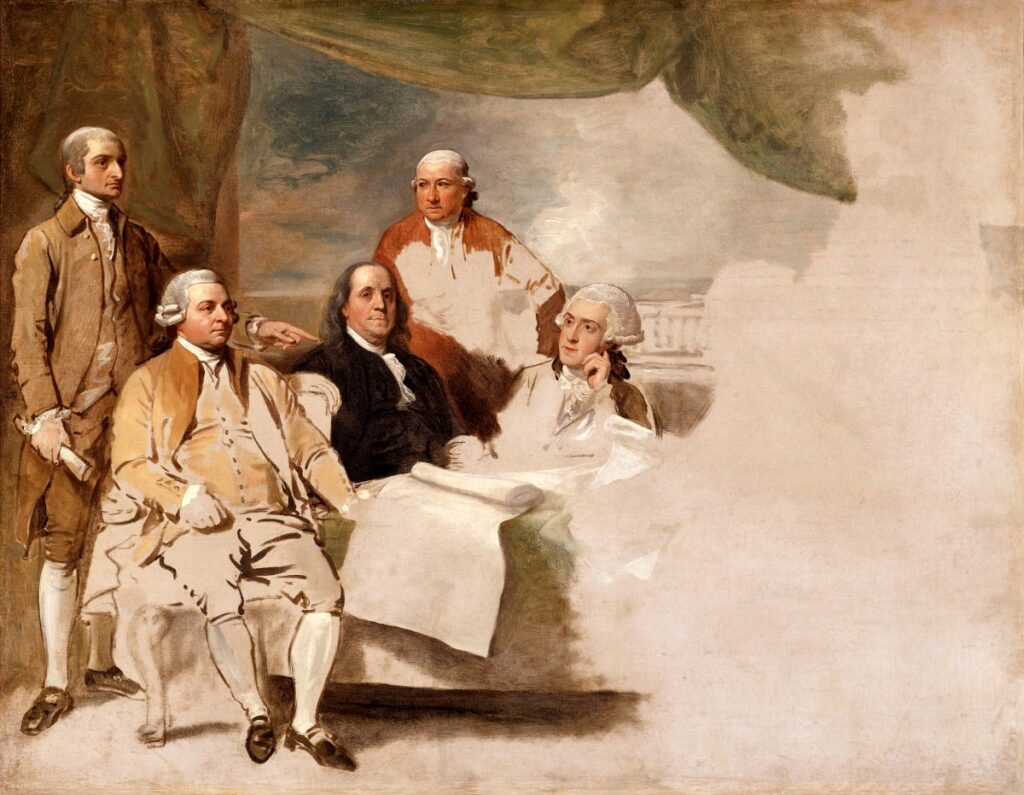
Peace talks between the Americans and Britain began in Paris in April. France now also was fully supportive of the end of the conflict due to the extreme financial problems the war had wreaked on the country. The negotiations became defined by mistrust and suspicions on all sides:
- Britain was determined to try and break French-American unity by being generous to the Americans.
- John Jay and John Adams (leaders of the American delegation) whilst suspicious of British motives, were also distrustful of the French, suspecting (correctly) that they were ready to support the Spanish claim to land west of the Appalachian mountains – an area that the Americans were determined to control. Without consulting either Franklin or the French, Jay and Adams opened separate discussions with the British.
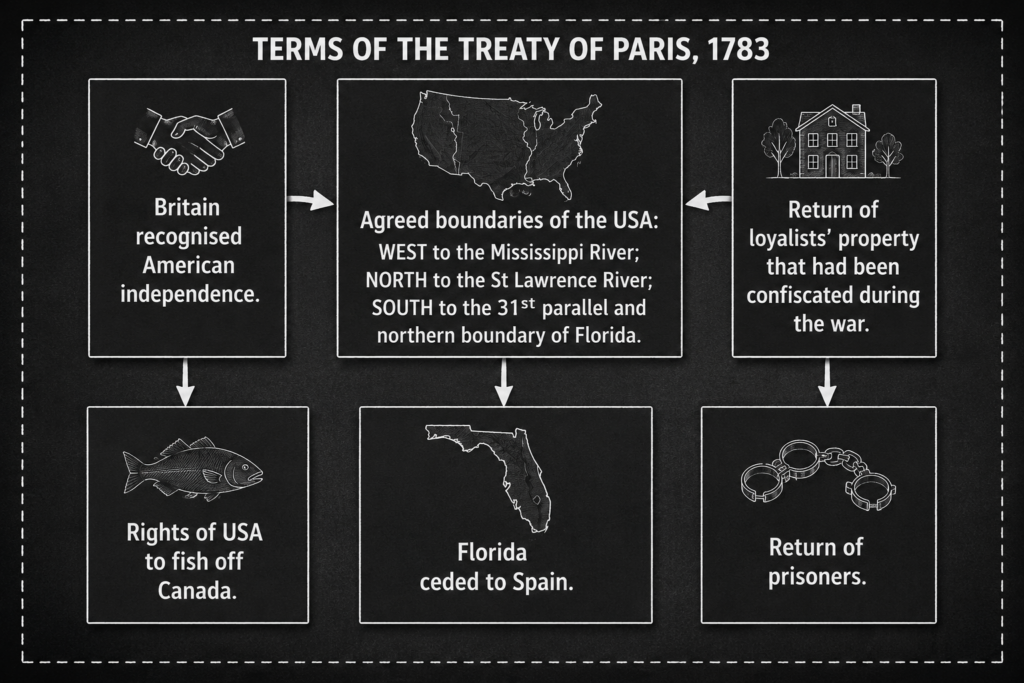
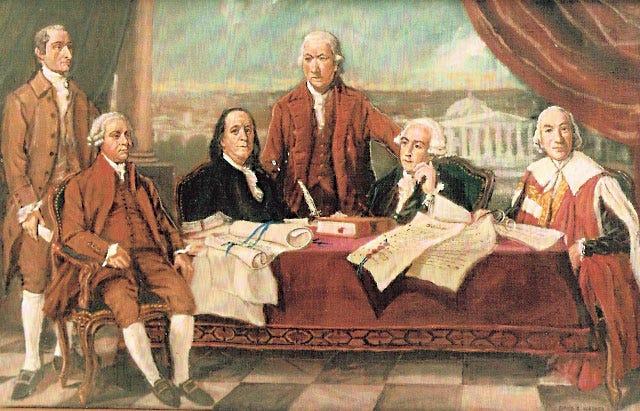
A preliminary peace treaty with Britain was signed in November 1782. The Treaty of Paris was formally signed by Britain, the USA, France, Spain and the Netherlands on 3rd September 1783.
Significance of the Treaty of Paris
Britain
- Separate treaties were signed with France, Spain and the Netherlands which saw limited British losses including Menorca to Spain; Tobago in the West Indies and Senegal in West Africa to France; territory taken from Dutch was returned to them.
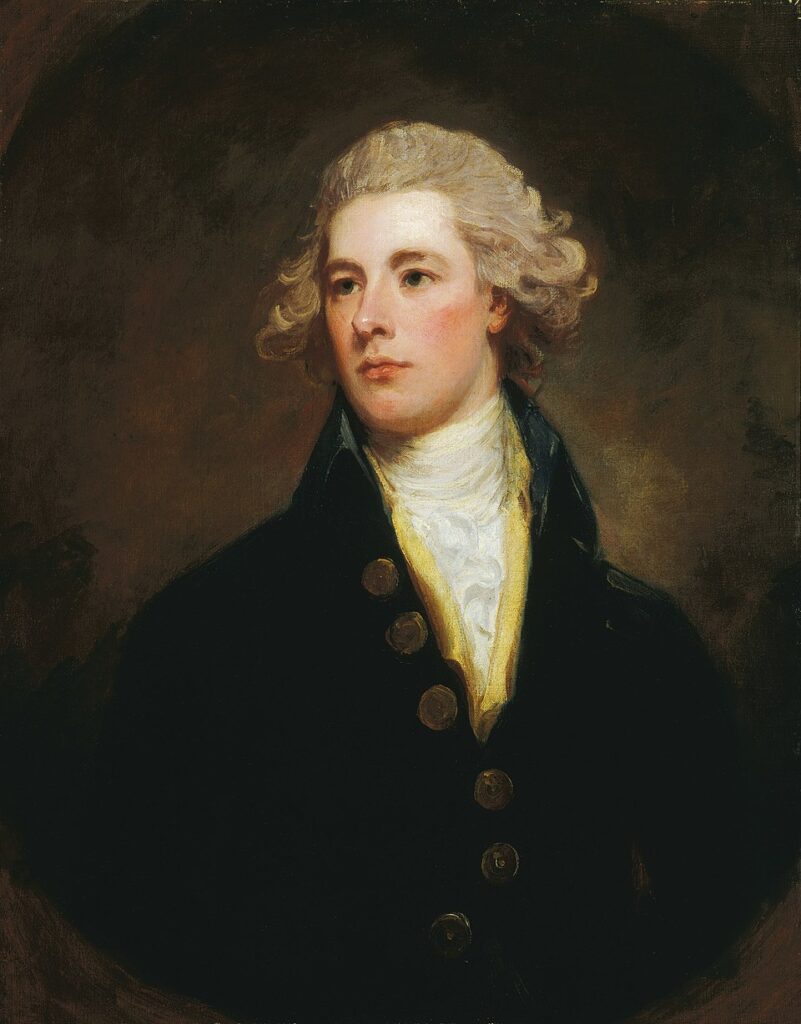
- At home the Treaty was opposed and led to the resignation of the government. For a brief time, Lord North returned as Prime Minister. He was not well supported by George III nor parliament and was replaced by Tory William Pitt the Younger, who oversaw a period of reform and revival in Britain.
France and Spain
Spain: did well to gain Florida. However, future conflicts emerged as the southern border of the USA was not defined.
France: The costs of the war exacerbated an already serious financial crisis in France whilst an increased interest in the Enlightenment ideas of freedom that French troops had fought to defend in America became a major problem for the absolute monarchy of Louis XVI. The French King found himself criticised for not allowing his subjects the freedoms that it had fought to allow Americans to enjoy, and these criticisms became a major force for causing the French Revolution in 1789.
The United States of America
- The USA had gained recognition of its independence.
- Gained a vast amount of land to the west, which changed the whole nature of the colonies. New opportunities for territorial expansion had been opened up.
- The new union faced huge debts as they had borrowed huge amounts for abroad to help fight the conflict, including 11 million livres from France.
- Questions remained about how the former colonies would form a united nation and government.
- Those who helped support the British loyalists, Native Americans and African Americans faced a difficult time. Thousands, who could, fled to Canada. The new republic waged a relentless war on the Native Americans. Independence did little to alter the system of slavery, especially in the South. The British were to relinquish all property seized during the war, and this included slaves who had been freed to fight.
Analysis: Why did the Colonists Win the War of Independence?
1. Unity of the colonists
Despite the Declaration of Independence, many colonists were more loyal to their own former colony than to the concept of a United America.
This is perhaps best evidenced by the fact that Congress did not form a single government during the war itself.
Enthusiasm and morale were often an issue for Washington with the troops making up his
army.
Many of the men who joined did not stay beyond their period of agreed service.
There was a substantial number of Loyalists throughout the conflict. These were people who believed that their long-term best interests lay with a union with Britain. In the southern colonies, social resentment of the poor against their landowners, who backed the Patriots, led poor men to support the British.
The causes of resistance and support for
independence was stronger in some colonies than others:
- New York – remained loyal
- Massachusetts and Connecticut – more radical
- Virginia – supported the Patriots
In some areas the war took on the character of a local conflict or civil war, particularly in the south after 1778, where much of the fighting was between paramilitary groups of loyalists and patriots
Some 200,000 men fought at various times in Washington’s Continental Army. While British forces captured important towns and won most pitched battles, this success did not subdue the population. Whenever the British army moved out of an area, the people invariably returned to the patriot cause.
2. The Importance of George Washington
Few military leaders had to face the problems that Washington faced – and overcame. At the start of the conflict, he had to build an army capable of facing the trained and professional forces of a world power. He did not lead the forces of a united nation and was not backed by a determined government. Instead, he had to deal with individual states rather than an effective union. His forces lacked money and their clothing and equipment were much poorer in quality than those of the European forces. Washington’s leadership was harsh, and his forces resented sacrificing their independence and liberty in the face of the levels of military discipline that Washington believed was necessary to defeat Britain. There were often desertions (at least one third of the army during the course of the war) and, in 1783, Washington faced a mutiny. He executed two of the ringleaders to maintain discipline and his own authority. Washington wrote about the difficulty of “keeping an army without pay, clothing and frequently without provision (food)”. He and his troops often faced periods of hardship – especially during the punishing conditions whilst in winter quarters for example in the winter of the war 1776-77, then famously at Valley Forge. To keep armies together in improvised quarters in bad weather with no established supply arrangements for a long war was a daunting task, especially when local people were often unsympathetic and prepared to trade with the enemy.
Much of Washington’s importance lies in his dogged persistence in the face of difficulties and his ability to master logistics – the movement of his forces, organisation and the maintenance of discipline. Perhaps his greatest achievement was in keeping his army intact and maintaining its morale and ability to fight against the odds.
Significance of the Treaty of Paris
Historian Stephen Brumwell has argued that Washington is often mischaracterised as a passive and patient organiser, yet he actually yearned for swift victories and aggressive tactics.
This was clearly shown in the crucial 1776-77 campaign. His inexperienced was shown in his defeat at New York, but his ability to manoeuvre his forces and to avoid utter defeat was the rapid movement of the British forces saved the Continental Army. His surprise attack at Trenton, which showed that the Continental Army could not be written off as a force, and his brilliant outflanking of British forces to attack Princeton revealed an enterprising and imaginative leader who refused to accept the military logic of his day.
Maintaining his army as a fighting force allowed the war to continue and in a position to capitalise on a flawed British campaign in 1777. However, bold tactics with inferior troops had their limits. He could not stop the British taking Philadelphia at Brandywine and the attack at Germantown was costly and ineffective.
Washington also made a decisive turn in military strategy and demonstrated that he could reflect on advice. During the winter at Valley Forge in 1777-78, he opted to move away from the tactic of engaging the British in open warfare towards a containment strategy. This was not guerrilla warfare as such but did mean that he could tie down British forces. This strategy did also rely on the fact that Britain had become distracted by the widening of the war with the entry of France. However, it kept his forces in existence.
In the final phase of the war, Washington pretended to launch an attack at New York in order to keep British forces there and distracted them from reinforcing Cornwallis in Yorktown. When he knew that French forces would not be diverted to the West Indies he concentrated his own forces in Yorktown, making good use of the French forces and artillery.
Washington was not a very dashing or imaginative commander, and he was not always the perfect gentleman that his admirers claimed he was. He blamed others for failures, often despised his own forces and pursued over-ambitious plans. He was also reliant of external factors, such as French help, and the mistakes of his enemies. However, it is difficult not to see his leadership being one of the most important reasons for the eventual success of the colonies in the war.
3. Quality of British military leadership
The British were fighting a war a long way from home. The force sent in 1776 was the largest ever dispatched from Europe. Naval power was effective along the coast and in navigable rivers and was used extensively. However, fighting inland was more difficult. Expectations were high that expert British armies would achieve a quick victory, which led to overambitious plans. The task of subduing very large areas with poor communications and an often-hostile population was formidable and, from 1778, the British forces had to fight France and Spain. The colonists were motivated by a desire for liberty, while British troops had no political and moral cause.
Nonetheless, British troops were bolstered by German mercenaries and were well-trained, well clothed and did not suffer from pay arrears. The skilful landings and campaign in 1776 and their close pursuit of Washington’s army showed their professionalism and the strength of their leadership. However, early successes in the war under Howe’s leadership were not fully capitalised on but his was partly due to the over-arching British strategy at this point. The plan was not to crush resistance but to use military power to force a negotiated settlement.
There was also a tendency to underestimate colonial forces and to assume that the “normal” conventions of warfare would be followed. This led to failures – for example at Trenton and Princeton in the winter of 1776-77.
Criticism can be directed at individual commanders and at the overall calibre of British general ship. Howe was too cautious, missing several opportunities to destroy Washington’s army in 1776-77. Clinton was equally timid. Other generals, especially Burgoyne, were overconfident. British officers – military and naval – did not cooperate particularly well.
British planning for 1777 was particularly weak and lacked clarity. The secretary for war, Lord George Germain, envisaged an advance from Canada by Burgoyne and his forces, meeting an advance from Howe’s forces northwards to divide the rebels. However, it was never clear how linking up the two forces at Albany would achieve a victory and the plan was flawed from the start. Both individual campaigns were poorly planned and beset by difficulties. Reinforcements for Burgoyne failed to arrive from New York leading to the humiliation of defeat at Saratoga. It is argued that this colonial victory encouraged the French to get involved in the conflict.
Lack of clarity was also apparent in the final campaign. Germain and Howe had high hopes of a campaign in Virginia after the successes in the south. But Clinton, in overall command, preferred to keep Cornwallis’s forces in Yorktown behind strong fortifications, losing flexibility. Cornwallis’ hopes for naval support did not materialise so he was unable to maintain his forces against Washington’s army. The surrender at Yorktown did not end the war – but the political will to keep it going was not strong enough any longer.
Exam Zone
This section has been designed to help you build confidence, sharpen your skills, and achieve your best possible results. Whether you are preparing for mock exams, end-of-unit tests, or final assessments, the Exam Zone provides everything you need in one place.
The Exam Zone is not just about testing your knowledge. It is about developing the key historical skills required for success: critical thinking, evaluation, and clear written communication. By practising regularly and reflecting on feedback, you will strengthen both your understanding of the past and your performance in exams.