Winston Churchill’s Early Years
Churchill’s early years (1874–1930) were marked not only by privilege and ambition but also by notable flaws — from impulsive decision‑making and political inconsistency to a tendency for self‑promotion — all of which shaped the complex leader he would later become.
Childhood
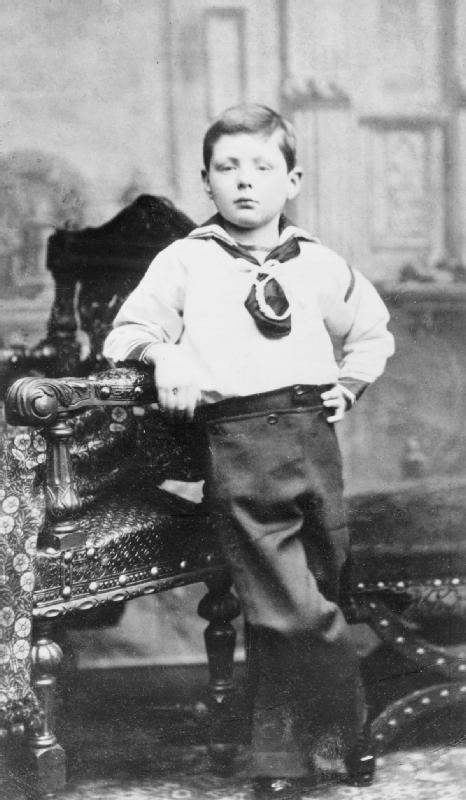
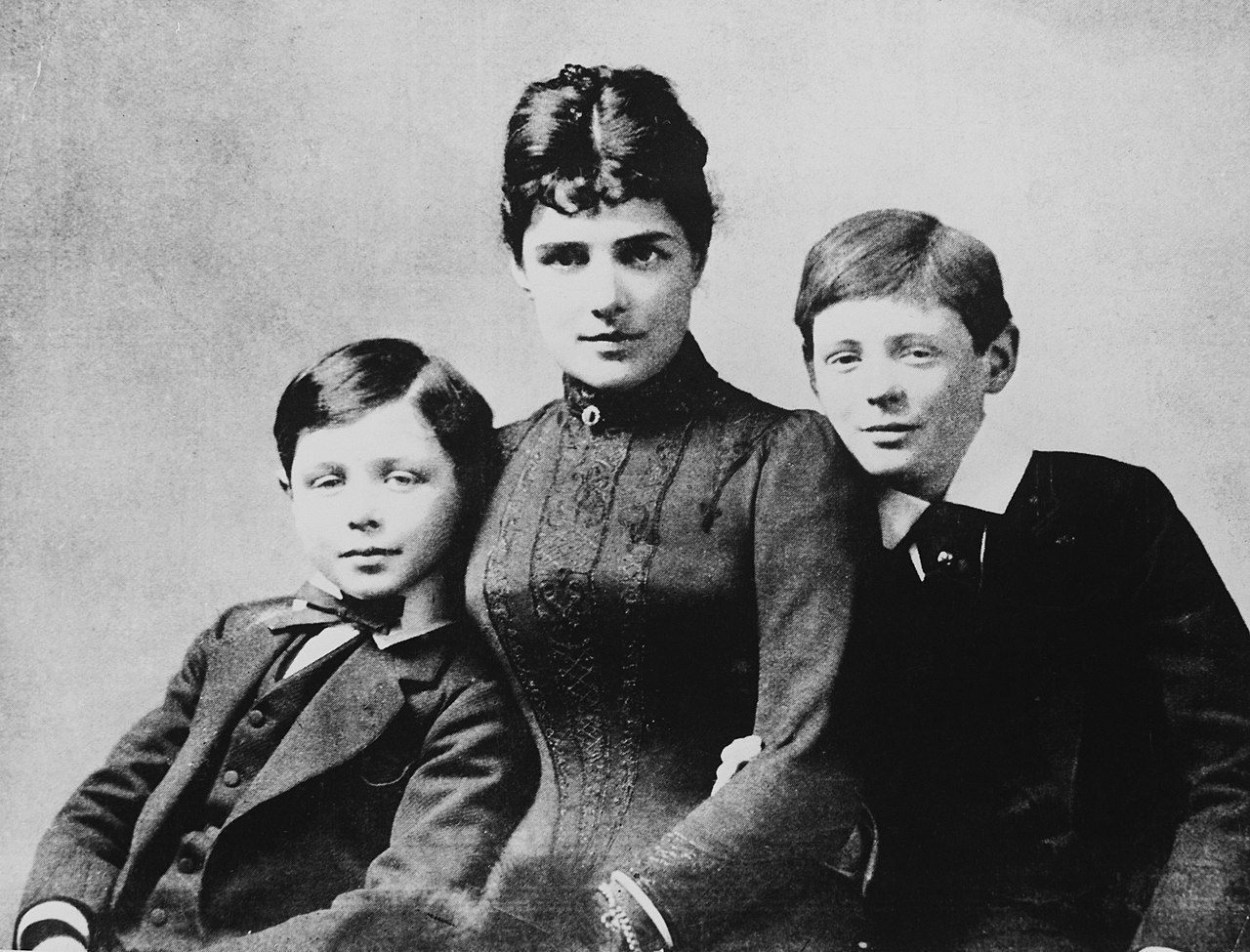
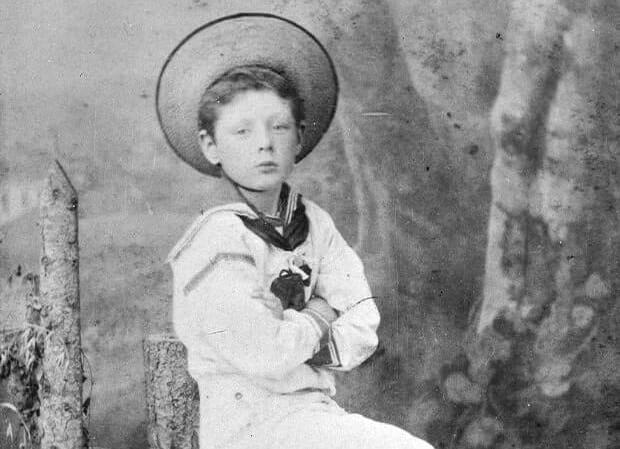
Winston Churchill was born 30th November 1874 at Blenheim Palace in Oxfordshire, England, reportedly two months premature. Winston was the elder son of Lord and Lady Randolph Churchill.
Winston’s father, Lord Randolph Churchill, was a direct descendant of the Dukes of Marlborough, nominally among the higher members of the British aristocracy. As a Conservative politician, Randolph acted as both Chancellor of the Exchequer and Leader of the House of Commons. He was known as a Tory radical and had formulated the policy of progressive Conservatism, known as “Tory Democracy”.
Winston’s mother, Lady Jeanette Jerome Churchill was an American-born British socialite. Jennie became well known for chartering the hospital ship Maine to care for those wounded in the Second Boer War.
Winston attended Harrow School where he wrote poetry and letters which were published in the school magazine, Harrovian. He then attended the Royal Military Academy, Sandhurst, as a cadet in the cavalry. In January 1895, shortly after Churchill finished at Sandhurst, his father died.
Military Career
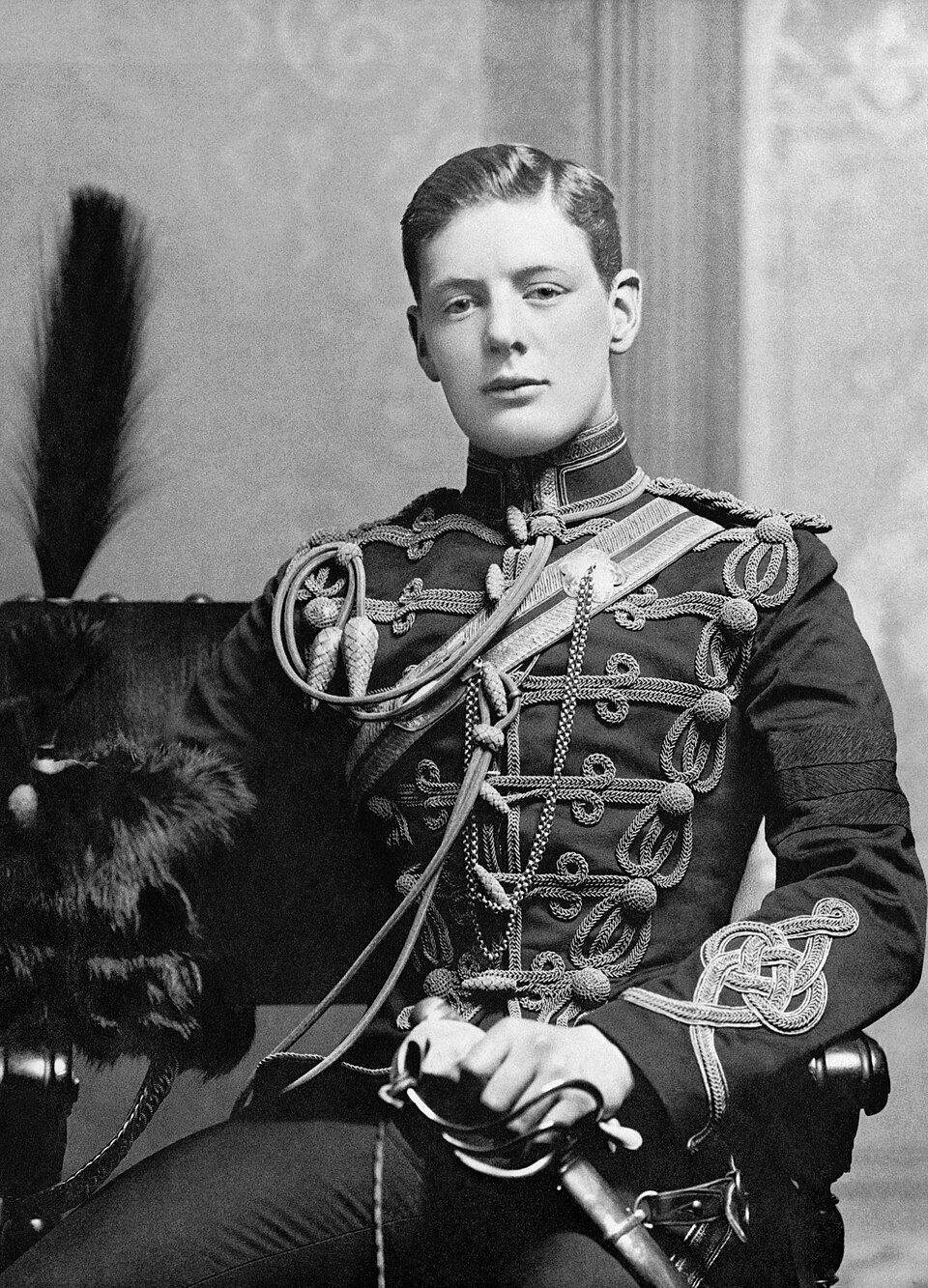
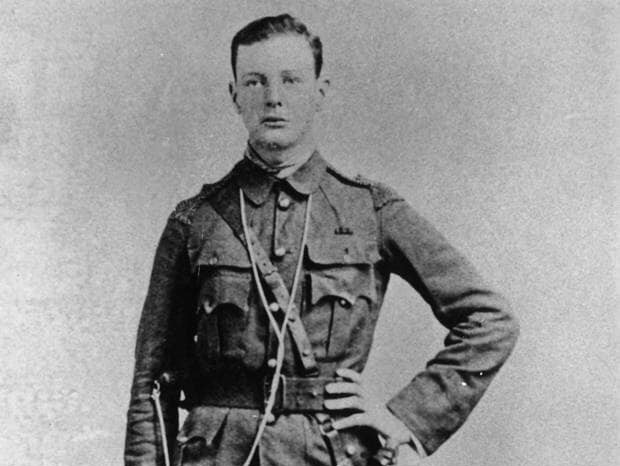
In February 1895, Churchill was commissioned as a second lieutenant in the 4th Queen’s Own Hussars. Later that year, he travelled with Reginald Barnes to Cuba to observe the island’s war of independence. Attached to Spanish forces attempting to suppress the rebellion, they witnessed several skirmishes at close quarters.
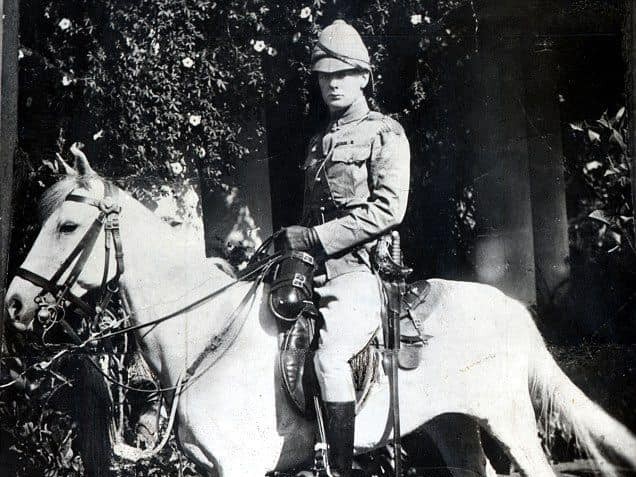
Churchill reached Bombay with the Hussars in October 1896 and spent the next 19 months in British India. During this period, he made repeated visits to Calcutta and undertook expeditions to Hyderabad and the North West Frontier. He later travelled to Egypt, joining the 21st Lancers in Cairo before moving south along the Nile to take part in the Battle of Omdurman against the forces of Abdallahi ibn Muhammad. After the battle, he famously donated skin from his chest for a graft to help an injured officer. Returning to England by October, he wrote an account of the campaign, published as The River War in November 1899.
Expecting conflict in South Africa, Churchill sailed from Southampton as a war correspondent for the Daily Mail and the Morning Post. In October he travelled from Cape Town to the front near Ladysmith, then under Boer siege, and spent time at Estcourt. While heading towards Colenso, his armoured train was derailed by Boer artillery, and he was captured and imprisoned in Pretoria. In December he escaped by climbing over the latrine wall, stowing away on a freight train, and later hiding in a mine owned by a sympathetic Englishman. Still hunted by Boer authorities, he boarded another freight train and concealed himself among coal sacks, eventually reaching safety in Portuguese East Africa. When he arrived in Durban, he discovered that his dramatic escape had made him a public sensation in Britain.
In January 1900, Churchill was appointed a lieutenant in the South African Light Horse and joined General Buller’s efforts to relieve Ladysmith and capture Pretoria. He was among the first British troops to enter both towns. In Pretoria, he and his cousin, the Duke of Marlborough, pushed ahead of the main force and secured the surrender of 52 Boer prison‑camp guards. After the British victory, Churchill returned to Cape Town and sailed home in July. His Morning Post dispatches from the war, published as London to Ladysmith via Pretoria, had already appeared in May and sold widely.
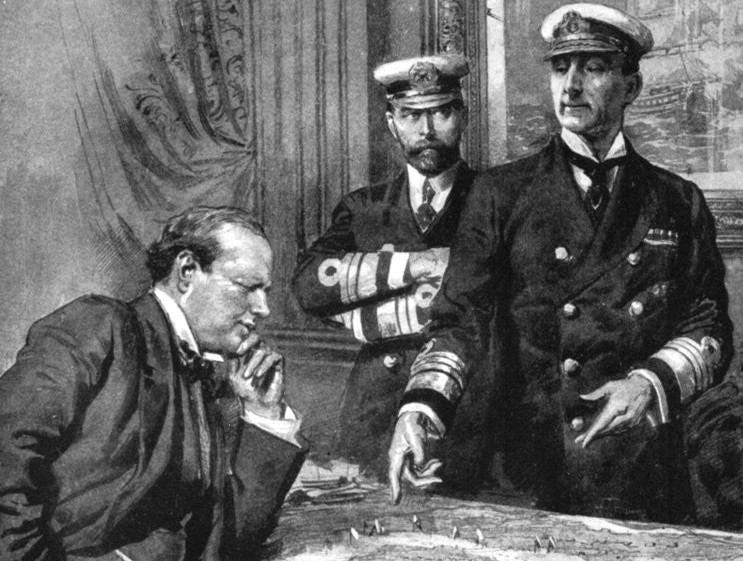
In October 1911, Asquith appointed Churchill First Lord of the Admiralty, where he oversaw major reforms. He created a naval war staff, toured dockyards to raise morale, and pushed for better pay, more submarines, and rapid development of the Royal Naval Air Service, encouraging experiments with military aviation. When the First World War began in August 1914, Churchill directed Britain’s naval effort: transporting 120,000 troops to France, enforcing a blockade of Germany, sending submarines to support Russia, and deploying the Marine Brigade to Ostend. He also took charge of Britain’s aerial defence.
Churchill visited Antwerp in October to support Belgian resistance, but the city soon fell, prompting press criticism. He argued that the delay he helped secure allowed the Allies to hold Calais and Dunkirk.
Churchill then championed a new strategy in the Middle East, hoping to relieve pressure on Russia by attacking Turkey through the Dardanelles and potentially capturing Constantinople. The naval assault in March 1915 and the Gallipoli landings in April both failed, and many MPs—especially Conservatives—blamed Churchill. When Asquith formed a coalition government in May, the Conservatives insisted that Churchill be removed from the Admiralty.
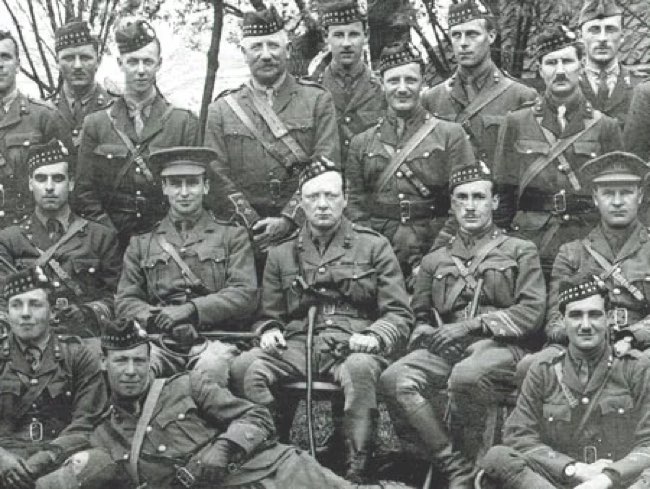
Churchill chose to return to active military service and was attached to the 2nd Grenadier Guards on the Western Front. In January 1916 he was temporarily promoted to lieutenant-colonel and given command of the 6th Royal Scots Fusiliers, who were stationed on the Belgian Front near Ploegsteert. For three months his battalion endured constant shellfire, though no major German assault. During one inspection with his cousin, the Duke of Marlborough, a large piece of shrapnel landed between them—an incident that narrowly avoided killing them both.
Early Political Career
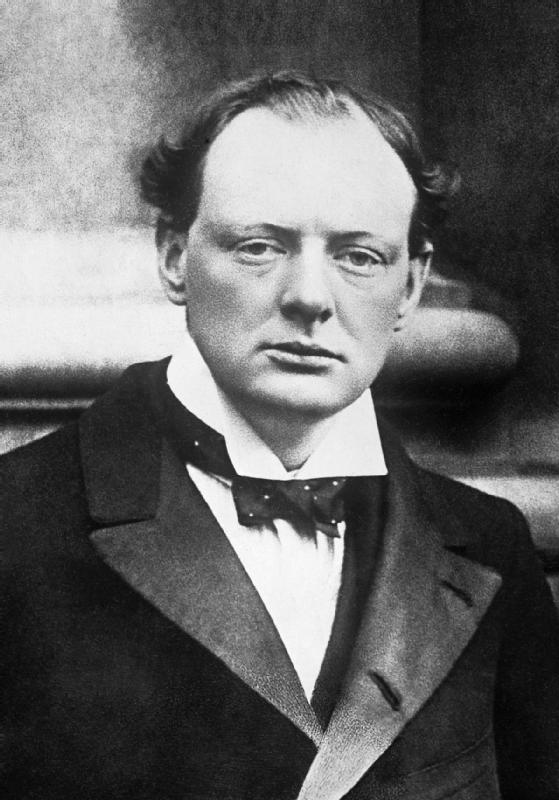
Churchill stood as a Conservative candidate for Oldham in the October 1900 general election and narrowly won, entering Parliament at 25. His maiden speech attracted significant press attention, and he soon gravitated toward senior Liberal figures, later admitting that he “drifted steadily to the left” of parliamentary politics. By 1903 he had grown disillusioned with the Conservatives—especially their support for protectionism—and recognised that hostility within the party was likely to block his path to high office. In a 1903 letter he even described himself as an “English Liberal” and declared his hatred of “the Tory party, their men, their words and their methods.” Increasingly, he voted with the Liberal opposition, and on 31 May 1904 he crossed the floor to join the Liberal Party. His defection also coincided with the Liberals’ rising popularity, suggesting that ambition played a part in his decision.
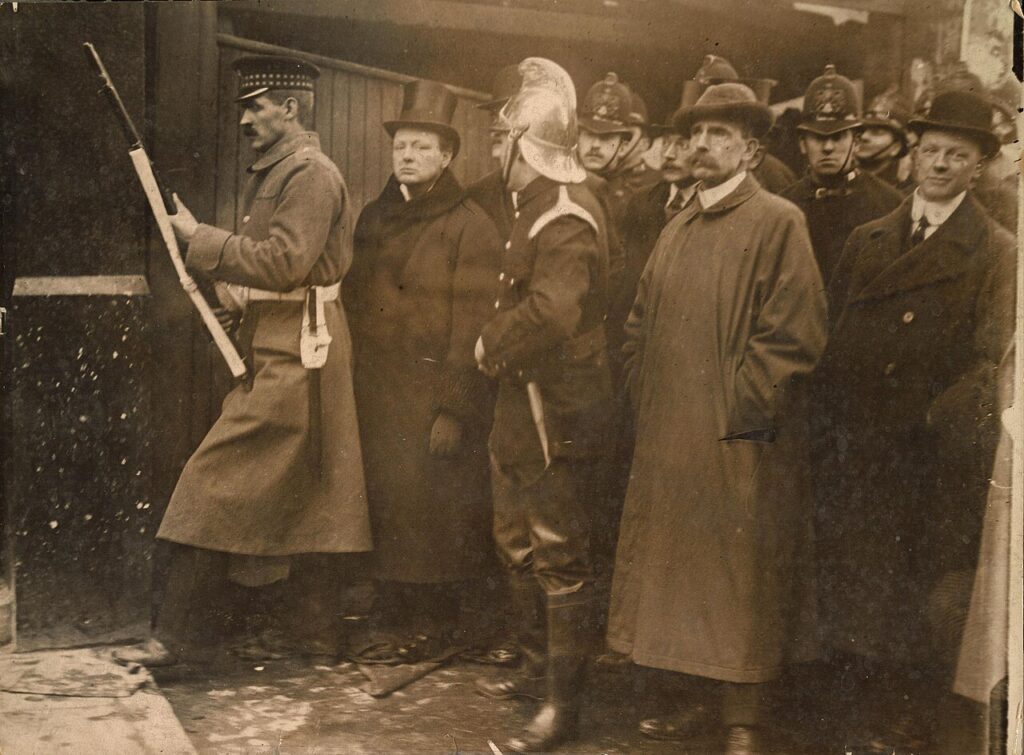
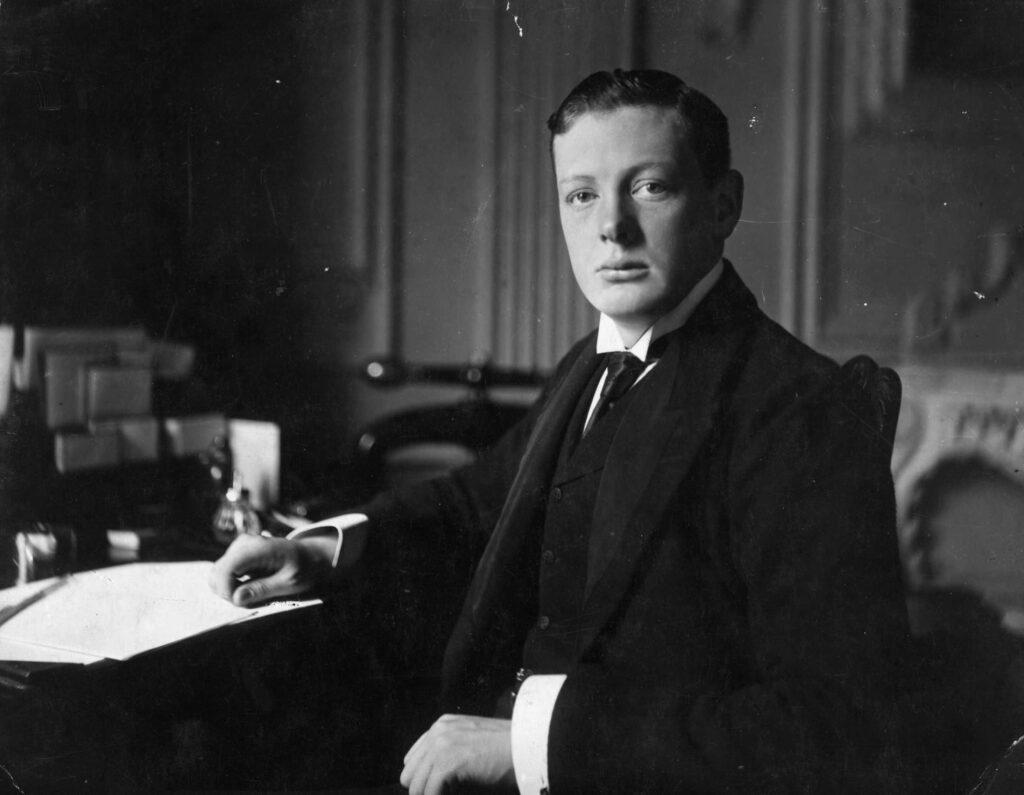
By 1910, Churchill had become one of the most prominent figures in government outside the Cabinet, and that year he was promoted to Home Secretary. His tenure quickly became defined by three major controversies. First, he faced a violent coalminers’ strike in the Rhondda, which highlighted wider tensions in industrial relations and drew criticism for the government’s handling of unrest. Second, his involvement in the Siege of Sidney Street—where armed Latvian anarchists were confronted in London—sparked debate over the extent of ministerial intervention in policing. Third, he had to contend with escalating suffragette agitation, balancing demands for law and order with growing pressure for women’s political rights. These disputes made Churchill one of the most visible and divisive ministers of the period.
After the First World War, Churchill returned to high office when, in January 1919, he became Secretary of State for War and Secretary of State for Air. In this role he oversaw the demobilisation of millions of soldiers, managed Britain’s post‑war military commitments, and supported limited intervention against the Bolsheviks during the Russian Civil War.
In 1921, Churchill was appointed Colonial Secretary, where he played a major role in negotiating the Anglo‑Irish Treaty, which created the Irish Free State and ended the Irish War of Independence. He also dealt with unrest and administrative challenges across the British Empire, including in the Middle East.
Churchill lost his seat in the 1922 general election, a moment that coincided with the collapse of the Lloyd George coalition. He returned to Parliament in 1924 as a Conservative MP for Epping—having formally rejoined the party he once left—and was appointed Chancellor of the Exchequer by Stanley Baldwin. His most famous (and controversial) decision in this role was returning Britain to the Gold Standard in 1925, a move later criticised for worsening unemployment and industrial tensions.
The General Strike of 1926 further strained Churchill’s reputation, as he took a hard line against the unions and edited the government’s strike newspaper, The British Gazette. By the late 1920s, his influence within the Conservative Party was waning. He increasingly found himself at odds with the leadership, particularly over issues such as Indian self‑government.
When the Conservatives were defeated in 1929, Churchill was left without office. His opposition to further constitutional reform in India and his increasingly isolated views pushed him to the margins of political life. This marked the beginning of his Wilderness Years, a decade in which he held no government post and was often dismissed as out of touch—until events in Europe brought him back to the centre of national politics.
Exam Zone
This section has been designed to help you build confidence, sharpen your skills, and achieve your best possible results. Whether you are preparing for mock exams, end-of-unit tests, or final assessments, the Exam Zone provides everything you need in one place.
The Exam Zone is not just about testing your knowledge. It is about developing the key historical skills required for success: critical thinking, evaluation, and clear written communication. By practising regularly and reflecting on feedback, you will strengthen both your understanding of the past and your performance in exams.