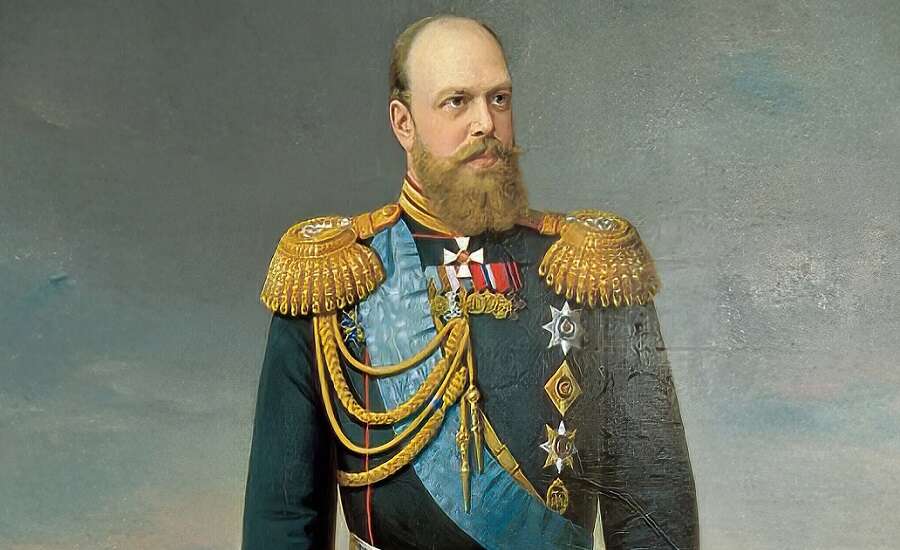
Alexander III
Following the assassination of Alexander II in 1881, Alexander III established a staunchly autocratic and repressive regime that sought to strengthen state control, suppress opposition, and promote Russification while simultaneously pursuing industrial and economic development.
Tsar Repressor
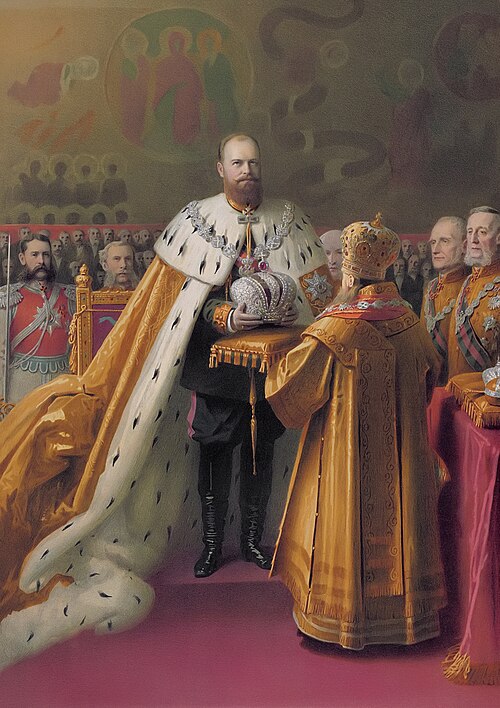
Following the assassination of his father Alexander III was clear that none of the opposition above was acceptable. The first casualties in the campaign of repression were Alexander II’s liberal ministers like Loris-Melikov who left office. In their place came Konstantin Pobedonostsev, Chief Procurator of the Holy Synod of the Russian Orthodox Church. As the Tsar’s chief minister and leading official of the State Church, Pobedonostsev wielded immense power and influence. He was the person who masterminded Alexander III’s Manifesto, which was issued at the end of April 1881 – just five weeks after the Tsar Liberator’s assassination. The Manifesto declared that absolute political power resided in the Tsar. An unbending conservative, Pobedonostsev believed the basis of political and social stability lay in support for autocracy, the Russian Orthodox Church and Russian nationalism.
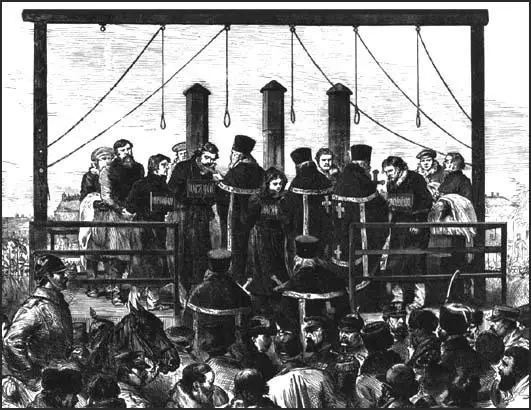
However, the immediate task of Alexander III’s new government was to destroy the terror organisation, the People’s Will. In the wake of the assassination, the government introduced the Statute of State Security, which set up government controlled courts to try government opponents. The government could now arrest and put on trial political opponents, without the need for a jury. Those convicted faced possible execution, and thousands were exiled to Siberia. Although these courts, which helped maintain political stability, were only meant as a temporary measure, they stayed in existence until the end of the Tsarist autocracy in 1917.
The government also took action to prevent the spread of radical – and even liberal – ideas. Press freedom was severely restricted, with fourteen major newspapers being banned between 1882 and 1889 for displaying “liberal” tendencies. Foreign books and newspapers were also rigorously censored by the Okhrana (the secret police) in order to prevent dangerous foreign ideas – such as democracy and parliamentary government – reaching the Russian people.
The universities were a particular area singled out for strict government supervision. University fees were increased to exclude all but the very wealthy, and in 1884 the universities lost their self-government and came under government control. Universities across Russia were temporarily closed in 1889 because of student demonstrations against government control.
However, these repressive policies did not destroy the People’s Will and other extremist groups. They continued to operate underground, and in 1887 they even made an attempt to assassinate Alexander III. In the crackdown that followed, the Okhrana arrested, and subsequently executed, a university student called Alexander Ulyanov – the elder brother of the future Bolshevik leader, Vladimir Ulyanov, better known as Lenin.
Increased central control
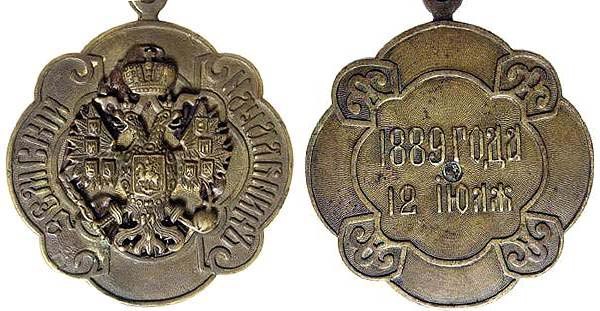
No aspect of Russian society seemed untouched by central government control. Pobedonostsev began to undo many of the reforms brought in by Alexander II. In 1889 the government created the post of “Land Captain” to enforce local laws, replacing the locally elected justices of peace. Land Captains were members of the landed classes and were directly appointed by the Minister of the Interior. Land Captains were given wide-ranging powers including the ability to over-ride zemstva elections and disregard zemstva decisions. They could even ignore the normal judicial process, overturn the judgements of local courts and impose punishments.
In the following year, 1890, Land Captains were made members of the local government bodies – the zemstva. In addition, the franchise to the zemstva was restricted, to ensure that the landed classes had the most political power. Doctors and schoolteachers, for instance, were no longer allowed to seek election. In 1892 these restrictions were extended to towns and cities. Press censorship was increased after 1882 and the government also interfered with the trial by jury system, introducing closed (secret) trials for political offences.
Russification and the Empire
The Policy of Russification
Alexander III ruled over a multi-racial empire, and one way for him to bring unity and cohesion to even its far-flung corners was to adopt a policy of “Russification” – insisting on the use of the Russian language. This policy had already been introduced late in the reign of the Tsar Liberator, but it reached new heights of implementation under Alexander III.
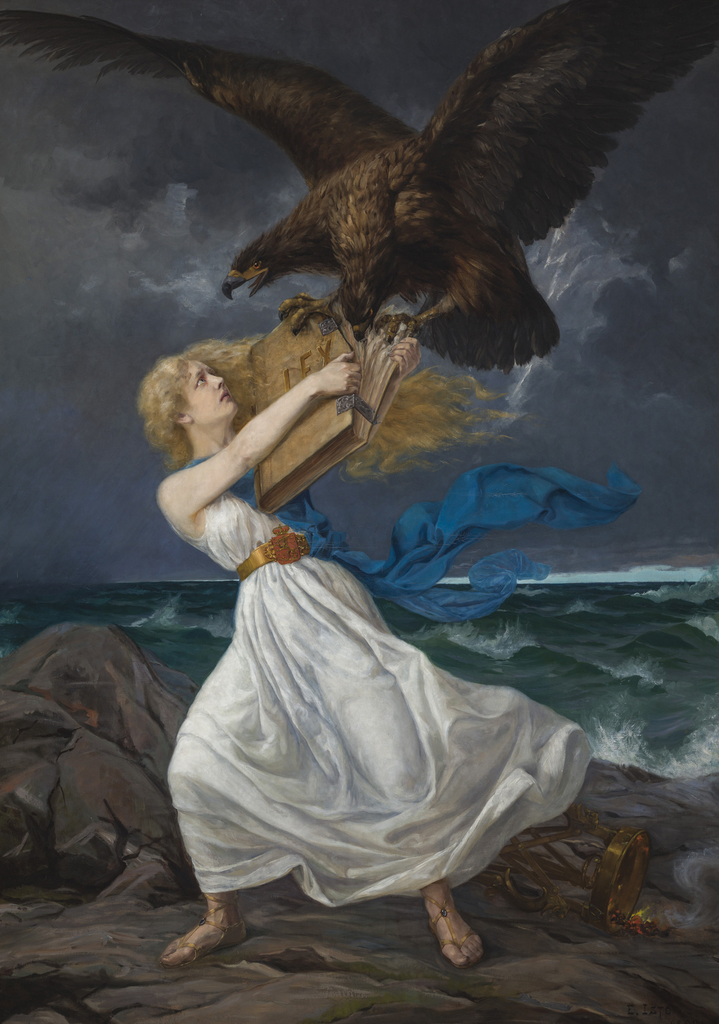
In 1885 Russian was made the official language for the whole of the Russian Empire. All official documents had to be in Russian, and all other languages were forbidden in schools – even where other races were in the majority. Areas which were badly affected by these developments were Poland and the Baltic lands of Estonia, Latvia and Lithuania. But the area where this policy caused most resentment was Central Asia, where many people were not only non-Russian but also Muslim in religion.
The Jewish Population
It was the Jews, however, who suffered most under Alexander III as he fully embraced anti-Semitism. A famous comment on a law restricting Jewish entry to university reveals his attitude, “Let us never forget that it was the Jews who crucified Jesus”. Alexander III sought to diminish Jewish communities’ economic, political, and social rights. The May Laws of 1882 encouraged anti-Semitism, banned Jews from specific areas, and stopped them from getting certain jobs.
Organised attacks on Jews greatly increased during the reign of Alexander III. These attacks – known as pogroms – would involve a mob going into Jewish parts of town to beat, rob, rape and even kill Jews. Under Alexander III, many of these attacks were organised or approved by the government. Such was the intensity of persecution in the early 1890s that thousands of Jews fled Russia for new lives in North America and western Europe.
Central Asia
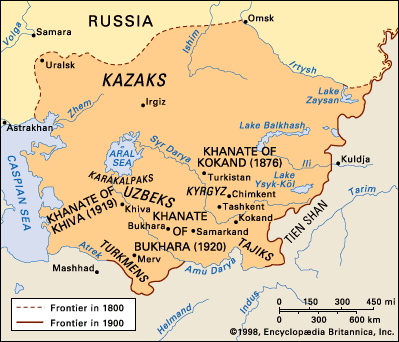
Alexander III followed the long-standing tradition of gradually increasing Russia’s influence in Central Asia. He managed to increase Russian power in the region without prompting conflict with Great Britain. Much of the Central Asian territory had been taken into Russia control by the 1880s through the use of force. The main motives for expansion and control were uniform throughout the period:
- Central Asia was to provide living and working space for large numbers of peasants from European Russia.
- The region was developed for cotton cultivation to serve the raw material needs of the textile factories in European Russia
- The Central Asian territories bordered Afghanistan, India and China, creating the prospect of further expansion and influence in these areas.
Central Asia largely avoided Russification – the tsars seemed to think that, given the complexity of societies there and the difficulties with communication and transport, Russification was no achievable or desirable. However other methods had to be carried out if Russian leaders were to achieve their goals. In 1891 Alexander III passed the Steppe Statute which granted 40 acres of land to peasant settlers in the Kazak region – enough to establish a successful farm unit (although it was of no use to the native nomadic peoples). This made the land the property of the state.
Economy
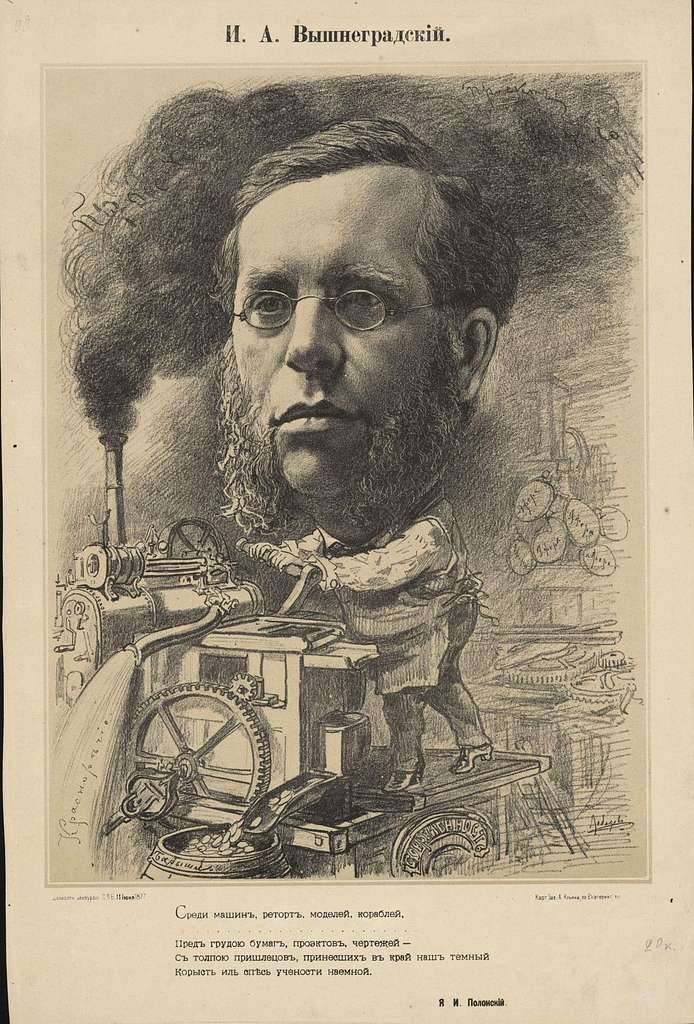
Ivan Vyshnegradsky
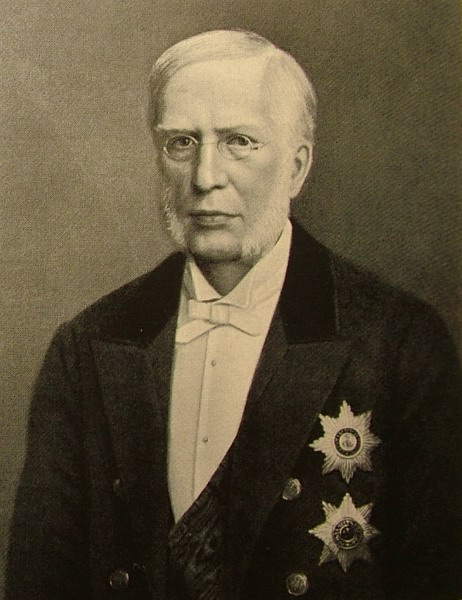
Ivan Vyshnegradsky was appointed finance minister in 1887 and strove to improve Russia’s finances and build up the country’s gold reserves. To achieve this, he increased indirect taxes and mounted a drive to swell grain exports. He also reduced imports by increasing tariffs, and in the Tariff Act of 1891 duties were increased so that Russian iron, industrial machinery and raw cotton were heavily protected against outside competition. By 1891 import duties had reached 33%. He also negotiated some valuable loans to kick-start growth, for example, from the French in 1888. On the surface, the policy appeared very successful. Between 1881 and 1891, grain exports increased by 18%, as a percentage of total Russian exports, and by 1892, the Russian budget was in a surplus.
However, this remarkable export drive was achieved at the expense of the peasants. They bore the brunt of heavy indirect taxation which reduced their limited purchasing power. At the same time, the price of goods rose because of the import taxes and their grain was being requisitioned by the government to sell abroad. Many peasants were left with no reserve stores and were often left hungry. It was put about that Vyshnegradsky said, “We ourselves shall not eat, but we shall export”, and one of the results of this policy was witnessed in 1891 when a bad harvest brought widespread famine.
The 1891-2 famine affected 17 of Russia’s 39 provinces. There had been an early winter and long hot dry summer which ruined the crops. A population weakened by hunger became susceptible to disease, so that when food began 6 growing again, cholera and typhoid still continued to kill more. This was a double tragedy as the able-bodied workers who succumbed to disease left families destitute with no bread winner to provide for them. Over 350,000 died from starvation or disease. The government failed to organise adequate relief and it was left to volunteer groups to help the stricken peasants.
Vyshnegradsky was dismissed in 1892, largely because of this national disaster which had been exacerbated by his own policy.
Development of the railways
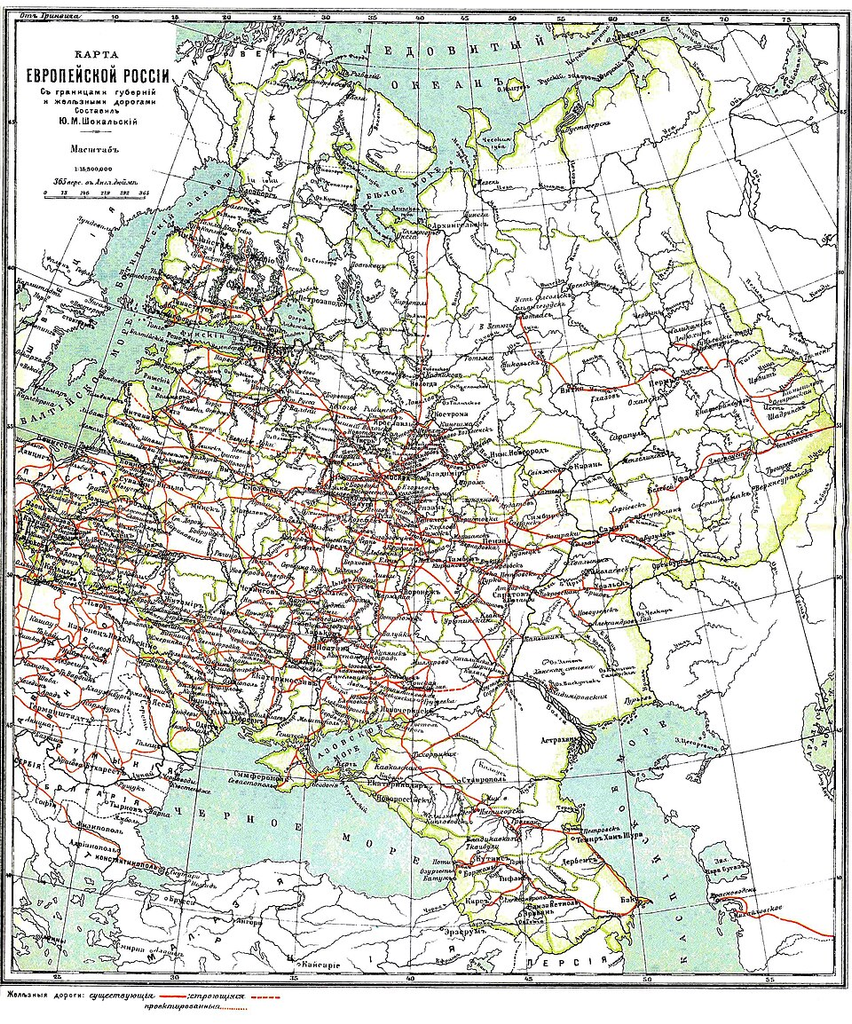
In the 1880s, the state began to buy up private railway companies and the construction of new long-distance state railways began. By 1905, Russia had 59,616 kilometres of railways, which, although still small in comparison with the size of the country, nevertheless indicates that a major engineering feat had been accomplished. This had many implications. The railways helped open up the Russian interior and allowed greater exploitation of Russia’s raw materials. For example:
- The rail link between the Donbas coalfields and iron ore deposits in the Ukraine was hugely successful.
- The Batum-Baku railway line of 1883 linking the Baku oilfields to the Black and Caspian Seas greatly increased the opportunities for exportation. The most acclaimed development was the impressive construction of the TransSiberian railway line, which crossed Russia from west to east. Its building provided a huge industrial stimulus whilst the psychological boost it provided, both at home and abroad, was perhaps even greater.
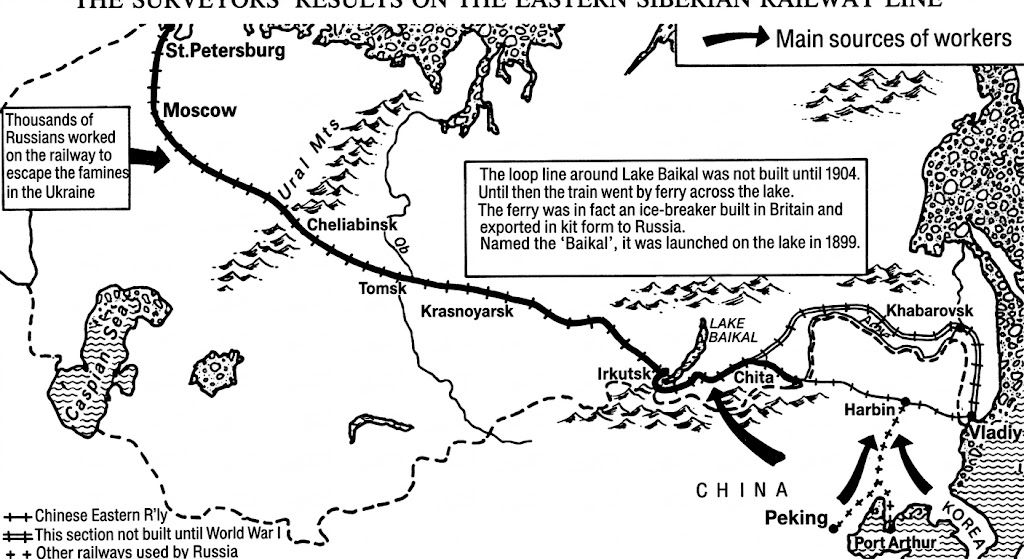
The Trans-Siberian Railway began in 1891, and was completed in 1902, although sections were still incomplete in 1914. It linked central European Russia with the Pacific Ocean at Vladivostok via the Chinese Eastern railway in Manchuria, and ran for 7,000 kilometres. It brought massive economic benefits, in part through its construction, with massive government orders for coal and metals. There were also economic and strategic advantages to the development of western Siberia. The eastern regions became like America’s Wild West as peasants were encouraged to emigrate there, away from the overpopulated areas of western Russia. Siberia had no tradition of serfdom, and the distance from the capital meant that there were fewer restrictions on life. In this respect it was an attractive option for peasants who were happy to take the challenge. Farming in the region increased, supplying the towns and cities of the West, and also foreign countries. Strategically, the railway could be used to transport troops and other military supplies to the more lawless or vulnerable outlying parts of the empire. But it promised more than it delivered.
The development of heavy industry
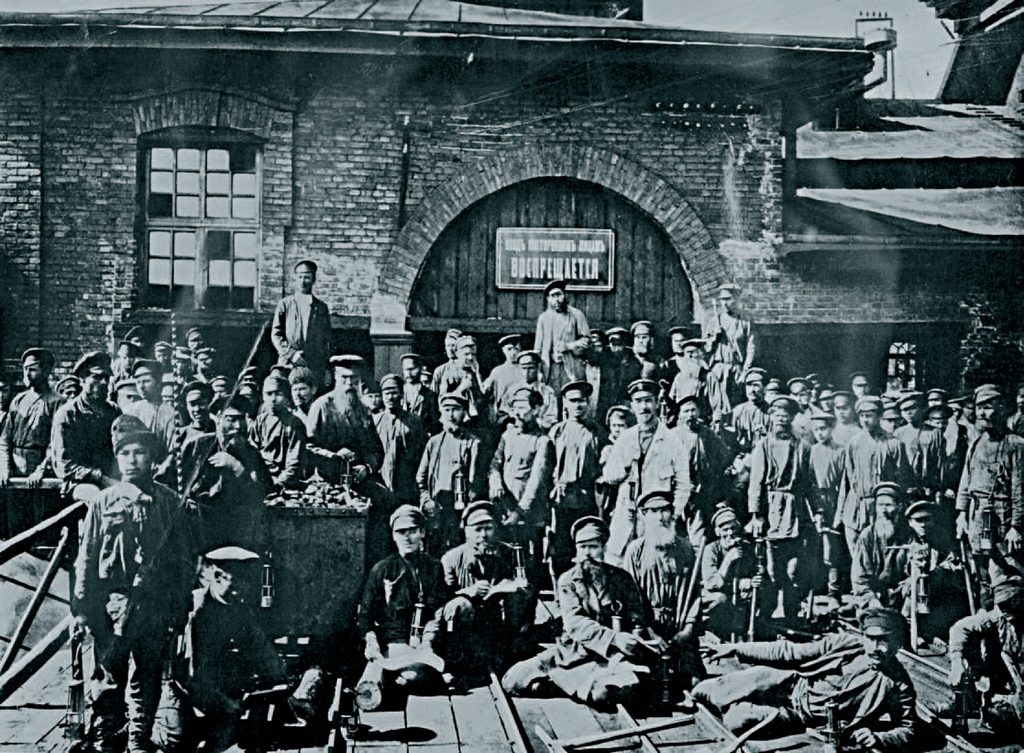
In the early stages of industrial growth to the 1880s, the lighter industries, particularly textiles, had led the way. By the time that Witte came to power in 1892—appointed Minister of Finance during the final years of Alexander III’s reign—the total industrial output of the textiles trade was one and a half times greater than that of coal mining, oil, minerals, and the metal trades put together. Witte immediately initiated a state-directed program to shift the empire’s focus toward capital-intensive infrastructure and metallurgy. Recognizing that vast distances were Russia’s greatest economic handicap, Alexander III approved Witte’s plans for the construction of the Trans-Siberian Railway in 1891. Under Alexander III, the national railway network expanded dramatically from around 14,000 kilometres in 1881 to over 30,000 kilometres by the mid-1890s, stimulating the metallurgical and coal-mining hubs of the Donets Basin (Donbas) and Krivoi Rog.
Living and Working Conditions
The problems of the rural economy
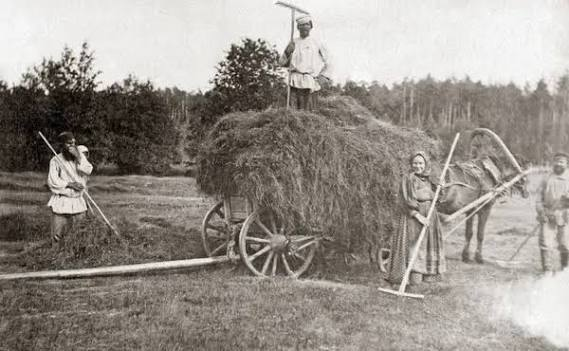
Whilst much attention was given by Vyshnegradsky and Witte to the development characterise the of an industrial economy, the same was not true of agriculture. Although the rural economy provided a livelihood for 80-90 per cent of the Russian population, it was largely ignored or sacrificed in the interests of industrialisation until 1906. Most farming was small scale and in the hands of former serfs and state peasants, tied to their local mir by the redemption dues they were re-paying. In the years of good harvest, the peasants’ income remained low because bread prices were kept down – whilst in the bad years, they faced starvation, as occurred in 1891-92 during the catastrophic famine that devastated the Volga and central agricultural provinces.
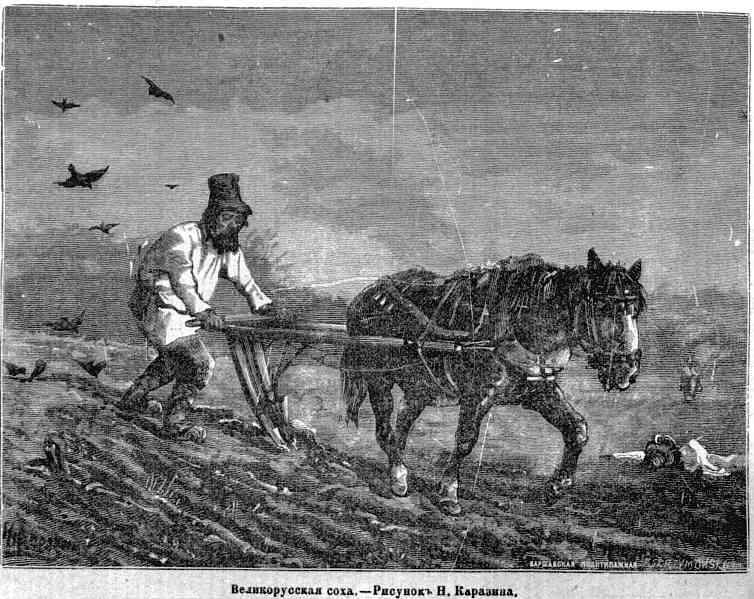
Quite apart from the ignorance and the suspicion in which some western farming practices were held, until 1905 agricultural output was hampered by the system of the mir, in which farmers were bound to work together. The wooden plough (sokha) was still widely used and medieval rotation systems, which wastefully left land fallow each year, were practised. Alexander III reinforced this communal conservatism by creating Land Captains (zemskie nachalniki) in 1889—noble officials with sweeping powers to override peasant zemstva decisions, overturn local court rulings, and impose corporal punishment, firmly entrenching aristocratic authority over the villages.
The gap between richest and poorest sections of the peasantry became wider as the wealthier peasant entrepreneurs or kulaks took advantage of the position of the less favoured. The government introduced a new scheme – the Peasant Land Bank in 1883 under Bunge to allow the kulaks to purchase and develop larger farms (though the establishment of the Nobles’ Land Bank in 1885 offered significantly lower interest rates to the nobility, underscoring state favoritism). However, they often exploited poorer peasants by buying their land for low amounts. The kulaks had become a small “capitalist peasant” class – employing labour and perhaps acting as “pawn brokers”. This harsh rural poverty and political repression fostered radical resistance; for instance, Jozef Pilsudski was arrested in 1887 for his involvement in a plot to assassinate Alexander III. The rigorous police control and repression under Alexander III became a classic benchmark in Russian history, often compared to the extensive terror later deployed by Stalin.
Impact of Industrialisation: Working Class
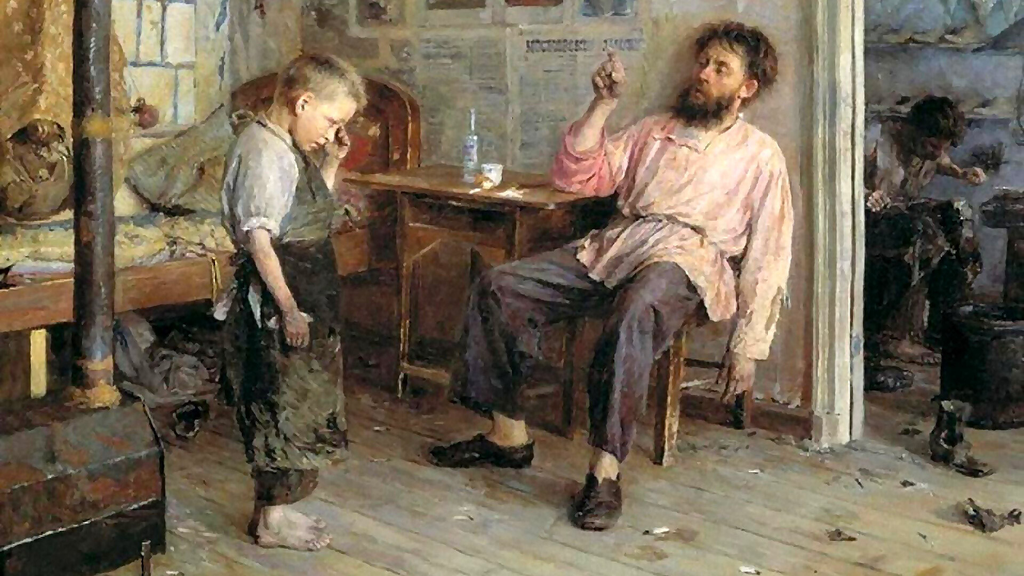
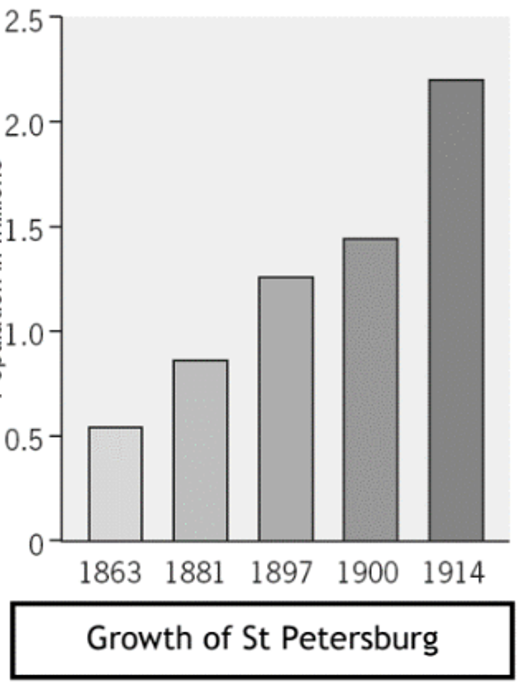
In the 1880s and 1890s, as Alexander III’s government began aggressively pushing for industrial expansion, it was still relatively common for some workers to move to the towns temporarily, retaining their land and returning to their villages to help out with the harvest. These migrant peasant-workers (otkhodniki) formed a transitional social class, caught between the seasonal rhythms of traditional village life and the harsh, mechanized realities of early urban capitalism.
Working Conditions and Labor Unrest
Because the state prioritized rapid industrialization over social welfare, the daily lives of these early industrial laborers were exceedingly grim.
- Adult men frequently endured exhausting shifts of 12 to 15 hours in dangerous, unregulated environments, as statutory limits on working hours—such as the 11-hour day and 6-day week—were not legally mandated until 1896, two years after Alexander III’s death.
- Wages were incredibly low and often paid irregularly, sometimes in the form of company store vouchers rather than cash, which kept workers trapped in a cycle of debt.
- Workers faced arbitrary and crippling wage deductions; factory owners imposed heavy fines for minor infractions such as singing, arriving minutes late, or producing slightly defective goods.
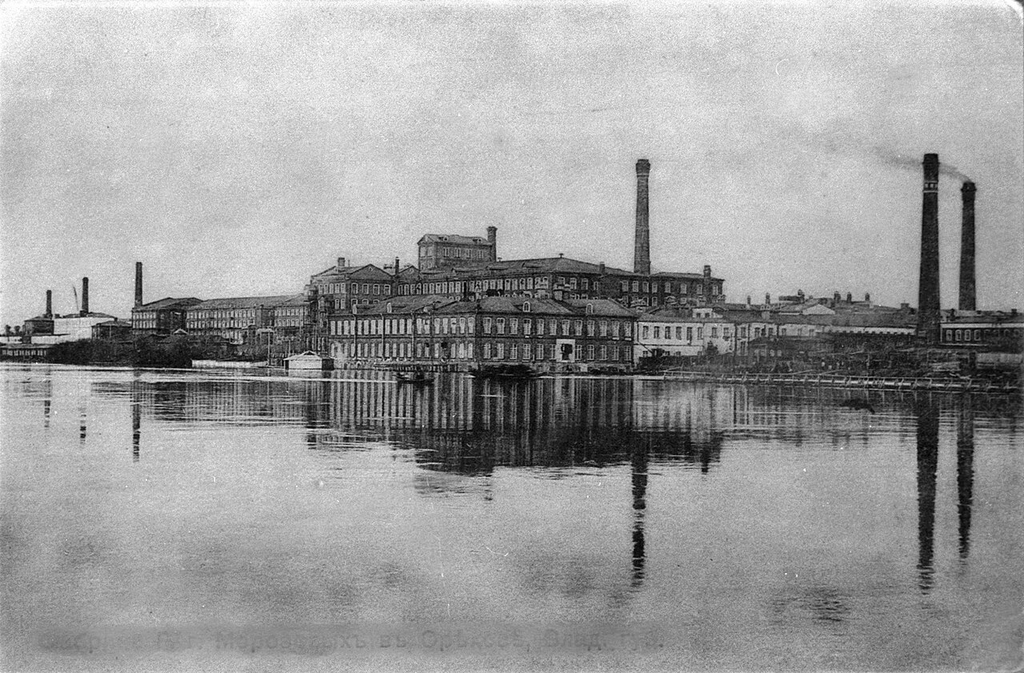
- These exploitative practices culminated in the massive Morozov textile strike of 1885, where 8,000 workers violently protested their treatment, forcing the Tsarist autocracy to recognize the explosive political potential of the growing urban proletariat.
Early Factory Legislation
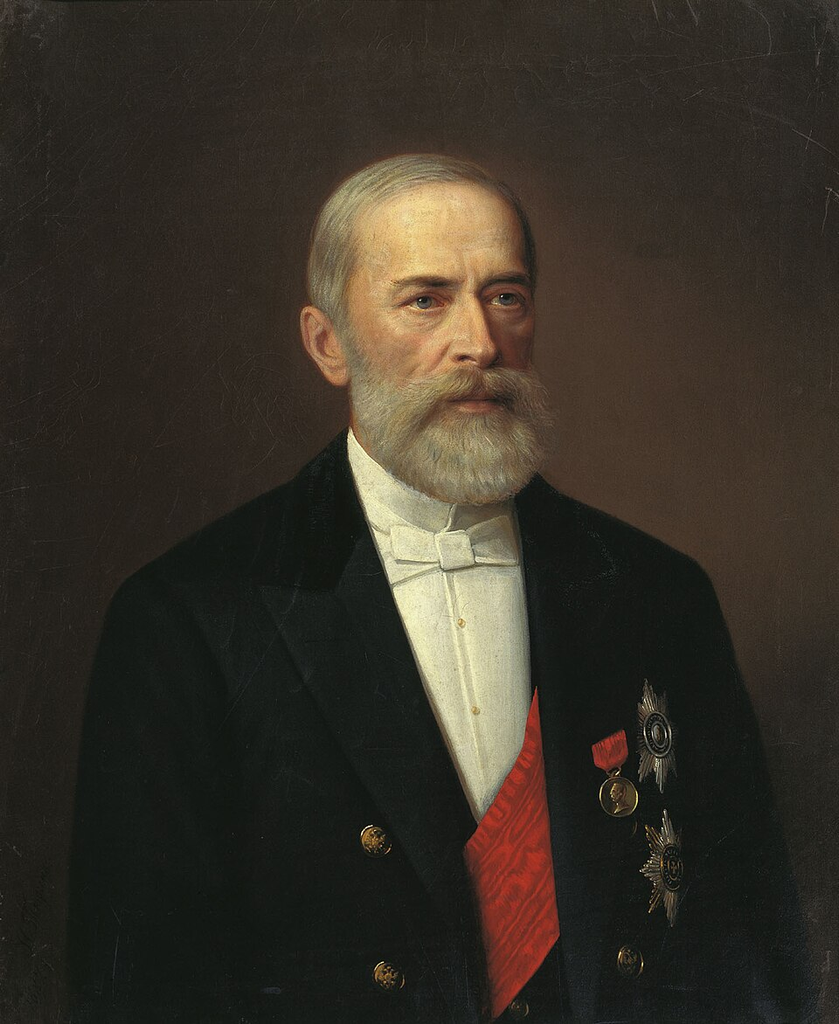
To pacify this mounting unrest, Finance Minister Nikolai Bunge introduced Russia’s first meaningful factory legislation. While groundbreaking for autocracy, the laws offered only minimal protection:
- 1882 Child Labor Law: Banned the factory employment of children under 12 and restricted minors aged 12 to 15 to a maximum 8-hour workday.
- 1885 Night Work Ban: Prohibited night-time employment for women and children, initially targeting the textile industry.
- 1886 Factory Act: Attempted to regulate workplace discipline by standardizing employment contracts, mandating regular cash wage payments, and capping the maximum fines managers could levy.
Enforcement and Living Standards
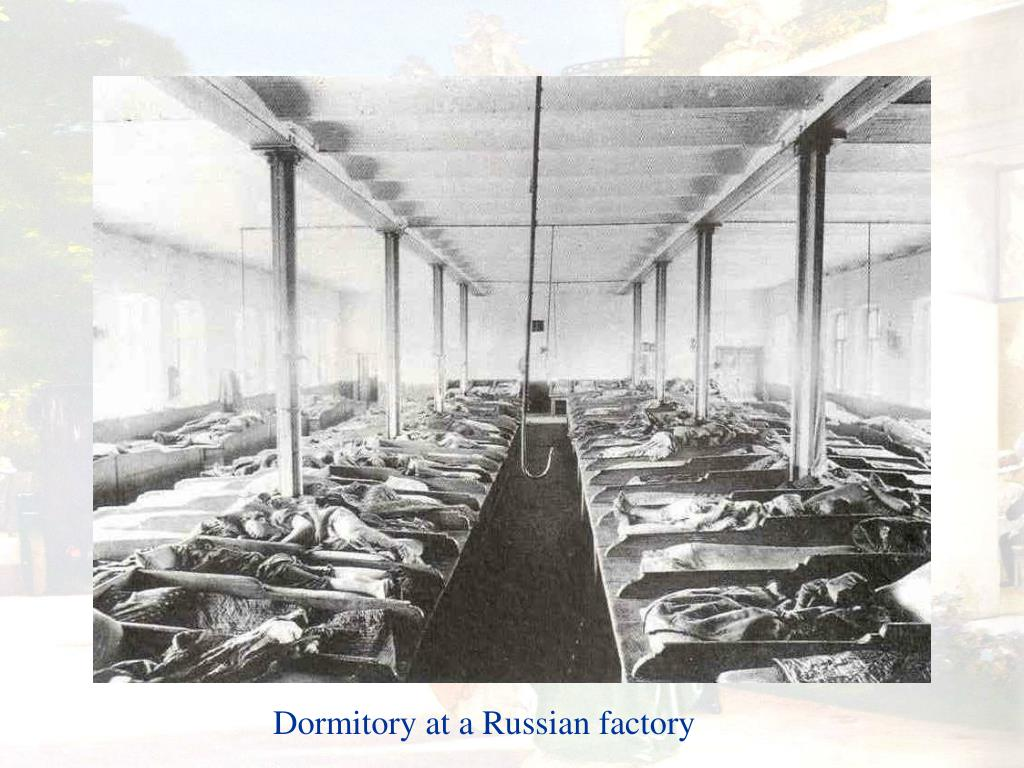
Despite these legislative milestones, enforcement by the small number of factory inspectors was remarkably weak. The newly created Factory Inspectorate numbered fewer than 300 officials for the entire empire, making it nearly impossible to police vast industrial hubs. Factory owners easily bypassed regulations and continued to house workers in squalid, company-owned barracks. In these unventilated, disease-ridden buildings, dozens of laborers shared single rooms with no privacy, sometimes sleeping in shifts on bare wooden planks. This systemic neglect and failure to provide adequate living standards laid the groundwork for the radicalization of the Russian working class.
Alexander III’s Death
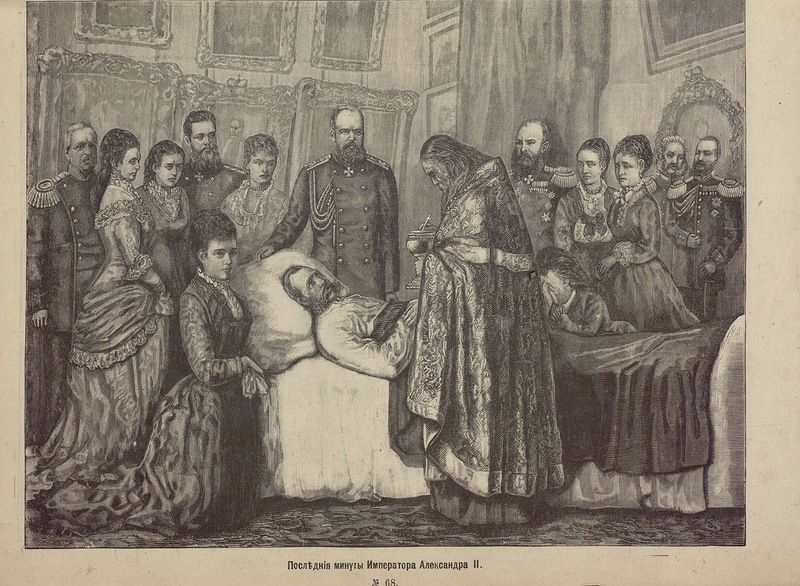
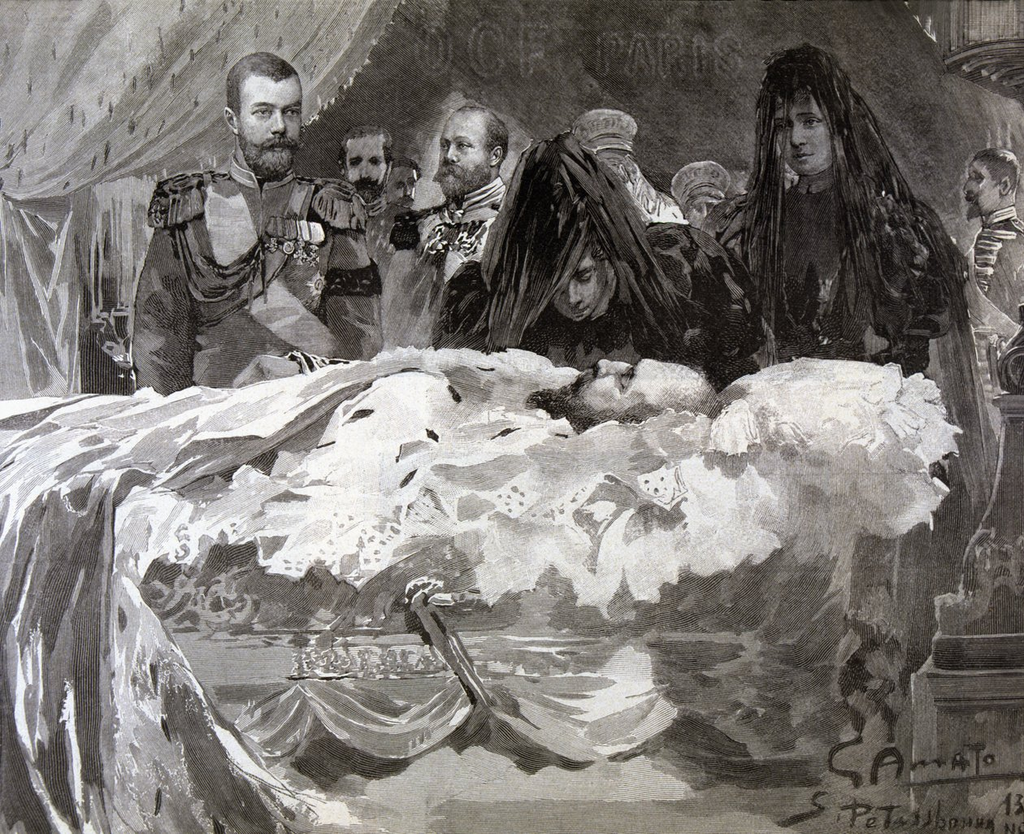
Alexander III’s reign was cut unexpectedly short when he died of terminal kidney disease (nephritis) on November 1, 1894, at the age of 49. His health had been in a state of steady decline, a deterioration that some contemporaries and historians have attributed to the immense physical strain he endured during the Borki train disaster of 1888, where he reportedly held up the collapsed roof of a railway car on his shoulders to save his family. Seeking a milder climate to recover, he traveled to the Livadia Palace in the Crimea, but his condition rapidly worsened. His premature death brought an abrupt end to his era of staunch, iron-fisted autocracy and thrust his politically unprepared 26-year-old son, Nicholas II, onto the imperial throne, setting the stage for the tumultuous final chapter of the Romanov dynasty.
Exam Zone
This section has been designed to help you build confidence, sharpen your skills, and achieve your best possible results. Whether you are preparing for mock exams, end-of-unit tests, or final assessments, the Exam Zone provides everything you need in one place.
The Exam Zone is not just about testing your knowledge. It is about developing the key historical skills required for success: critical thinking, evaluation, and clear written communication. By practising regularly and reflecting on feedback, you will strengthen both your understanding of the past and your performance in exams.